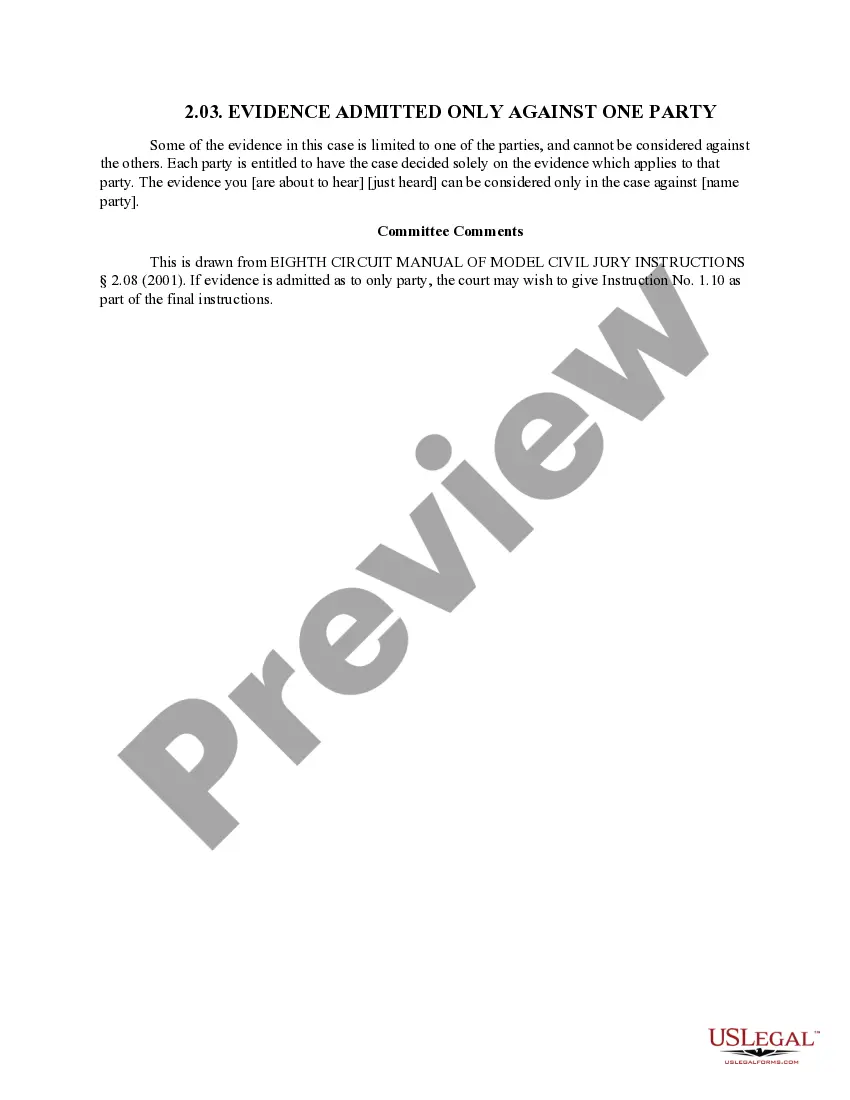
2.03 Evidence Admitted Only Against One Party
What this document covers
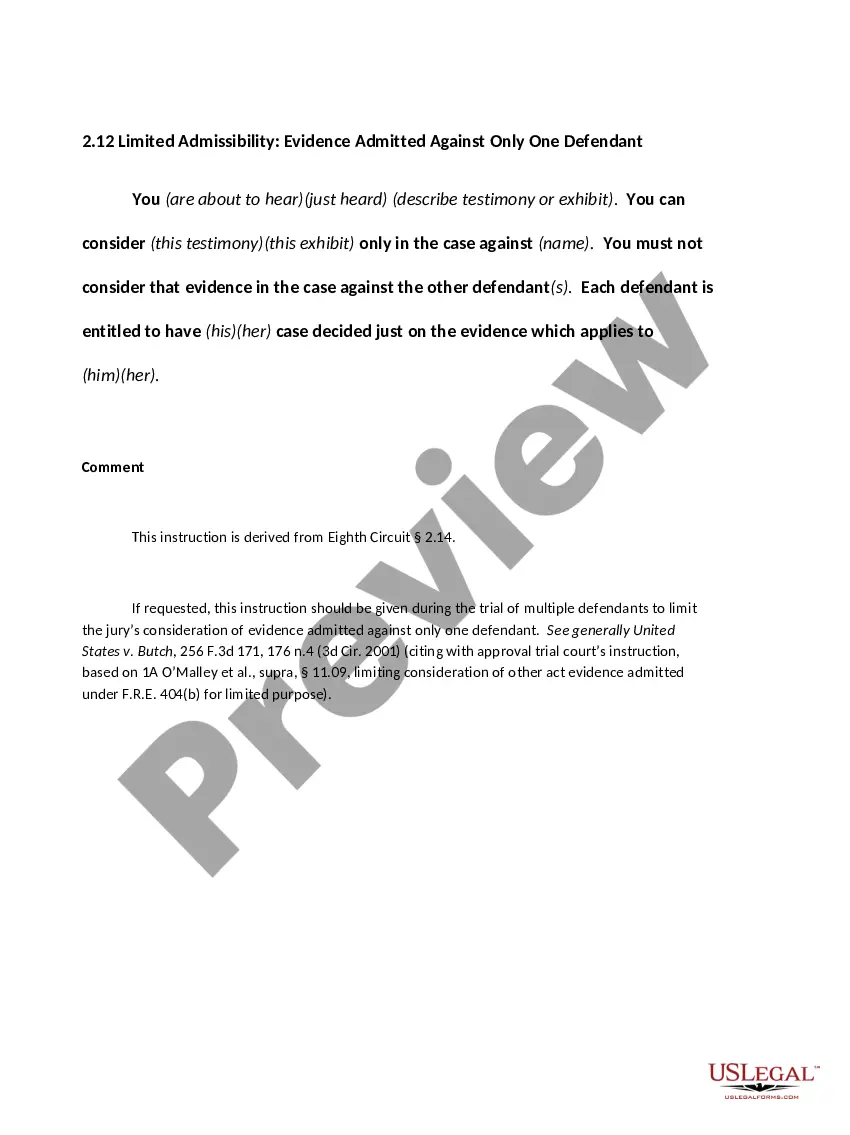
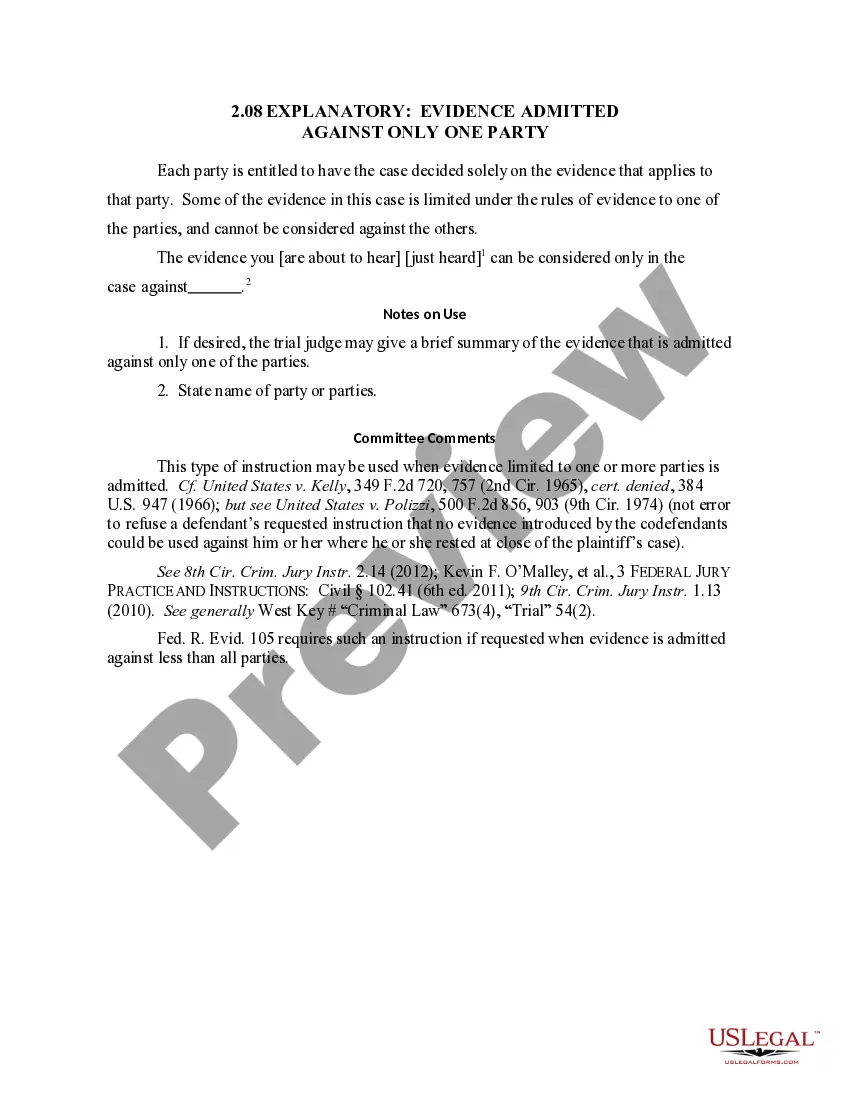
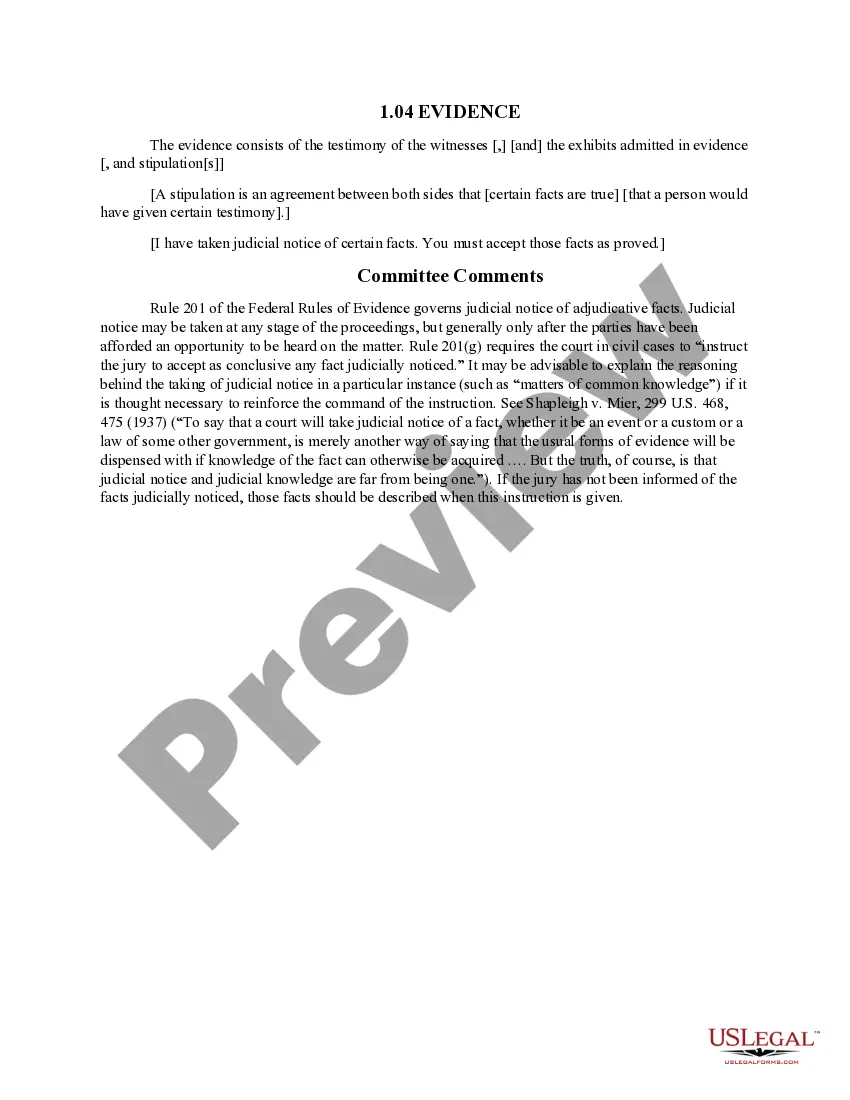
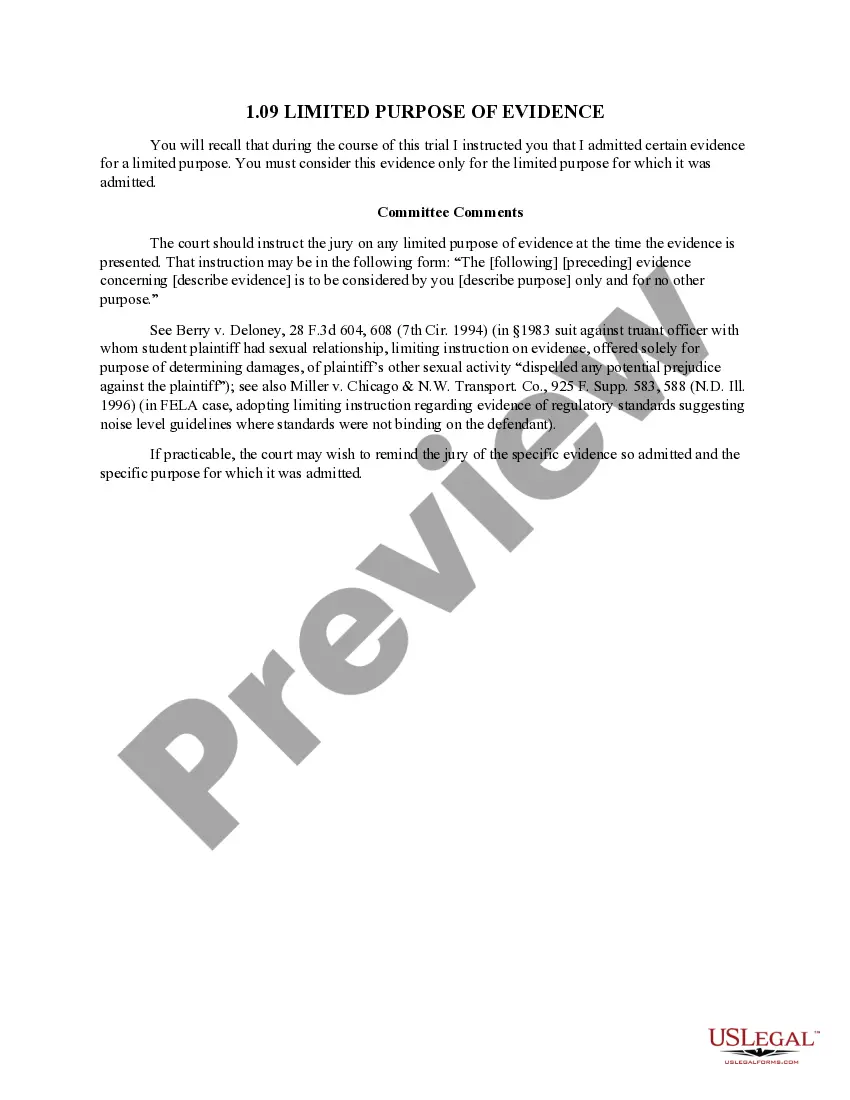
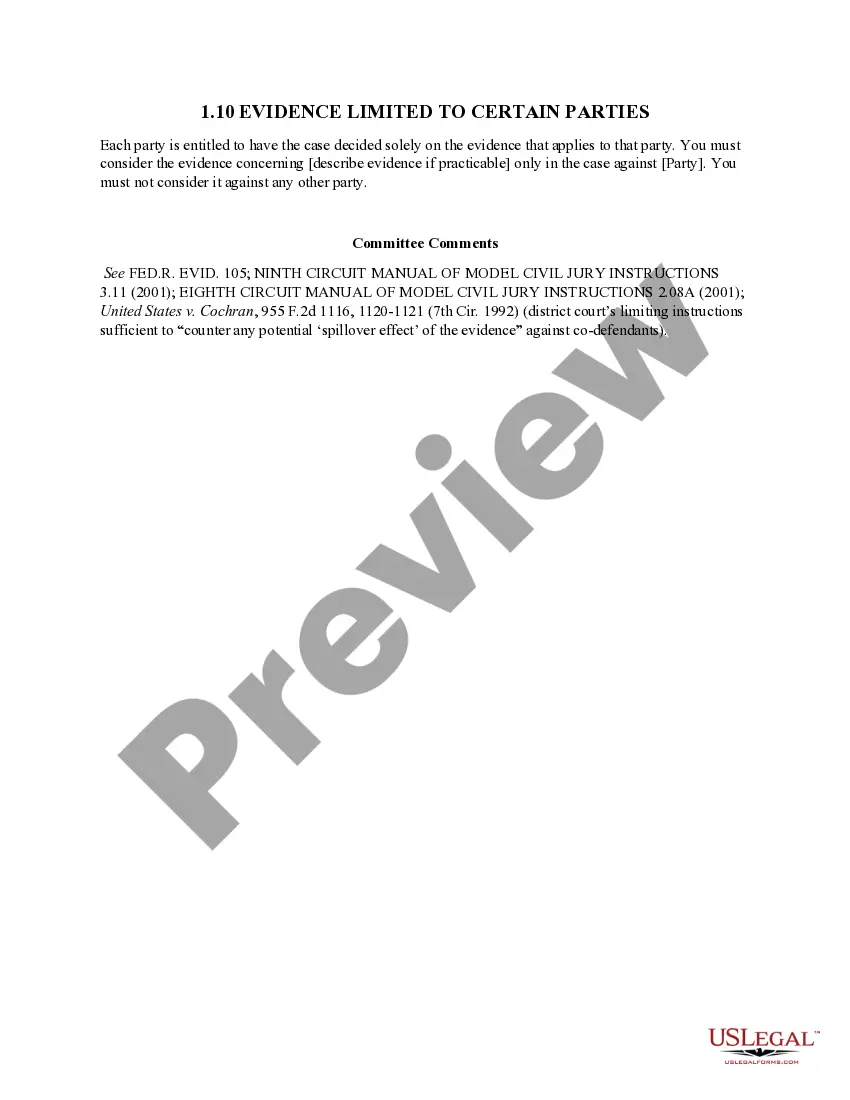
The "Evidence Admitted Only Against One Party" form is a legal instruction used in federal civil jury trials. It clarifies that certain evidence presented in a case is only applicable to one party and cannot be used to influence the jury's verdict regarding other parties involved. This form ensures that each party is judged solely on the evidence relevant to them, promoting fairness in the trial process. It differs from general jury instructions as it specifically addresses the handling of evidence that pertains only to a particular party.
Form components explained
- Clear statement that some evidence is limited to one party.
- Instruction on how jurors should treat evidence concerning only specific parties.
- Reference to related jury instruction (Instruction No. 1.10) if needed.
- Connection to guidelines established by the Eighth Circuit Manual of Model Civil Jury Instructions.
Common use cases
This form is used in cases where evidence is presented that is only applicable to one party. For instance, in a civil lawsuit involving multiple defendants, if certain testimony or documents pertain solely to one defendant, this instruction is essential for guiding jurors on how to interpret and utilize that evidence without bias against other parties.
Who should use this form
- Judges presiding over federal civil jury trials.
- Lawyers representing defendants or plaintiffs in civil litigation.
- Jury members needing clarification on the use of specific evidence during deliberation.
Completing this form step by step
- Identify the parties involved in the case.
- Determine which pieces of evidence pertain only to one party.
- Specify the relevant party in the instruction.
- Incorporate any additional jury instructions that may clarify evidence use.
- Present the instruction clearly to the jury before deliberation.
Notarization requirements for this form
Notarization is generally not required for this form. However, certain states or situations might demand it. You can complete notarization online through US Legal Forms, powered by Notarize, using a verified video call available anytime.
Get your form ready online
Our built-in tools help you complete, sign, share, and store your documents in one place.
Make edits, fill in missing information, and update formatting in US Legal Forms—just like you would in MS Word.
Download a copy, print it, send it by email, or mail it via USPS—whatever works best for your next step.
Sign and collect signatures with our SignNow integration. Send to multiple recipients, set reminders, and more. Go Premium to unlock E-Sign.
If this form requires notarization, complete it online through a secure video call—no need to meet a notary in person or wait for an appointment.
We protect your documents and personal data by following strict security and privacy standards.

Make edits, fill in missing information, and update formatting in US Legal Forms—just like you would in MS Word.

Download a copy, print it, send it by email, or mail it via USPS—whatever works best for your next step.

Sign and collect signatures with our SignNow integration. Send to multiple recipients, set reminders, and more. Go Premium to unlock E-Sign.

If this form requires notarization, complete it online through a secure video call—no need to meet a notary in person or wait for an appointment.

We protect your documents and personal data by following strict security and privacy standards.
Mistakes to watch out for
- Not clearly identifying which evidence applies to only one party.
- Failing to instruct jurors on avoiding bias based on limited evidence.
- Omitting necessary references to related jury instructions.
Why use this form online
- Convenience of downloading and editing the form as needed.
- Access to up-to-date legal standards and guidelines.
- Time efficiency in preparing jury instructions for trial.
Legal use & context
- This form ensures that jurors do not mistakenly apply evidence to parties who are not implicated.
- It reinforces the importance of fair trial rights in the civil justice system.
- Applicable in federal cases where jury instructions are a critical part of the proceedings.
Looking for another form?


Form popularity
FAQ
Something that's admissible is allowed or relevant. Admissible evidence in court is evidence that a judge permits to be brought forward. Evidence that's admissible is valid ? it has some measure of reliability, and it makes sense in the context of a particular trial.
Basically, if evidence is to be admitted at court, it must be relevant, material, and competent. To be considered relevant, it must have some reasonable tendency to help prove or disprove some fact. It need not make the fact certain, but at least it must tend to increase or decrease the likelihood of some fact.
Generally, to be admissible, the evidence must be relevant) and not outweighed by countervailing considerations (e.g., the evidence is unfairly prejudicial, confusing, a waste of time, privileged, or, among other reasons, based on hearsay).
What Is Admissible Evidence? One admissible evidence definition is that admissible evidence is any document, testimony, or tangible, physical item, e.g. a murder weapon, that can be used to prove a fact at issue in a hearing or trial in a court of law under the rules of evidence.
There are two types of evidence; namely, direct evidence and circumstantial evidence. In this case, the People contend that there is circumstantial evidence of the defendant's guilt.
Admissible evidence is evidence that may be presented before the trier of fact (i.e., the judge or jury) for them to consider in deciding the case. Compare inadmissible evidence. Rules of evidence determine what types of evidence is admissible, and the trial court judge applies these rules to the case.
If the court admits evidence that is admissible against a party or for a purpose ? but not against another party or for another purpose ? the court, on timely request, must restrict the evidence to its proper scope and instruct the jury ingly.