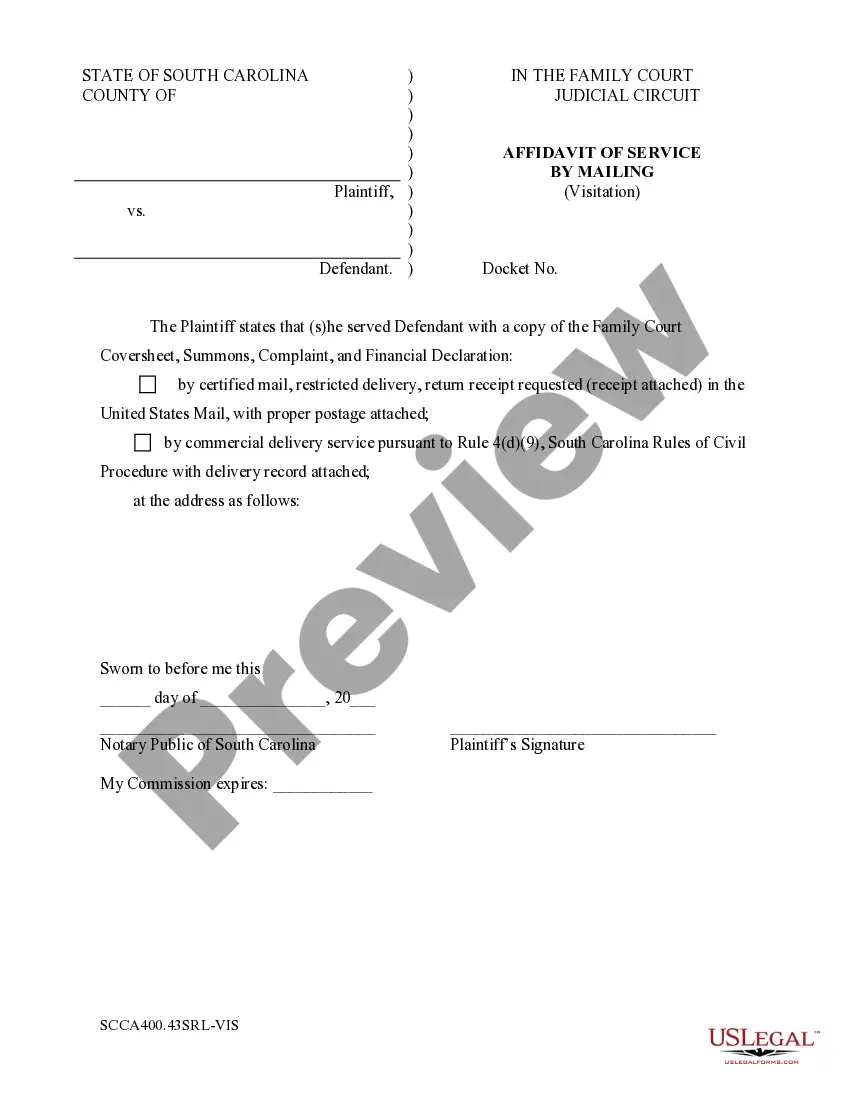
South Carolina Affidavit of Service by Mailing-Visitation
Overview of this form
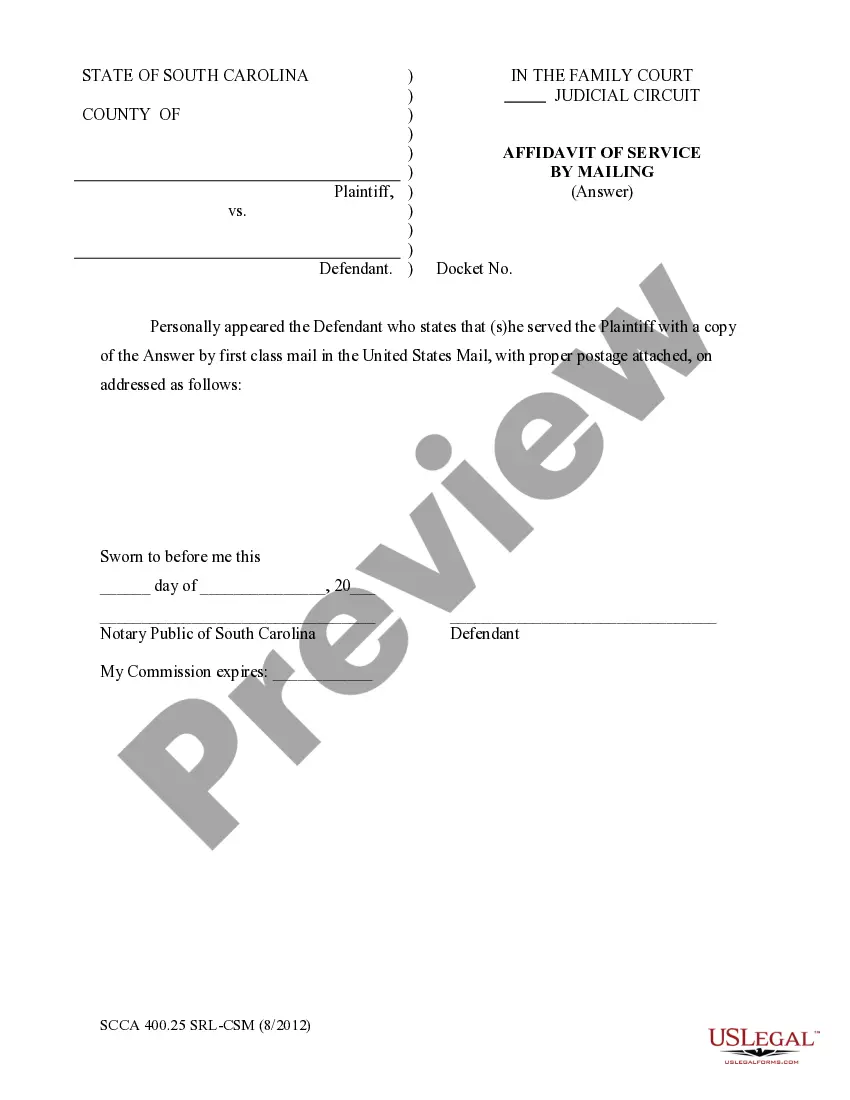
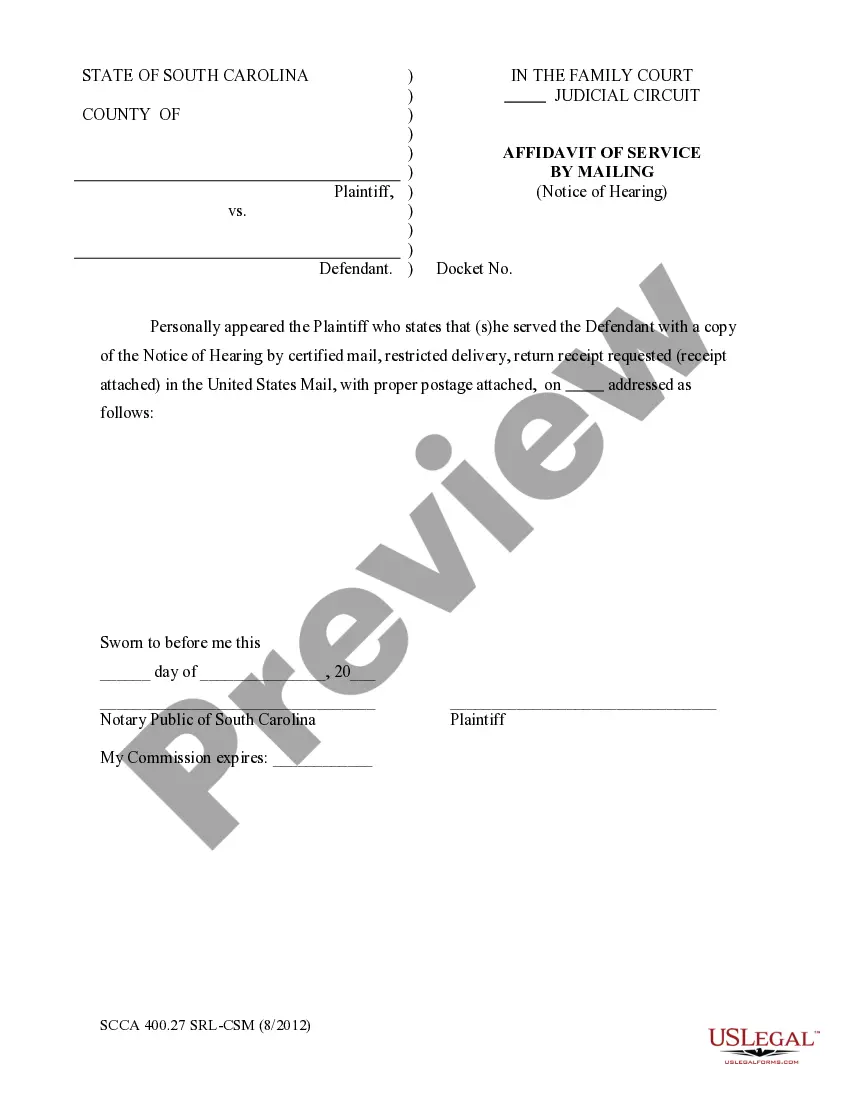
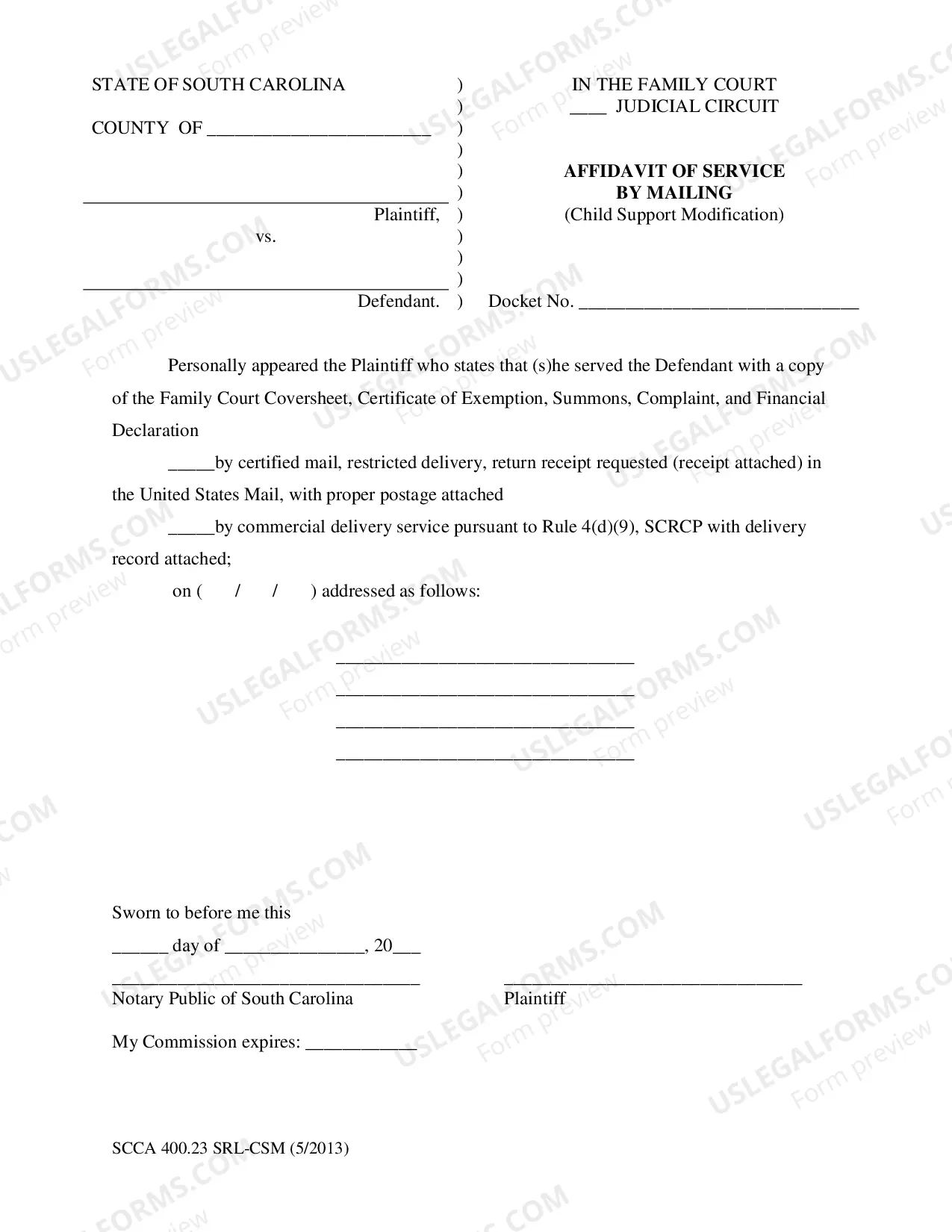
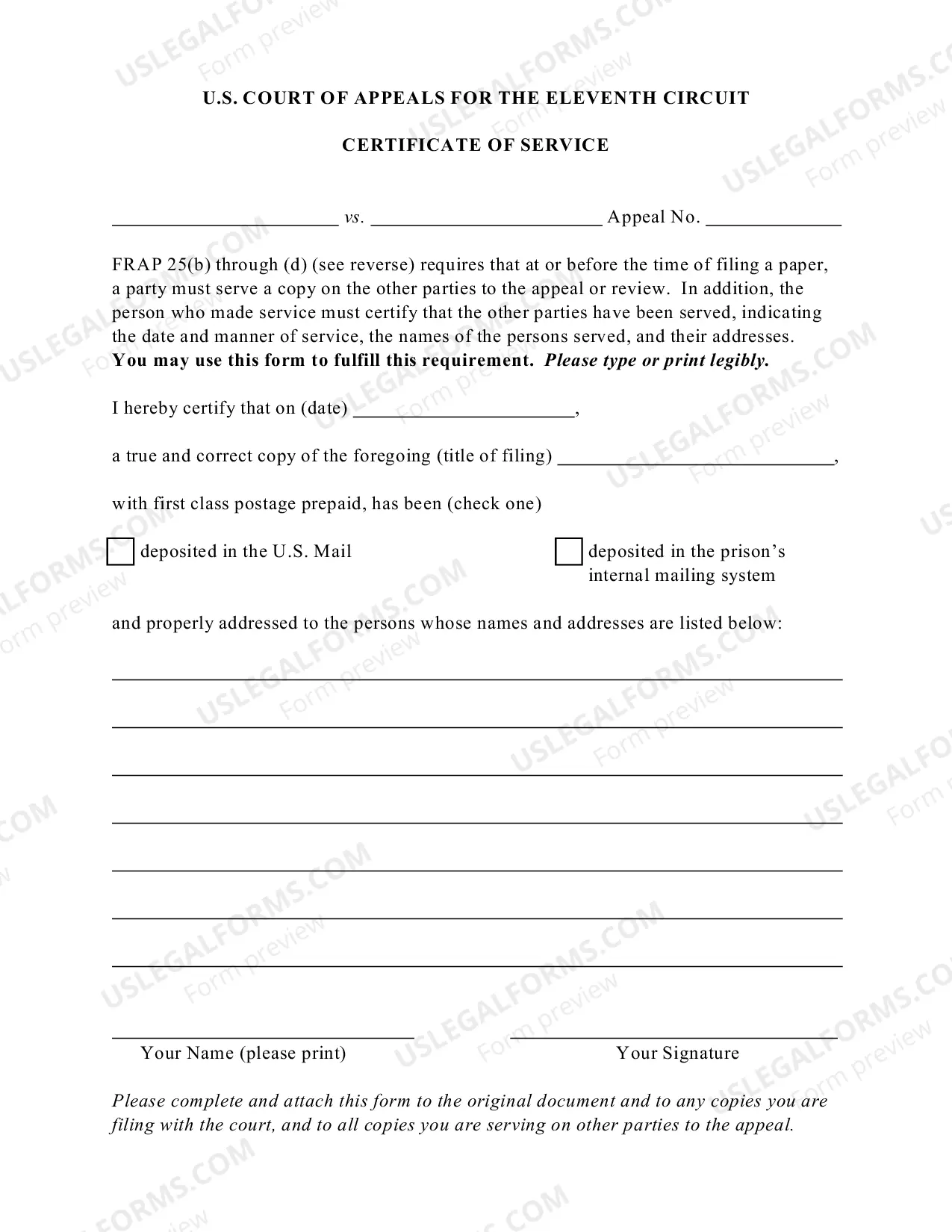
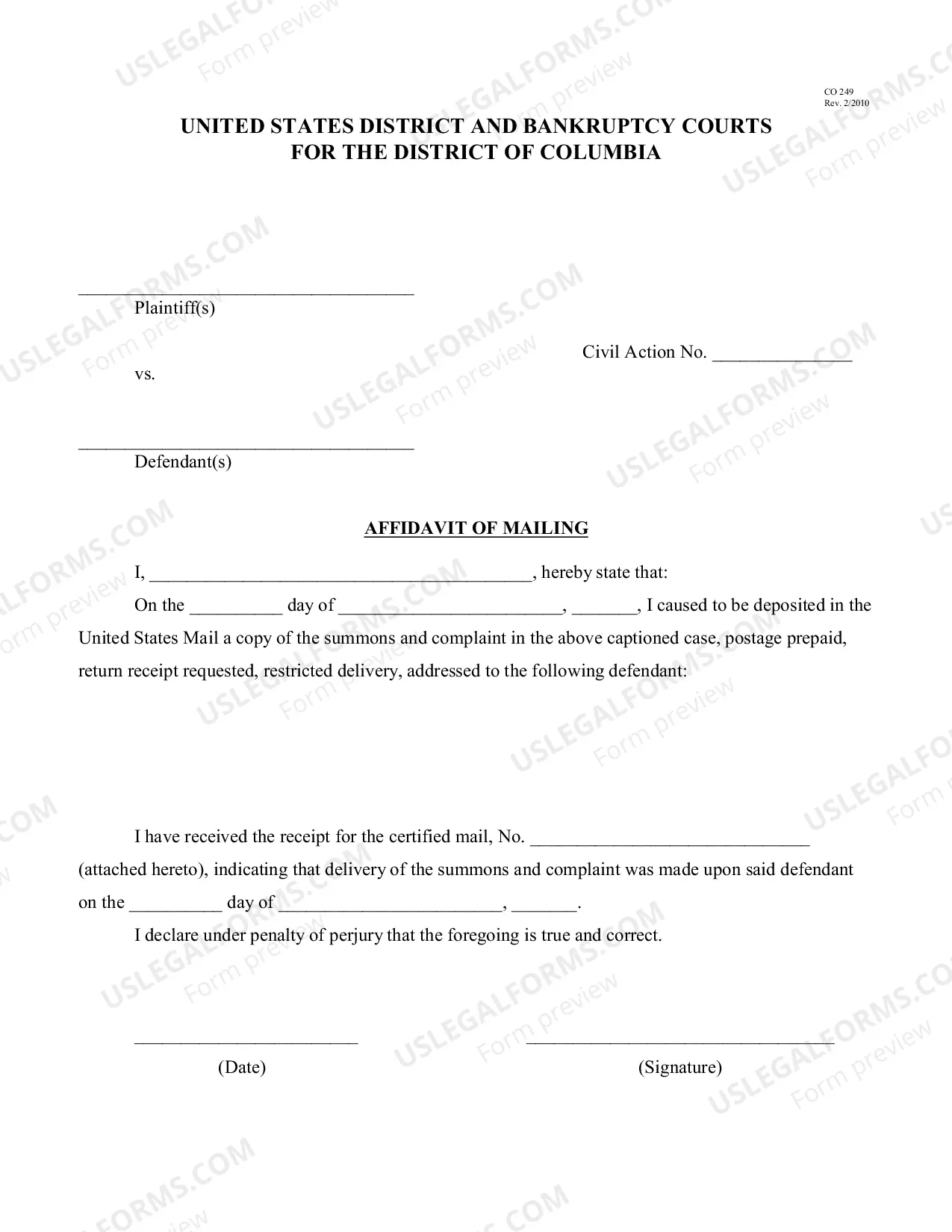
The Affidavit of Service by Mailing-Visitation is a sworn statement that confirms a legal document has been sent to a party through the mail, typically via registered or certified mail. This form is important for providing evidence of service in legal proceedings, ensuring that the recipient is properly notified of documents such as a summons or complaint. It differs from other types of affidavits because it specifically pertains to service by mailing, making it essential in many civil procedures.
Form components explained
- Affiant's name and signature - the individual asserting that the service was completed.
- Description of the documents sent - details about the legal paperwork that was mailed.
- Details of service method - information indicating that the service was done via registered or certified mail.
- Date of mailing - when the documents were sent to the recipient.
- Recipient's address - the address to which the documents were sent.
- Notary public signature - verification by a notary confirming the affidavit's authenticity.
Situations where this form applies
This form is used when a party must provide proof of delivering legal documents to another party. It is often required in civil cases where documentation of service is necessary to proceed with legal actions. Typical scenarios include divorce proceedings, custody battles, or any case where legal notifications must be sent and verified.
Who can use this document
- Individuals involved in legal proceedings who need to serve documents by mail.
- Lawyers or legal representatives looking to confirm service for their clients.
- Anyone required to provide evidence of service in court to comply with legal requirements.
How to prepare this document
- Identify the parties involved, including the affiant and the recipient of the mailed documents.
- Specify the legal documents that were sent to the recipient.
- Indicate the mailing method usedâregistered or certified mailâand include the date of mailing.
- Enter the recipient's complete address where the documents were sent.
- Sign the affidavit in the presence of a notary public.
- Make copies for your records and any required legal filings.
Notarization requirements for this form
Yes, this form must be notarized to be legally valid. It is essential for the affiant to sign the document in front of a notary public to verify the authenticity of the statement provided. US Legal Forms offers integrated online notarization services, allowing convenient and secure video calls to meet this requirement without the need for travel.
Get your form ready online
Our built-in tools help you complete, sign, share, and store your documents in one place.
Make edits, fill in missing information, and update formatting in US Legal Forms—just like you would in MS Word.
Download a copy, print it, send it by email, or mail it via USPS—whatever works best for your next step.
Sign and collect signatures with our SignNow integration. Send to multiple recipients, set reminders, and more. Go Premium to unlock E-Sign.
If this form requires notarization, complete it online through a secure video call—no need to meet a notary in person or wait for an appointment.
We protect your documents and personal data by following strict security and privacy standards.

Make edits, fill in missing information, and update formatting in US Legal Forms—just like you would in MS Word.

Download a copy, print it, send it by email, or mail it via USPS—whatever works best for your next step.

Sign and collect signatures with our SignNow integration. Send to multiple recipients, set reminders, and more. Go Premium to unlock E-Sign.

If this form requires notarization, complete it online through a secure video call—no need to meet a notary in person or wait for an appointment.

We protect your documents and personal data by following strict security and privacy standards.
Common mistakes
- Not using the proper mailing method (e.g., failing to use registered or certified mail).
- Omitting essential details, such as the recipient's address or the mention of the documents sent.
- Failing to sign the affidavit in front of a notary public, which may invalidate the document.
Why complete this form online
- Convenience of downloading and filling out the form at your own pace.
- Editability allows users to customize the document as needed before finalizing.
- Reliability of attorney-drafted templates ensures compliance with relevant laws.
Looking for another form?
Form popularity
FAQ
It is possible to serve an official in the state of South Carolina by hand-delivery of a summons and complaint and by registered or certified mail of the same documents to the office of the Attorney General in Columbia when another official has been designated by statute as being served in that manner.
Depending on the circumstances, your criminal defense lawyer may be able to schedule a hearing on a motion to lift the bench warrant, and, if you appear at the hearing, may be able to get the bench warrant lifted before you are taken to jail.
To be an admissible Affidavit, the acknowledgment must be sworn to be true and correct to the best personal knowledge of the affiant. Furthermore, the affiant must declare that the statements contained in the Affidavit are true and correct under penalties of perjury.
2. Do arrest warrants expire? No, arrest warrants do not expire.
To file a pro se visitation complaint, a father should: Consider and define the visitation he wants family court to grant. File the complaint in the county/state where the child resides. Make sure the visitation schedule is spelled out in the final visitation order.
Form 9 - Letter to Clerk of Lower Court Filing Notice of Appeal, S.C.
The enforcement powers of the Family Court are known as the ?Contempt Powers,? and are outlined by the South Carolina Code of Laws as follows: (1) up to one year in prison, (2) a fine up to $1,500, and/or (c) up to 300 hours of community service.
If you are taken into custody on a bench warrant, you will remain in jail until a hearing is scheduled on a motion to lift the bench warrant, which could take weeks or even months depending on your location and the circumstances.