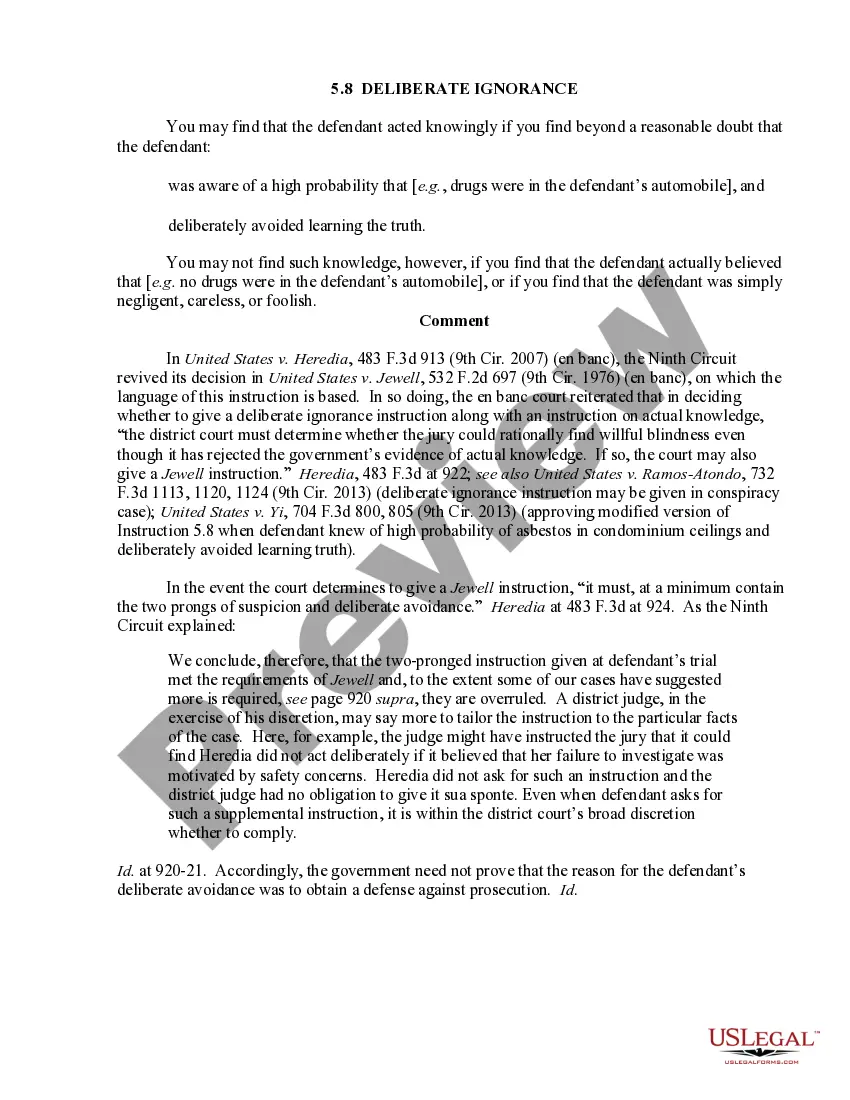
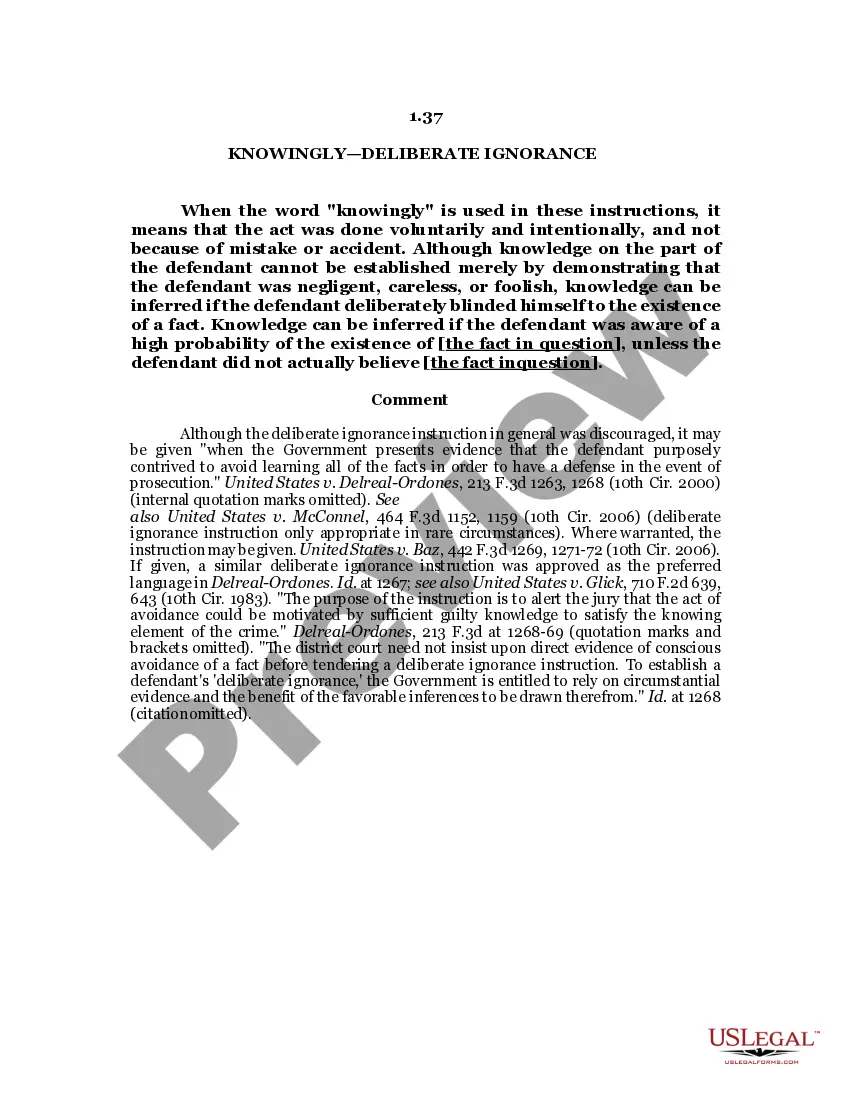
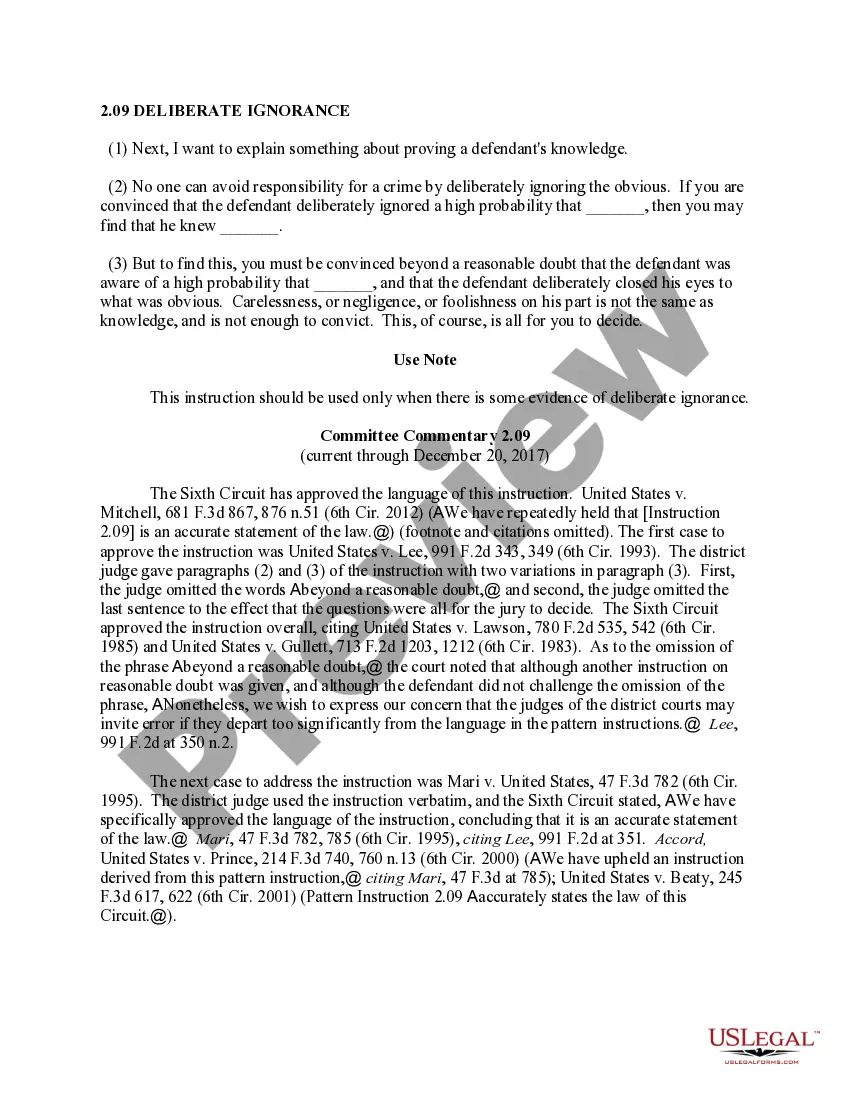
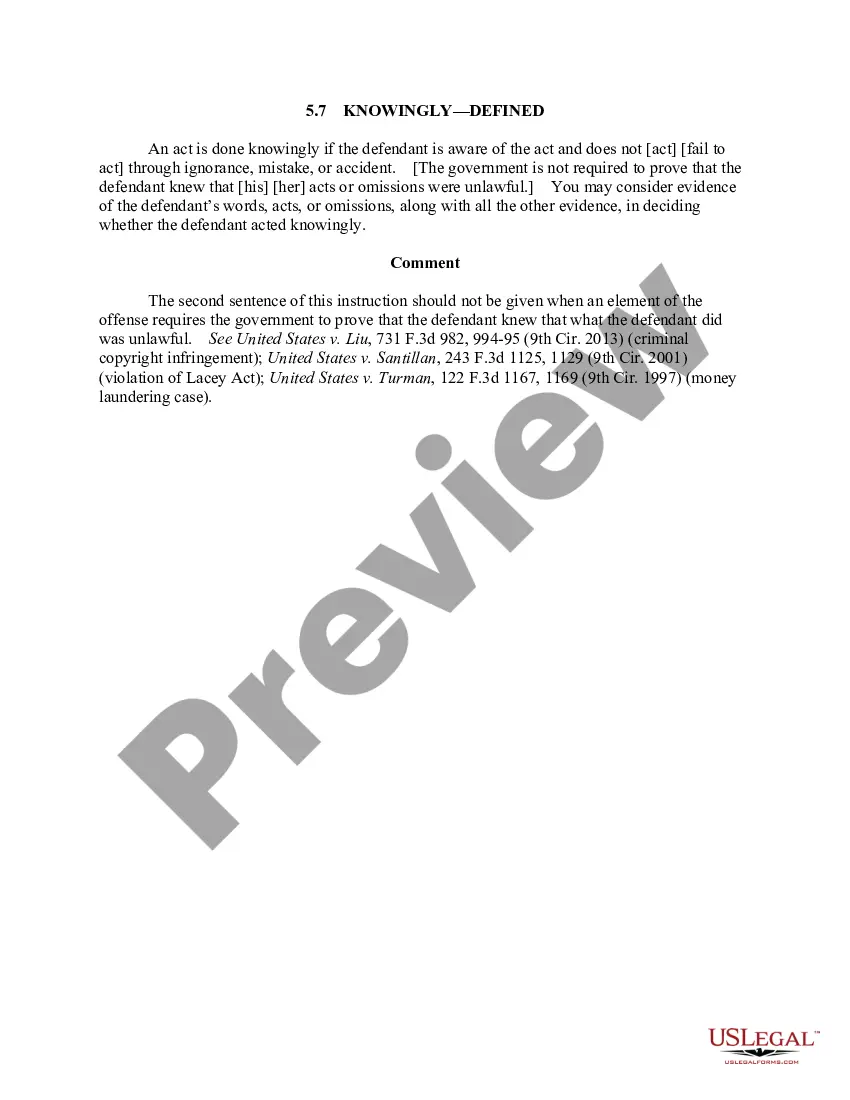
5.8 Deliberate Ignorance
Notarization requirements for this form
In most cases, this form does not require notarization. However, some jurisdictions or signing circumstances might. US Legal Forms offers online notarization powered by Notarize, accessible 24/7 for a quick, remote process.
Get your form ready online
Our built-in tools help you complete, sign, share, and store your documents in one place.
Make edits, fill in missing information, and update formatting in US Legal Forms—just like you would in MS Word.
Download a copy, print it, send it by email, or mail it via USPS—whatever works best for your next step.
Sign and collect signatures with our SignNow integration. Send to multiple recipients, set reminders, and more. Go Premium to unlock E-Sign.
If this form requires notarization, complete it online through a secure video call—no need to meet a notary in person or wait for an appointment.
We protect your documents and personal data by following strict security and privacy standards.

Make edits, fill in missing information, and update formatting in US Legal Forms—just like you would in MS Word.

Download a copy, print it, send it by email, or mail it via USPS—whatever works best for your next step.

Sign and collect signatures with our SignNow integration. Send to multiple recipients, set reminders, and more. Go Premium to unlock E-Sign.

If this form requires notarization, complete it online through a secure video call—no need to meet a notary in person or wait for an appointment.

We protect your documents and personal data by following strict security and privacy standards.
Looking for another form?
Form popularity
FAQ
The Ninth Circuit explained: A deliberate ignorance?or "willful blindness"?instruction is only relevant if the jury rejects the government's evidence of actual knowledge. United States v. Heredia, 483 F.
The so-called "ostrich instruction" informs a jury that actual knowledge and deliberate avoidance of knowledge are the same.
Ralph Hertwig: To give an example, if somebody takes an HIV test and then decides that they do not want to know the result and has unprotected sex, most of us would consider this to be morally highly problematic. In this case, the person who is deliberately ignorant would accept that they might be harming others.
In what follows, the phrase "the willful ignorance doctrine" is. used to refer to the rule that juries may find the defendant to. possess the requisite knowledge for a crime merely on the ground. that he was willfully ignorant of the relevant fact.
Also referred to as willful ignorance, this is described as a situation in which a person will intentionally shield themselves from acknowledging information that might make them liable in a civil or criminal case, even denying these facts to themselves.
The Supreme Court has stated that the federal aiding and abetting statute has two primary components : "a person is liable under § 2 if (and only if) he (1) takes an affirmative act in furtherance of that offense, (2) with the intent of facilitating the offense's commission." Rosemond v. United States,134 S. Ct.
The deliberate ignorance instruction should be given only when evidence has been presented showing the defendant purposely contrived to avoid learning the truth. The defendant must deny knowledge and must engage in conduct which includes deliberate acts to avoid actual knowledge of the operant fact.