Holiday Vacation Policy
What is this form?
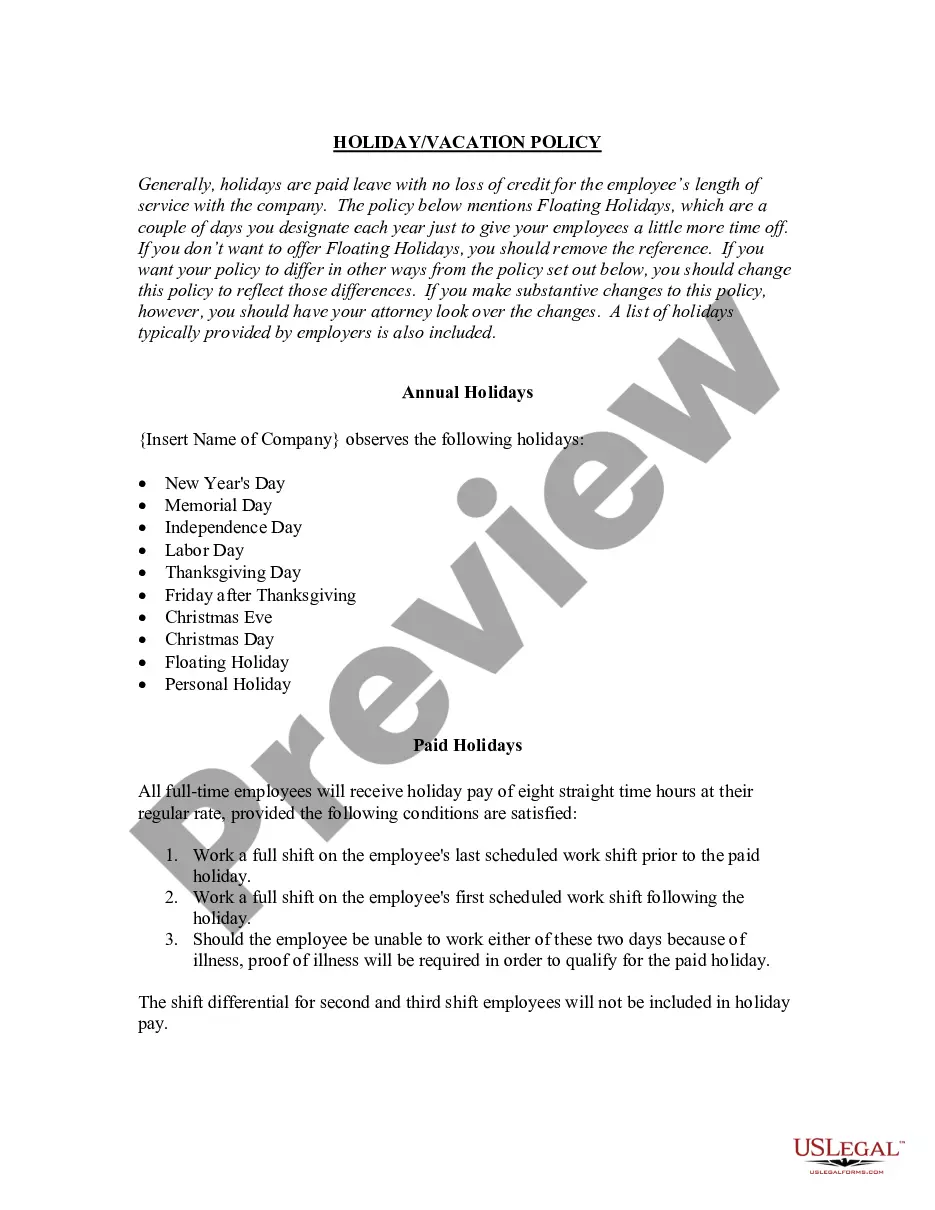
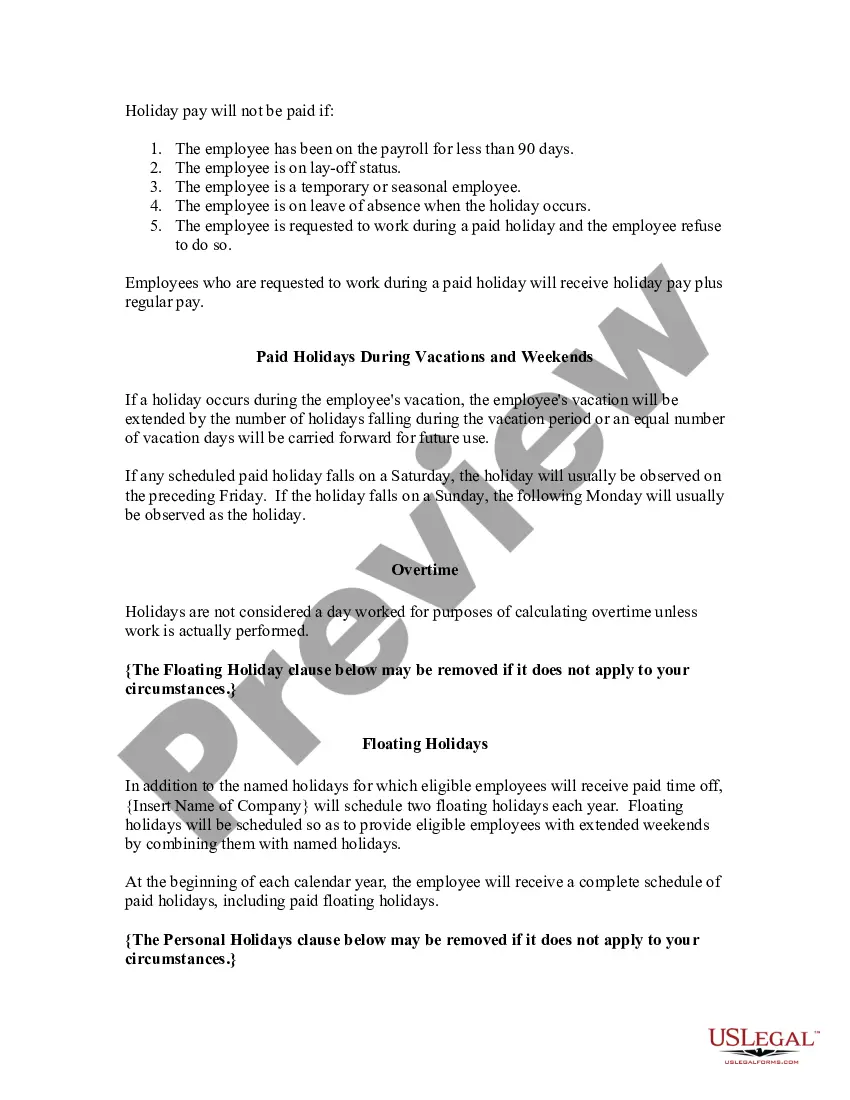
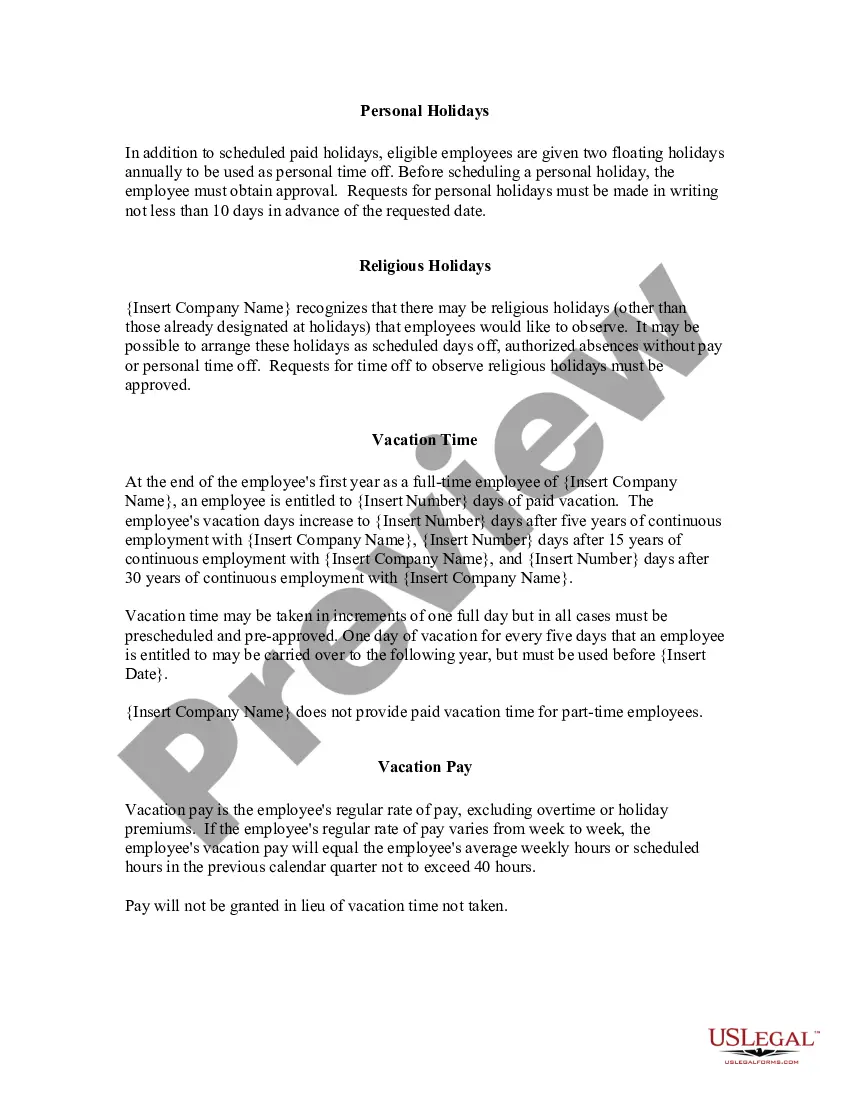
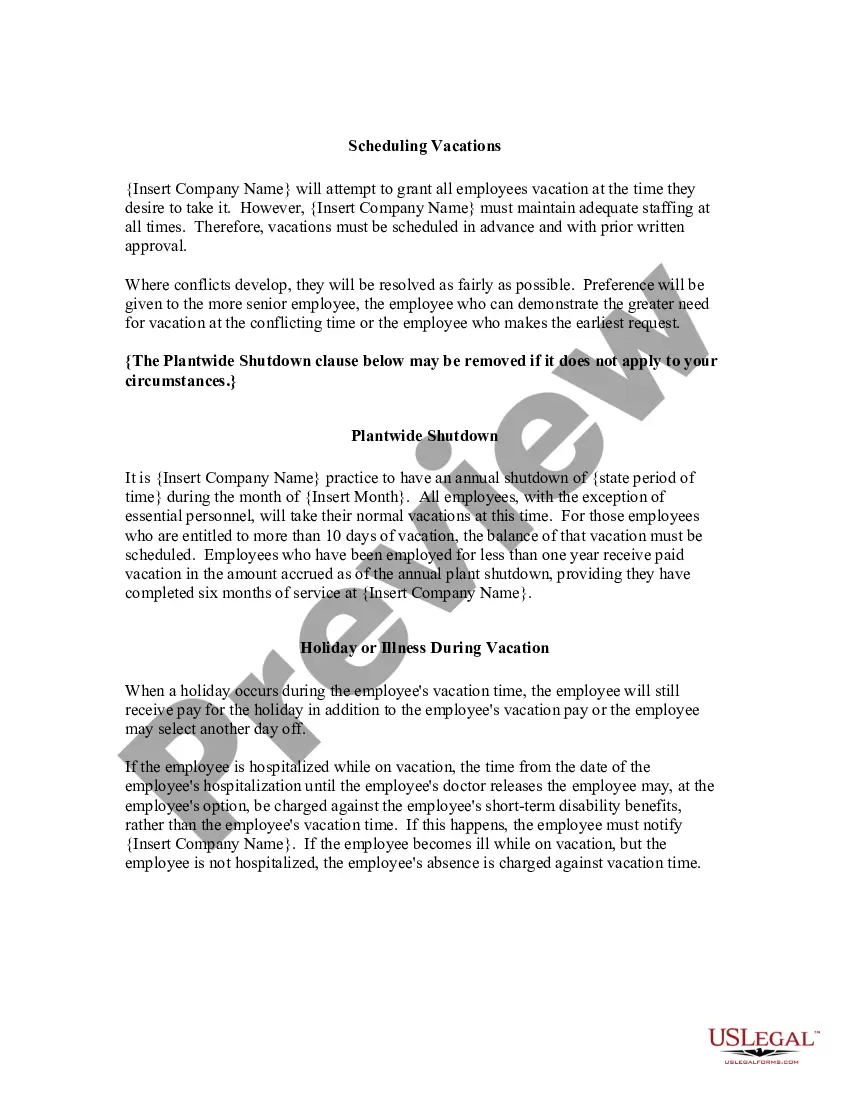
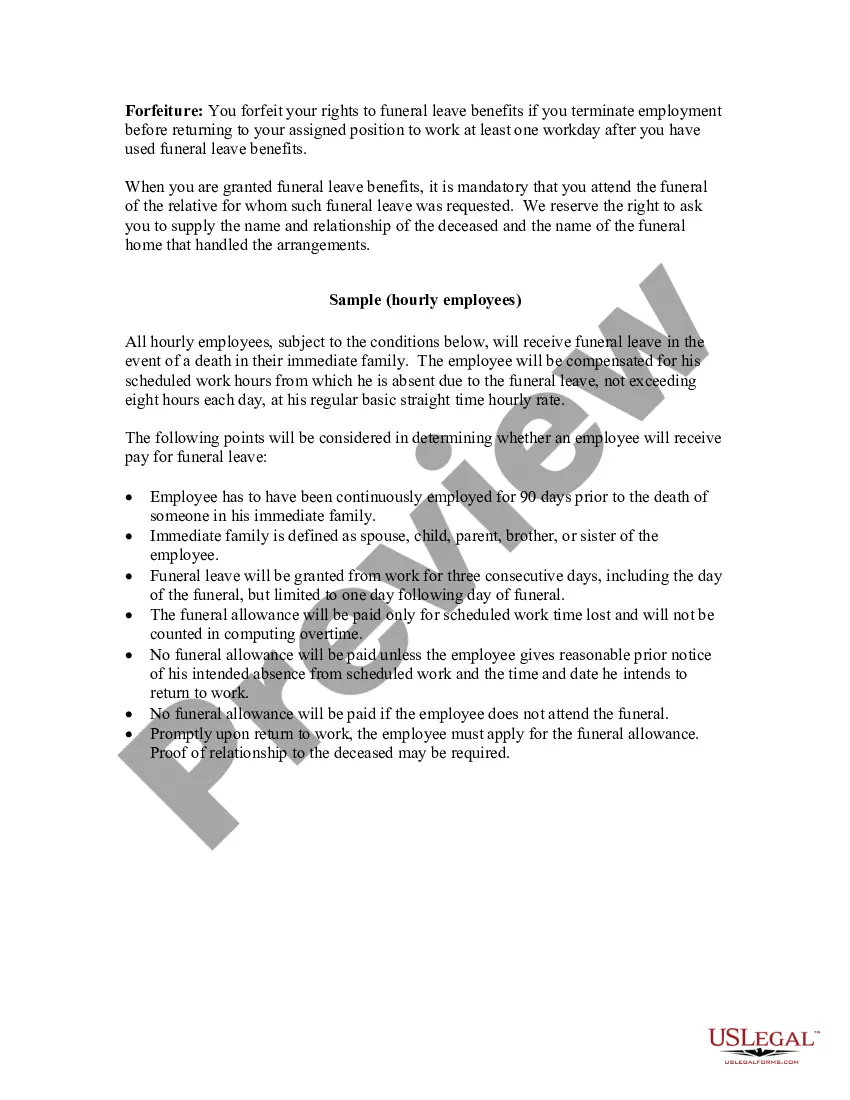
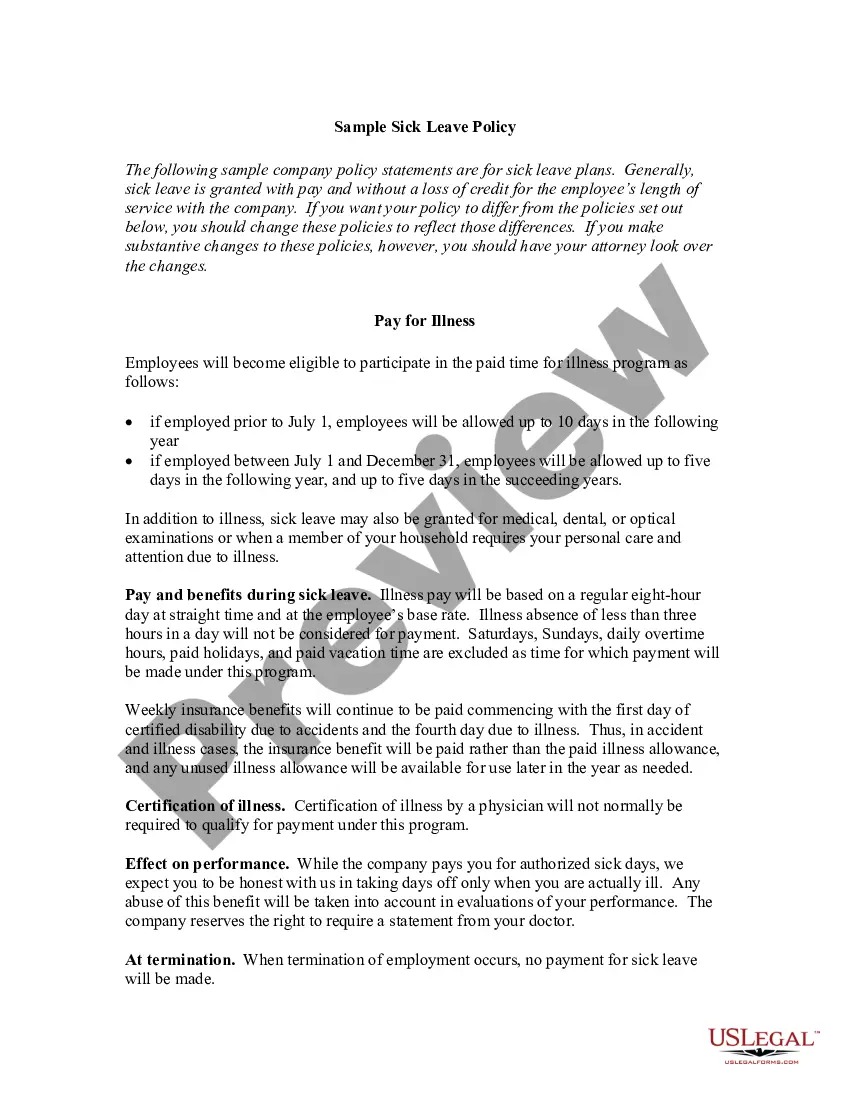
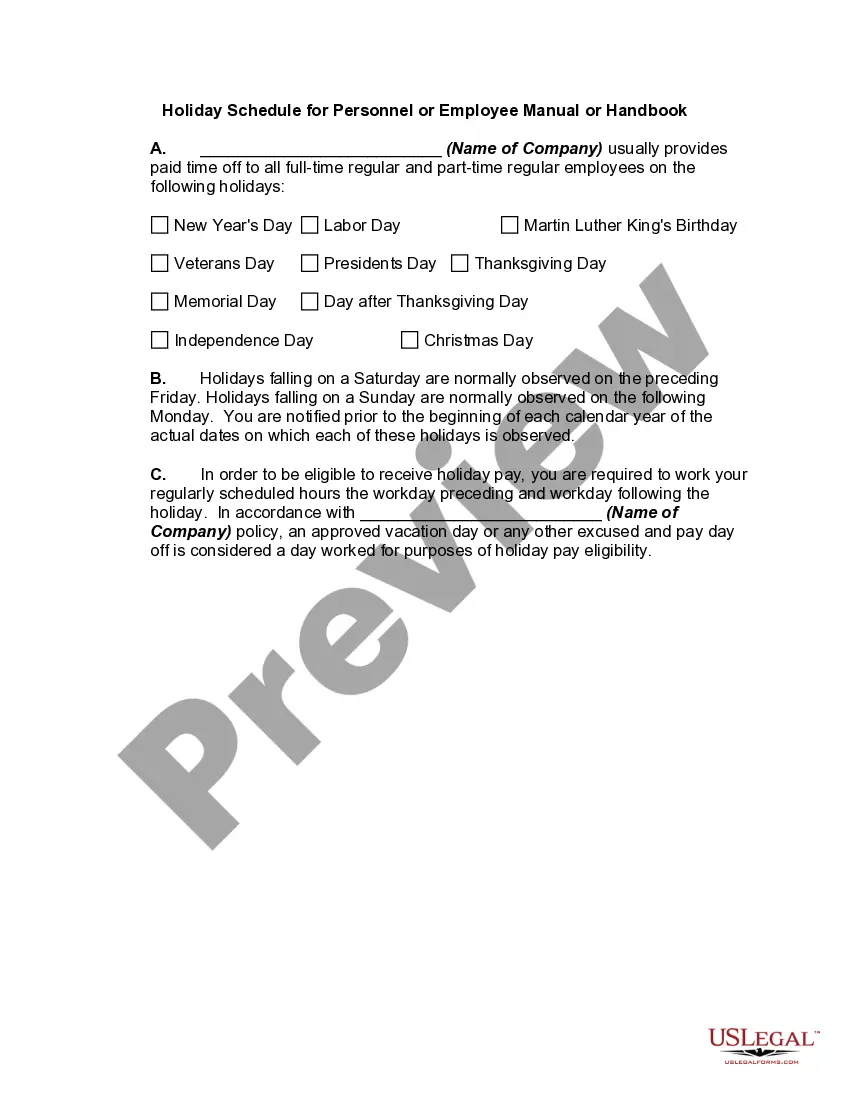
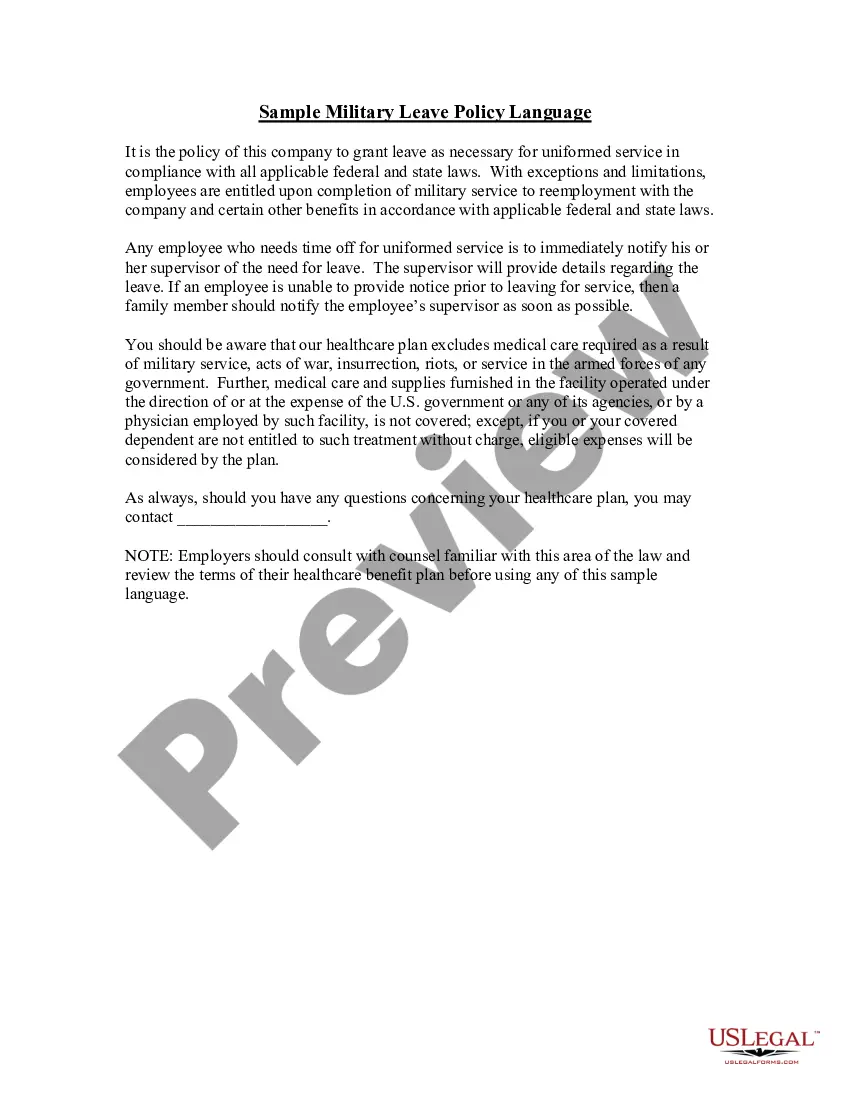
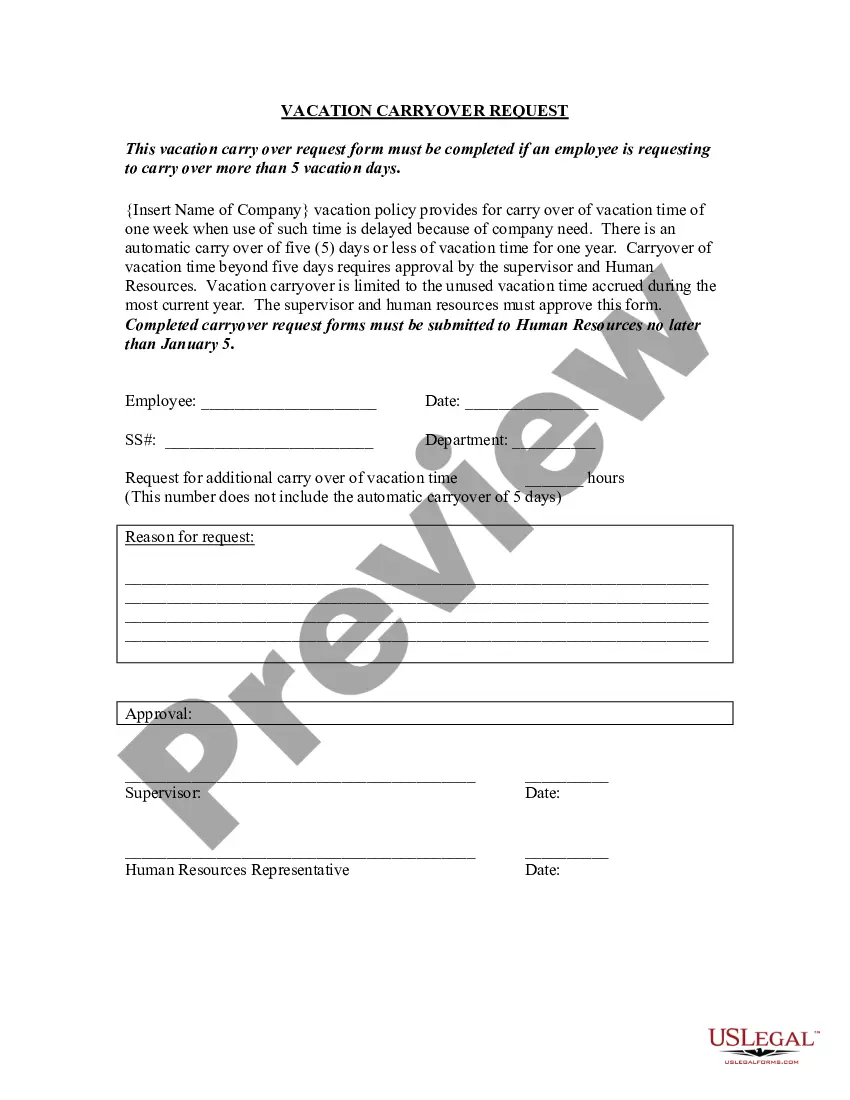
The Holiday Vacation Policy form outlines the rules and guidelines for vacation and holiday leaves within a company. It details employee entitlements for paid holidays, vacation accrual, and specific types of absences, such as personal, military, pregnancy, and jury duty. This form ensures that all policies are consistent and legally compliant while providing employees clarity on their rights and responsibilities regarding time off.
Key parts of this document
- Annual holidays and eligibility for paid holidays
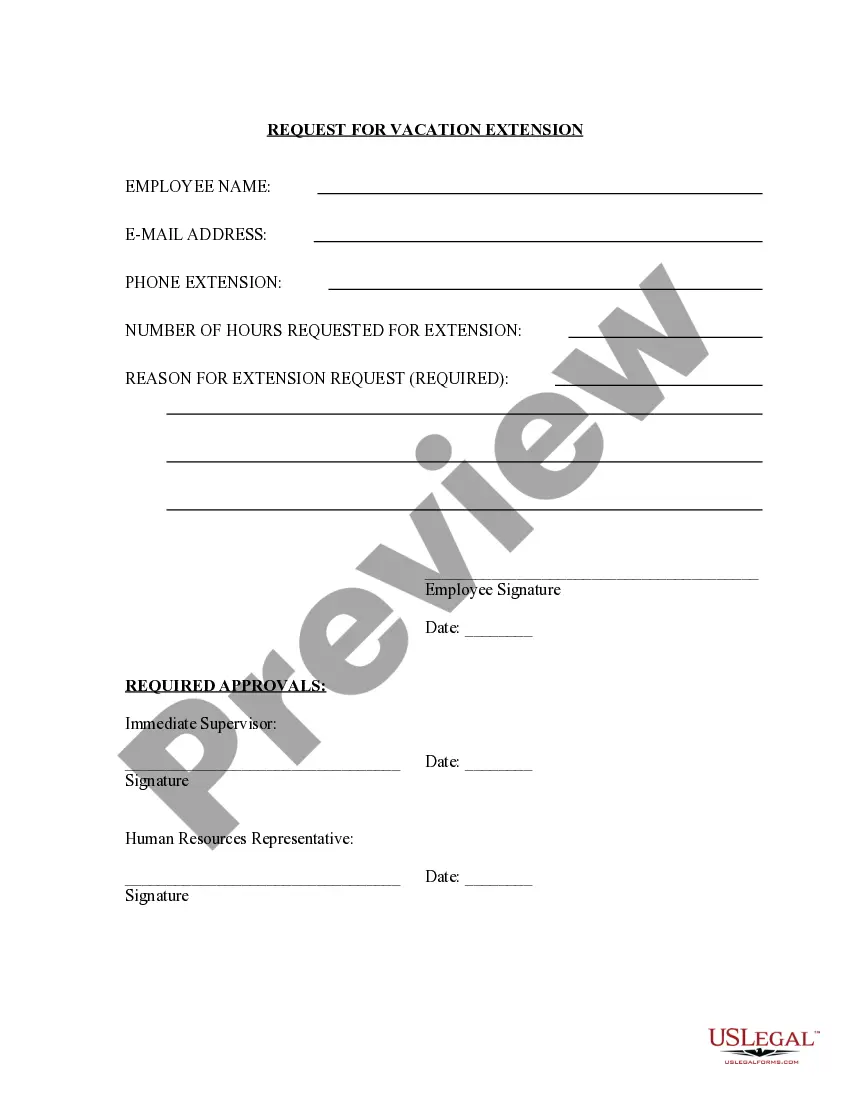
- Procedures for requesting vacation days and personal leave
- Guidelines for floating holidays and religious observances
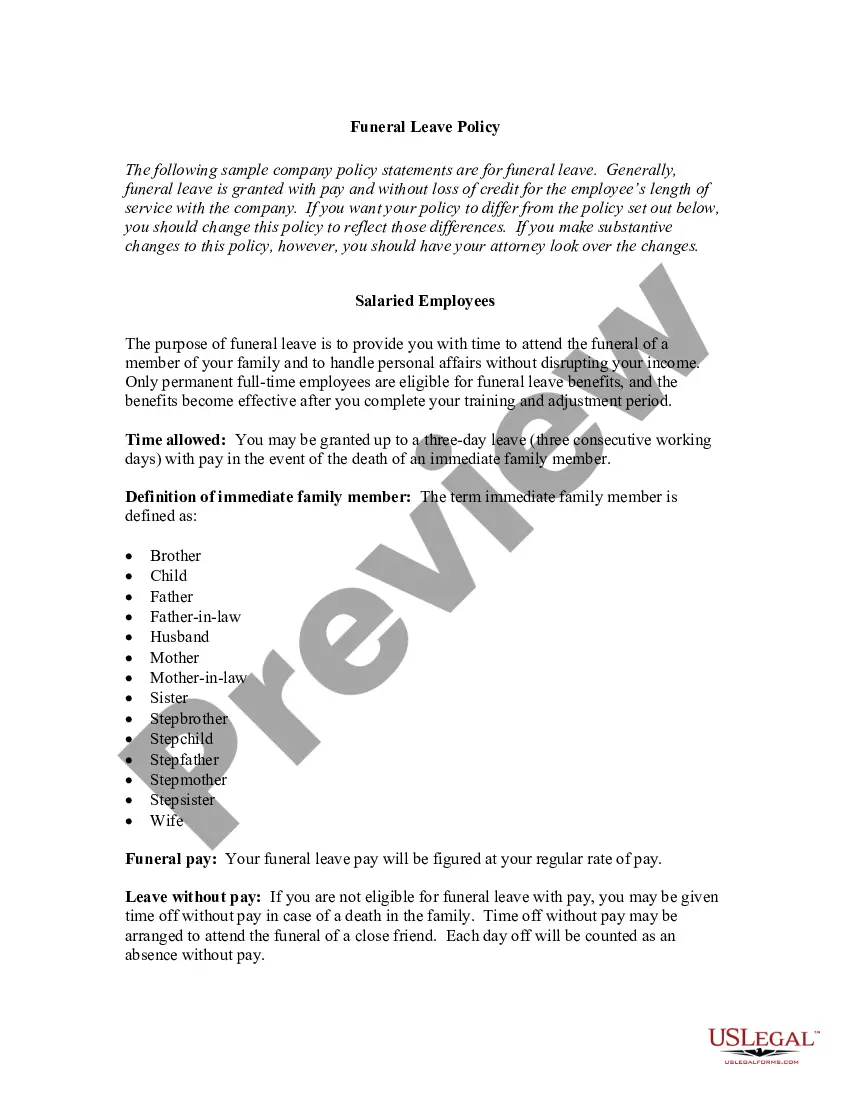
- Provisions for military leave and jury duty
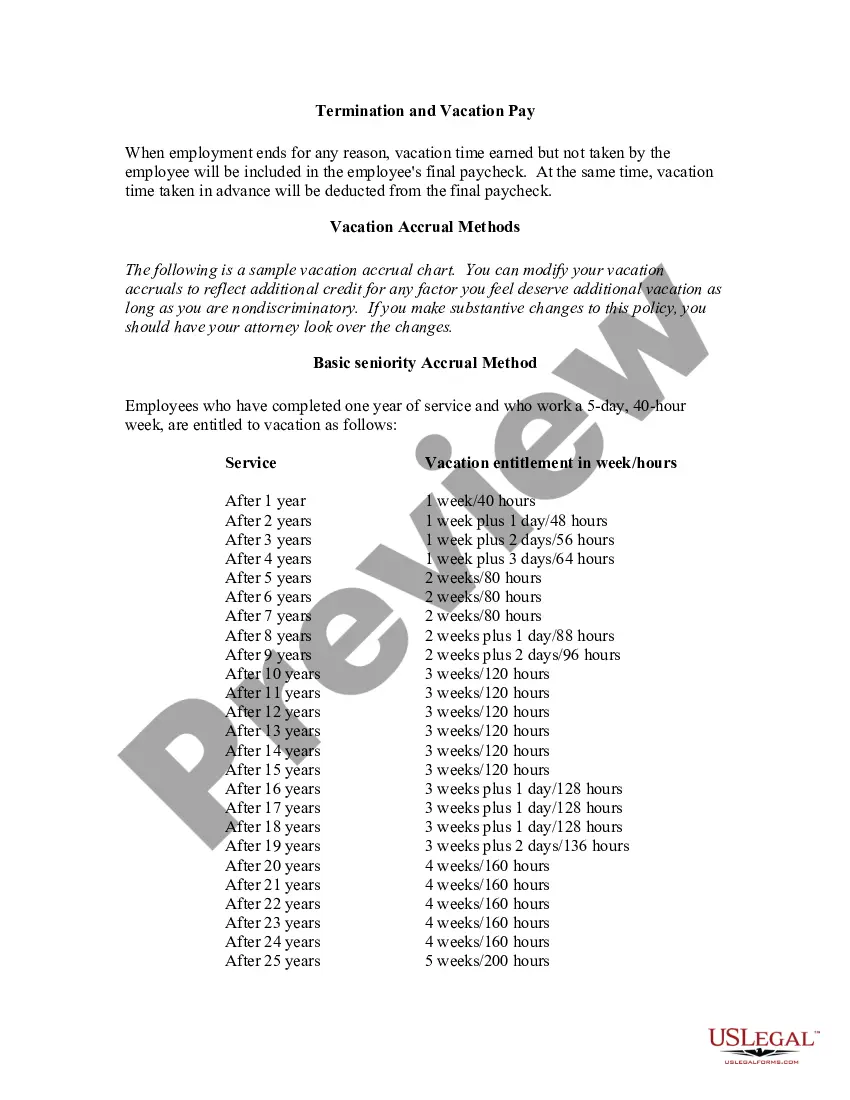
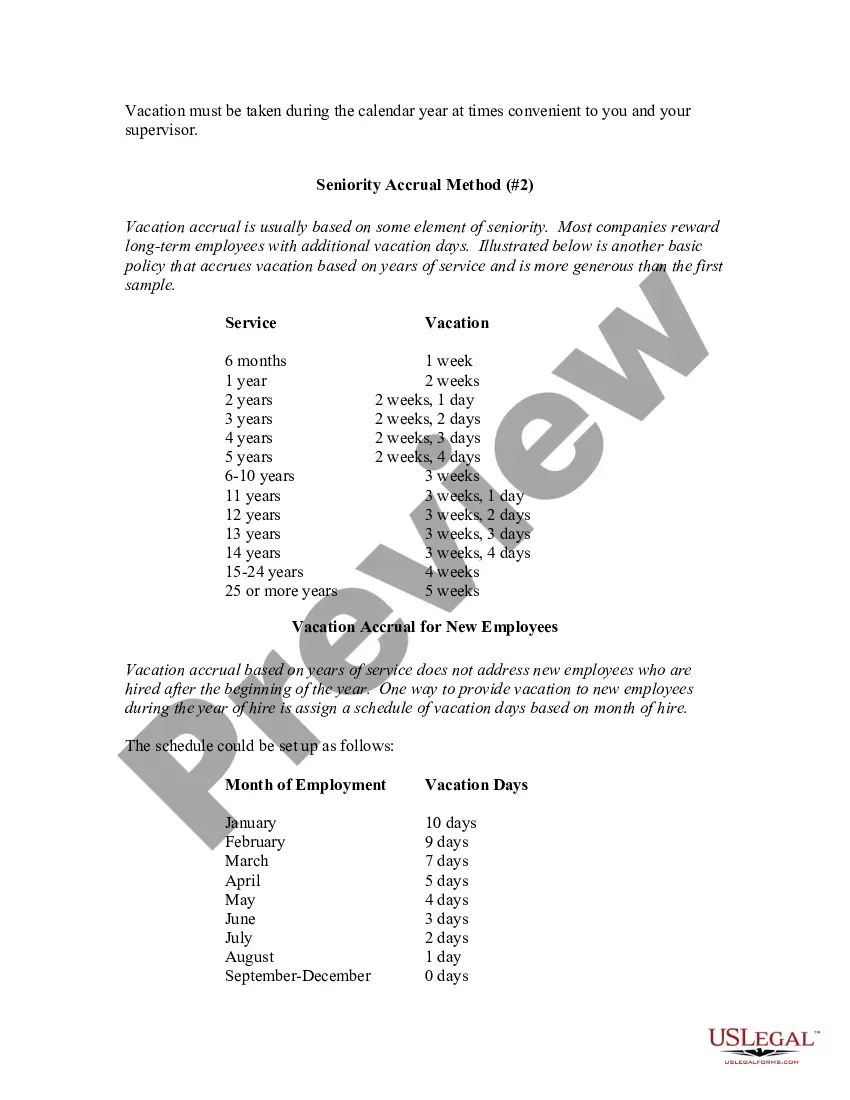
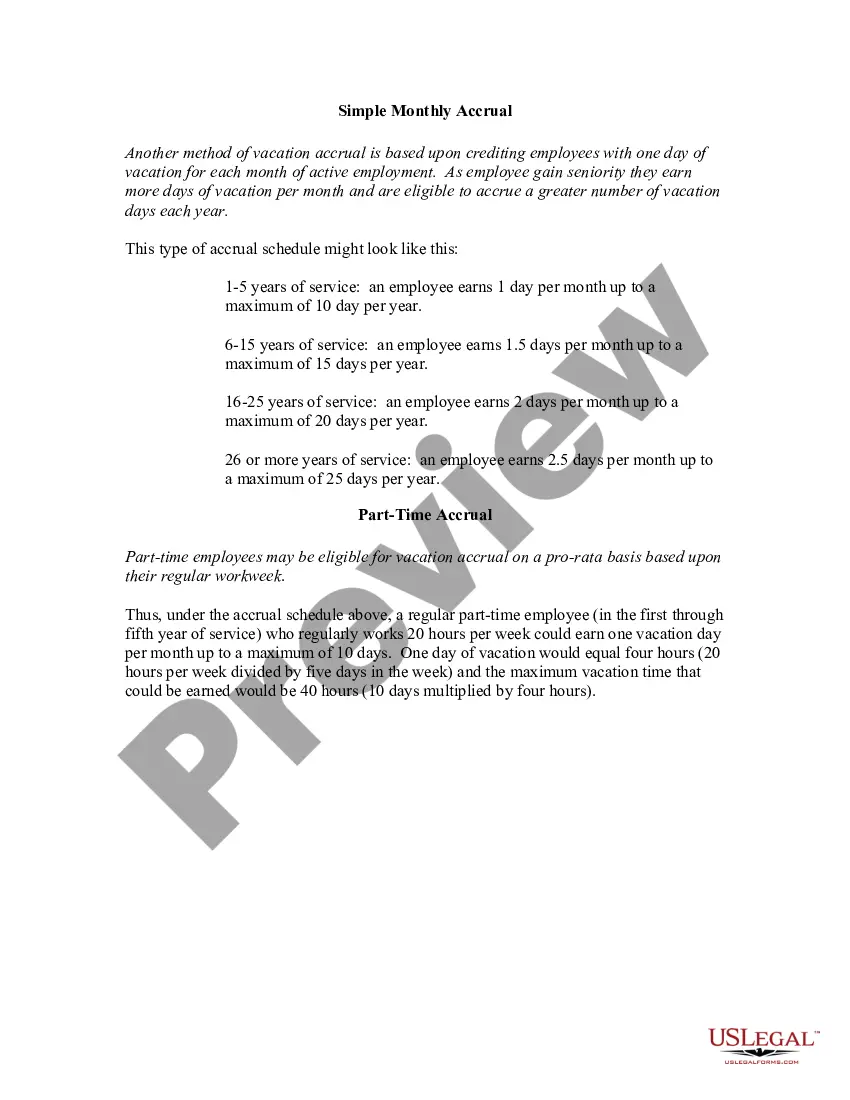
- Accrual processes for vacation time based on length of service


When to use this form
This form should be used when establishing or updating a company's vacation and holiday policies. It is essential for businesses looking to provide clear guidelines to employees on how they can utilize their time off effectively and fairly, as well as to ensure compliance with relevant employment laws.
Who needs this form
- Employers seeking to formalize their vacation and holiday policies
- HR professionals implementing employee benefit structures
- Small business owners managing employee leave policies
- Companies looking to comply with state and federal labor laws
How to complete this form
- Insert the company name where indicated in relevant sections.
- Define and list annual holiday dates and floating holidays for employees.
- Specify the number of vacation days employees earn based on their tenure with the company.
- Detail the procedure for requesting personal and religious leave, including notice periods.
- Review the policy with legal counsel to ensure compliance with applicable laws.
Notarization requirements for this form
This form usually doesn’t need to be notarized. However, local laws or specific transactions may require it. Our online notarization service, powered by Notarize, lets you complete it remotely through a secure video session, available 24/7.
Get your form ready online
Our built-in tools help you complete, sign, share, and store your documents in one place.
Make edits, fill in missing information, and update formatting in US Legal Forms—just like you would in MS Word.
Download a copy, print it, send it by email, or mail it via USPS—whatever works best for your next step.
Sign and collect signatures with our SignNow integration. Send to multiple recipients, set reminders, and more. Go Premium to unlock E-Sign.
If this form requires notarization, complete it online through a secure video call—no need to meet a notary in person or wait for an appointment.
We protect your documents and personal data by following strict security and privacy standards.

Make edits, fill in missing information, and update formatting in US Legal Forms—just like you would in MS Word.

Download a copy, print it, send it by email, or mail it via USPS—whatever works best for your next step.

Sign and collect signatures with our SignNow integration. Send to multiple recipients, set reminders, and more. Go Premium to unlock E-Sign.

If this form requires notarization, complete it online through a secure video call—no need to meet a notary in person or wait for an appointment.

We protect your documents and personal data by following strict security and privacy standards.
Mistakes to watch out for
- Failing to define eligibility for paid holidays clearly.
- Not specifying the required notice periods for leave requests.
- Omitting state-specific legal requirements.
- Forgetting to include provisions for part-time employees.
Benefits of completing this form online
- Convenient access allows for quick edits and customizations.
- Instant downloads facilitate fast implementation of policies.
- Secure storage of documents ensures reliable record keeping.
- Guidance from licensed attorneys helps ensure legal compliance.
Legal use & context
- This policy serves as a guideline and should be adapted to comply with local employment legislation.
- Employers should review the policy periodically to ensure it remains current with changes in laws.
- It is recommended to involve legal counsel when making significant changes to ensure enforceability.
Main things to remember
- The Holiday Vacation Policy provides clarity on employee rights regarding time off.
- Employers must customize the form to reflect specific policies and local laws.
- Proper implementation can enhance employee satisfaction and compliance.
Looking for another form?
Form popularity
FAQ
How many vacation days should you take? LifeHacker recommends taking between seven to 11 days of vacation per year. If you work it correctly around a weekend, you can use less actual workdays for your vacation.
The average paid vacation days per year for employees who have been with a business for 1-5 years is 10 days. Employees who have been with a business for 5-10 years receive an average of 15 days for vacation. The average number of vacation days employees who have worked at a business between 10-20 years receive is 17.
How many PTO days do organizations typically give? The standard across most benefits surveys is providing 10 vacation days after at least 1 year of service, 15 vacation days after 5 years of service, 18 vacation days after 10 years of service, and 20 vacation days after 15 years of service.
According to the Bureau of Labor Statistics, on average American workers receive 10 days of paid time off per year, after they've completed one year of service. That time doesn't include sick days and holidays. While the number goes up or down a bit, depending on industry and region, 10 is the national average.
The number of days varies from employer to employer, but on average, US workers receive around 10 days of paid holiday each year. In addition, this holiday time is often accrued, which means that US staff will need to be working in their job for 12 months before they're entitled to 10 days of holiday.
PTO is considered to be any time an employee is getting paid while away from workit's more all-encompassing than vacation. Think of it like this: all vacation is PTO while not all PTO is vacation. Other examples of PTO include maternity/paternity leave, jury duty, sick leave, holiday pay or disability leave.
The United States is the only advanced economy that does not federally mandate any paid vacation days or holidays. About one in four workers in the U.S. don't get any paid vacation time or holidays at all. That particularly affects lower-income workers, part-time employees and small business workers.
The BLS reports: Workers with one year of experience average 11 days of paid vacation. Employees with five years of experience average 15 days of vacation. Workers with 10 and 20 years of tenure average 17 and 20 days respectively.
5 weeks (30 days with Saturdays sometimes, but not Sundays, counted as holidays) is the minimum mandated annual leave by law. Workers are also entitled to 11 paid public holidays on average. After working for the same company for a long period, many employers raise the 30 to 36 days (so-called long holidays).