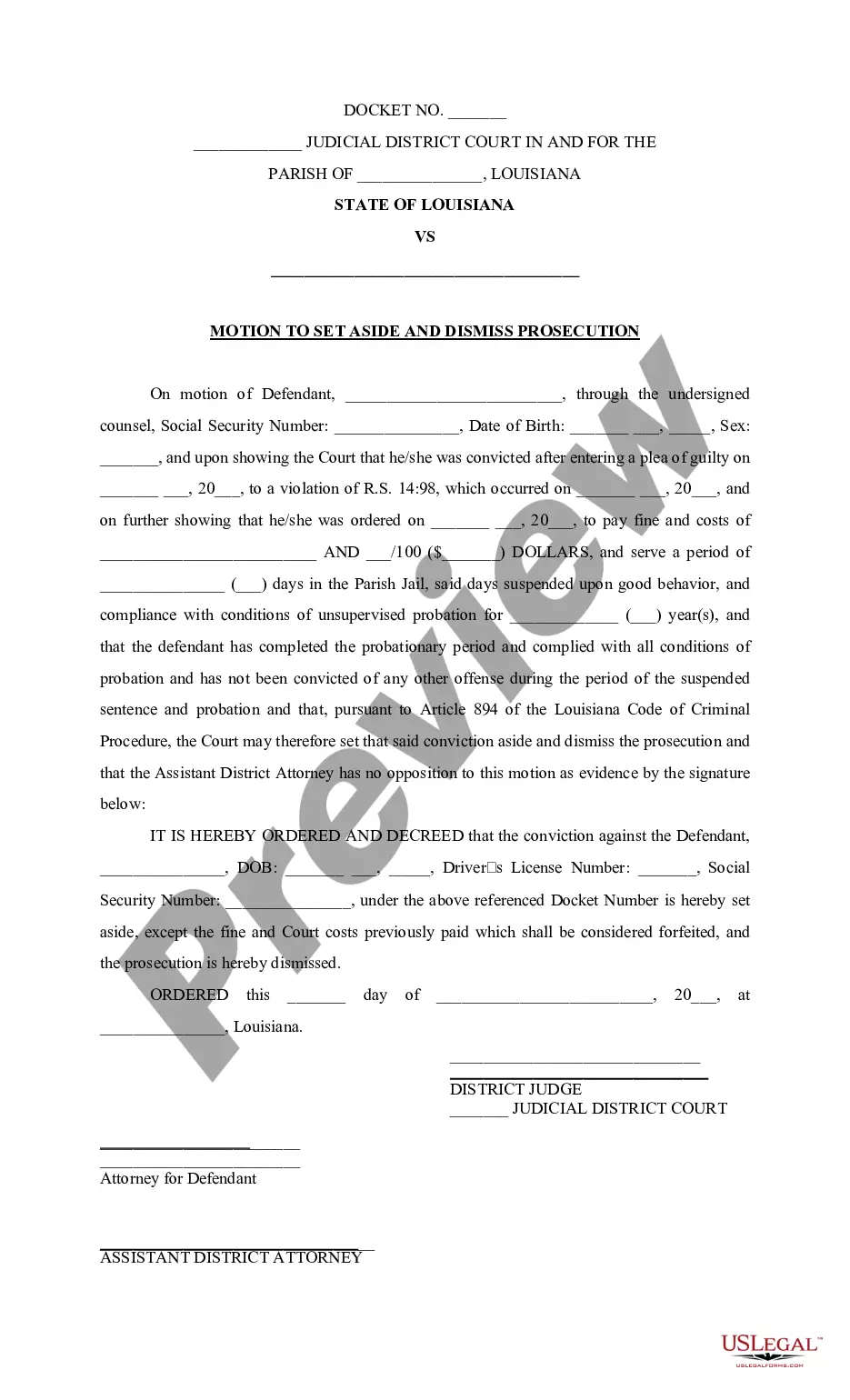
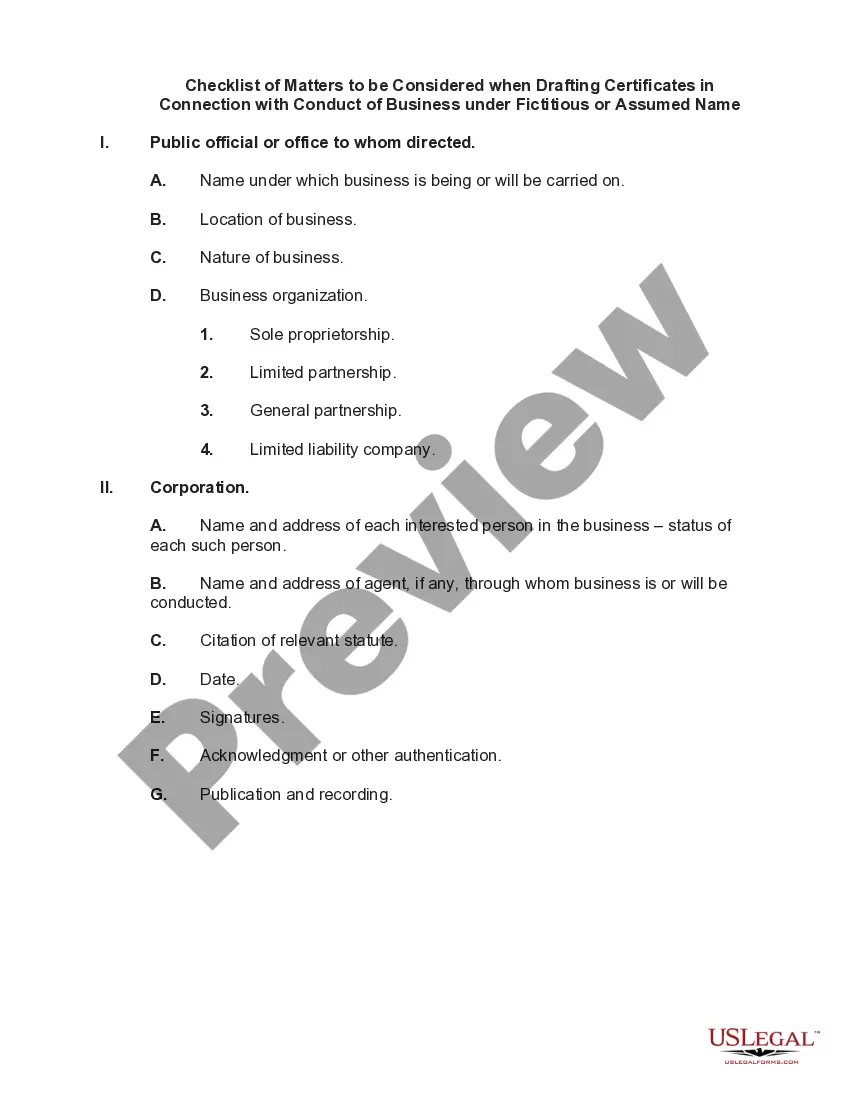
Checklist of Matters to be Considered when Drafting Certificates in Connection with Conduct of Business under Fictitious of Assumed Name
What this document covers
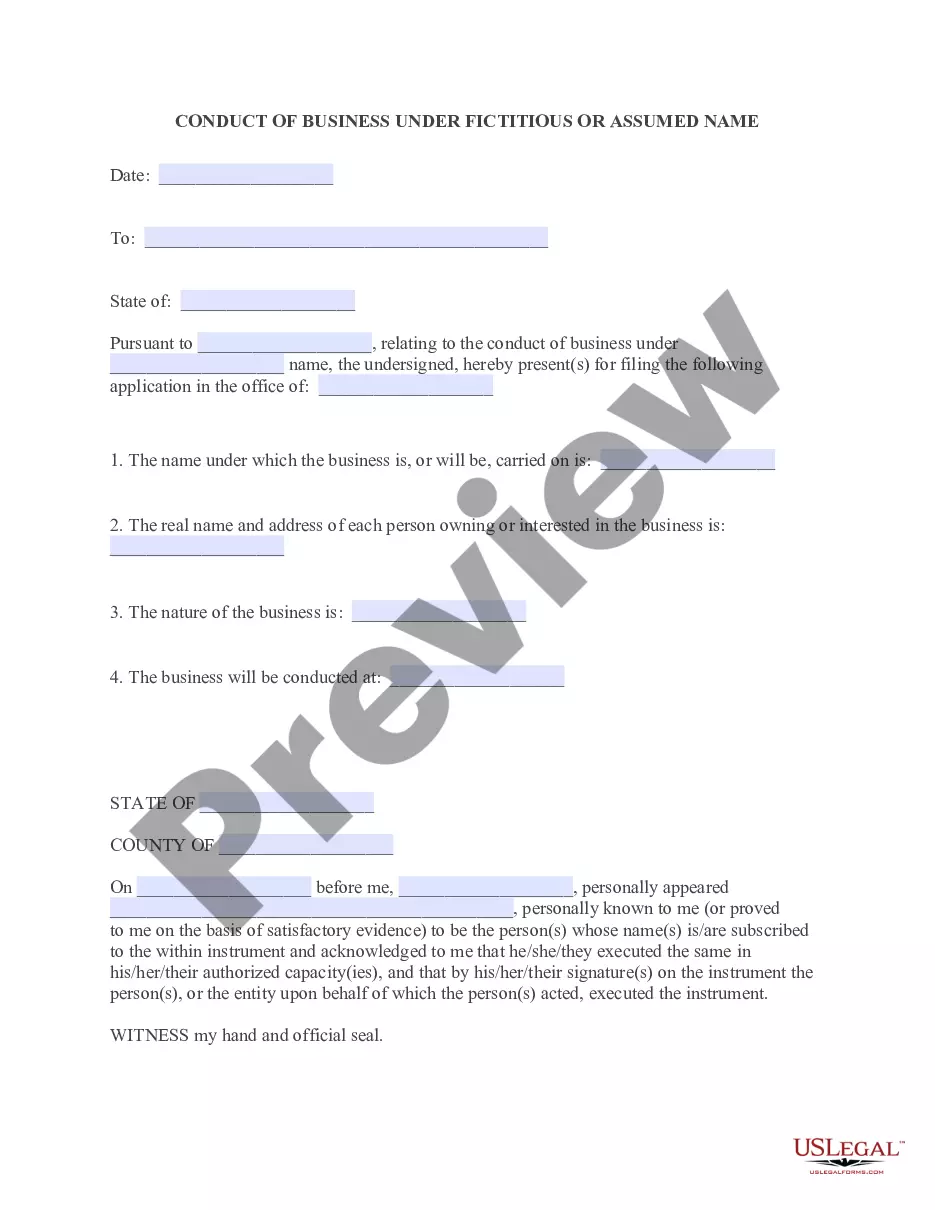
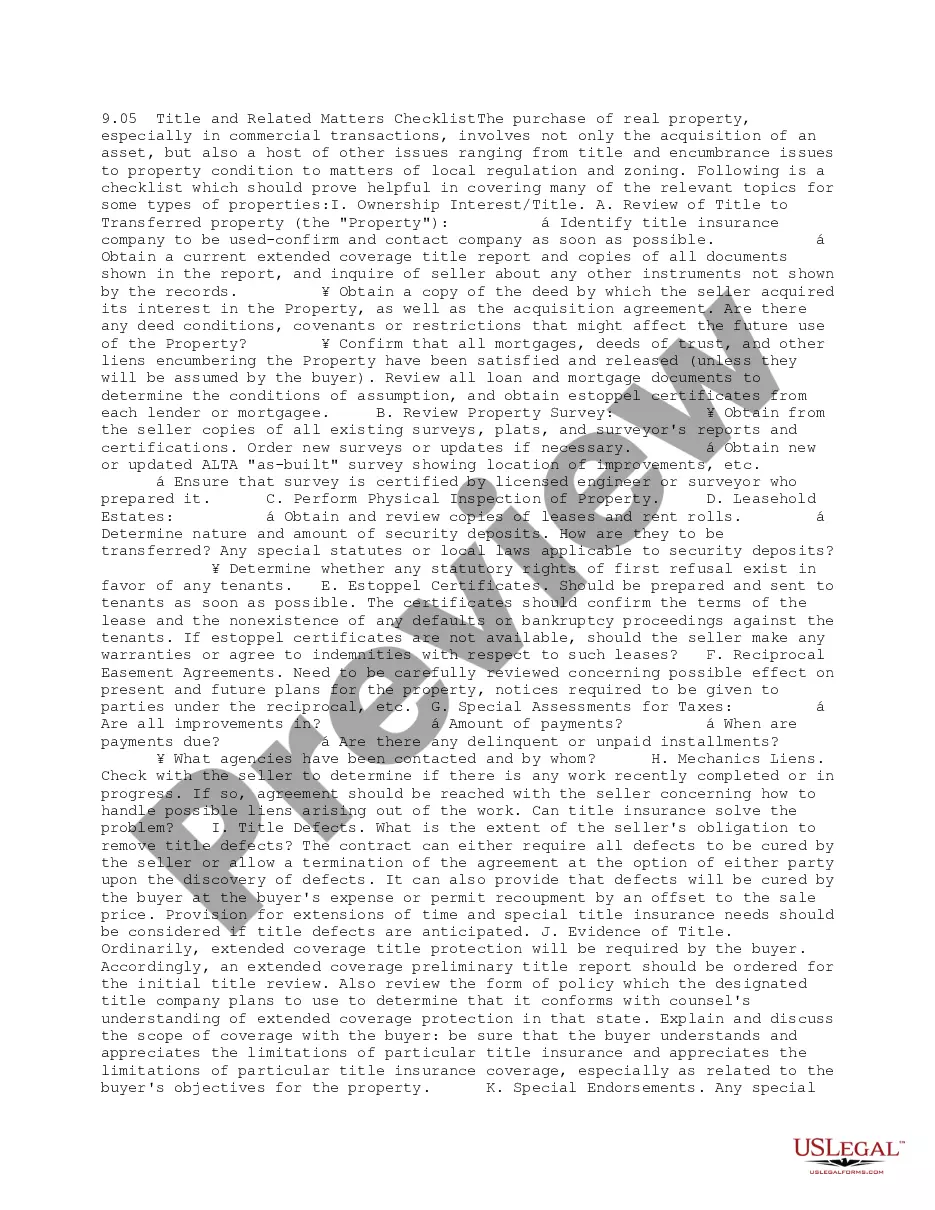
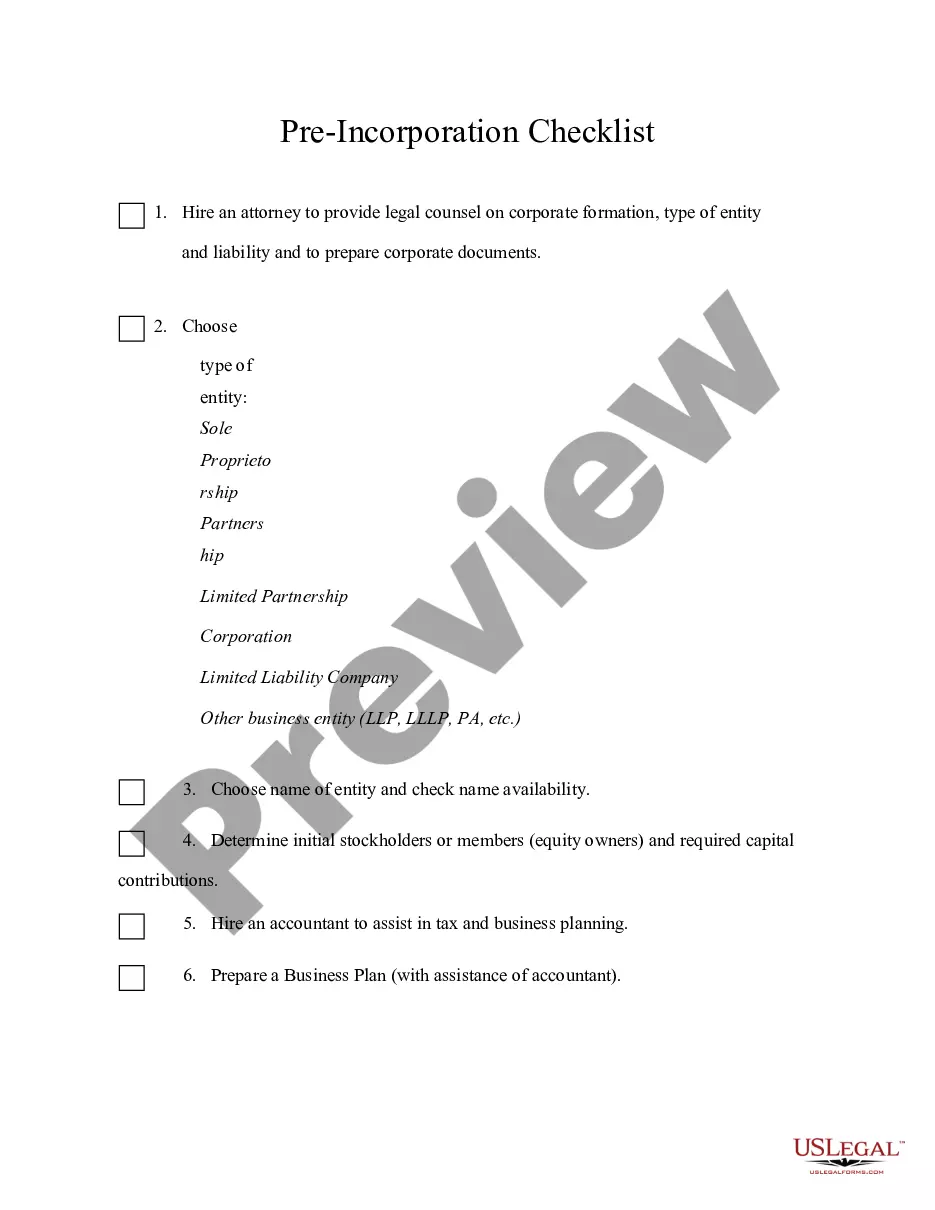
The Checklist of Matters to be Considered when Drafting Certificates in Connection with Conduct of Business under Fictitious or Assumed Name is a legal tool that outlines essential considerations for individuals or partnerships wishing to operate under a name that is not their legal name. This form helps ensure compliance with state regulations by providing a systematic approach to document the business's existence under an assumed name while protecting the public against fraud and misrepresentation.
Key parts of this document
- Public official or office to whom directed
- Name under which business is being conducted
- Location and nature of the business
- Business organization type (e.g., sole proprietorship, partnership)
- Name and address of each interested party
- Date and signatures for legal validity

When to use this document
This form is necessary when an individual or partnership intends to conduct business under a fictitious or assumed name. It is typically used in situations where clarity in business identity is required for customers, partners, or regulatory bodies. For instance, if a sole proprietor named Jane Doe wants to operate a coffee shop under the name "Cafe Delight," she must use this checklist to ensure all relevant information is documented correctly.
Who can use this document
- Individuals or sole proprietors planning to operate under a fictitious name
- Partnerships that intend to conduct business under a name that does not reflect the actual partners' names
- Corporations aiming to register and disclose their fictitious business names
Completing this form step by step
- Identify the name under which your business will operate and ensure it is not misleading.
- Specify the location where the business will be conducted.
- Detail the nature of your business, including descriptions of the goods or services offered.
- Indicate the type of business organization, such as a sole proprietorship or partnership.
- Collect and document the names and addresses of all interested parties or partners involved in the business.
- Affix dates and signatures where required for authenticity.
Notarization guidance
This form does not typically require notarization unless specified by local law. However, having it notarized can provide an additional layer of authenticity and may be required for certain business registrations.
Get your form ready online
Our built-in tools help you complete, sign, share, and store your documents in one place.
Make edits, fill in missing information, and update formatting in US Legal Forms—just like you would in MS Word.
Download a copy, print it, send it by email, or mail it via USPS—whatever works best for your next step.
Sign and collect signatures with our SignNow integration. Send to multiple recipients, set reminders, and more. Go Premium to unlock E-Sign.
If this form requires notarization, complete it online through a secure video call—no need to meet a notary in person or wait for an appointment.
We protect your documents and personal data by following strict security and privacy standards.

Make edits, fill in missing information, and update formatting in US Legal Forms—just like you would in MS Word.

Download a copy, print it, send it by email, or mail it via USPS—whatever works best for your next step.

Sign and collect signatures with our SignNow integration. Send to multiple recipients, set reminders, and more. Go Premium to unlock E-Sign.

If this form requires notarization, complete it online through a secure video call—no need to meet a notary in person or wait for an appointment.

We protect your documents and personal data by following strict security and privacy standards.
Common mistakes to avoid
- Failing to verify that the chosen business name does not infringe on existing trademarks.
- Omitting the acknowledgment or authentication step, which may render the document invalid.
- Not including all interested parties' names and addresses, leading to potential legal issues.
Benefits of completing this form online
- Convenience of accessing and downloading the form from anywhere at any time.
- Editability of the document allows for customization to fit specific business needs.
- Reliability of templates created by licensed attorneys while minimizing legal risks.
Summary of main points
- The form is essential for individuals and businesses using a fictitious name to ensure legal compliance.
- Completing the checklist correctly helps protect against fraud and clarifies business identity.
- Be aware of state-specific requirements that may impact the registration of your fictitious name.
Looking for another form?
Form popularity
FAQ
A fictitious name is an artificial name deliberately created or adopted. For example, a business may have a fictitious business name. Fictitious names may also be used when filing a lawsuit against someone whose name is unknown to the plaintiff or to conceal a person's identity. See also: doing business as (DBA)
In the case of entities, such as corporations, a fictitious business name is any name different from that used in the articles of incorporation. For a natural person, an example is when Jane Doe (legal name) starts a catering business called JD Catering (fictitious business name).
In the case of a business owned by an individual, a ?fictitious business name? is any name that does not include the last name (surname) of the owner, or which implies additional owners (such as "Company", "and Company", "and Sons", "Associates", etc.).
A fictitious name is an artificial name deliberately created or adopted. For example, a business may have a fictitious business name. Fictitious names may also be used when filing a lawsuit against someone whose name is unknown to the plaintiff or to conceal a person's identity.
Examples: "Joyce Smith Catering" is not a Fictitious Business Name. "Smith and Company Catering" is a Fictitious Business Name.
An assumed business name, also called a DBA (doing business as) name, is used by an entity that is conducting business under a name that is not its legal name. Any business that uses an assumed name should take steps to comply with the assumed name statutes in the state(s) in which it does business.
A DBA (which stands for ?doing business as?) name is when the person or company does business under a name other than the legal name.
There are two important reasons for registering a fictitious business name. By registering the business, the owner can be found in case of any problems related to the enterprise. Also, a business owner with a signed contract and registered business name can better enforce a contract.