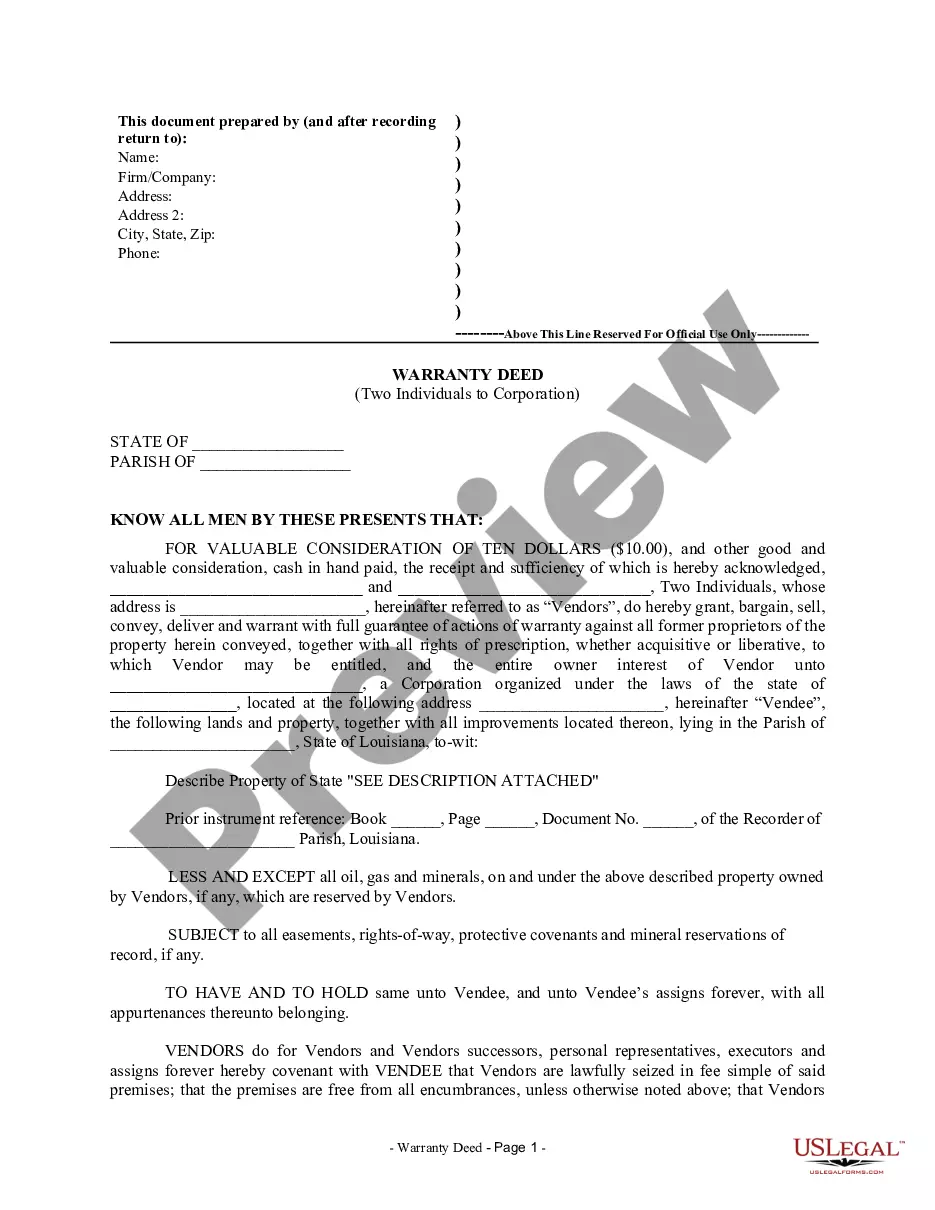
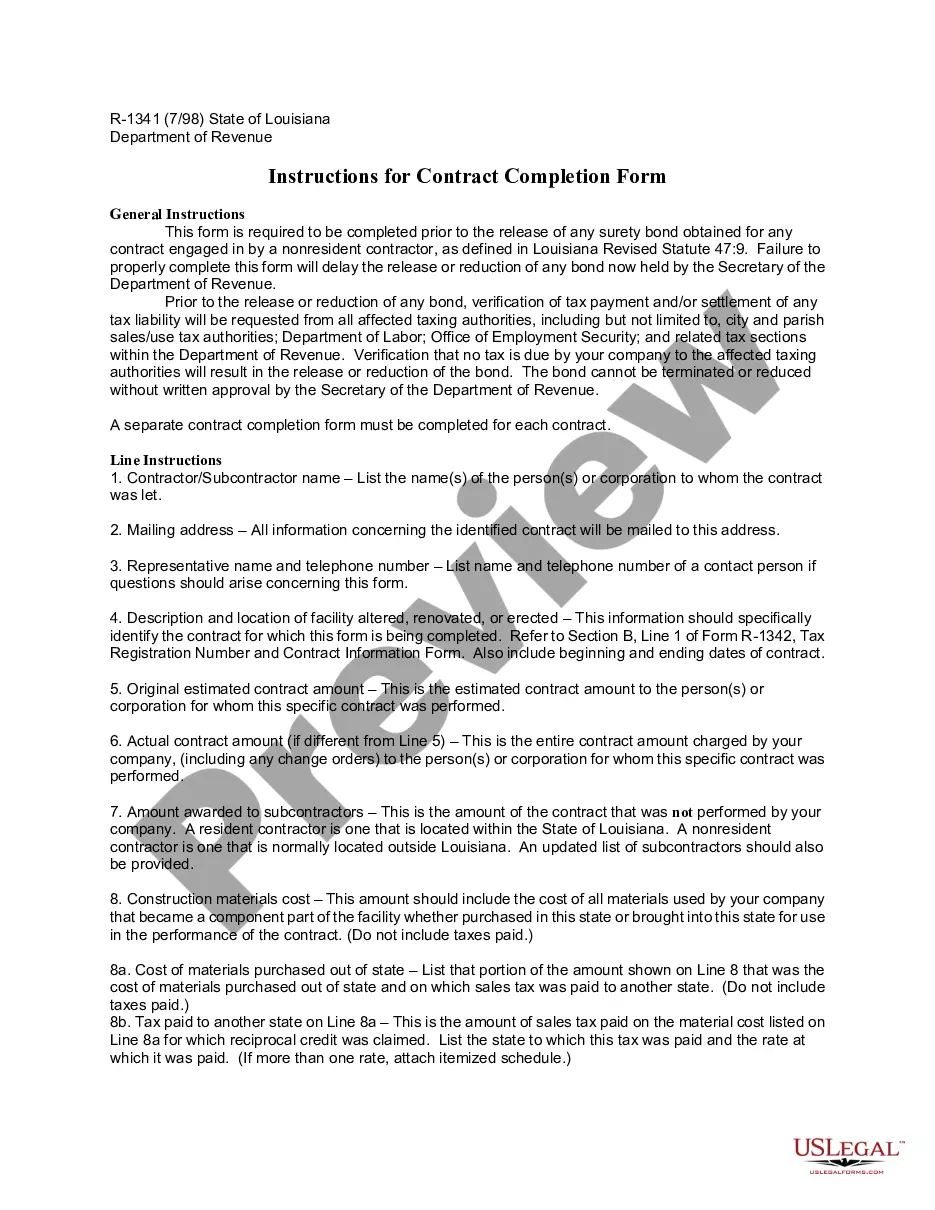
Agreement between Adjoining Landowners regarding Construction along Common Boundary about Fixing Liability for Damage to Adjoining Building
Overview of this form
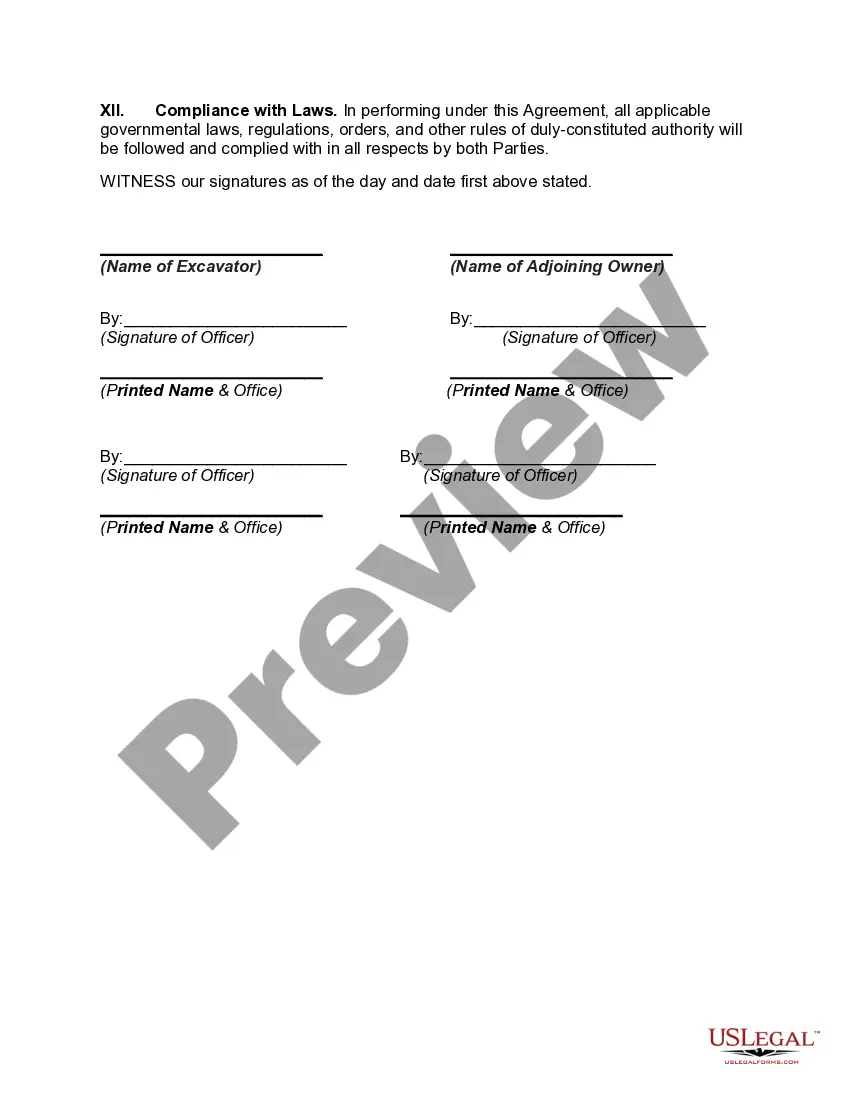
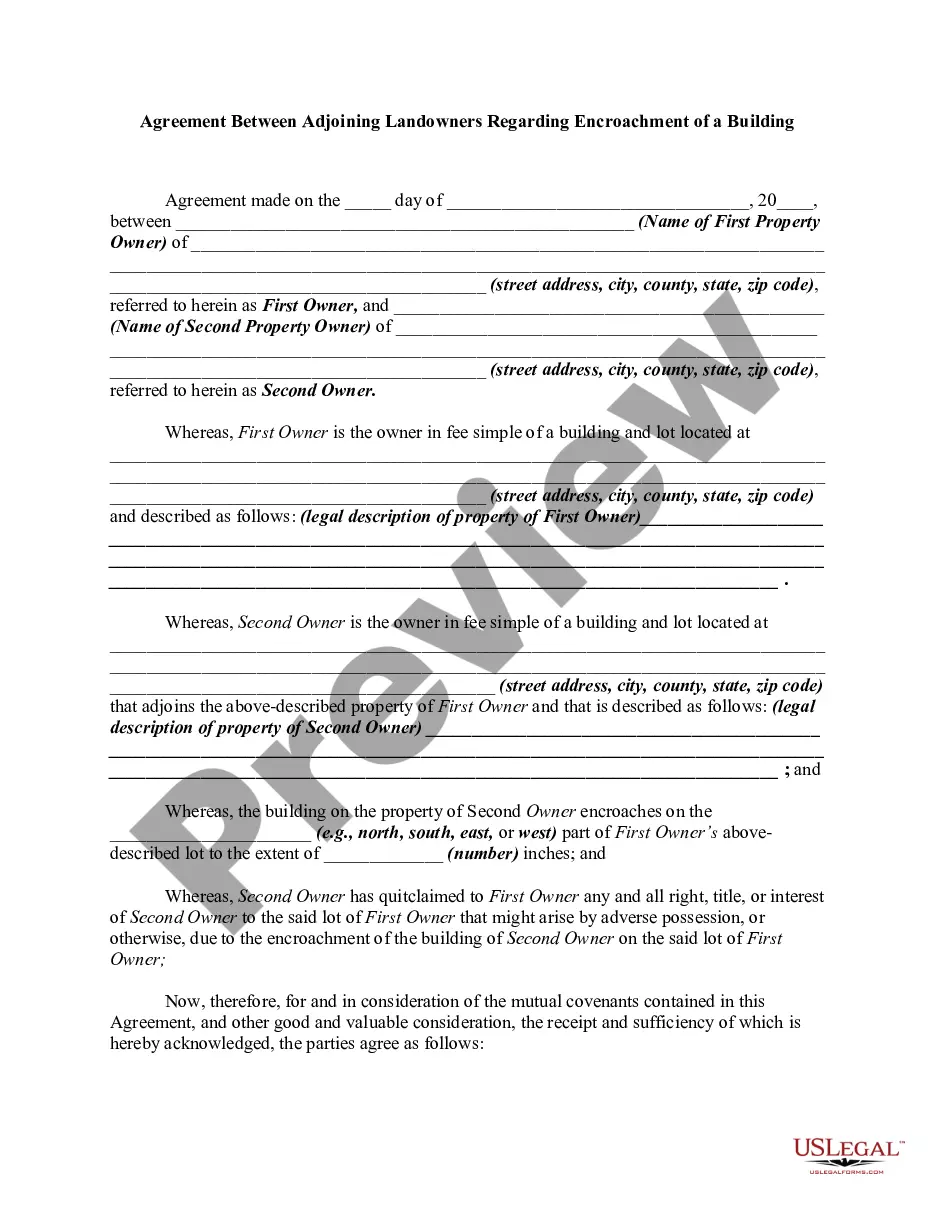
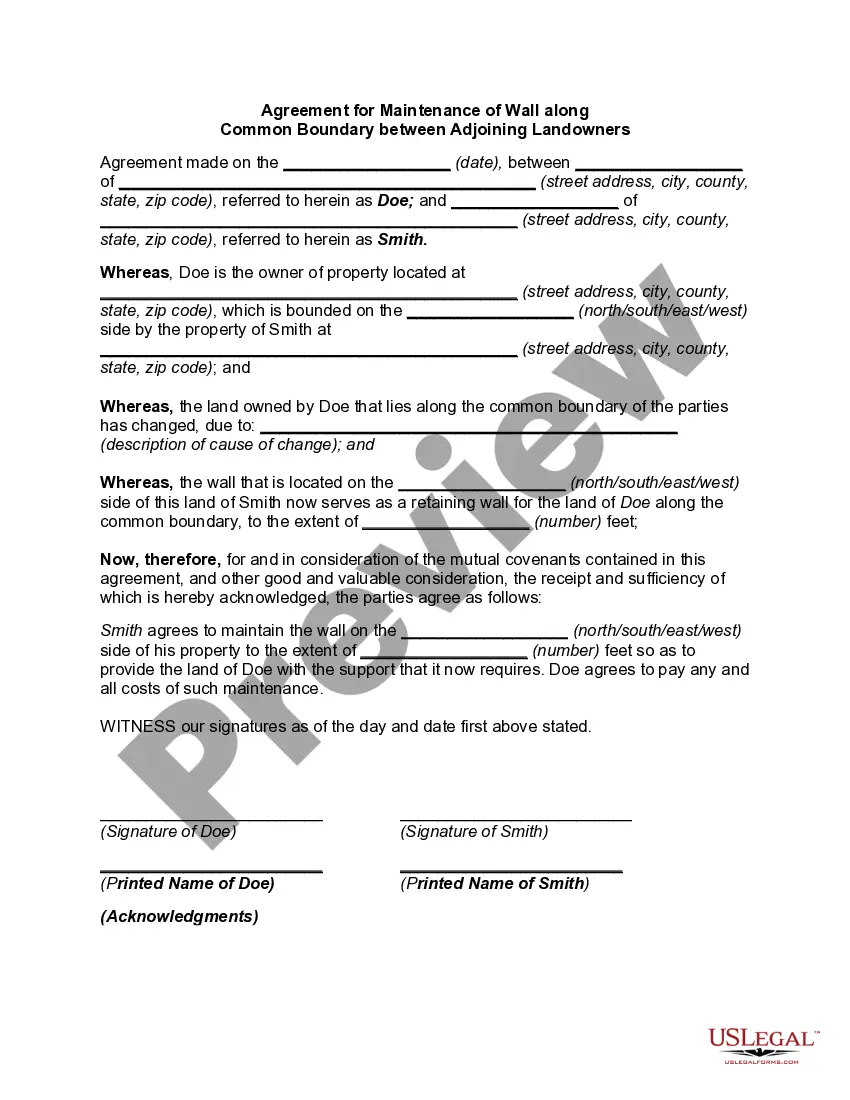
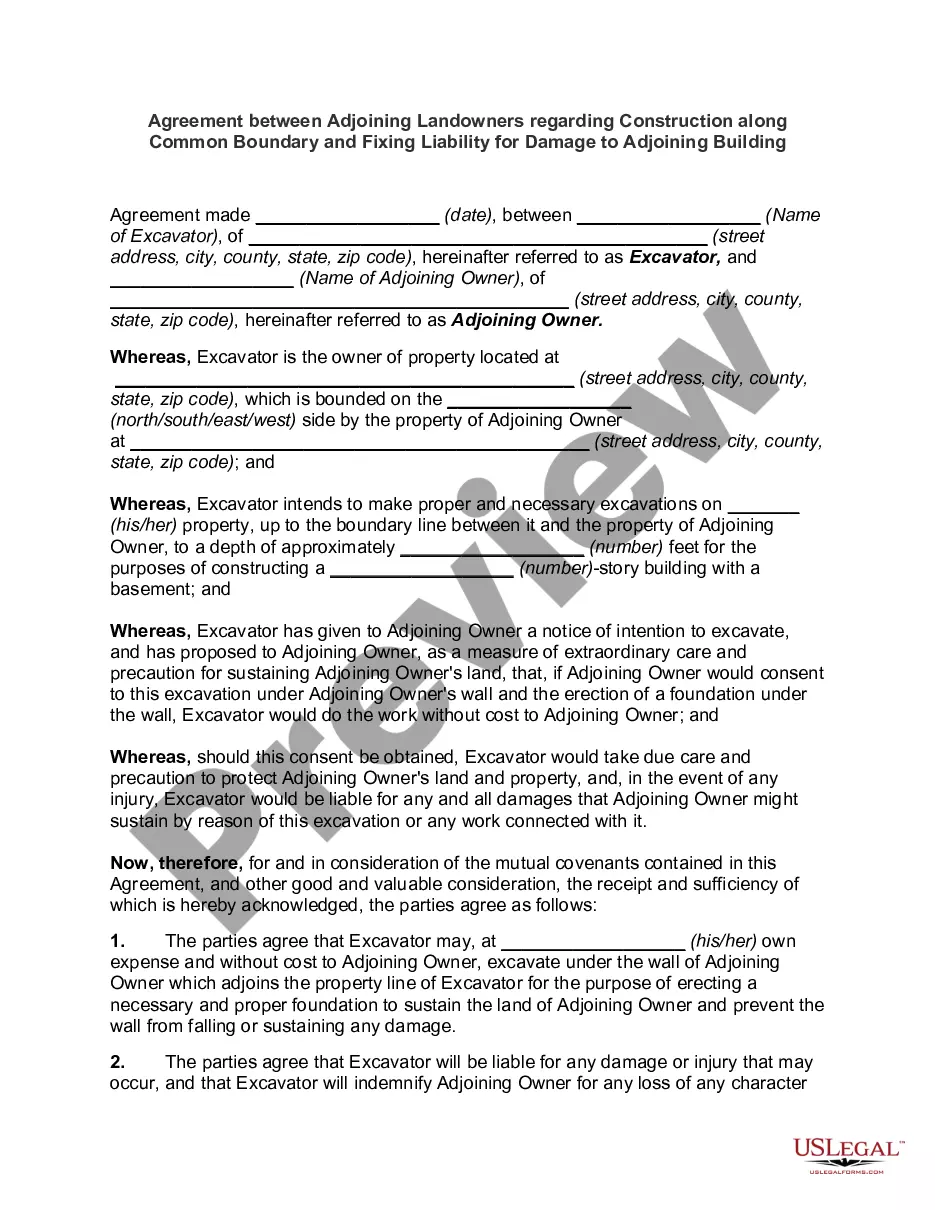
The "Agreement between Adjoining Landowners regarding Construction along Common Boundary about Fixing Liability for Damage to Adjoining Building" establishes the terms between two landowners who share a common boundary. This form outlines each party's rights and responsibilities concerning construction activities that may affect their adjoining properties. It emphasizes liability for damages that may occur as a result of construction, making it distinct from other property agreements.
What’s included in this form
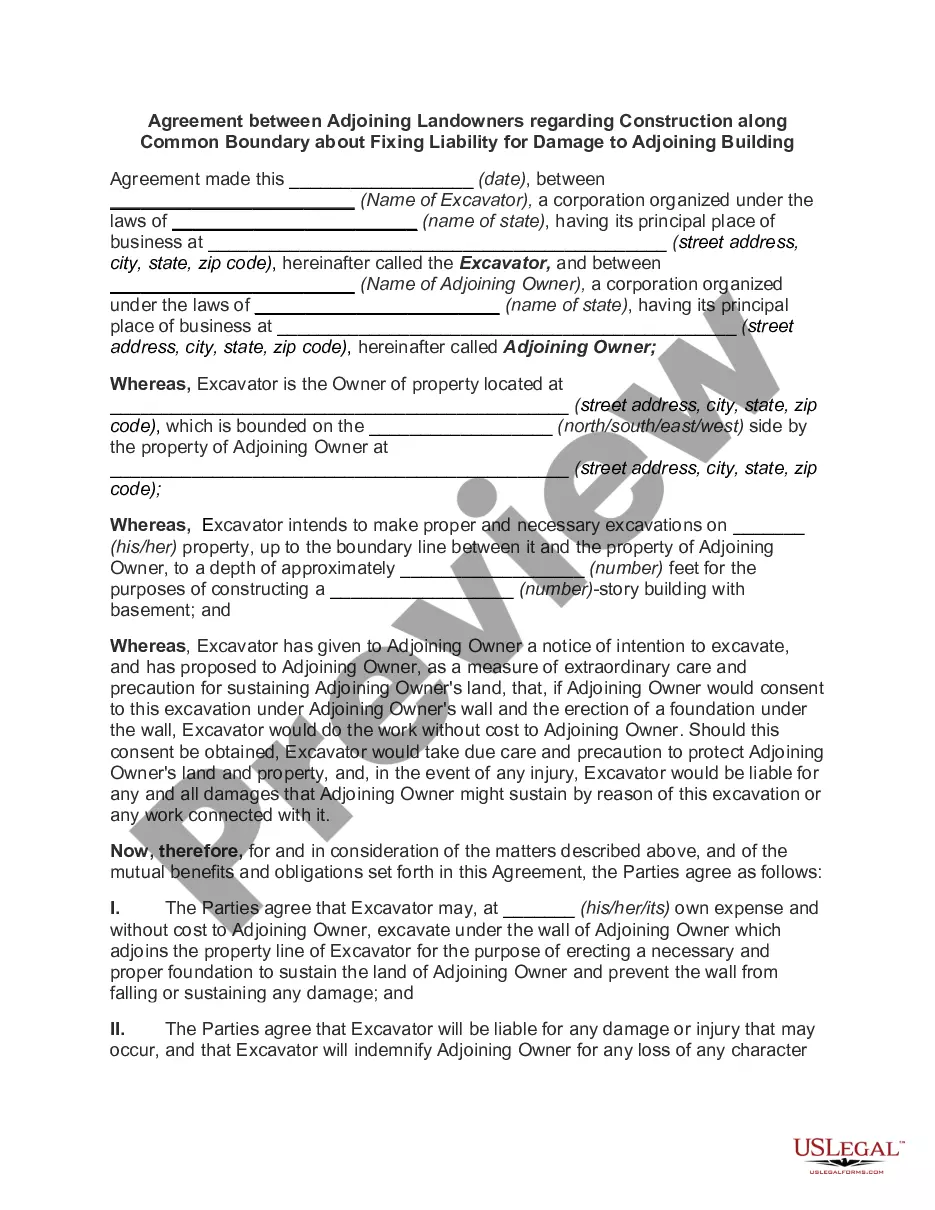
- Introduction of the parties involved, including addresses and corporate status.
- Details of the construction plan, including the nature and purpose of the excavation.
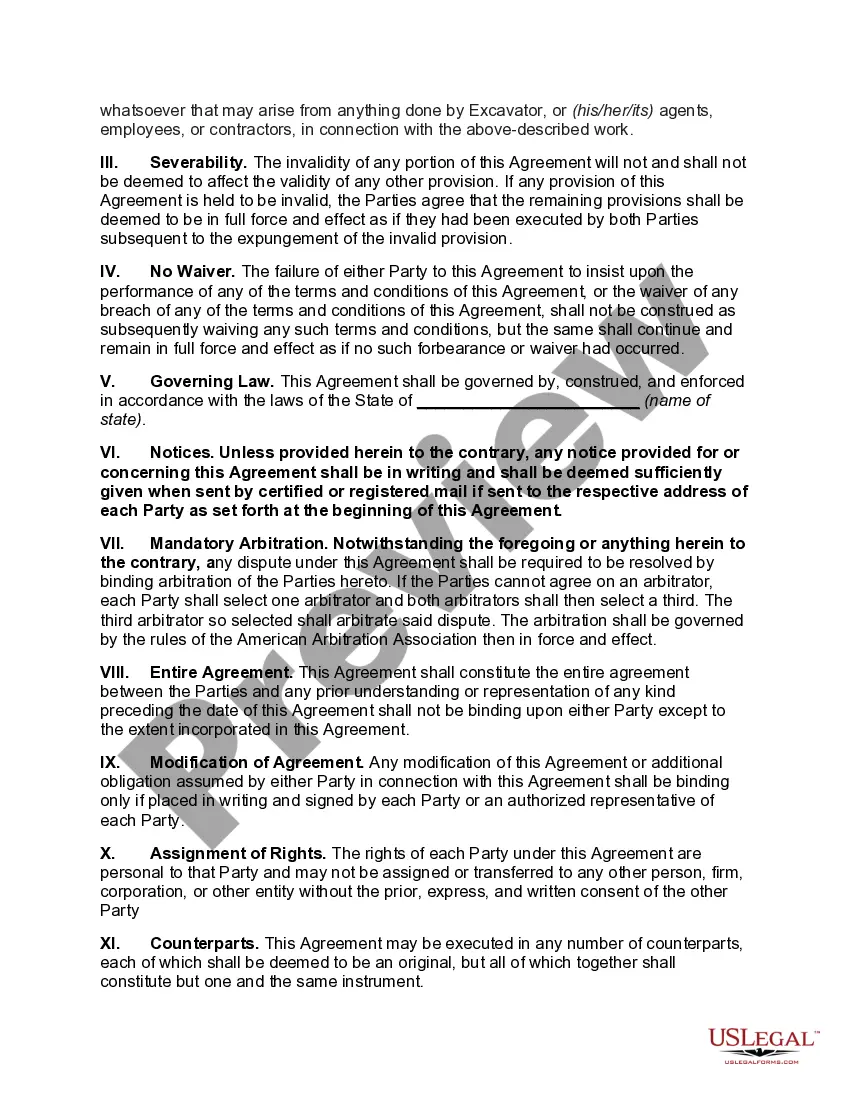
- Agreements on liability for damages during construction activities.
- Clauses on severability, waiver, and modifications to the agreement.
- Procedures for resolving disputes, including mandatory arbitration.
- Governance by state law and compliance with governmental regulations.
Common use cases
This form should be used when two landowners are planning construction activities near a shared boundary line. It is essential in situations where one owner intends to undertake excavation or building work that could potentially impact the neighboring property. The agreement provides clarity on liability and ensures that both parties understand their rights and responsibilities, helping to prevent disputes.
Who can use this document
This form is suitable for:
- Property owners who are planning construction activities adjacent to another owner's property.
- Real estate developers involved in projects that may affect neighboring land.
- Attorneys representing clients in property disputes regarding construction responsibilities.
Completing this form step by step
- Identify and enter the names and addresses of the Excavator and Adjoining Owner.
- Provide details about the properties, including addresses and boundaries.
- Specify the depth and purpose of the excavation planned by the Excavator.
- Include the terms regarding liability and any commitments to protect the adjoining property.
- Ensure all parties review and sign the agreement, including printing names and titles.
Notarization requirements for this form
This form does not typically require notarization unless specified by local law. However, having the agreement notarized can add an additional layer of legal protection and authenticity.
Get your form ready online
Our built-in tools help you complete, sign, share, and store your documents in one place.
Make edits, fill in missing information, and update formatting in US Legal Forms—just like you would in MS Word.
Download a copy, print it, send it by email, or mail it via USPS—whatever works best for your next step.
Sign and collect signatures with our SignNow integration. Send to multiple recipients, set reminders, and more. Go Premium to unlock E-Sign.
If this form requires notarization, complete it online through a secure video call—no need to meet a notary in person or wait for an appointment.
We protect your documents and personal data by following strict security and privacy standards.

Make edits, fill in missing information, and update formatting in US Legal Forms—just like you would in MS Word.

Download a copy, print it, send it by email, or mail it via USPS—whatever works best for your next step.

Sign and collect signatures with our SignNow integration. Send to multiple recipients, set reminders, and more. Go Premium to unlock E-Sign.

If this form requires notarization, complete it online through a secure video call—no need to meet a notary in person or wait for an appointment.

We protect your documents and personal data by following strict security and privacy standards.
Common mistakes
- Failing to specify detailed construction plans, which can lead to misunderstandings.
- Leaving out critical liability clauses, which may expose parties to unforeseen damages.
- Not having all parties sign the agreement, making it unenforceable.
- Neglecting to update the form for state-specific laws and requirements.
Advantages of online completion
- Convenient access to a legally sound template drafted by licensed attorneys.
- Editability allows for customization based on specific project needs and local laws.
- Secure storage of the signed document for future reference and legal protection.
What to keep in mind
- The form establishes clear responsibilities and liabilities between neighboring property owners during construction.
- It is essential to fill out all sections accurately to avoid legal disputes.
- Understanding local laws can enhance the agreement's enforceability.
Looking for another form?

Form popularity
FAQ
Each party of this agreement shall exonerate the other from any civil liability for damages suffered by him or his staff as a result of performance of this agreement, provided such damages are not the result of serious and deliberate misconduct on the part of the other party or his staff.
Example of Contractual Liability XYZ is aware that someone may be injured or property may be damaged if PQR makes a mistake while replacing the wiring. If that happens, the injured party may seek compensation by filing a lawsuit against XYZ and PQR.
Liability can be limited through contractual clauses. Most types of contracts allow limited liability clauses, however it cannot be included in a standard form contract. The standard form contract is a uniform contract businesses give to most of their clients and change only the personal details.
In a legal context, a liability is generally a responsibility to compensate for some failure to perform ing to an established or agreed-upon stipulation. Because there is an element of risk inherent in most business agreements, limitation of liability clauses are common in all areas of contract law.
A release of liability agreement is a legal agreement between two parties that waives the ability to bring action against a particular claim. One party releases liability of another party for potential damages or injuries.