Mining Lease Regarding Sand, Gravel, and Rock
What is this form?
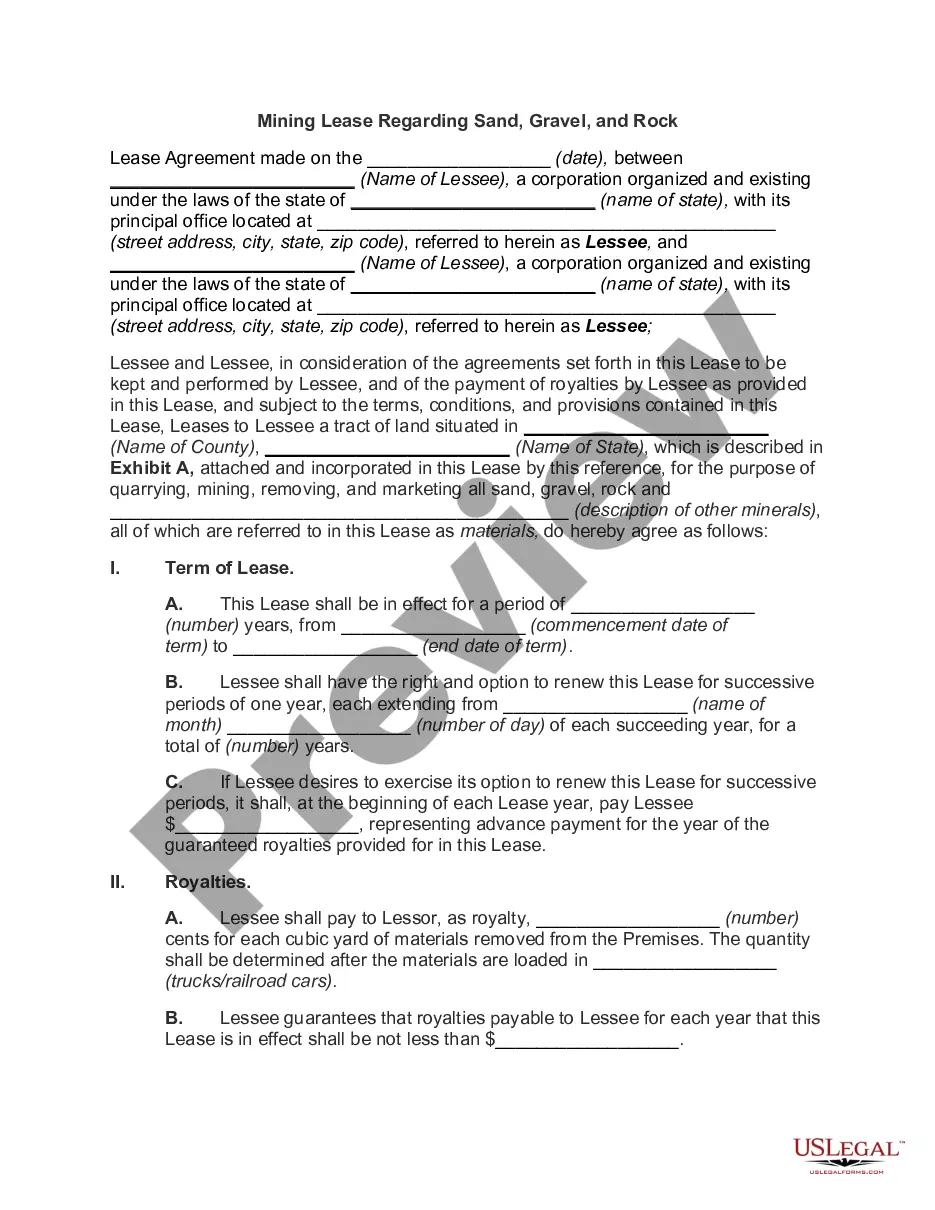
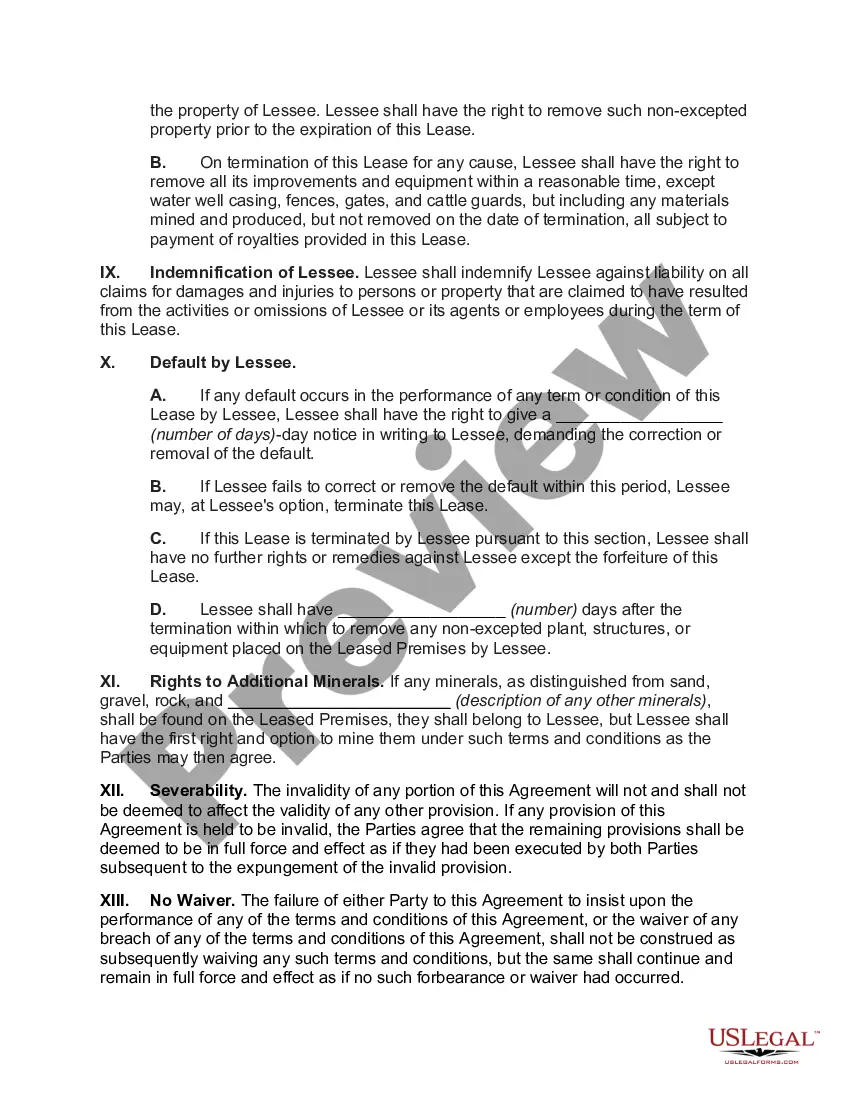
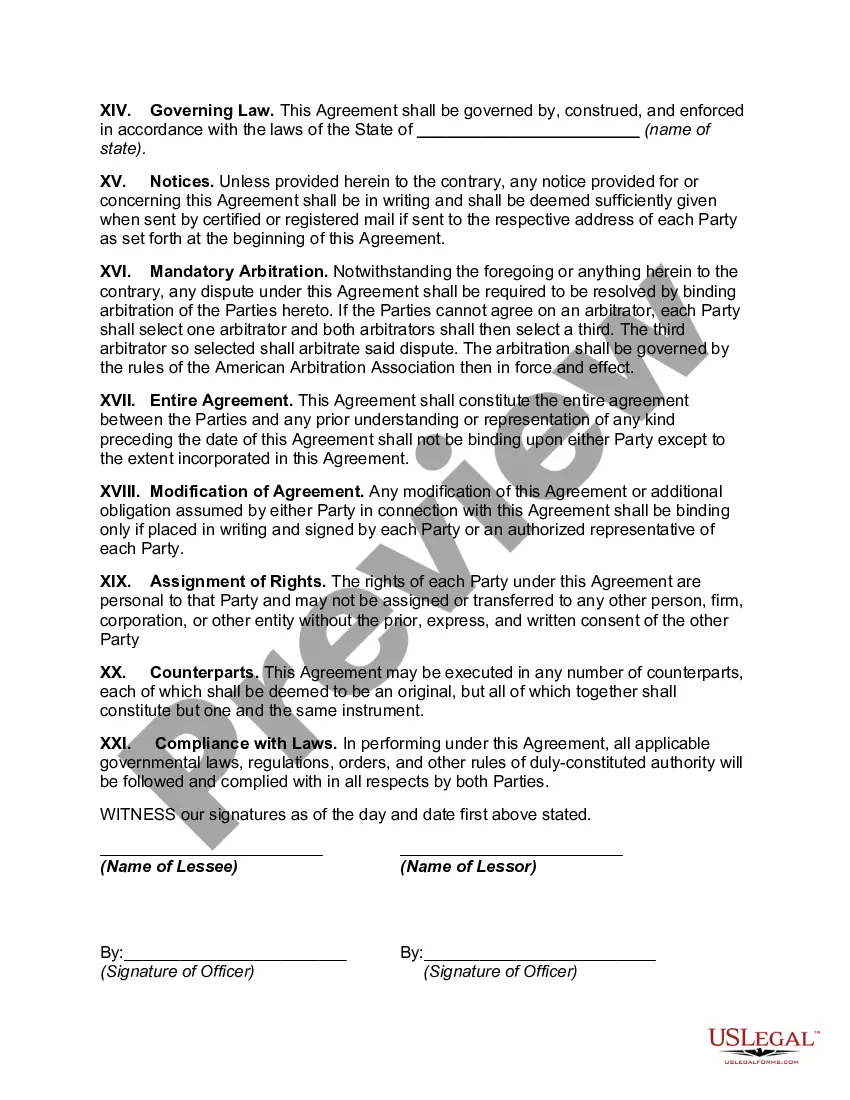
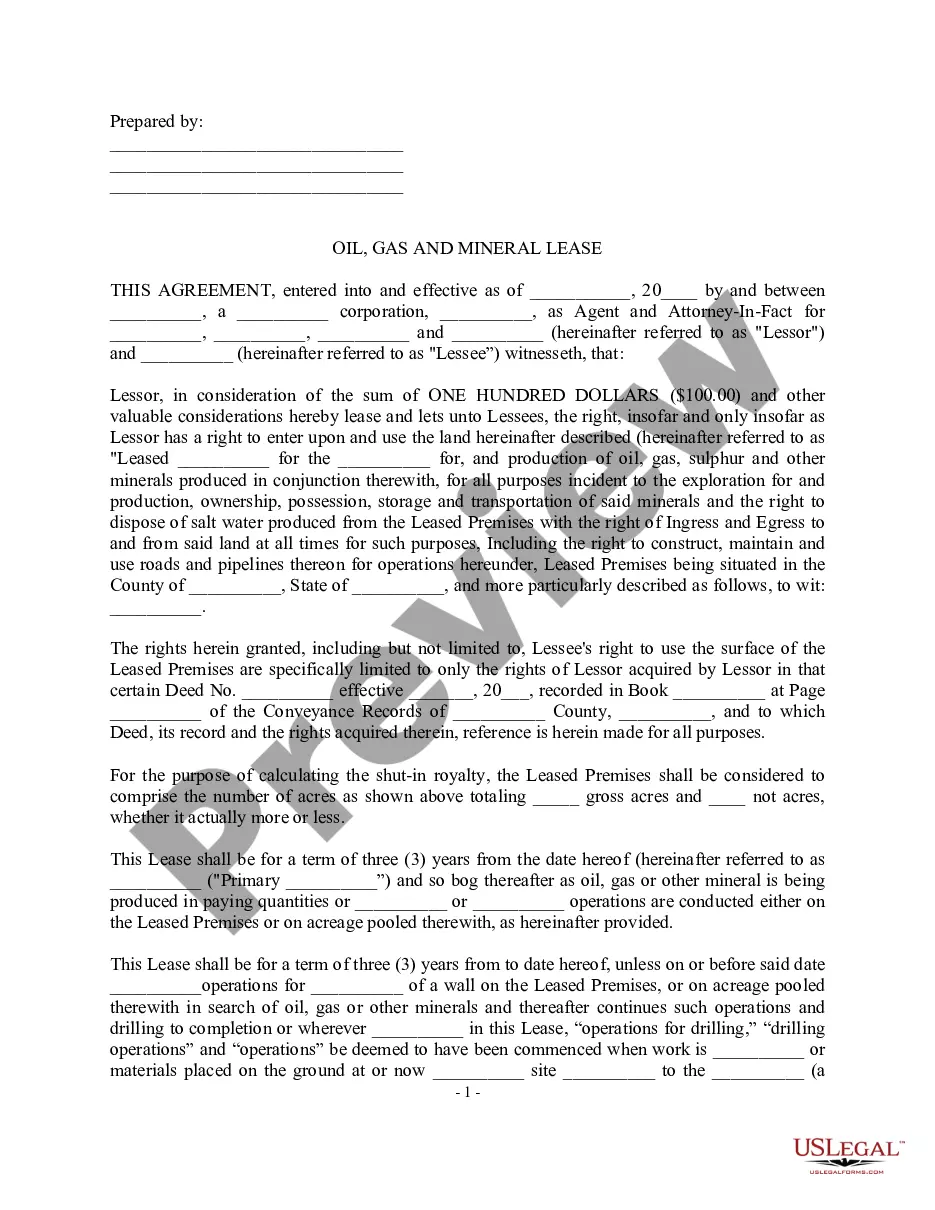
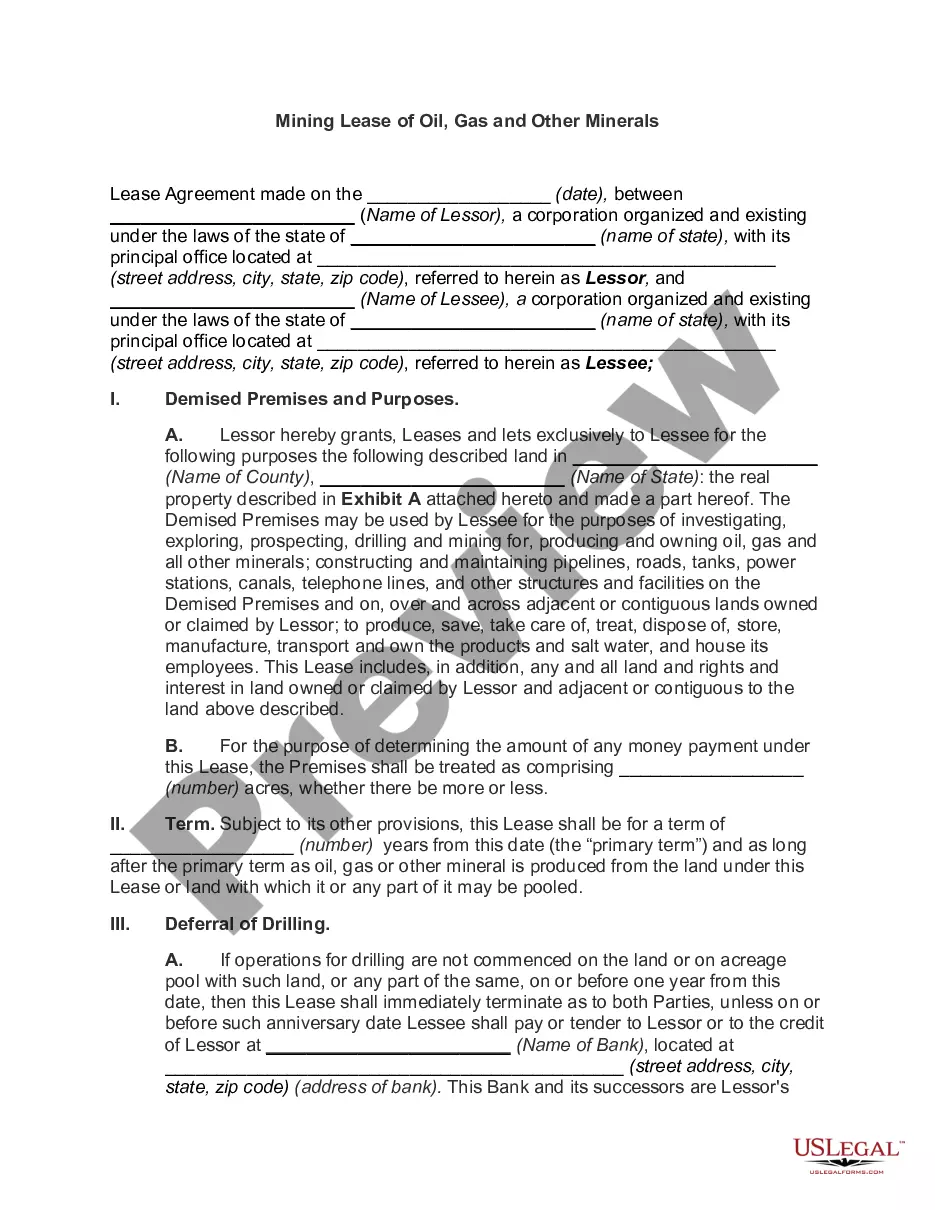
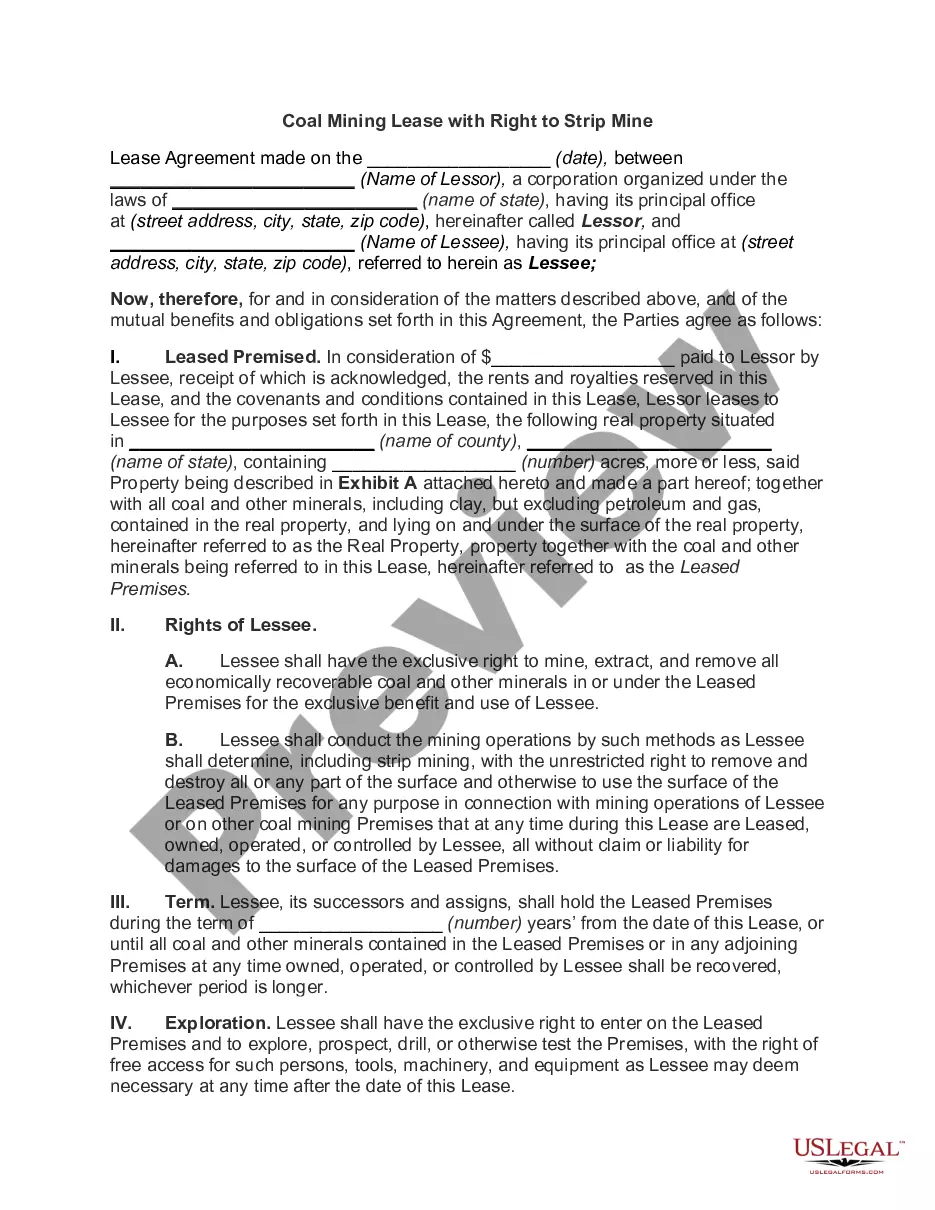
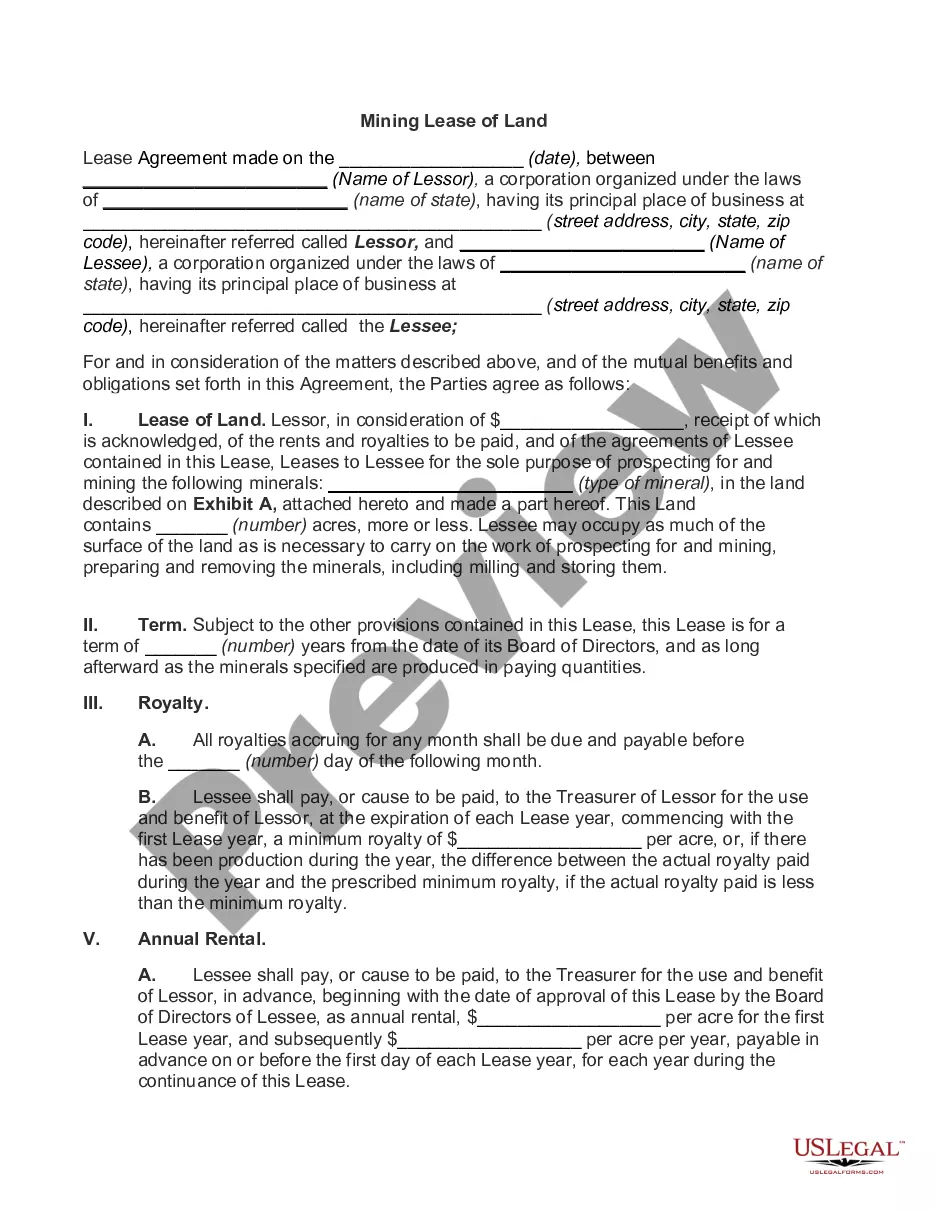
The Mining Lease Regarding Sand, Gravel, and Rock is a legal agreement that allows a lessee to explore and extract specified minerals from a property for a defined period. This form is distinct from other lease agreements as it specifically pertains to mining operations for sand, gravel, and rock, making it crucial for property owners and mining companies to establish clear terms. By using this form, the property owner ensures they receive appropriate royalties based on the quantity of material extracted, while the lessee gains the right to mine valuable resources from the land.
Form components explained
- Identification of parties: Names and addresses of the property owner (lessor) and the mining company (lessee).
- Term of lease: Duration of the lease and terms for possible renewal.
- Royalties: Detailed provisions for payments based on the quantity of materials extracted.
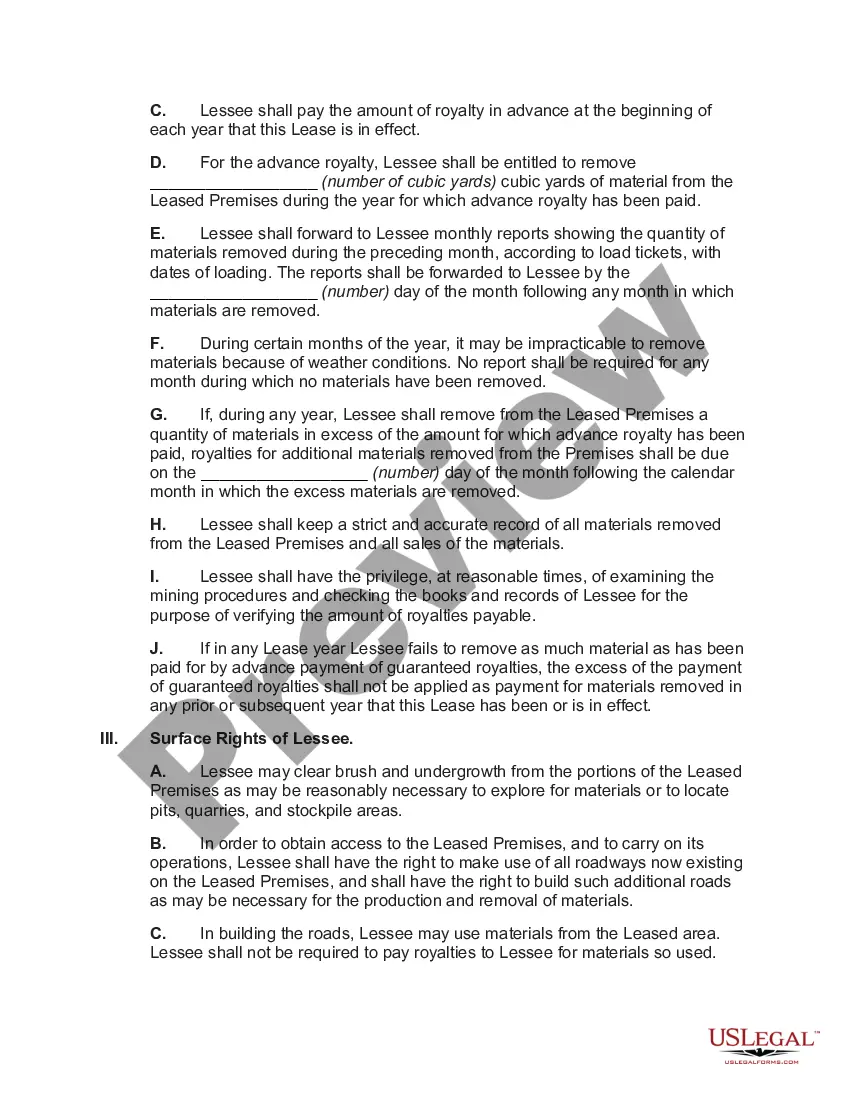
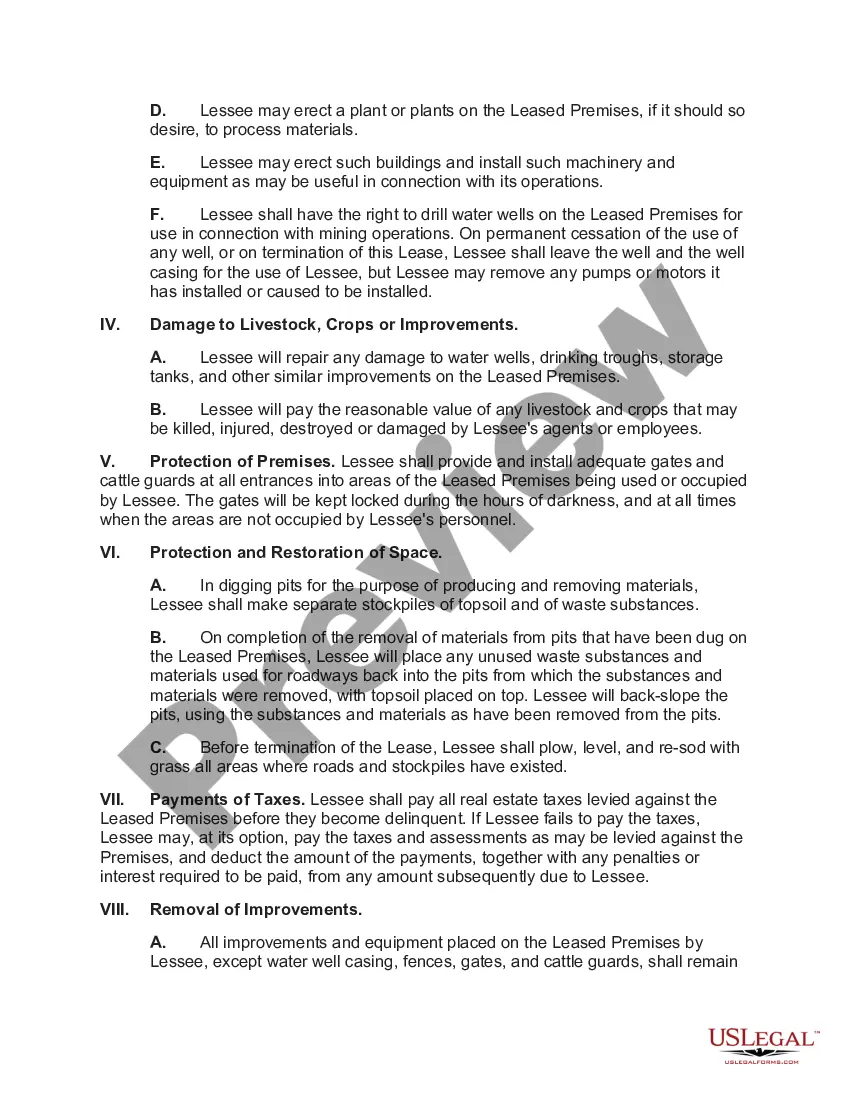
- Surface rights: Rights of the lessee to explore and utilize the leased property for mining purposes.
- Indemnification: Responsibilities of the lessee regarding claims for damages or injuries.
- Termination conditions: Provisions for lease termination and obligations upon termination.


When this form is needed
This Mining Lease should be used when a property owner wishes to lease their land for the purpose of mining sand, gravel, or rock. It is essential for situations where a company seeks to extract these materials legally while ensuring the property owner is compensated through royalties. This form is also applicable when establishing terms that govern the use of land, duration of extraction activities, and obligations for land restoration during and after the lease period.
Who can use this document
- Property owners (lessors) who want to lease their land for mining operations.
- Mining companies (lessees) seeking permission to extract minerals from a property.
- Legal professionals assisting clients with mineral rights and lease agreements.
- Investors interested in mining operations and land leases related to mineral extractions.
Instructions for completing this form
- Identify the parties involved by filling in the names and addresses of the lessor and lessee.
- Specify the term of the lease, including start and end dates, along with options for renewal.
- Determine and enter the royalty rate to be paid per cubic yard of material extracted.
- Outline the rights granted to the lessee concerning surface use and access to the property.
- Include clauses on damages, protections, and obligations regarding land restoration upon lease termination.
Is notarization required?
This form does not typically require notarization unless specified by local law. However, for added legal validity, parties may choose to have it notarized during the signing process.
Get your form ready online
Our built-in tools help you complete, sign, share, and store your documents in one place.
Make edits, fill in missing information, and update formatting in US Legal Forms—just like you would in MS Word.
Download a copy, print it, send it by email, or mail it via USPS—whatever works best for your next step.
Sign and collect signatures with our SignNow integration. Send to multiple recipients, set reminders, and more. Go Premium to unlock E-Sign.
If this form requires notarization, complete it online through a secure video call—no need to meet a notary in person or wait for an appointment.
We protect your documents and personal data by following strict security and privacy standards.

Make edits, fill in missing information, and update formatting in US Legal Forms—just like you would in MS Word.

Download a copy, print it, send it by email, or mail it via USPS—whatever works best for your next step.

Sign and collect signatures with our SignNow integration. Send to multiple recipients, set reminders, and more. Go Premium to unlock E-Sign.

If this form requires notarization, complete it online through a secure video call—no need to meet a notary in person or wait for an appointment.

We protect your documents and personal data by following strict security and privacy standards.
Common mistakes to avoid
- Failing to clearly define the property boundaries in the lease.
- Leaving out specific royalty amounts or calculation methods.
- Not specifying the duration of the lease and renewal options.
- Ignoring local regulations that may apply to mining leases.
Benefits of completing this form online
- Convenience: Download and complete your lease agreement from anywhere at any time.
- Editability: Make necessary adjustments to tailor the lease to specific needs.
- Reliability: Forms created by licensed attorneys ensure legal compliance and clarity.
Looking for another form?
Form popularity
FAQ
Major uses for construction sand and gravel include concrete aggregate; concrete products, including block, brick, and pipe; aggregate in asphalt and other bituminous mixtures; road-base material and road coverings; construction fill; snow and ice control; filtration purposes; and railroad ballast.
With many diverse uses, industrial sand and gravel, also known as silica sand, is one of the most important nonmetallic minerals in the world.
Sand and gravel typically are mined in a moist or wet condition by open pit excavation or by dredging. Open pit excavation is carried out with power shovels, draglines, front end loaders, and bucket wheel excavators. In rare situations, light charge blasting is done to loosen the deposit.
Sand mining has some economic and social benefits, including the creation of jobs and revenue, as well as the enhancement of the local economy. But after water, Sand is now the second most exploited and exported resource by volume.
Mineral Leasing Act of 1920 This law provided for the leasing of minerals from public lands including oil, gas, coal and other non-energy leasable minerals such as phosphates and sodium. It requires that a royalty be paid on amounts mined and sold.
Sand mining presents opportunities to extract rutile, ilmenite, and zircon, which contain the industrially useful elements titanium and zirconium. Besides these minerals, beach sand may also contain garnet, leucoxene, sillimanite, and monazite. These minerals are often found in ordinary sand deposits.
Sand and gravel are favored landscaping materials and also used in recreational applications such as golf courses, volleyball courts, and lake-side beaches. Aggregates serve essential roles in erosion control, water filtration and coastal shoreline protection.
The processing of sand and gravel for a specific market involves the use of different combinations of washers, screens, and classifiers to segregate particle sizes; crushers to reduce oversized material; and storage and loading facilities.