Coal Mining Lease with Right to Strip Mine
Overview of this form
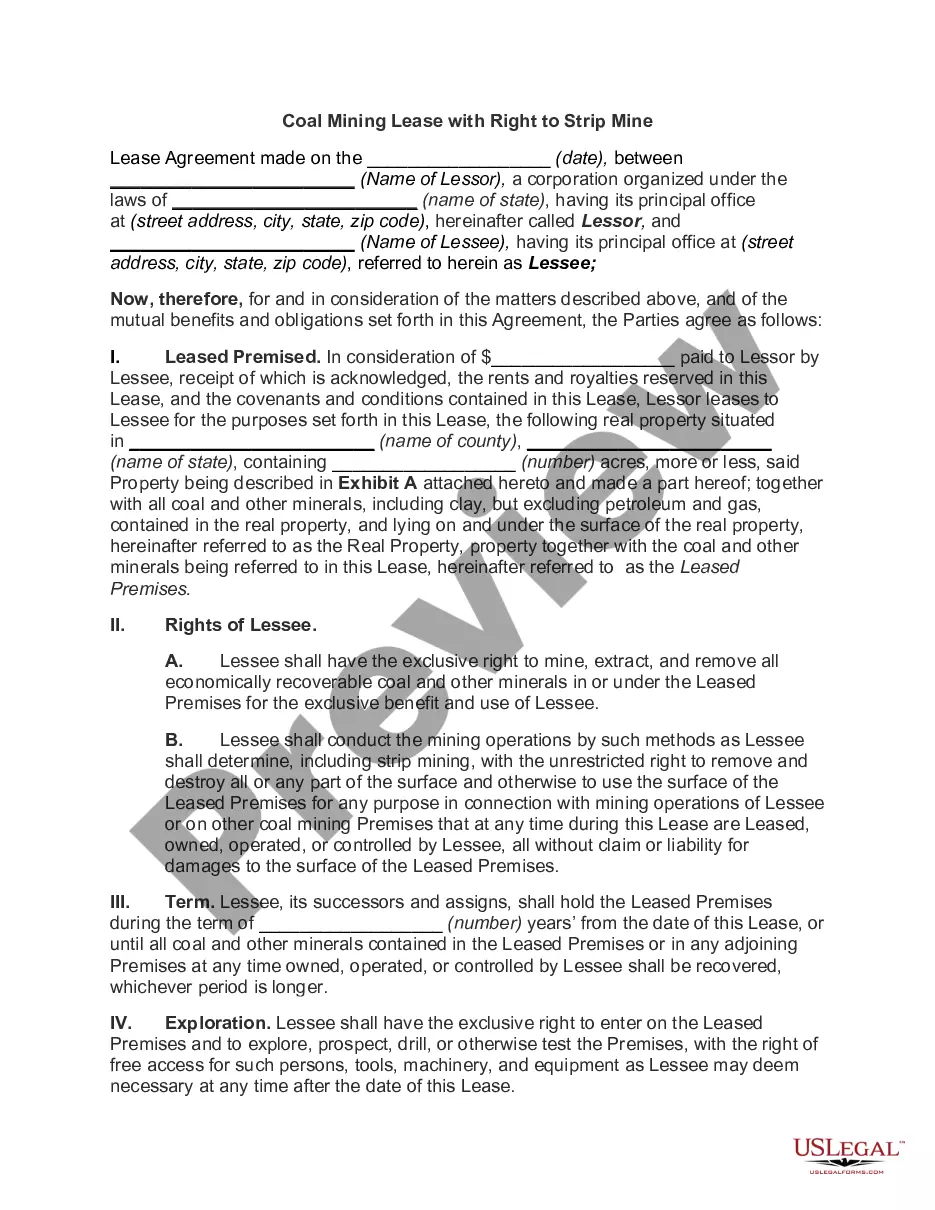
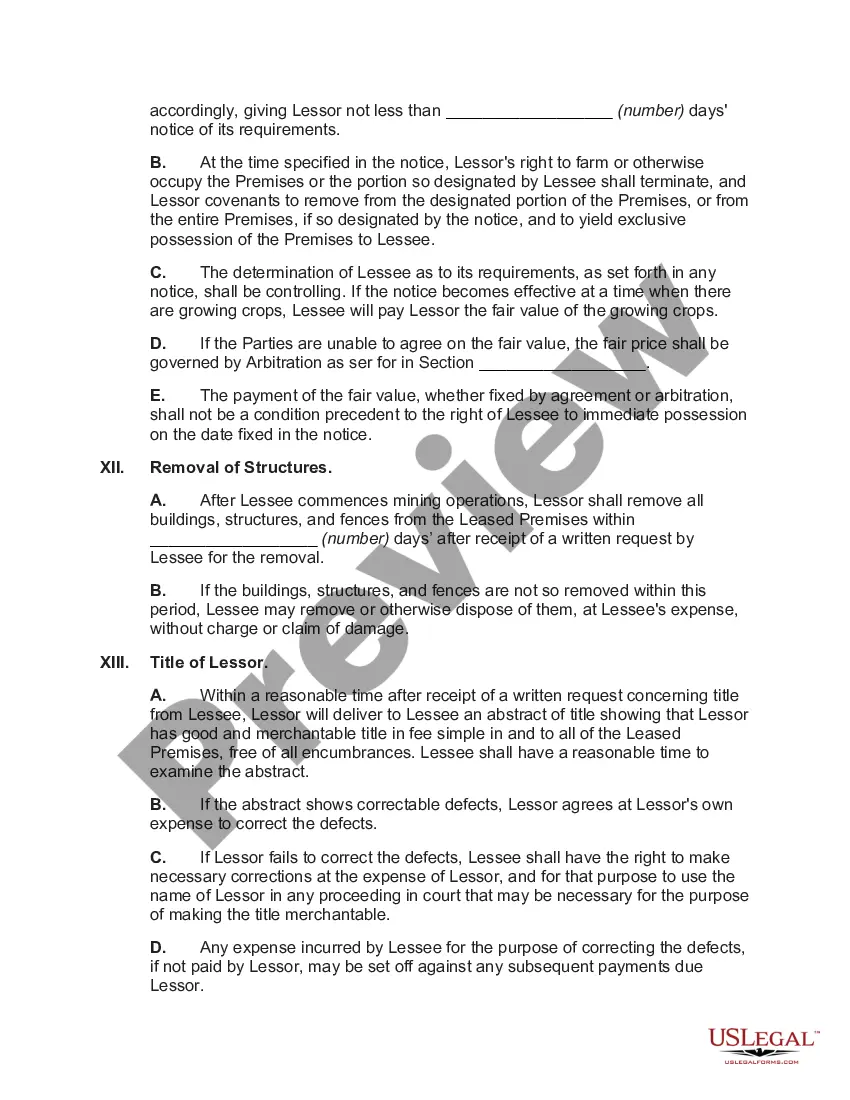
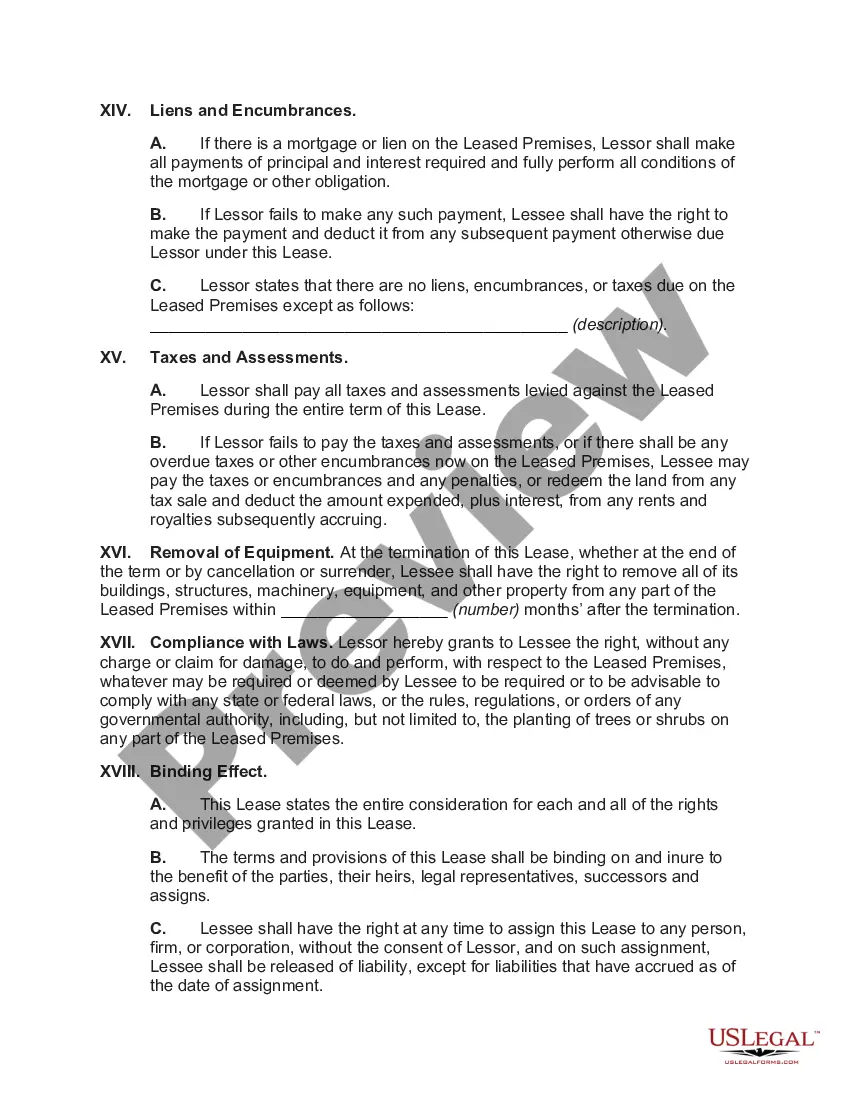
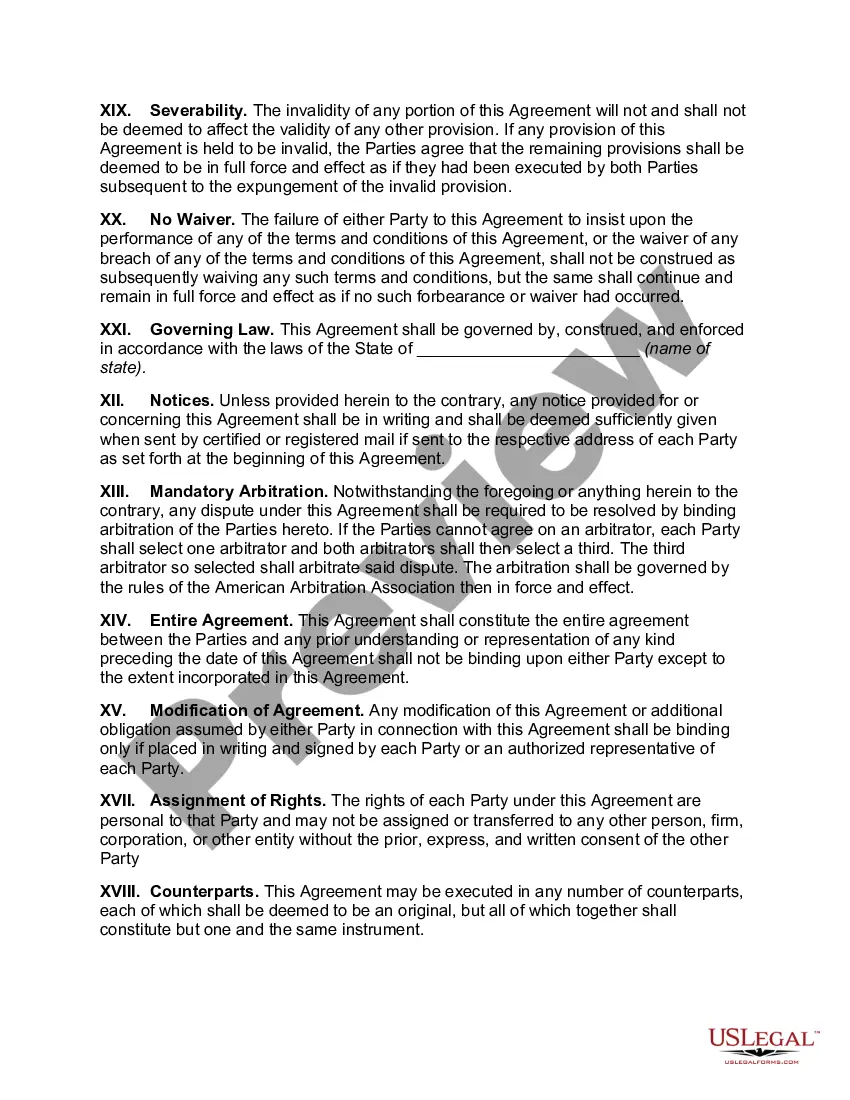
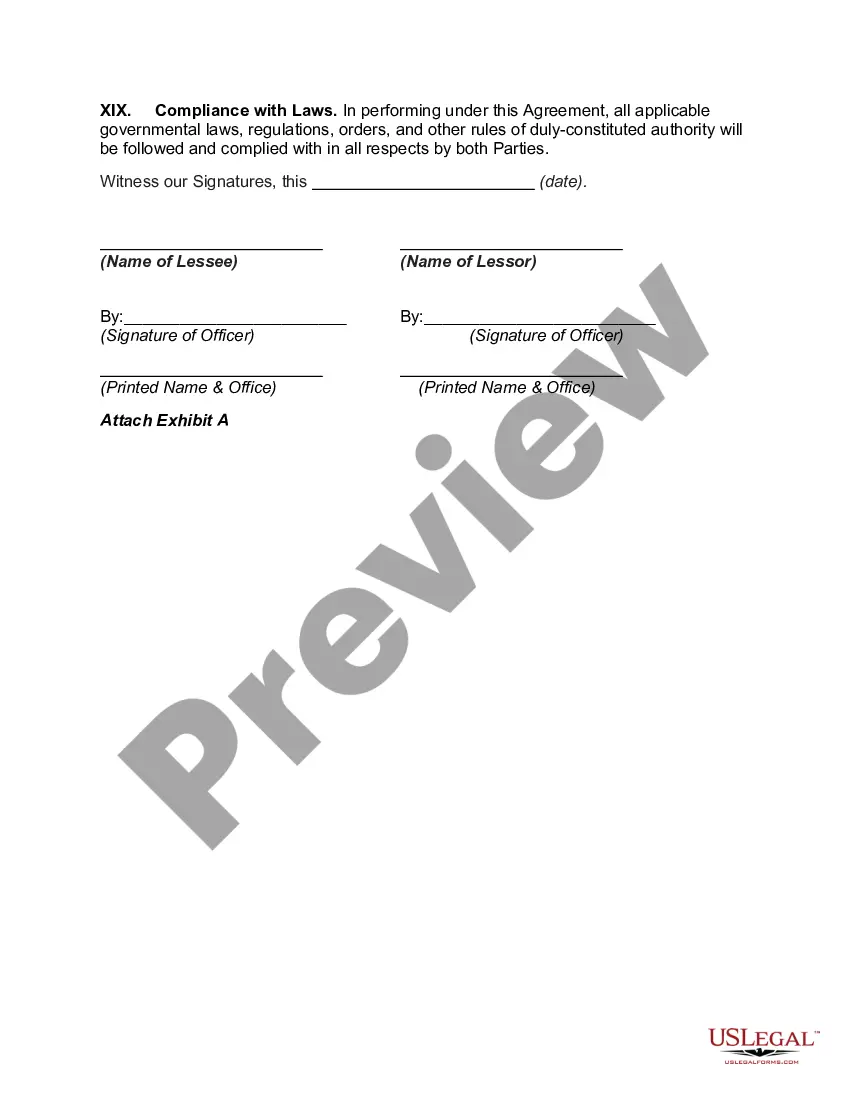
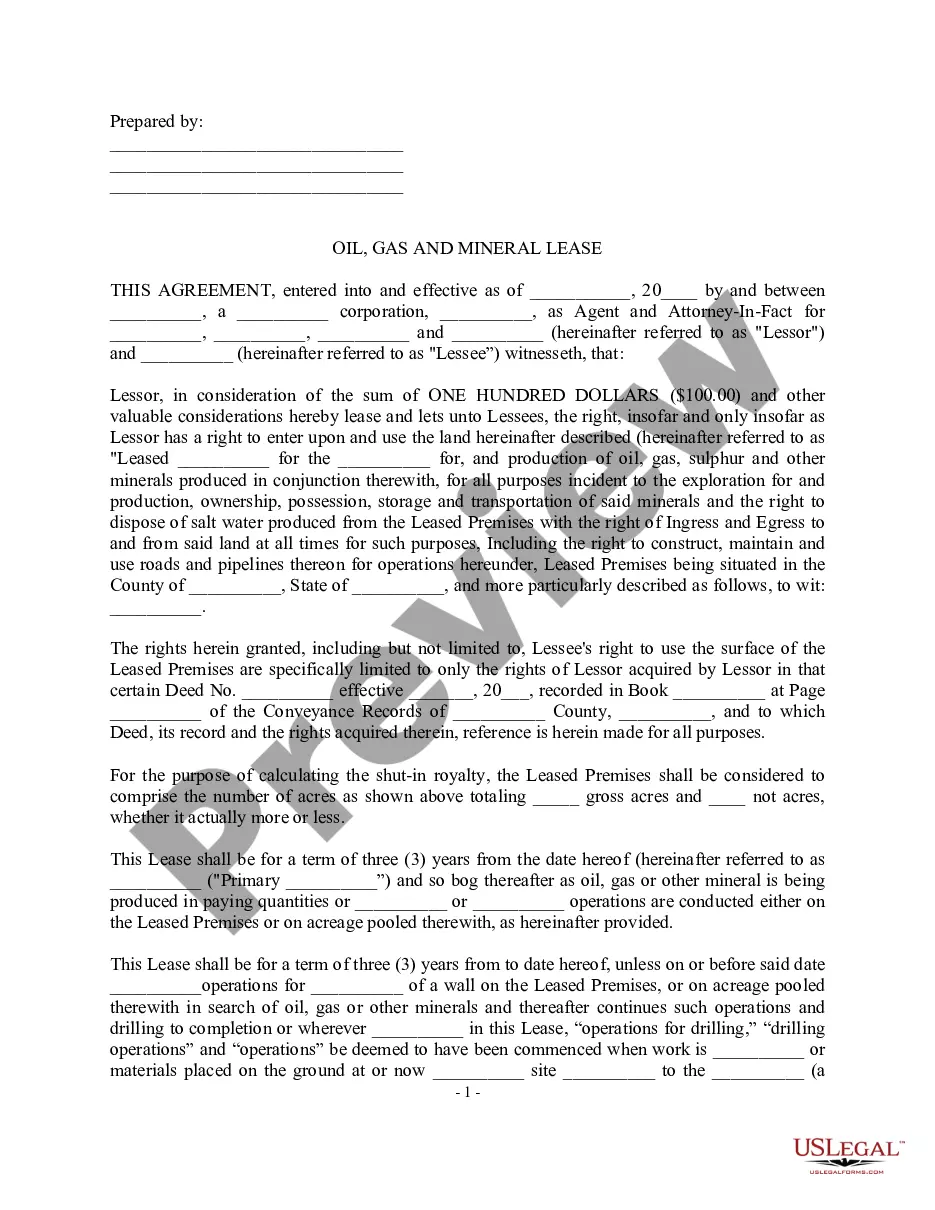
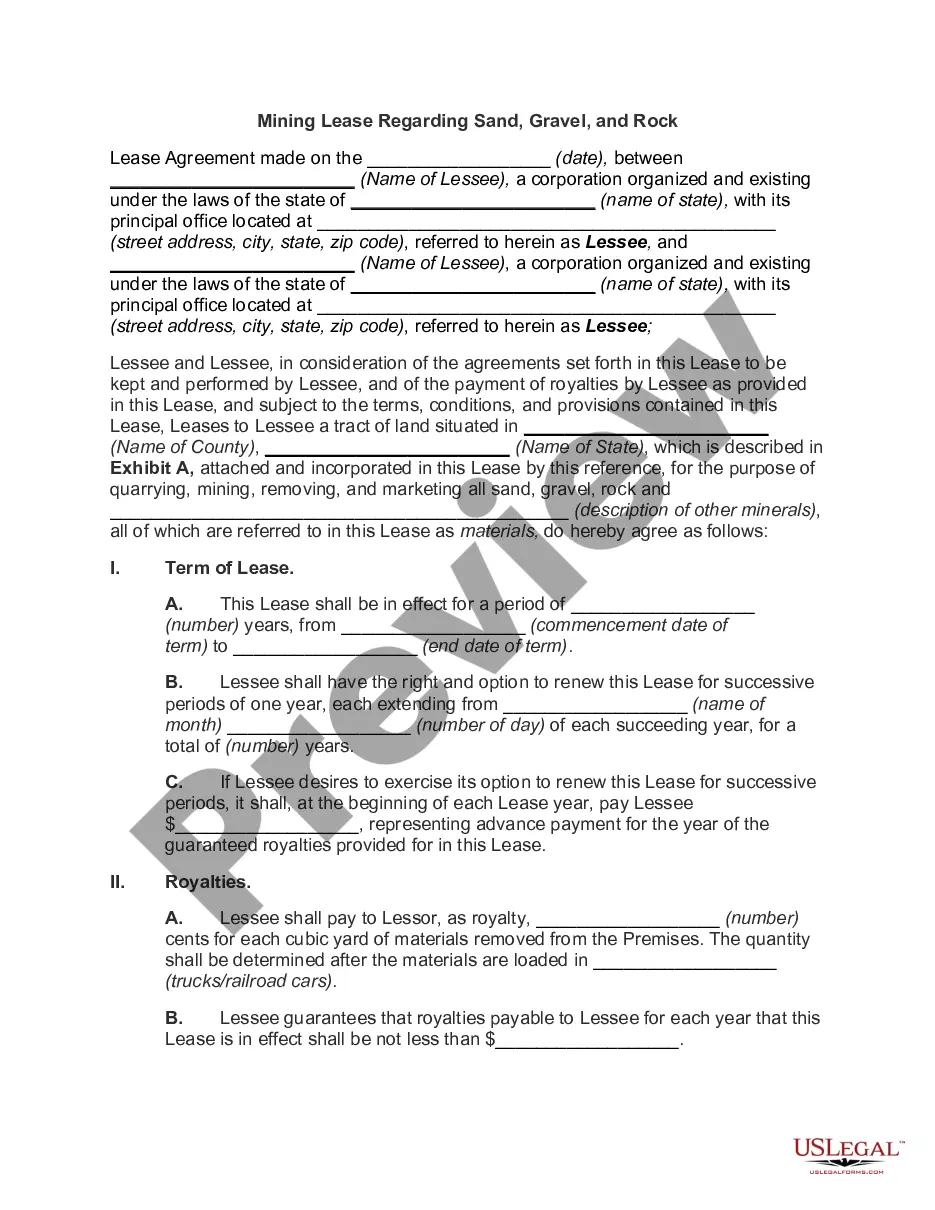
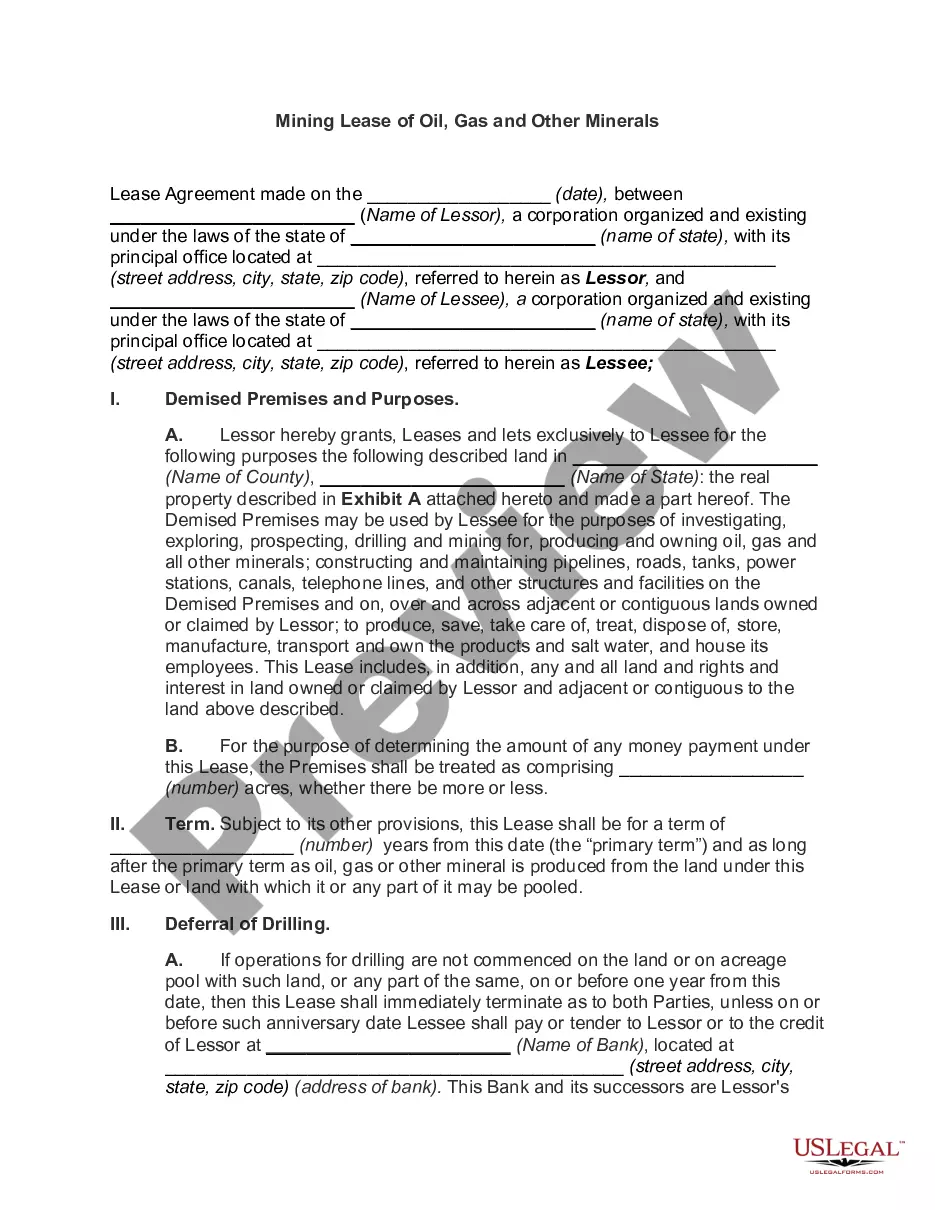
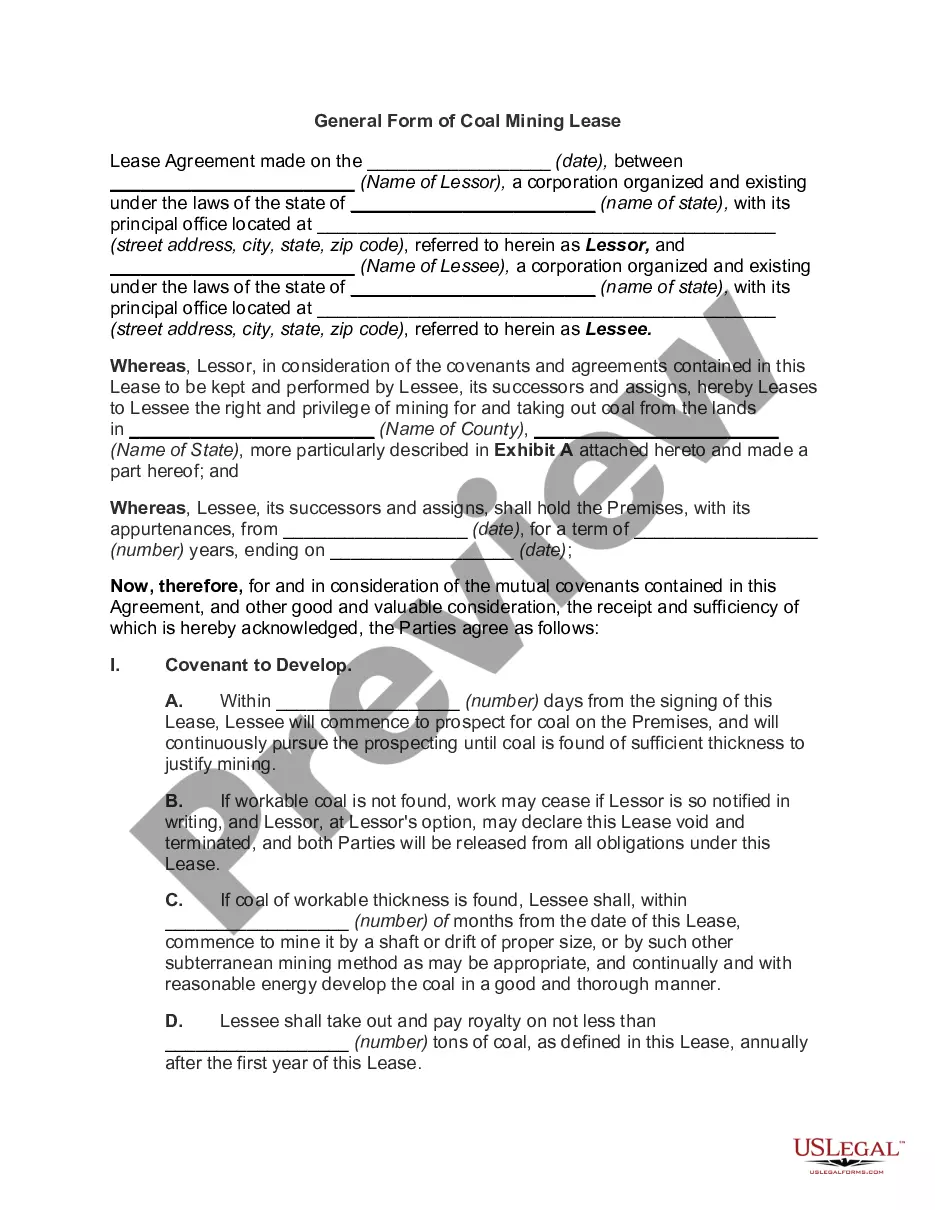
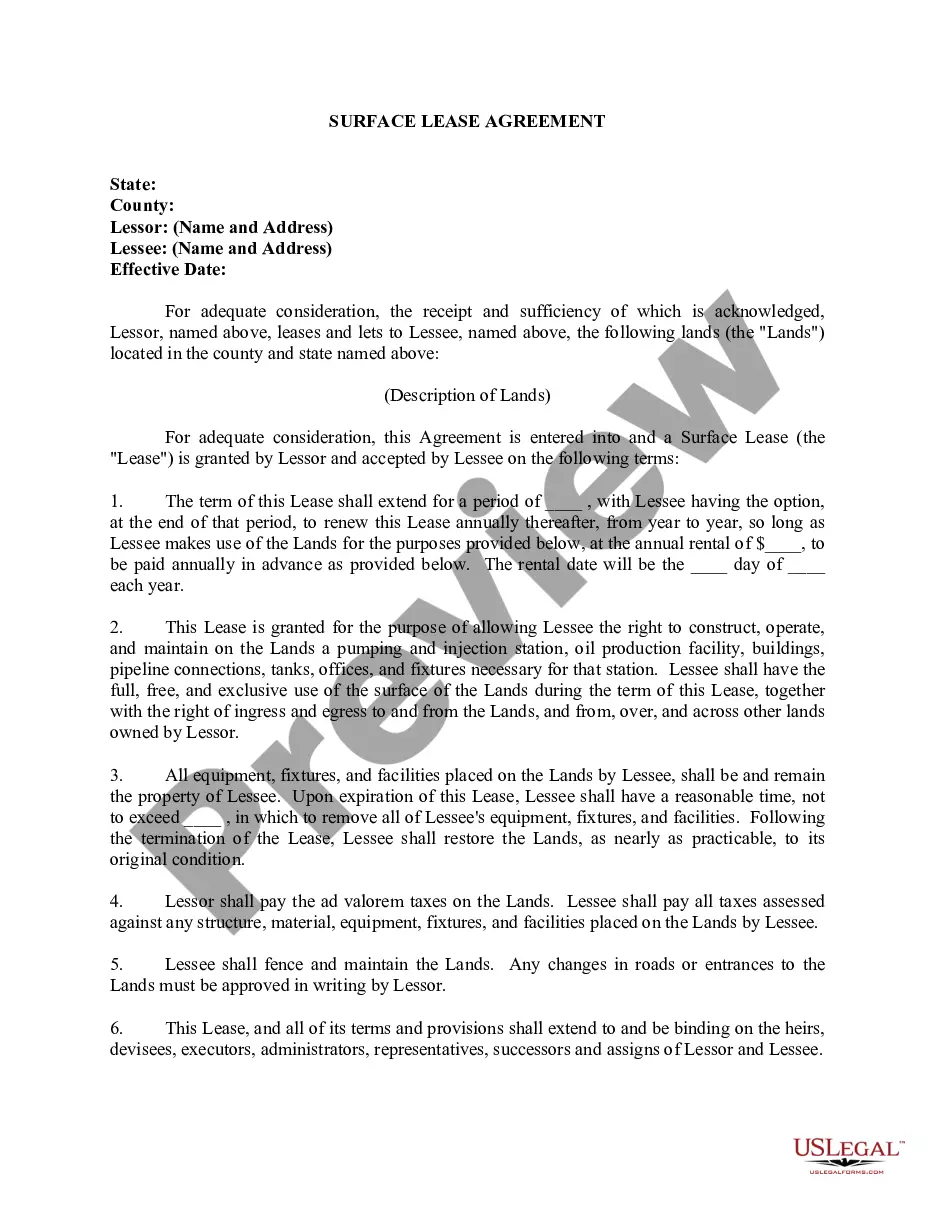
The Coal Mining Lease with Right to Strip Mine is a legal agreement that allows a lessee to mine and extract coal and other minerals from a specified area of land. This form is used when property owners (lessors) grant rights to mining companies (lessees) to conduct strip mining operations on their property, enabling the extraction of valuable coal resources. It ensures that both parties clearly understand their rights and obligations throughout the lease period.
Key components of this form
- Identification of the lessor and lessee, including their legal entities and addresses.
- Description of the leased premises and the specific mineral rights included with the lease.
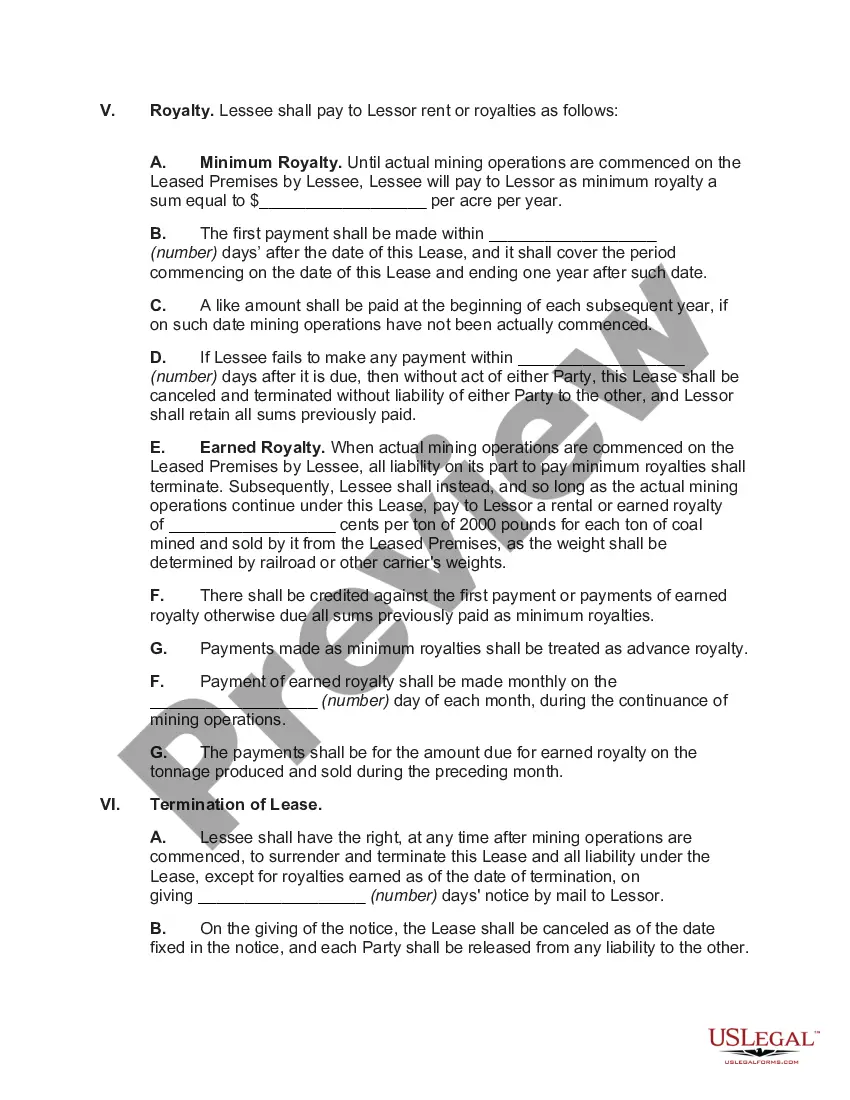
- Provisions for minimum royalties and payments based on coal production.
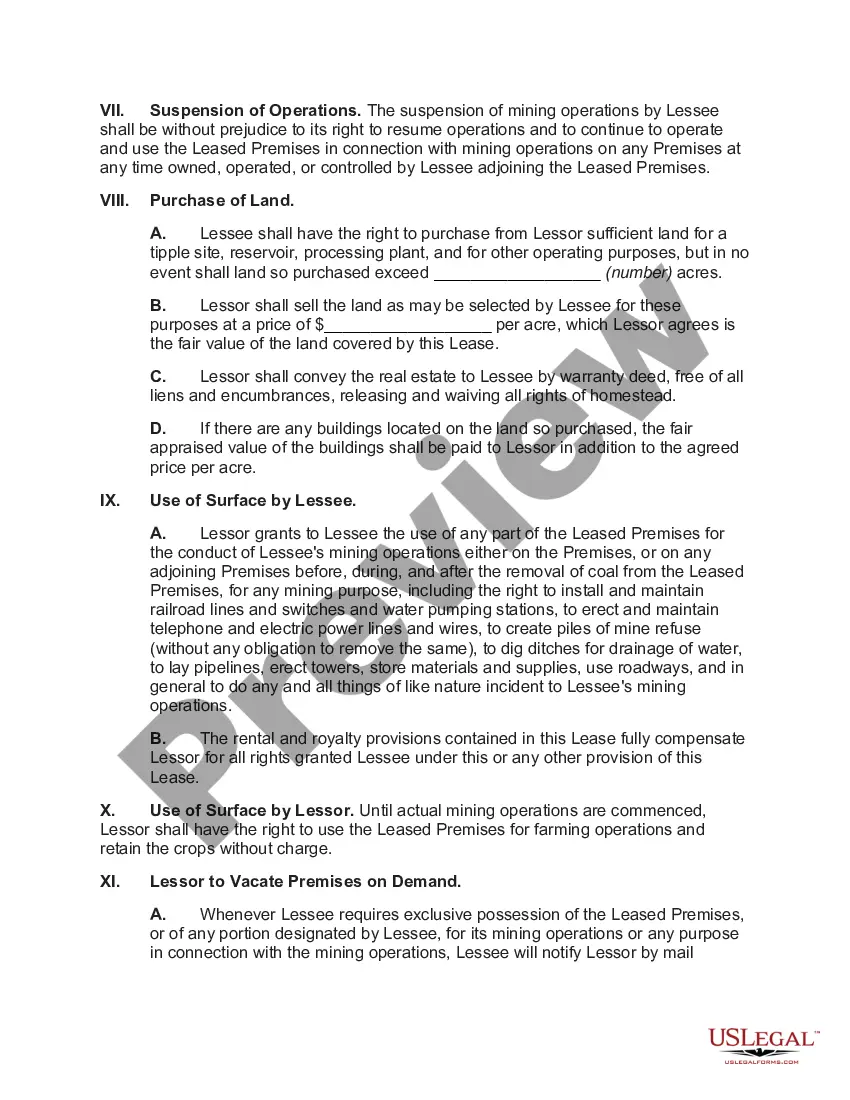
- Rights of the lessee regarding the mining methods and use of the surface land.
- Conditions for termination of the lease and rights for land purchase.
- Compliance with applicable laws and provisions for dispute resolution through arbitration.
Situations where this form applies
This form is typically used when a property owner wishes to lease land for coal mining operations. It should be utilized when there is a defined interest in extracting coal or other minerals from the ground, especially in regions where strip mining is a viable method. It is essential in scenarios where both parties need to formalize the terms related to the mining lease, including payment structure, rights, and responsibilities.
Who should use this form
- Property owners looking to lease their land for coal mining activities.
- Mining companies or lessees seeking to acquire rights to mine coal from specific property.
- Entities involved in resource extraction that require clear legal documentation for mining operations.
- Legal representatives working on behalf of either lessors or lessees in drafting or reviewing lease agreements.
Instructions for completing this form
- Identify the parties involved by entering the names and addresses of the lessor and lessee.
- Describe the leased property, including the total area and any specific conditions or restrictions.
- Specify the duration of the lease and the payment structure, including minimum royalties and earned royalties.
- Include any special rights granted to the lessee regarding surface use and termination conditions.
- Ensure all signatures are completed, and any required exhibits are attached to the document.
Is notarization required?
This form does not typically require notarization unless specified by local law. However, having it notarized can strengthen its legal validity and help in any future enforcement of the lease agreement.
Get your form ready online
Our built-in tools help you complete, sign, share, and store your documents in one place.
Make edits, fill in missing information, and update formatting in US Legal Forms—just like you would in MS Word.
Download a copy, print it, send it by email, or mail it via USPS—whatever works best for your next step.
Sign and collect signatures with our SignNow integration. Send to multiple recipients, set reminders, and more. Go Premium to unlock E-Sign.
If this form requires notarization, complete it online through a secure video call—no need to meet a notary in person or wait for an appointment.
We protect your documents and personal data by following strict security and privacy standards.

Make edits, fill in missing information, and update formatting in US Legal Forms—just like you would in MS Word.

Download a copy, print it, send it by email, or mail it via USPS—whatever works best for your next step.

Sign and collect signatures with our SignNow integration. Send to multiple recipients, set reminders, and more. Go Premium to unlock E-Sign.

If this form requires notarization, complete it online through a secure video call—no need to meet a notary in person or wait for an appointment.

We protect your documents and personal data by following strict security and privacy standards.
Common mistakes to avoid
- Failing to accurately describe the leased property can lead to disputes.
- Omitting important terms related to royalties and payment schedules.
- Not including clauses for termination and rights to surrender the lease.
- Neglecting to ensure all parties have signed the lease before mining operations commence.
Benefits of using this form online
- Convenience and accessibility to complete the lease from anywhere.
- Editability to customize details specific to the transaction.
- Assurance of reliability with attorney-drafted and reviewed content.
- Quick download options to streamline the process for both parties.
Looking for another form?
Form popularity
FAQ
Strip mining can extract minerals like coal, iron ore, gold, copper, and uranium. Some of its examples are underground, open-pit, and underwater mining.
The primary methods of surface coal mining used in Pennsylvania are: Strip Mining: Layers of soil and rock overburden are removed the coal exposed coal seam is excavated.
About two-thirds of U.S. coal production is from surface mines because surface mining is less expensive than underground mining. Underground mining, sometimes called deep mining, is used when the coal is more than 200 feet below the surface.
Strip mining is employed in coal reserves where the overburden is removed in rectangular blocks in plan view called pits or strips. The pits are parallel and adjacent to each other. Strip mining is fundamentally different from contour or area mining on how the overburden is displaced, called spoil handling.
Strip mining is the practice of mining a seam of mineral, by first removing a long strip of overlying soil and rock (the overburden); this activity is also referred to as overburden removal. It is most commonly used to mine coal and lignite (brown coal).
The royalty rate for surface-mining methods is 12.5 percent and is 8.0 percent for underground mining, and the BLM can approve reduced royalty rates based on maximum economic recovery. Regulations that govern BLM's coal leasing program are contained in Title 43, Groups 3000 and 3400 of the CFR.
Strip mining, removal of soil and rock (overburden) above a layer or seam (particularly coal), followed by the removal of the exposed mineral. The common strip-mining techniques are classified as area mining or contour mining on the basis of the deposit geometry and type.
The Surface Mining Control and Reclamation Act of 1977 (SMCRA) is the primary federal law that regulates the environmental effects of coal mining in the United States.