Rules and Regulations Concerning Occupancy of Cooperative Apartment
Understanding this form
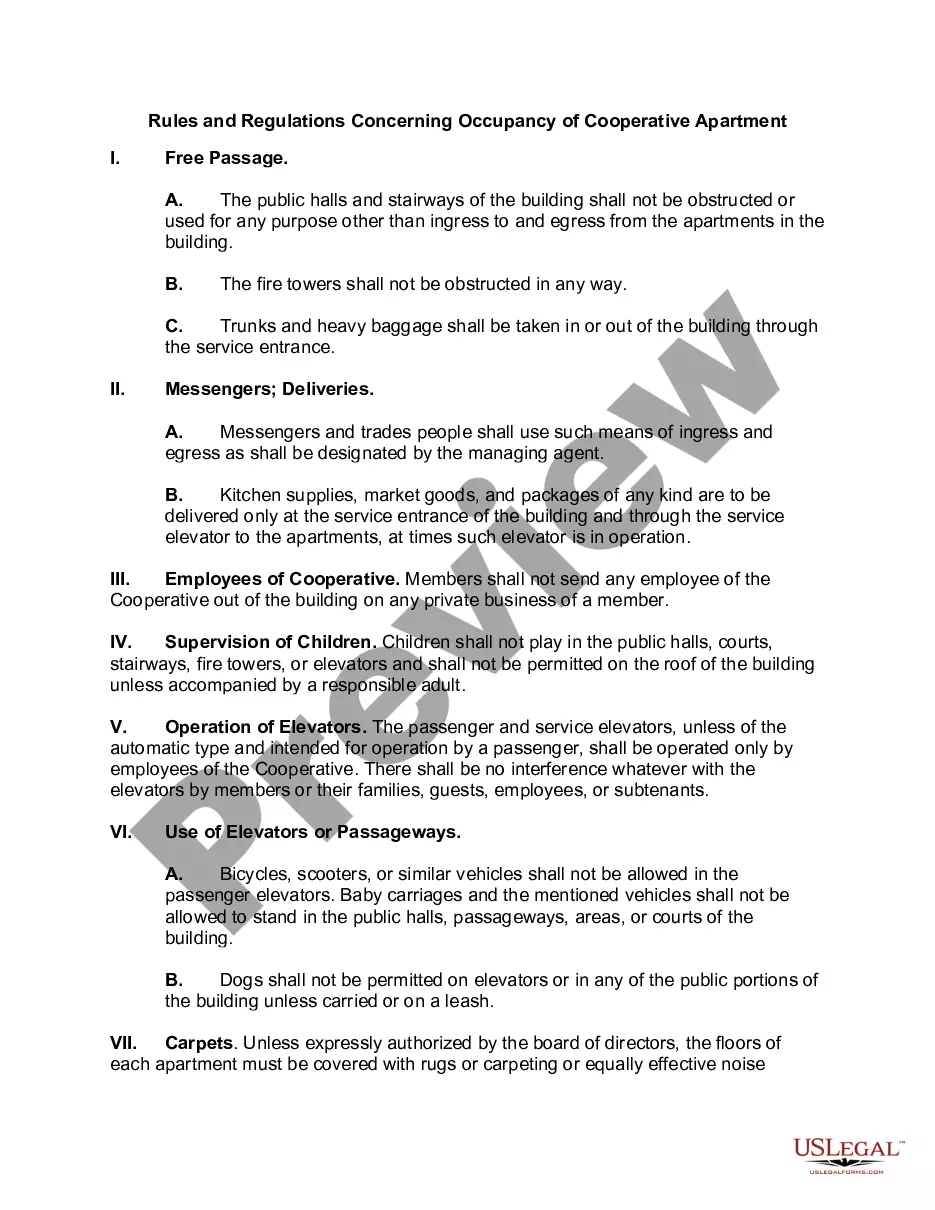
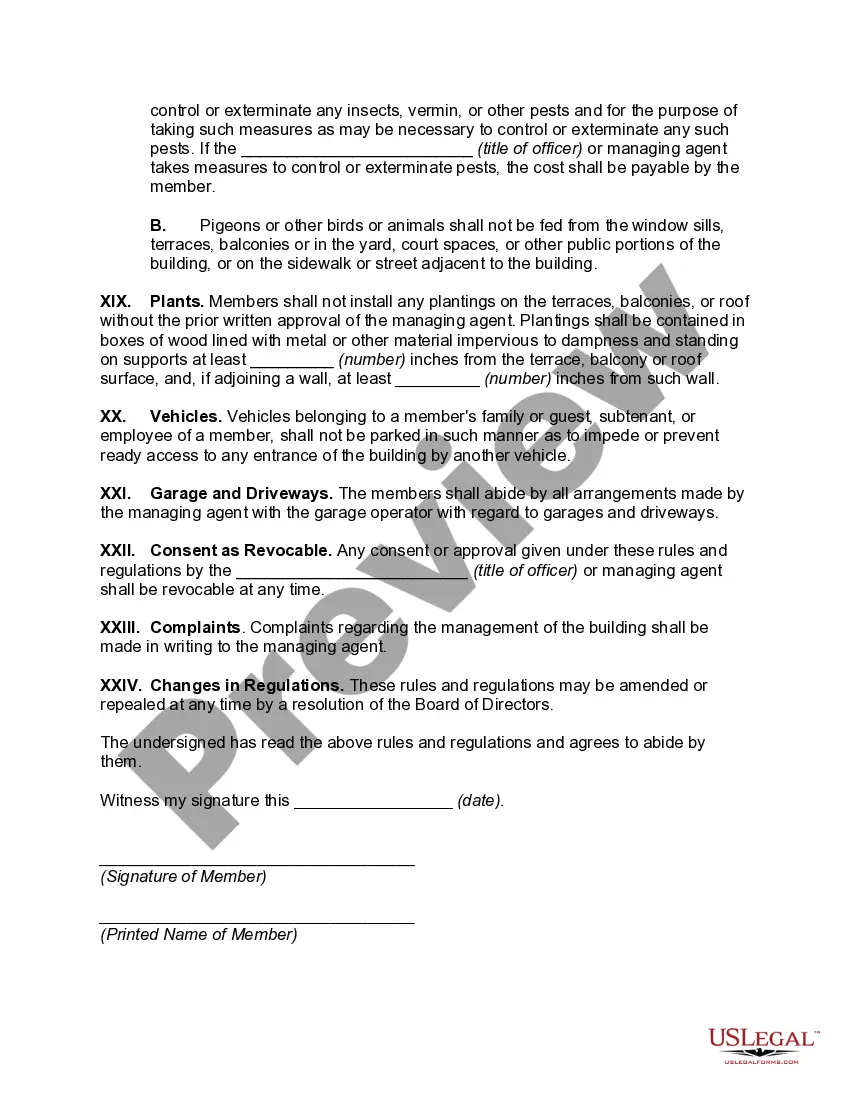
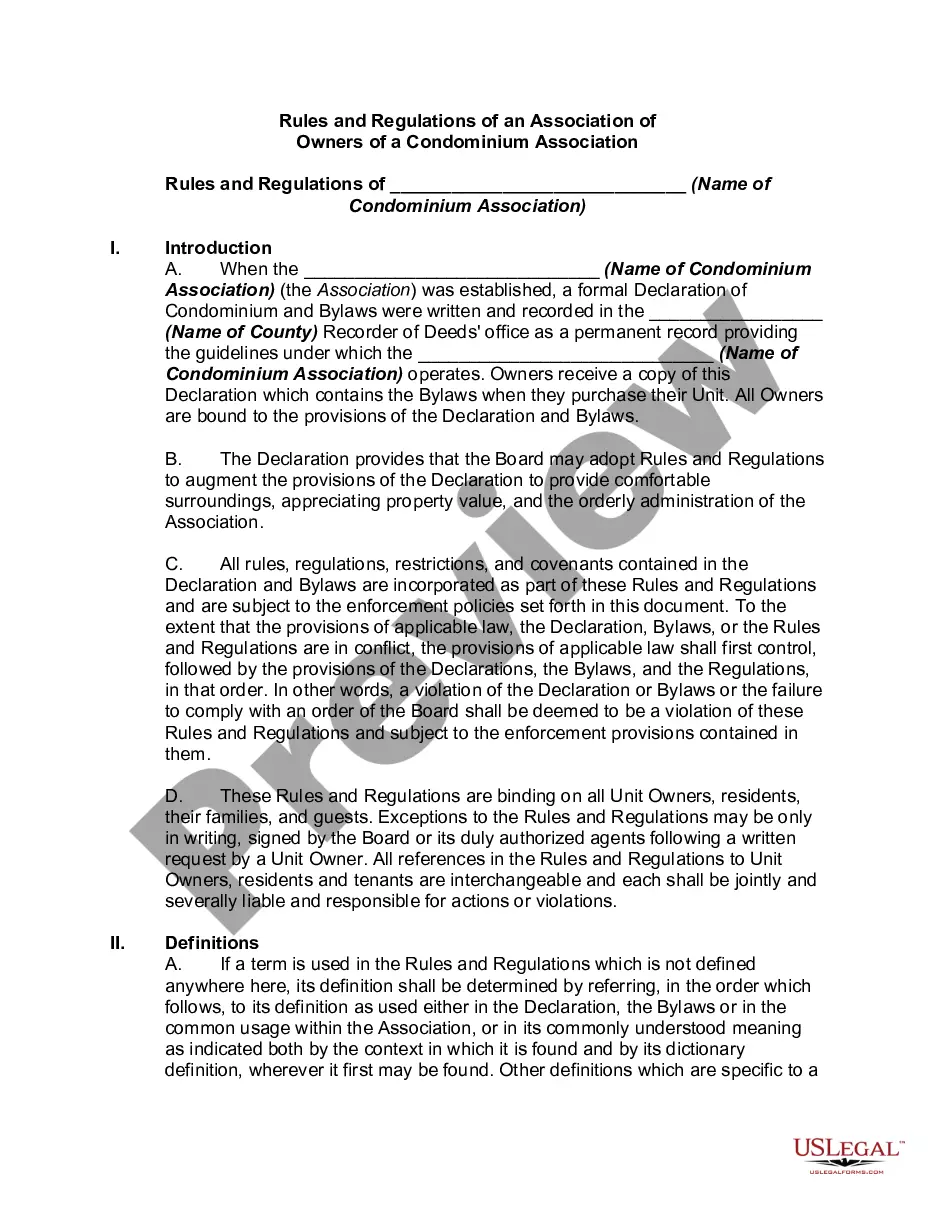
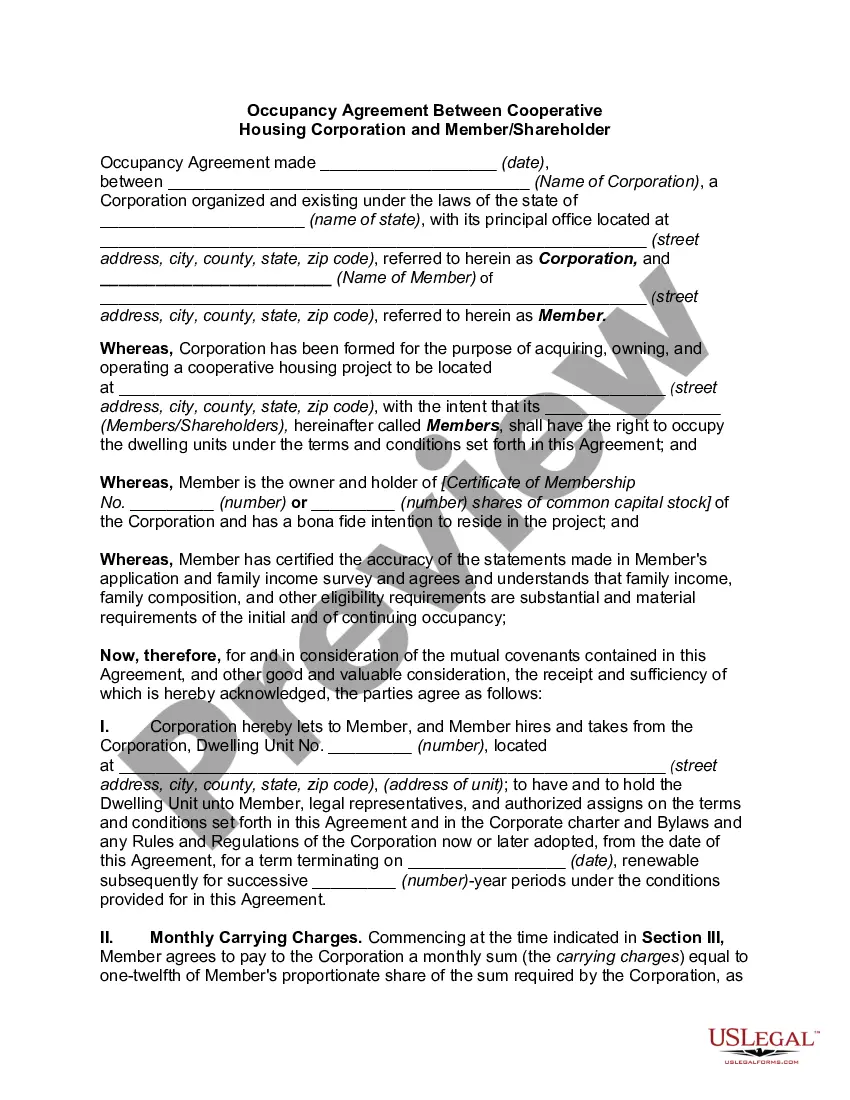
The Rules and Regulations Concerning Occupancy of Cooperative Apartment sets forth the guidelines for residents within a cooperative apartment building. It outlines the rights and responsibilities of both the cooperative association and its members, ensuring a harmonious living environment. Unlike standard lease agreements, this form specifically addresses the unique structure of cooperative housing, where residents are both members and stakeholders in the property.
Main sections of this form
- Free passage rules for common areas and service entrances.
- Guidelines for deliveries and messenger access.
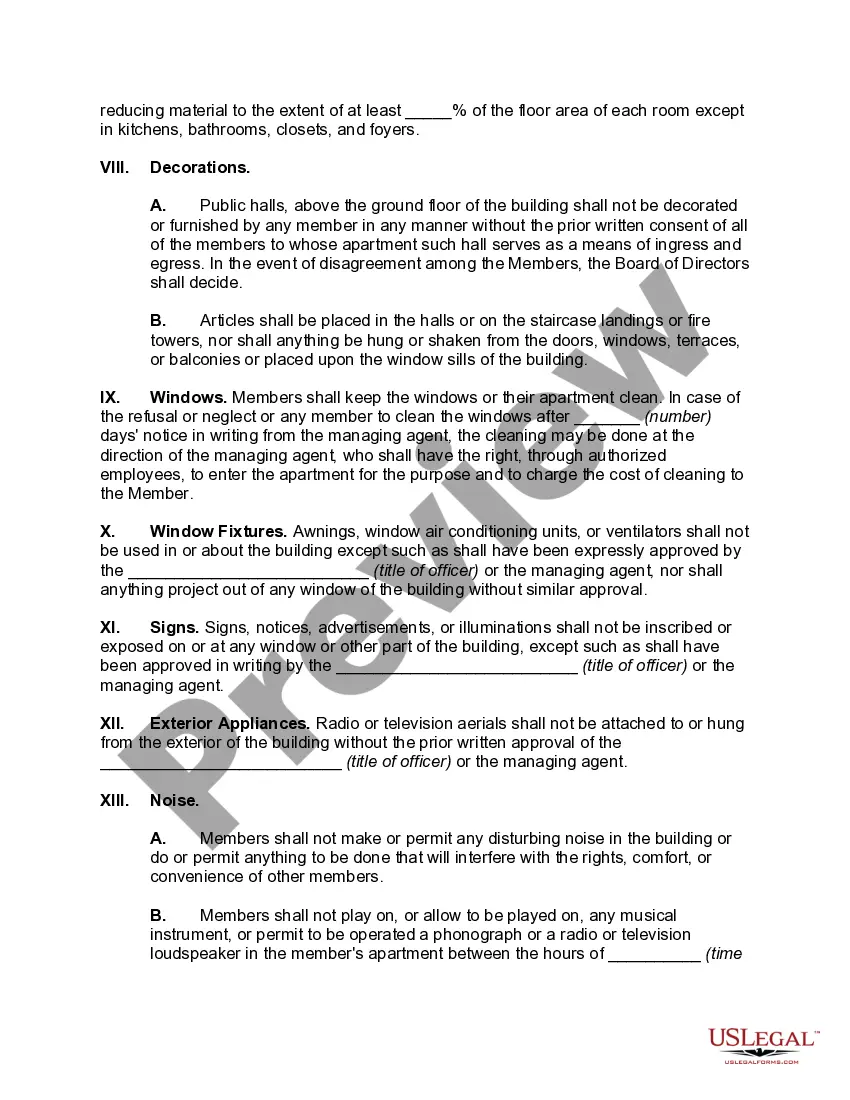
- Noise restrictions to maintain a peaceful living environment.
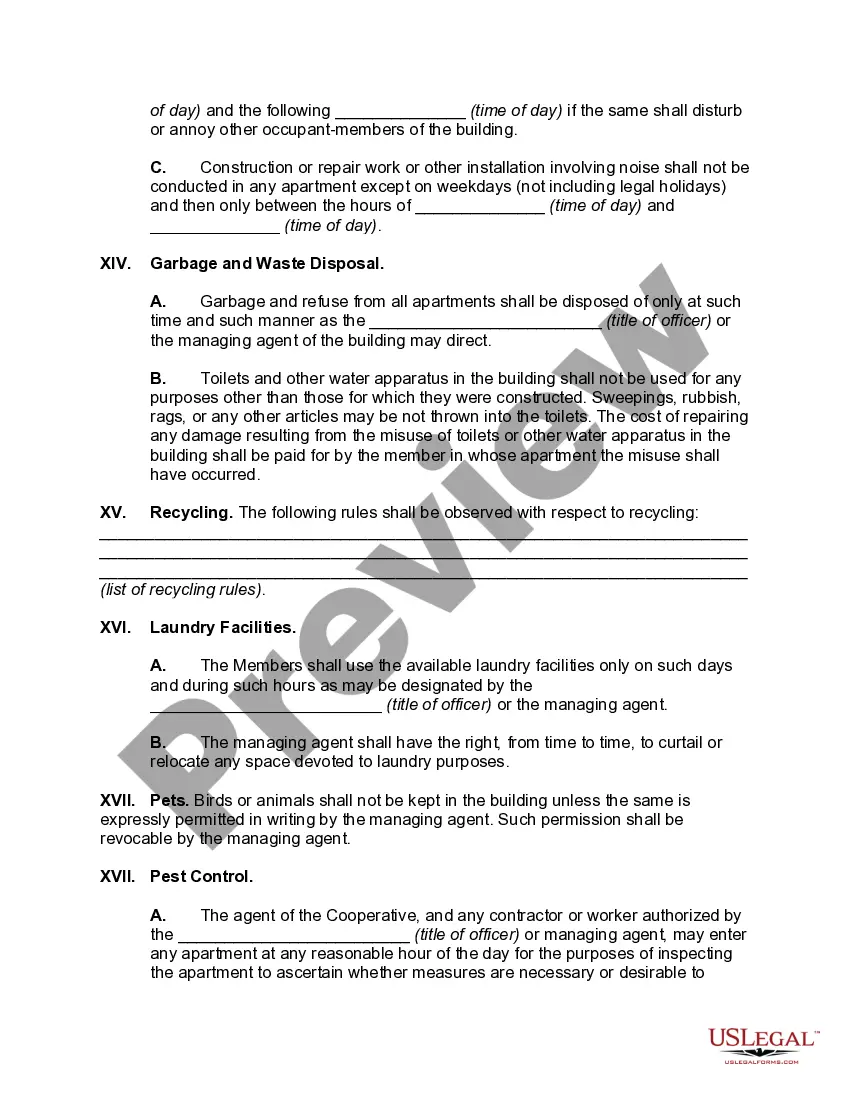
- Pet policies including regulations around their presence in the building.
- Maintenance responsibilities for apartment cleanliness and pest control.
- Rules regarding modifications to windows and decorations in common areas.

Situations where this form applies
This form is essential for cooperative apartment associations to establish clear rules governing member behavior and building maintenance. It should be used when creating or updating the occupancy rules to ensure all residents understand the expectations and policies they must follow for communal living.
Intended users of this form
- Cooperative apartment associations looking to establish or update occupancy rules.
- Current members of a cooperative living arrangement needing to understand their rights and responsibilities.
- Potential members looking for transparency about community standards and regulations before joining.
How to complete this form
- Read the document thoroughly to understand all rules and regulations listed.
- Fill in the blanks where indicated, including titles of officers and specific times or percentages.
- Sign and date the form at the bottom to indicate agreement with the rules.
Notarization guidance
This form does not typically require notarization unless specified by local law. Ensure to check state regulations to determine if notarization is necessary.
Get your form ready online
Our built-in tools help you complete, sign, share, and store your documents in one place.
Make edits, fill in missing information, and update formatting in US Legal Forms—just like you would in MS Word.
Download a copy, print it, send it by email, or mail it via USPS—whatever works best for your next step.
Sign and collect signatures with our SignNow integration. Send to multiple recipients, set reminders, and more. Go Premium to unlock E-Sign.
If this form requires notarization, complete it online through a secure video call—no need to meet a notary in person or wait for an appointment.
We protect your documents and personal data by following strict security and privacy standards.

Make edits, fill in missing information, and update formatting in US Legal Forms—just like you would in MS Word.

Download a copy, print it, send it by email, or mail it via USPS—whatever works best for your next step.

Sign and collect signatures with our SignNow integration. Send to multiple recipients, set reminders, and more. Go Premium to unlock E-Sign.

If this form requires notarization, complete it online through a secure video call—no need to meet a notary in person or wait for an appointment.

We protect your documents and personal data by following strict security and privacy standards.
Typical mistakes to avoid
- Failing to fill in all required fields, such as the officer's title or specific times.
- Not reviewing the rules with all members before signing.
- Overlooking necessary amendments that may be introduced by the Board of Directors after the initial approval.
Benefits of completing this form online
- Convenient access from anywhere, allowing for efficient distribution to all members.
- Editable features that permit easy updates to comply with changing regulations.
- Reliable documentation that ensures legality and accountability within the cooperative.
Looking for another form?



Form popularity
FAQ
If you are a tenant in a co-op, you can be evicted. The board can start a non-payment proceeding or a holdover proceeding against you in Housing Court. Co-op boards have a lot of freedom in deciding how to run their buildings and whether to evict a tenant for objectionable conduct.
The major difference between a condominium and a cooperative is that in a cooperative, each owner does not have outright ownership of any specific, identifiable unit. Rather, title to the entire property is held by the cooperative (usually a corporation), and the residents own stock in the corporation.
ARTICLE I. NAME OF ORGANIZATION. The name of the corporation is YOUR NONPROFIT NAME HERE. ARTICLE II. CORPORATE PURPOSE. Section 1. ARTICLE III. MEMBERSHIP. ARTICLE IV. MEETINGS OF MEMBERS. ARTICLE V. BOARD OF DIRECTORS. ARTICLE VI. OFFICERS. ARTICLE VII. COMMITTEES. ARTICLE VIII. CORPORATE STAFF.
A co-op is a way to own a primary residence, but where homeowners don't own their units outright; instead, each resident is a shareholder in the co-op itself. Some co-op owners are allowed to sell their co-op shares in the open market, depending on the market rate for co-ops in that location.
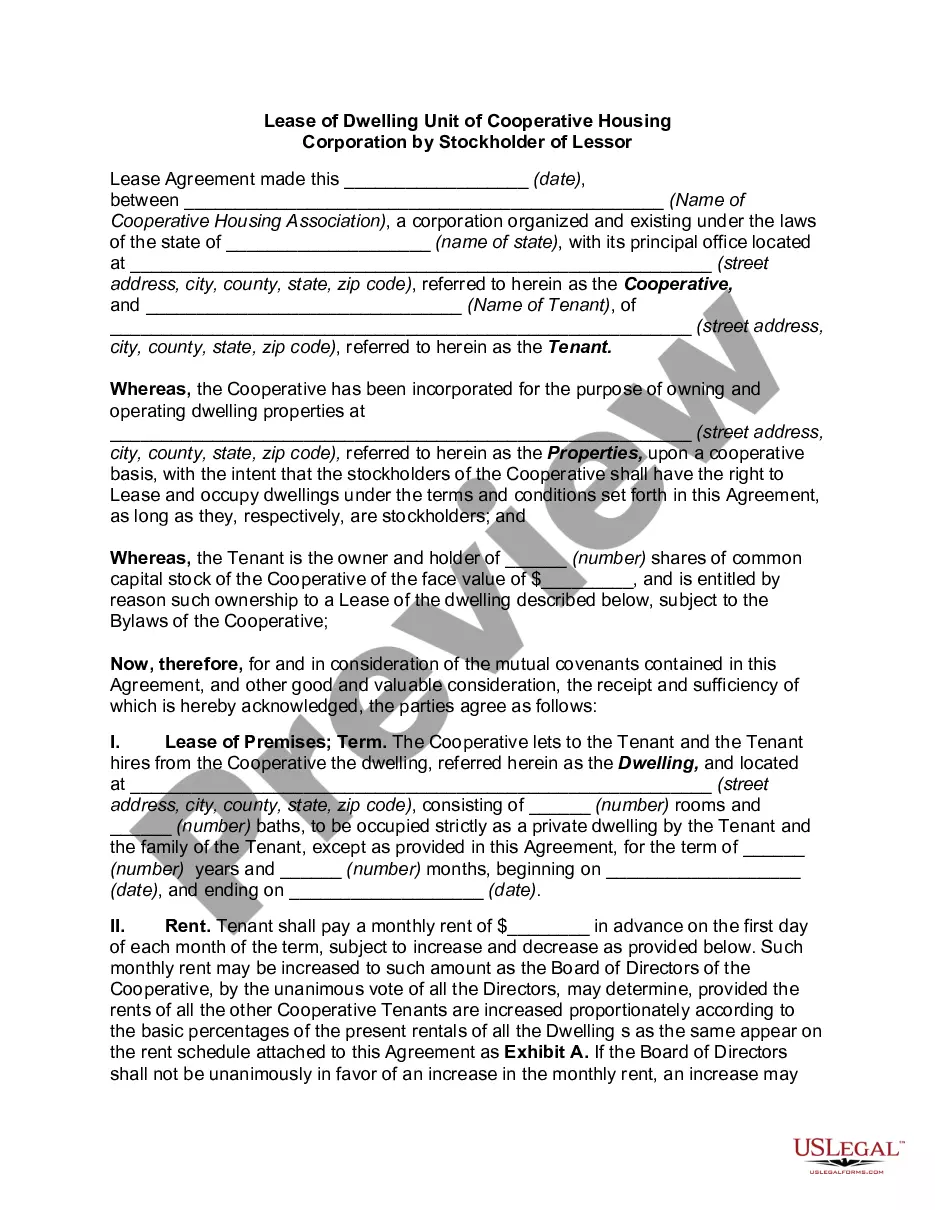
A housing cooperative or "co-op" is a type of residential housing option that is actually a corporation whereby the owners do not own their units outright. Instead, each resident is a shareholder in the corporation based in part on the relative size of the unit that they live in.
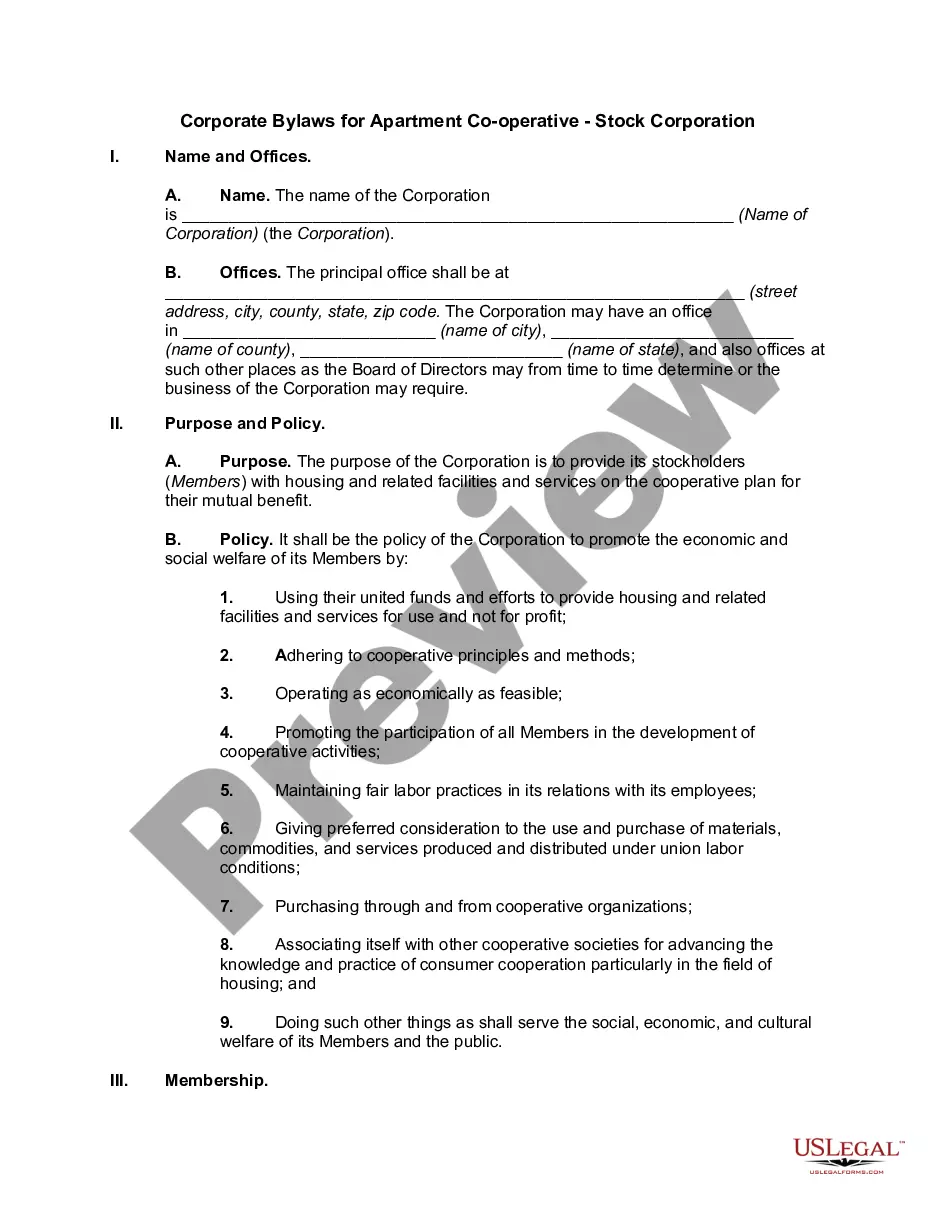
Bylaws are the rules and regulations that govern and define various aspects of a co-operative's business. Bylaws can vary widely across organizations and reflect both the business of the co-operative and values and interests of its members.
Just like any other privately owned piece of property, the answer is yes for a condo. However, to inherit either, you will need a will that clearly names you as the inheritor of the property. If one spouse passes away and the real estate was jointly owned, then it can pass directly to the other upon death.
Whether or not there is a will, a proprietary lease in a co-op will not terminate upon the death of an owner.The decedent's interest passes to the estate and is inherited by the beneficiary in the will or by the next of kin. That may not be the co-owner of the sharesor even the spouse of the decedent.
Except when it's a co-op apartment, where a board can evict shareholders for annoying conduct and needn't even go to court to do it.Co-ops cannot avoid court altogether in such cases, because even after a Pullman-type termination of a shareholder's proprietary lease, the co-op still must sue to evict the shareholder.