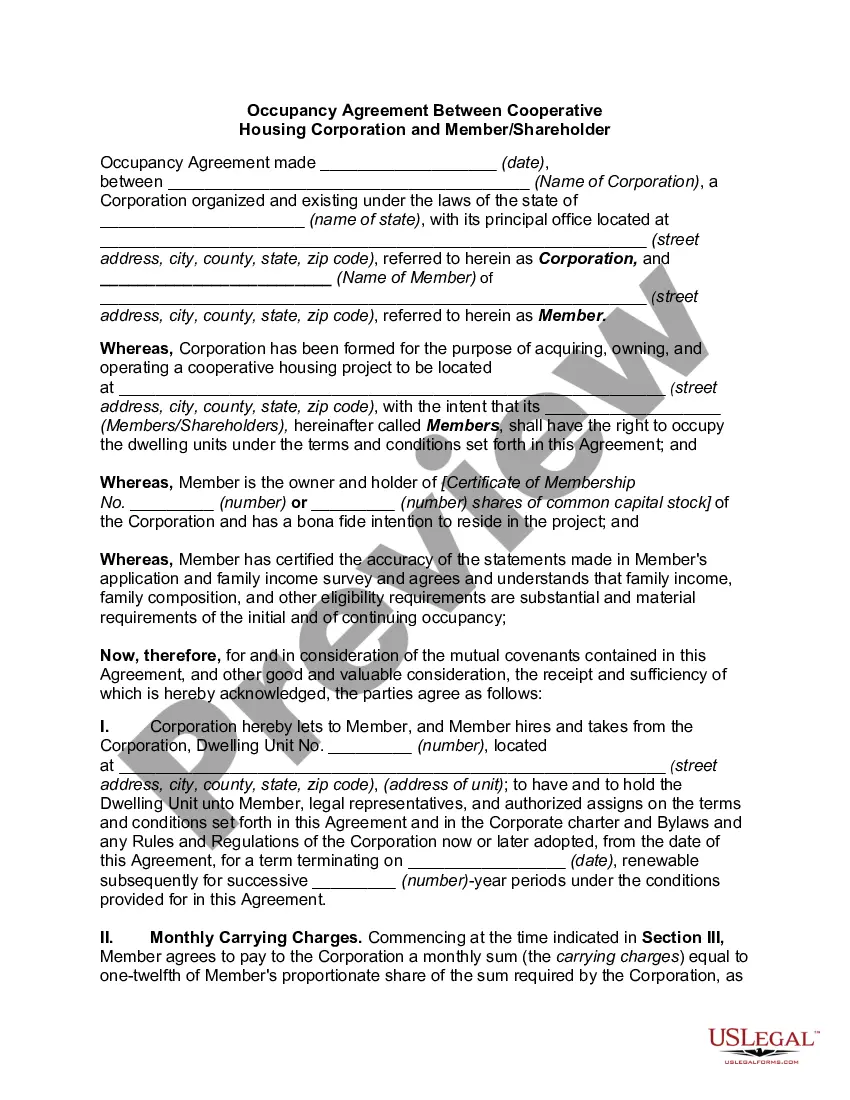
Occupancy Agreement Between Cooperative Housing Corporation and Member/Shareholder
Overview of this form
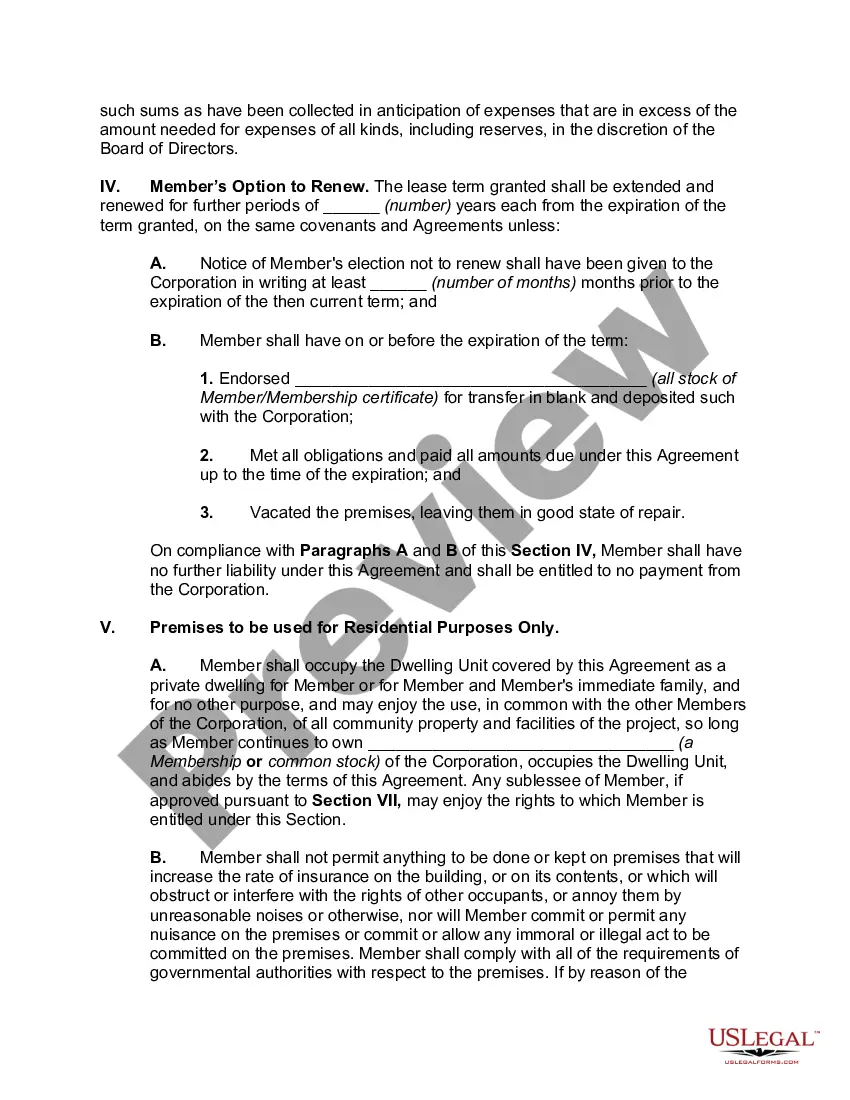
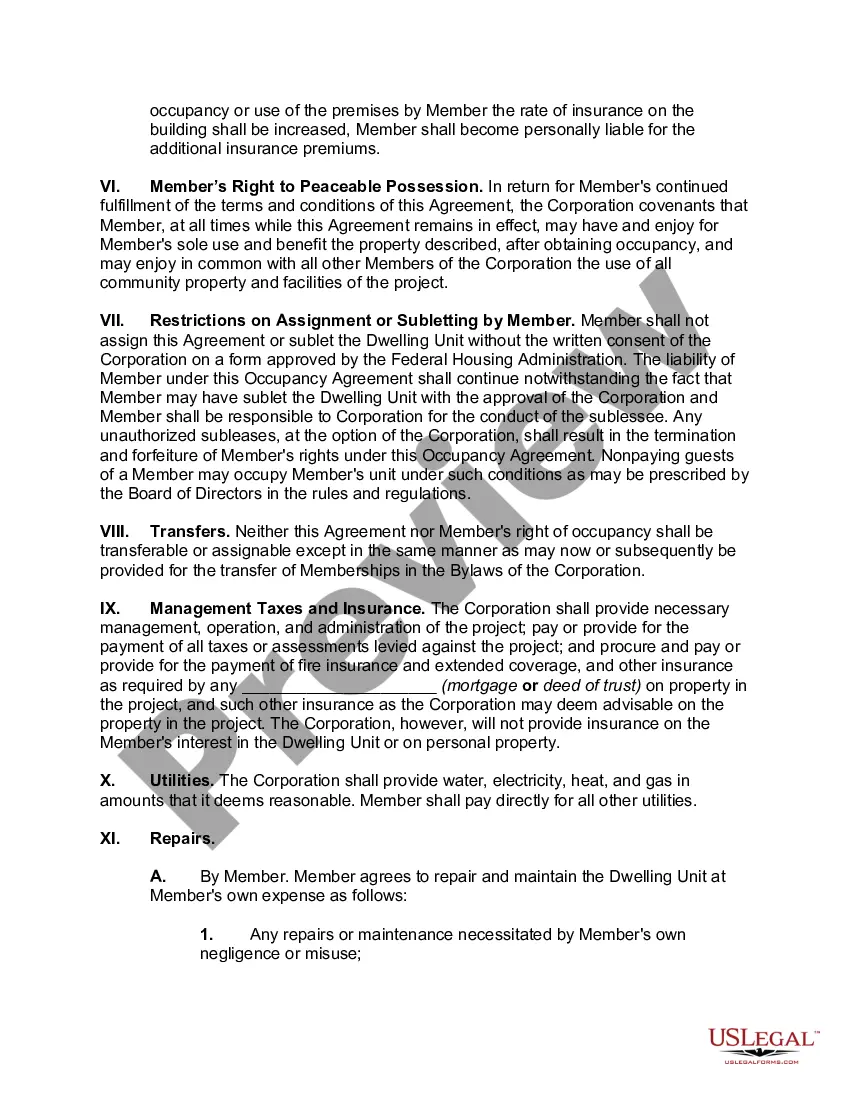
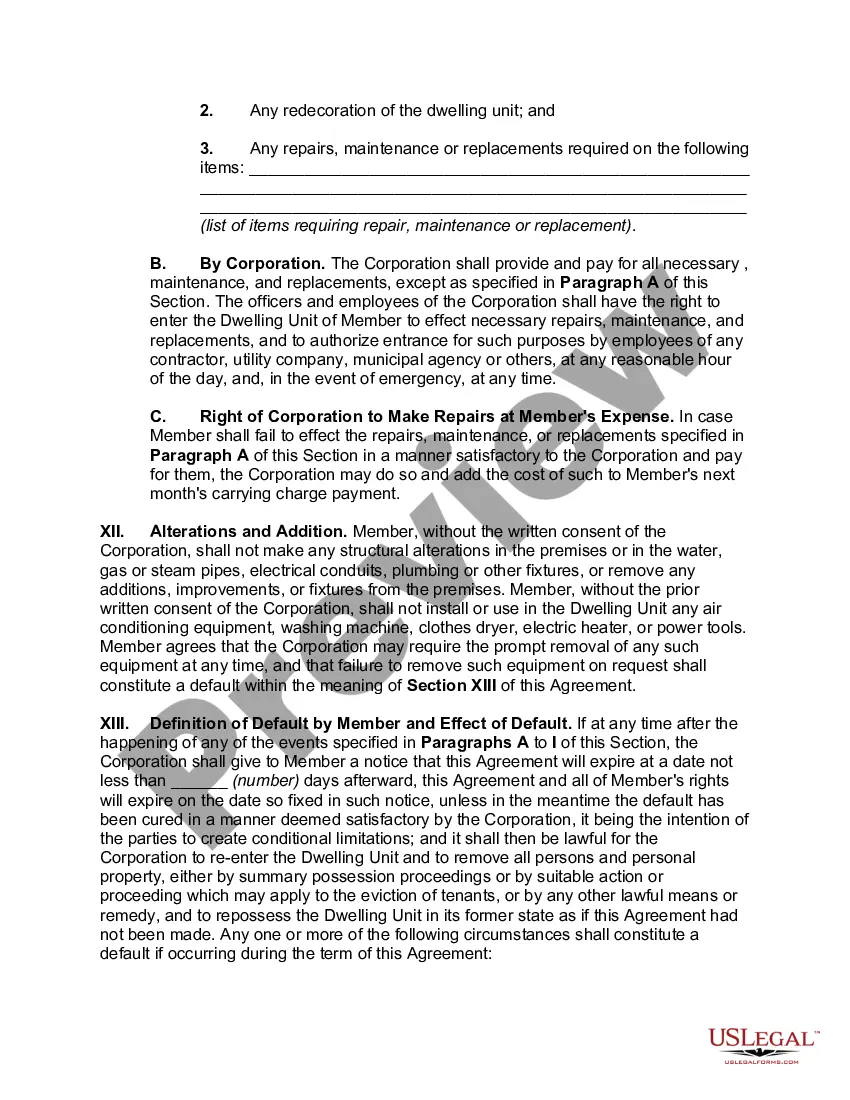
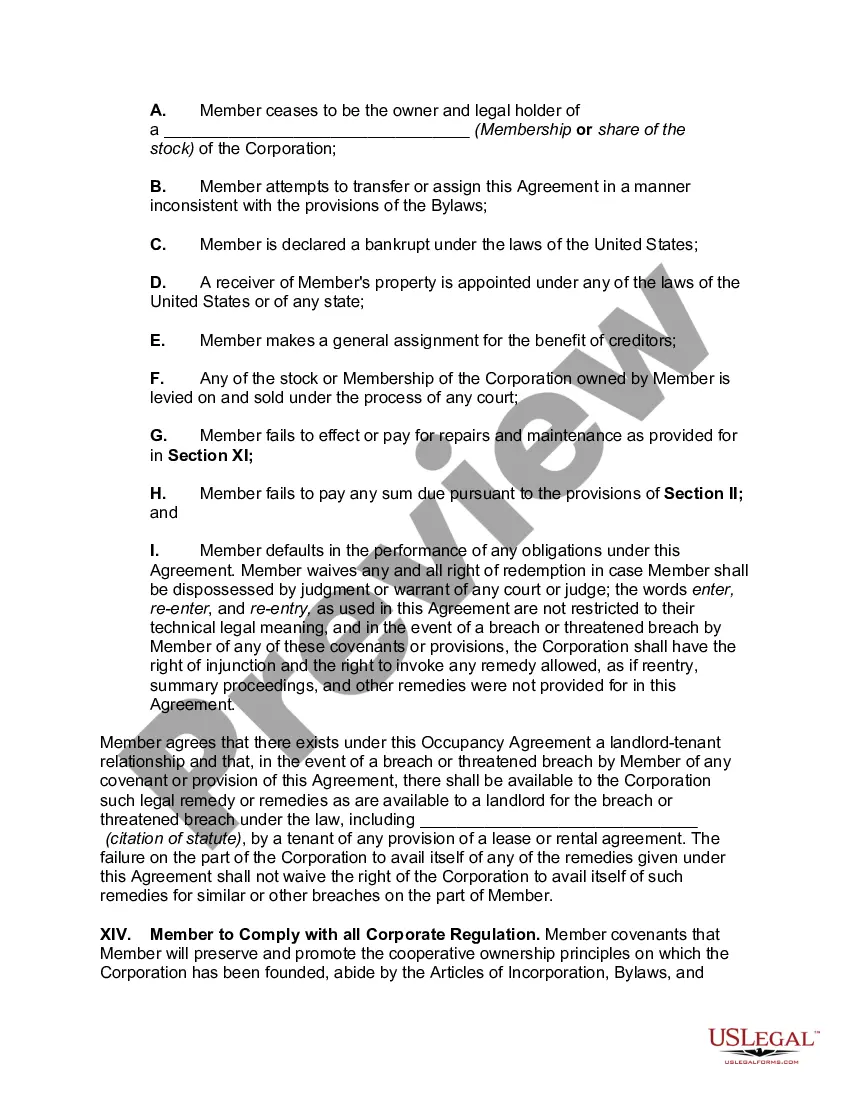
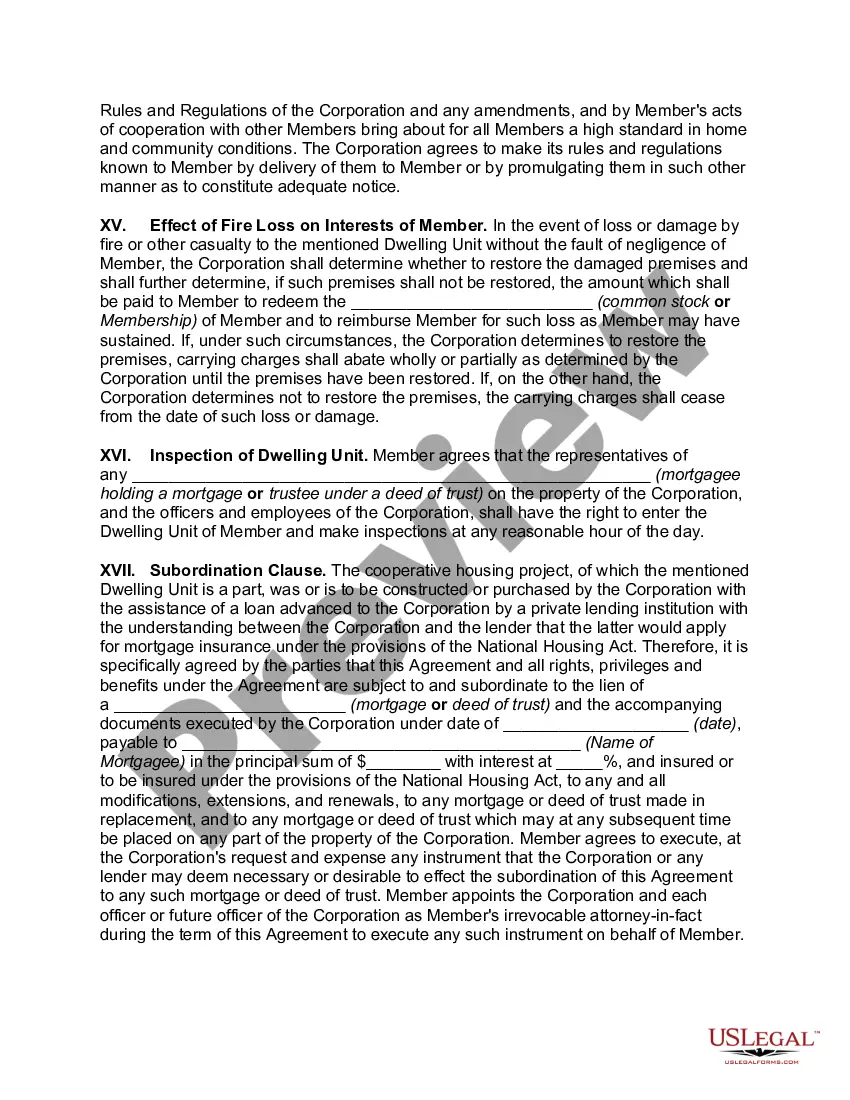
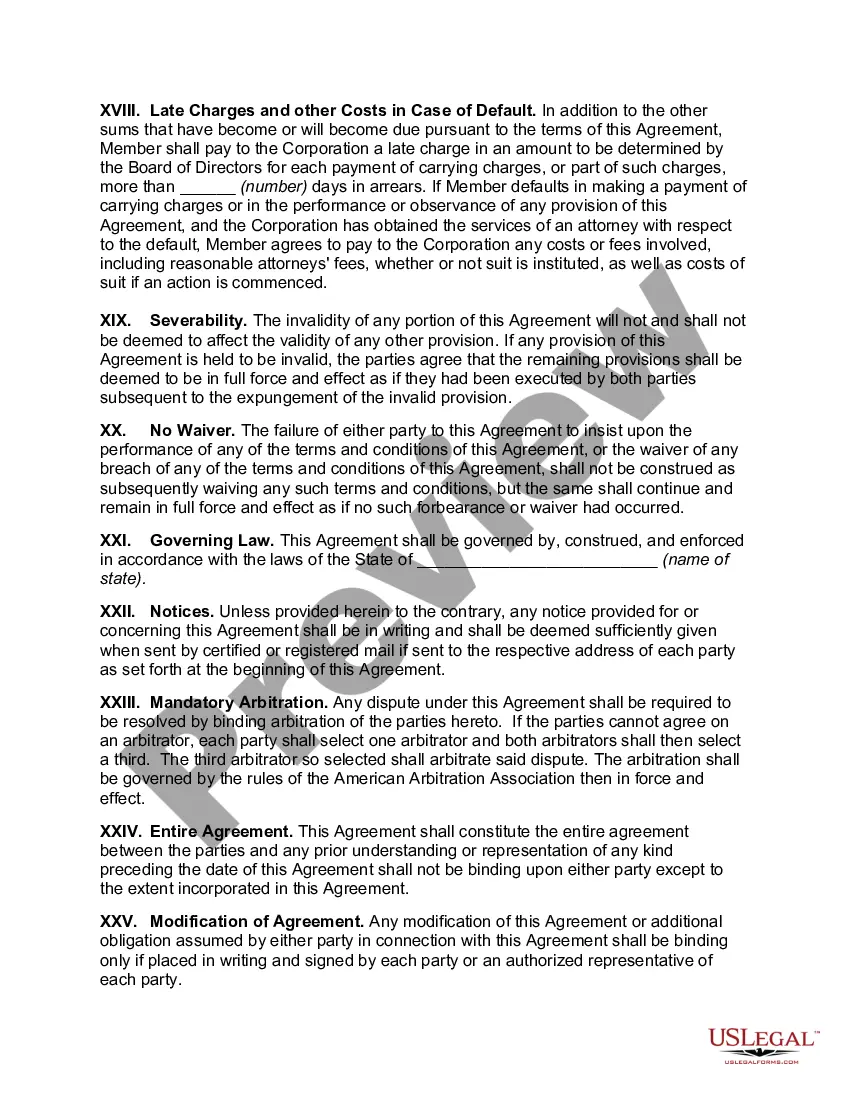
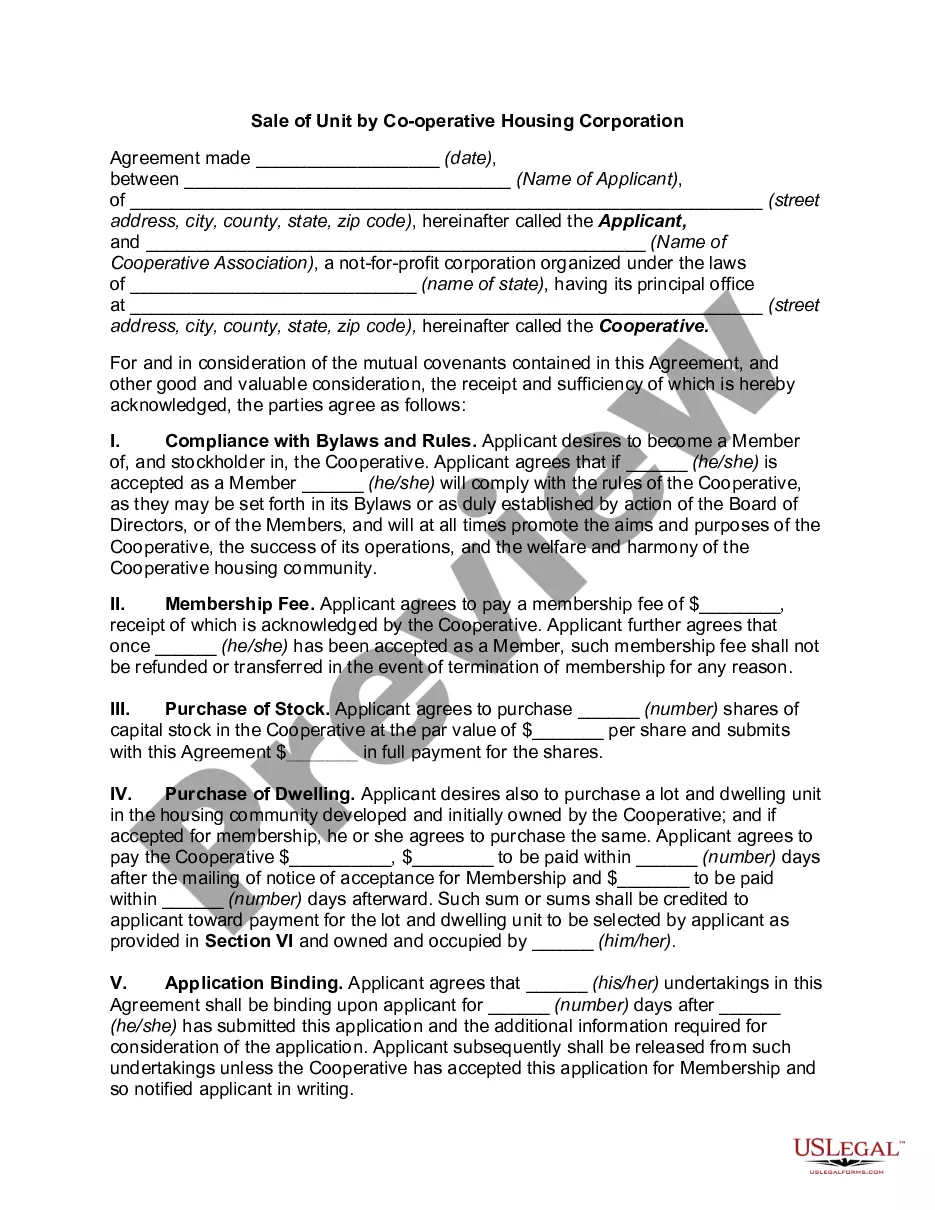
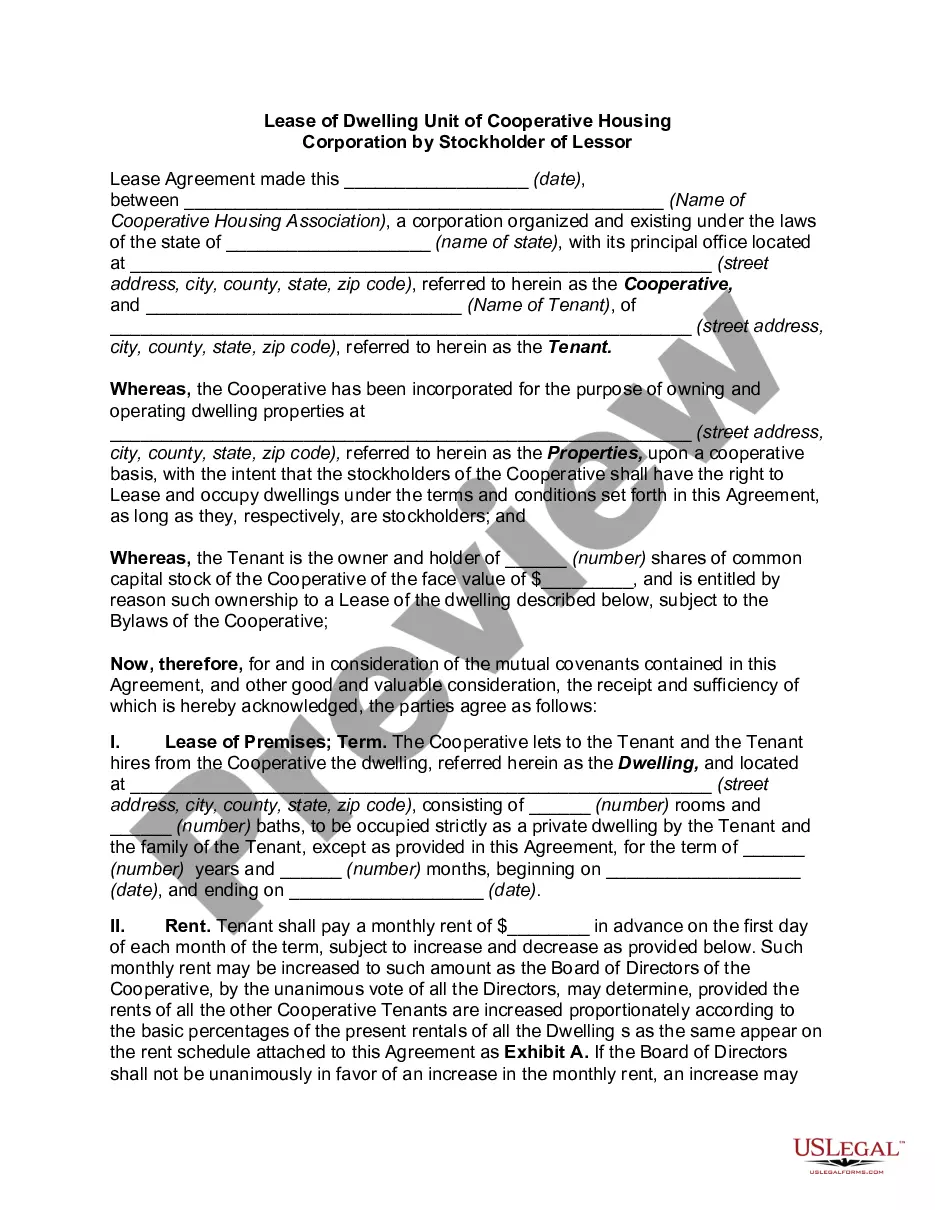
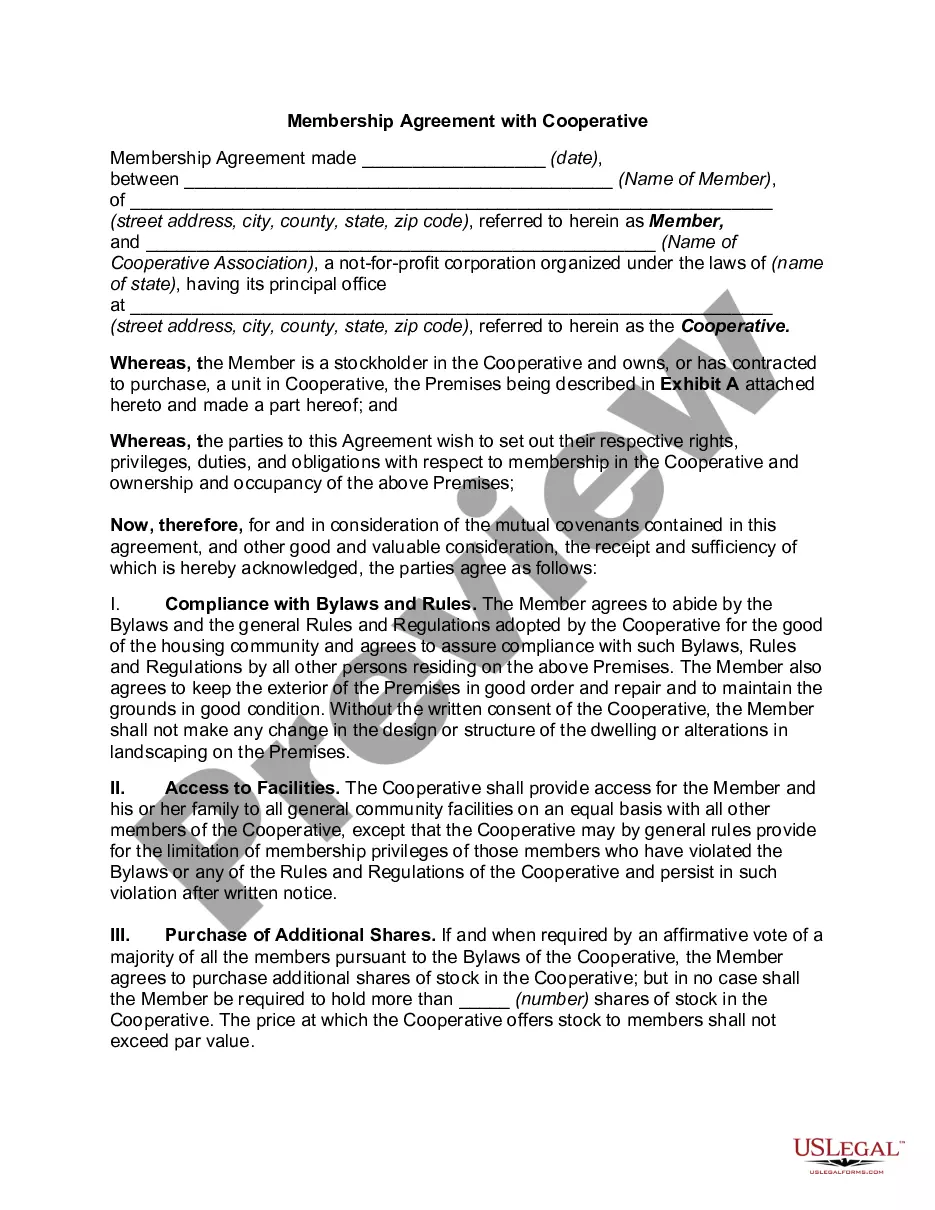
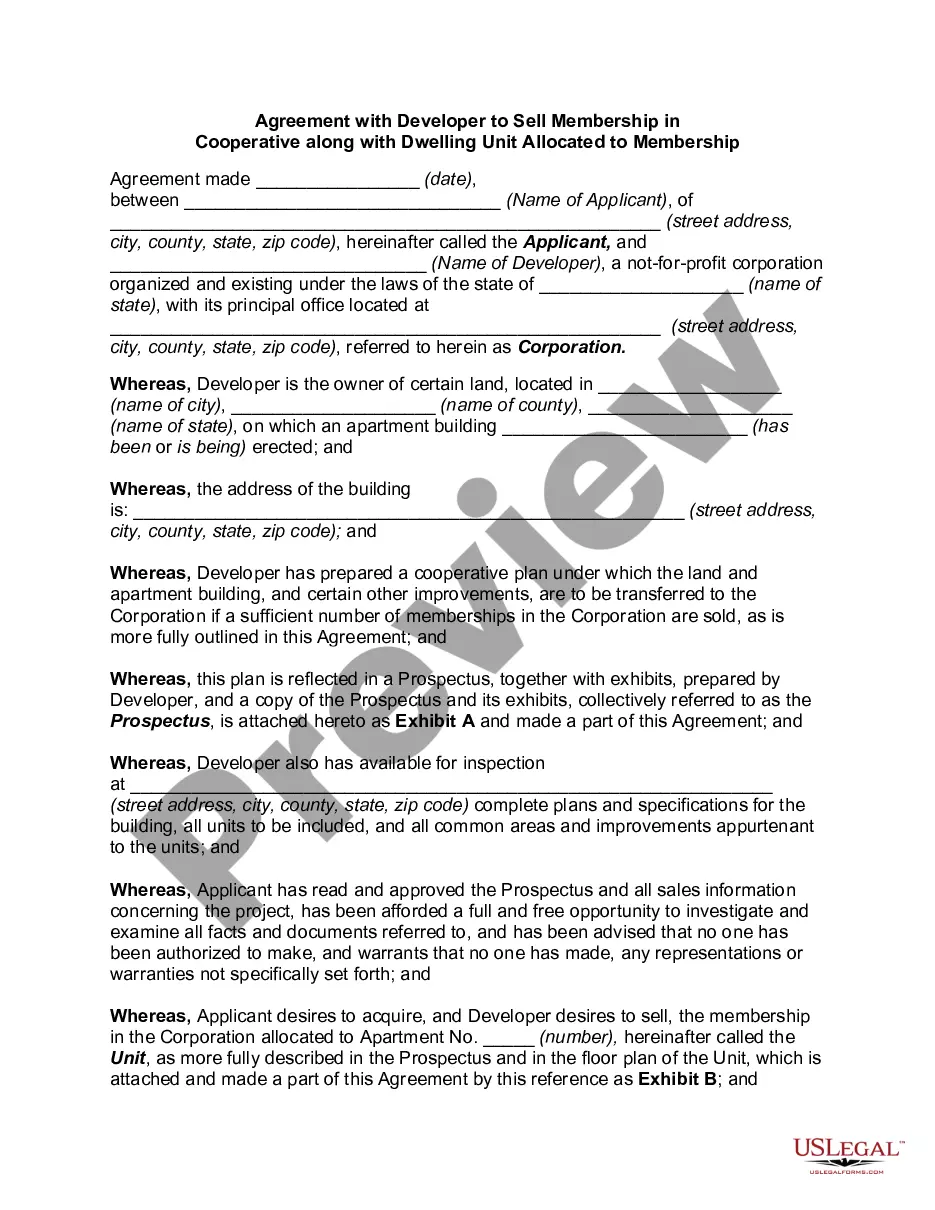
The Occupancy Agreement Between Cooperative Housing Corporation and Member/Shareholder is a legal document that outlines the terms under which a member can occupy a dwelling unit in a housing cooperative. This form establishes the relationship between the cooperative housing corporation and the member, detailing responsibilities, rights, and financial obligations. Unlike traditional rental agreements, this occupancy agreement reflects the unique structure and ownership model of cooperative housing, where the member owns a share in the corporation rather than the property itself.
What’s included in this form
- Identification of the parties involved in the agreement.
- Details about the dwelling unit being leased.
- Terms of occupancy, including the duration and renewal options.
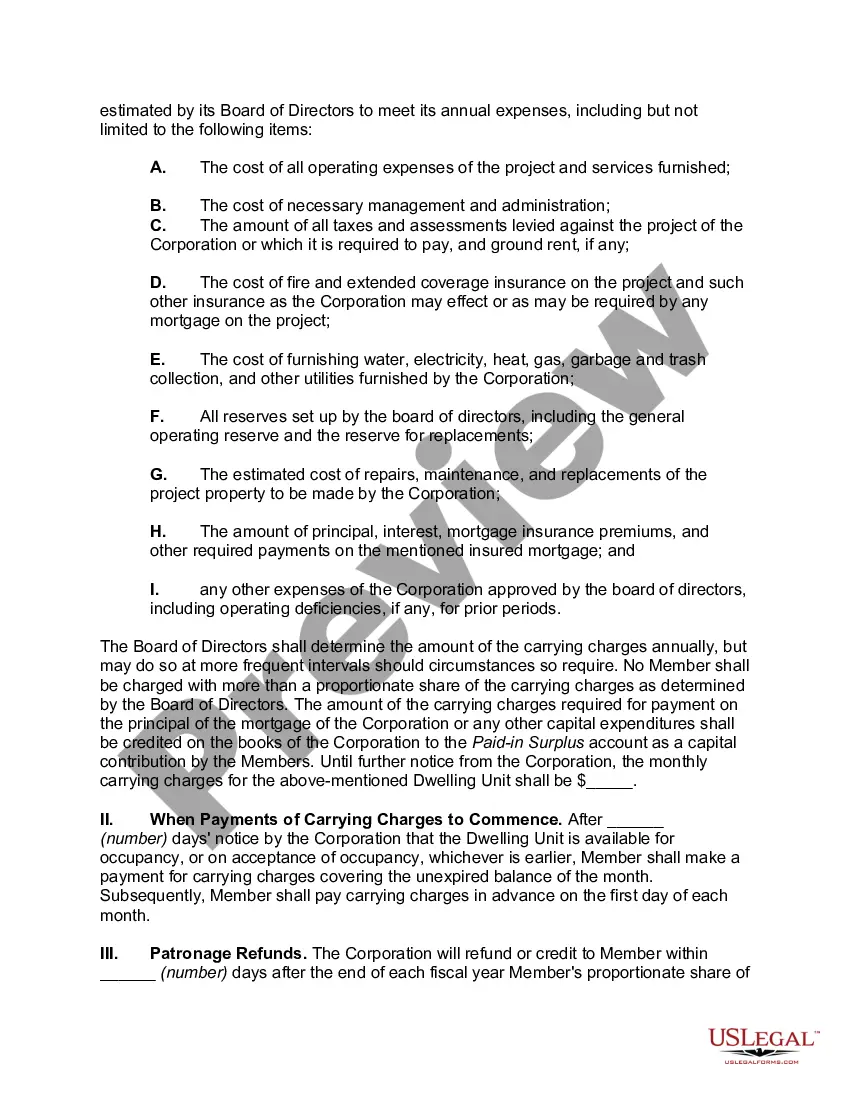
- Monthly carrying charges and payment obligations.
- Rights and responsibilities relating to the use of the unit and common areas.
- Conditions under which the agreement may be terminated.
When to use this document
This occupancy agreement should be used when an individual becomes a member or shareholder of a cooperative housing corporation and intends to occupy a dwelling unit within the cooperative. It is applicable when entering into a legal relationship that involves shared ownership and management responsibilities, as well as when defining the financial obligations associated with living in a cooperative community.
Intended users of this form
- Individuals who are members or shareholders of a cooperative housing corporation.
- Cooperative housing corporations that are formalizing agreements with their members.
- Legal representatives assisting clients in cooperative housing arrangements.
Steps to complete this form
- Identify the parties: Fill in the names and addresses of the cooperative corporation and the member.
- Specify the dwelling unit: Clearly indicate the unit number and address to be occupied.
- Enter relevant dates: Fill in the date of the agreement and the term of occupancy.
- Define financial obligations: Include the monthly carrying charges and payment terms.
- Review member responsibilities: Ensure that all terms regarding the use of the premises and compliance with community rules are clearly stated.
Notarization requirements for this form
This form does not typically require notarization unless specified by local law. Users are advised to check their state regulations or consult with a legal professional to determine any specific notarization needs related to occupancy agreements.
Get your form ready online
Our built-in tools help you complete, sign, share, and store your documents in one place.
Make edits, fill in missing information, and update formatting in US Legal Forms—just like you would in MS Word.
Download a copy, print it, send it by email, or mail it via USPS—whatever works best for your next step.
Sign and collect signatures with our SignNow integration. Send to multiple recipients, set reminders, and more. Go Premium to unlock E-Sign.
If this form requires notarization, complete it online through a secure video call—no need to meet a notary in person or wait for an appointment.
We protect your documents and personal data by following strict security and privacy standards.

Make edits, fill in missing information, and update formatting in US Legal Forms—just like you would in MS Word.

Download a copy, print it, send it by email, or mail it via USPS—whatever works best for your next step.

Sign and collect signatures with our SignNow integration. Send to multiple recipients, set reminders, and more. Go Premium to unlock E-Sign.

If this form requires notarization, complete it online through a secure video call—no need to meet a notary in person or wait for an appointment.

We protect your documents and personal data by following strict security and privacy standards.
Mistakes to watch out for
- Failing to accurately enter ownership details or unit descriptions.
- Not specifying the renewal terms properly.
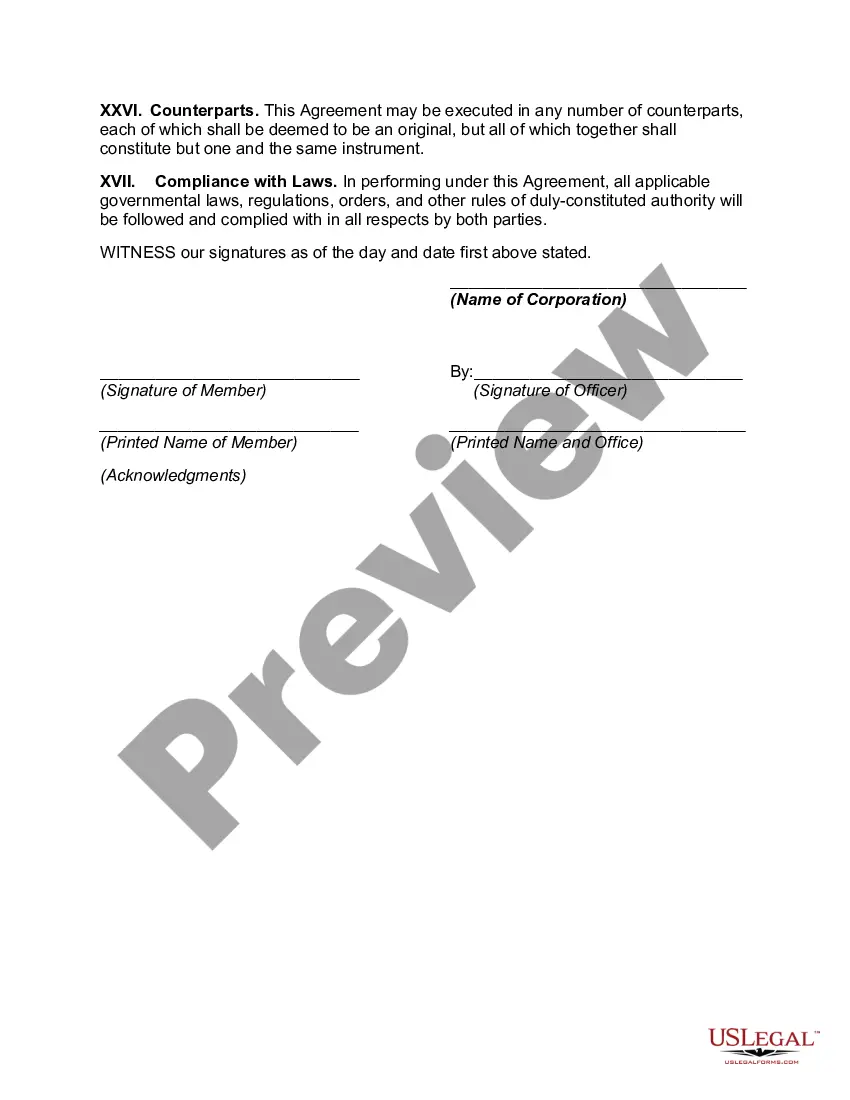
- Neglecting to include all parties' signatures for validity.
- Omitting important financial obligations such as carrying charges.
Benefits of using this form online
- Convenient access to professionally drafted legal documents tailored to cooperative housing.
- Easy online editing to customize the form according to individual needs.
- Instant downloads, allowing for prompt use and implementation.
- Reliable templates that comply with legal standards and requirements.
Summary of main points
Key points to remember:
- The Occupancy Agreement is vital for establishing clear terms between cooperative housing corporations and their members.
- Accurate completion of the form is crucial to avoid misunderstandings and legal issues.
- Understanding the obligations regarding carrying charges and the rules of the corporation is essential for new members.
Looking for another form?

Form popularity
FAQ
It is a standard contract used in cooperatives to document the arrangement by which a member/shareholder occupies a cooperative unit. The agreement formalizes the occupancy relationship, including the parties’ roles, the terms of occupancy, and expectations for conduct within the cooperative. Use it when a member seeks to occupy a unit and formalize that arrangement with the cooperative.
In a cooperative, shareholders are members of the corporation who have occupancy rights to a unit under the Occupancy Agreement Between Cooperative Housing Corporation and Member/Shareholder. The agreement helps document those rights, along with applicable cooperative rules and membership obligations; it does not transfer title to the unit.
In a cooperative, a member owns shares in the cooperative corporation rather than real property. The Occupancy Agreement Between Cooperative Housing Corporation and Member/Shareholder documents the member’s occupancy rights tied to those shares, not ownership of the unit itself. Ownership remains with the cooperative, while the member gains occupancy privileges.
Cooperative ownership can involve stricter approvals, ongoing board governance, potential assessments, and occupancy restrictions. The Occupancy Agreement documents the specific occupancy terms within that cooperative framework, but members should understand how board decisions and bylaw rules may affect use, eligibility, and ongoing rights beyond a simple rental arrangement.
Cooperative corporations typically owe fiduciary duties to their members, including fair governance and accountability. The Occupancy Agreement reflects the occupancy arrangement but fiduciary duties are described by the coop’s bylaws and applicable law, not solely by this form. The agreement operates within the cooperative framework and subject to the corporation’s governance.
Unlike a typical landlord-tenant lease, this agreement is between a cooperative housing corporation and a member/shareholder within a co‑op structure. It reflects the ownership framework, ties occupancy rights to shareholding, and governs the member’s use of a unit within the cooperative rather than a direct tenancy.