Liability Waiver for Personal Training
What is this form?
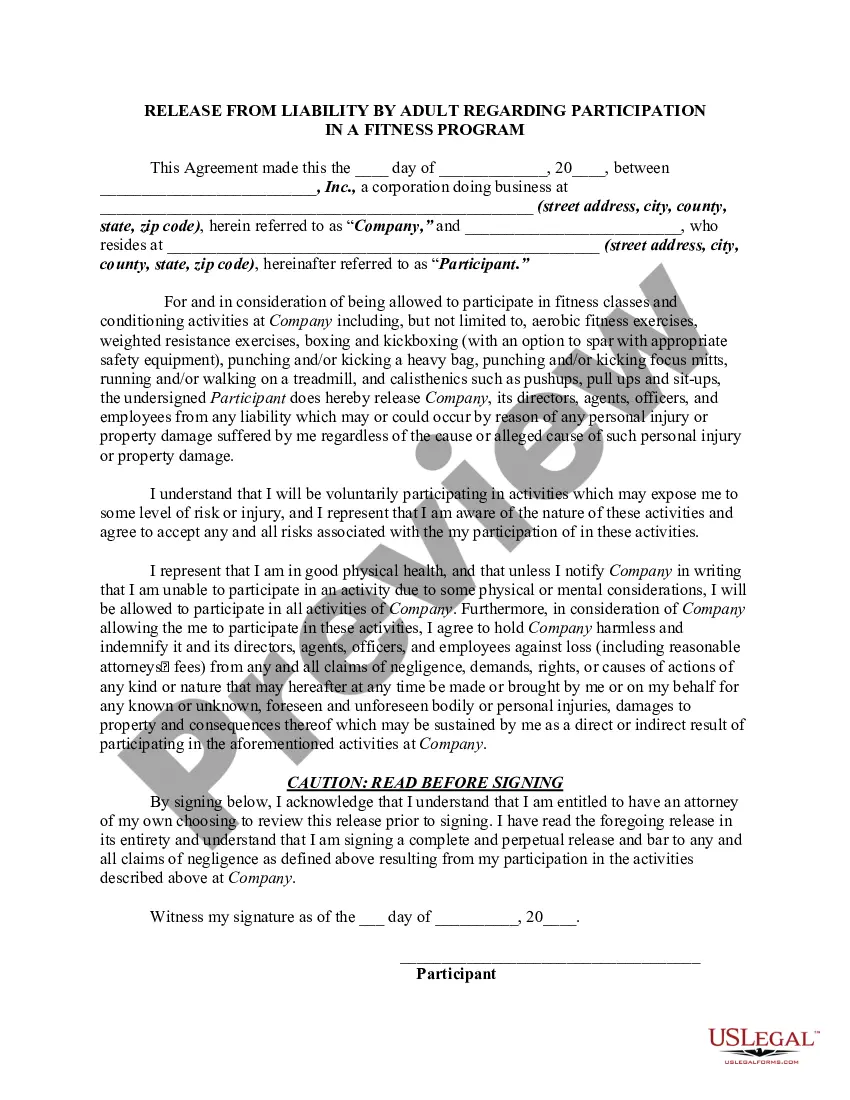
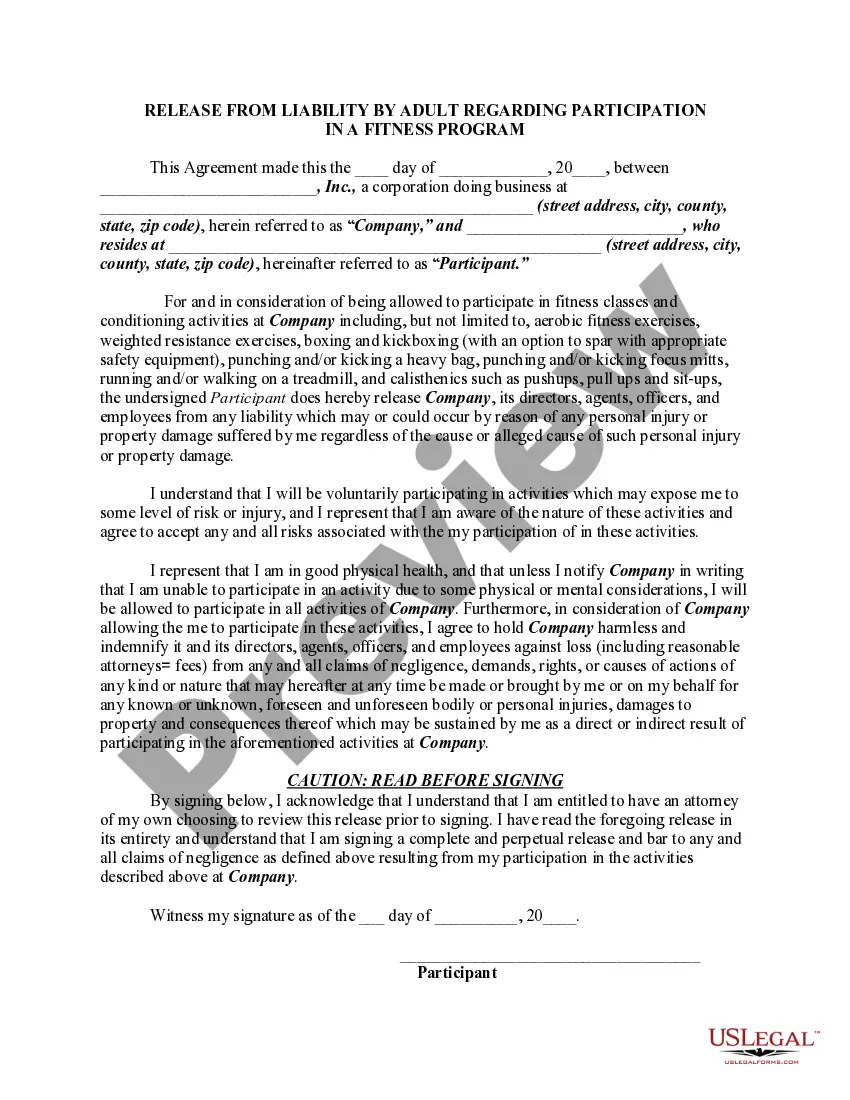
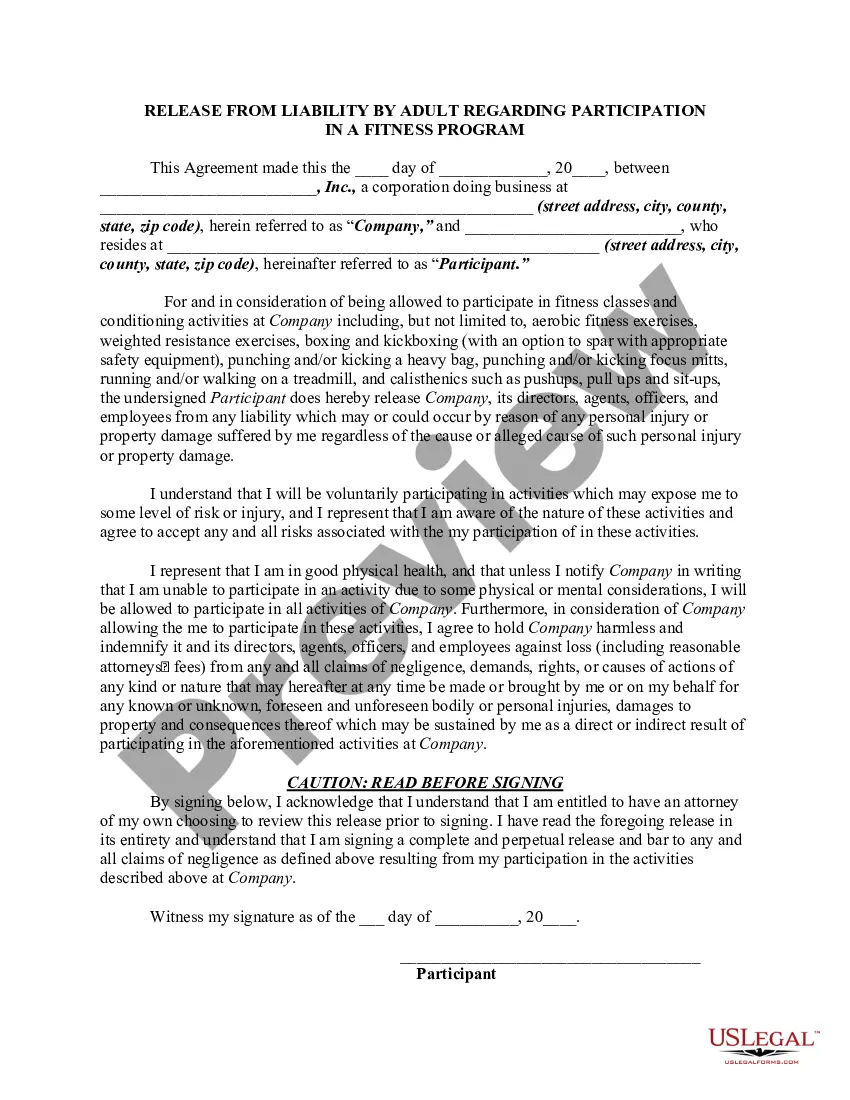
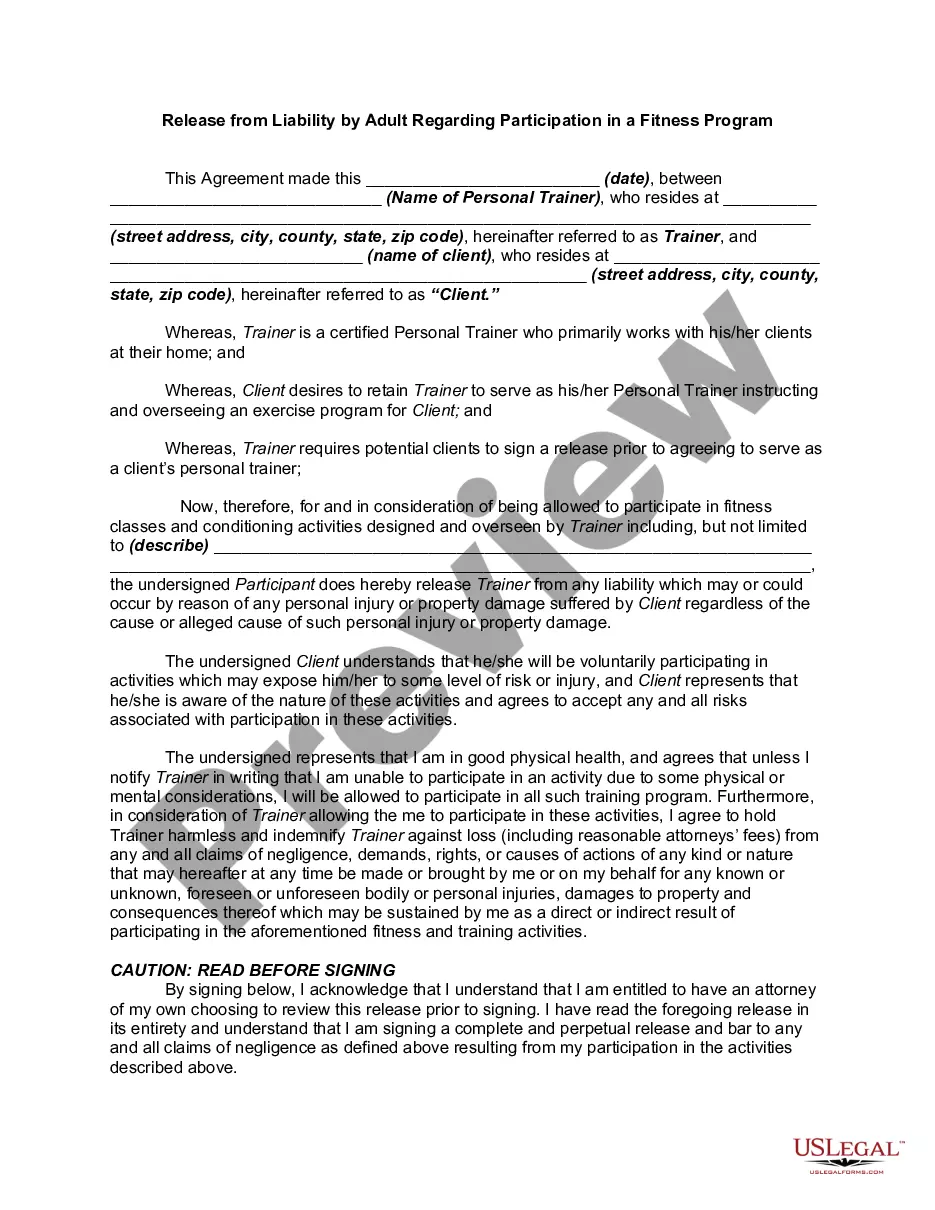
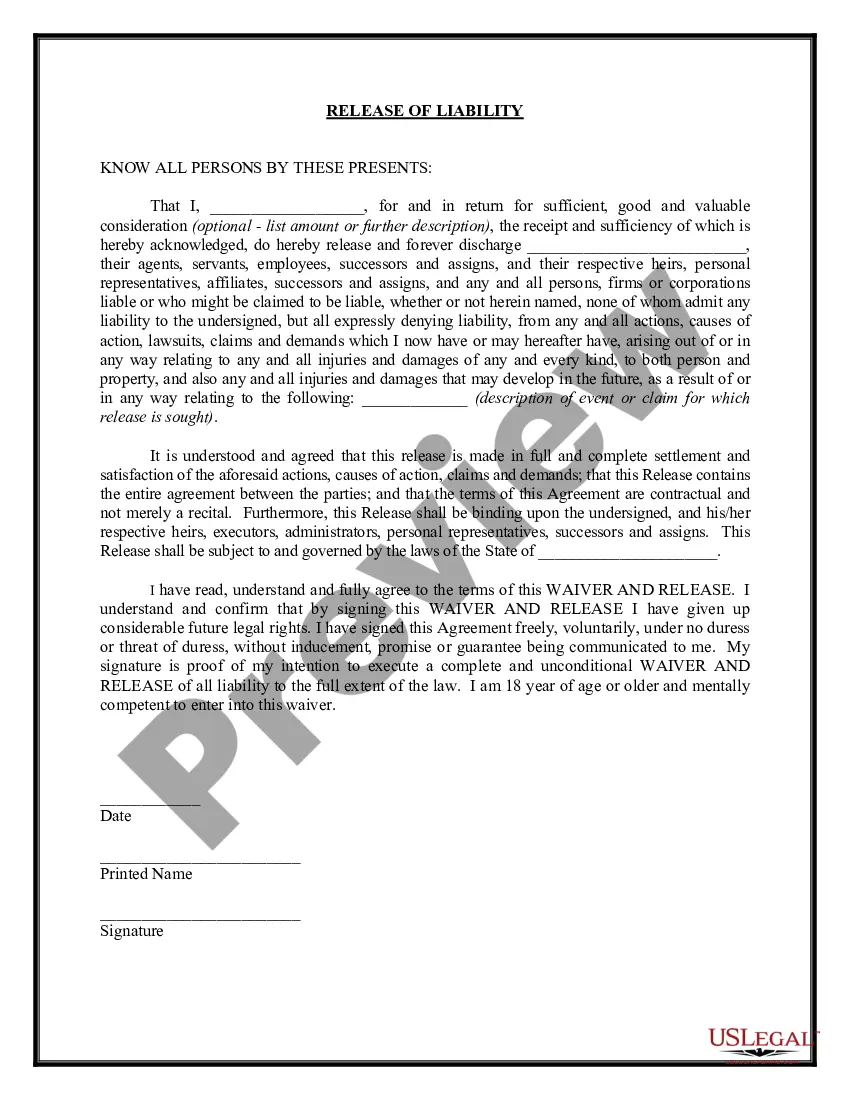
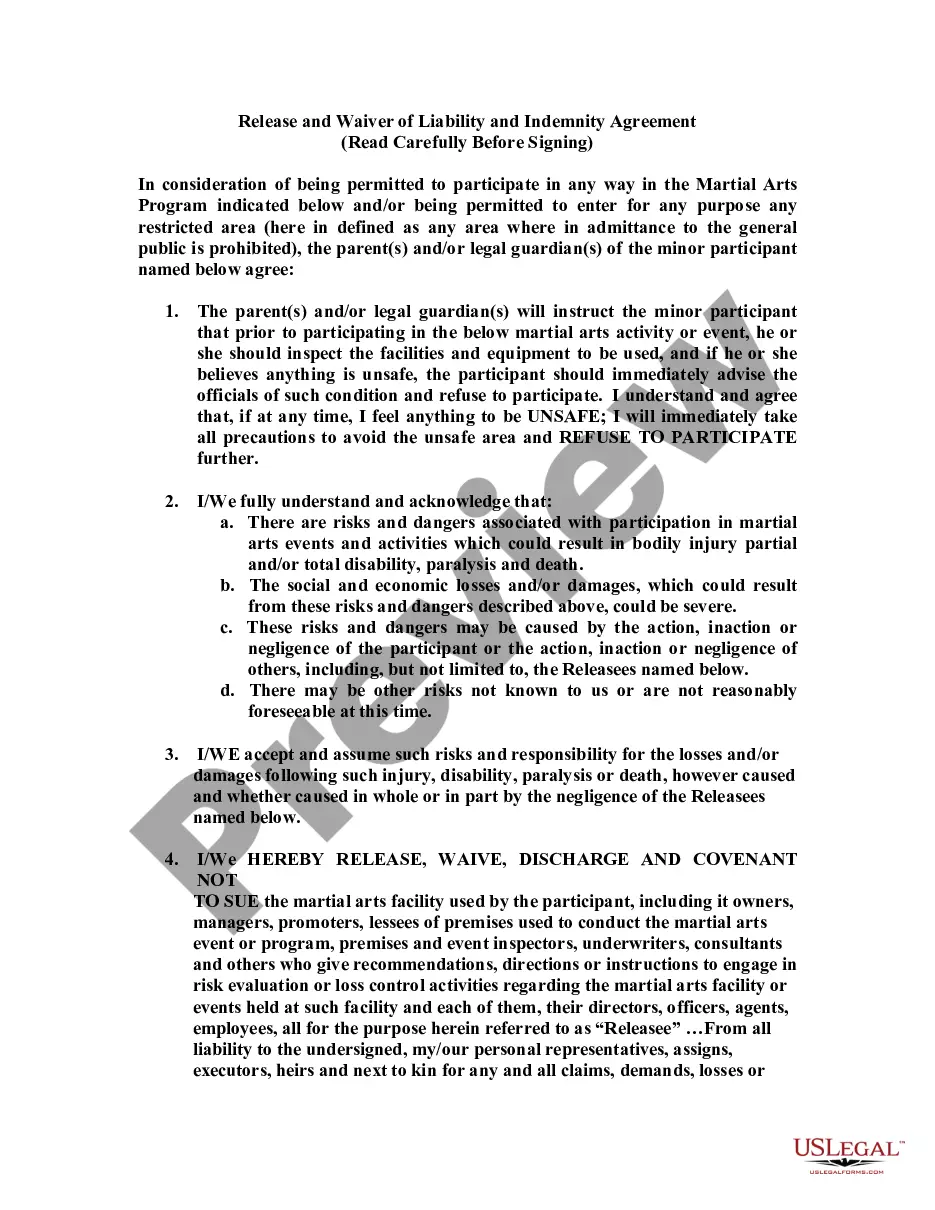
The Liability Waiver for Personal Training is a legal document that releases a fitness facility from liability for injuries or damages that may occur during physical activities. This waiver protects the facility by ensuring that participants acknowledge the risks involved in personal training and agree not to hold the facility responsible for any accidents. It is a crucial form for both participants and fitness providers, differentiating it from other types of waivers that may not specifically address fitness activities.
Key components of this form
- Identification of the fitness facility (Company) and the participant.
- Detailed description of the activities covered by the waiver, including various fitness exercises.
- Release of liability clause stating the participant accepts all risks associated with the activities.
- Indemnification clause protecting the Company from any claims or legal actions.
- Statement allowing participants to seek attorney review before signing.
Common use cases
This form should be used when an individual wishes to participate in fitness classes or personal training sessions at a gym or fitness facility. It is essential to complete this waiver before engaging in any physical activities to ensure that both the participant and the fitness facility are protected from potential claims arising from personal injuries or property damages. This is particularly important for activities that carry higher risks, such as high-intensity training, sparring, or the use of specialized fitness equipment.
Who needs this form
- Individuals participating in personal training or fitness classes.
- Fitness facilities seeking to protect themselves from liability claims.
- Instructors and trainers who conduct fitness sessions requiring a waiver for legal protection.
How to complete this form
- Identify the fitness facility by entering its name and address.
- Fill in the participant's name and address accurately.
- Specify the date of the agreement and the activities the participant will engage in.
- Read the waiver carefully to understand its terms and implications.
- Sign and date the form, and provide a witness signature if required.
Does this document require notarization?
This form does not typically require notarization unless specified by local law. It is advisable to check local regulations to ensure compliance, but in general, a signature from the participant is sufficient for it to be legally valid.
Get your form ready online
Our built-in tools help you complete, sign, share, and store your documents in one place.
Make edits, fill in missing information, and update formatting in US Legal Forms—just like you would in MS Word.
Download a copy, print it, send it by email, or mail it via USPS—whatever works best for your next step.
Sign and collect signatures with our SignNow integration. Send to multiple recipients, set reminders, and more. Go Premium to unlock E-Sign.
If this form requires notarization, complete it online through a secure video call—no need to meet a notary in person or wait for an appointment.
We protect your documents and personal data by following strict security and privacy standards.

Make edits, fill in missing information, and update formatting in US Legal Forms—just like you would in MS Word.

Download a copy, print it, send it by email, or mail it via USPS—whatever works best for your next step.

Sign and collect signatures with our SignNow integration. Send to multiple recipients, set reminders, and more. Go Premium to unlock E-Sign.

If this form requires notarization, complete it online through a secure video call—no need to meet a notary in person or wait for an appointment.

We protect your documents and personal data by following strict security and privacy standards.
Avoid these common issues
- Not reading the waiver fully before signing.
- Failing to include the correct names and addresses of the parties involved.
- Leaving the date field blank or incorrectly filled out.
- Not understanding the extent of the risks involved in the activities.
Benefits of using this form online
- Convenient access allows for completion anytime and anywhere.
- Editability ensures that users can tailor the form to their specific needs.
- Reliable, attorney-drafted content ensures legal soundness and comprehensiveness.
Looking for another form?



Form popularity
FAQ
As a personal trainer, you need insurance that will keep your business in good shape if something goes wrong. Public liability insurance is the key cover for many personal trainers, as it can protect you if you're faced with a compensation claim for injury or damage from a client or another member of the public.
Public liability insurance. Public liability insurance covers you should someone be injured as a result of your business or if third-party property is damaged by you or your client. Professional indemnity insurance.
Health insurance benefits vary by company and policy, but typically, to have sessions covered, you'll need to prove that a personal trainer is medically necessary. Some insurance companies will provide reimbursement for personal training sessions.
So, what type of insurance do personal trainers need? They should have both general and professional liability coverage. A comprehensive policy should cover the business owner as well as any employees or contract workers. Having the right coverage will protect your business if you are ever sued.
It is recommended that all personal trainers, fitness trainers, and group exercise instructors are covered by a liability insurance policy. Liability insurance does not protect personal trainers from a lawsuit, but it does protect against financial loss in case of a lawsuit.
How Much Is Personal Trainer Insurance? A basic general and professional liability insurance policy starts at $129 per year, or $12.50 per month.
Liability Waiver. A personal trainer liability waiver is an essential piece of paperwork for your business. Certificate of Insurance. Goal Setting Forms. Personal Training Contract. PAR-Q Form for Personal Trainers. Fitness Assessment Form. Consent and Disclaimer. Conclusion.
So, what type of insurance do personal trainers need? They should have both general and professional liability coverage. A comprehensive policy should cover the business owner as well as any employees or contract workers. Having the right coverage will protect your business if you are ever sued.
You can sue your trainer for a personal injury.As long as all the elements of a personal injury claim can be proven, damage caused by your trainer's negligence can be treated like any other personal injury matter.