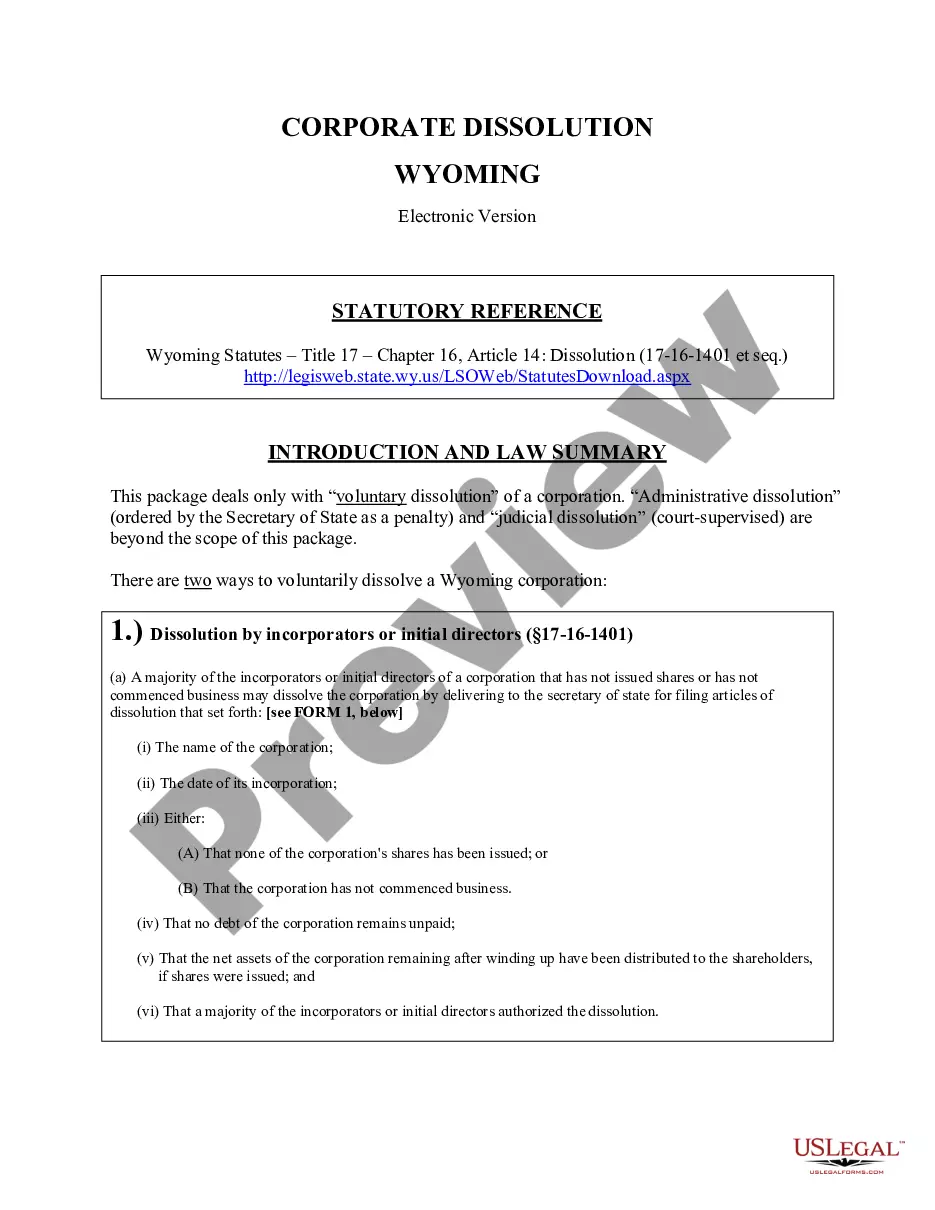
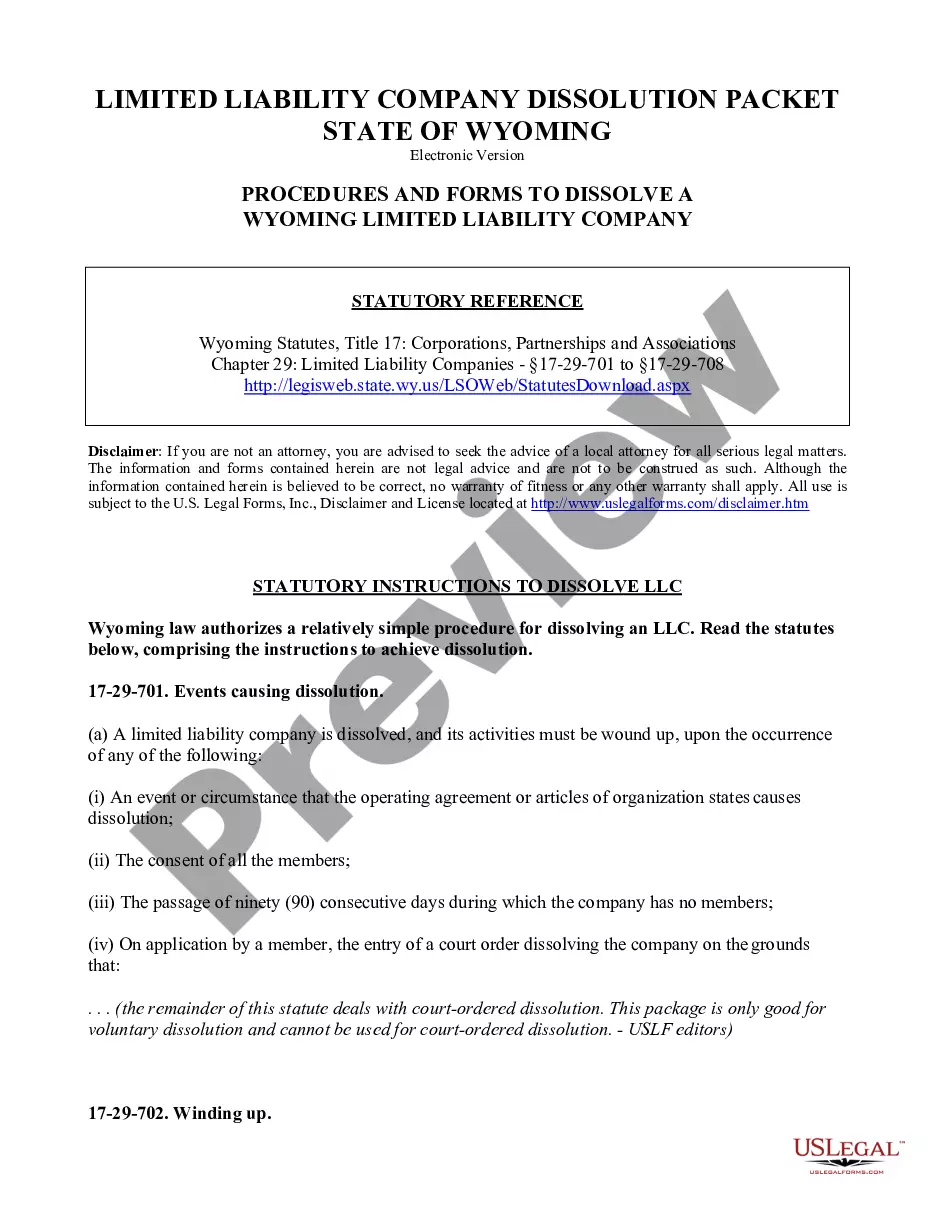
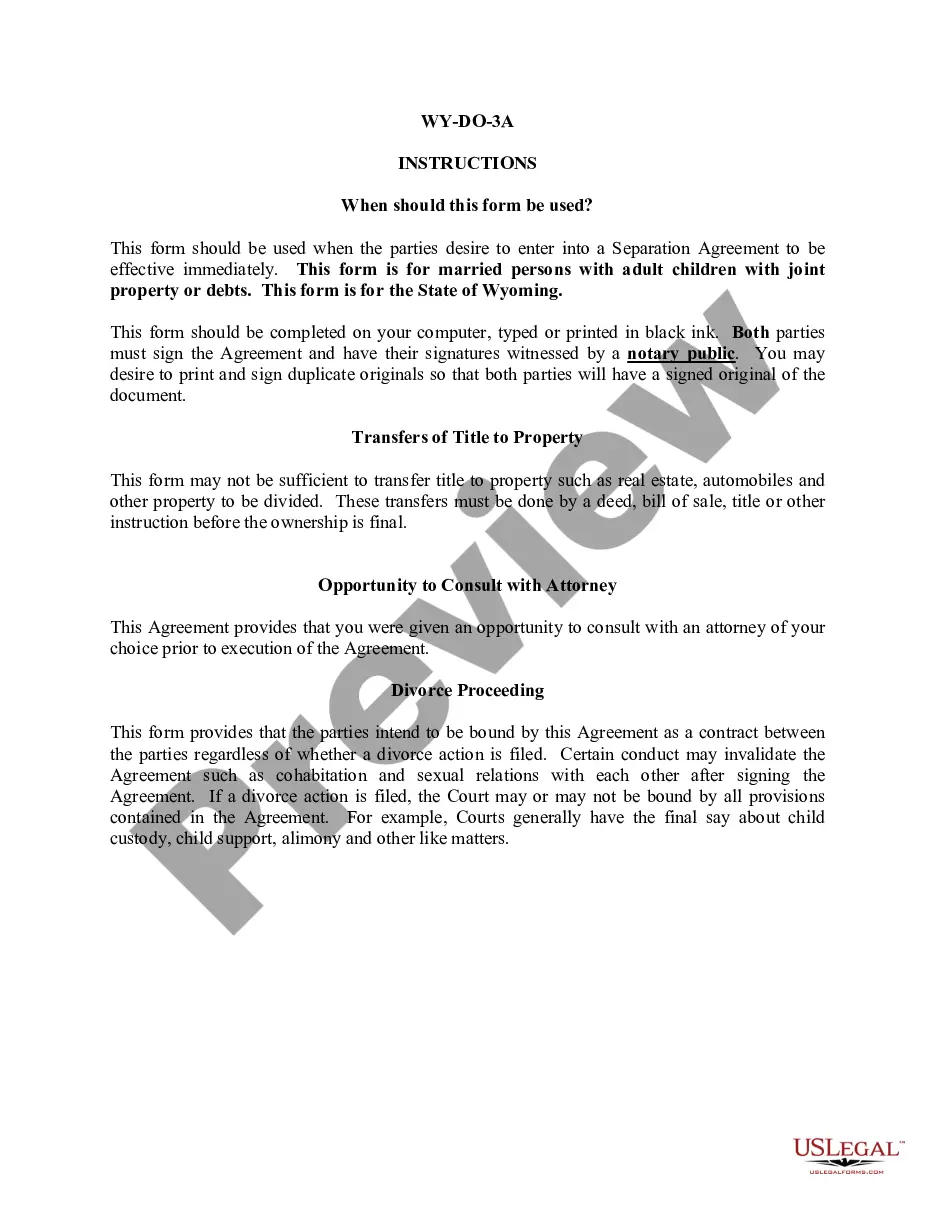
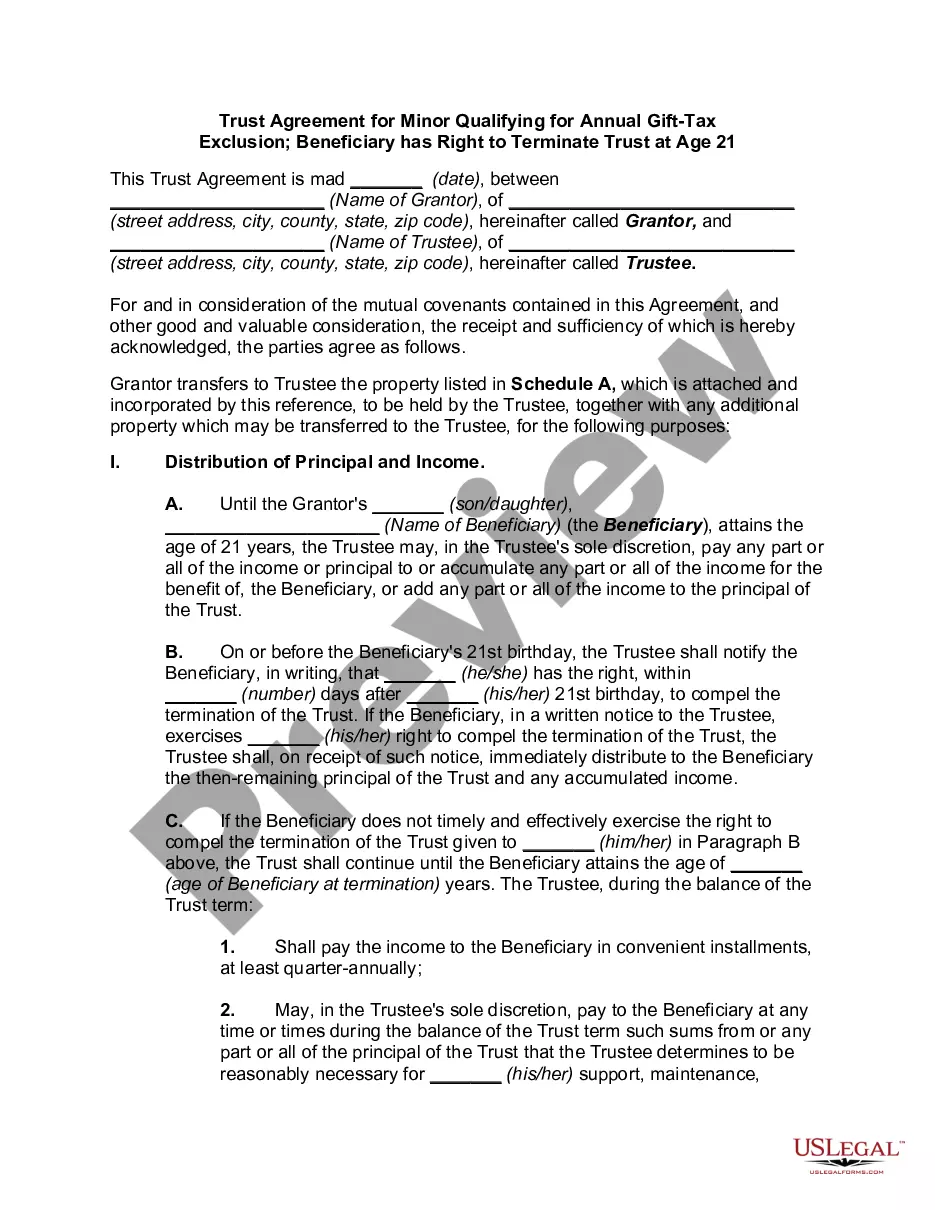
Trust Agreement for Minor Qualifying for Annual Gift-Tax Exclusion; Beneficiary has Right to Terminate Trust at Age 21
Understanding this form
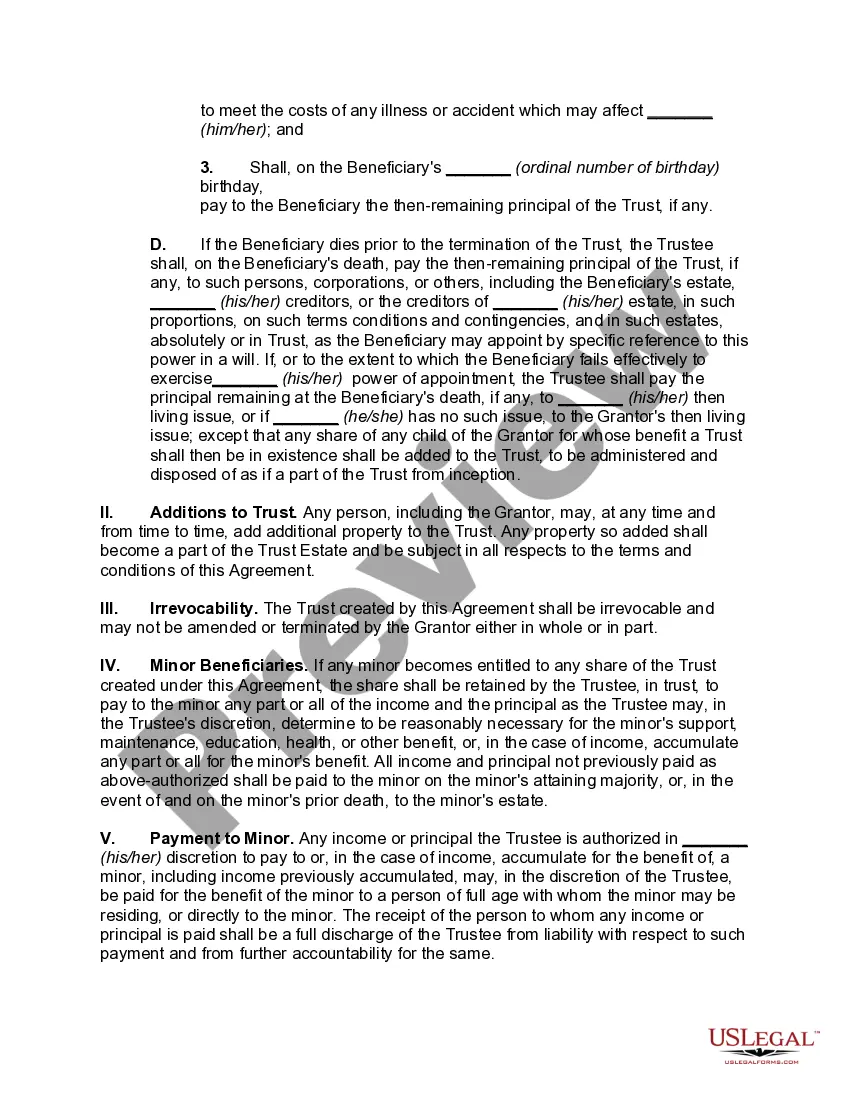
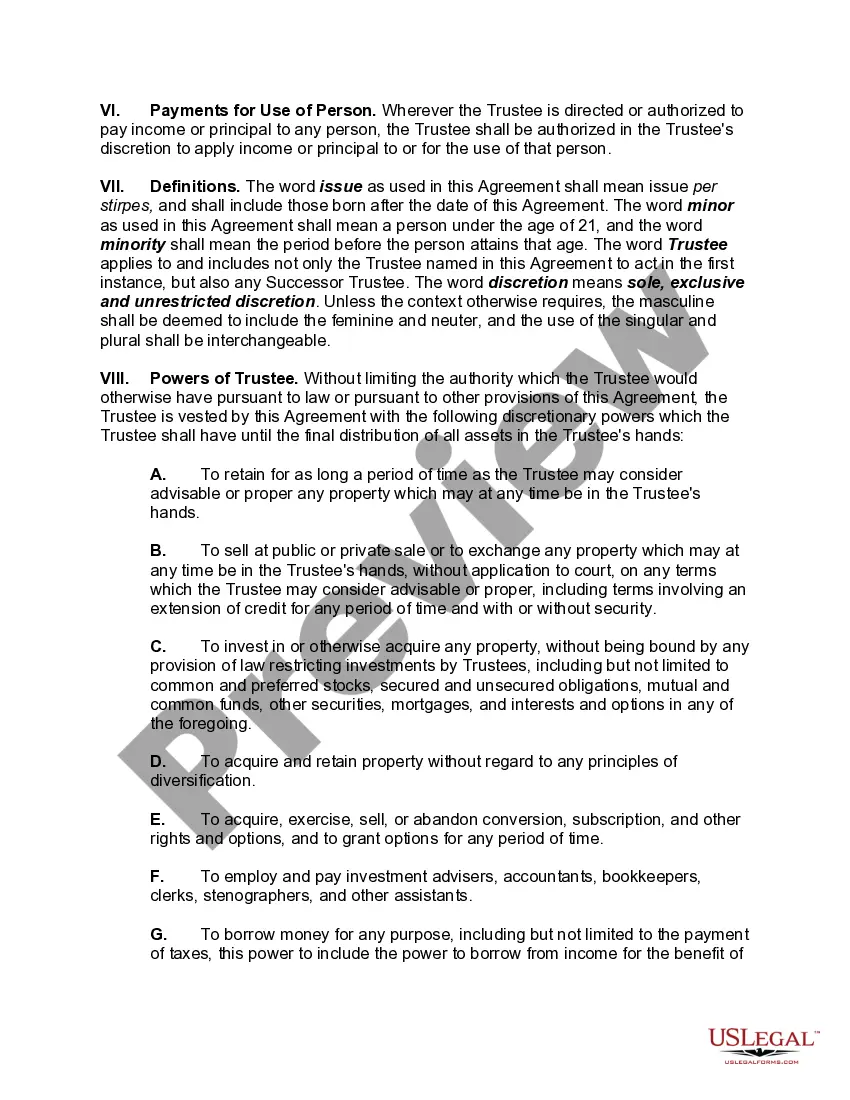
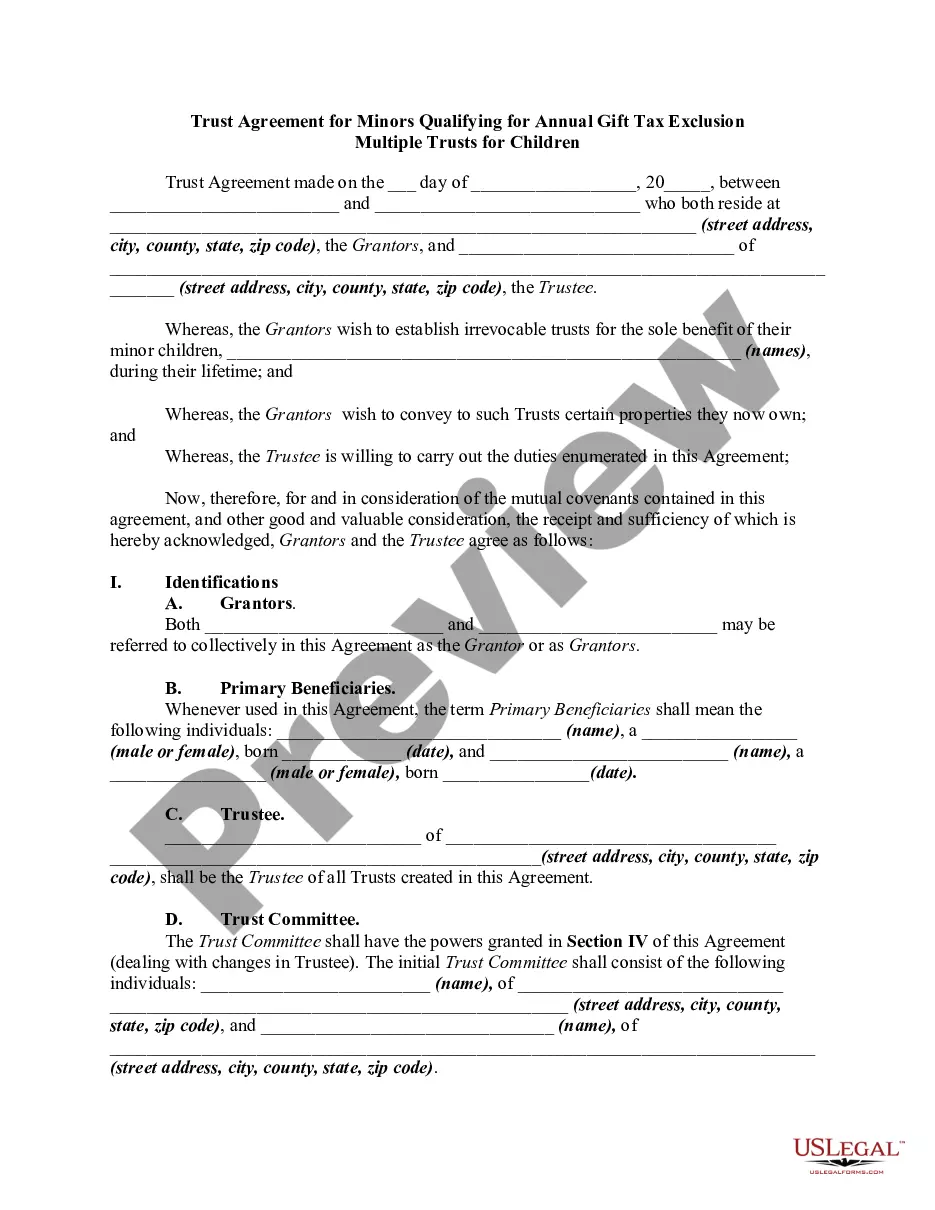
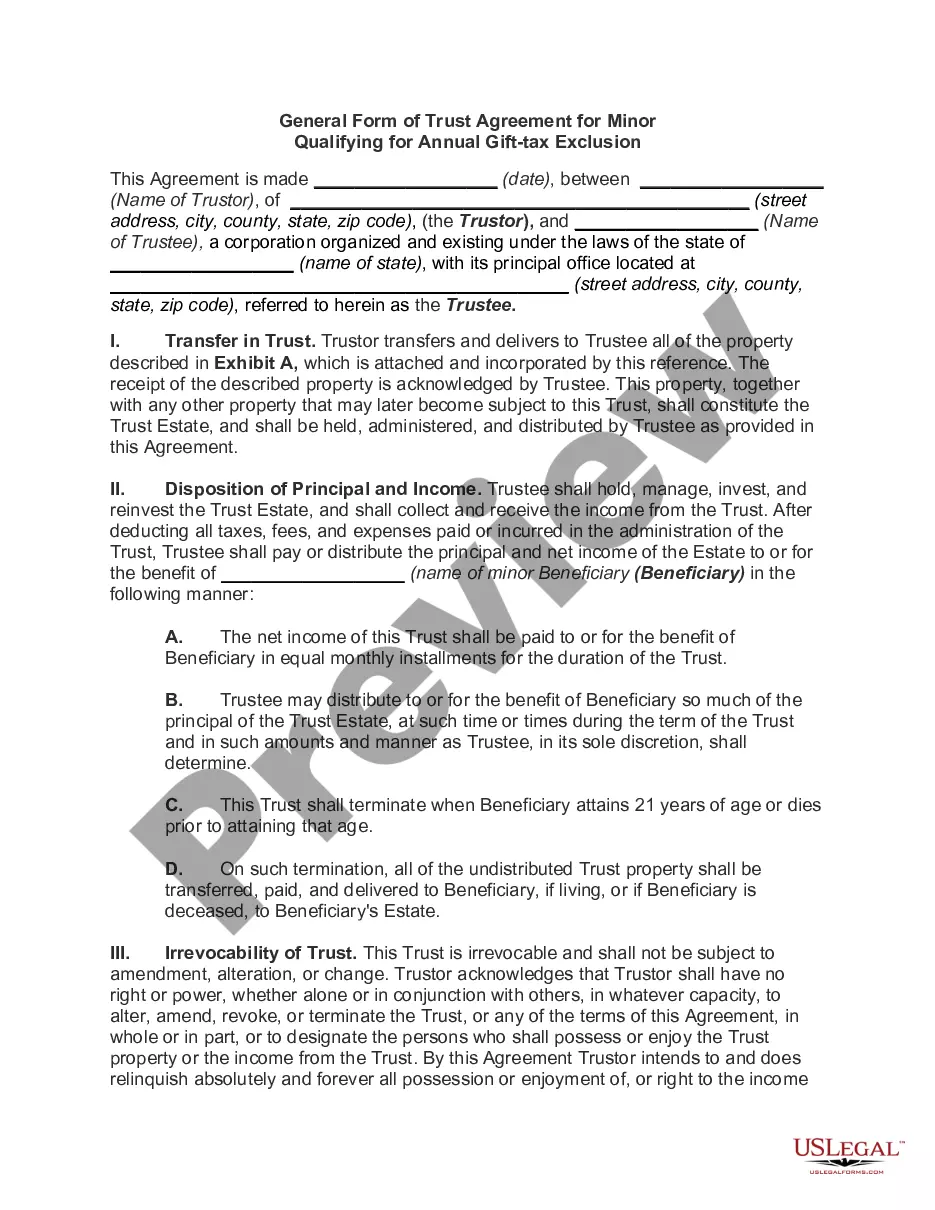
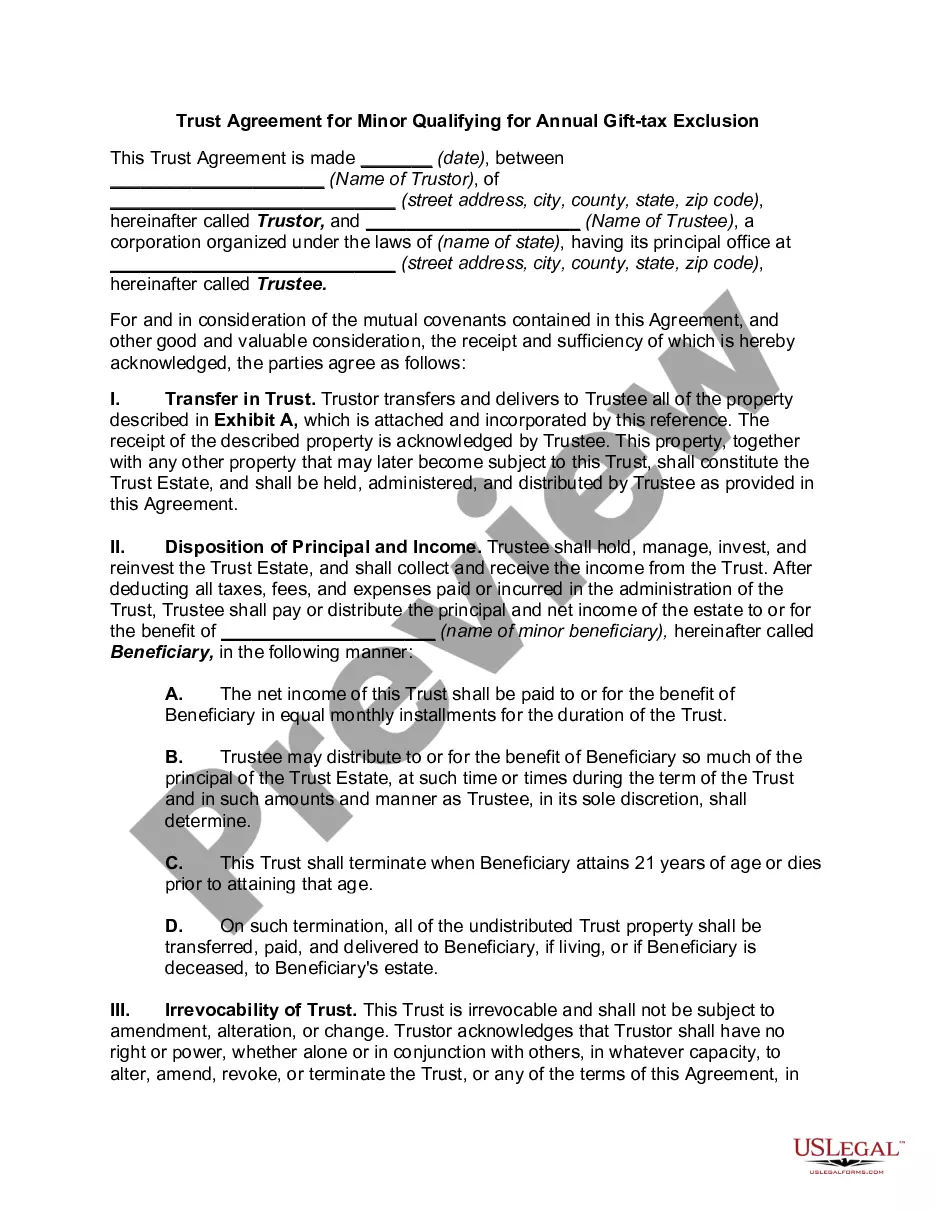
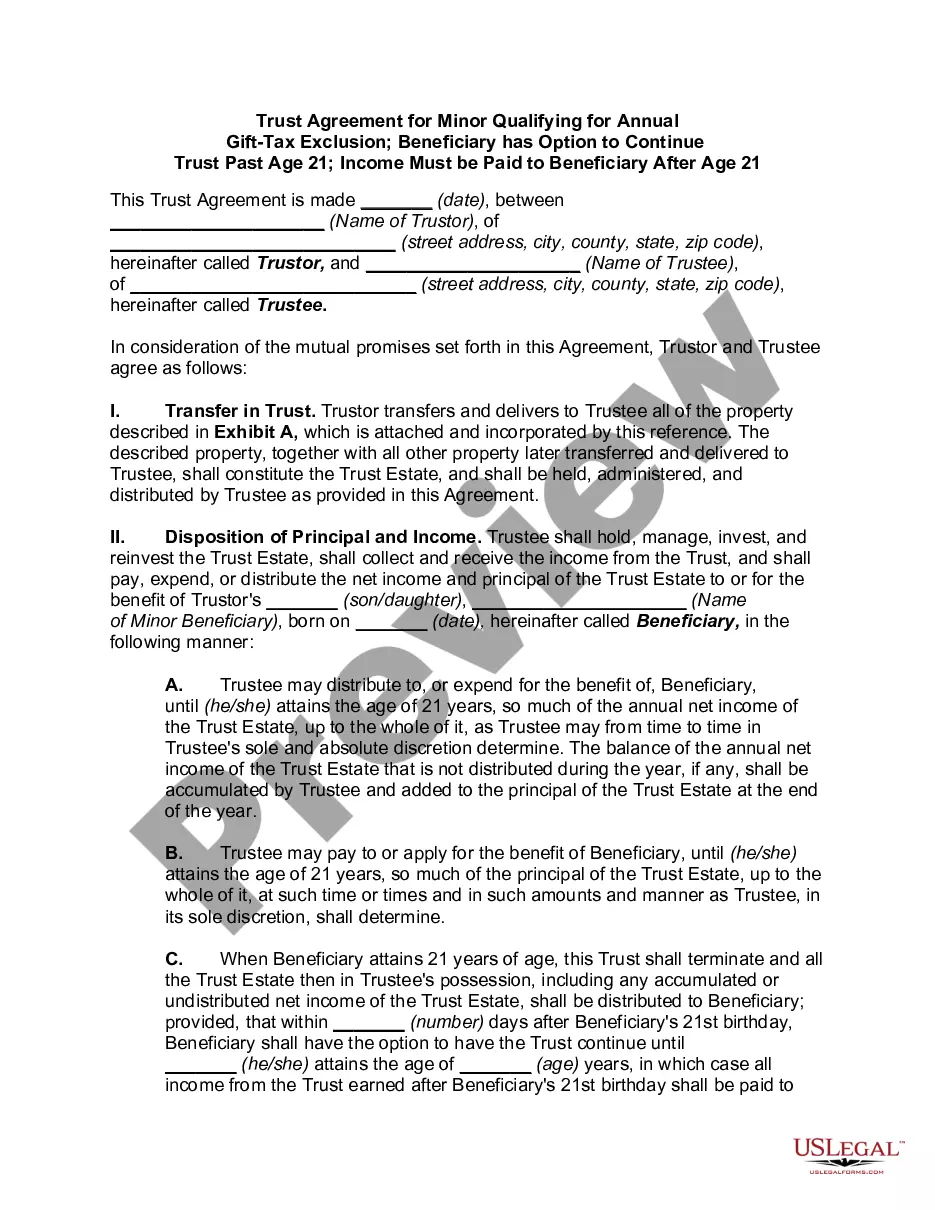
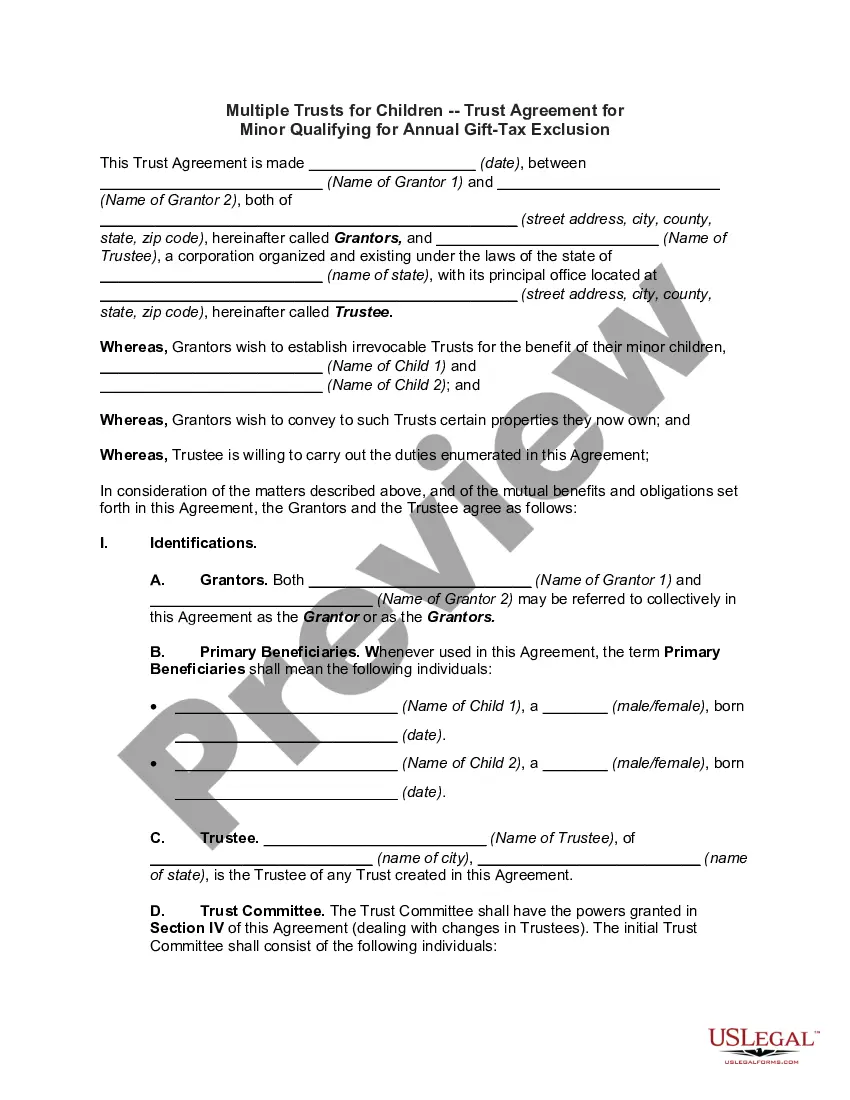
The Trust Agreement for Minor Qualifying for Annual Gift-Tax Exclusion is a legal document used to establish a trust specifically for minors. This trust allows gifts made to a minor to qualify for the annual gift tax exclusion under section 2503(c) of the Internal Revenue Code. It not only minimizes federal gift, income, and estate taxes for the trustor but also ensures that the trust property is managed effectively until the minor reaches age 21. This form provides clear guidelines on how the trust assets can be distributed, allowing the beneficiary to terminate the trust when they turn 21 if they choose to do so.
Key parts of this document
- Identification of parties: Grantor and Trustee details.
- Definition of trust property, including Schedule A for specifying assets.
- Instructions for managing and distributing trust income and principal before and after the beneficiary turns 21.
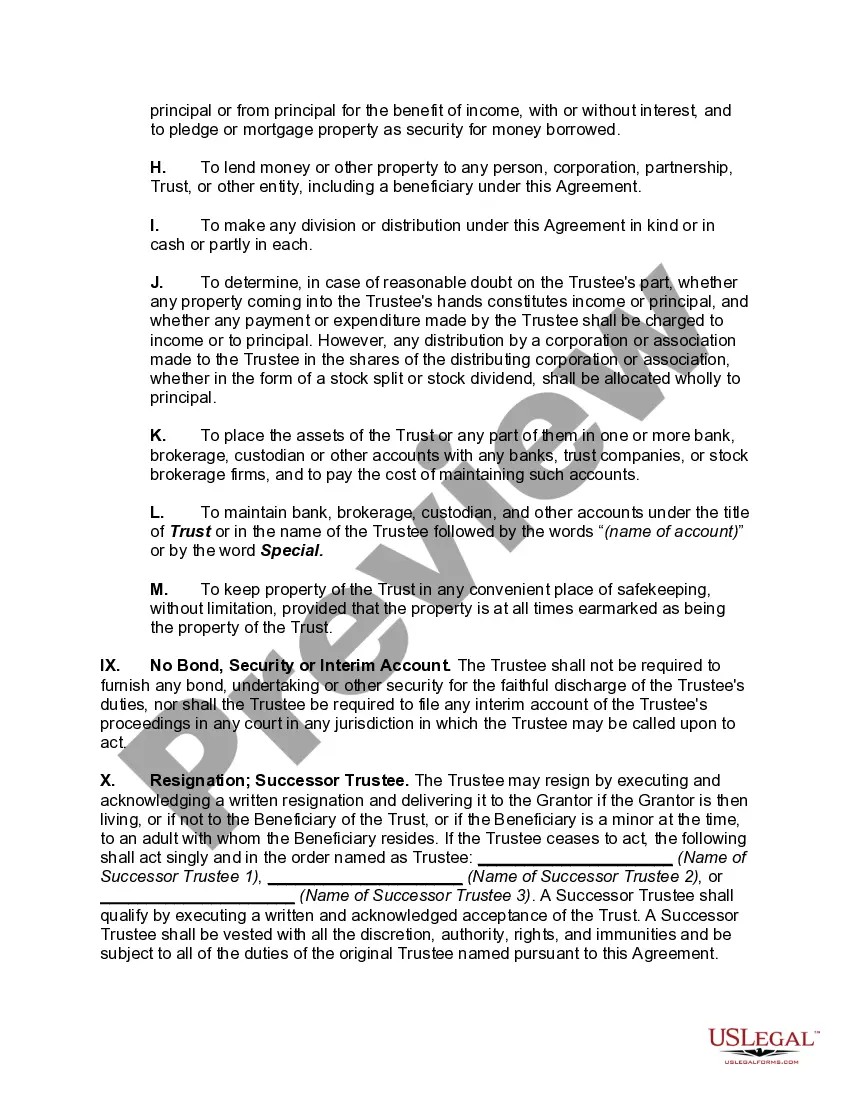
- Details on the Trustee's powers and responsibilities.
- Conditions for terminating the trust, including age requirements for the beneficiary.
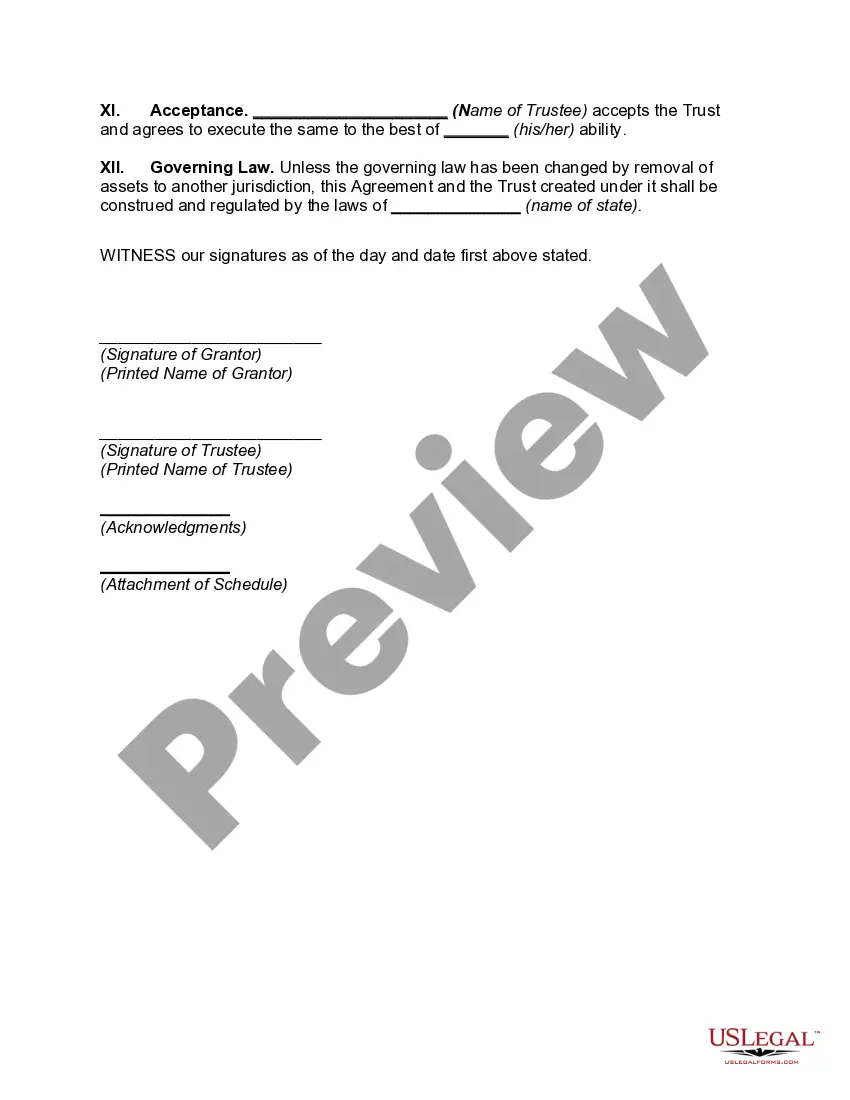
- Legal provisions for the Trustee's resignation and appointment of successor trustees.
Situations where this form applies
This trust agreement is ideal for parents or guardians wishing to gift assets to a minor while minimizing tax liabilities. It is particularly useful for individuals looking to help build a minor's financial future through thoughtful gift planning. Scenarios may include setting aside funds for education, supporting a child's future endeavors, or managing inheritance responsibly until the child reaches adulthood.
Who should use this form
- Parents or guardians wishing to establish a financial foundation for their children.
- Grandparents looking to gift money or assets to their grandchildren.
- Individuals planning significant gifts that may subject them to gift tax liabilities.
Steps to complete this form
- Identify and enter the date of the agreement at the top of the form.
- Provide names and addresses for both the Grantor and the Trustee.
- Specify the property to be included in the trust in Schedule A.
- Detail the rights of the beneficiary, particularly relating to the trust's termination upon reaching age 21.
- Include signatures of the Grantor and Trustee at the end of the document.
Does this form need to be notarized?
This form usually doesn’t need to be notarized. However, local laws or specific transactions may require it. Our online notarization service, powered by Notarize, lets you complete it remotely through a secure video session, available 24/7.
Get your form ready online
Our built-in tools help you complete, sign, share, and store your documents in one place.
Make edits, fill in missing information, and update formatting in US Legal Forms—just like you would in MS Word.
Download a copy, print it, send it by email, or mail it via USPS—whatever works best for your next step.
Sign and collect signatures with our SignNow integration. Send to multiple recipients, set reminders, and more. Go Premium to unlock E-Sign.
If this form requires notarization, complete it online through a secure video call—no need to meet a notary in person or wait for an appointment.
We protect your documents and personal data by following strict security and privacy standards.

Make edits, fill in missing information, and update formatting in US Legal Forms—just like you would in MS Word.

Download a copy, print it, send it by email, or mail it via USPS—whatever works best for your next step.

Sign and collect signatures with our SignNow integration. Send to multiple recipients, set reminders, and more. Go Premium to unlock E-Sign.

If this form requires notarization, complete it online through a secure video call—no need to meet a notary in person or wait for an appointment.

We protect your documents and personal data by following strict security and privacy standards.
Common mistakes to avoid
- Not providing complete identification information for the Grantor and Trustee.
- Failing to list all assets in the Schedule A section.
- Neglecting to outline specific conditions for beneficiary distributions clearly.
- Overlooking the importance of accurate signatures and dates.
Why use this form online
- Convenient access to legal forms anytime and anywhere.
- Easy customization of the trust agreement to suit specific needs.
- Instant downloads allow for quick implementation of gift plans.
Looking for another form?
Form popularity
FAQ
A 2503(c) trust, or minor's trust, is a trust established to hold gifts for one child until he or she attains age 21. A gift to this type of trust qualifies for the annual federal gift tax exclusion.
What if my spouse and I want to give away property that we own together? Year of GiftAnnual Exclusion per DoneeAnnual Exclusion Total per Donee (from 2 spouses)2011 through 2012$13,000$26,0002013 through 2017$14,000$28,0002018 through 2021$15,000$30,0002022$16,000$32,0001 more row
The value of all gifts made during the year to a single beneficiary count towards the donor's $16,000 annual exclusion, no matter what their form. Thus, if you give your child a $10,000 automobile, you have used $10,000 of your annual exclusion and have $6,000 left to give that child within the annual exclusion amount.
Gifts in trust do not qualify for the annual exclusion unless the trust either qualifies as a ?Minor's Trust? under Internal Revenue Code Section 2503(c) or has certain temporary withdrawal powers called ?Crummey? powers.
Minor Trust Taxes This means that the income of the trust is taxed at the beneficiary's marginal tax rate. These types of trusts are taxed as if they were an individual's own money. The biggest problem with this is it pushes the tax bracket up to a higher marginal rate which means more taxes.
Do gifts to a Gift Trust qualify for the annual exclusion? As previously mentioned, to qualify for the annual exclusion, a gift must be a gift of a ?present interest,? which simply means that the recipient must either receive or have the right to receive the gifted property at the time of the gift.
What is the 21-year rule? Family trusts created during someone's lifetime are deemed to dispose of their property every 21 years. Although the trust is deemed to have disposed of property for tax purposes, an actual disposition typically does not occur.
The annual exclusion amount for 2023 is $17,000 ($34,000 per married couple). That means you could give up to $17,000 (or a married couple could give a total of $34,000) in annual exclusion gifts to any child, grandchild or other person.
The trust vs. mistrust stage is the first stage of psychologist Erik Erikson's theory of psychosocial development. This stage begins at birth and lasts until a child is around 18 months old.