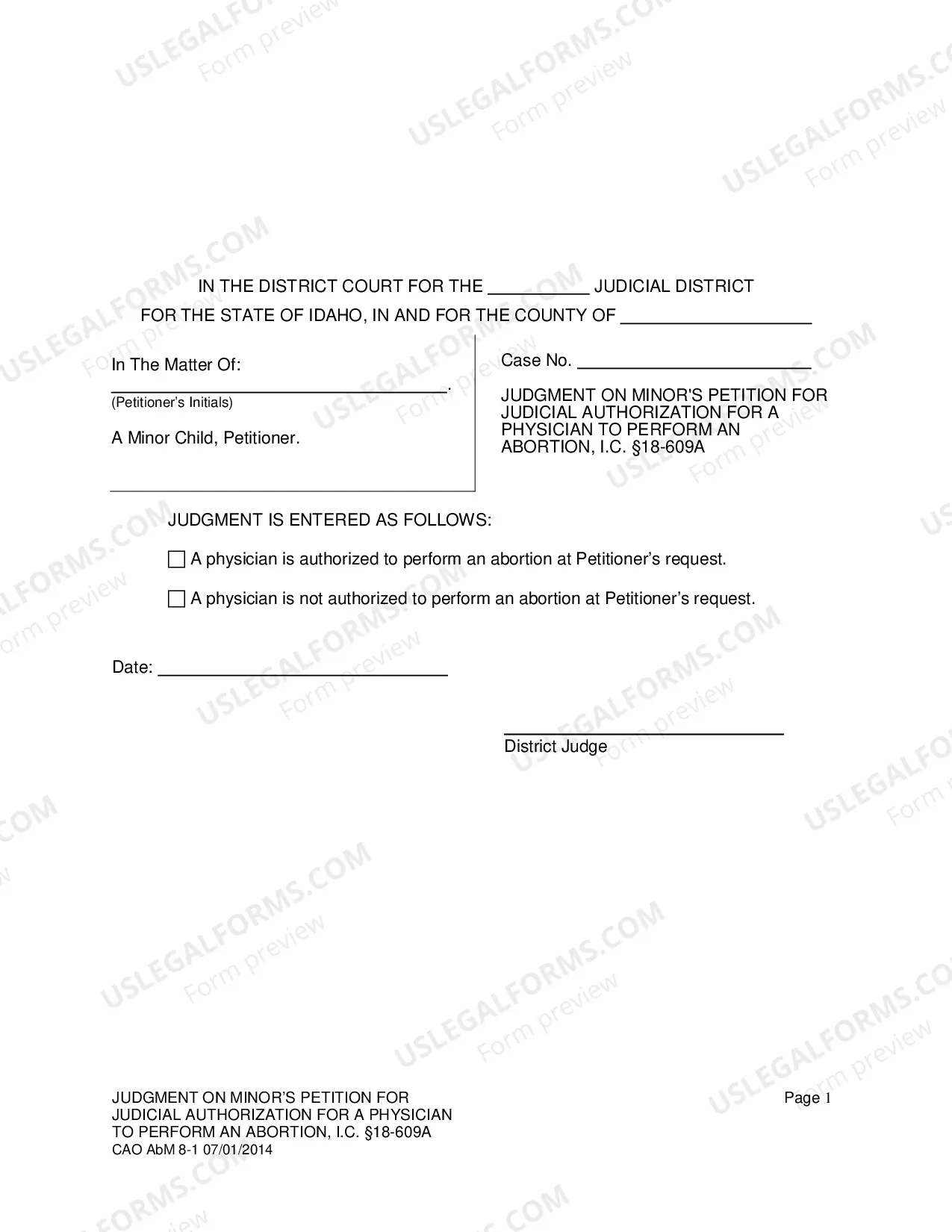
Security Agreement Covering Inventory, Equipment, Appliances, Furnishings, and Fixtures
Overview of this form
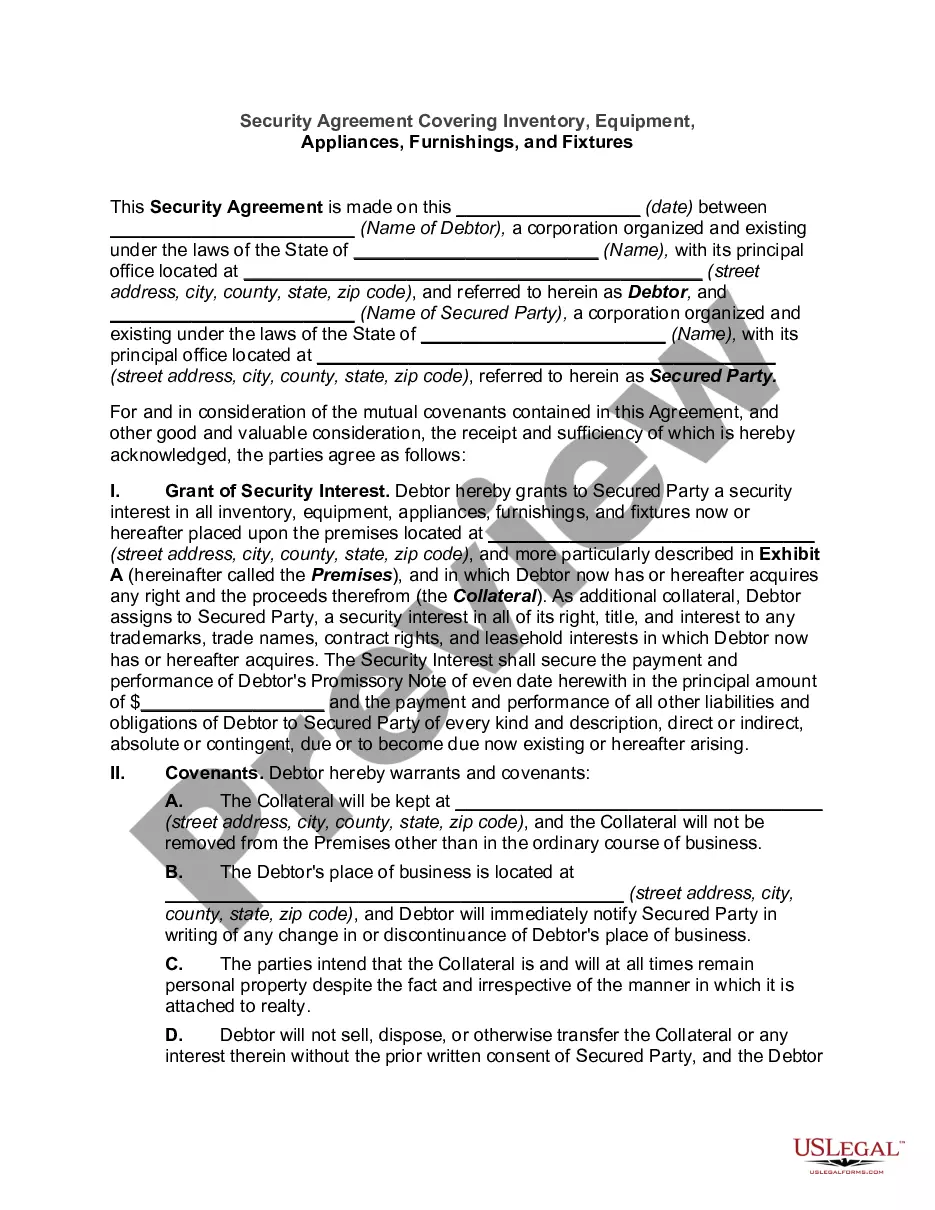
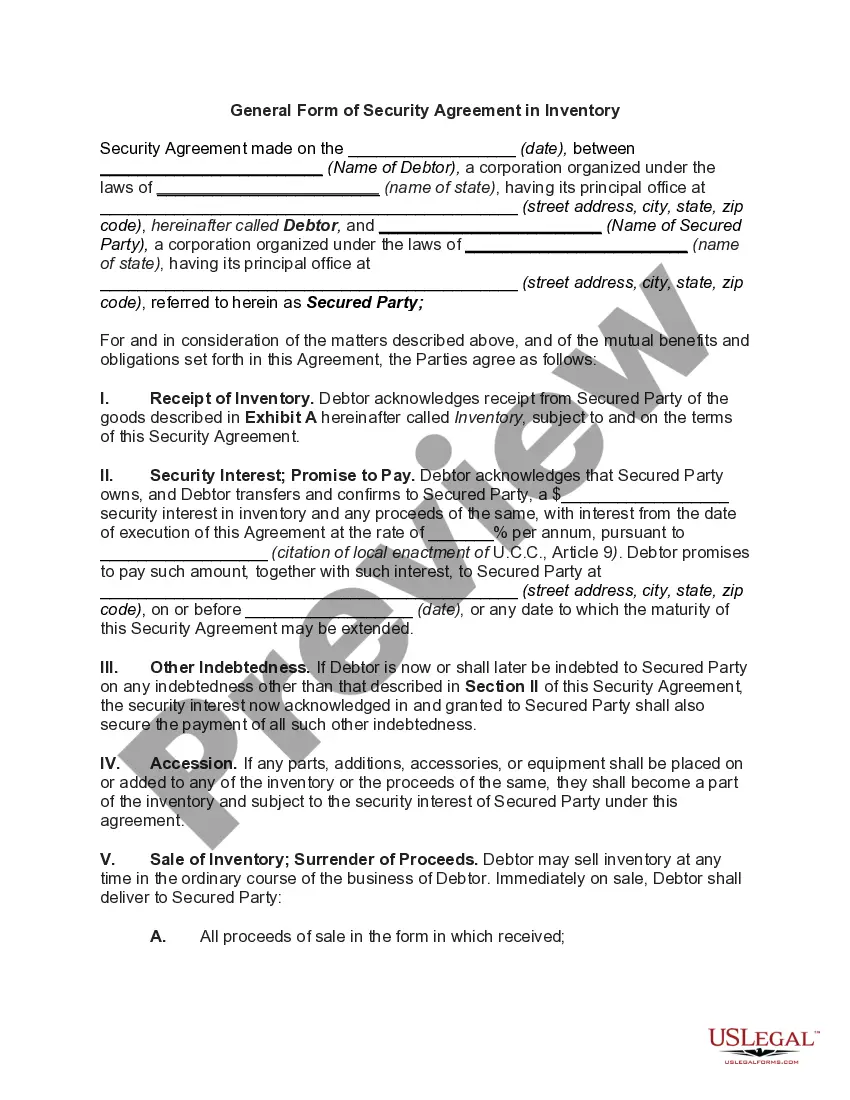
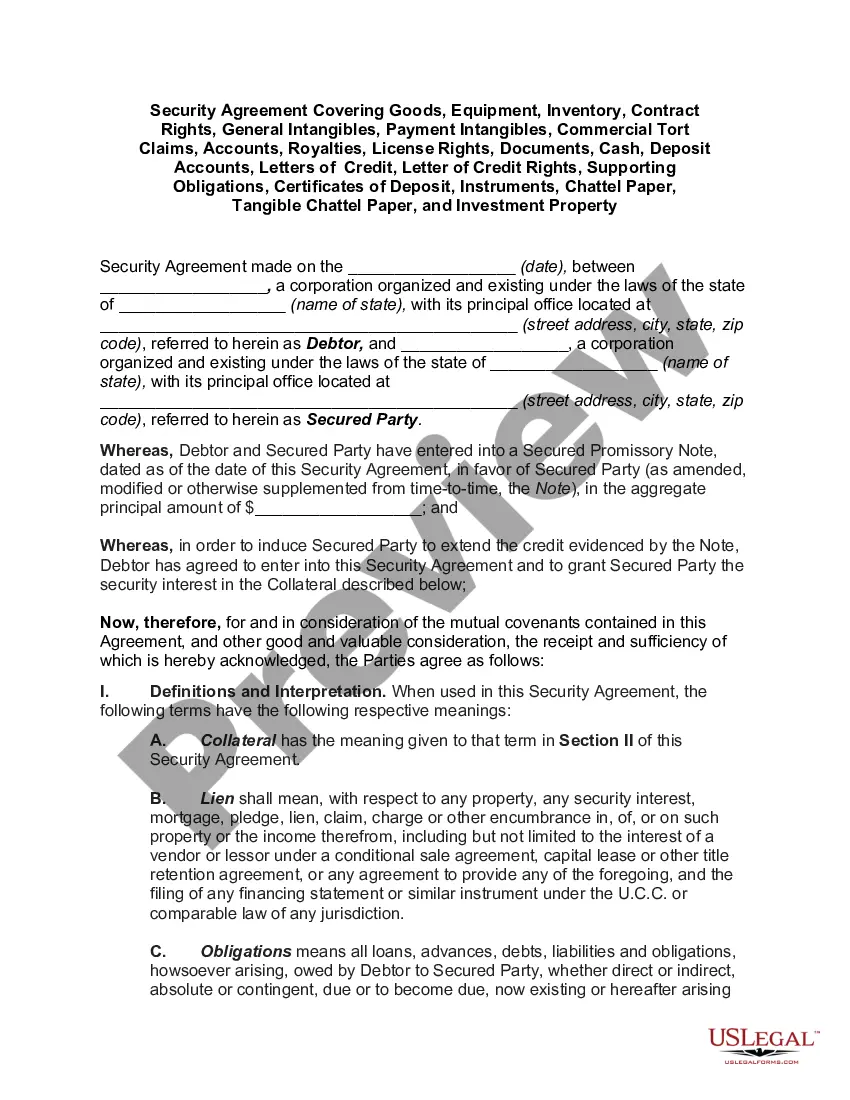
The Security Agreement Covering Inventory, Equipment, Appliances, Furnishings, and Fixtures is a legally binding document that allows a borrower or buyer to grant a security interest in personal property to a lender or seller. This agreement secures the lender's position in case of default by giving them the right to recover the specified personal property. It is important to understand that this form differs from a mortgage, which is specific to real estate. Instead, this form applies to a borrower's personal assets, ensuring that a lender has recourse to these items should the borrower fail to meet their obligations.
Key parts of this document
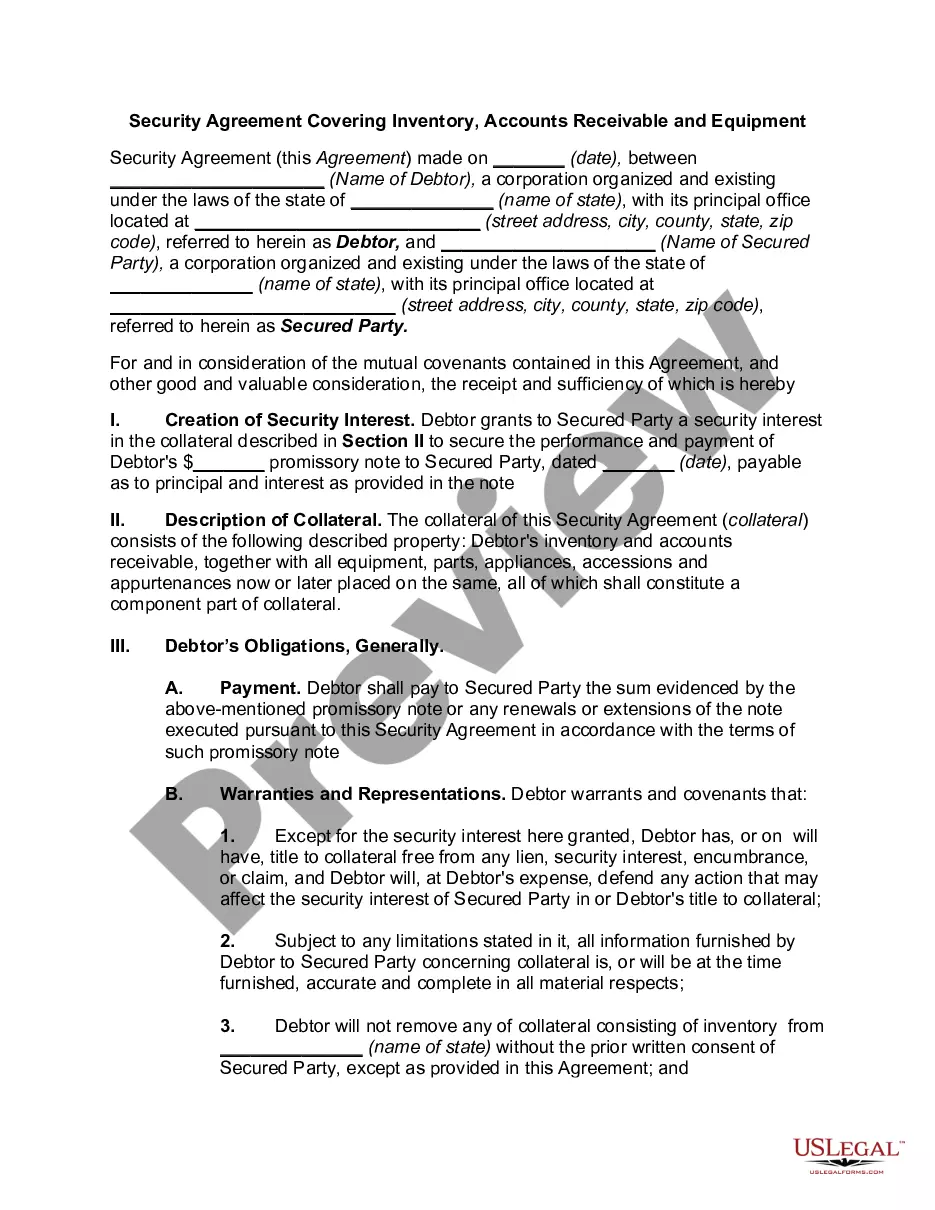
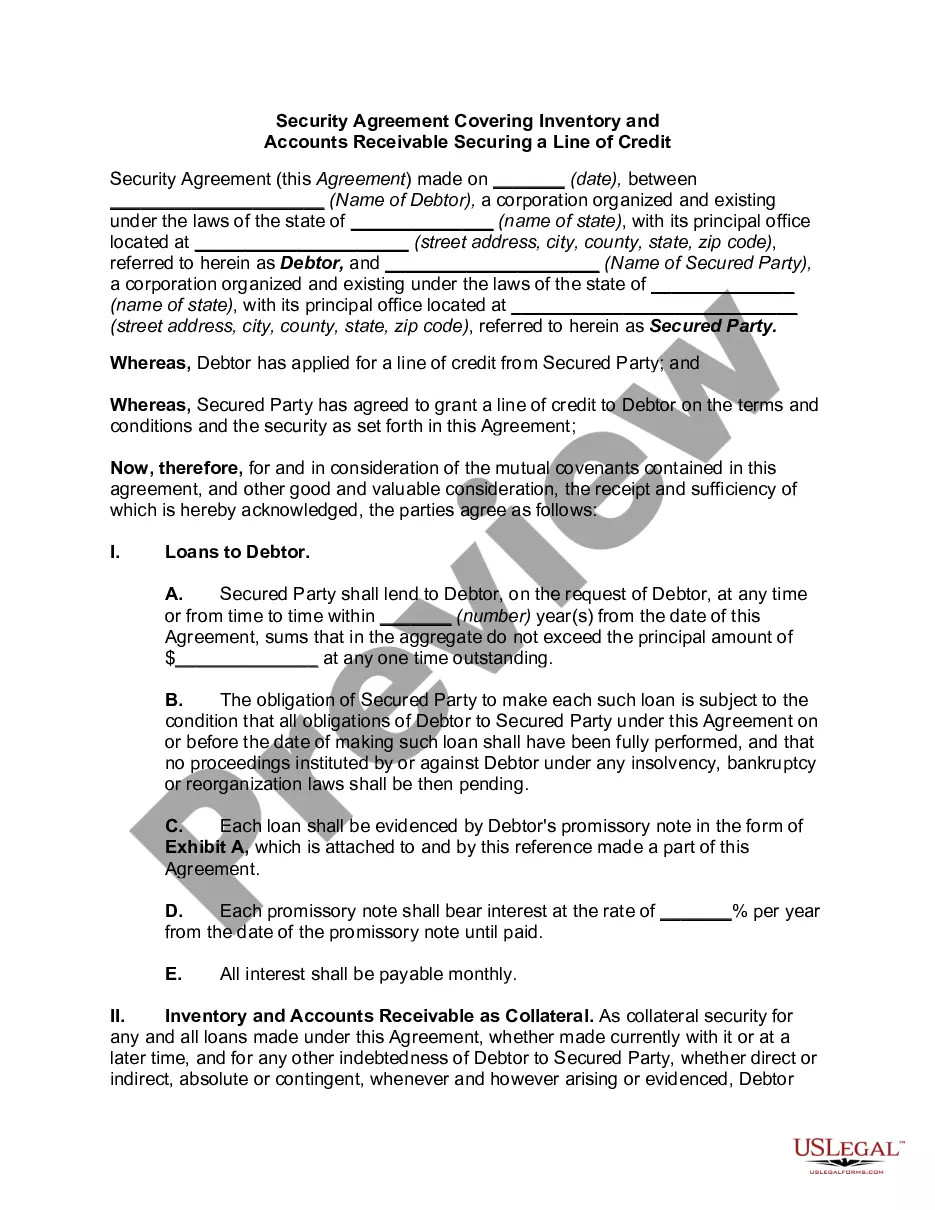
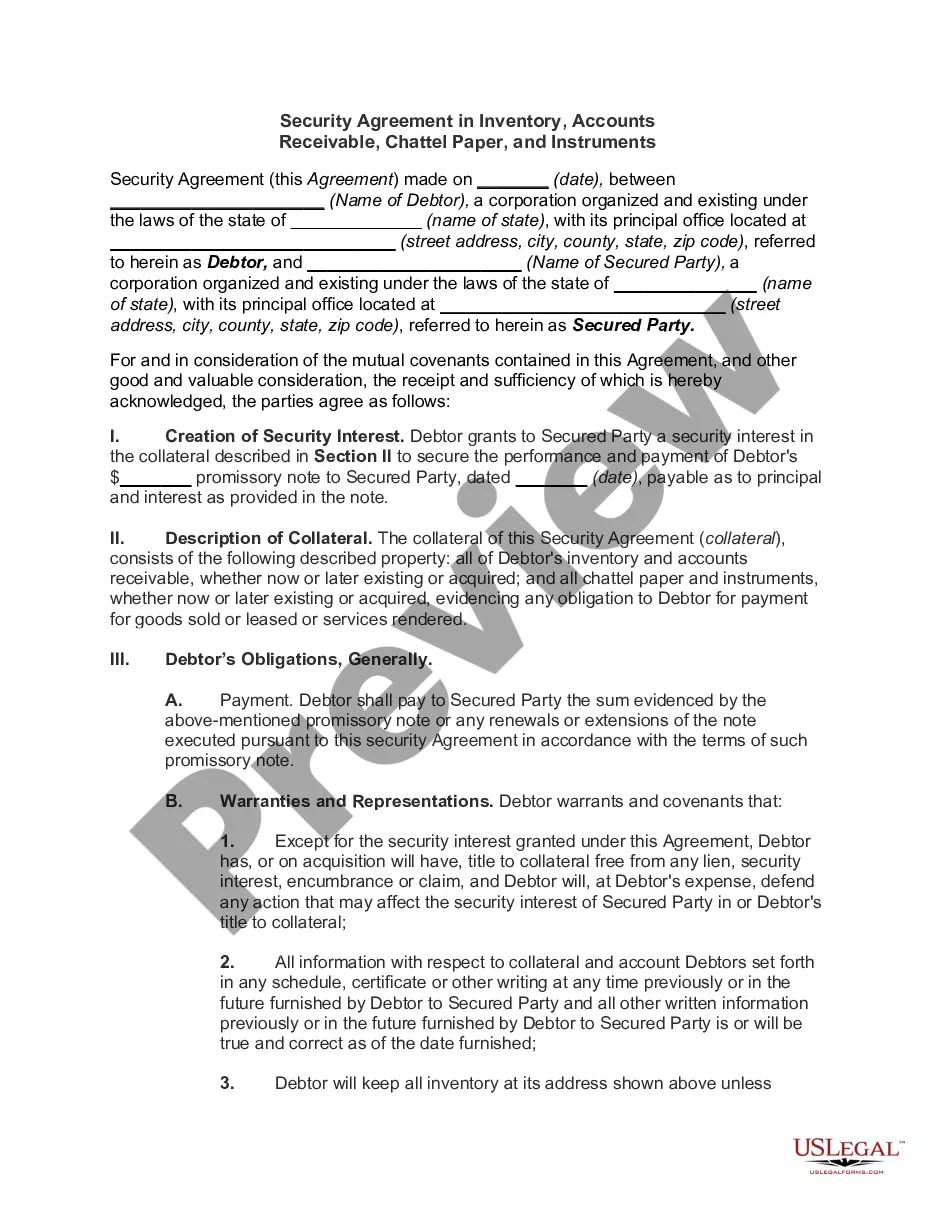
- Identification of the Debtor and Secured Party, including their legal names and addresses.
- Grant of security interest in inventory, equipment, appliances, furnishings, and fixtures.
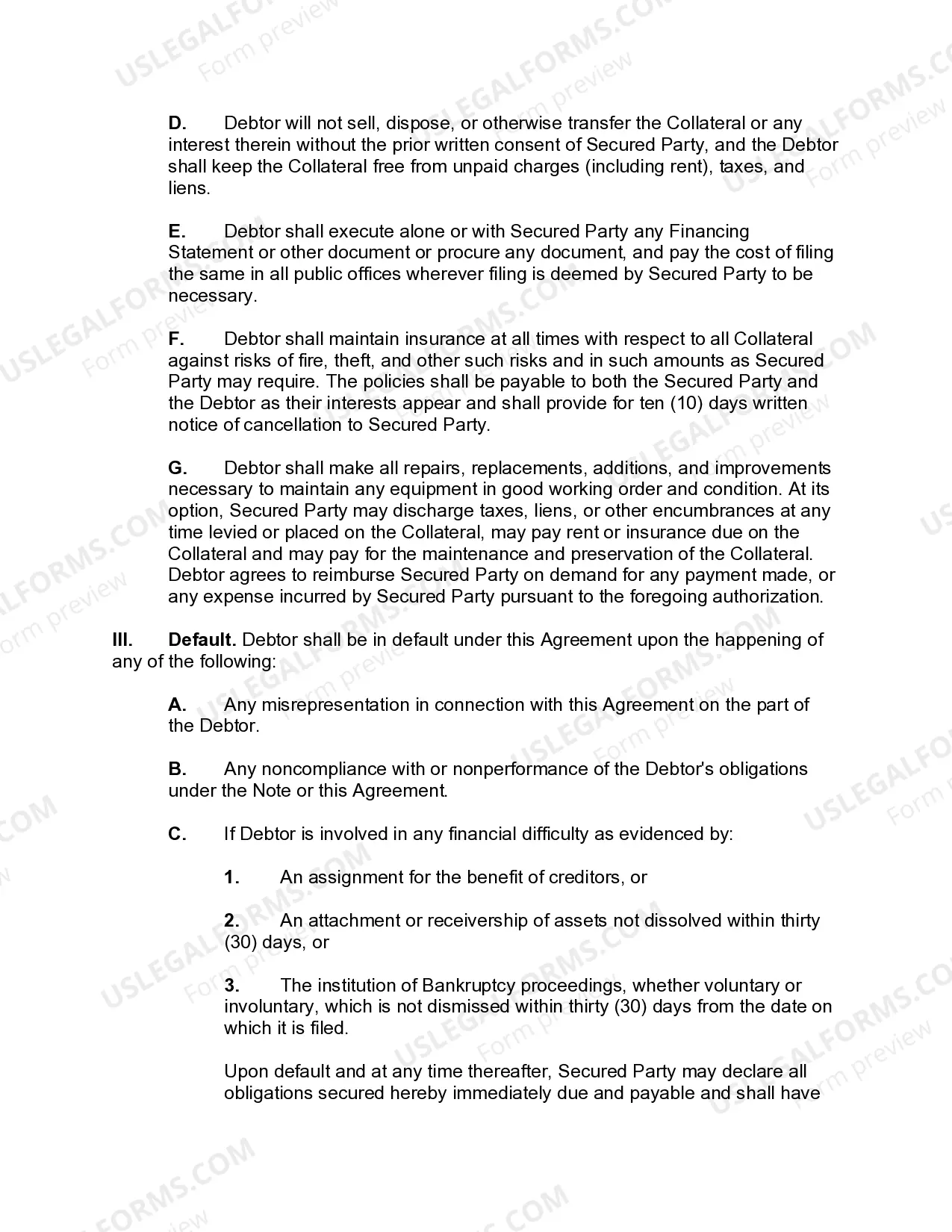
- Covenants outlining the Debtor's obligations regarding the collateral, including insurance and maintenance.
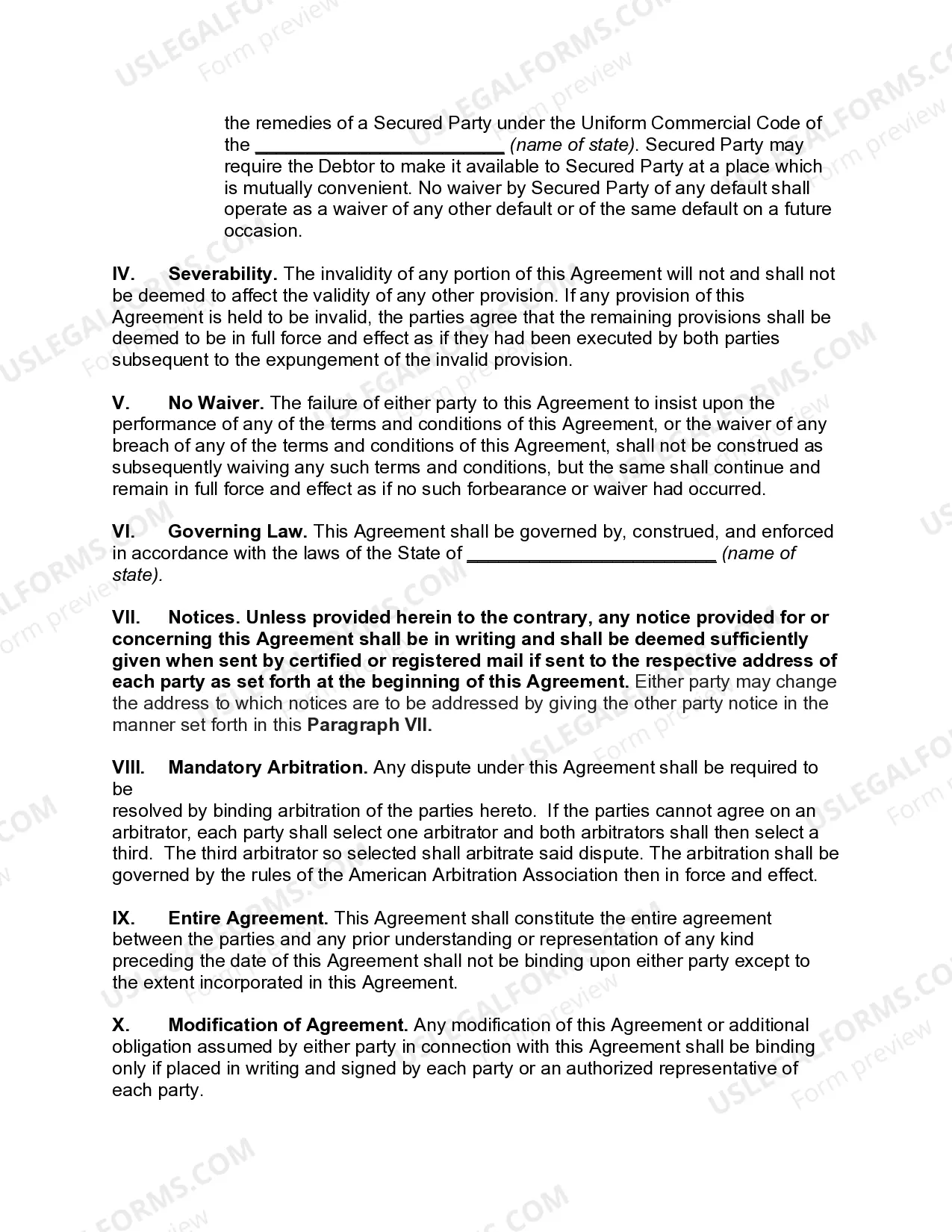
- Default conditions that explain when the Debtor is considered in breach of the agreement.
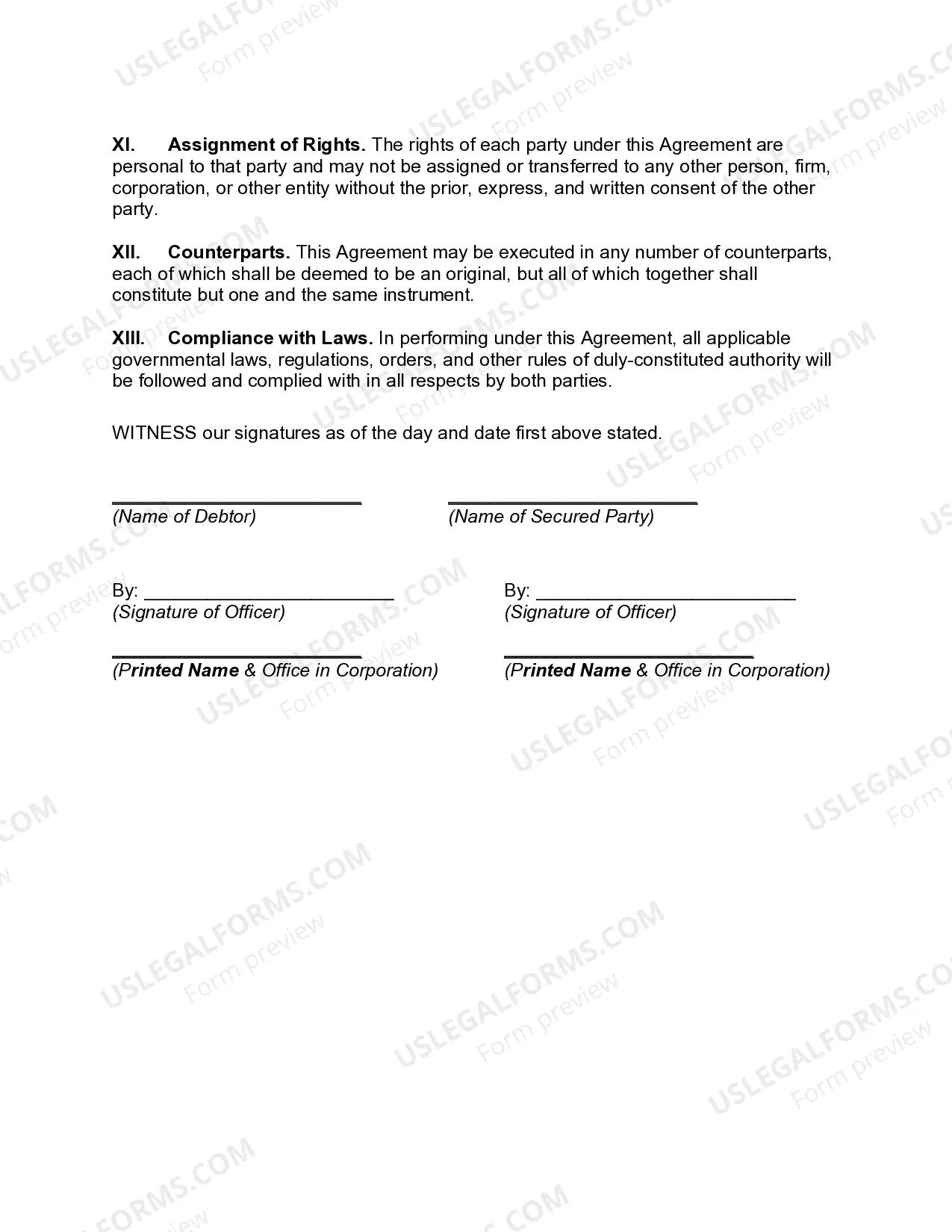
- Clauses addressing arbitration, modification, and severability of the agreement.
When to use this document
This form is typically used when a borrower needs to secure a loan or credit sale with personal property rather than real estate. It is most applicable in scenarios where a business is acquiring equipment or inventory and wants to assure the lender that they have a claim to these assets in the event of a default. This can also be important for businesses seeking financing that involves the use of their existing assets as collateral.
Who can use this document
- Businesses acquiring loans or credit sales that involve personal property as collateral.
- Individuals or corporations looking to secure a financial obligation with their inventory or equipment.
- Lenders who require a formalized agreement to ensure their interest is protected in the borrower's assets.
How to prepare this document
- Identify the parties by entering the legal names and addresses of both the Debtor and the Secured Party.
- Specify the collateral by detailing the inventory, equipment, appliances, furnishings, and fixtures being used as security.
- Enter the date of the agreement at the designated line at the top of the form.
- Fill in any required amounts, including the principal amount of the loan or credit obligation secured by the collateral.
- Ensure that both parties sign the document and provide their printed names and titles to validate the agreement.
Is notarization required?
This form usually doesn’t need to be notarized. However, local laws or specific transactions may require it. Our online notarization service, powered by Notarize, lets you complete it remotely through a secure video session, available 24/7.
Get your form ready online
Our built-in tools help you complete, sign, share, and store your documents in one place.
Make edits, fill in missing information, and update formatting in US Legal Forms—just like you would in MS Word.
Download a copy, print it, send it by email, or mail it via USPS—whatever works best for your next step.
Sign and collect signatures with our SignNow integration. Send to multiple recipients, set reminders, and more. Go Premium to unlock E-Sign.
If this form requires notarization, complete it online through a secure video call—no need to meet a notary in person or wait for an appointment.
We protect your documents and personal data by following strict security and privacy standards.

Make edits, fill in missing information, and update formatting in US Legal Forms—just like you would in MS Word.

Download a copy, print it, send it by email, or mail it via USPS—whatever works best for your next step.

Sign and collect signatures with our SignNow integration. Send to multiple recipients, set reminders, and more. Go Premium to unlock E-Sign.

If this form requires notarization, complete it online through a secure video call—no need to meet a notary in person or wait for an appointment.

We protect your documents and personal data by following strict security and privacy standards.
Mistakes to watch out for
- Failing to accurately identify the collateral can lead to disputes about what is secured.
- Not obtaining the necessary signatures can result in an invalid agreement.
- Overlooking state-specific requirements which may impact enforceability.
Why complete this form online
- Convenience of completing the form at your own pace without the need for in-person meetings.
- Editable fields allow customization to fit specific circumstances easily.
- Access to professionally drafted templates ensures compliance with legal standards.
Looking for another form?
Form popularity
FAQ
A security interest is not enforceable unless it has attached. Attachment of a security interest generally requires a written security agreement, description of collateral, secured party's giving value, and the debtor having rights in collateral.
Two-Party Secured Transaction. Occurs when a seller sells goods to a buyer on credit and retains a security interest in the goods. Three-Party Secured Transaction. Occurs when a seller sells goods to a buyer who has obtained financing from a third-party lender who takes a security interest in the goods sold.
Security interest is an enforceable legal claim or lien on collateral that has been pledged, usually to obtain a loan. The borrower provides the lender with a security interest in certain assets, which gives the lender the right to repossess all or part of the property if the borrower stops making loan payments.
UCC § 9-203 sets forth the requirements for attachment and enforceability of security interests. In general: (1) the creditor must give value, (2) the debtor must have rights in the collateral, and (3) there must be a security agreement or other action indicating an intent to convey a security interest.
(a) A security interest attaches to collateral when it becomes enforceable against the debtor with respect to the collateral, unless an agreement expressly postpones the time of attachment.
Under the Secured Transactions Article of the UCC, which of the following requirements is necessary to have a security interest attach? An interest in personal property or fixtures that secures payment or performance of an obligation.
Certain specific requirements are required for the security agreement to form the foundation for a valid security interest, namely 1) it must be signed, 2) it must clearly state that a security interest is intended, and 3) it must contain a sufficient description of the collateral subject to the security interest.
Attachment involves three elements: 1) the secured party must give value to the debtor; 2) the debtor must have rights in the collateral or the power to give rights in the collateral to the secured party; and a third condition must be satisfied?usually, the debtor's authentication of a security agreement describing the