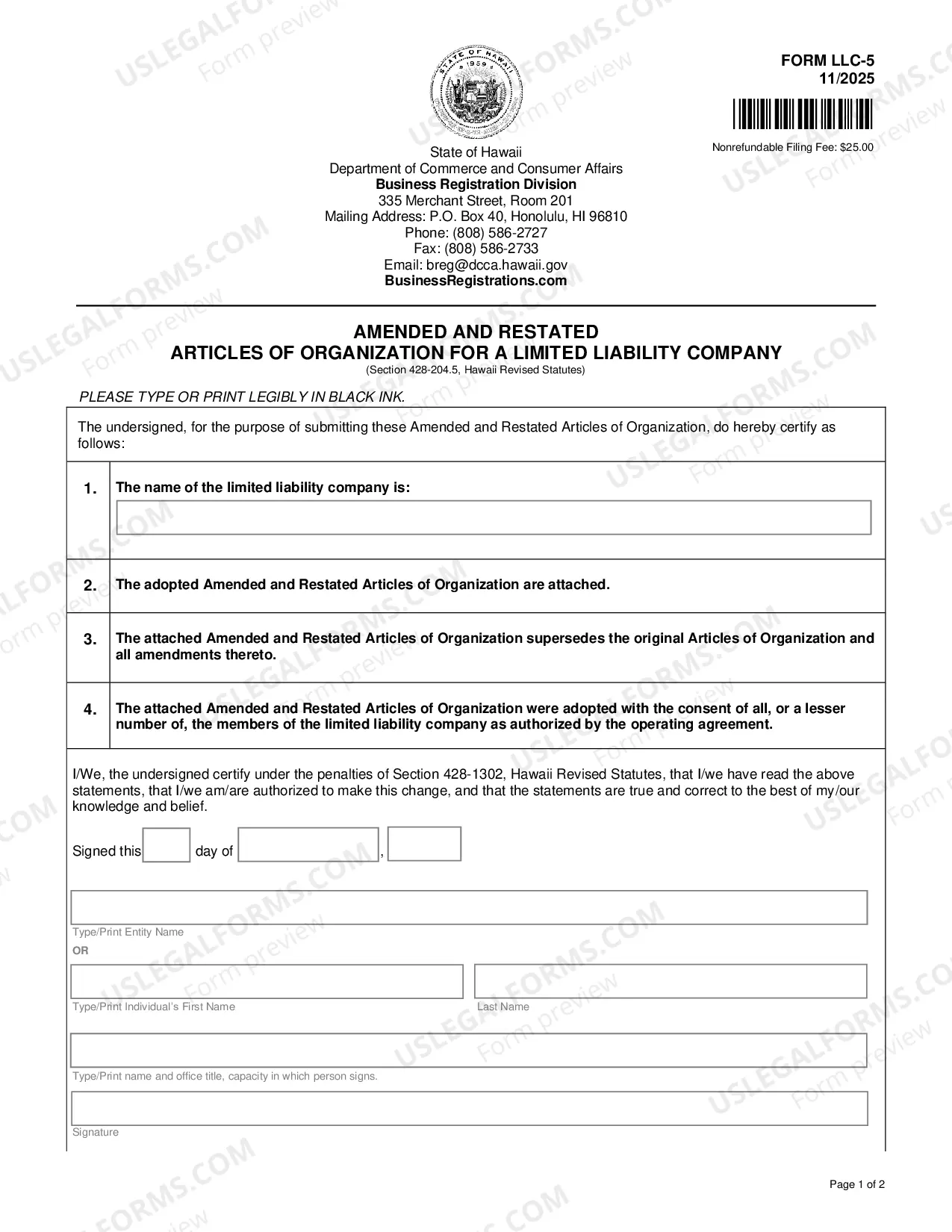
Sample Limited Liability Company LLC Operating Agreement with company assets divided into ownership shares
Understanding this form
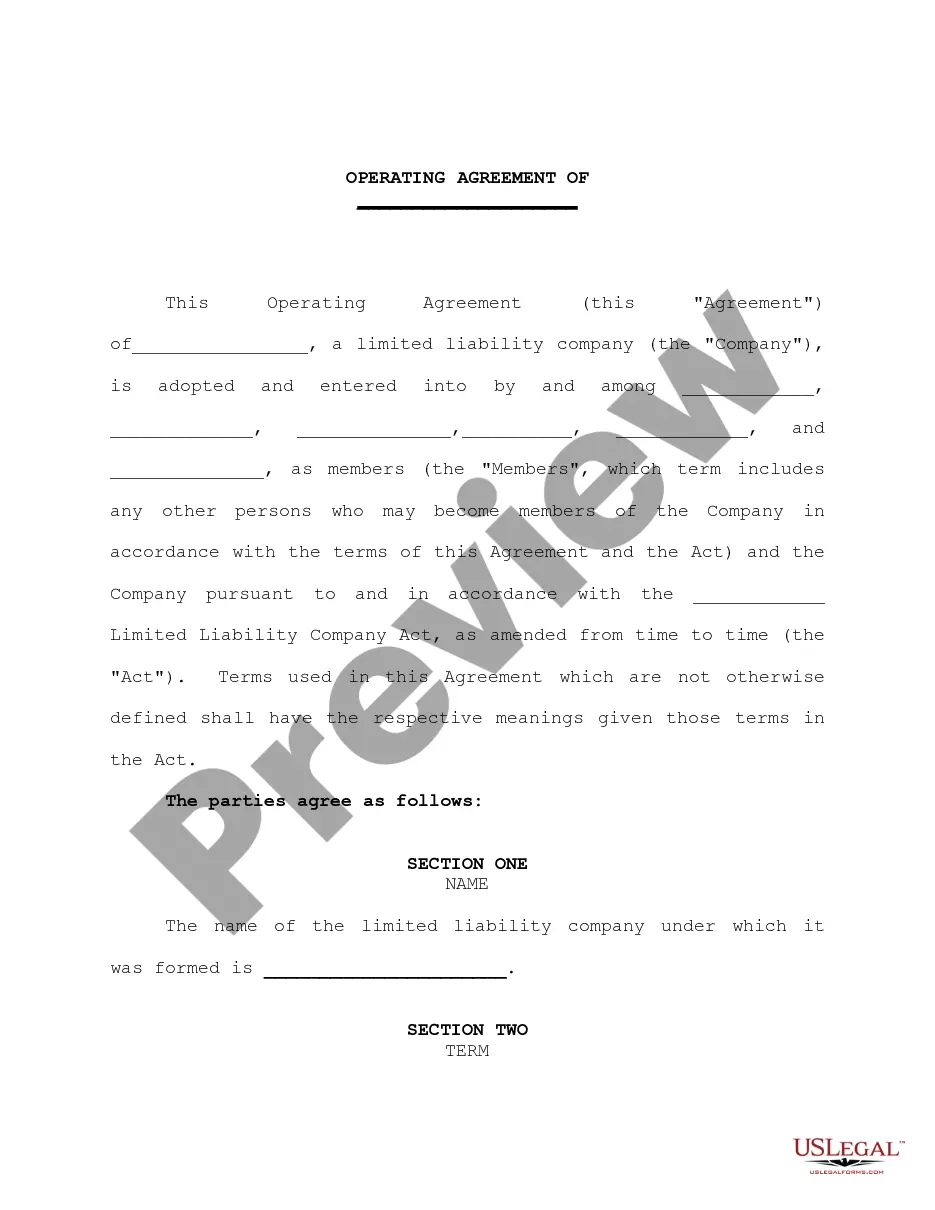
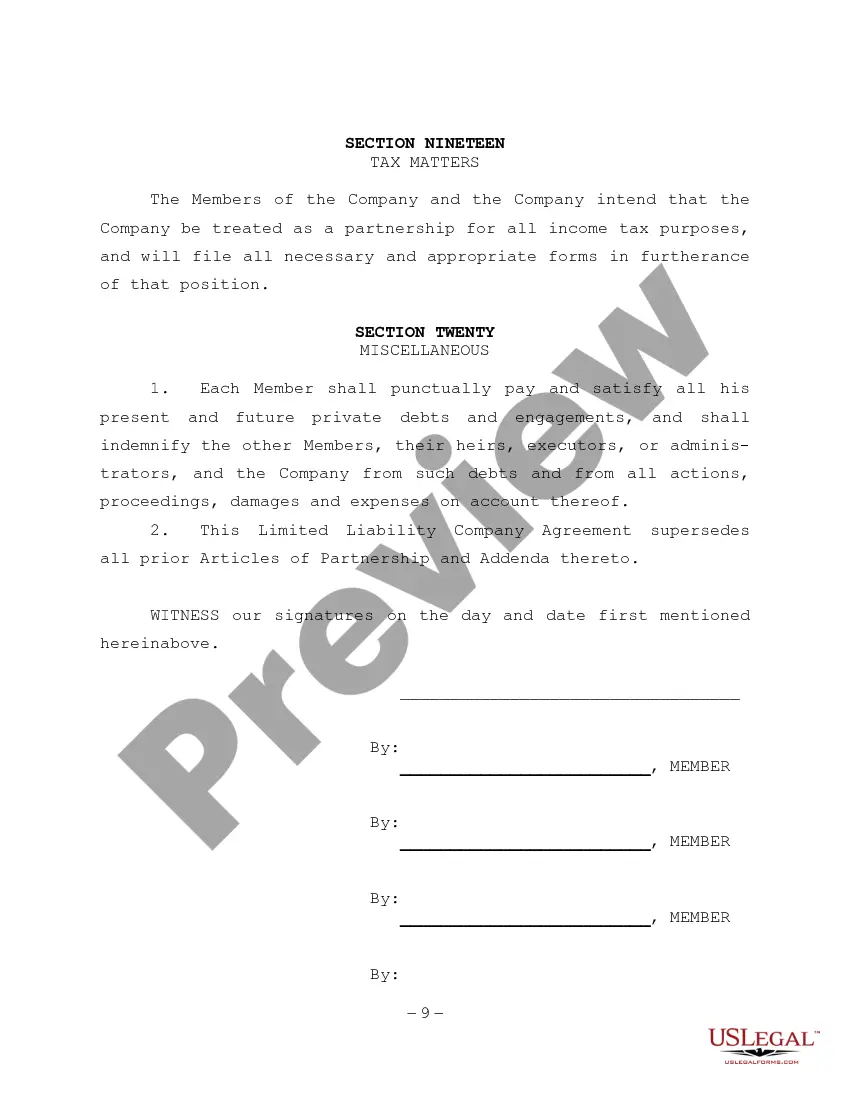
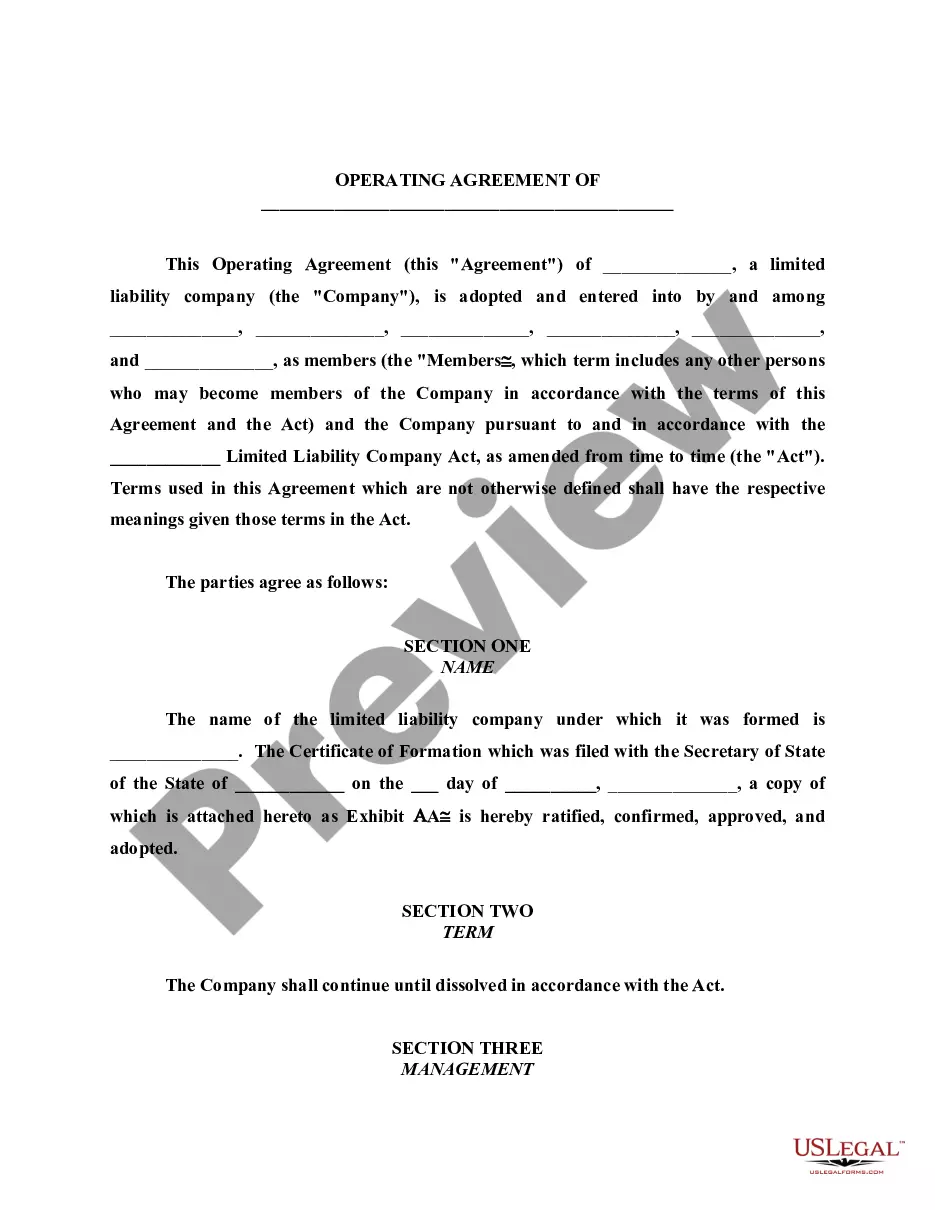
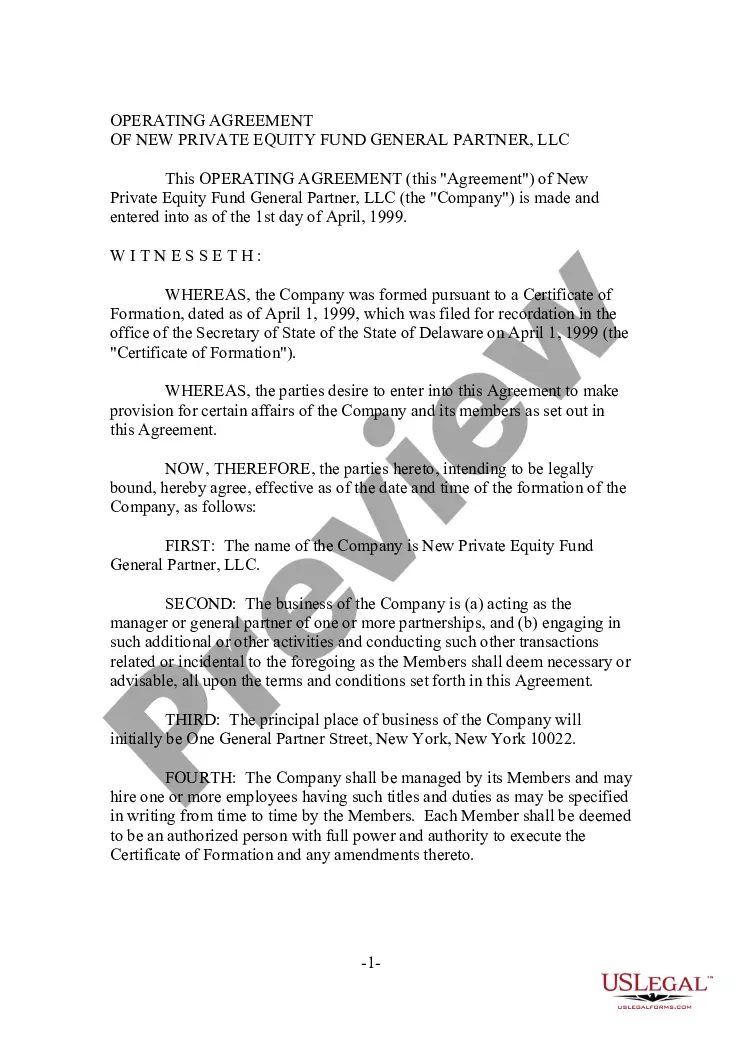
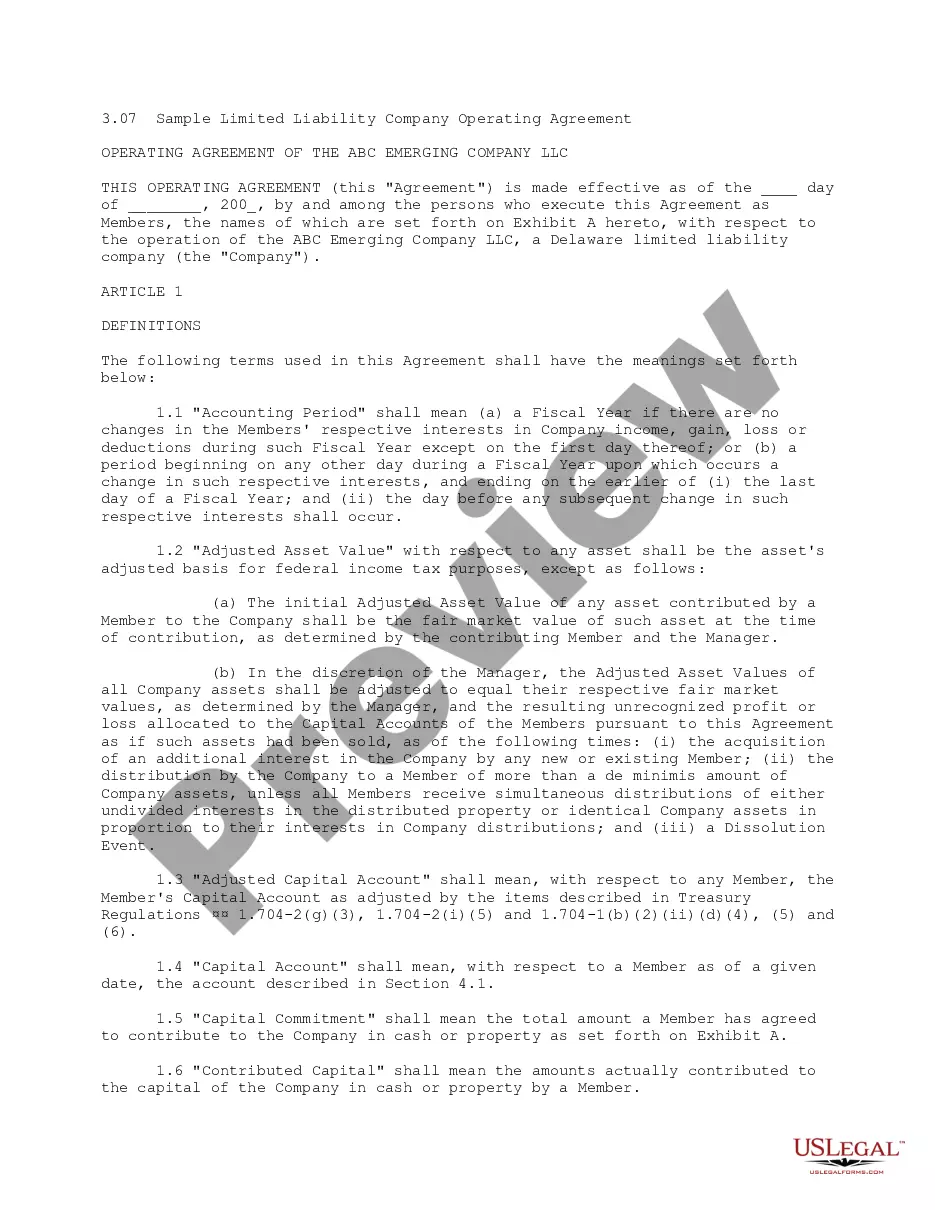
A Sample Limited Liability Company LLC Operating Agreement is a legal document that outlines the management structure and operational guidelines for a limited liability company (LLC). This particular agreement details how company assets are divided into ownership shares among its members. Unlike other business formation documents, this operating agreement clarifies each member's rights, responsibilities, and profit distribution, ensuring smooth operations and protecting members from personal liability for company debts.
What’s included in this form
- Name of the LLC
- Term or duration of the LLC
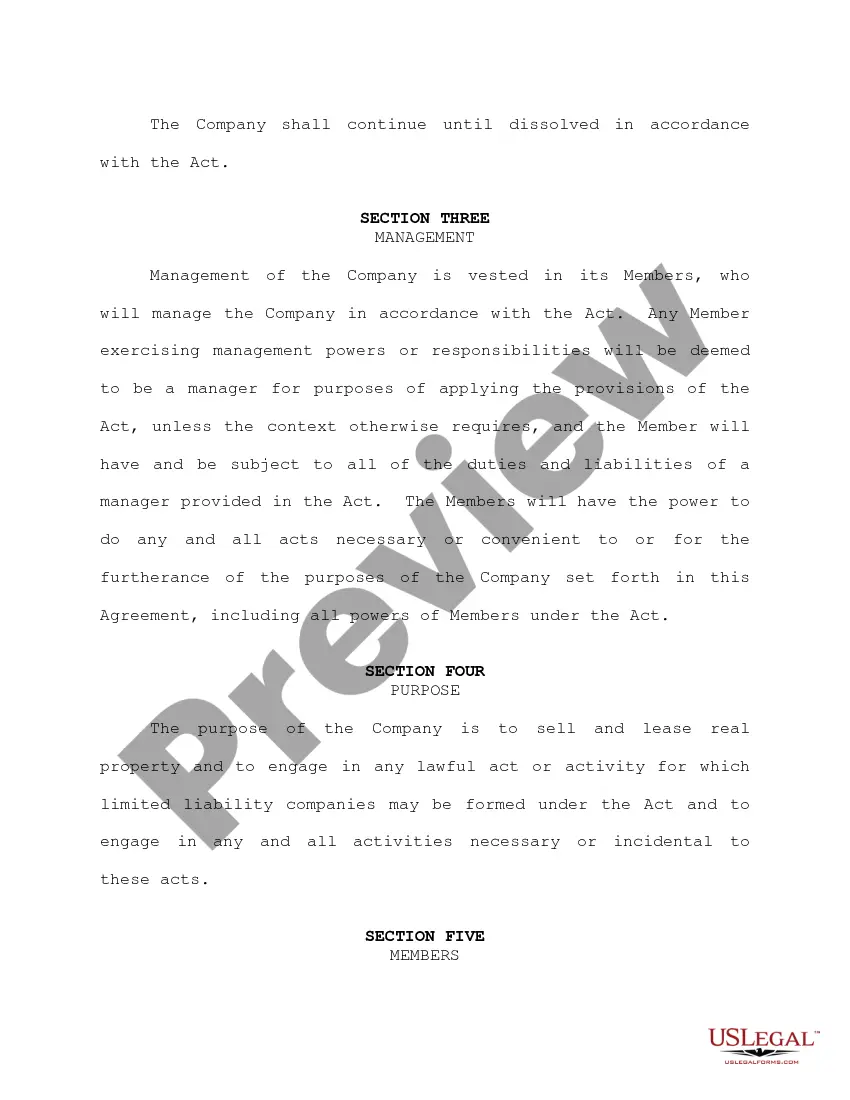
- Management structure and member responsibilities
- Purpose of the LLC
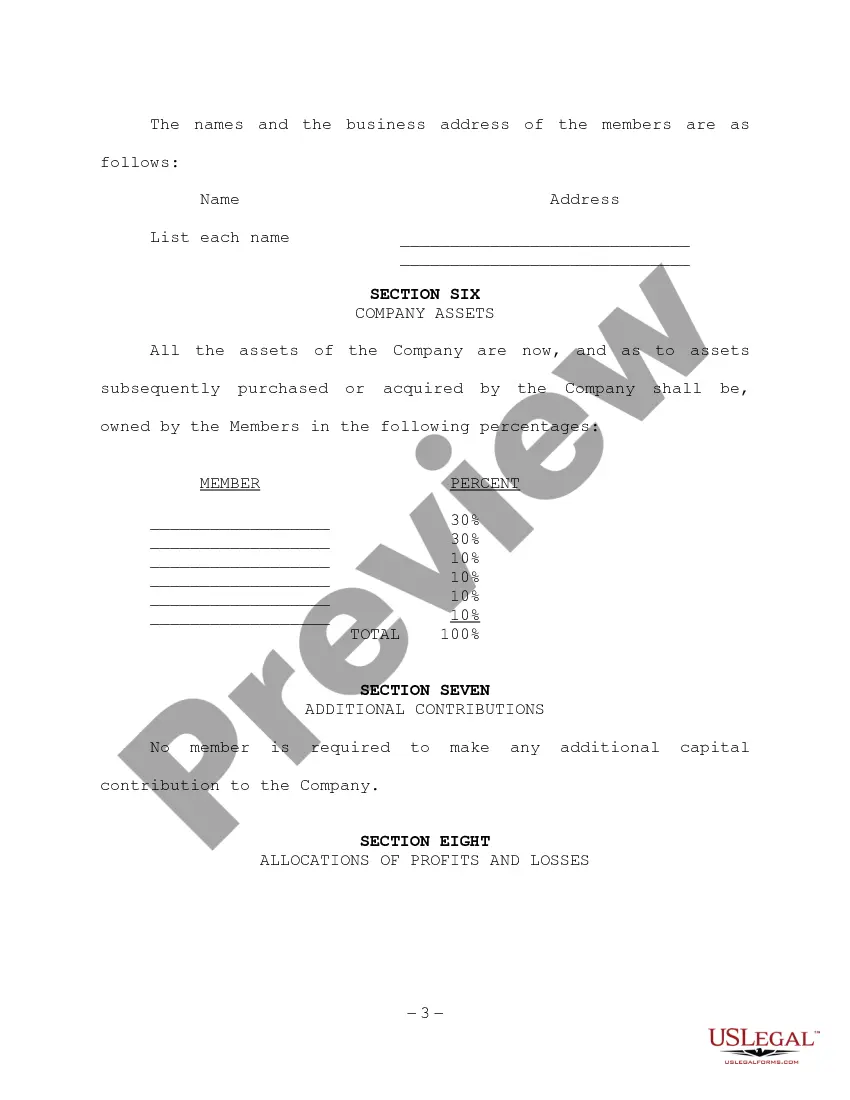
- Members and their ownership percentages
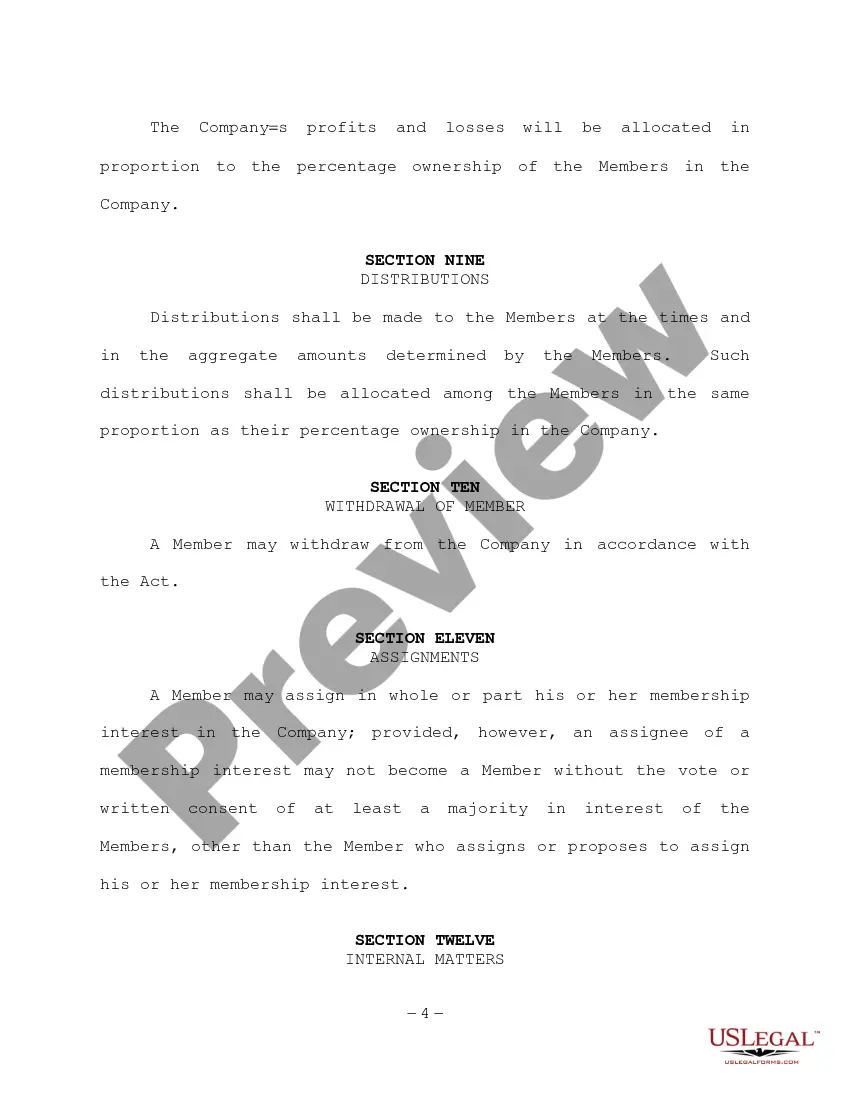
- Distribution of profits and losses
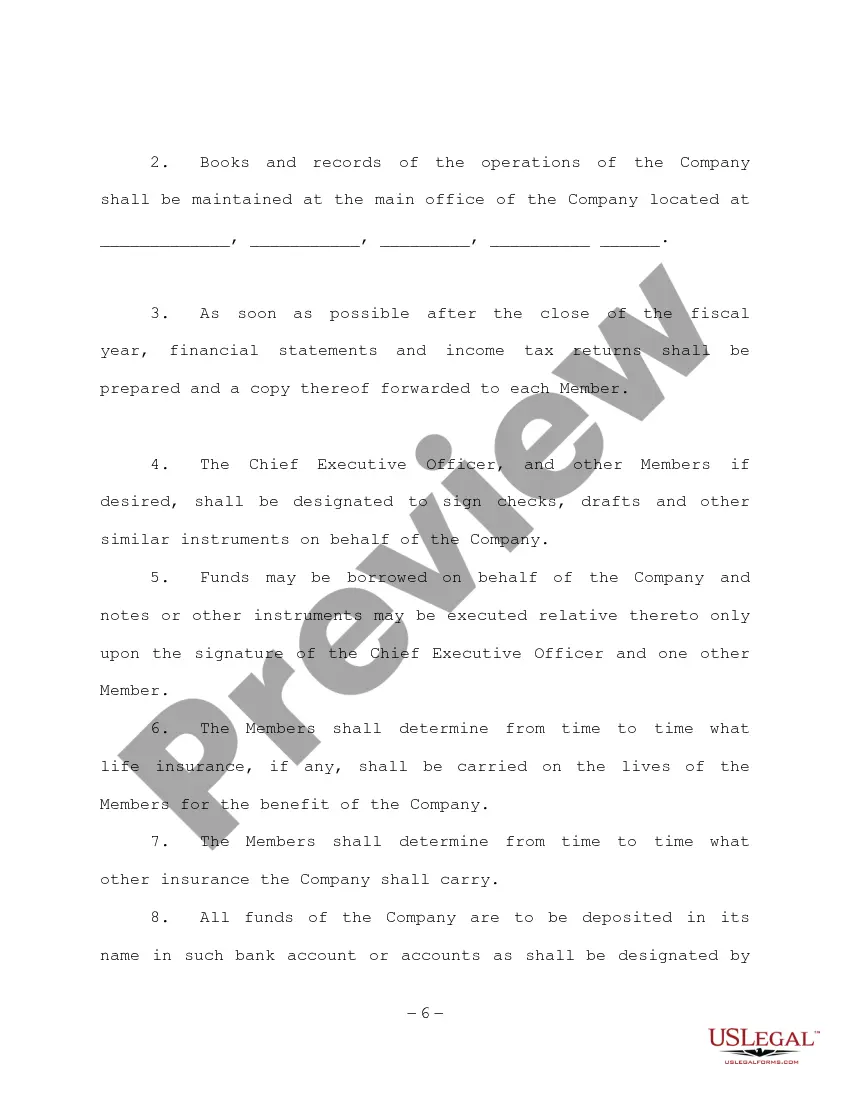
- Procedures for member withdrawal and adding new members
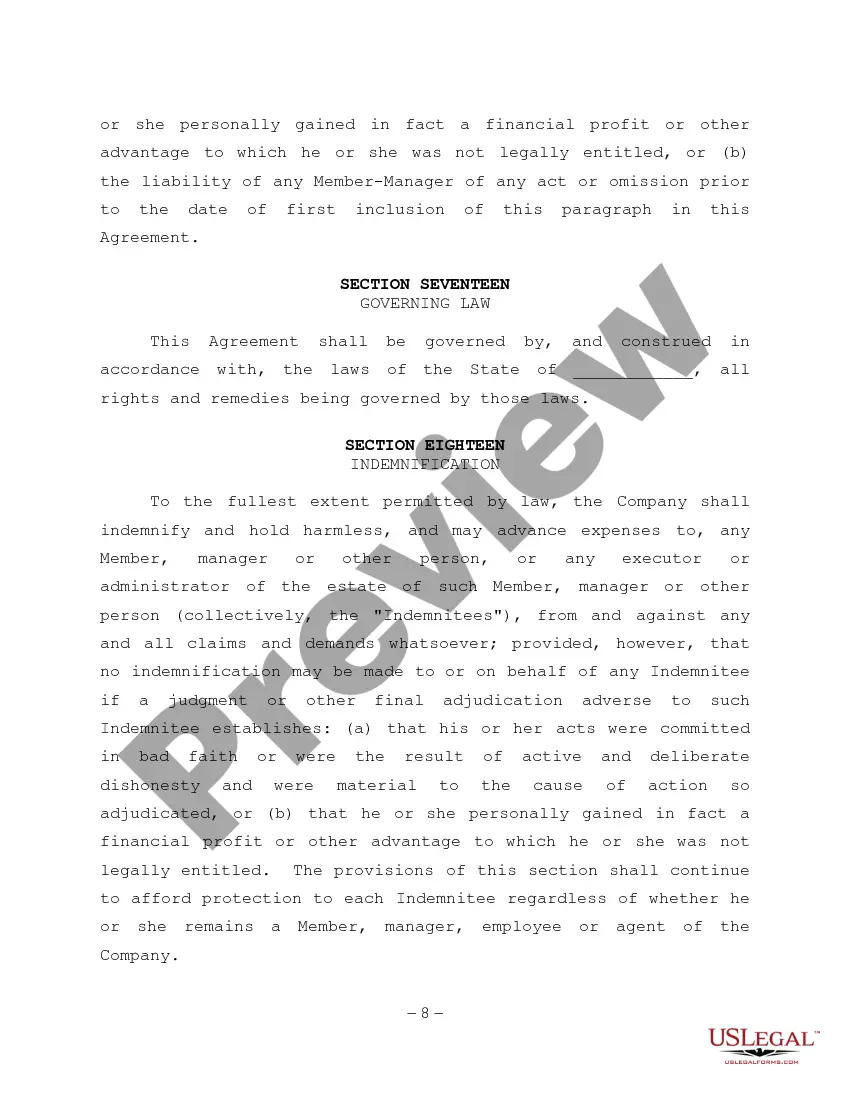
- Governing law provisions



When to use this document
This form should be used when forming a limited liability company (LLC) and when members want to clearly outline how the company will operate. It is essential for new business ventures where assets are divided among members. Additionally, existing LLCs can use this agreement to update or reinforce their operational protocols for clarity and compliance.
Who needs this form
- Business owners planning to establish an LLC
- Current LLC members looking to formalize their operational structure
- Investors involved in an LLC that need clarity on ownership shares
- Entrepreneurs seeking to protect personal assets by forming an LLC
How to complete this form
- Enter the name of the LLC in the designated section.
- Specify the term or duration for which the LLC will operate.
- List the members along with their respective ownership percentages.
- Define the management structure and responsibilities of each member.
- Outline distribution policies for profits and losses.
- Include any relevant governing law provisions for your LLC.
Does this form need to be notarized?
Notarization is generally not required for this form. However, certain states or situations might demand it. You can complete notarization online through US Legal Forms, powered by Notarize, using a verified video call available anytime.
Get your form ready online
Our built-in tools help you complete, sign, share, and store your documents in one place.
Make edits, fill in missing information, and update formatting in US Legal Forms—just like you would in MS Word.
Download a copy, print it, send it by email, or mail it via USPS—whatever works best for your next step.
Sign and collect signatures with our SignNow integration. Send to multiple recipients, set reminders, and more. Go Premium to unlock E-Sign.
If this form requires notarization, complete it online through a secure video call—no need to meet a notary in person or wait for an appointment.
We protect your documents and personal data by following strict security and privacy standards.

Make edits, fill in missing information, and update formatting in US Legal Forms—just like you would in MS Word.

Download a copy, print it, send it by email, or mail it via USPS—whatever works best for your next step.

Sign and collect signatures with our SignNow integration. Send to multiple recipients, set reminders, and more. Go Premium to unlock E-Sign.

If this form requires notarization, complete it online through a secure video call—no need to meet a notary in person or wait for an appointment.

We protect your documents and personal data by following strict security and privacy standards.
Mistakes to watch out for
- Failing to accurately list all members and their ownership percentages.
- Neglecting to specify the company's purpose, which can lead to legal issues.
- Overlooking state-specific requirements that may alter the document's validity.
- Not updating the operating agreement as membership changes.
Benefits of completing this form online
- Convenient access to a legally compliant document from anywhere.
- Edit and customize the agreement to suit specific business needs.
- Fast downloads for immediate use without waiting for print services.
- Professional quality forms drafted by licensed attorneys.
Legal use & context
- This operating agreement is enforceable as a binding contract among members of the LLC.
- It outlines the operational framework and management duties, helping prevent disputes.
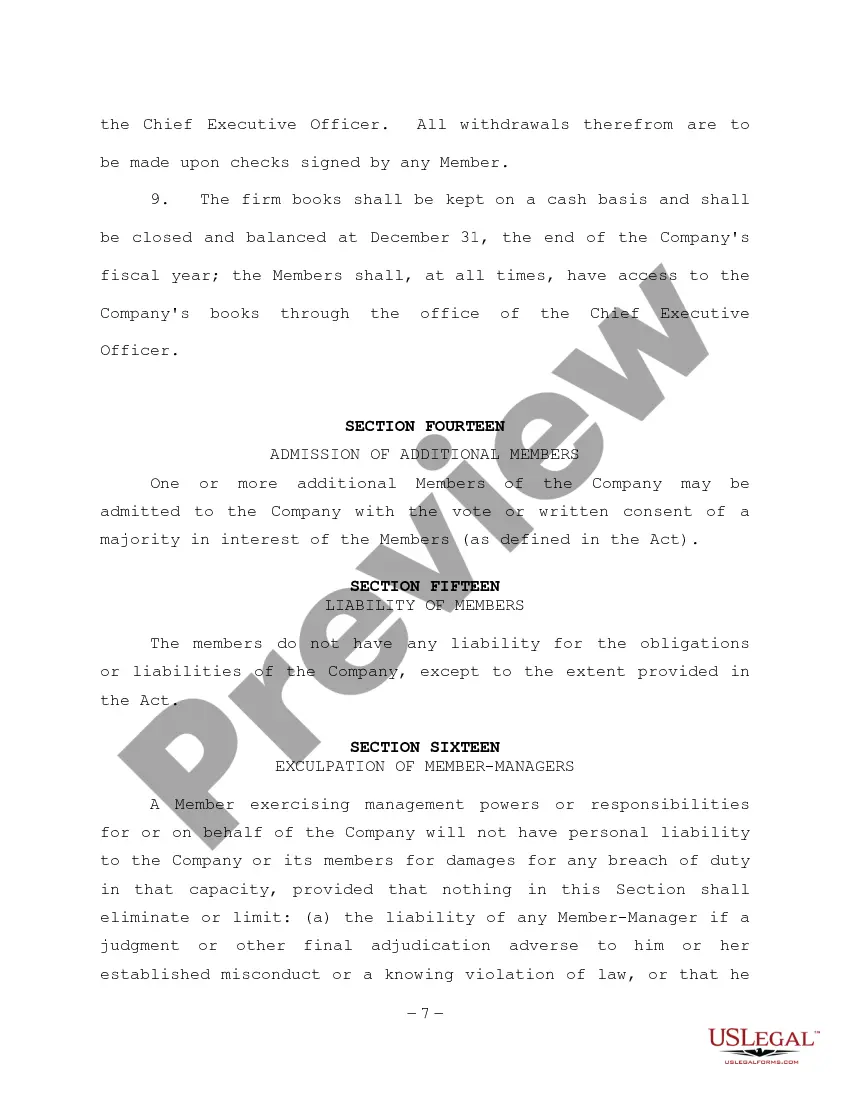
- Members are protected from personal liability for the company's debts and obligations.
Key takeaways
- The operating agreement is essential for the structure and management of an LLC.
- Clearly defining ownership and management roles can prevent future legal issues.
- Using an online form can simplify the creation and revision of this agreement.
Glossary of terms used in this form
- Limited Liability Company (LLC): A business structure that protects its owners from personal liability while providing tax advantages.
- Members: Individuals or entities that own shares in the LLC.
- Operating Agreement: A document outlining the management structure and operational procedures of an LLC.
- Profits and Losses: Financial gains and losses allocated to members based on their ownership percentages.
Looking for another form?


Form popularity
FAQ
Every member of the LLC and the manager or managers (if there are any) need to sign the operating agreement. Each signatory should sign a separate signature page.Learn how to properly sign business documents on your state's LLC formation page.
1. Divide ownership of the LLC by calculating total cash investment by the members. Give each member an ownership stake equal to his cash investment. Four members contributing $25,000 apiece would each receive a 25 percent stake in the company.
The core elements of an LLC operating agreement include provisions relating to equity structure (contributions, capital accounts, allocations of profits, losses and distributions), management, voting, limitation on liability and indemnification, books and records, anti-dilution protections, if any, restrictions on
The multi-member LLC is a Limited Liability Company with more than one owner. It is a separate legal entity from its owners, but not a separate tax entity. A business with multiple owners operates as a general partnership, by default, unless registered with the state as an LLC or corporation.
Member Financial Interest. What percentage ownership does each member have? Corporate Governance. Corporate Officer's Power and Compensation. Non-Compete. Books and Records Audit. Arbitration/Forum Selection. Departure of Members. Fiduciary duties.
Percentages of Ownership In return, each LLC member gets a percentage of ownership in the assets of the LLC. Members usually receive ownership percentages in proportion to their contributions of capital, but LLC members are free to divide up ownership in any way they wish.
Get together with your co-owners and a lawyer, if you think you should (it's never a bad idea), and figure out what you want to cover in your agreement. Then, to create an LLC operating agreement yourself, all you need to do is answer a few simple questions and make sure everyone signs it to make it legal.
By default, an LLC's profits are allocated in proportion to ownership interests. For example, if two LLC members each own 50 percent of the LLC, half of the profits is allocated to each owner. If an LLC does not specify an alternative method, this is how the company must allocate its profits.
Unlike most business organizations, absent an agreement by all of the members of the LLC, ownership percentage has no real effect in terms of the governance and financial benefits. To increase the traditional benefits associated with ownership, control and financial return, you need to amend the operating agreement.