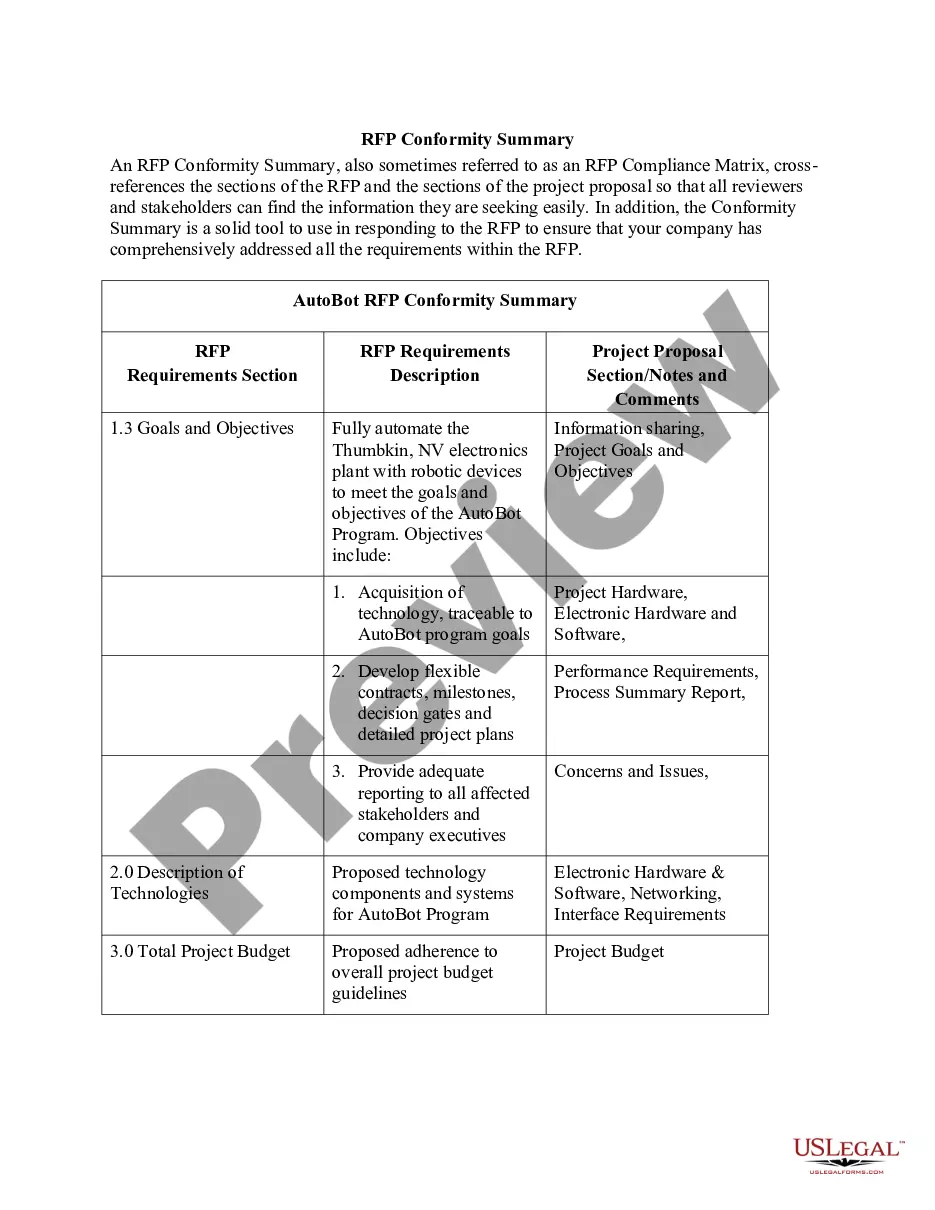
RFP Conformity Summary
What this document covers
The RFP Conformity Summary is a vital document that cross-references the sections of a Request for Proposal (RFP) with your project proposal. It helps reviewers easily locate specific information, ensuring all RFP requirements are comprehensively addressed. This summary differs from a standard proposal by providing a clear matrix that aligns proposal content with RFP expectations, which can significantly enhance the evaluation process and clarify compliance for stakeholders.
Key parts of this document
- RFP Requirements Section: Outlines the primary goals and objectives of the RFP.
- RFP Requirements Description: Detailed narratives explaining what each requirement entails.
- Project Proposal Section/Notes and Comments: Where you detail how your proposal addresses each RFP requirement.
- Performance Requirements: Specifies the expected deliverables and reporting obligations.
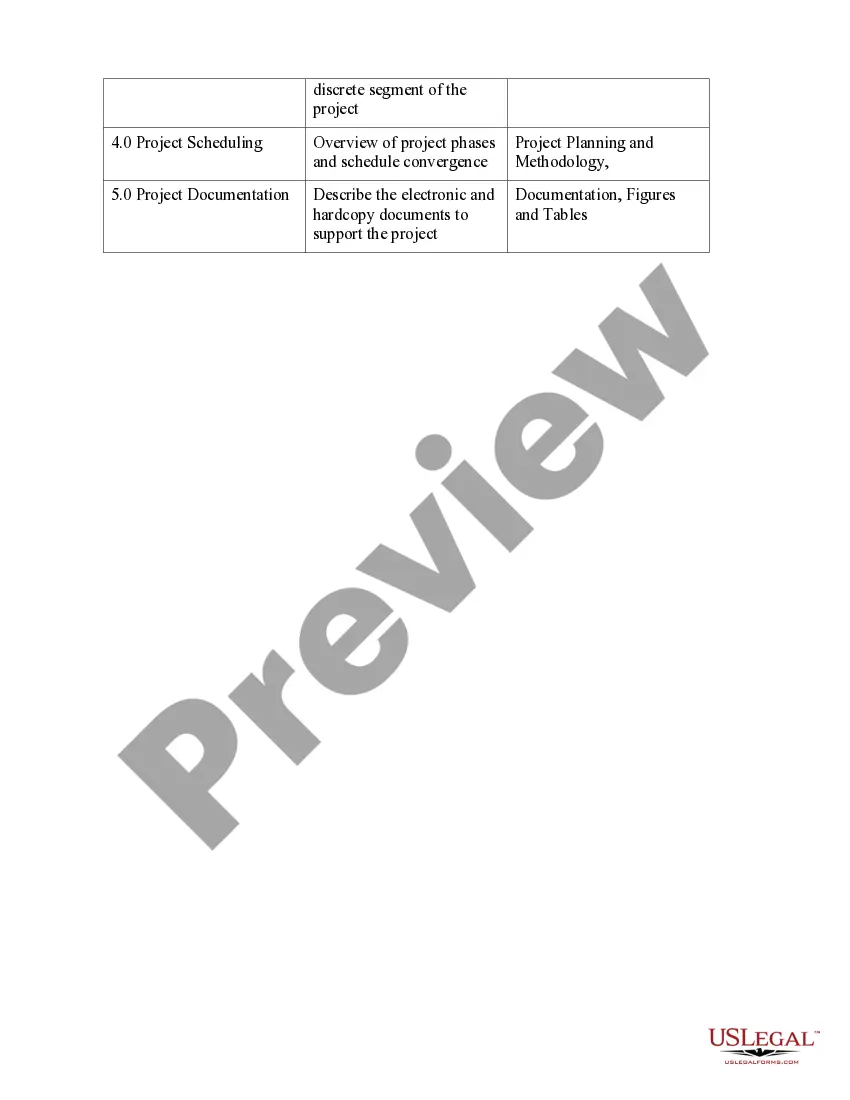
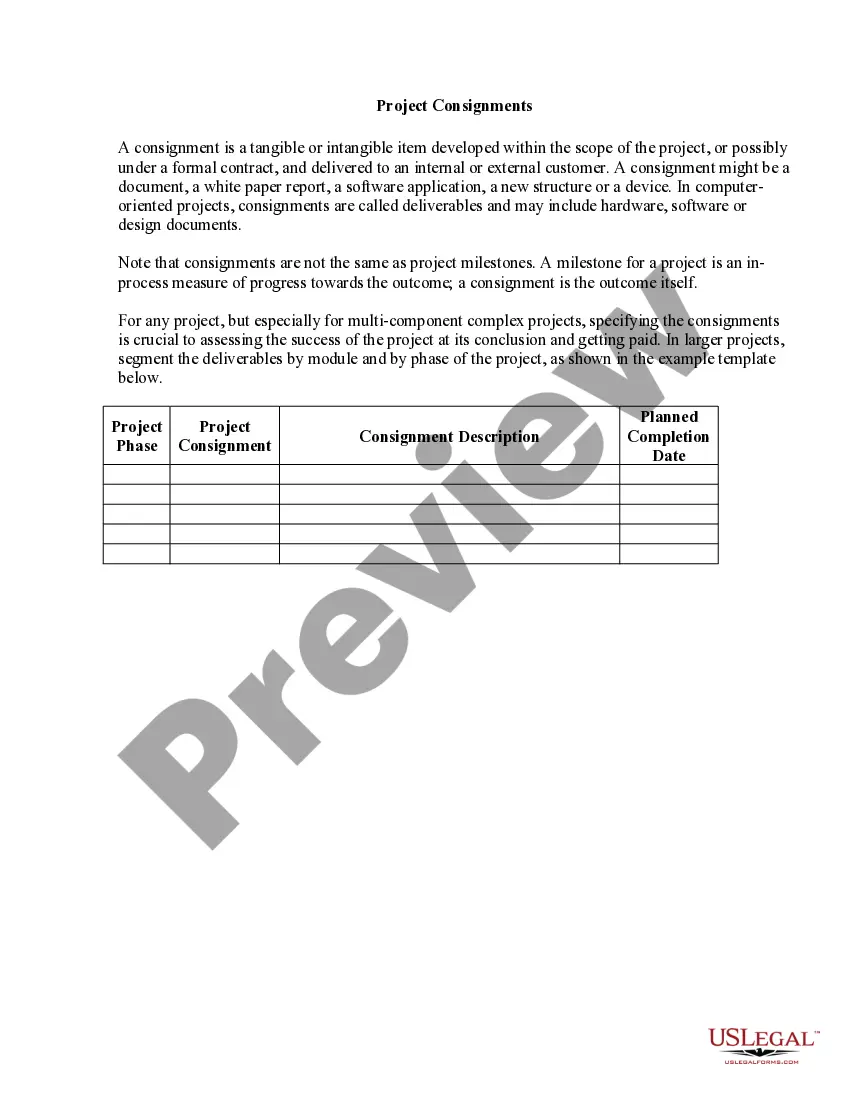
- Project Budget: A summary of budget adherence, highlighting project segment budgets.
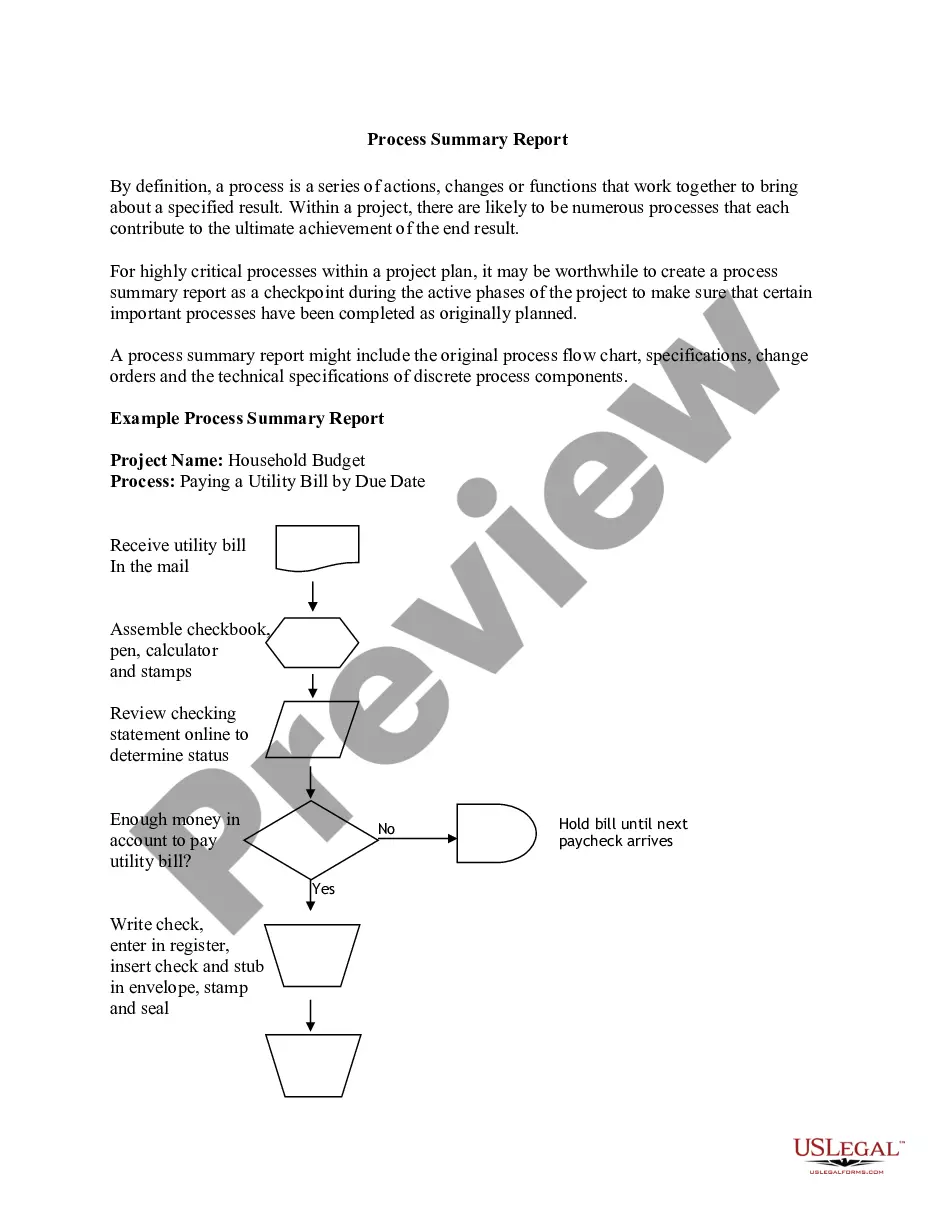
- Project Scheduling: An overview of the project phases and timelines.
- Project Documentation: Description of necessary electronic and hardcopy documentation to support the project.
When this form is needed
This form is essential whenever you respond to an RFP. It is particularly useful for ensuring that all requirements are met and to facilitate clear communication among team members and stakeholders involved in the proposal evaluation process. Use this form when preparing bids for government contracts, large-scale projects, or any competitive proposals where compliance with specific requirements is critical.
Who needs this form
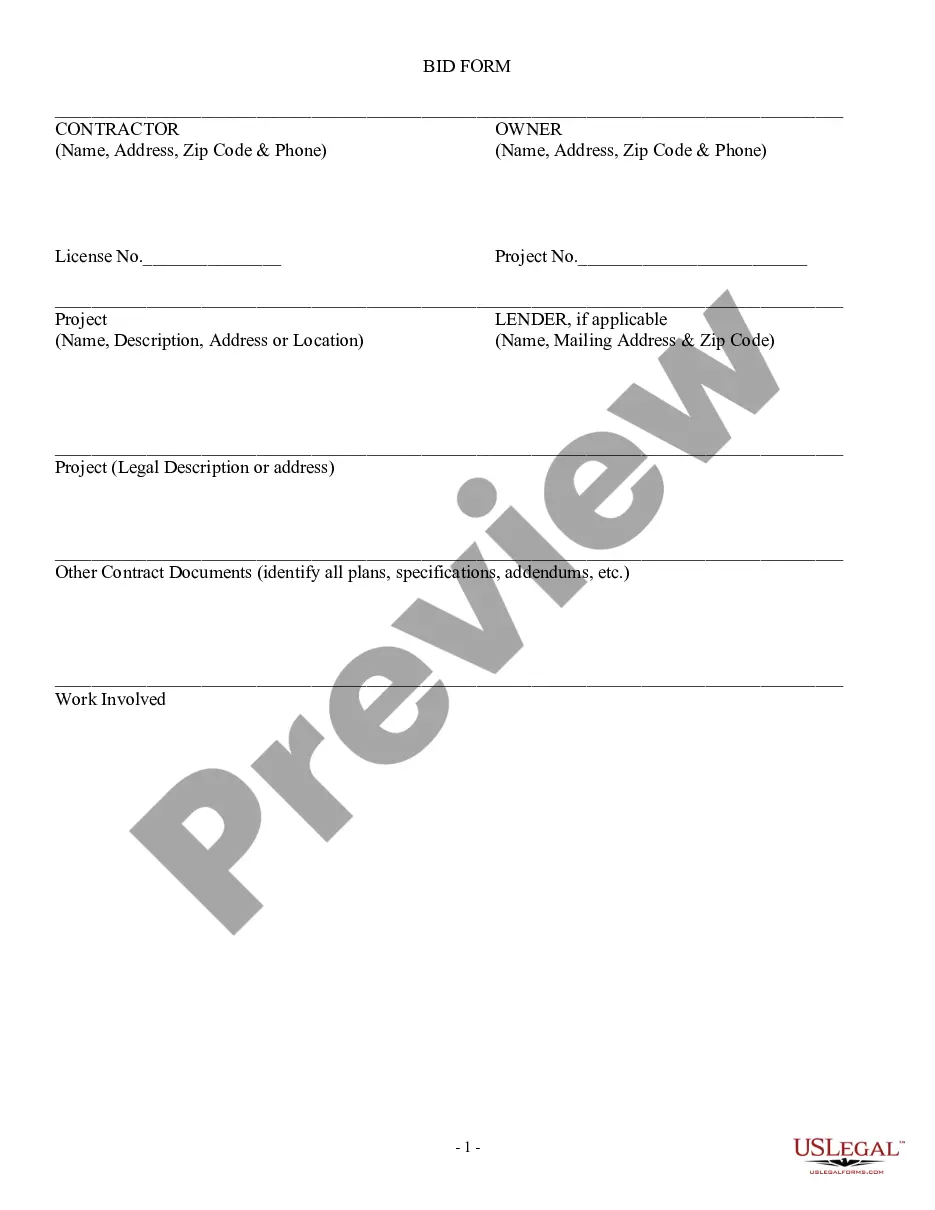
- Businesses preparing to submit proposals in response to RFPs.
- Project managers coordinating proposal teams and documentation.
- Contractors bidding on public or private sector projects.
- Consultants aiding clients in proposal preparation.
- Legal and compliance teams ensuring adherence to requirements.
Steps to complete this form
- Identify the key sections of the RFP you need to address.
- Cross-reference each RFP section with corresponding details from your project proposal.
- Complete the comments field, providing notes on compliance and relevance for each section.
- Ensure that all required sections are thoroughly covered as per the RFP guidelines.
- Review the document for completeness before submission to stakeholders.
Notarization guidance
In most cases, this form does not require notarization. However, some jurisdictions or signing circumstances might. US Legal Forms offers online notarization powered by Notarize, accessible 24/7 for a quick, remote process.
Get your form ready online
Our built-in tools help you complete, sign, share, and store your documents in one place.
Make edits, fill in missing information, and update formatting in US Legal Forms—just like you would in MS Word.
Download a copy, print it, send it by email, or mail it via USPS—whatever works best for your next step.
Sign and collect signatures with our SignNow integration. Send to multiple recipients, set reminders, and more. Go Premium to unlock E-Sign.
If this form requires notarization, complete it online through a secure video call—no need to meet a notary in person or wait for an appointment.
We protect your documents and personal data by following strict security and privacy standards.

Make edits, fill in missing information, and update formatting in US Legal Forms—just like you would in MS Word.

Download a copy, print it, send it by email, or mail it via USPS—whatever works best for your next step.

Sign and collect signatures with our SignNow integration. Send to multiple recipients, set reminders, and more. Go Premium to unlock E-Sign.

If this form requires notarization, complete it online through a secure video call—no need to meet a notary in person or wait for an appointment.

We protect your documents and personal data by following strict security and privacy standards.
Typical mistakes to avoid
- Failing to address all RFP requirements.
- Inconsistent format between the RFP and proposal sections.
- Incomplete or vague comments in the summary.
- Neglecting to update the conformity summary as project details change.
- Not involving relevant team members in the review process.
Why use this form online
- Convenience of instant access and download from any device.
- Editability allows for tailoring the document specifically to the RFP requirements.
- Increased reliability through structured guidance on compliance.
- Ability to collaborate effectively with team members in real-time.
Summary of main points
- The RFP Conformity Summary enhances clarity and compliance in proposal submissions.
- It serves as a direct comparison tool between your proposal and RFP expectations.
- Using this form can improve communication among stakeholders, ensuring thorough review and understanding.
Looking for another form?
Form popularity
FAQ
The Price Sheet is a key document within the RFP, vital to both cost projections and cost control. A well-structured price sheet ? which can also be provided in an attached electronic spreadsheet ? will enable the agency to project costs over the contract term.
While there are many different components of an RFP, there are three that rise to the top in terms of importance and overall time benefit -- defining your need, determining your communication strategy and coming up with evaluation criteria.
In an RFP summary, that means offering one or two sentences about the project. Next, provide an overview of the challenges that the purchase will solve. And finally, state the goals and expected outcomes.
RFP compliance means demonstrating fulfilment of all the instructions and requirements contained in the RFP. RFP compliance is mandatory for some bids, such as Federal Government RFPs. The problem is that full RFP compliance often cannot be achieved.
7 Steps to Writing an RFP That Gets High-Quality Responses Step 1: Get Clear.Step 2: Figure Out the Details.Step 3: Determine the Audience.Step 4: Decide What You Need.Step 5: Outline the RFP.Step 6: Write the RFP.Step 7: Edit the RFP.
A government RFP should contain the following sections: Section A ? Solicitation/Contract Form (SF-33) Section B ? Supplies and Services and Prices/Costs. Section C ? Description/Specifications/Statement of Work.
Here are three components that should be included in every RFP: Background information on the organization or company requesting the proposal.A description of the project for which proposals are being solicited.Evaluation criteria that will be used to assess proposals.