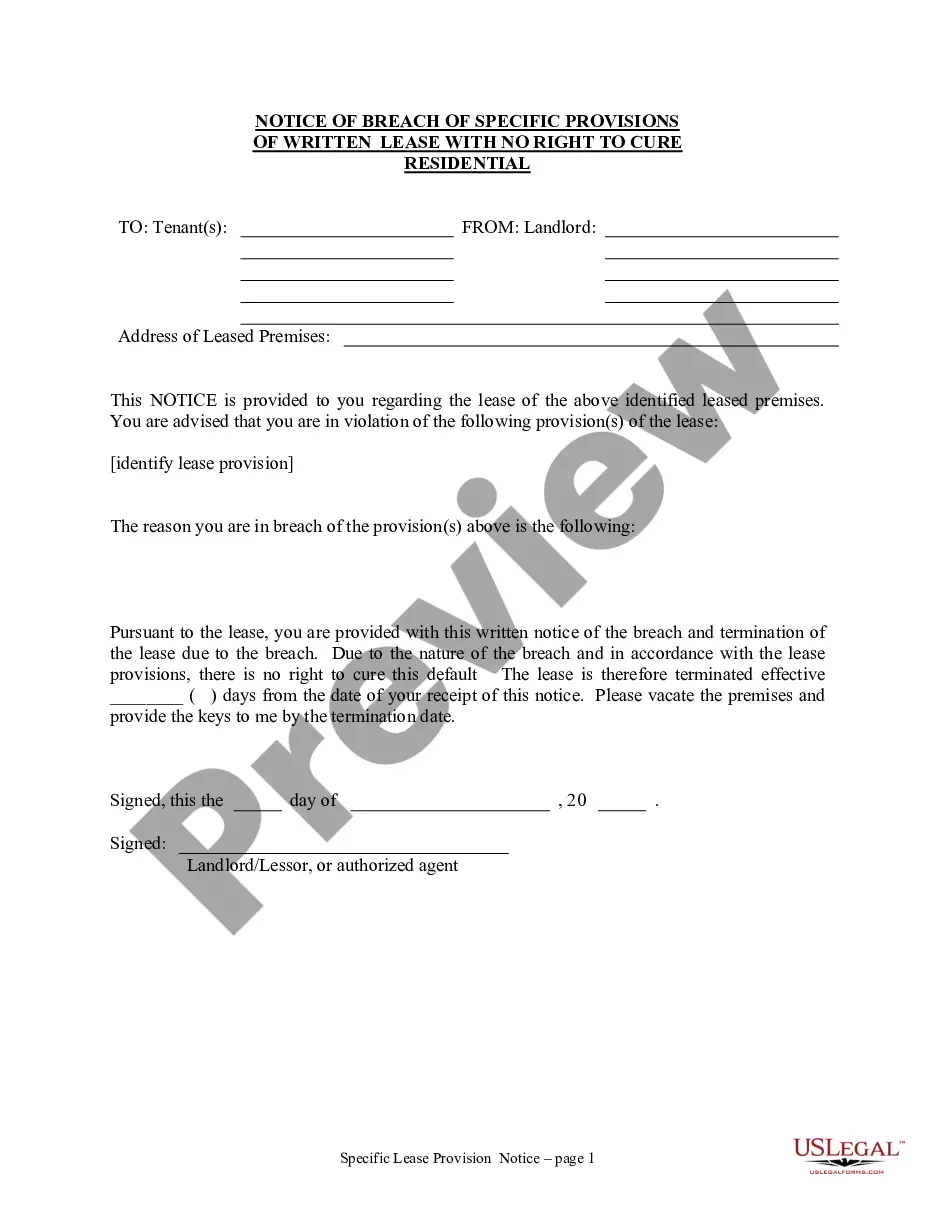
Possible Human Resource Management Strategies
Understanding this form
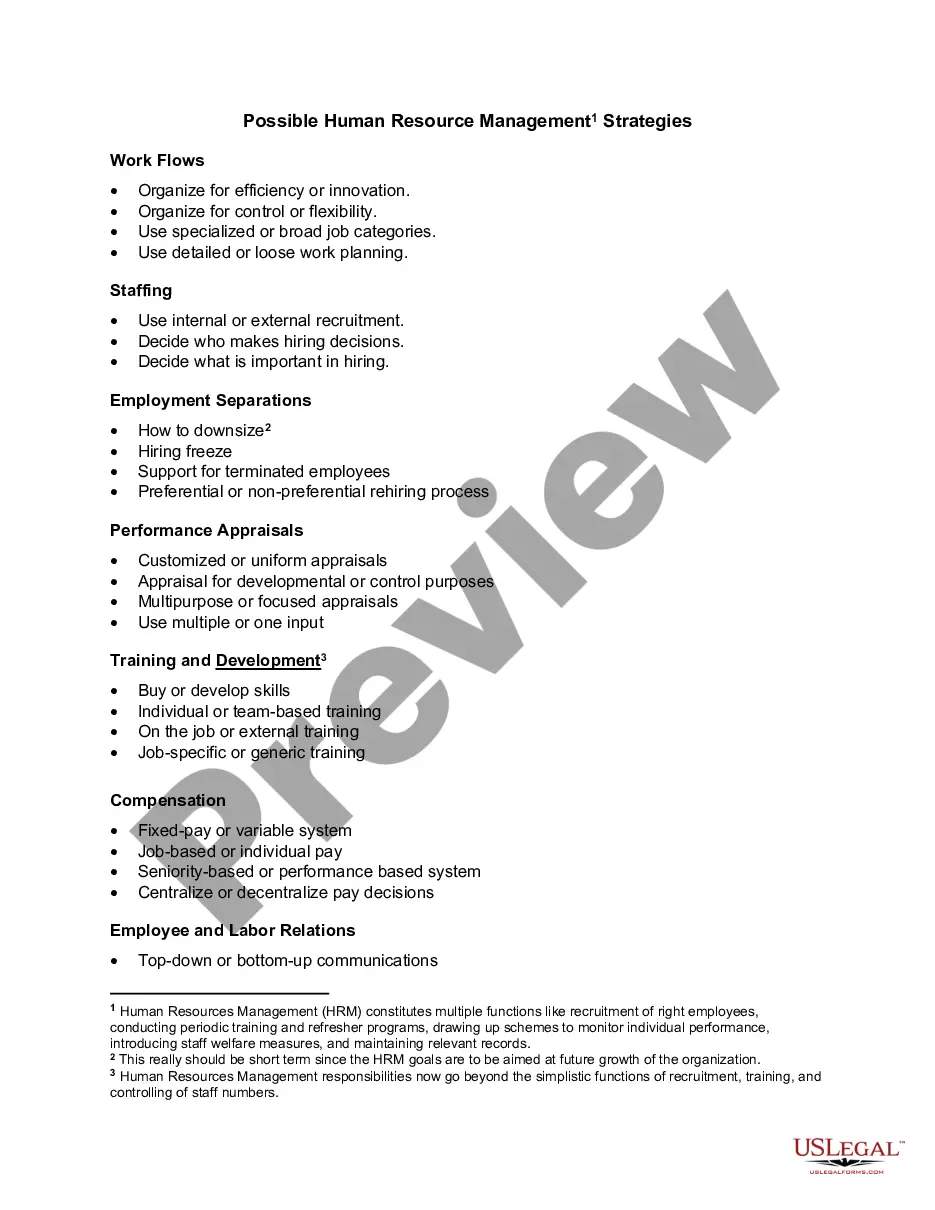
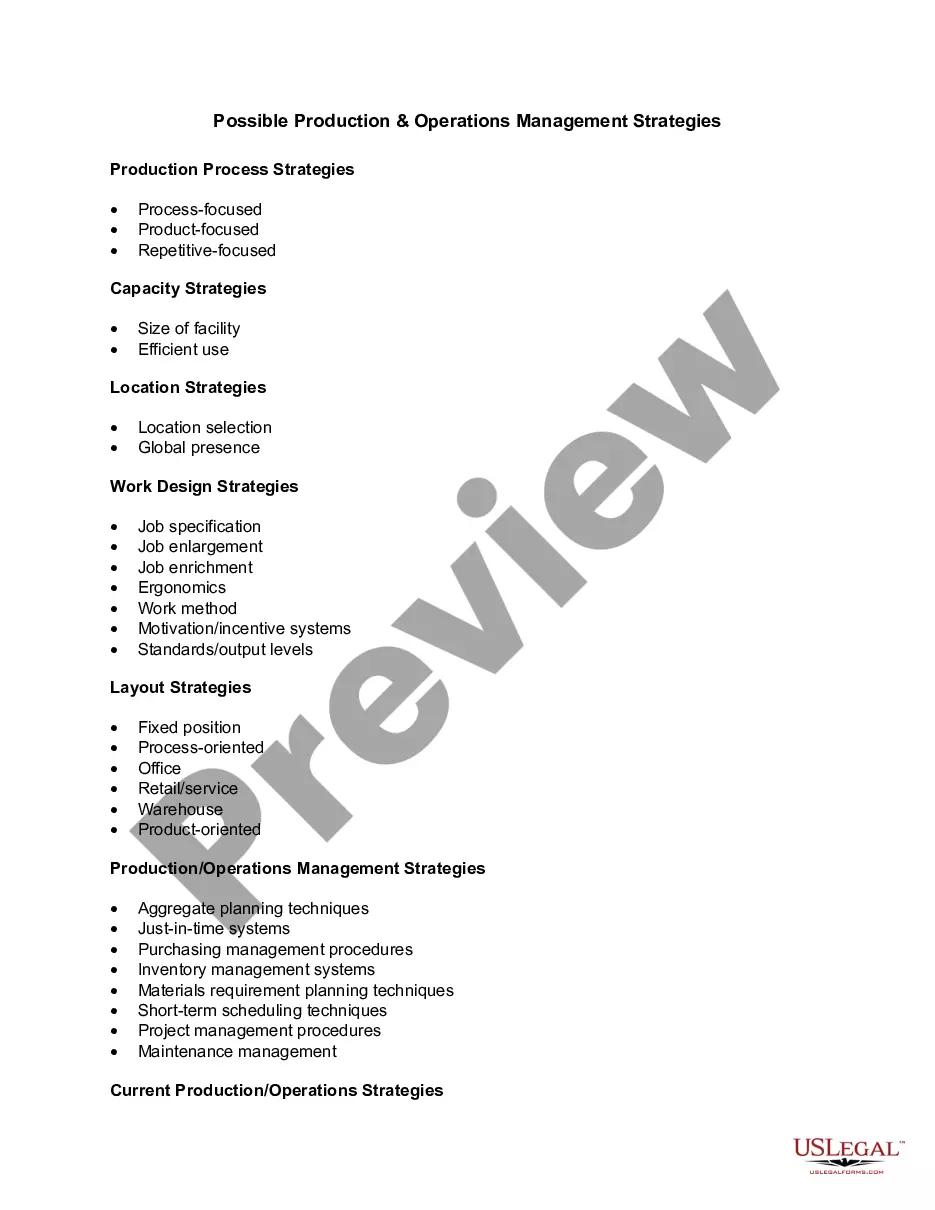
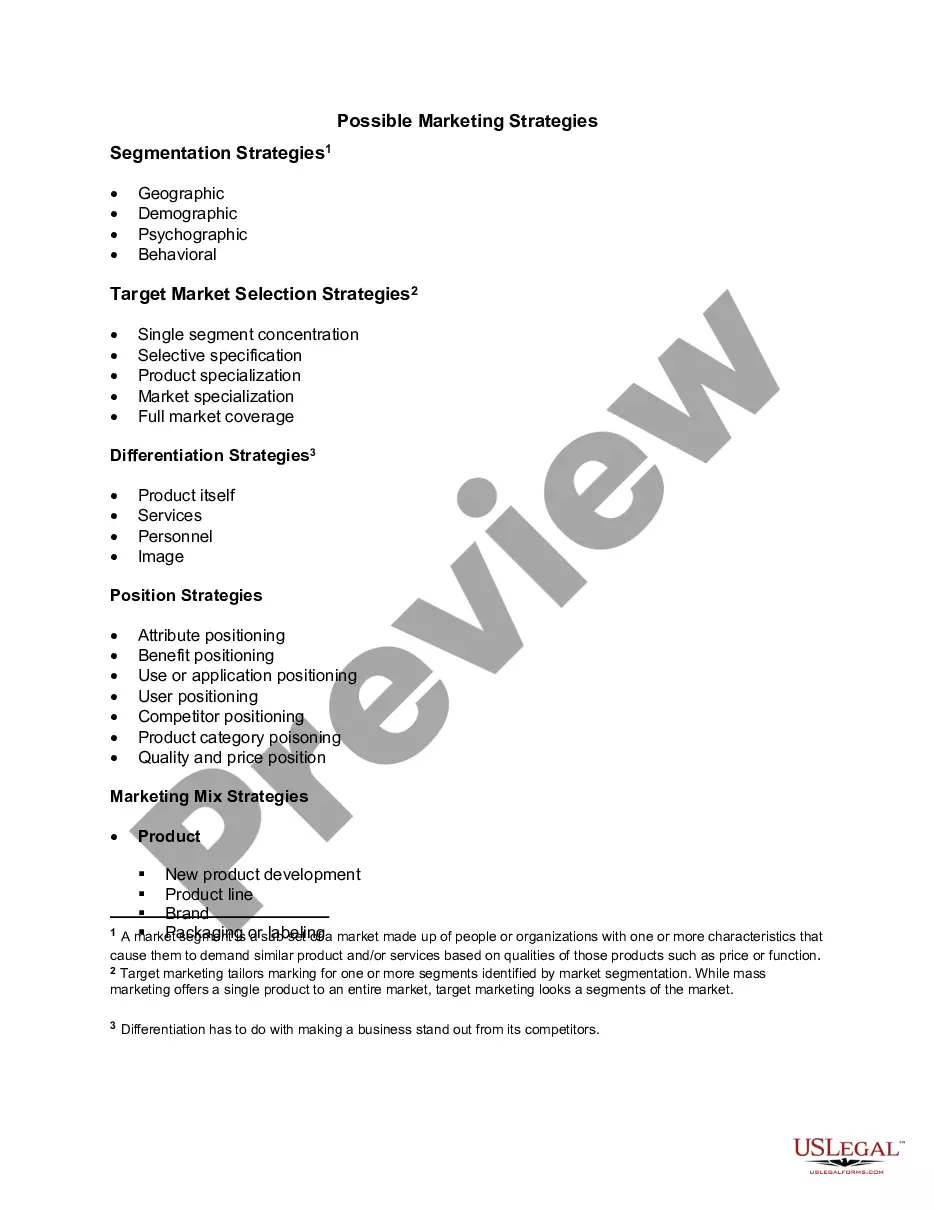
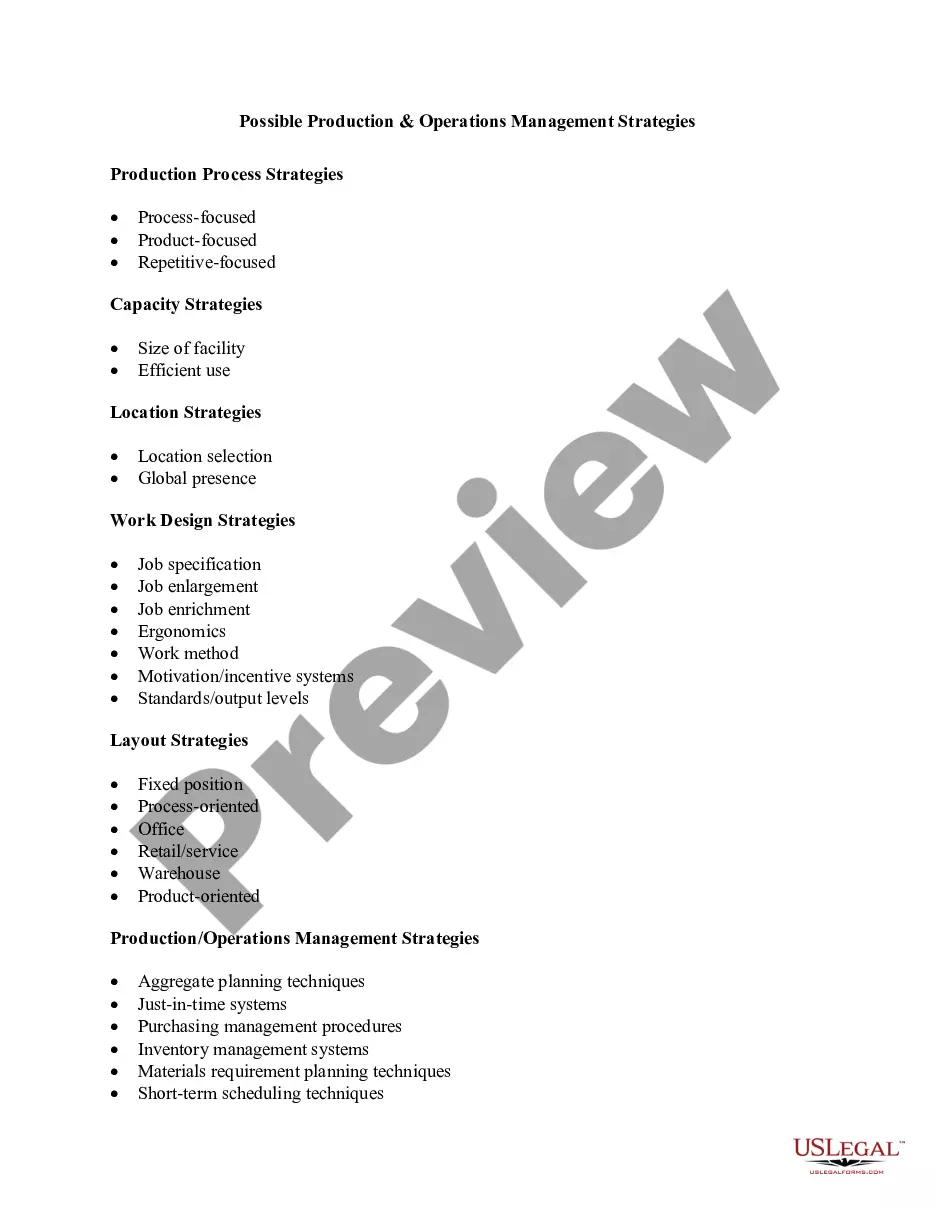
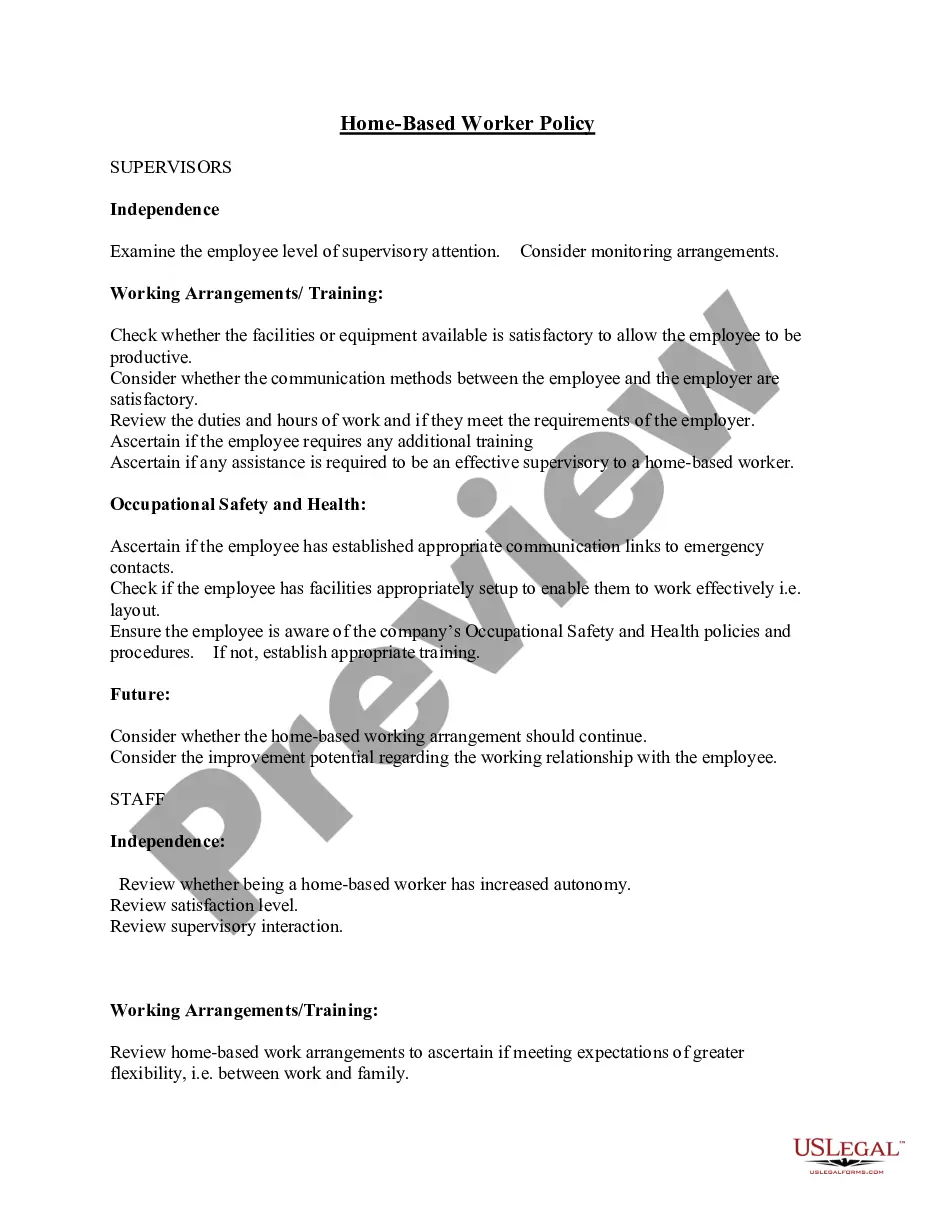
The Possible Human Resource Management Strategies form serves as a guide for organizations in developing effective HR strategies. It outlines various aspects of human resources management, including recruitment, performance appraisals, training, and compensation. This form differs from other HR templates by focusing on strategic planning for future growth rather than just operational tasks, helping organizations create a structured approach to harnessing their workforce's potential.
Form components explained
- Work flows: Design efficiency and innovation in organizing workforce tasks.
- Staffing: Guidelines for recruitment methods and decision-making in hiring.
- Performance appraisals: Options for customizing evaluations and their purposes.
- Training and development: Choices between on-the-job training and external programs.
- Compensation: Different structures for pay systems, including fixed and variable options.
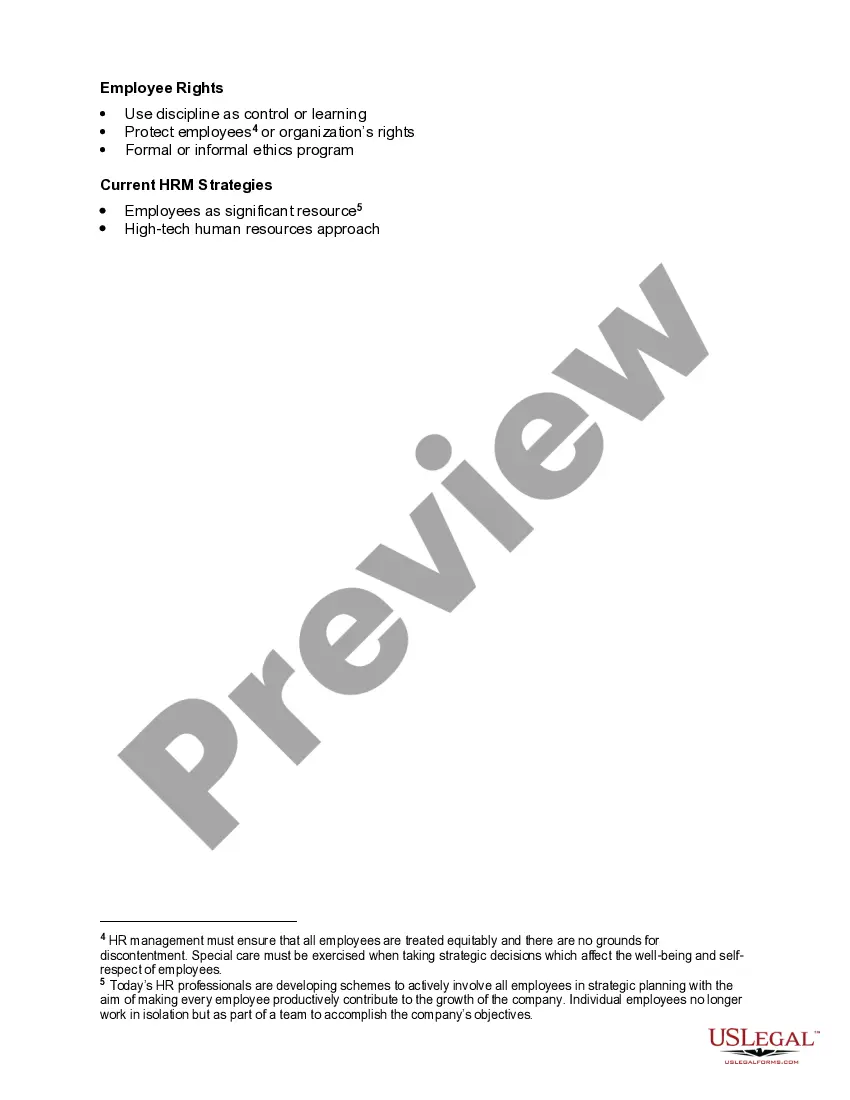
- Employee rights: Approaches to employee discipline and ethics programs.
When to use this document
This form is useful when an organization is planning to optimize its human resource strategies. It can be employed during the development of HR policies, restructures in staffing, or alignments of employee training programs. Additionally, it is applicable for assessing performance appraisal systems and compensation strategies to ensure fairness and compliance with organizational goals.
Who this form is for
- Human resources professionals seeking to enhance their strategies.
- Management teams involved in shaping workforce policies.
- Small business owners needing structure in HR management.
- Consultants advising organizations on HR best practices.
How to prepare this document
- Identify the specific HR areas in your organization that need strategic planning.
- Evaluate current HR practices to understand gaps and opportunities.
- Determine the preferred staffing and recruitment methods suitable for your needs.
- Develop a framework for performance appraisals, ensuring it aligns with organizational objectives.
- Establish training and development programs that address skill gaps within the workforce.
- Review compensation strategies to ensure competitiveness and fairness among employees.
Does this form need to be notarized?
Notarization is not commonly needed for this form. However, certain documents or local rules may make it necessary. Our notarization service, powered by Notarize, allows you to finalize it securely online anytime, day or night.
Get your form ready online
Our built-in tools help you complete, sign, share, and store your documents in one place.
Make edits, fill in missing information, and update formatting in US Legal Forms—just like you would in MS Word.
Download a copy, print it, send it by email, or mail it via USPS—whatever works best for your next step.
Sign and collect signatures with our SignNow integration. Send to multiple recipients, set reminders, and more. Go Premium to unlock E-Sign.
If this form requires notarization, complete it online through a secure video call—no need to meet a notary in person or wait for an appointment.
We protect your documents and personal data by following strict security and privacy standards.

Make edits, fill in missing information, and update formatting in US Legal Forms—just like you would in MS Word.

Download a copy, print it, send it by email, or mail it via USPS—whatever works best for your next step.

Sign and collect signatures with our SignNow integration. Send to multiple recipients, set reminders, and more. Go Premium to unlock E-Sign.

If this form requires notarization, complete it online through a secure video call—no need to meet a notary in person or wait for an appointment.

We protect your documents and personal data by following strict security and privacy standards.
Avoid these common issues
- Neglecting to involve team members in the strategic planning process.
- Overlooking the importance of regular performance reviews.
- Failing to customize training programs to fit specific job roles.
- Not clearly defining responsibilities in the recruitment process.
Benefits of using this form online
- Accessibility: Download and use anytime without waiting for a consultation.
- Editability: Customize templates to fit specific organizational needs.
- Reliability: Forms are overseen by licensed attorneys, ensuring legal compliance.
Legal use & context
- This form can help create enforceable HR policies that align with organizational goals.
- It does not replace specific laws or regulations that may apply in different jurisdictions.
Summary of main points
- The Possible Human Resource Management Strategies form guides organizations in optimizing HR functions.
- It covers critical areas like staffing, training, and performance management.
- Using this form can help align HR strategies with future growth objectives.
Looking for another form?

Form popularity
FAQ
Step 1: Identify Future HR Needs. Step 2: Consider Present HR Capabilities. Step 3: Identify Gaps Between Future Needs & Present Capability. Step 4: Formulate Gap Strategies. Step 5: Share & Monitor The Plan.
The HR strategy is based on the organizational strategy. The HR strategy touches on all the key areas in HR. These include recruitment, learning & development, performance appraisal, compensation, and succession planning.
Providing security to employees. Selective hiring: Hiring the right people. Self-managed and effective teams. Fair and performance-based compensation. Training in relevant skills. Creating a flat and egalitarian organization. Making information easily accessible to those who need it.
Recruitment & selection. Performance management. Learning & development. Succession planning. Compensation and benefits. Human Resources Information Systems. HR data and analytics.
But two basic types of HR strategies can be identified. These are: Overarching strategies; and Specific strategies relating to the different aspects of human resource management.
Step 1: Get the 'big picture' Step 2: Develop a Mission Statement or Statement of Intent. Step 3: Conduct a SWOT analysis of the organization. Step 4: Conduct a detailed human resources analysis. Step 5: Determine critical people issues. Step 6: Develop consequences and solutions.
The key to a successful HR strategy is to identify what unifies and motivates employees and to develop a strategic plan around that understanding. Think about conducting a regular survey where you ask what motivates employees and ask them to rank a series of options in order of importance to them.
A Human Resource strategy is a business's overall plan for managing its human capital to align it with its business activities. The Human Resource strategy sets the direction for all the key areas of HR, including hiring, performance appraisal, development, and compensation.