Agreement to Extend Debt Payment Terms
Understanding this form
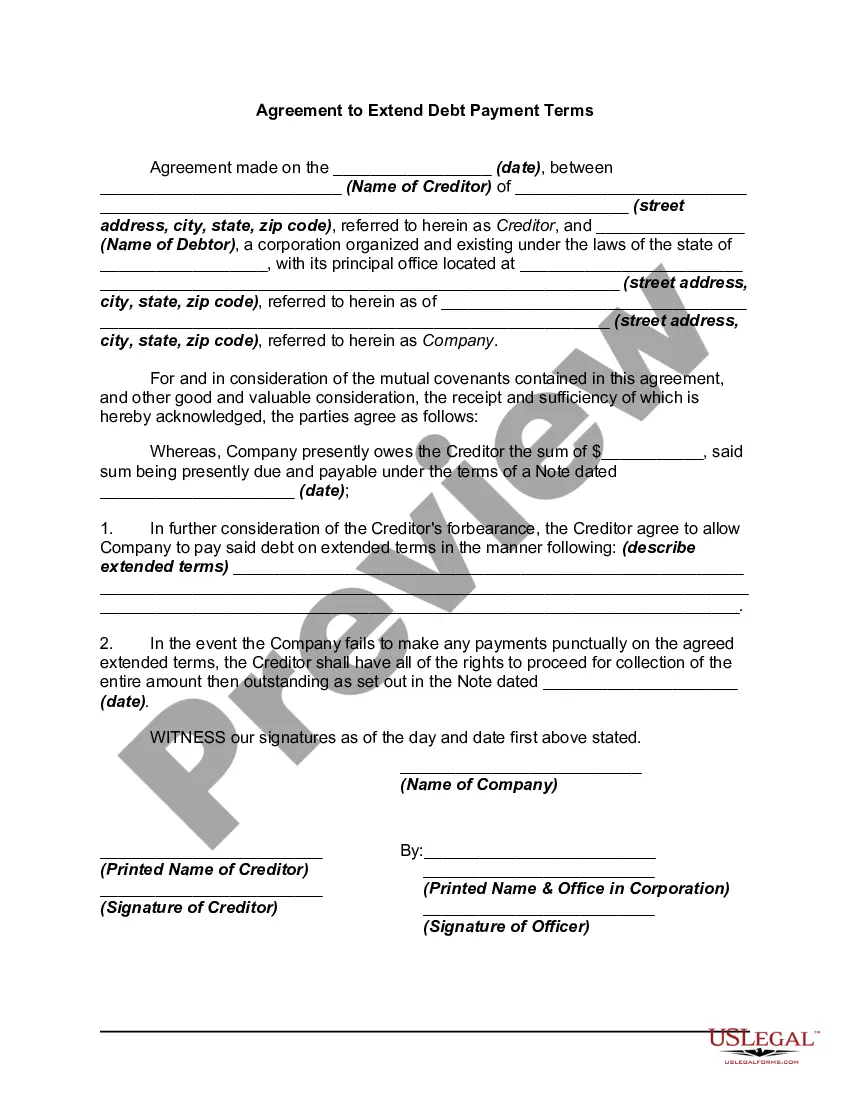
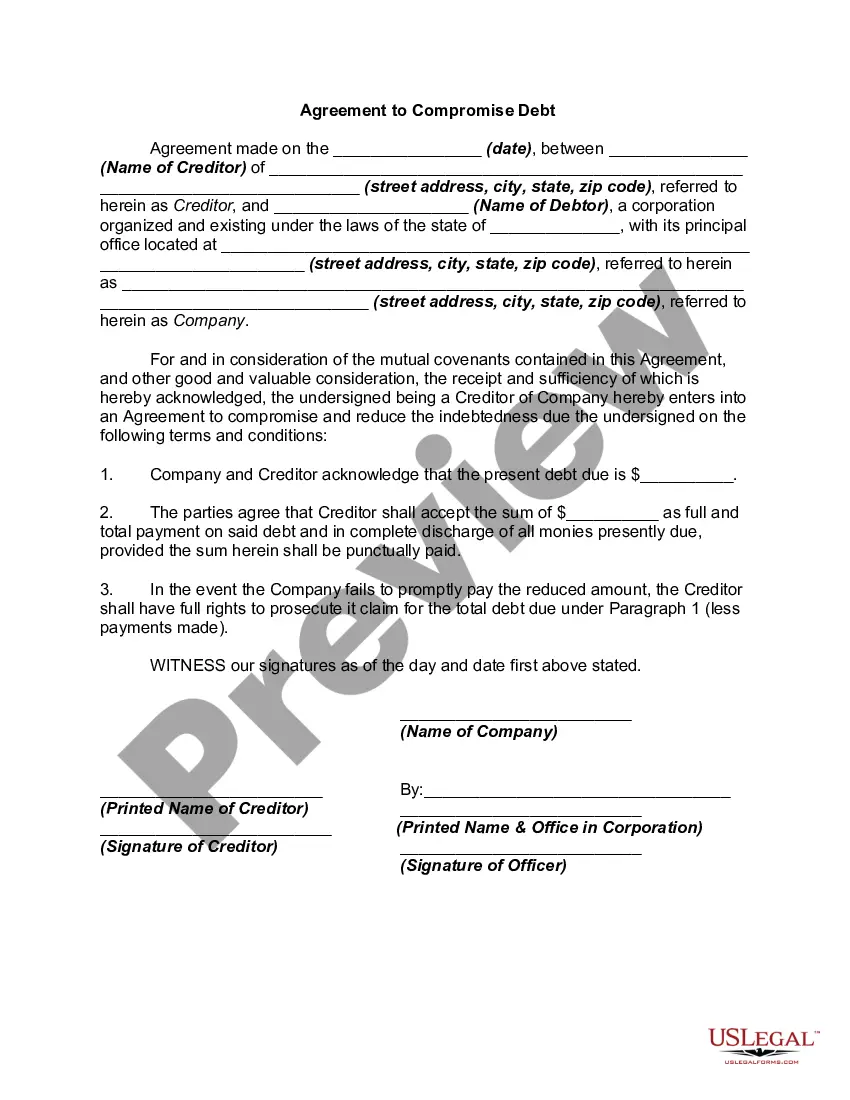
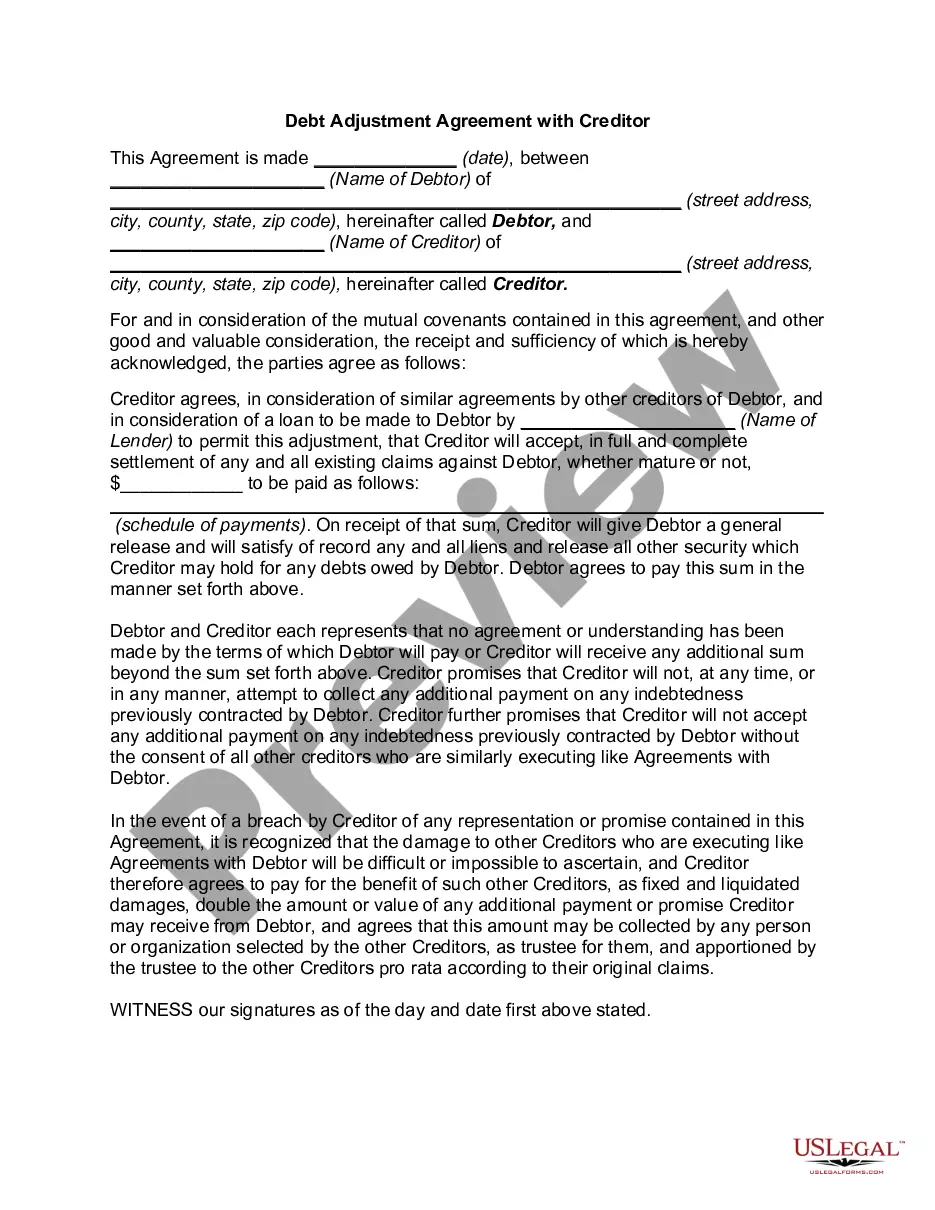
The Agreement to Extend Debt Payment Terms is a legal document that allows a debtor to negotiate new payment terms for an existing debt. This form establishes an understanding between the creditor and debtor regarding adjusted payment timelines and amounts, thus providing relief for the debtor while ensuring the creditor's interests are protected. It differs from standard promissory notes by specifically addressing altered terms rather than creating an entirely new debt obligation.
What’s included in this form
- Date of agreement
- Name and address of the creditor
- Name and address of the debtor
- Total amount owed
- New extended payment terms
- Consequences of missed payments
- Signatures of both parties
Common use cases
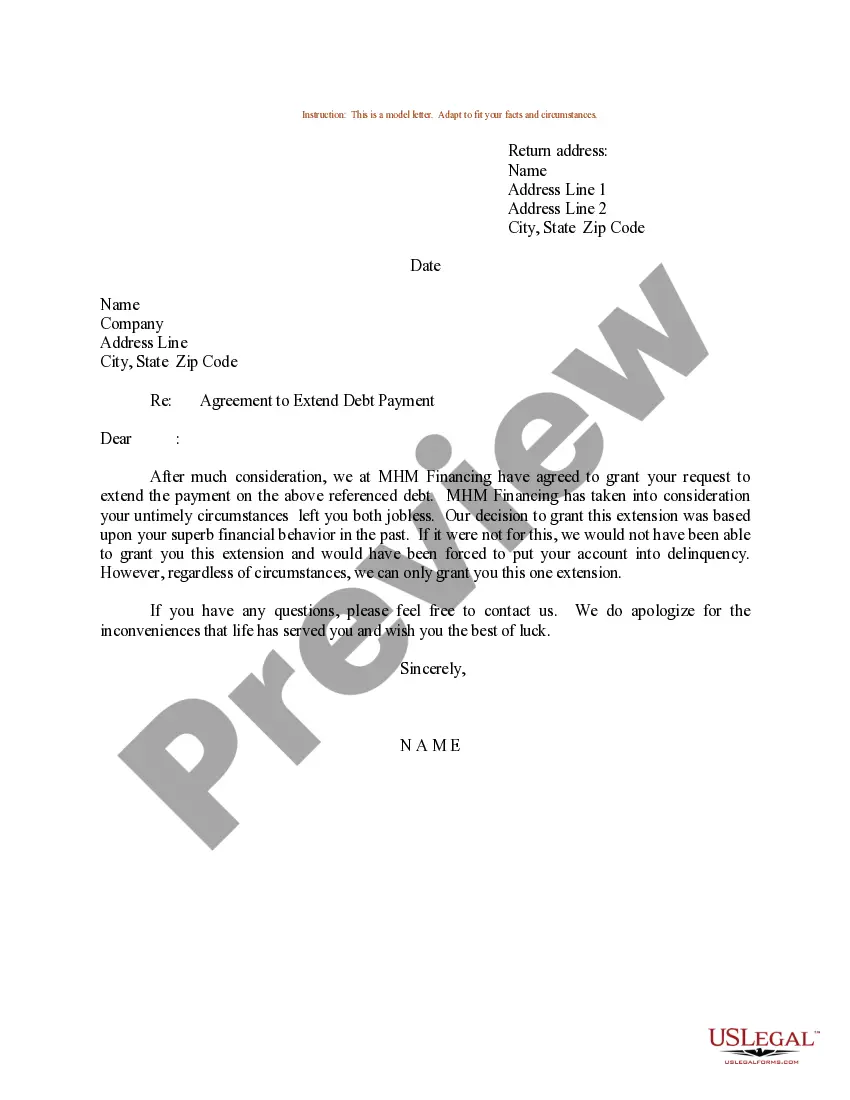
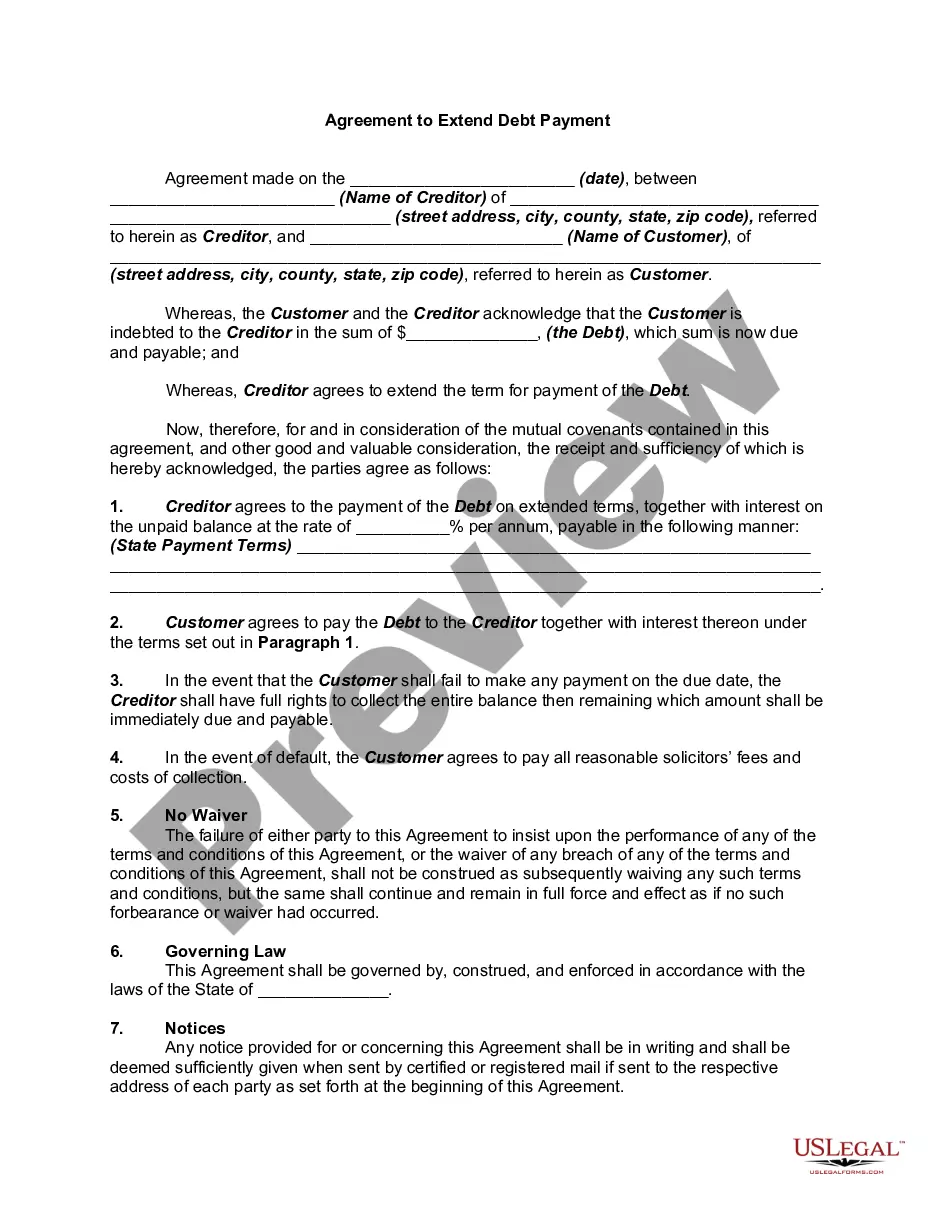
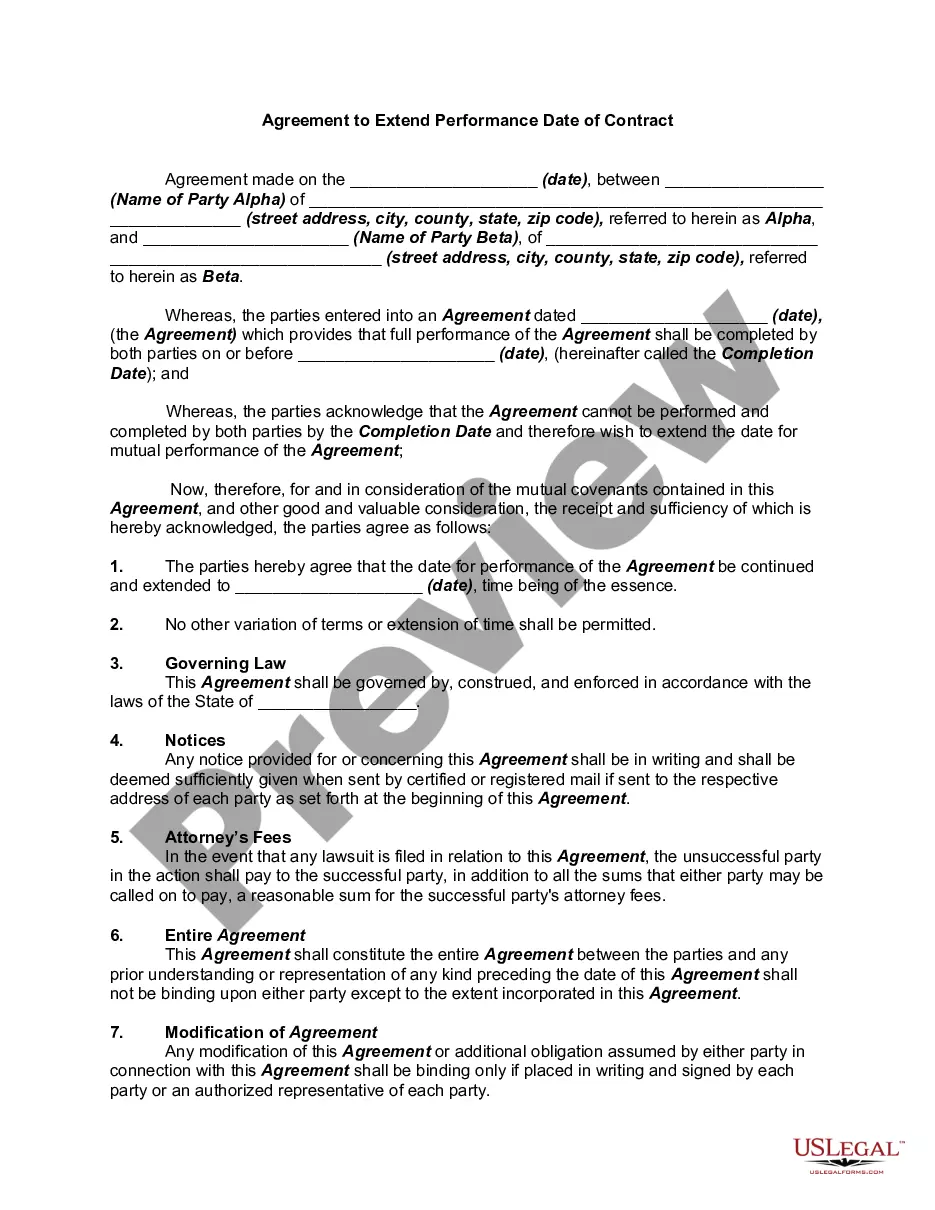
This form is useful in situations where a debtor is struggling to meet existing payment terms for a loan or debt. It allows the debtor to request an extension or modification of payments, often to avoid default or further financial penalties. Use this form when both parties agree on new terms that provide a workable solution for repaying the debt.
Who needs this form
- Debtors seeking to negotiate more manageable payment terms
- Creditors willing to extend payment timelines to facilitate repayment
- Businesses and individuals in a debtor-creditor relationship
Instructions for completing this form
- Enter the date the agreement is made.
- Fill in the names and addresses of both the creditor and debtor.
- Specify the total amount owed by the debtor.
- Describe the new extended payment terms clearly.
- Sign and date the agreement in the designated areas.
Does this form need to be notarized?
This form does not typically require notarization unless specified by local law. However, confirming the need for notarization based on jurisdiction can add an extra layer of legal validation for the agreement.
Get your form ready online
Our built-in tools help you complete, sign, share, and store your documents in one place.
Make edits, fill in missing information, and update formatting in US Legal Forms—just like you would in MS Word.
Download a copy, print it, send it by email, or mail it via USPS—whatever works best for your next step.
Sign and collect signatures with our SignNow integration. Send to multiple recipients, set reminders, and more. Go Premium to unlock E-Sign.
If this form requires notarization, complete it online through a secure video call—no need to meet a notary in person or wait for an appointment.
We protect your documents and personal data by following strict security and privacy standards.

Make edits, fill in missing information, and update formatting in US Legal Forms—just like you would in MS Word.

Download a copy, print it, send it by email, or mail it via USPS—whatever works best for your next step.

Sign and collect signatures with our SignNow integration. Send to multiple recipients, set reminders, and more. Go Premium to unlock E-Sign.

If this form requires notarization, complete it online through a secure video call—no need to meet a notary in person or wait for an appointment.

We protect your documents and personal data by following strict security and privacy standards.
Common mistakes to avoid
- Failing to specify the new payment terms clearly.
- Not including all required signatures.
- Leaving out the date of the agreement.
- Incorrectly identifying the parties involved.
Benefits of using this form online
- Convenient access to legally vetted templates.
- Easy customization to meet specific needs.
- Structured guidance ensures all essential details are included.
Legal use & context
- Validating the debtor's commitment to repay the debt with modified terms.
- Providing evidence of the creditorâs agreement to altered conditions.
- Avoiding potential legal disputes by clearly outlining responsibilities and consequences.
Key takeaways
- The form is essential for legally adjusting debt repayment terms.
- Ensure all parties clearly understand the new terms before signing.
- Use this agreement to maintain clarity and prevent miscommunication in financial obligations.
Looking for another form?


Form popularity
FAQ
Make a List of All Your Debts. Rank Your Debts. Find Extra Money to Pay Your Debts. Focus on One Debt at a Time. Move Onto the Next Debt on Your List. Build Up Your Savings. Other Tips.
Write a debt settlement letter to your creditor. Explain your current situation and how much you can pay. Also, provide them with a clear description of what you expect in return, such as removal of missed payments or the account shown as paid in full on your report.
Your debt settlement proposal letter must be formal and clearly state your intentions, as well as what you expect from your creditors. You should also include all the key information your creditor will need to locate your account on their system, which includes: Your full name used on the account. Your full address.
Original creditor and collection agent's company name. Date the letter was written. Your name. Your account number. Outstanding balance owed on the account (optional) Amount agreed to as settlement. Terms and amounts of payments to be made (if not a lump-sum)
Get it in writing. Keep it simple. Deal with the right person. Identify each party correctly. Spell out all of the details. Specify payment obligations. Agree on circumstances that terminate the contract. Agree on a way to resolve disputes.
The creditor and/or debt collectors name. The date the letter was drafted. Your name. Your account number.
Offer a specific dollar amount that is roughly 30% of your outstanding account balance. The lender will probably counter with a higher percentage or dollar amount. If anything above 50% is suggested, consider trying to settle with a different creditor or simply put the money in savings to help pay future monthly bills.
The Debt Settlement Agreement is a contract signed between a creditor and debtor to re-negotiate or compromise on a debt. This is usually in the case when an individual wants to make a final payment for a debt that is owed.