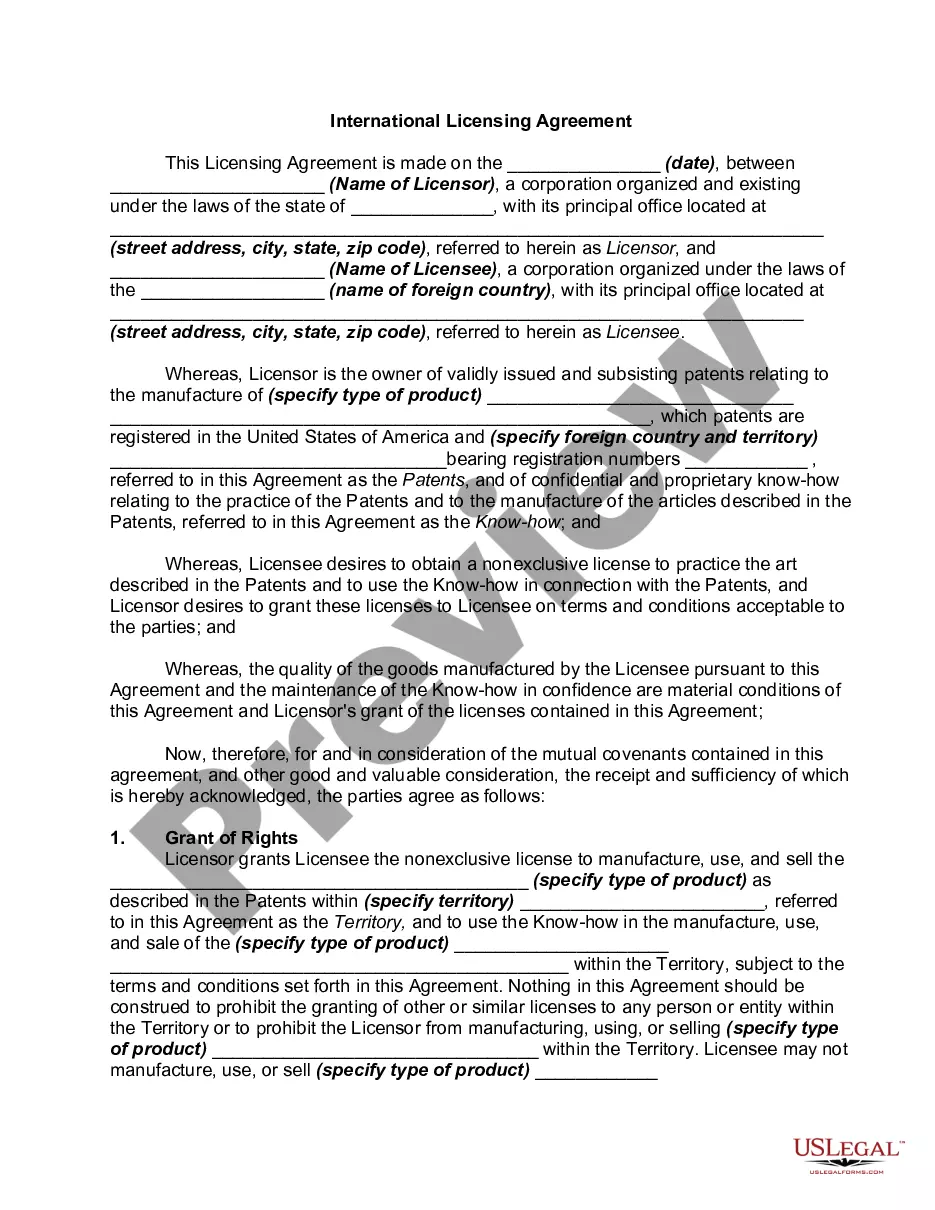
International Licensing Agreement
What this document covers
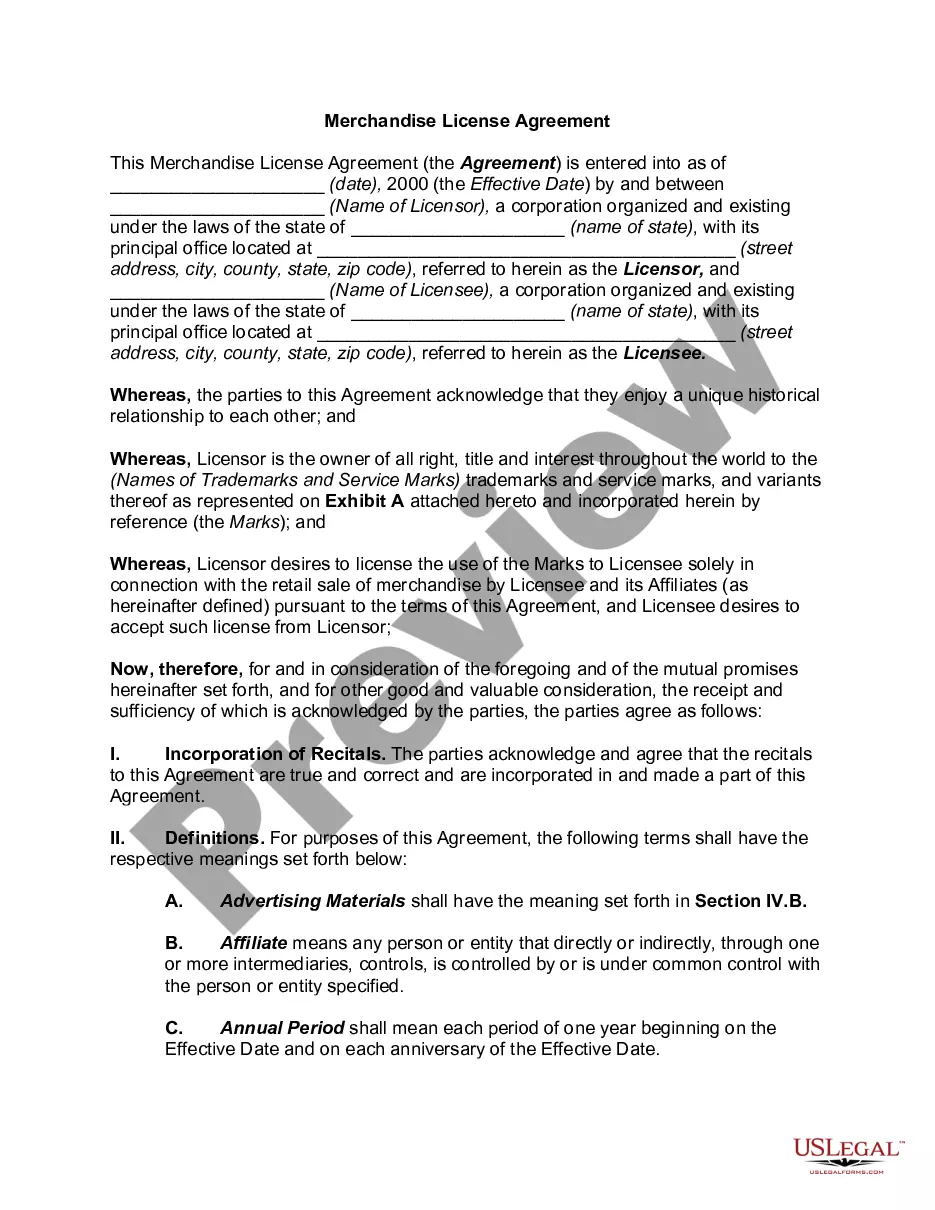
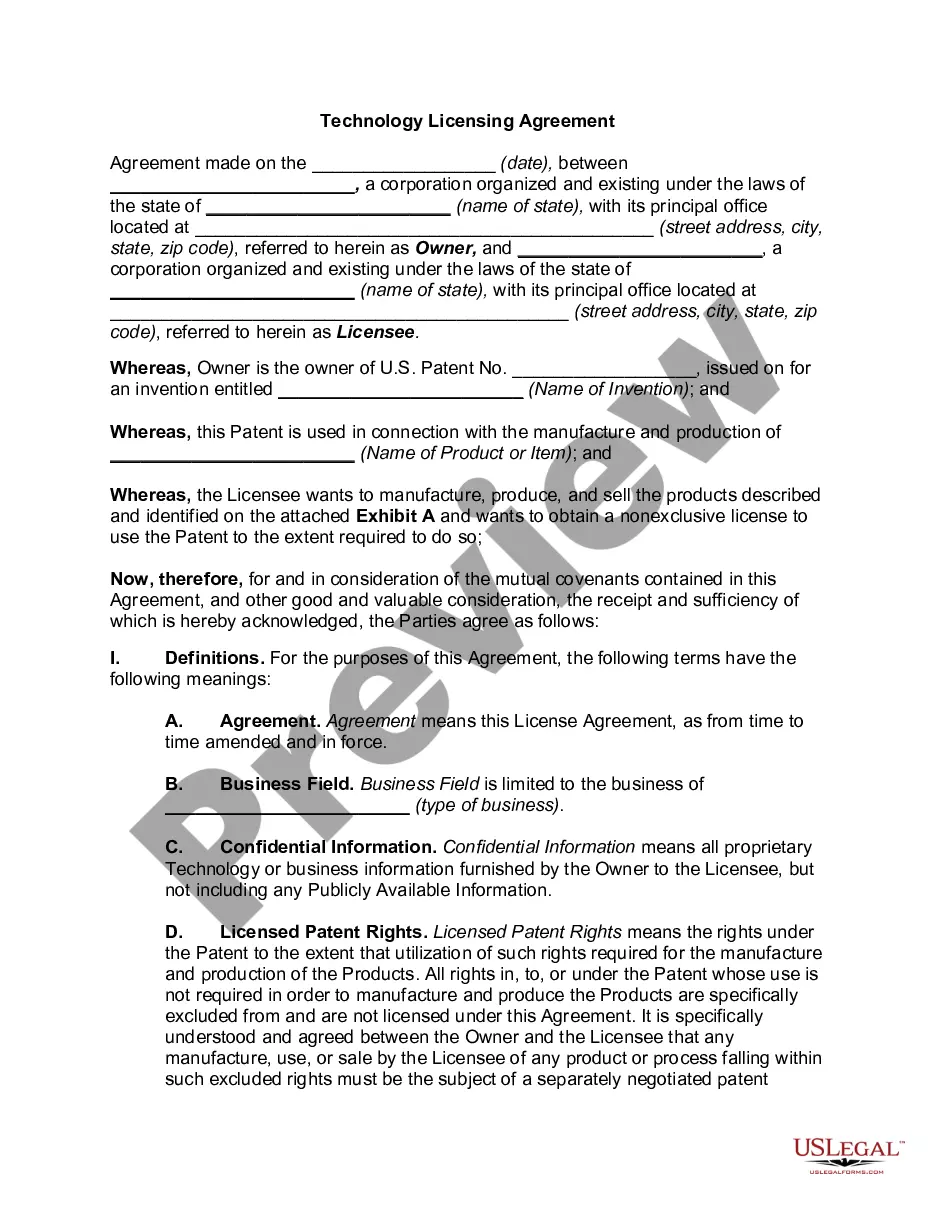
The International Licensing Agreement is a legal document that allows one party (the Licensor) to grant permission to another party (the Licensee) to use, manufacture, and sell specific products based on existing patents and proprietary know-how. This agreement specifically addresses the licensing of both U.S. and foreign patents to a foreign entity, distinguishing it from domestic licensing agreements by encompassing international legal considerations and compliance with varying regulations.
Main sections of this form
- Grant of Rights: Specifies the rights granted to the Licensee for manufacturing and selling products.
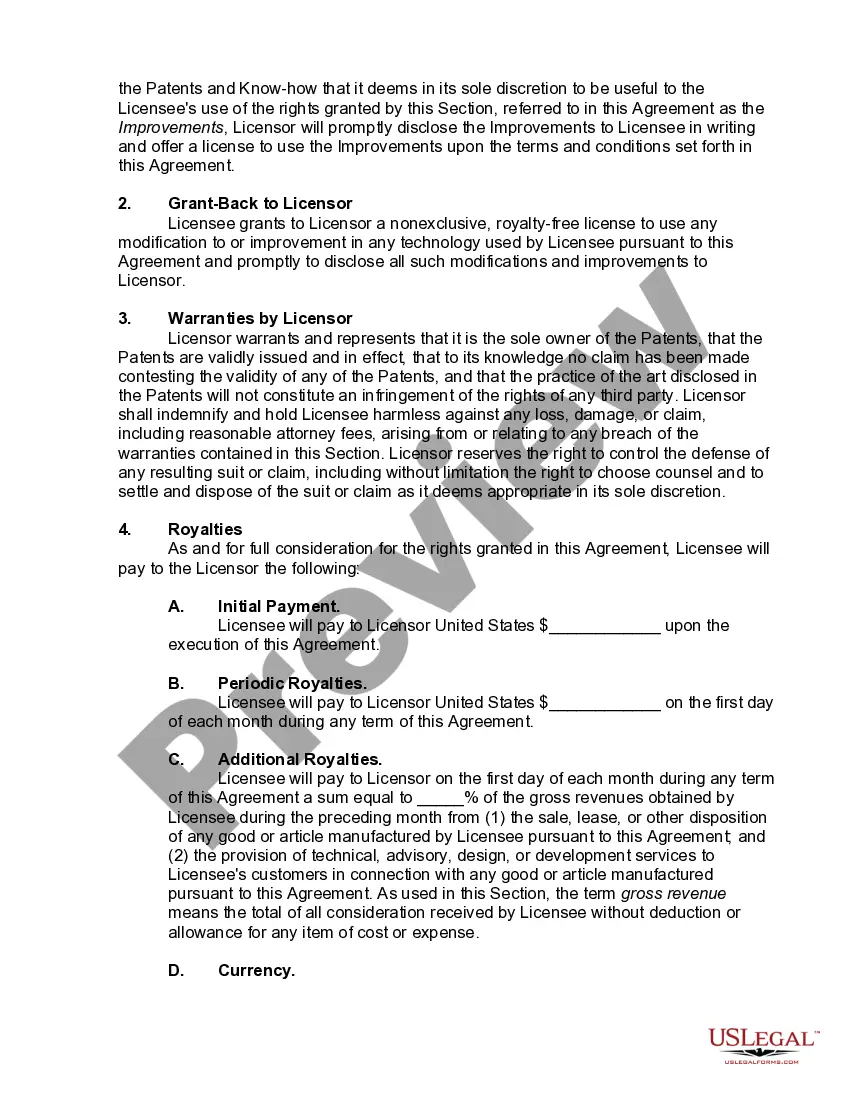
- Warranties by Licensor: Includes assurances about the validity of patents and non-infringement issues.
- Royalties: Details payments that the Licensee must make to the Licensor.
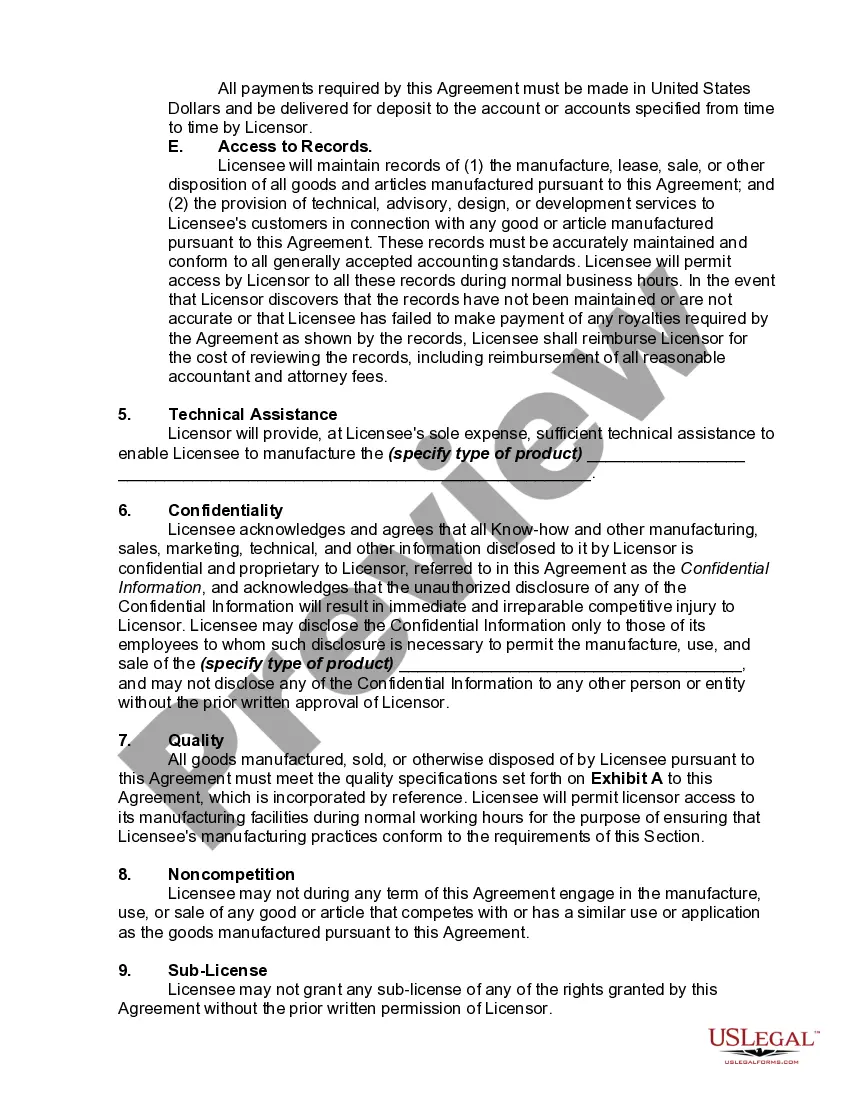
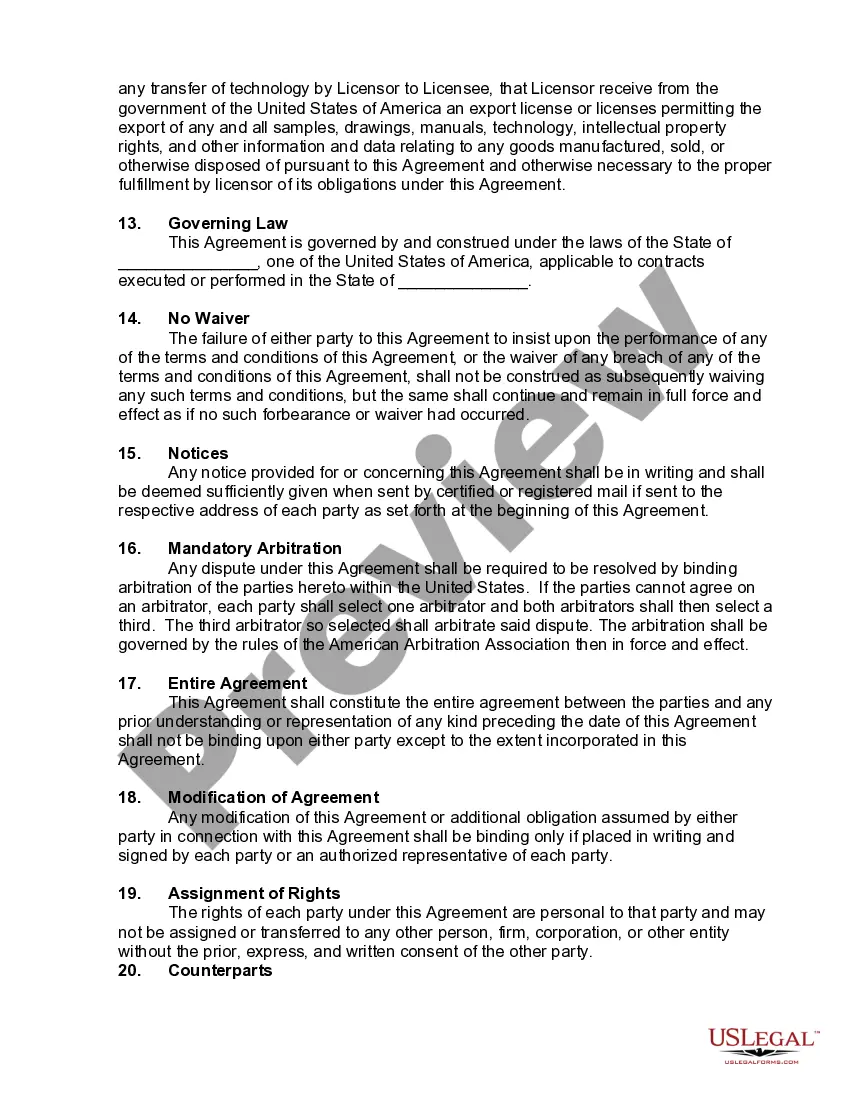
- Confidentiality: Outlines the obligations of the Licensee to maintain the confidentiality of proprietary information.
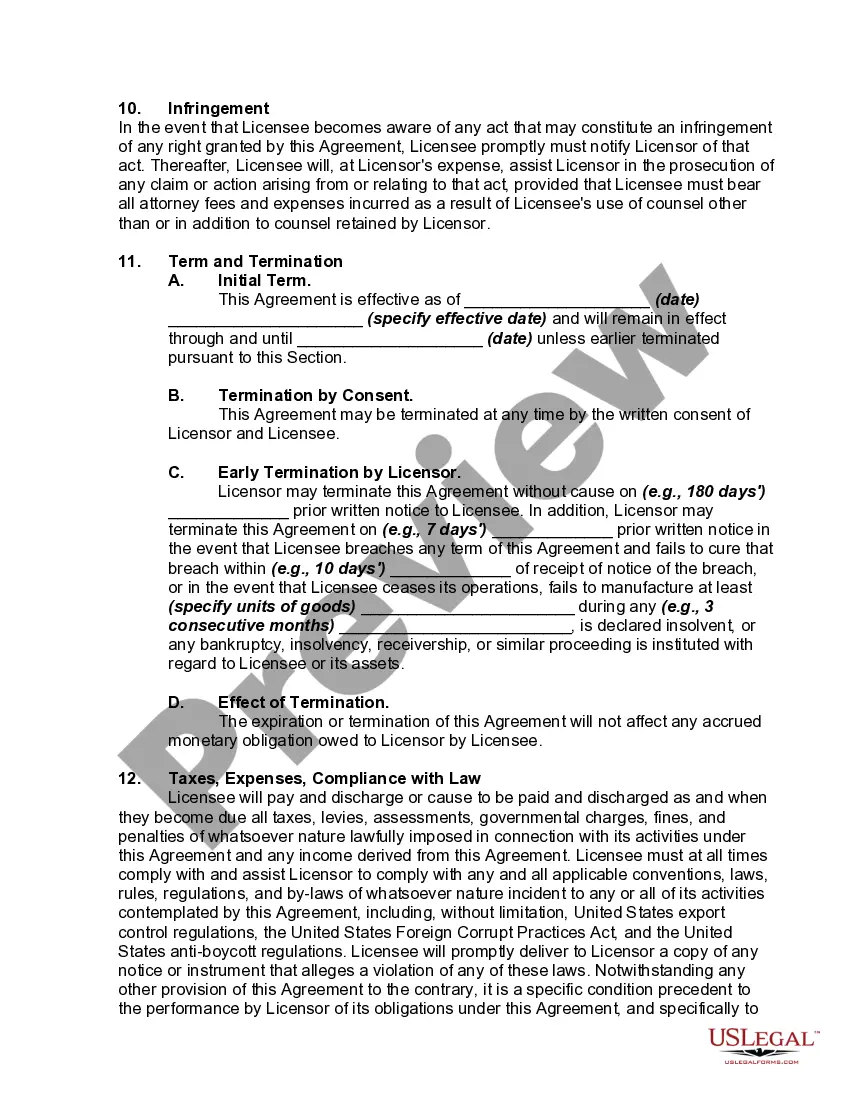
- Termination and Renewal: Explains terms under which the agreement can be terminated or renewed.
- Non-Competition: Prohibits the Licensee from engaging in competing activities during the term of the agreement.
When this form is needed
This form is typically used when a company or individual holding patents or proprietary technology seeks to expand globally by licensing their rights to a manufacturer or seller located in a foreign territory. It is ideal for businesses looking to enter new markets without investing in manufacturing facilities or those wanting to leverage their innovation internationally while ensuring the integrity of their intellectual property.
Who needs this form
- Businesses that hold U.S. and/or foreign patents and want to license their rights to foreign parties.
- Corporations planning to expand their product reach into international markets.
- Entities looking to share technological expertise while protecting their proprietary information.
- Individuals considering partnerships with foreign companies for manufacturing or distribution.
Steps to complete this form
- Identify the parties: Fill in the names and addresses of the Licensor and Licensee.
- Specify the patents: Clearly describe the patents and related know-how being licensed.
- Define the territory: Indicate the foreign territory where the Licensee can market the products.
- Detail payment terms: Enter initial payment and ongoing royalty percentages.
- Outline obligations: Confirm understanding of confidentiality and quality control requirements.
- Sign and date the agreement: Ensure all parties sign and indicate any countersigning if necessary.
Notarization requirements for this form
This form does not typically require notarization to be legally valid. However, some jurisdictions or document types may still require it. US Legal Forms provides secure online notarization powered by Notarize, available 24/7 for added convenience.
Get your form ready online
Our built-in tools help you complete, sign, share, and store your documents in one place.
Make edits, fill in missing information, and update formatting in US Legal Forms—just like you would in MS Word.
Download a copy, print it, send it by email, or mail it via USPS—whatever works best for your next step.
Sign and collect signatures with our SignNow integration. Send to multiple recipients, set reminders, and more. Go Premium to unlock E-Sign.
If this form requires notarization, complete it online through a secure video call—no need to meet a notary in person or wait for an appointment.
We protect your documents and personal data by following strict security and privacy standards.

Make edits, fill in missing information, and update formatting in US Legal Forms—just like you would in MS Word.

Download a copy, print it, send it by email, or mail it via USPS—whatever works best for your next step.

Sign and collect signatures with our SignNow integration. Send to multiple recipients, set reminders, and more. Go Premium to unlock E-Sign.

If this form requires notarization, complete it online through a secure video call—no need to meet a notary in person or wait for an appointment.

We protect your documents and personal data by following strict security and privacy standards.
Common mistakes
- Failing to specify the scope of the rights granted, leading to potential disputes later.
- Not including sufficient detail about payment terms, which can cause confusion.
- Neglecting to address confidentiality obligations, risking the loss of proprietary information.
- Overlooking to sign the agreement by all involved parties, rendering it unenforceable.
Benefits of using this form online
- Easy access to a legally crafted document designed by licensed attorneys.
- Convenient downloading and editing options to fit specific business needs.
- Ensures compliance with legal standards, reducing the risk of errors.
- Cost-effective compared to hiring legal counsel for a custom agreement.
Legal use & context
- Ensures clarity in terms of rights and obligations between the Licensor and Licensee.
- Provides legal protection for intellectual property in an international context.
- Facilitates smoother business operations and compliance with cross-border regulations.
What to keep in mind
- This agreement is essential for licensing intellectual property internationally.
- Clearly defining terms will prevent misunderstandings and disputes.
- Legal counsel is recommended for complex transactions and negotiations.
Looking for another form?




Form popularity
FAQ
Essentially, the international licensing agreement is a contract which transfers to a foreign enterprise technology and rights in the form of patents, trademarks, know-how, and trade secrets. Until recent years, these agreements generally provided for the licensing of patent rights to a technical innovation or product.
In a typical licensing agreement, the licensor agrees to provide the licensee with intellectual property rights such as the licensor's technology, brand name, or product creation know-how.
Exclusive or non-exclusive. In an exclusive license, the intellectual property holder is licensing the work only to one person, for that particular use/territory. Territory. Use. Attribution. Derivative works. Confidentiality. Time frame. Termination.
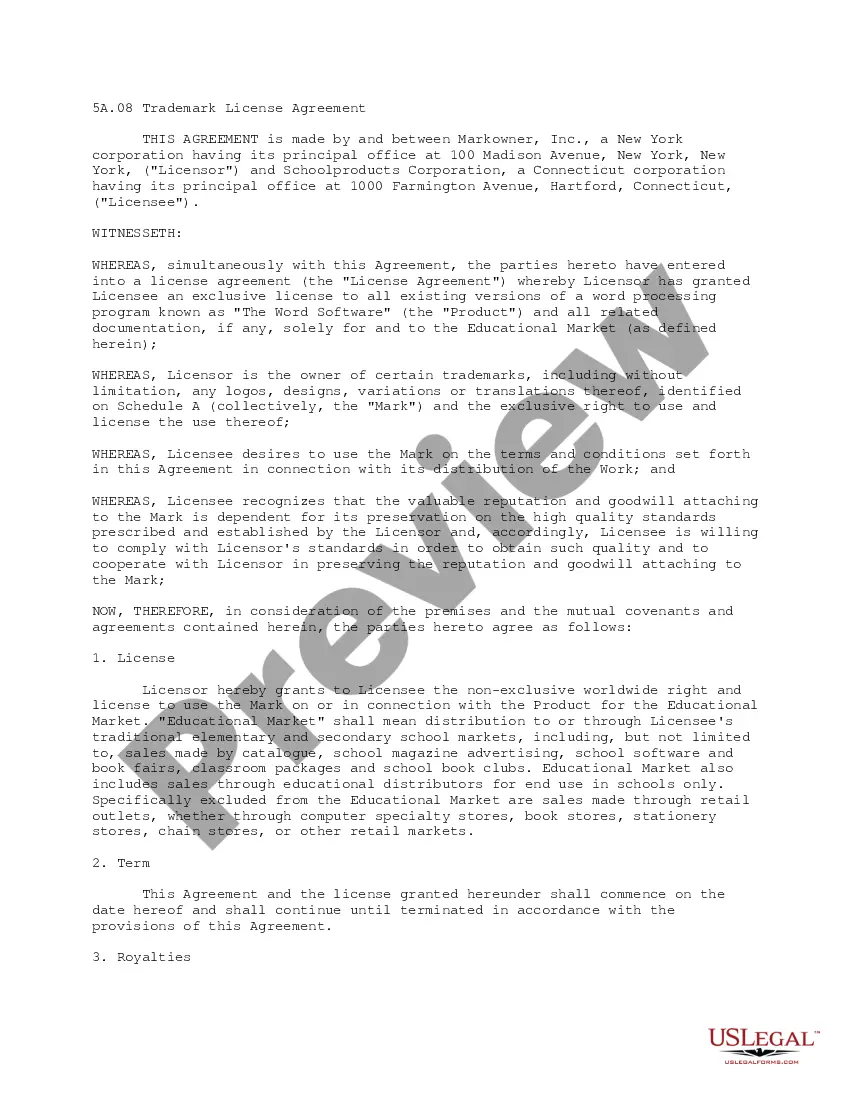
A license agreement is a business contract between two parties. The licensor (the seller of the license) owns the asset being licensed and the licensee (the buyer) pays for the right to use the license. The licensee pays royalties to the owner in exchange for the right to sell the product or use the technology.
Download a template for a licensing agreement. Choose your role as the licensor or licensee. Define the license(s) in the agreement. Decide whether the license is exclusive or not. Settle the matter of fees and payment schedule. Add a renewal date and rules.
An example of a licensing agreement is a contract between the copyright holders of software and another company, allowing the latter to use the computer software for their daily business operations.
An example of a licensing agreement is a contract between the copyright holders of software and another company, allowing the latter to use the computer software for their daily business operations.
The 3 P's of collegiate licensing are protection, promotion, and profit.