Advertising Effectiveness Study
What is this form?
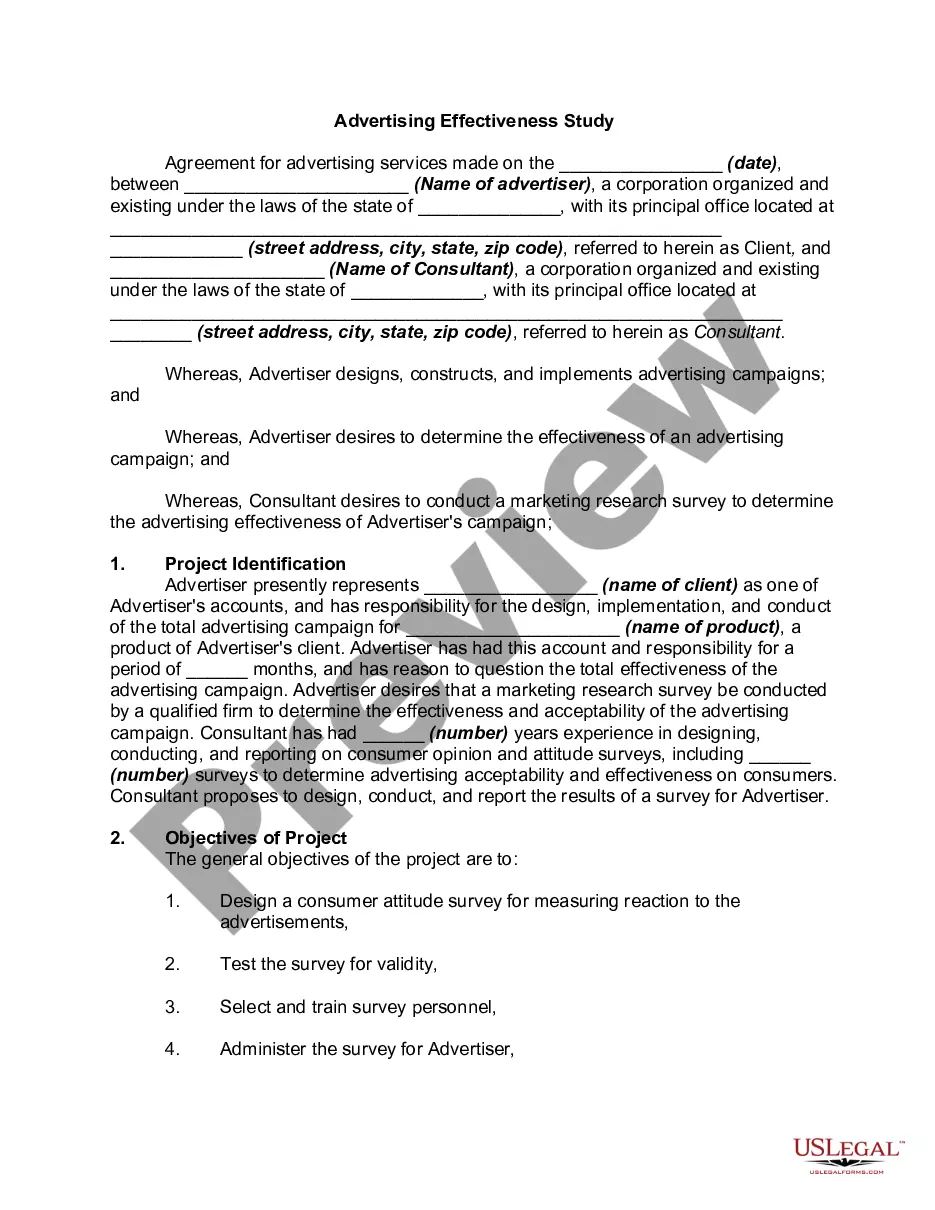
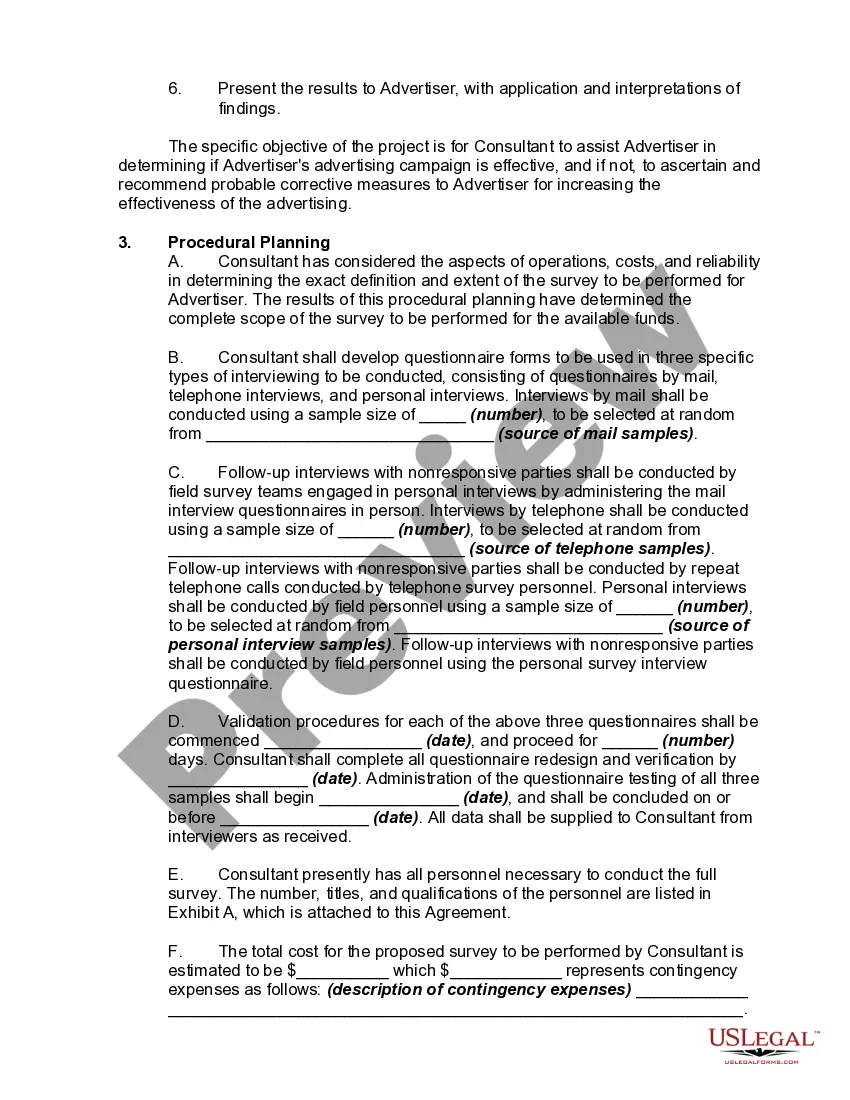
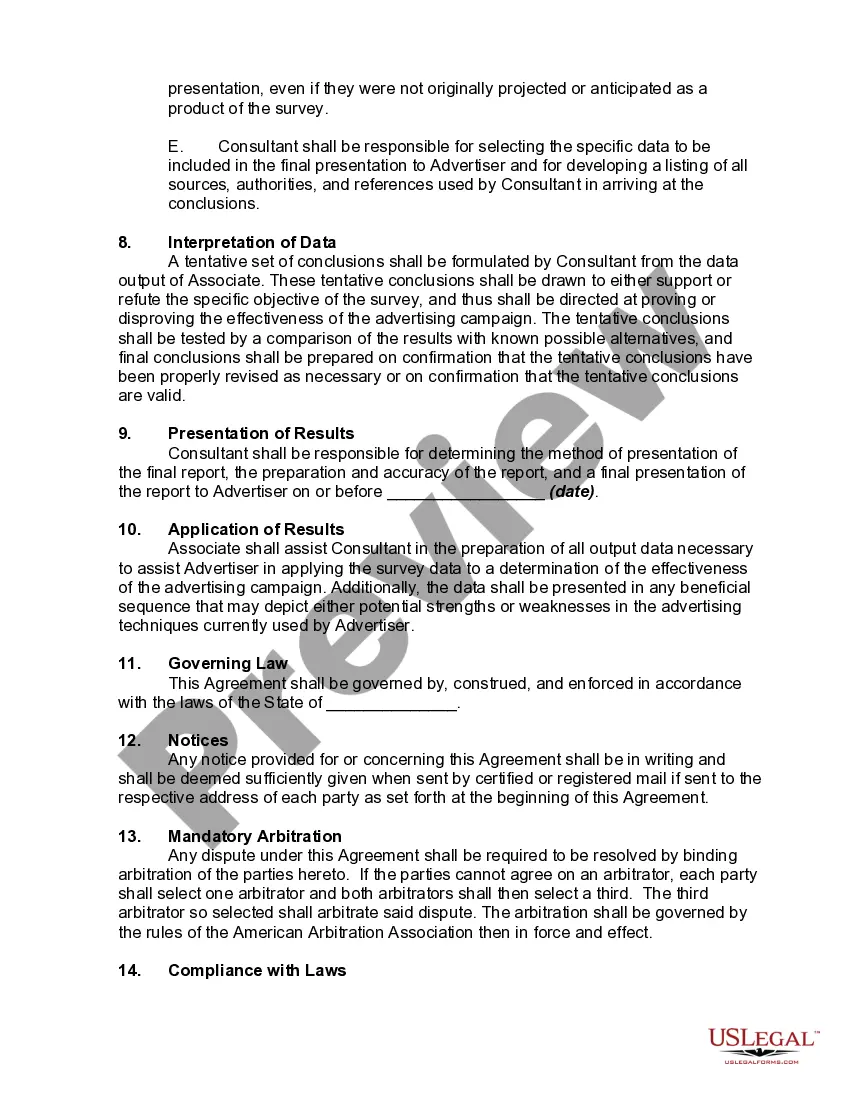
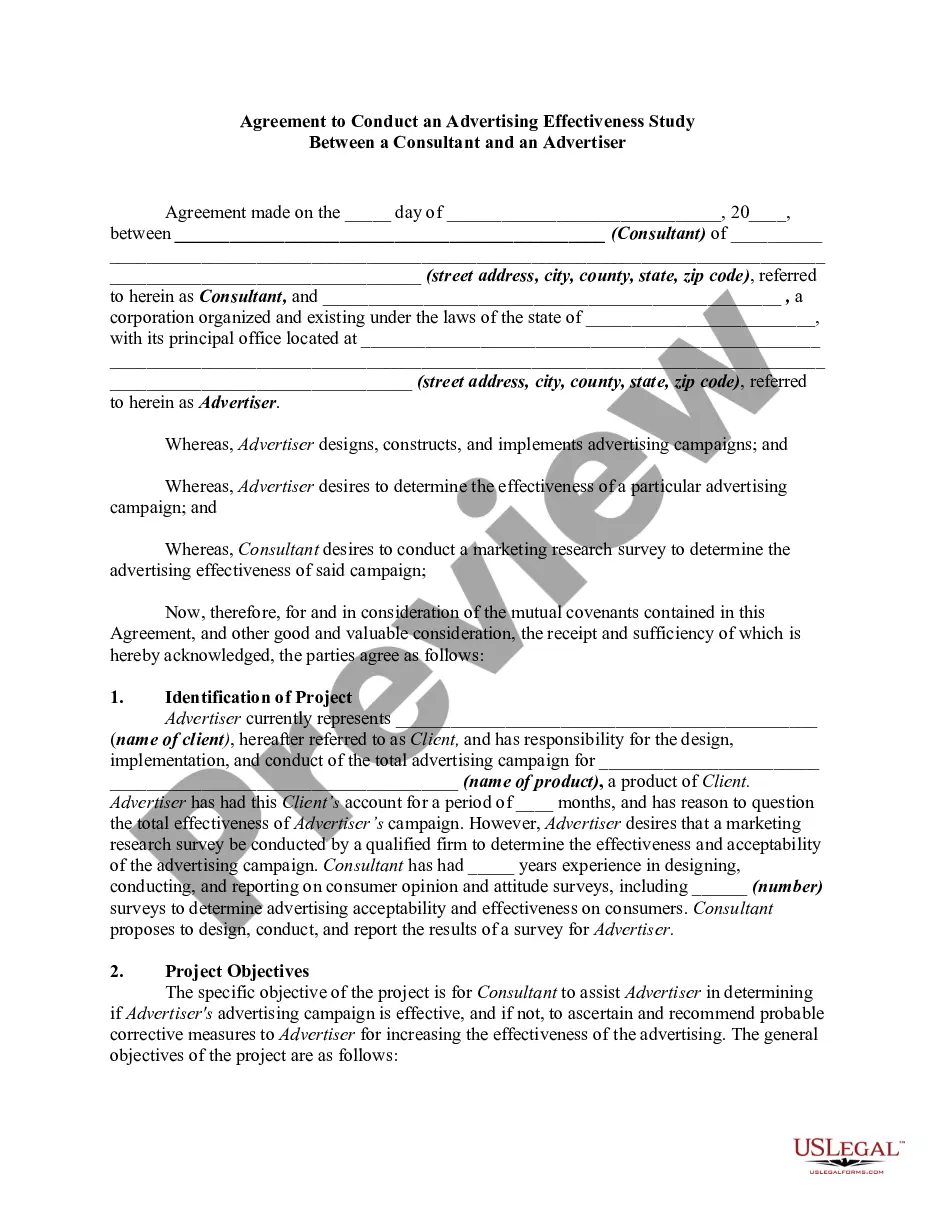
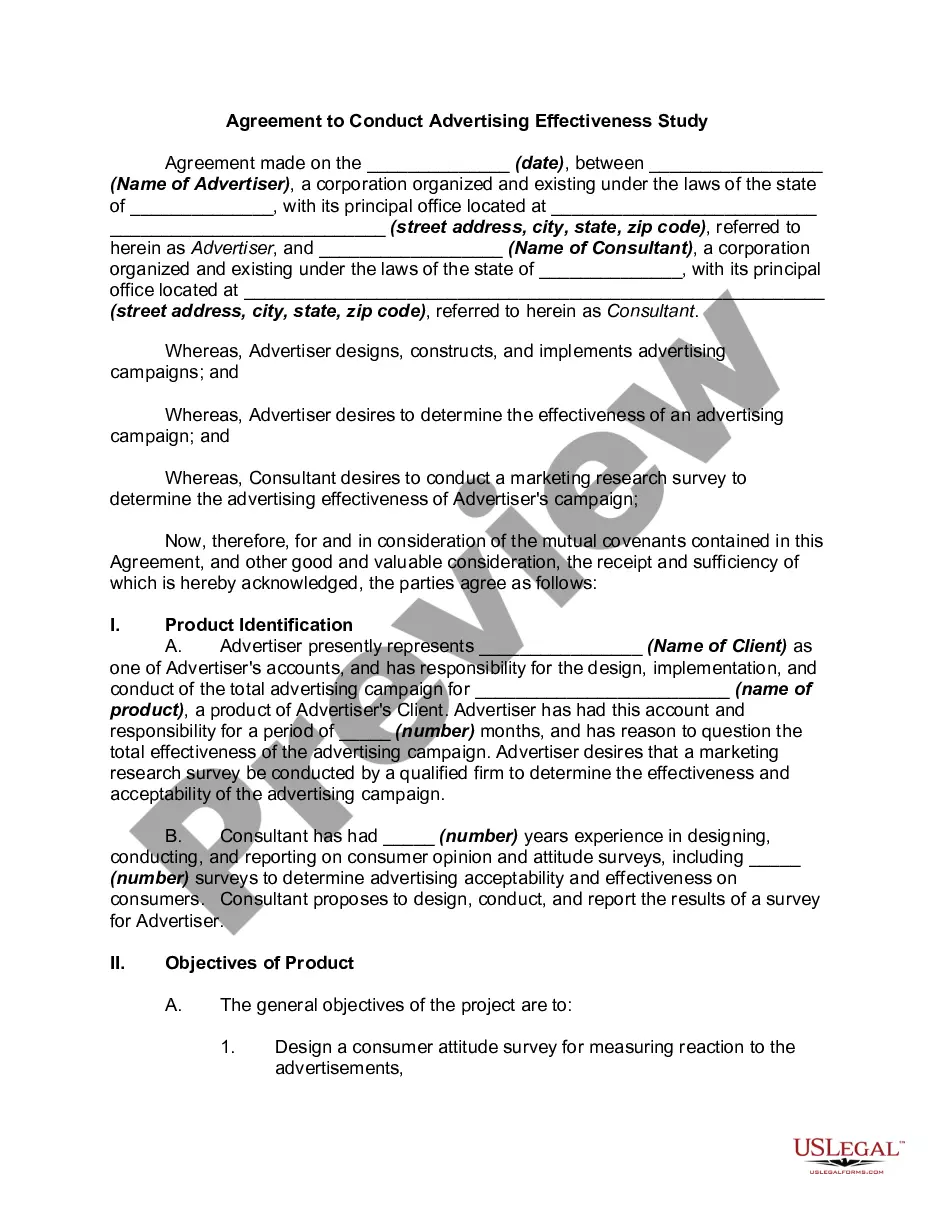
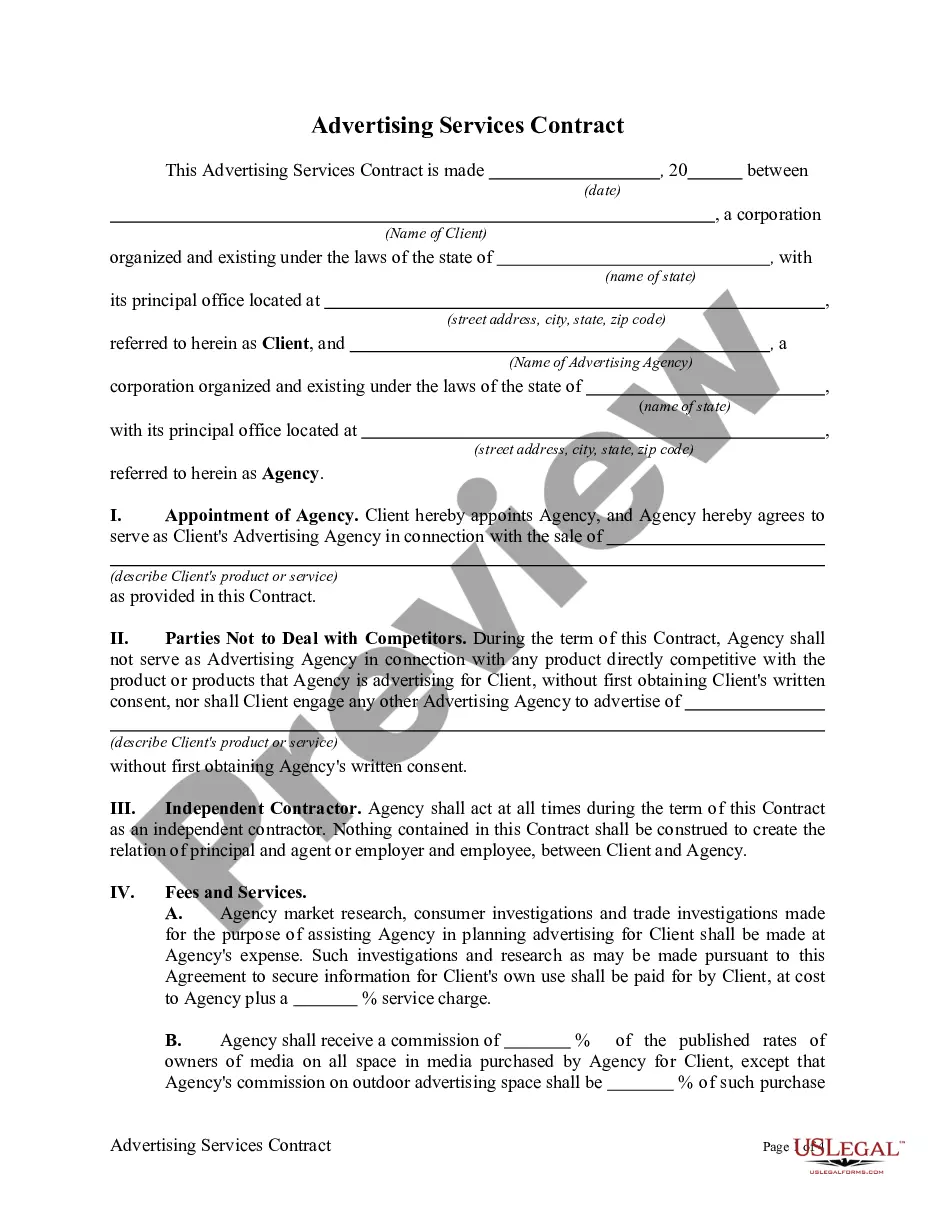
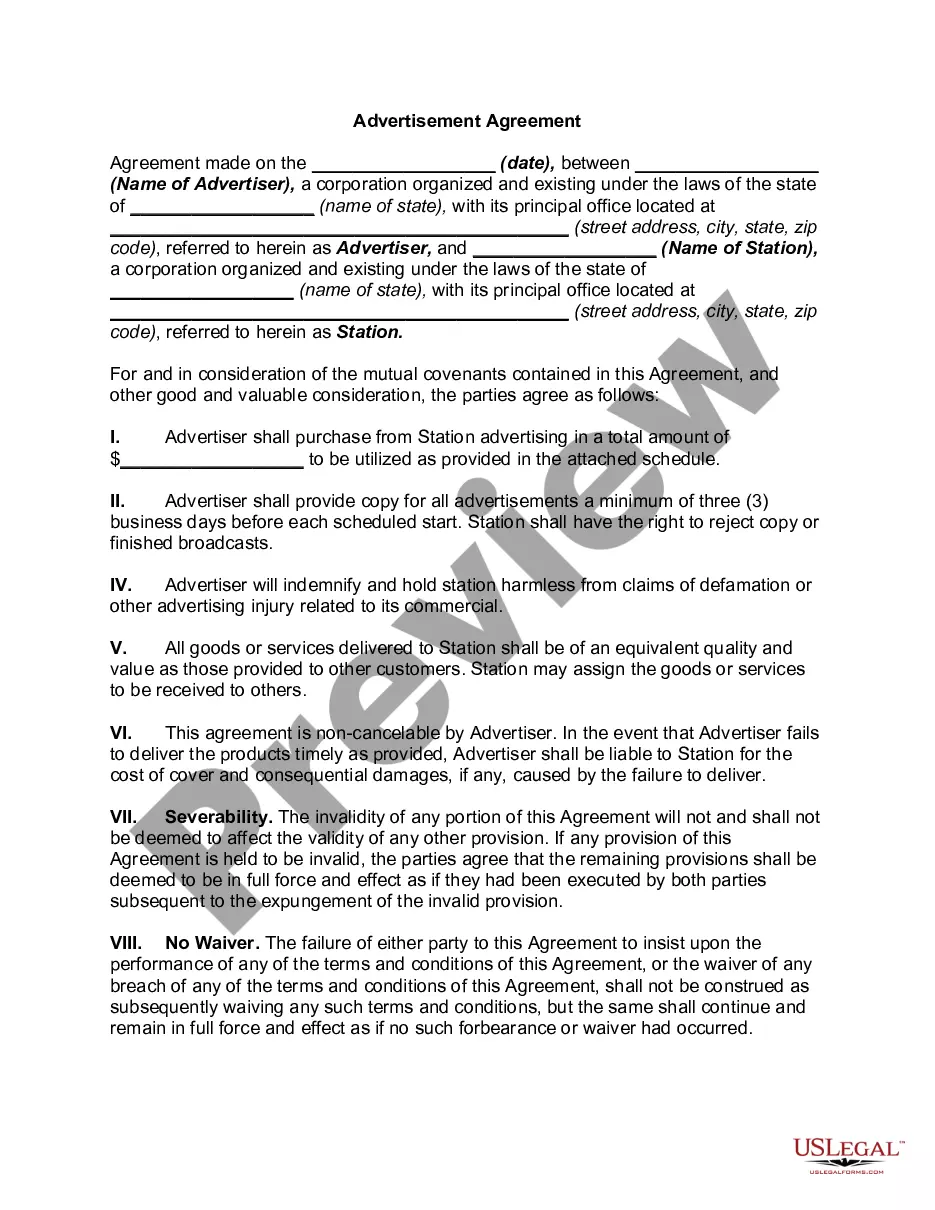
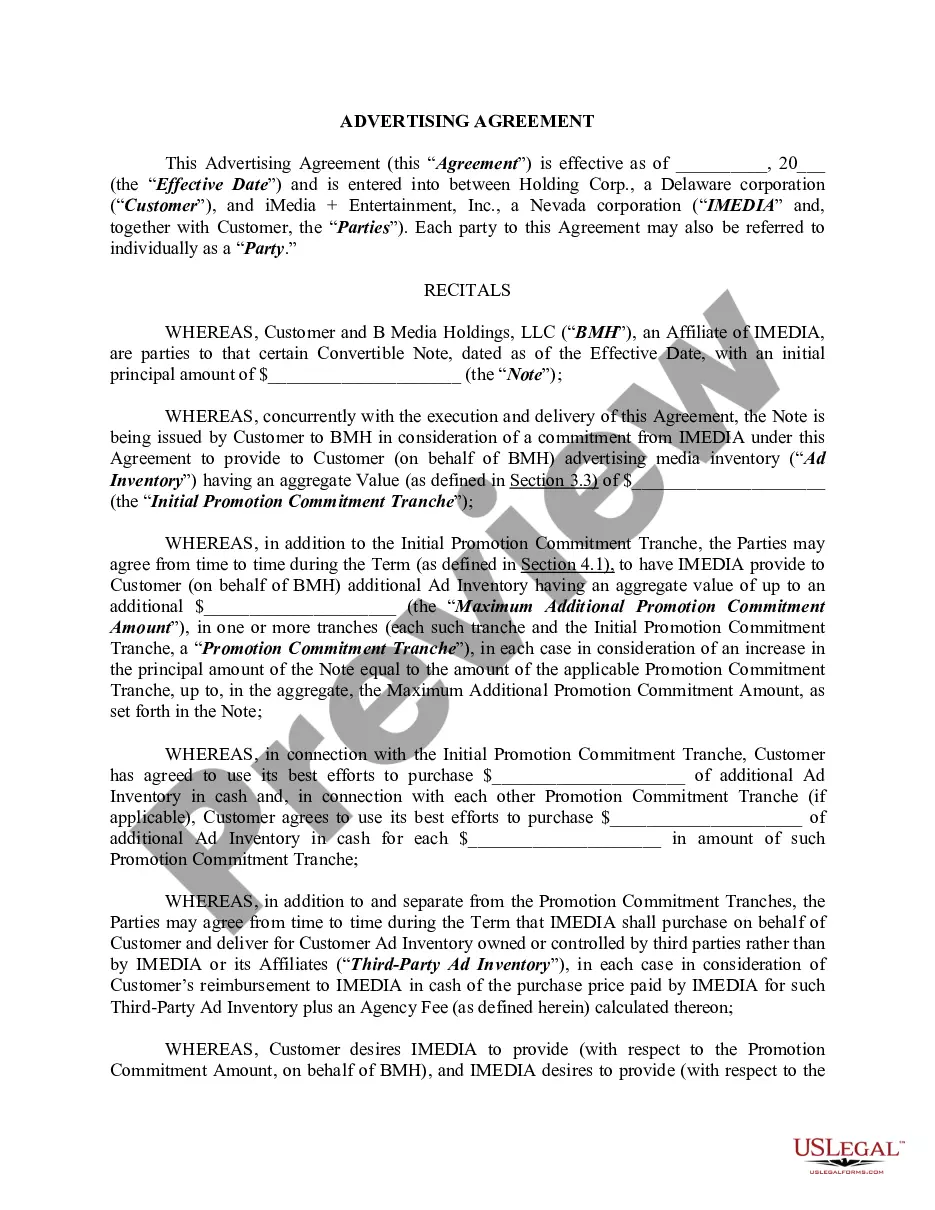
The Advertising Effectiveness Study is a comprehensive tool designed to evaluate the effectiveness of an advertising campaign. This form provides a structured agreement between an advertiser and a consultant, allowing for systematic testing of consumer attitudes towards advertisements. Unlike general market research agreements, this form specifically focuses on assessing advertising impact and gathering actionable insights to improve marketing strategies.
What’s included in this form
- Date of agreement
- Names and details of the parties involved (Advertiser and Consultant)
- Project objectives and scope
- Details on survey methodology, including types of interviews
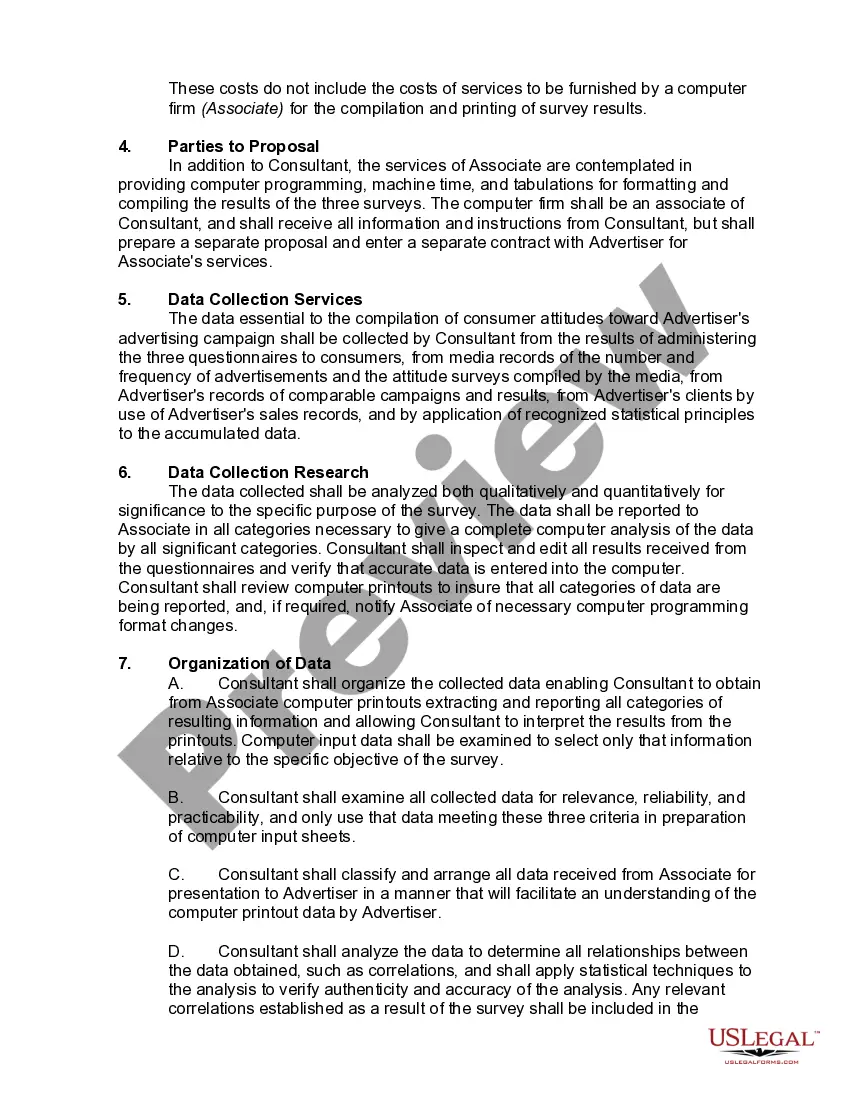
- Data collection and analysis procedures
- Presentation of results and recommendations
Situations where this form applies
This form is ideal when an advertiser wants to assess the effectiveness of a specific advertising campaign. It is particularly useful if there are concerns about the campaign's performance or if the advertiser aims to refine marketing strategies based on consumer feedback. Businesses embarking on new advertising initiatives or revisiting existing campaigns can utilize this form to ensure their efforts yield measurable results.
Who this form is for
This form is intended for:
- Advertisers who are running advertising campaigns
- Marketing consultants conducting effectiveness studies
- Businesses seeking to improve their advertising strategies
- Research firms involved in consumer opinion surveys
Steps to complete this form
- Identify and fill in the names of the parties: Advertiser and Consultant.
- Specify the date of agreement.
- Outline the objectives and desired outcomes of the advertising effectiveness study.
- Detail the survey methodology, including the sample size and types of interviews planned.
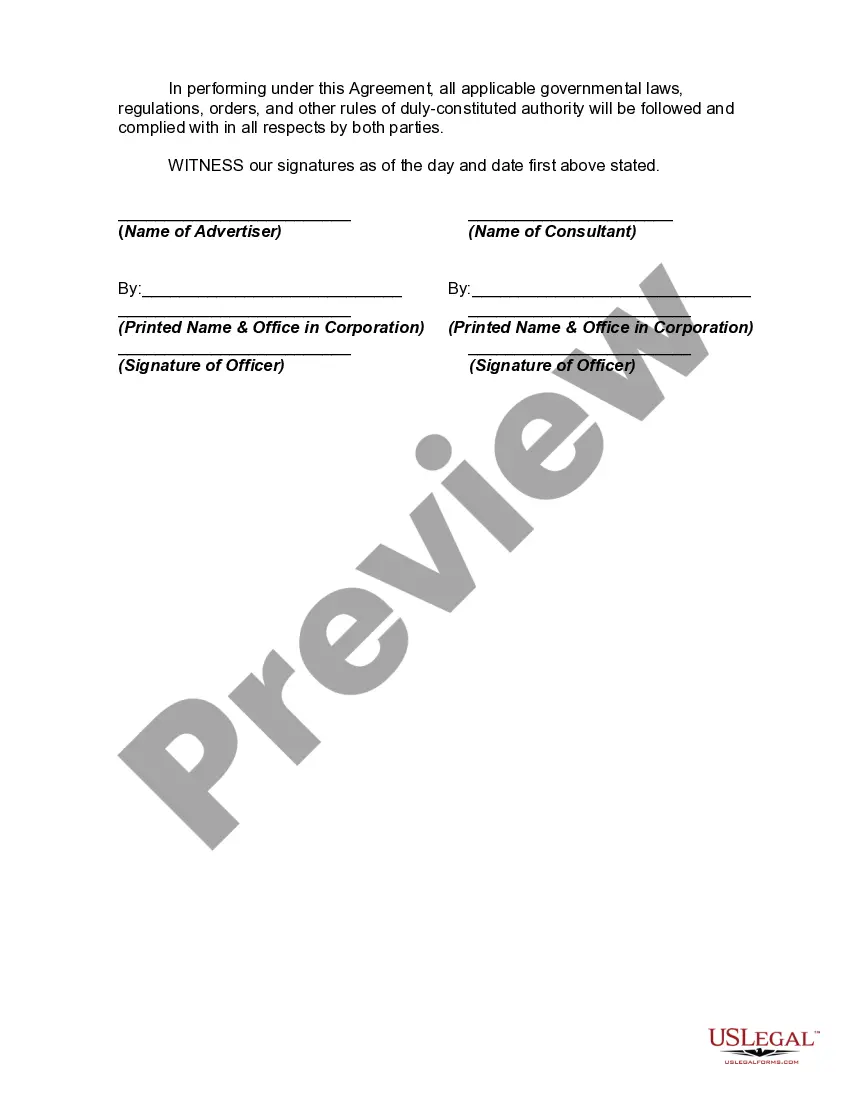
- Enter all necessary signatures from authorized representatives of both parties.
Is notarization required?
In most cases, this form does not require notarization. However, some jurisdictions or signing circumstances might. US Legal Forms offers online notarization powered by Notarize, accessible 24/7 for a quick, remote process.
Get your form ready online
Our built-in tools help you complete, sign, share, and store your documents in one place.
Make edits, fill in missing information, and update formatting in US Legal Forms—just like you would in MS Word.
Download a copy, print it, send it by email, or mail it via USPS—whatever works best for your next step.
Sign and collect signatures with our SignNow integration. Send to multiple recipients, set reminders, and more. Go Premium to unlock E-Sign.
If this form requires notarization, complete it online through a secure video call—no need to meet a notary in person or wait for an appointment.
We protect your documents and personal data by following strict security and privacy standards.

Make edits, fill in missing information, and update formatting in US Legal Forms—just like you would in MS Word.

Download a copy, print it, send it by email, or mail it via USPS—whatever works best for your next step.

Sign and collect signatures with our SignNow integration. Send to multiple recipients, set reminders, and more. Go Premium to unlock E-Sign.

If this form requires notarization, complete it online through a secure video call—no need to meet a notary in person or wait for an appointment.

We protect your documents and personal data by following strict security and privacy standards.
Avoid these common issues
- Failing to clearly define the project objectives, leading to vague expectations.
- Not specifying sample sizes or methods for data collection.
- Leaving out signatures from key decision-makers.
- Overlooking state-specific legal requirements that may affect the study.
Benefits of completing this form online
- Convenient access to a professionally drafted agreement.
- Editable to customize specific details and objectives of the advertising effectiveness study.
- Quick turnaround time for creating and finalizing essential documents.
- Reliability from a source that employs licensed attorneys for form drafting.
Legal use & context
- This form serves as a binding contract between the advertiser and consultant.
- It provides clear guidelines for the responsibilities of each party, ensuring accountability.
- The survey results can be used to inform future advertising strategies and investments.
Quick recap
- The Advertising Effectiveness Study serves as a comprehensive agreement for measuring the success of advertising campaigns.
- It is essential for businesses looking to adapt and enhance their marketing strategies based on consumer feedback.
- Accurately filling out the form and following its procedures is crucial for gathering reliable data.
Looking for another form?

Form popularity
FAQ
Advertising effectiveness helps brands determine if their ads are hitting the mark with their audience, and whether they're getting the best returns. This enables them to measure the strengths, weaknesses and ROI of specific campaigns, so they can adjust accordingly.
It acts as a Safety measure: Measuring advertising effectiveness helps in finding out ineffective advertisement and advertising campaigns. It facilitates timely adjustments in advertising to make advertising consumer oriented and result oriented. Thus waste of money in faulty advertising can be avoided.
Reach and RECENCY MATTER For many years, marketers have used recency theory (the belief that ads are most effective when they appear immediately before consumers are predicted to make a purchase) to gauge when to run their ads.
Advertising effectiveness refers to an evaluation of the extent to which a specific advertisement or advertising campaign meets the objectives specified by the client. There is a wide variety of approaches to evaluation, including brand preference measures, inquiry tests, recall tests, and market tests.
Pre-test and Post Test: Pre-test implies testing advertising message before it is sent to specific media. Communication and Sales Effect Test: Communication test measures communicability (ability to communicate) of the message. Laboratory and Field Test: Experimental and Survey Test: Message and Media Effect Test:
Monitor traffic. Assess how an ad campaign affects sales. Code your coupons. Offer incentives. Track phone orders. Analyze site traffic. Understand key advertising metrics.
ReachThe number or percent of different homes or persons exposed at least once to an advertising schedule in one or more media vehicles over a given period of time. FrequencyThe average number of times that the household or person is exposed to a media vehicle, schedule or campaign over a given time period.
Management by objectives. This is probably the most common way to measure employee performance. Use rating scales. Ask staff to rate their own job satisfaction. Track digital trails. Team performance. Peer appraisals. External evaluators. Quantity and quality.