Mississippi Request for Admission
What is this form?
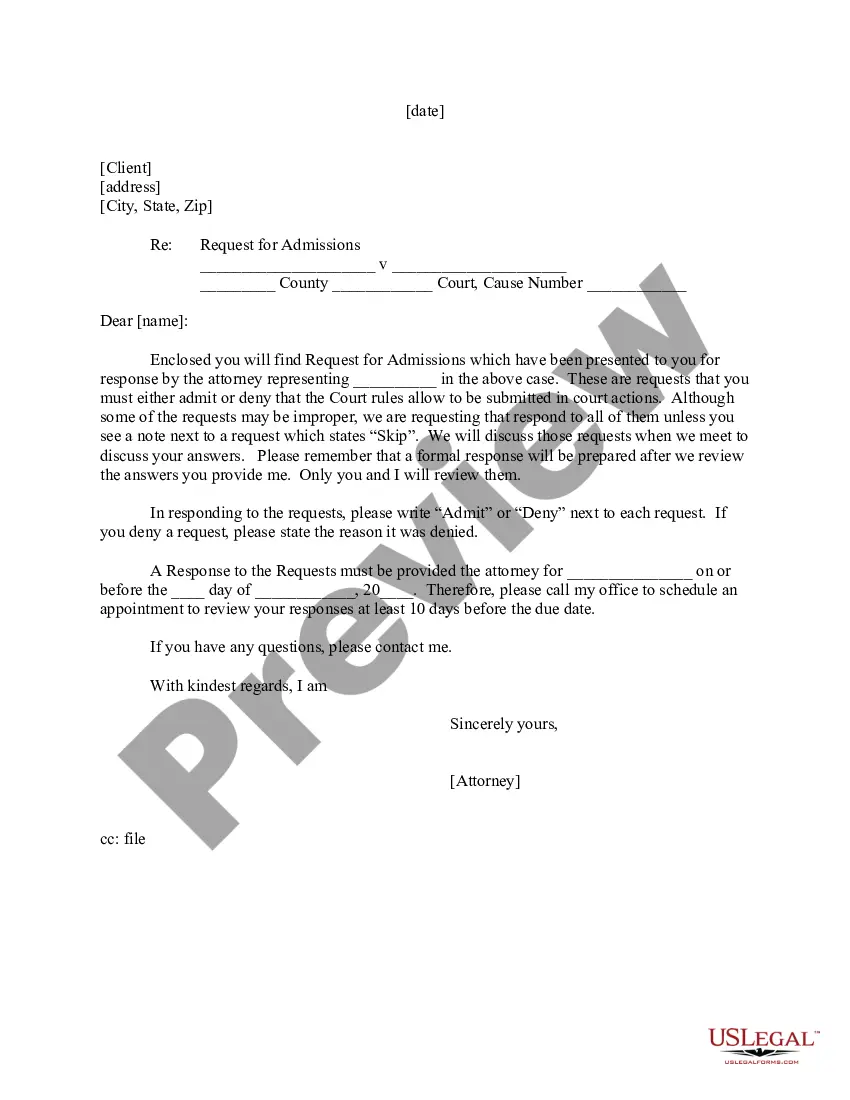
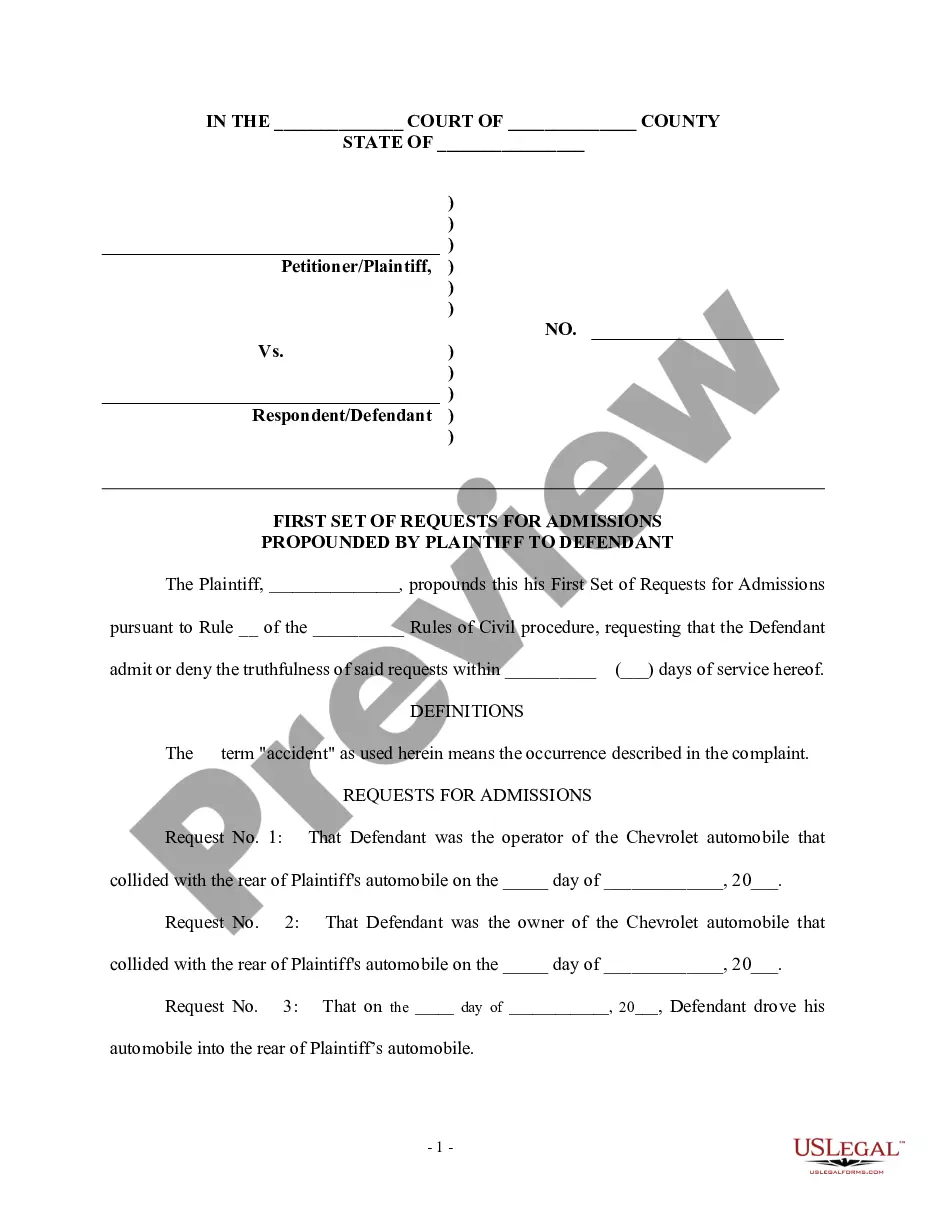
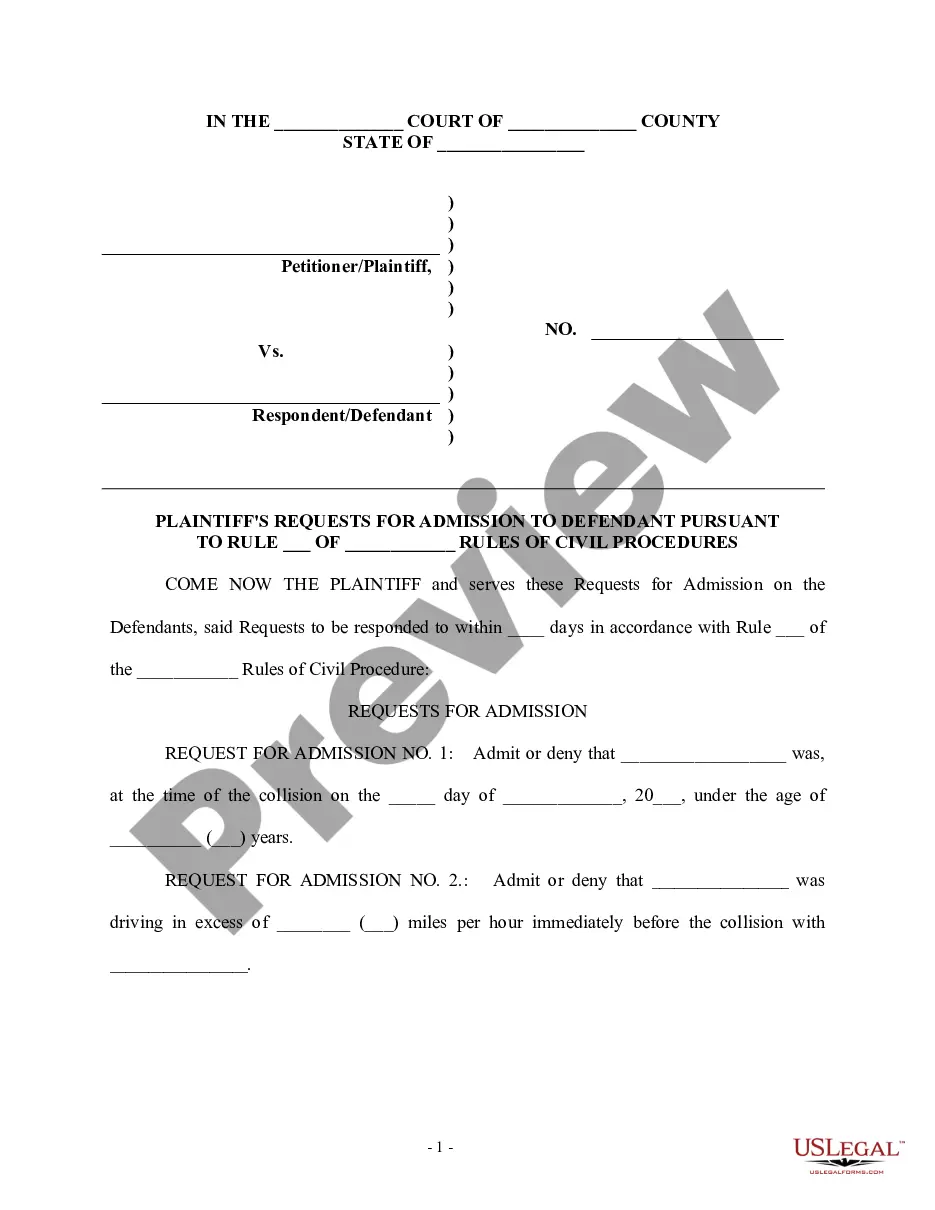
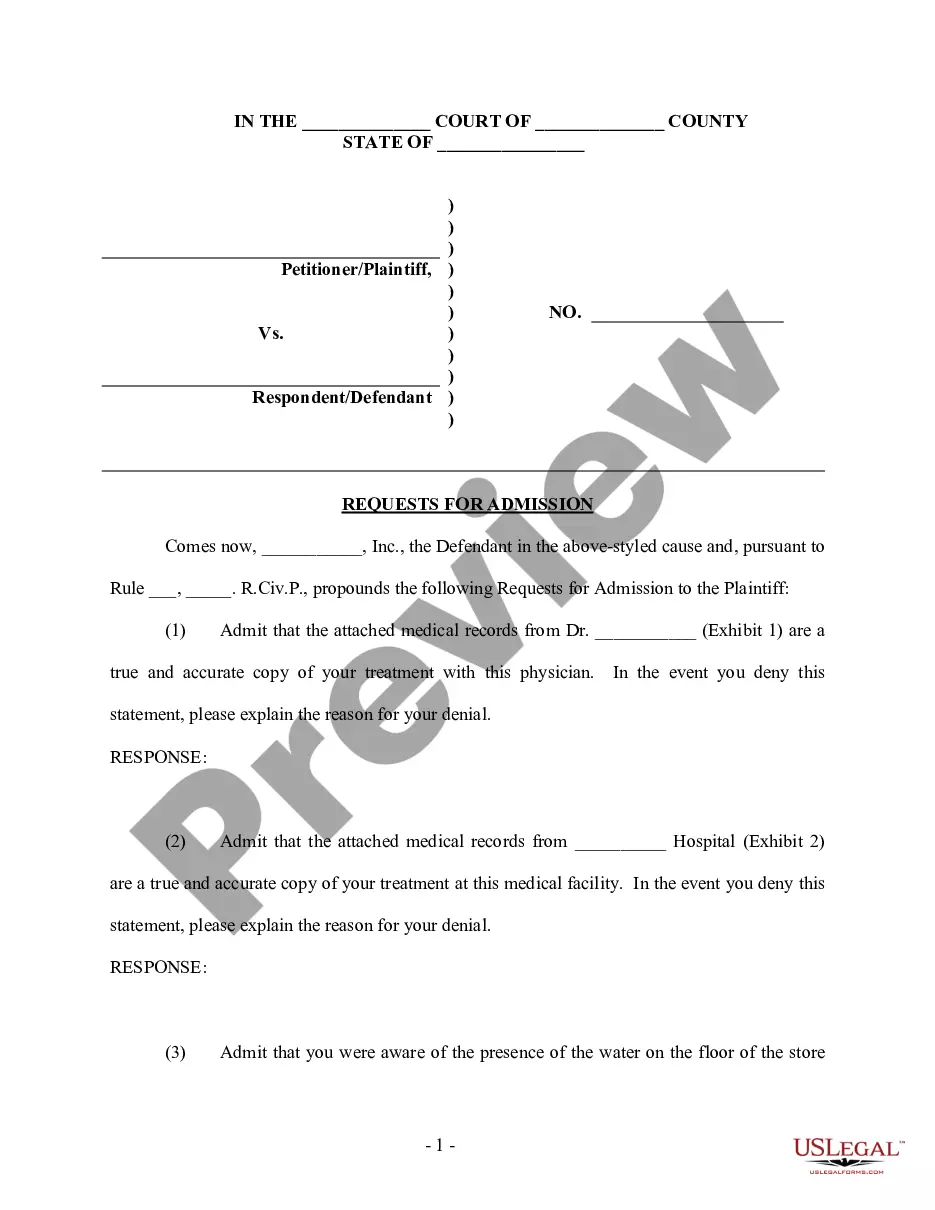
The Request for Admission is a legal document used in Mississippi that allows one party to formally ask the opposing party to admit or deny specific facts related to a case. This form is designed to streamline the litigation process by narrowing down the issues that need to be proven at trial. It differs from similar discovery tools like interrogatories in that it focuses on admissions of fact rather than detailed questions.
Main sections of this form
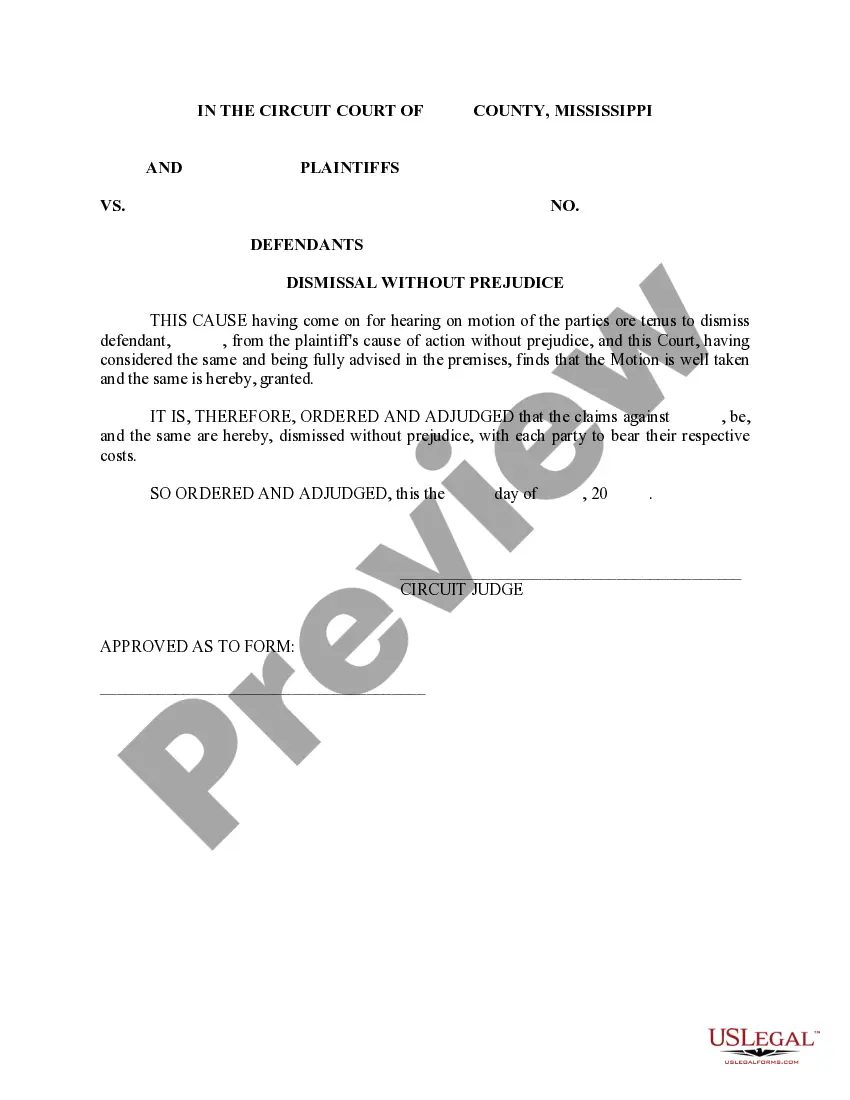
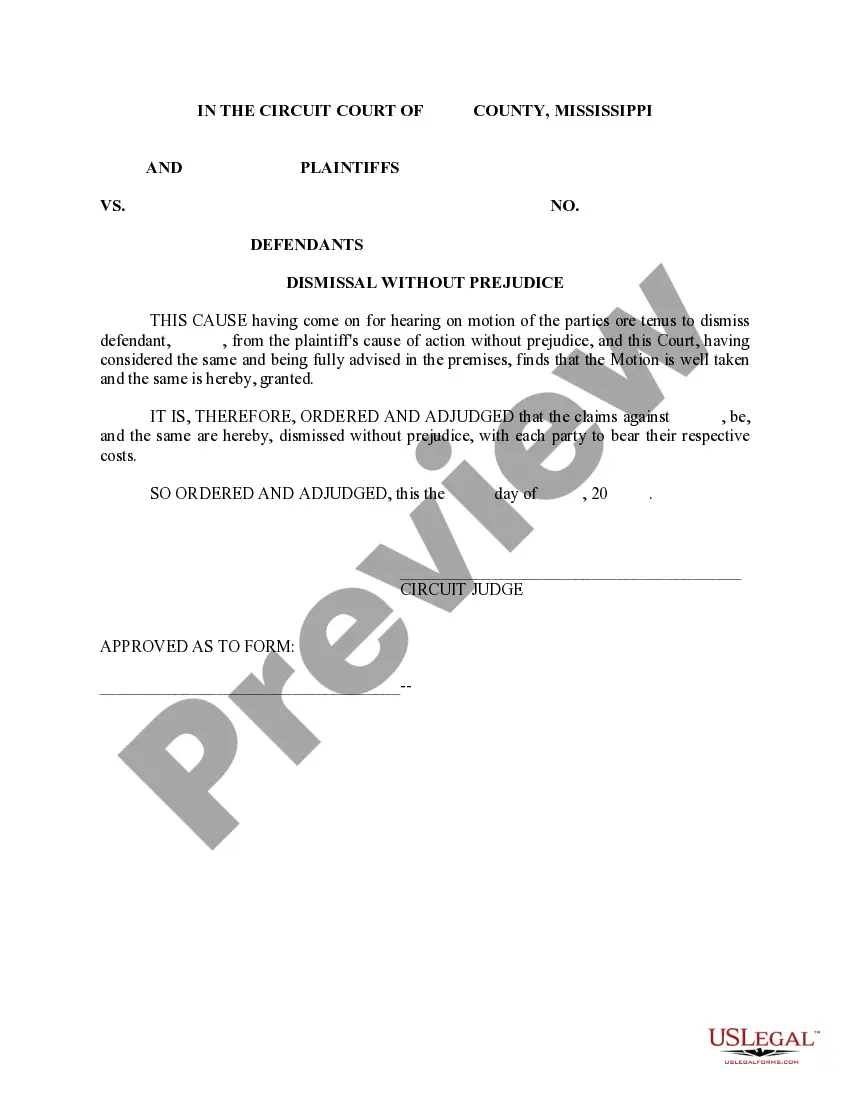
- Caption: Identifies the parties involved in the action.
- Requests: Lists specific facts that the opposing party must admit or deny.
- Signature line: Provides space for the signature of the party responding to the request.
- Date: Indicates when the form was completed and served.
- Instructions: Offers guidance on how responses should be framed.
Situations where this form applies
This form is typically used during the pre-trial phase of litigation. It is beneficial when you need to clarify or establish certain facts that may not be in dispute, allowing for a more efficient trial process. Common scenarios include civil litigation cases where facts related to liability or damages need to be confirmed prior to court proceedings.
Who this form is for
- Individuals or entities involved in civil litigation in Mississippi.
- Attorneys representing clients in disputes requiring fact clarification.
- Parties seeking to simplify trials by narrowing disputed issues.
How to prepare this document
- Identify the parties involved in the case and input their names in the caption.
- Clearly list each fact that you want the opposing party to admit or deny.
- Ensure all requests are specific and unambiguous.
- Provide a signature line for the party answering the request, and include the date.
- Review the completed form for accuracy before serving it on the opposing counsel.
Is notarization required?
This form does not typically require notarization to be legally valid. However, some jurisdictions or document types may still require it. US Legal Forms provides secure online notarization powered by Notarize, available 24/7 for added convenience.
Get your form ready online
Our built-in tools help you complete, sign, share, and store your documents in one place.
Make edits, fill in missing information, and update formatting in US Legal Forms—just like you would in MS Word.
Download a copy, print it, send it by email, or mail it via USPS—whatever works best for your next step.
Sign and collect signatures with our SignNow integration. Send to multiple recipients, set reminders, and more. Go Premium to unlock E-Sign.
If this form requires notarization, complete it online through a secure video call—no need to meet a notary in person or wait for an appointment.
We protect your documents and personal data by following strict security and privacy standards.

Make edits, fill in missing information, and update formatting in US Legal Forms—just like you would in MS Word.

Download a copy, print it, send it by email, or mail it via USPS—whatever works best for your next step.

Sign and collect signatures with our SignNow integration. Send to multiple recipients, set reminders, and more. Go Premium to unlock E-Sign.

If this form requires notarization, complete it online through a secure video call—no need to meet a notary in person or wait for an appointment.

We protect your documents and personal data by following strict security and privacy standards.
Common mistakes
- Failing to include all necessary parties in the caption.
- Making requests that are vague or overly broad.
- Not properly dating the form or providing a signature.
Why use this form online
- Easy access: Downloadable forms are available anytime.
- Editable: Tailor the template to fit specific case needs.
- Reliable: Forms are drafted and updated by licensed attorneys to ensure compliance with current laws.
Main things to remember
- The Request for Admission helps streamline litigation by clarifying facts.
- It is crucial for parties in civil litigation in Mississippi.
- Ensure clarity and specificity in requests to avoid challenges.
Looking for another form?

Form popularity
FAQ
All requests for admission must be relevant to the issues in the case. If a request does not lead to the discovery of relevant, admissible evidence, you may object.
Proper Objections A responding party has four options: (1) admit; (2) deny; (3) admit in part and deny in part; or (4) explain why the party is unable to answer. It is possible to object to all or part of a request as well, but courts do not like parties who play word games to avoid responding.
In a civil action, a request for admission is a discovery device that allows one party to request that another party admit or deny the truth of a statement under oath. If admitted, the statement is considered to be true for all purposes of the current trial.Rules regarding requests for admission vary by jurisdiction.
In a civil action, a request for admission is a discovery device that allows one party to request that another party admit or deny the truth of a statement under oath. If admitted, the statement is considered to be true for all purposes of the current trial.
A request for admission (sometimes also called a request to admit) is a set of statements sent from one litigant to an adversary, for the purpose of having the adversary admit or deny the statements or allegations therein. Requests for admission are part of the discovery process in a civil case.
The provisions of Rule 36 make it clear that admissions function very much as pleadings do. Thus, when a party admits in part and denies in part, his admission is for purposes of the pending action only and may not be used against him in any other proceeding.
When responding to Requests for Admissions, remember to answer as follows: Admit: If any portion of the Request for Admission is true then you must admit to that portion of the request. You are also allowed to have a hybrid response admit the part of the request that is true while denying another part. See C.C.P.
Each request must be numbered consecutively. The first paragraph immediately shall state he identity of the party requesting the admissions, the set number, and the identity of the responding party. Each request shall be separately set forth and identified by letter or number. C.C.P.