Complaint by Consumer against Wrongful User of Credit Information
What this document covers
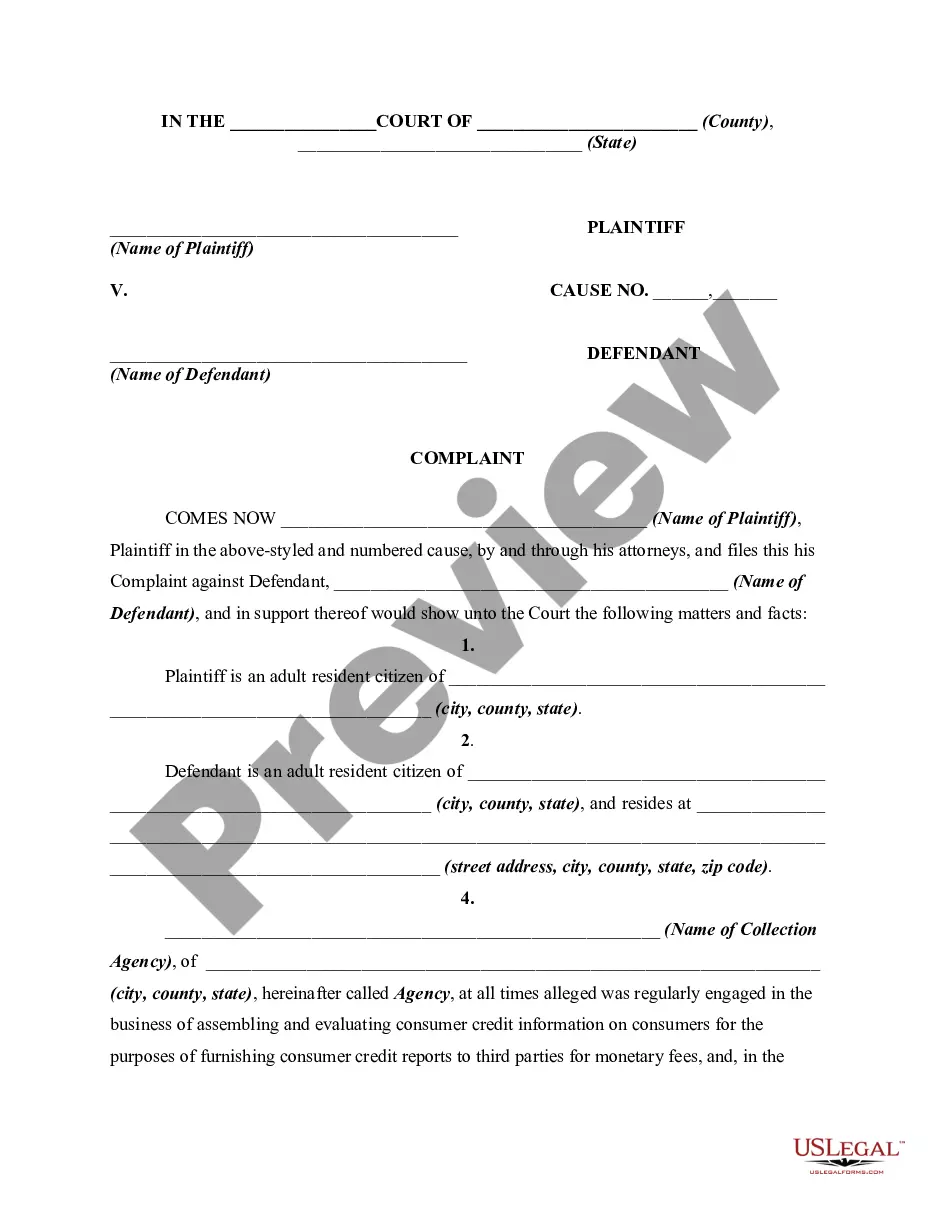
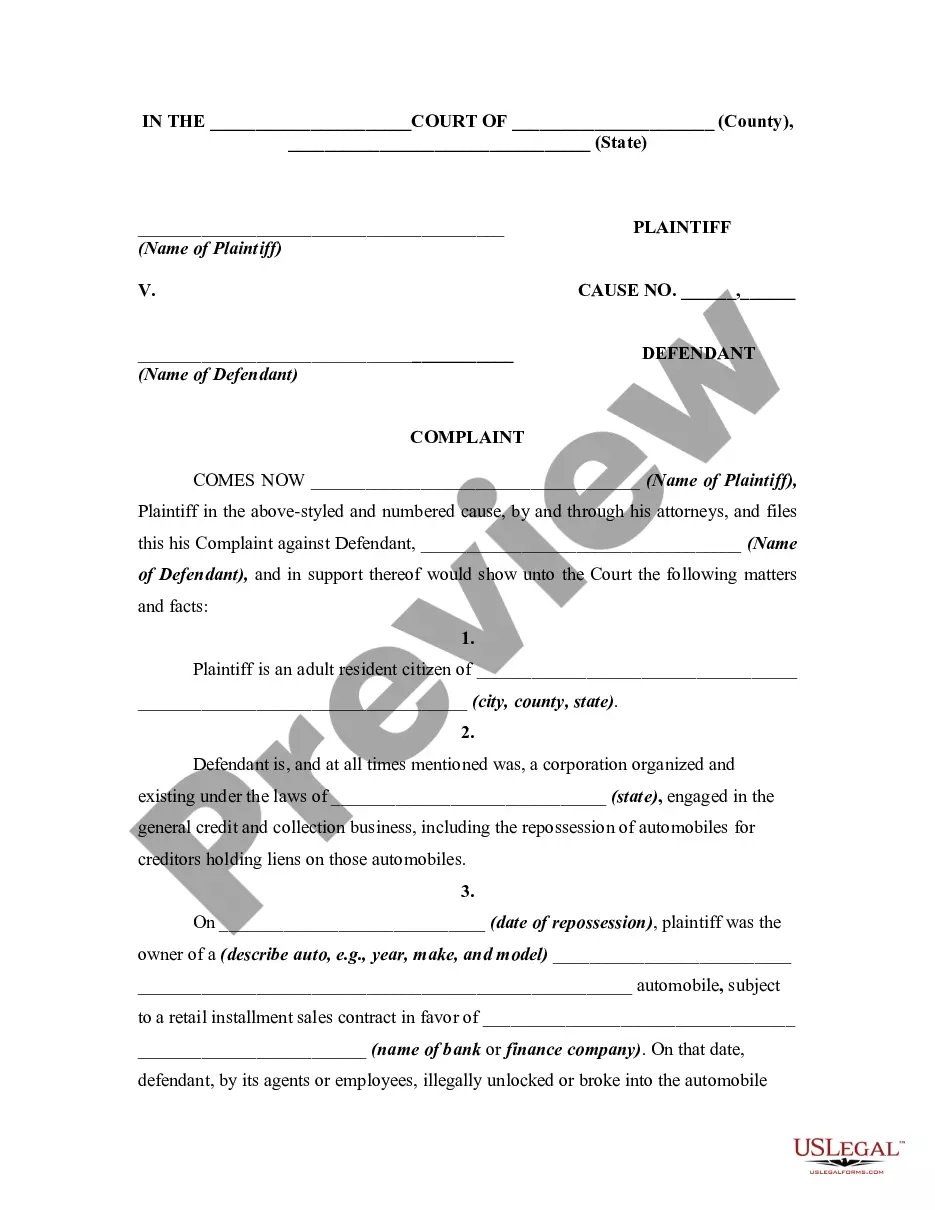
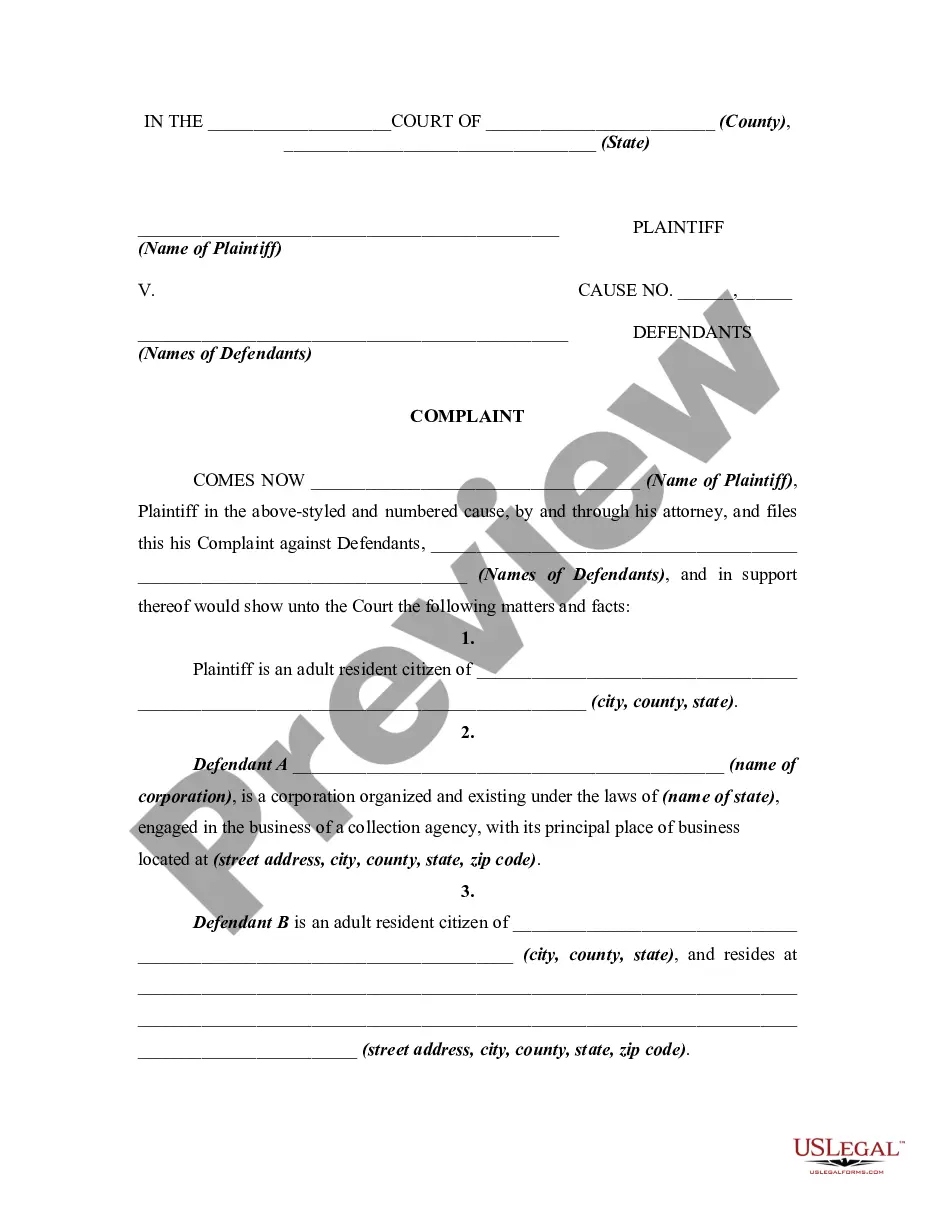
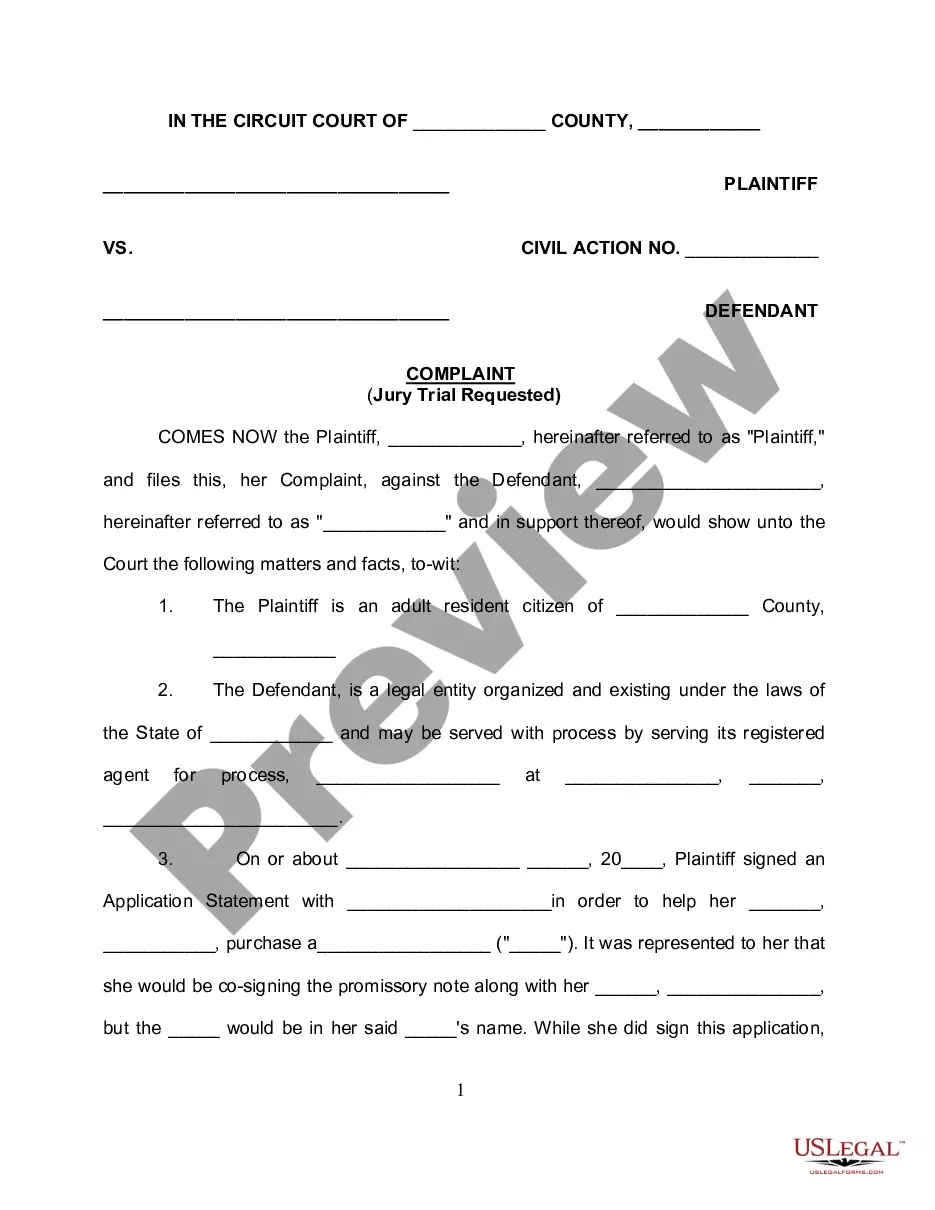
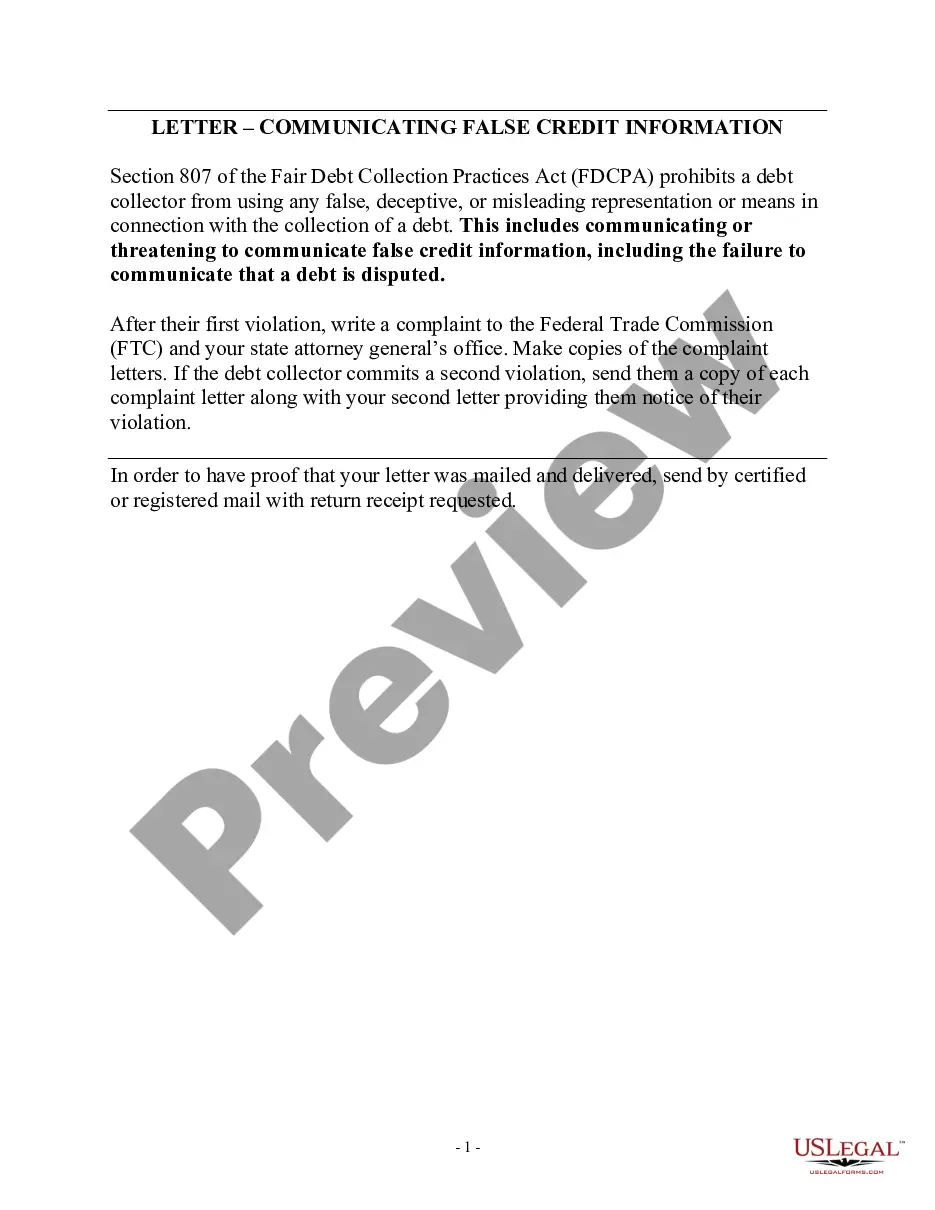
The Complaint by Consumer against Wrongful User of Credit Information is a legal document used by individuals to file a formal complaint regarding the misuse of their credit information. This form is particularly relevant under the Fair Credit Reporting Act, ensuring that consumers can seek redress if their credit information is obtained or used without proper authorization. This form stands apart from other credit-related documents by directly addressing allegations of wrongful access and utilization of credit data.
Form components explained
- Name of the plaintiff and defendant
- Details of the parties involved, including their residence and contact information
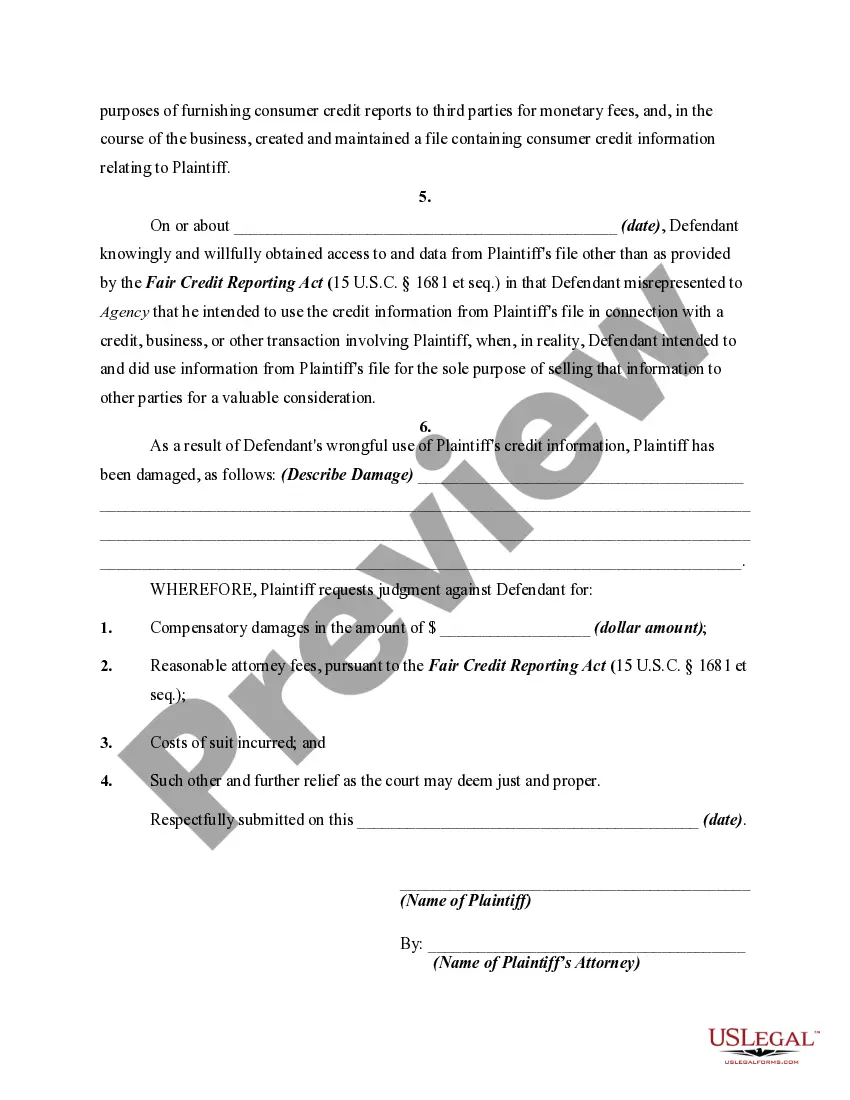
- Allegations regarding the wrongful use of credit information
- Description of damages suffered by the plaintiff
- Claim for compensatory damages and legal fees
- Signatures of the plaintiff and their attorney
When to use this form
This form should be used when a consumer believes their credit information has been wrongfully accessed or used without permission, primarily in cases where the misuse was for profit, such as selling the information to third parties. It is particularly important when the plaintiff has experienced damages as a result of such actions, and seeks to hold the responsible party accountable under the Fair Credit Reporting Act.
Who should use this form
This form is intended for:
- Consumers whose credit information has been accessed or misused without permission
- Individuals who have suffered financial or reputational harm due to wrongful use of their credit data
- Persons seeking legal redress for violations of the Fair Credit Reporting Act
Steps to complete this form
- Identify and enter the names of the plaintiff and defendant at the top of the form.
- Provide the addresses of both parties, including city, county, state, and zip code.
- Detail the collection agency's information if applicable.
- Clearly outline the circumstances of the wrongful access and detail the damages incurred.
- State the amounts for compensatory damages and other costs expected.
- Sign the form and have it executed by an attorney if required.
Is notarization required?
This form does not typically require notarization to be legally valid. However, some jurisdictions or document types may still require it. US Legal Forms provides secure online notarization powered by Notarize, available 24/7 for added convenience.
Get your form ready online
Our built-in tools help you complete, sign, share, and store your documents in one place.
Make edits, fill in missing information, and update formatting in US Legal Forms—just like you would in MS Word.
Download a copy, print it, send it by email, or mail it via USPS—whatever works best for your next step.
Sign and collect signatures with our SignNow integration. Send to multiple recipients, set reminders, and more. Go Premium to unlock E-Sign.
If this form requires notarization, complete it online through a secure video call—no need to meet a notary in person or wait for an appointment.
We protect your documents and personal data by following strict security and privacy standards.

Make edits, fill in missing information, and update formatting in US Legal Forms—just like you would in MS Word.

Download a copy, print it, send it by email, or mail it via USPS—whatever works best for your next step.

Sign and collect signatures with our SignNow integration. Send to multiple recipients, set reminders, and more. Go Premium to unlock E-Sign.

If this form requires notarization, complete it online through a secure video call—no need to meet a notary in person or wait for an appointment.

We protect your documents and personal data by following strict security and privacy standards.
Typical mistakes to avoid
- Failing to include complete contact details for all parties involved.
- Not providing a clear description of the alleged wrongful use of credit information.
- Leaving out specific amounts for damages and legal fees.
- Inadequate signatures or missing attorney execution when necessary.
Benefits of using this form online
- Convenience of completing the form at your own pace.
- Editable fields allow for easy customization based on your specific situation.
- Access to a reliable form drafted by legal professionals ensures compliance with current laws.
Legal use & context
- This form is grounded in the provisions of the Fair Credit Reporting Act.
- It protects consumers from unauthorized access and misuse of credit information.
- The successful use of this complaint can lead to compensation for damages incurred.
Looking for another form?
Form popularity
FAQ
You need only dispute with the credit bureau(s) whose credit report(s) reflect the inaccuracy. All three credit bureaus have an online dispute process, but opt for the mail-in option instead.Send it (with copies of supporting documentation) via certified mail with return receipt requested.
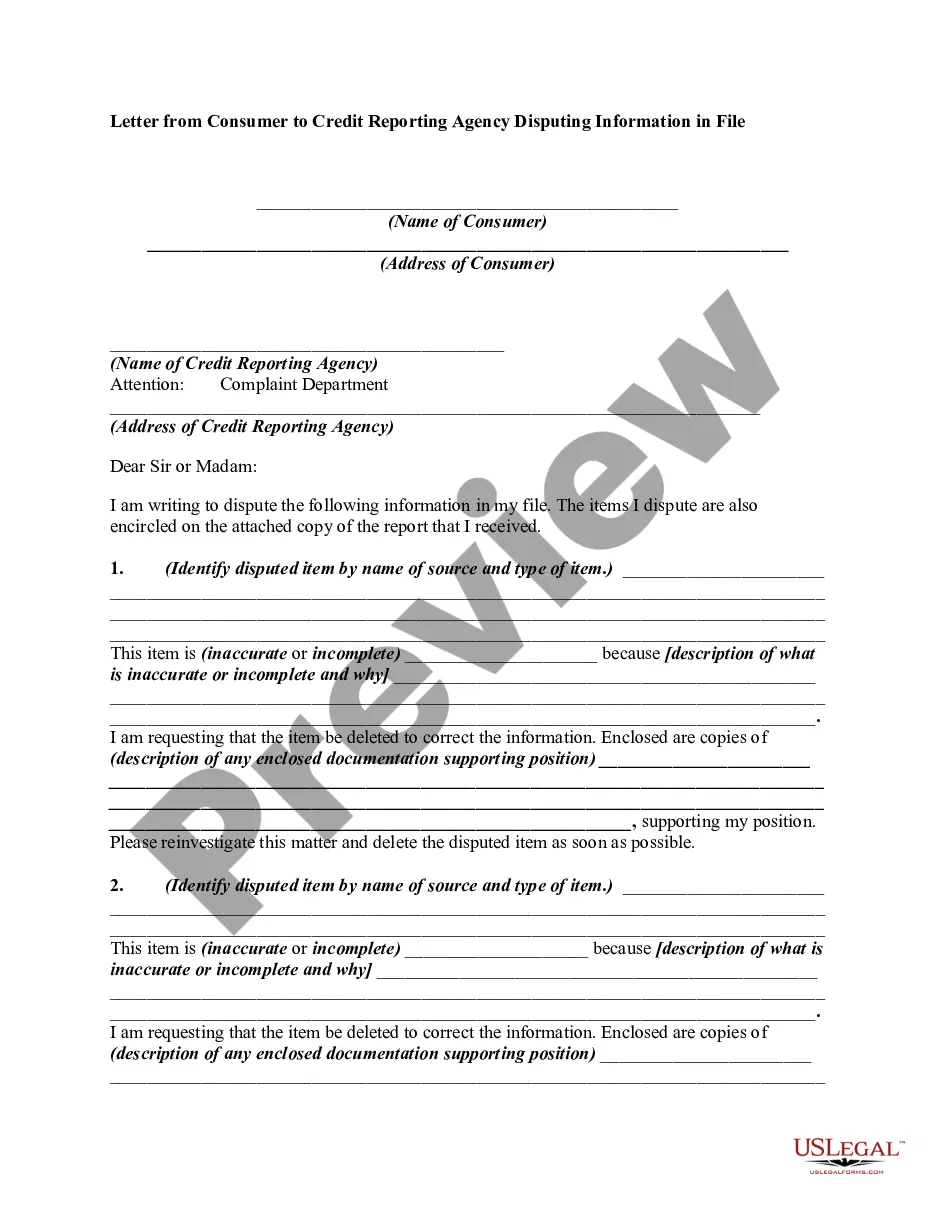
Tell the credit reporting company, in writing, what information you think is inaccurate. Tell the information provider (that is, the person, company, or organization that provides information about you to a credit reporting company), in writing, that you dispute an item in your credit report.
The FTC works to prevent fraudulent, deceptive and unfair business practices in the marketplace and to provide information to help consumers spot, stop and avoid them. To file a complaint or get free information on consumer issues, visit ftc.gov or call toll-free, 1-877-FTC-HELP (1-877-382-4357); TTY: 1-866-653-4261.
Incorrect information on a credit report; A consumer reporting agency's investigation; The improper use of a credit report; Being unable to get a copy of a credit score or file; and. Problems with credit monitoring or identify protection services.
If you identify an error on your credit report, you should start by disputing that information with the credit reporting company (Experian, Equifax, and/or Transunion). You should explain in writing what you think is wrong, why, and include copies of documents that support your dispute.
Yes, you might be able to sue a company for false credit reporting. However, before you seek a civil remedy through the courts, you should properly exercise your rights under the law. Begin by challenging the information with the credit bureau.
If you identify an error on your credit report, you should start by disputing that information with the credit reporting company (Experian, Equifax, and/or Transunion). You should explain in writing what you think is wrong, why, and include copies of documents that support your dispute.
You can file a complaint against a credit bureau through the Federal Trade Commission (FTC), the Consumer Financial Protection Bureau (CFPB), or your state's attorney general. - File a complaint with the FTC online or by calling 877-382-4357. - File a complaint with the CFPB online or by calling 855-411-2372.