Leave of Absence for Part Time Employees
Understanding this form
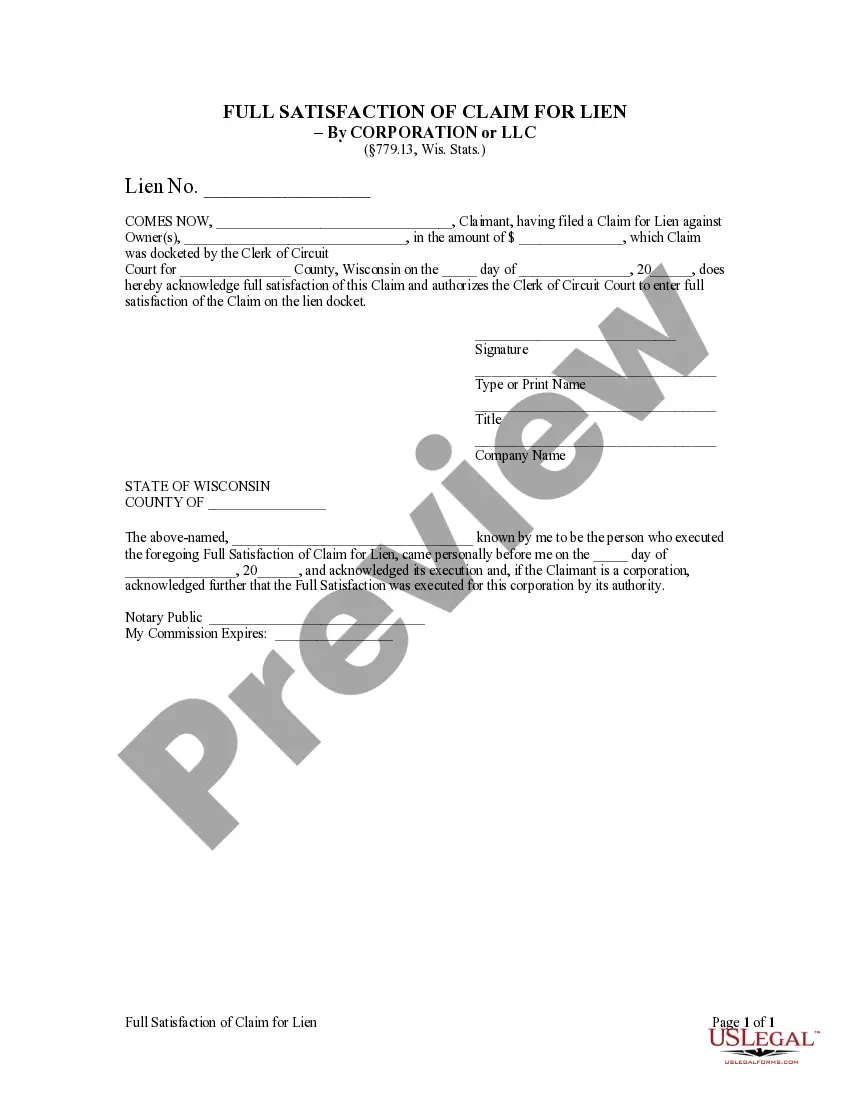
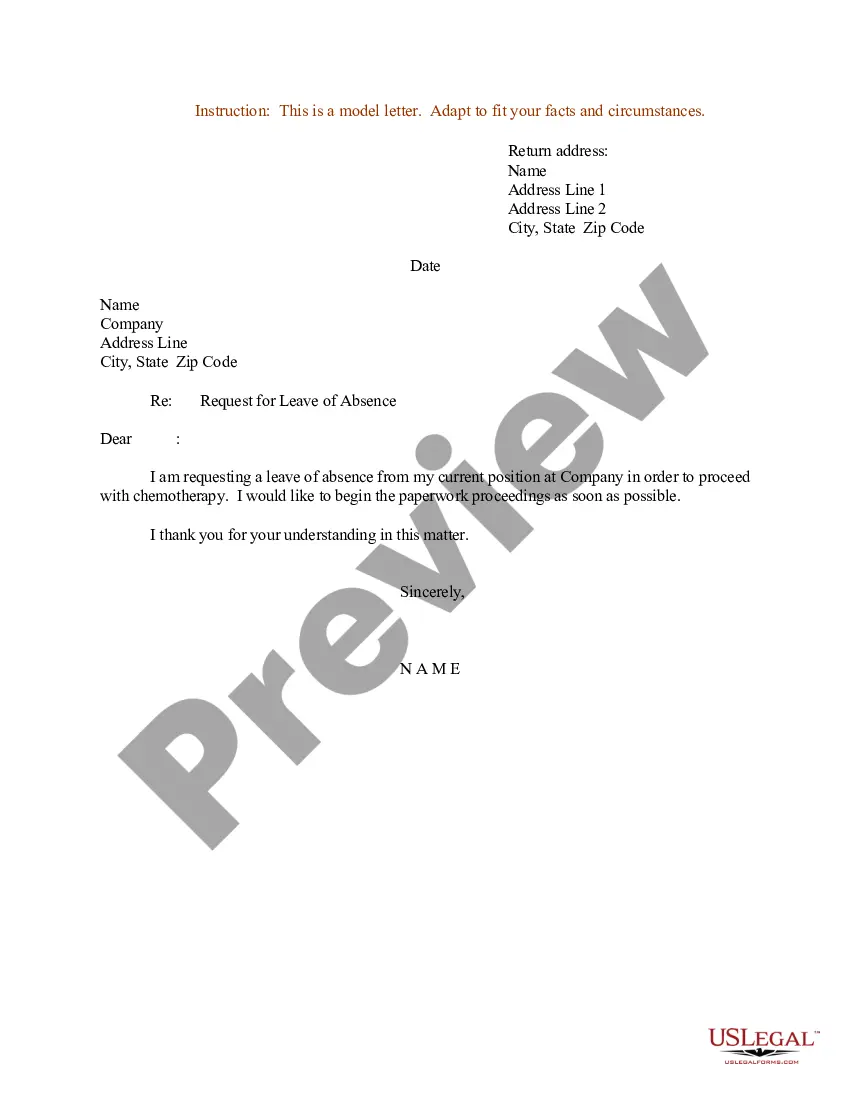
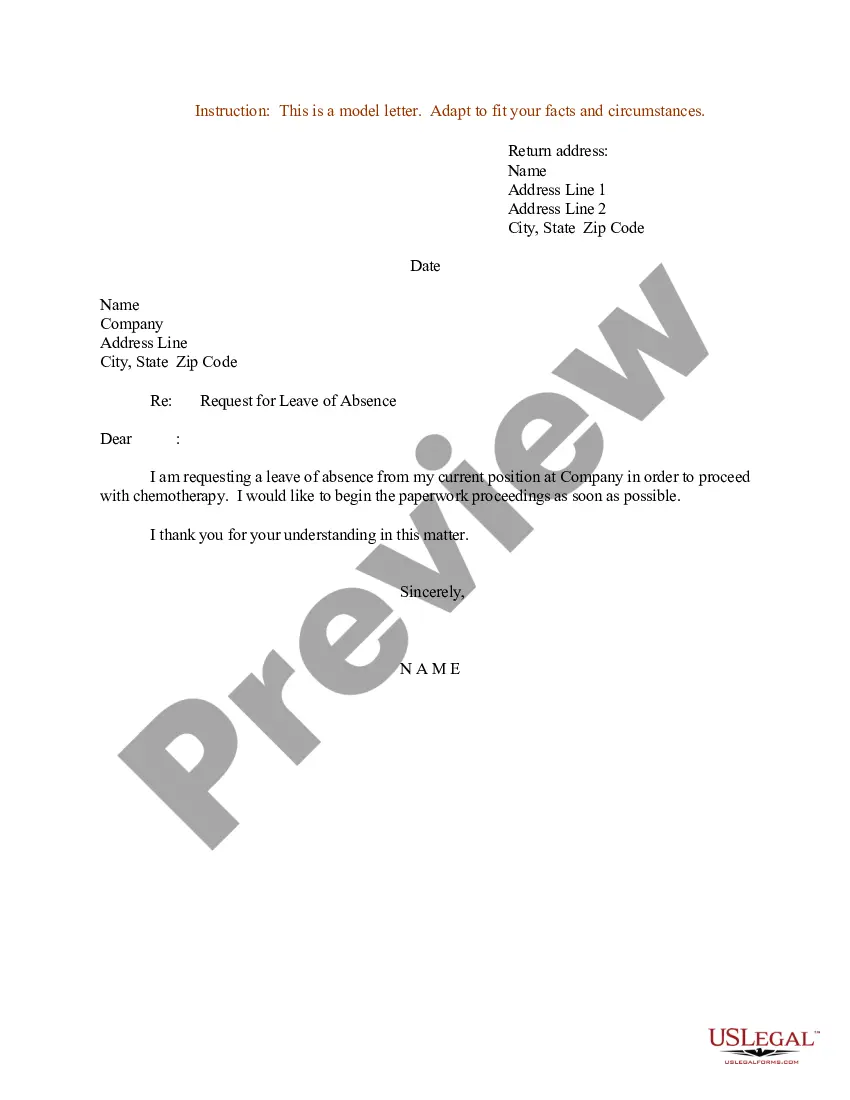
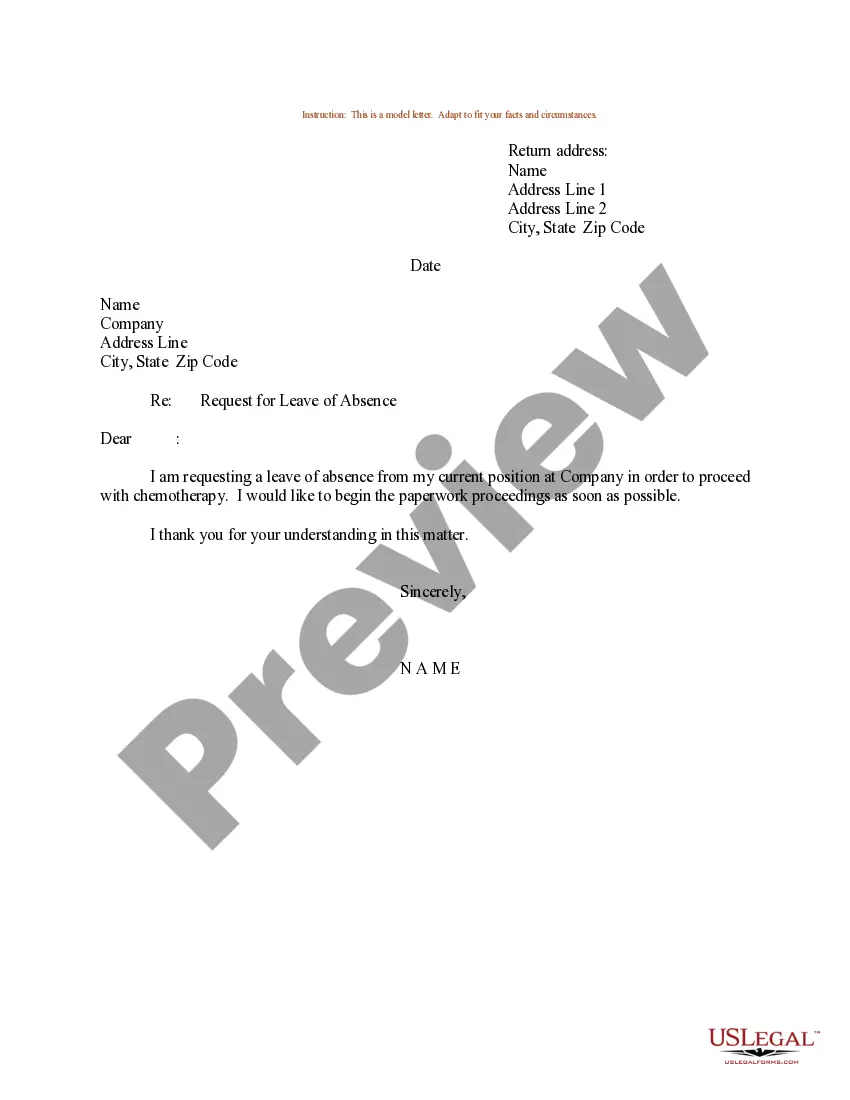
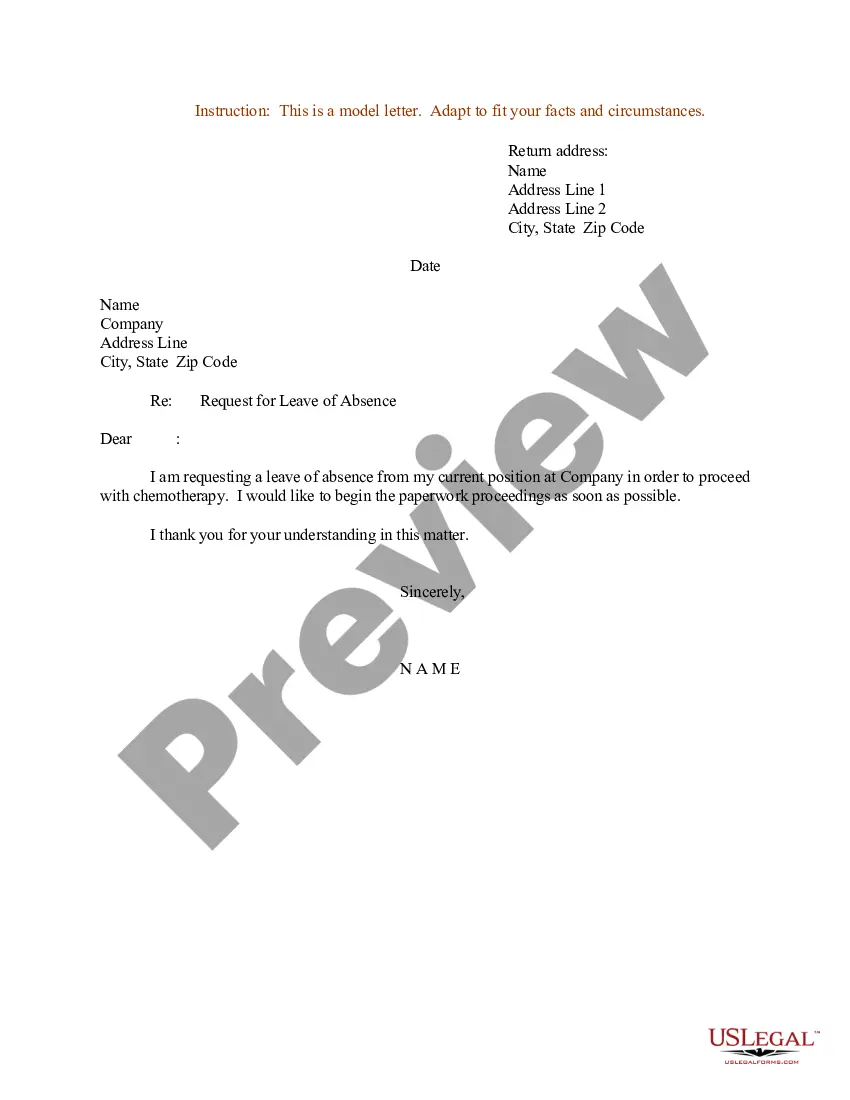
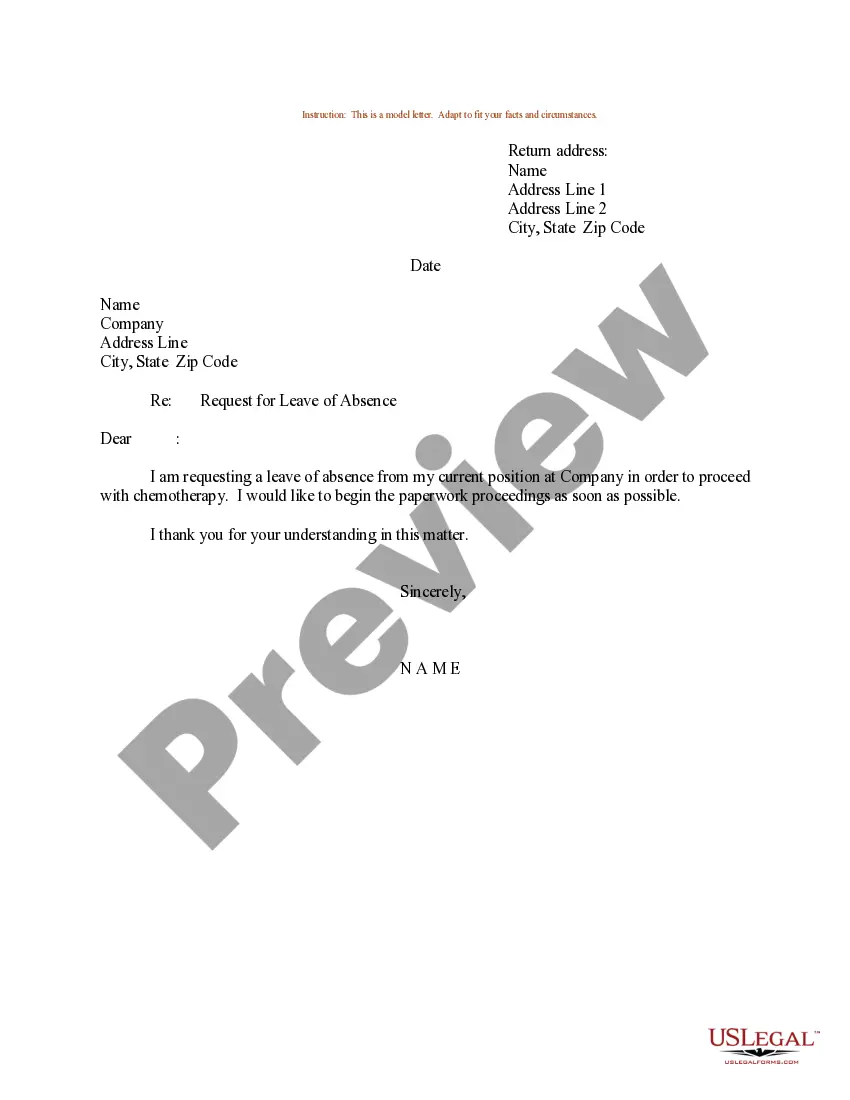
The Leave of Absence for Part Time Employees form is a sample letter template designed for part-time employees seeking to formally request a leave of absence. This form ensures that the request is properly documented and communicated to the employer. It is specifically tailored for part-time workers, which distinguishes it from leave of absence forms intended for full-time employees.
What’s included in this form
- Return address: Provide your name and address details.
- Date: Indicate the date of the letter.
- Employer's contact information: Include the name and address of your company.
- Subject line: Clearly state the purpose as "Request for Leave of Absence."
- Closing signature: Sign off with your name.

When to use this form
This form should be used when a part-time employee needs to take a leave of absence due to personal issues, health concerns, or other valid reasons that require time away from work. It serves as an official request to inform your employer of your situation and is appropriate when you want to adhere to workplace policies regarding leave notifications.
Intended users of this form
- Part-time employees who need to take a temporary leave from work.
- Individuals who wish to formally communicate their leave request to their employer.
- Employees who are familiar with their company's policies on leave requests.
Instructions for completing this form
- Enter your return address, including your name and contact details.
- Fill in the date on which you are submitting the letter.
- Include the employer's name and company address.
- Clearly state the subject as "Request for Leave of Absence."
- Sign the letter with your name for a formal closure.
Notarization requirements for this form
This form does not typically require notarization unless specified by local law. It is advisable to check your employer's policy for any additional requirements related to submitting leave requests.
Get your form ready online
Our built-in tools help you complete, sign, share, and store your documents in one place.
Make edits, fill in missing information, and update formatting in US Legal Forms—just like you would in MS Word.
Download a copy, print it, send it by email, or mail it via USPS—whatever works best for your next step.
Sign and collect signatures with our SignNow integration. Send to multiple recipients, set reminders, and more. Go Premium to unlock E-Sign.
If this form requires notarization, complete it online through a secure video call—no need to meet a notary in person or wait for an appointment.
We protect your documents and personal data by following strict security and privacy standards.

Make edits, fill in missing information, and update formatting in US Legal Forms—just like you would in MS Word.

Download a copy, print it, send it by email, or mail it via USPS—whatever works best for your next step.

Sign and collect signatures with our SignNow integration. Send to multiple recipients, set reminders, and more. Go Premium to unlock E-Sign.

If this form requires notarization, complete it online through a secure video call—no need to meet a notary in person or wait for an appointment.

We protect your documents and personal data by following strict security and privacy standards.
Mistakes to watch out for
- Failing to provide a clear reason for the leave of absence.
- Not including complete employer contact information.
- Ignoring company-specific policies related to leave notifications.
Benefits of using this form online
- Convenient access to a standardized template that simplifies the process of requesting leave.
- Edit the document easily to tailor it to your specific needs.
- Reliable format drafted by licensed attorneys to ensure compliance and clarity.
Looking for another form?

Form popularity
FAQ
An FMLA leave allows employees to take up to 12 weeks off in a 12-month period. If their absence is not protected by the Family and Medical Leave Act (FMLA), then it's considered a non-FMLA medical leave.
Part-time employees get the same minimum entitlements (such as sick leave and annual leave) as a full-time employee, but on a pro-rata basis.
Forced unpaid leave There's no limit to how long you can lay-off an employee, but if they've been away from work for four weeks in a row, or six weeks within a 13-week period where no more than six weeks are consecutive, then they can apply for redundancy pay and resign from their position.
All employers in California must abide by all FMLA and CFRA regulations without exception. However, an employer has every right to deny an employee's request to use accrued vacation time or paid time off, but the employer must usually provide some kind of reasonable explanation.
The Family and Medical Leave Act (FMLA) provides certain employees with up to 12 weeks of unpaid, job-protected leave per year. It also requires that their group health benefits be maintained during the leave.
If an employee requests time off for a reason covered by FMLA or the CFRA, the employer may not legally deny the request. All employers in California must abide by all FMLA and CFRA regulations without exception.This is perfectly legal albeit likely frustrating and disappointing for the employee.
Can You Get Fired for Taking a Leave of Absence? Employees may need time off from work because of health and family concerns. The time period during which the employee is off from work is known as a leave of absence. The law may prohibit an employer from terminating an employee for taking a leave of absence.
When a part-time employee takes Family and Medical Act (FMLA) leave in a single block of time, he or she is entitled to 12 workweeks of leave regardless of the number of hours typically worked in the workweek.