Resignation Letter for Position Change
Understanding this form
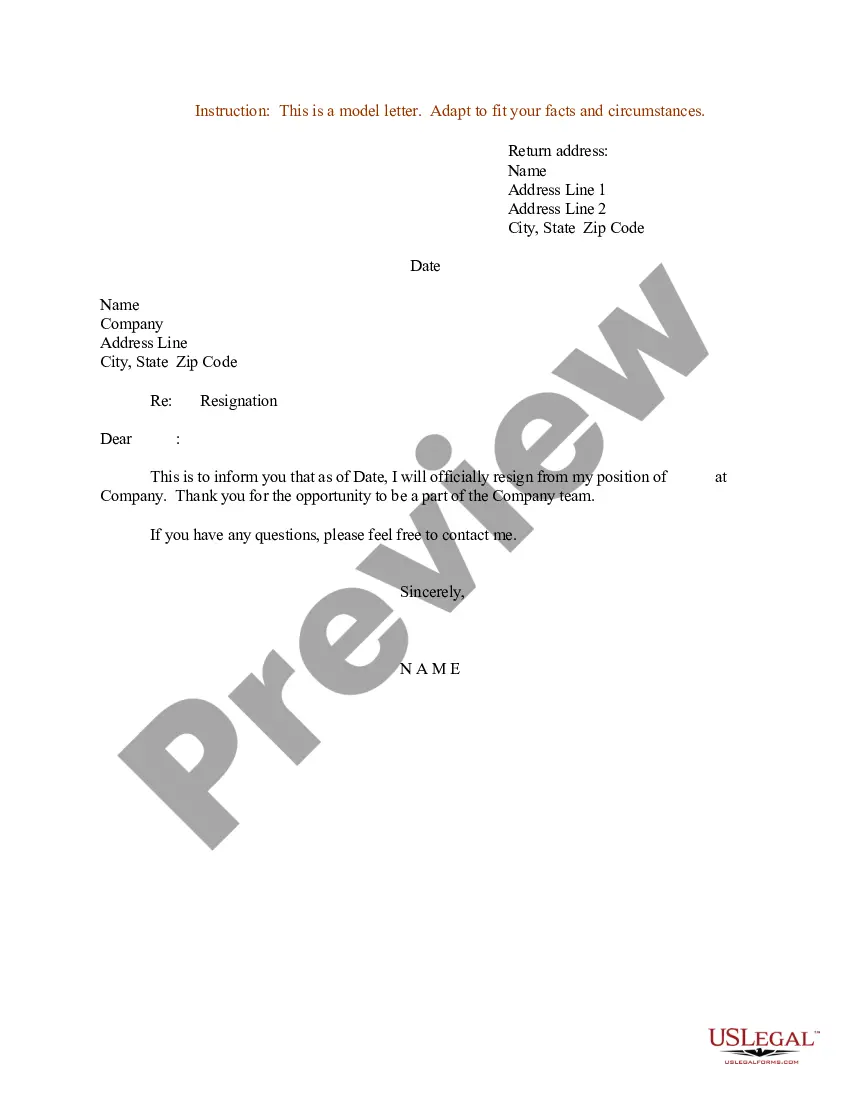
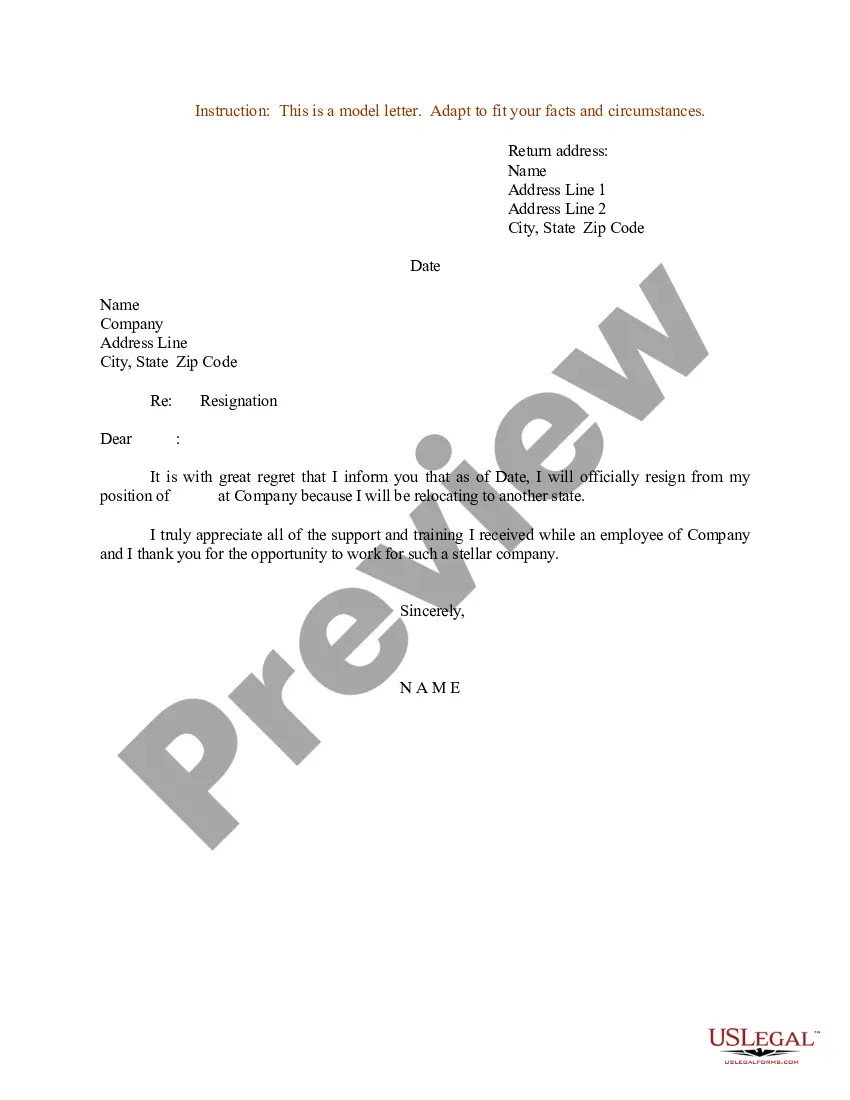
The resignation letter for position change is a formal document that allows employees to communicate their intent to resign from a current position while transitioning to a different role within the same organization. This letter serves to notify management of the decision to leave the current position and sets the stage for a smooth transition. Unlike a standard resignation letter, this form specifically addresses a change in position rather than a complete departure from the company.
Key components of this form
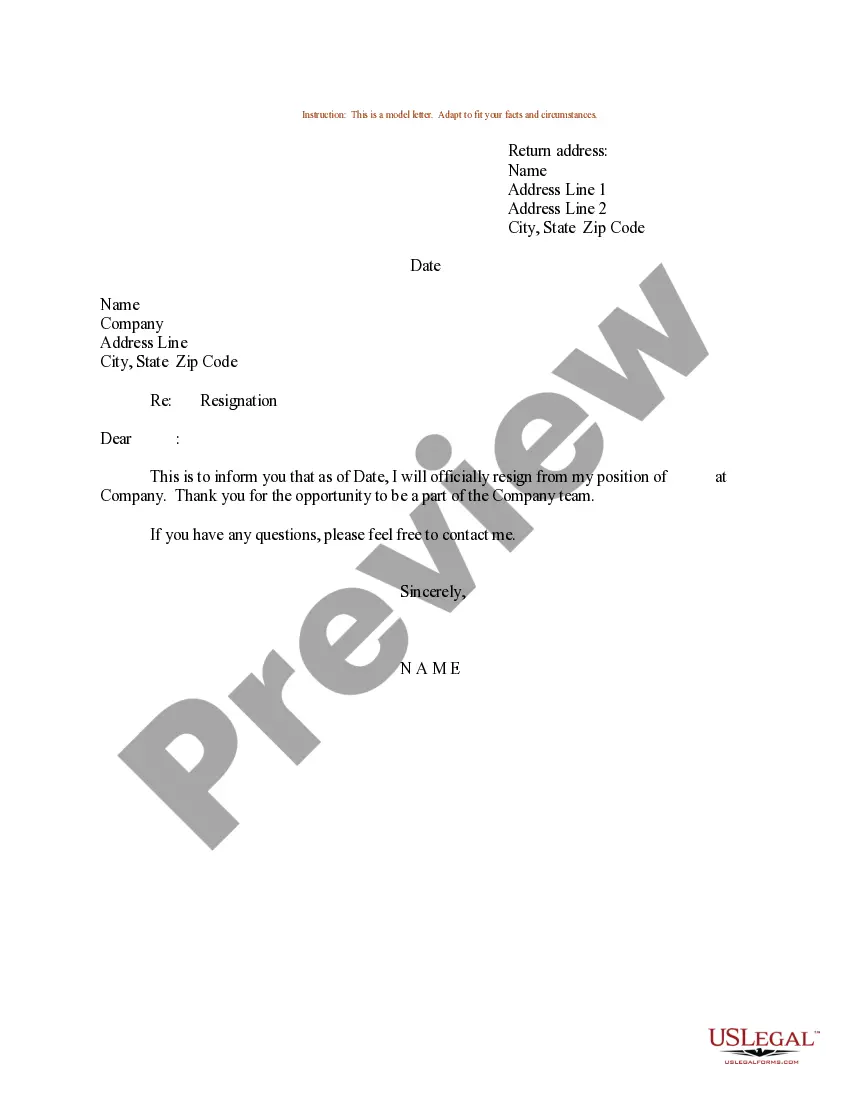
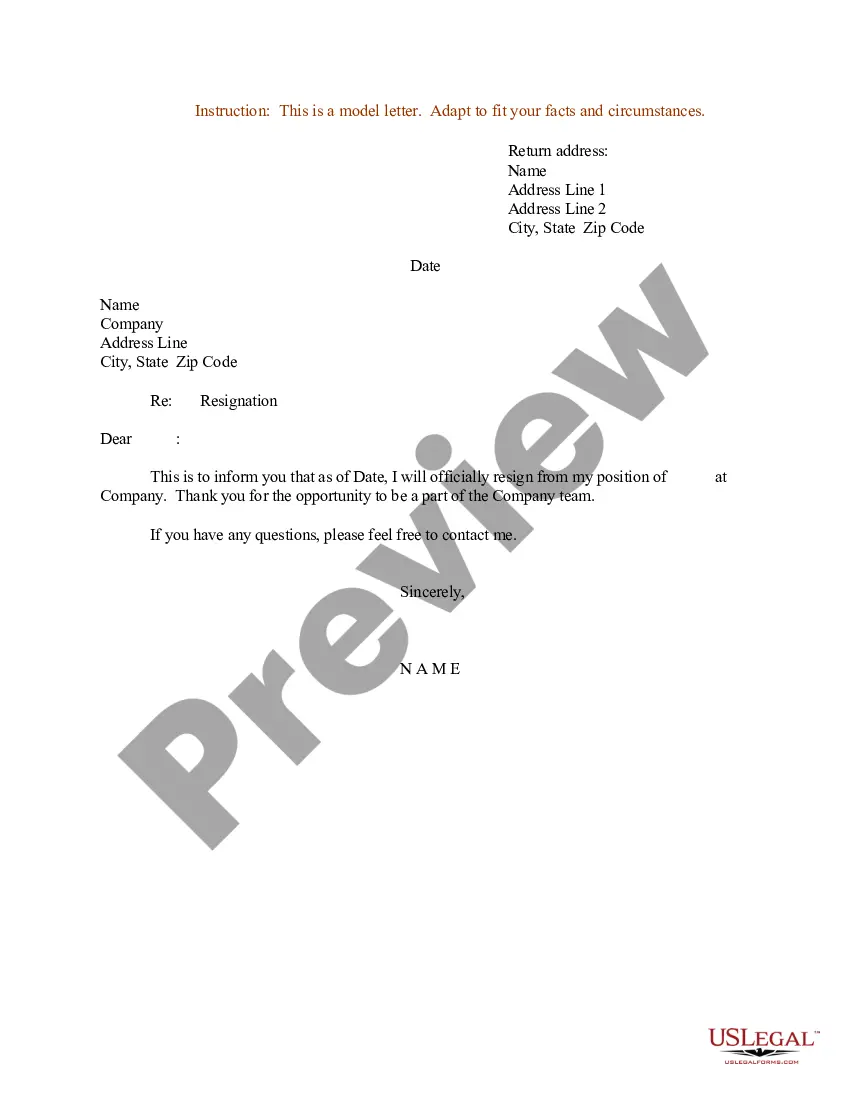
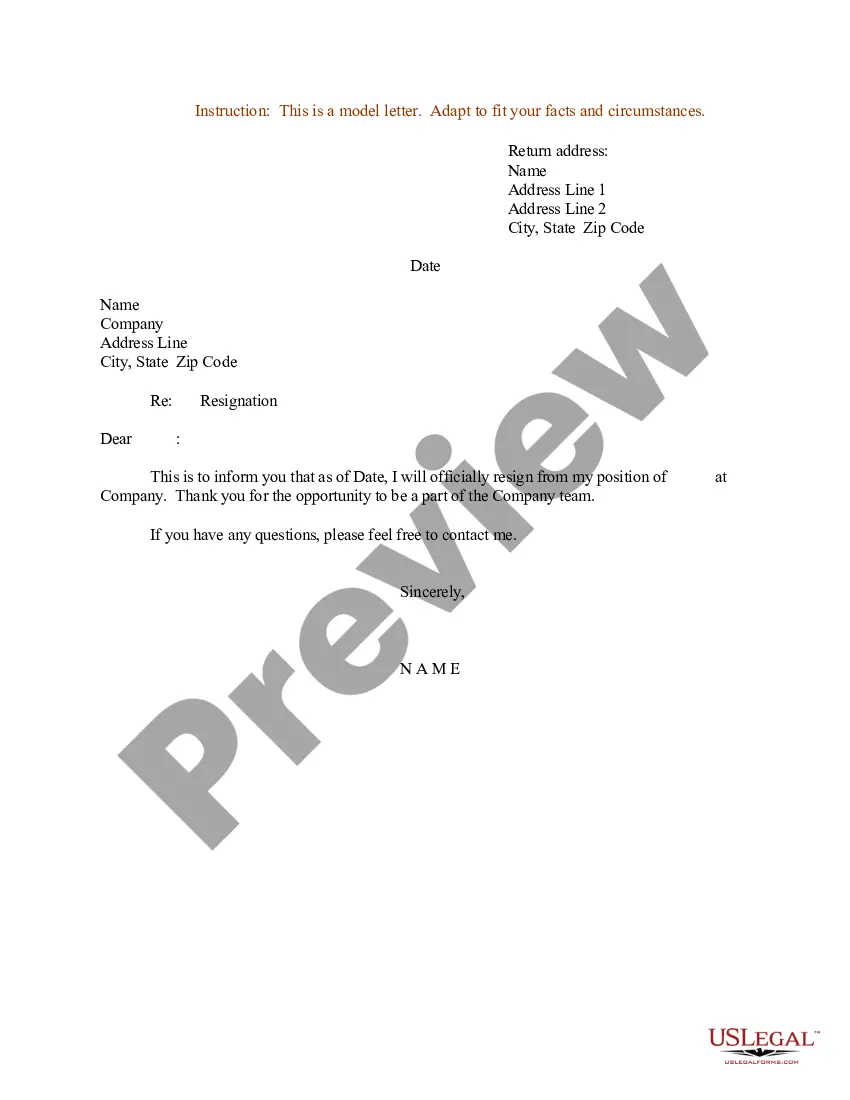
- Return address: Includes your name and contact details.
- Date: The date when the letter is written.
- Recipient's address: The name and address of the employer or supervisor.
- Subject line: Clearly states that this is a resignation letter.
- Opening statement: Expresses the intent to resign from the current position.
- Closing statement: Thanks the employer and expresses hope for a smooth transition.
When to use this form
This resignation letter is used when an employee is transitioning to a new role within the same organization. It is appropriate in scenarios such as accepting a job offer for a different position, aiming for career advancement, or simply seeking a change in responsibilities while remaining part of the same company. Submitting this form helps formalize the process and ensures clear communication with management.
Who this form is for
- Current employees seeking to change positions within their organization.
- Individuals aiming to formalize their transition to a new role.
- Workers looking to maintain a positive relationship with their employer during job changes.
How to prepare this document
- Identify the sender: Enter your name and contact information at the top of the letter.
- Enter the date: Write the current date below your address.
- Provide the recipient's information: Fill in the name and address of your supervisor or HR department.
- State your intention: Clearly express your decision to resign from your current position.
- Express gratitude: Thank your employer for the opportunities received during your time in the role.
- Sign the letter: Add your signature at the bottom to make it official.
Is notarization required?
This form does not typically require notarization unless specified by local law. However, it is advisable to check company policies regarding submission.
Get your form ready online
Our built-in tools help you complete, sign, share, and store your documents in one place.
Make edits, fill in missing information, and update formatting in US Legal Forms—just like you would in MS Word.
Download a copy, print it, send it by email, or mail it via USPS—whatever works best for your next step.
Sign and collect signatures with our SignNow integration. Send to multiple recipients, set reminders, and more. Go Premium to unlock E-Sign.
If this form requires notarization, complete it online through a secure video call—no need to meet a notary in person or wait for an appointment.
We protect your documents and personal data by following strict security and privacy standards.

Make edits, fill in missing information, and update formatting in US Legal Forms—just like you would in MS Word.

Download a copy, print it, send it by email, or mail it via USPS—whatever works best for your next step.

Sign and collect signatures with our SignNow integration. Send to multiple recipients, set reminders, and more. Go Premium to unlock E-Sign.

If this form requires notarization, complete it online through a secure video call—no need to meet a notary in person or wait for an appointment.

We protect your documents and personal data by following strict security and privacy standards.
Mistakes to watch out for
- Not addressing the letter to the correct individual.
- Using vague language instead of clearly stating the intention to resign.
- Forgetting to include the date of submission.
- Neglecting to thank the employer for their support during employment.
- Failing to proofread the letter for spelling and grammatical errors.
Benefits of using this form online
- Convenience: Download and complete the letter at your convenience without scheduling in-person consultations.
- Editability: Customize the template to fit your specific circumstances and tone.
- Reliability: Rely on professionally drafted content to ensure clarity and legal appropriateness.
Looking for another form?

Form popularity
FAQ
You: Hi Tim, thank you for meeting with me. Boss: Sure. You: Well, I'm planning to give my two week's notice tomorrow. Boss: Oh no! You: Well, I've had some great opportunities here. Boss: I'm so sorry to hear that.
You: Hi Tim, thank you for meeting with me. Boss: Sure. You: Well, I'm planning to give my two week's notice tomorrow. Boss: Oh no! You: Well, I've had some great opportunities here. Boss: I'm so sorry to hear that.
Include a header. Address the recipient. Make a clear statement of resignation. Specify the last day of your employment. Provide a reason for your departure. Make a statement of gratitude. Detail your next steps. Offer to help.
Text, Call, Email or in-person? In person, by handing your boss a simple letter of resignation. Address the letter to your boss. First line: I should like to resign my position with XYZ Company. Second line: My last day will be (date). That's all.
To save your boss time, type a resignation letter yourself and present it to your manager. Offer at least two weeks' notice. Even though you've only been with the company for a short period of time, giving two weeks' notice is appropriate. (Some companies even have a set policy for how many weeks' notice is required.)
Include a header. Address the recipient. Make a clear statement of resignation. Specify the last day of your employment. Provide a reason for your departure. Make a statement of gratitude. Detail your next steps. Offer to help.
Request an in-person meeting. Outline your reasons for quitting. Give at least two weeks' notice. Offer to facilitate position transition. Express gratitude. Provide constructive feedback. Provide your formal letter of resignation.
Potential employers may also scan your profile and consider your lack of discretion a trait they'd prefer to avoid in a new hire. Deciding to tell your boss you're job hunting is an incredibly personal and definitely case-by-case decision.