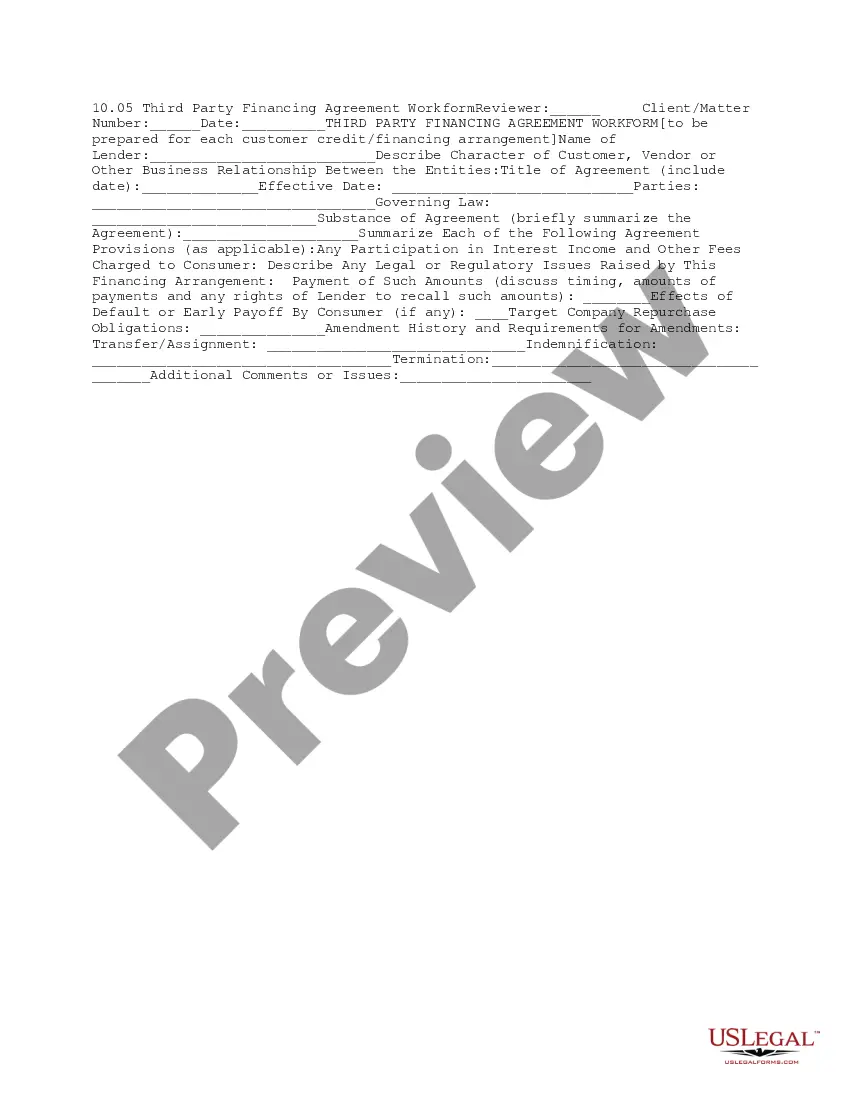
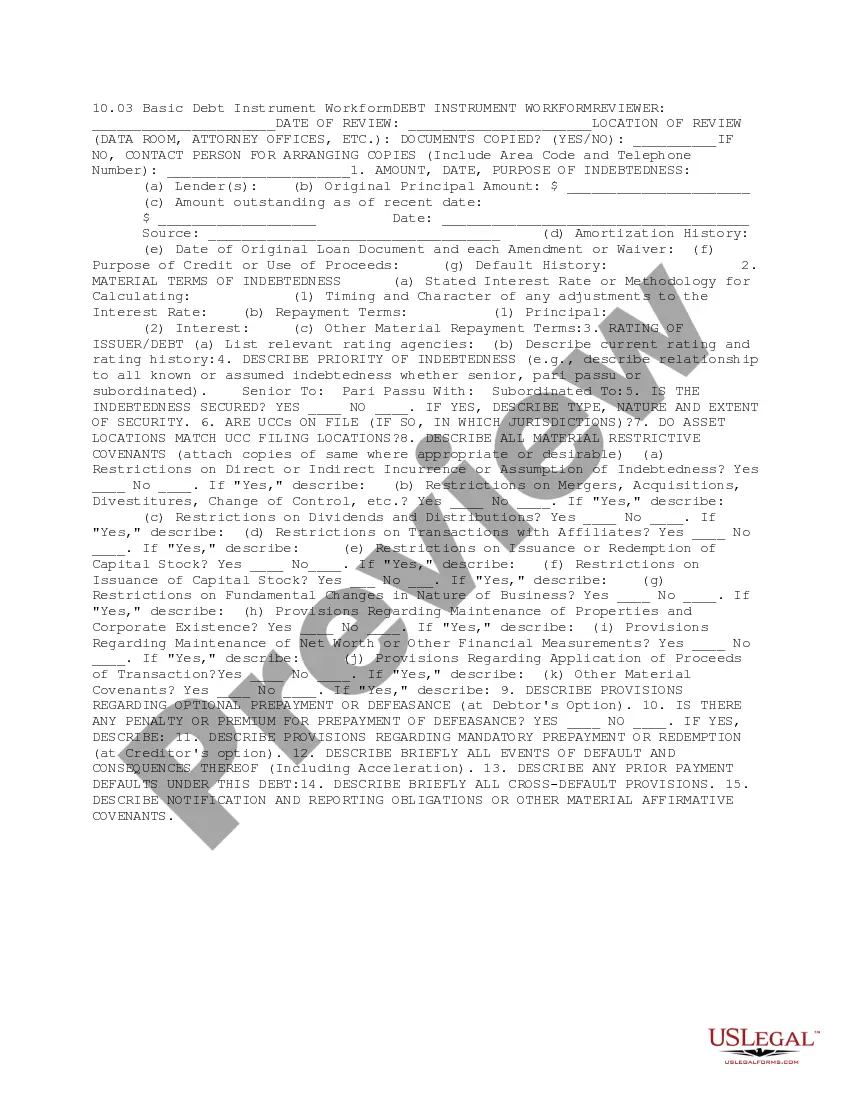
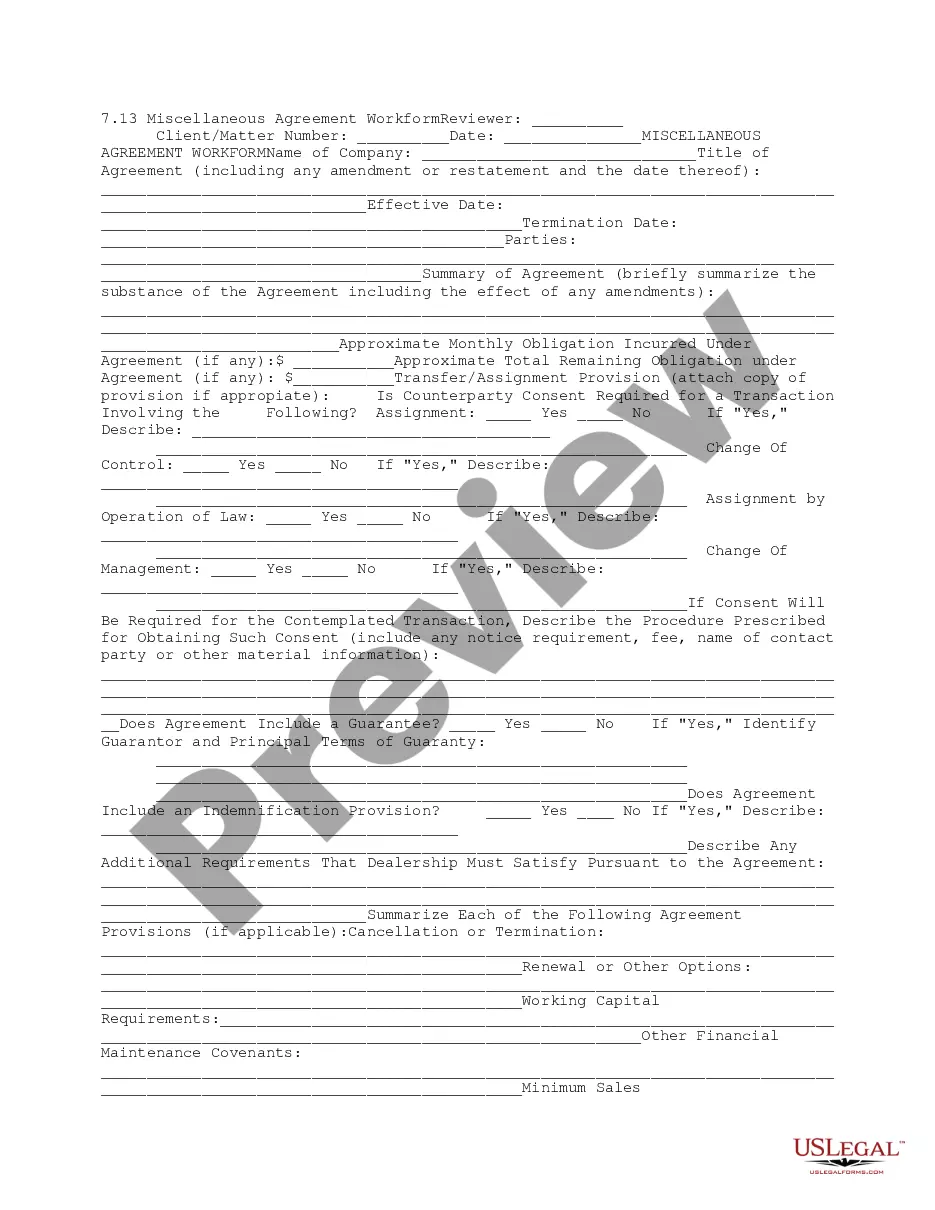
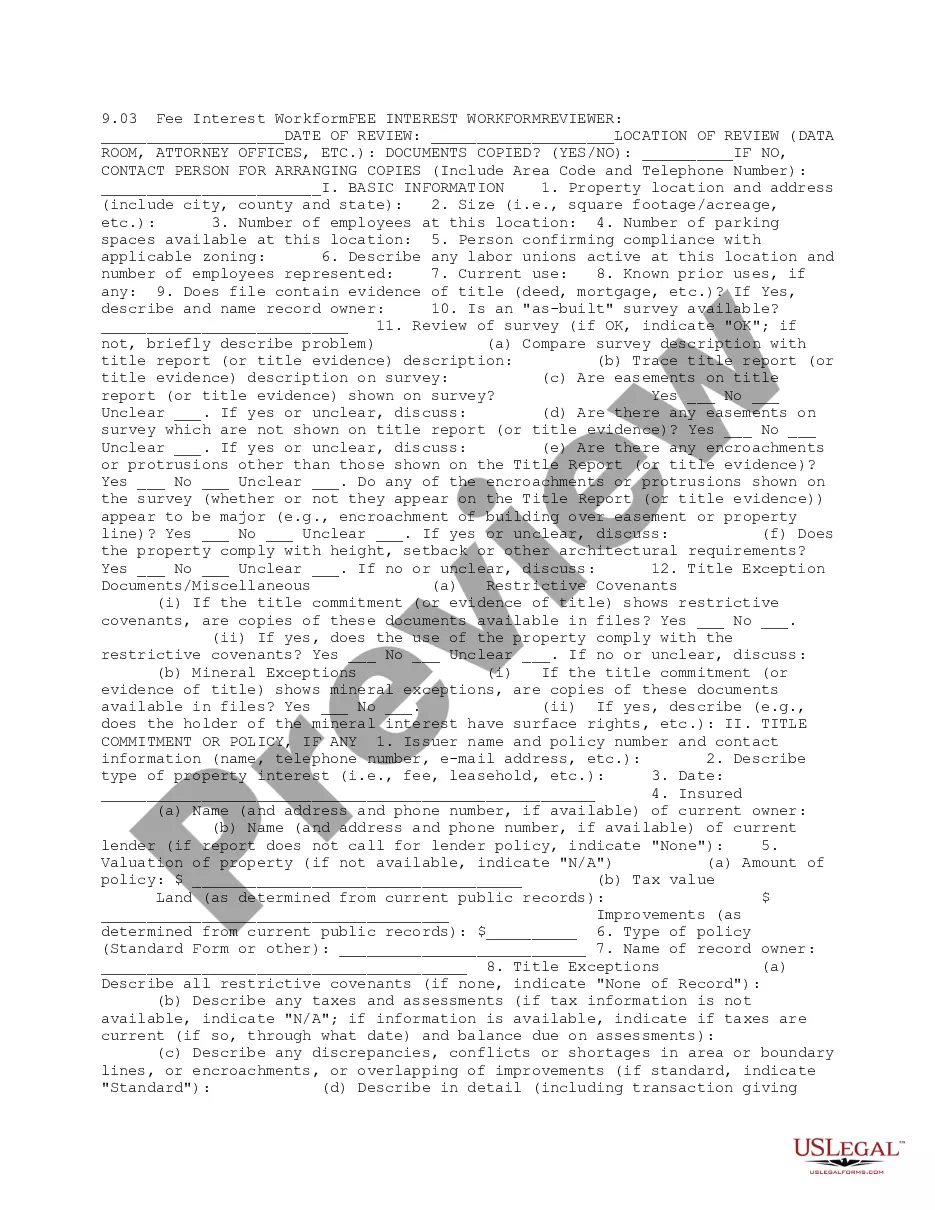
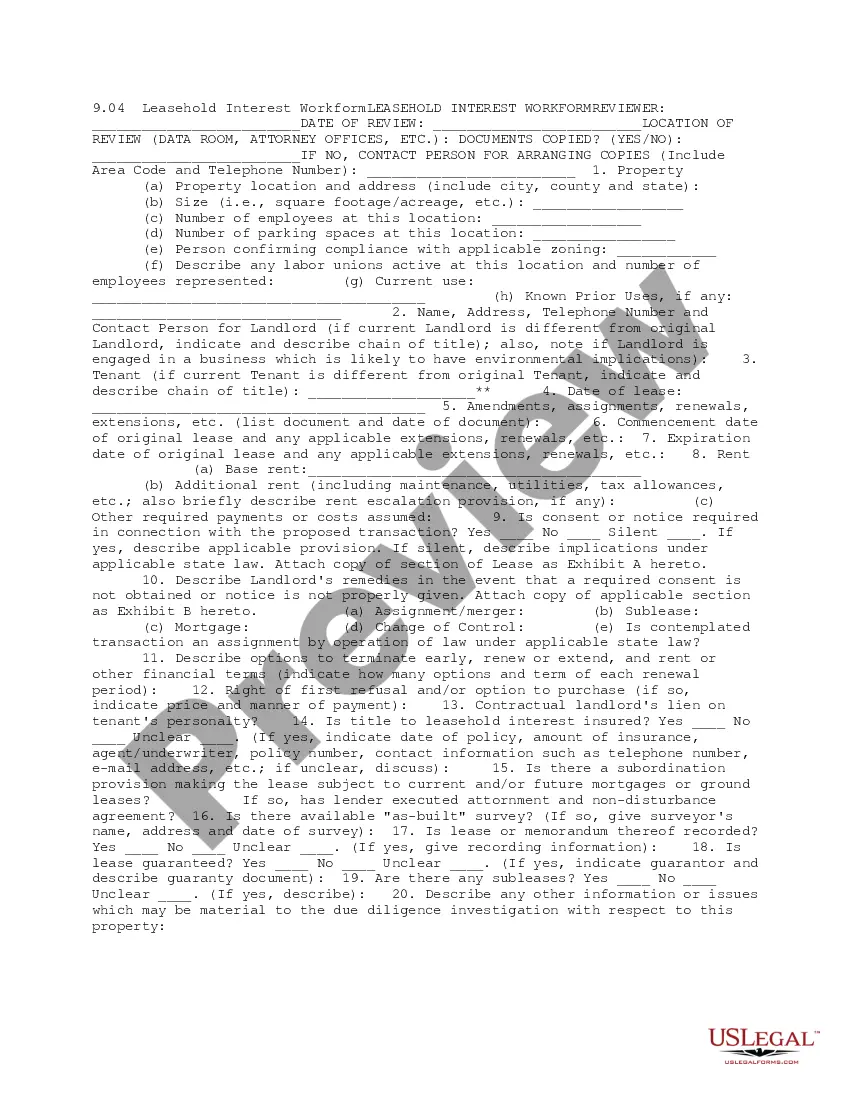
Texas Third Party Financing Agreement Workform
Description
Get your form ready online
Our built-in tools help you complete, sign, share, and store your documents in one place.
Make edits, fill in missing information, and update formatting in US Legal Forms—just like you would in MS Word.
Download a copy, print it, send it by email, or mail it via USPS—whatever works best for your next step.
Sign and collect signatures with our SignNow integration. Send to multiple recipients, set reminders, and more. Go Premium to unlock E-Sign.
If this form requires notarization, complete it online through a secure video call—no need to meet a notary in person or wait for an appointment.
We protect your documents and personal data by following strict security and privacy standards.

Make edits, fill in missing information, and update formatting in US Legal Forms—just like you would in MS Word.

Download a copy, print it, send it by email, or mail it via USPS—whatever works best for your next step.

Sign and collect signatures with our SignNow integration. Send to multiple recipients, set reminders, and more. Go Premium to unlock E-Sign.

If this form requires notarization, complete it online through a secure video call—no need to meet a notary in person or wait for an appointment.

We protect your documents and personal data by following strict security and privacy standards.
Looking for another form?


How to fill out Third Party Financing Agreement Workform?
You can spend countless hours online trying to locate the legal document template that meets the federal and state requirements you need.
US Legal Forms provides a wide variety of legal templates that are vetted by professionals.
You can readily obtain or create the Texas Third Party Financing Agreement Workform from our offerings.
If available, utilize the Review button to browse through the document template as well. If you need to find another version of the form, use the Research field to search for the template that meets your needs and specifications.
- If you already possess a US Legal Forms account, you can Log In and then click the Download button.
- Afterward, you can fill out, modify, print, or sign the Texas Third Party Financing Agreement Workform.
- Every legal document template you acquire is yours to keep permanently.
- To obtain another copy of a purchased form, navigate to the My documents tab and click the corresponding button.
- If you are using the US Legal Forms site for the first time, follow the simple instructions below.
- First, ensure you have selected the correct document template for your region/city of choice.
- Check the form description to make sure you have selected the proper form.
Form popularity
FAQ
The Broker Lawyer Committee, the State Forms Committee, and TREC Trela all play a role in promulgating forms for Texas licensees. Each entity has specific responsibilities that contribute to creating and updating essential real estate documents. This collaborative approach ensures that forms remain relevant and legally sound. The Texas Third Party Financing Agreement Workform is an example of a document that benefits from this oversight.
Which of the following is TRUE under the TREC Third Party Financing Addendum? The contract terminates if the buyer timely notifies the seller that the buyer was unable to get buyer approval.
The answer is seller financing. Which of the following is not included in the legal description in paragraph 2 of the One to Four Family Residential Contract? The answer is name and marital status of the parties.
What happens if buyer's credit is not approved under the TREC Third Party Financing Addendum for Credit Approval, and the buyer gives timely notice to the seller? The answer is the contract will terminate and the buyer will get the earnest money.
Which of the following types of financing is not addressed in the TREC Third Party Financing Addendum for Credit Approval? The answer is reverse mortgage financing. The forms specifically state that the addendum is not to be used for reverse mortgage financing.
The Third Party Financing Addendum is designed to limit the maximum amount of interest and loan fees that a buyer would be obligated to pay as part of his loan contingency.
What part of the Third Party Financing Addendum for Credit Approval specifically pertains to people getting FHA or VA loans? Paragraph D of the Third Party Financing Addendum for Credit Approval concerns FHA and VA loans.
The SBA defines the Third-Party Loan as a loan from a commercial or private lender, investor, or Federal (non-SBA), State, or local government source that is part of the project financing. So while it's rare, the Third-Party Loan could be from an individual or government source.
What is Third-Party Financing (TPF)? The Third-Party Financing refers solely to debt financing. The project financing comes from a third party, usually a financial institution or other investor, or the ESCO, which is not the user or customer.