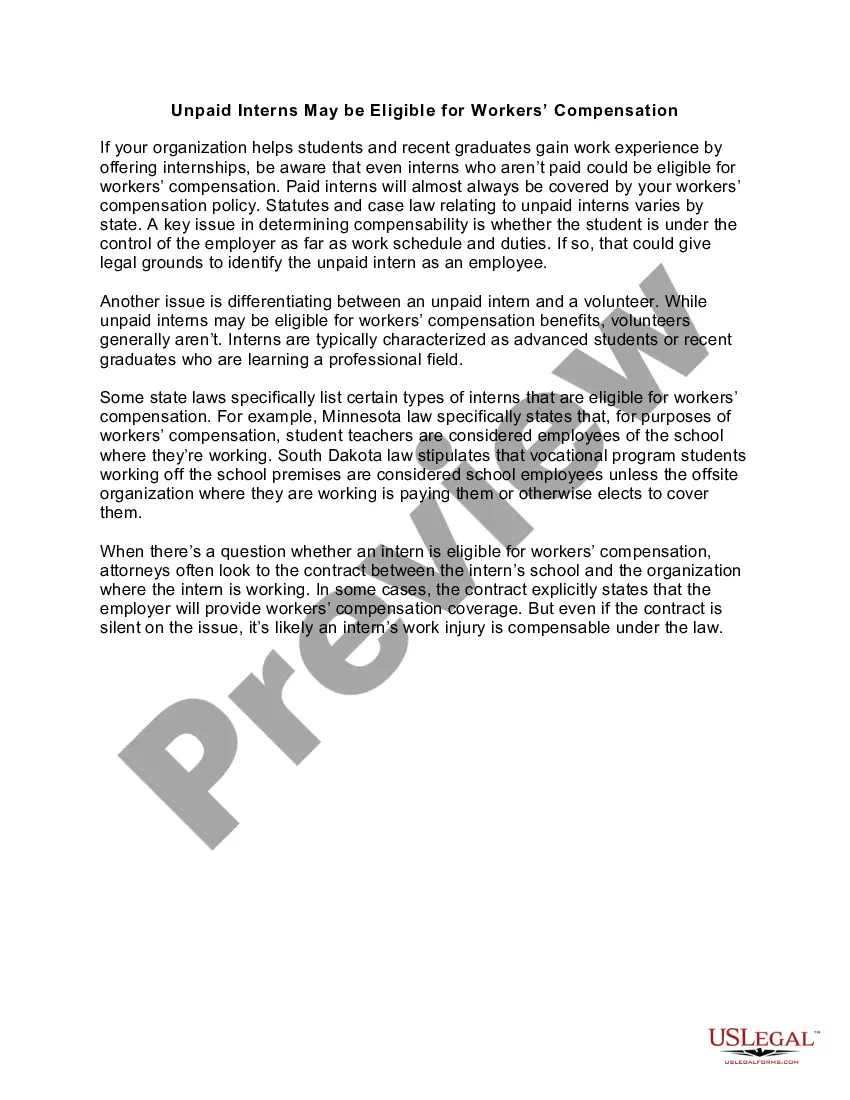
Texas Unpaid Interns May be Eligible for Worker's Compensation
Description
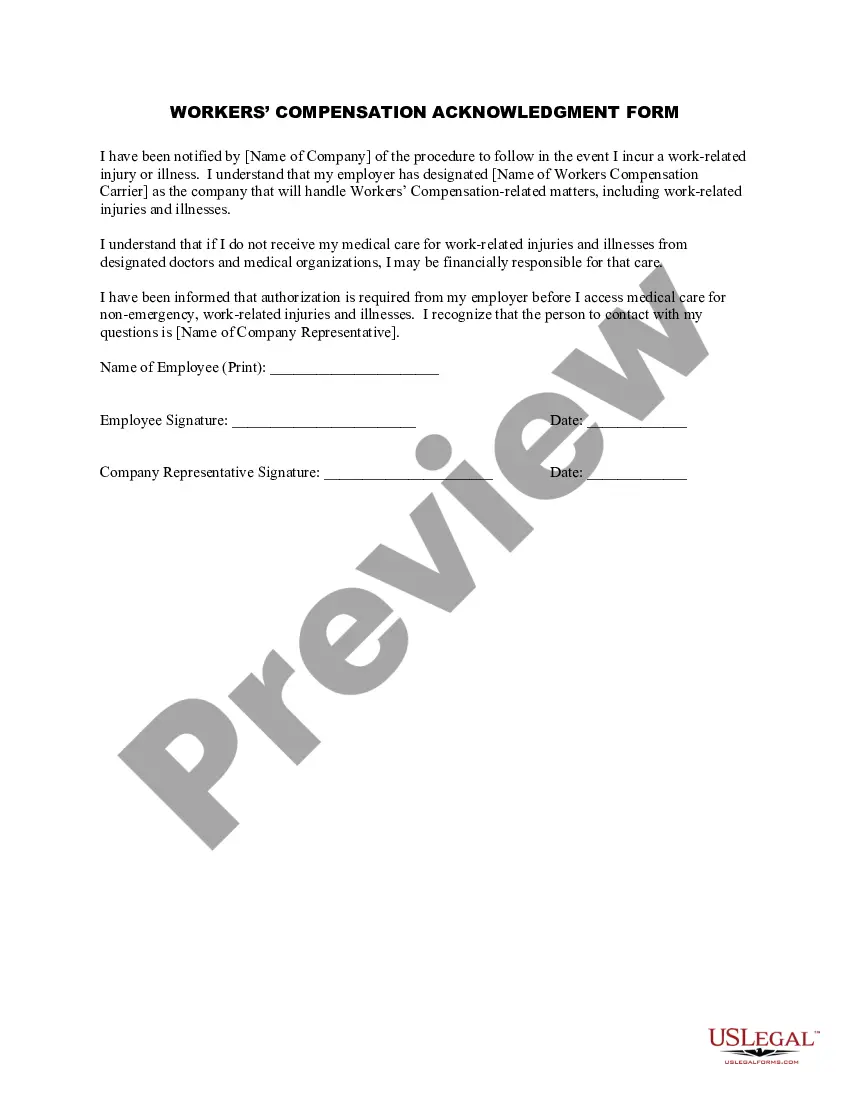
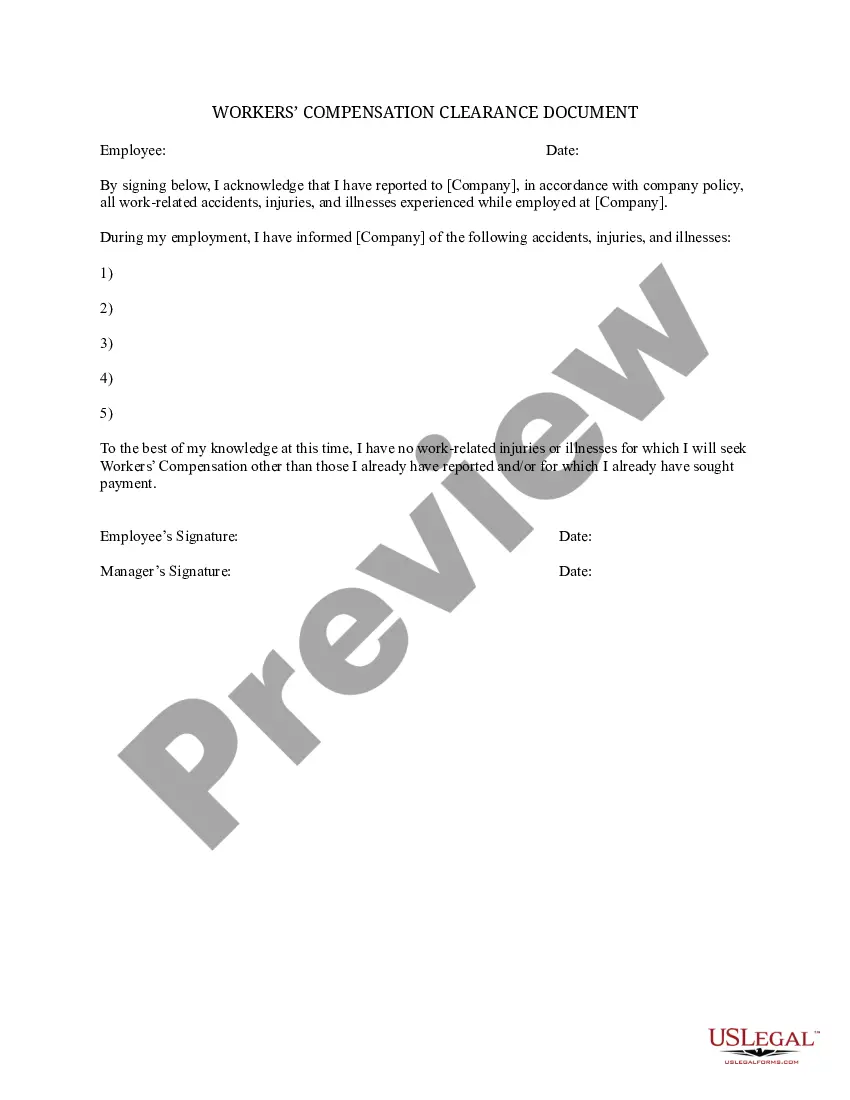
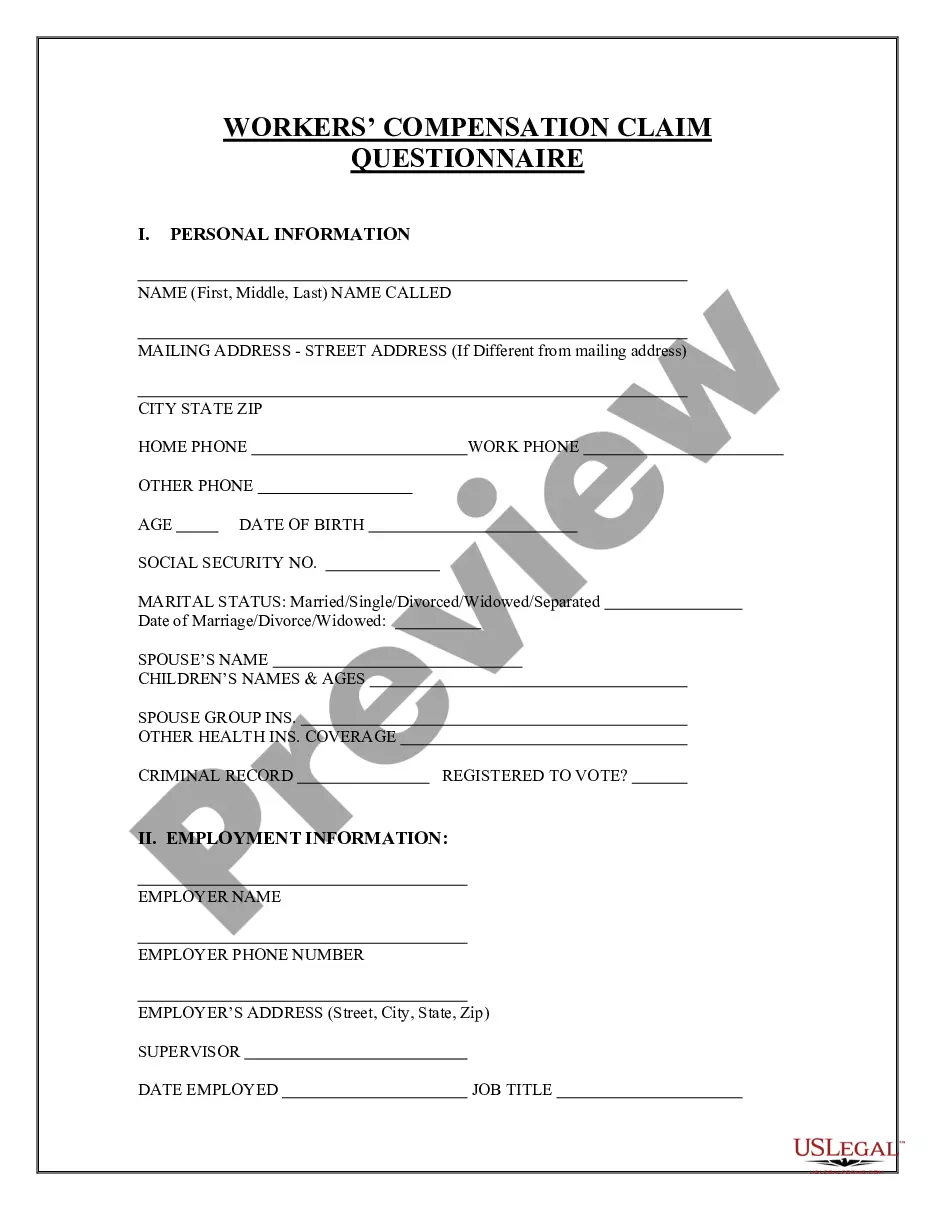
Get your form ready online
Our built-in tools help you complete, sign, share, and store your documents in one place.
Make edits, fill in missing information, and update formatting in US Legal Forms—just like you would in MS Word.
Download a copy, print it, send it by email, or mail it via USPS—whatever works best for your next step.
Sign and collect signatures with our SignNow integration. Send to multiple recipients, set reminders, and more. Go Premium to unlock E-Sign.
If this form requires notarization, complete it online through a secure video call—no need to meet a notary in person or wait for an appointment.
We protect your documents and personal data by following strict security and privacy standards.

Make edits, fill in missing information, and update formatting in US Legal Forms—just like you would in MS Word.

Download a copy, print it, send it by email, or mail it via USPS—whatever works best for your next step.

Sign and collect signatures with our SignNow integration. Send to multiple recipients, set reminders, and more. Go Premium to unlock E-Sign.

If this form requires notarization, complete it online through a secure video call—no need to meet a notary in person or wait for an appointment.

We protect your documents and personal data by following strict security and privacy standards.
Looking for another form?

How to fill out Unpaid Interns May Be Eligible For Worker's Compensation?
Are you presently in a situation where you need documents for either professional or personal reasons almost every business day.
There are numerous legal document templates available online, but finding reliable ones isn't simple.
US Legal Forms offers thousands of template forms, such as the Texas Unpaid Interns May be Eligible for Worker's Compensation, that are designed to meet state and federal requirements.
Once you obtain the correct form, simply click Buy now.
Select the payment plan you desire, complete the necessary information to create your account, and pay for your purchase using your PayPal or Visa or Mastercard.
- If you are already familiar with the US Legal Forms website and have an account, simply Log In.
- After that, you can download the Texas Unpaid Interns May be Eligible for Worker's Compensation template.
- If you do not have an account and wish to start using US Legal Forms, follow these instructions.
- Locate the form you need and ensure it corresponds to the correct state/region.
- Utilize the Preview button to examine the document.
- Review the summary to confirm that you have selected the right form.
- If the form isn’t what you’re looking for, use the Search area to find the form that meets your needs and requirements.
Form popularity
FAQ
There are no legal limits on the number of hours an unpaid intern over the age of 18 is allowed to work. For undergraduate students still in school, unpaid internship hours per week are usually limited to 10 to 20.
Unpaid internships are legal if the intern is the primary beneficiary of the arrangement. This is determined by the seven-point Primary Beneficiary Test. If an employer is the primary beneficiary, the intern is considered an employee under the Fair Labor Standards Act and entitled to minimum wage.
Accordingly, interns whether paid or unpaid are eligible for workers' compensation benefits in most cases.
Workers' compensation laws apply a broad definition of the word employee and may cover interns regardless of whether they are paid or not. Accordingly, interns whether paid or unpaid are eligible for workers' compensation benefits in most cases.
If an intern is placed with the employer for a trial period with the expectation that he or she will then be hired on a permanent basis, that individual generally would be considered an employee under the FLSA.
If an intern is placed with the employer for a trial period with the expectation that he or she will then be hired on a permanent basis, that individual generally would be considered an employee under the FLSA. Internships can be valuable for both the business and the intern.
While interns are not eligible for most company benefits, those that qualify as employees under the FLSA are typically permitted to participate according to the organization's standard eligibility requirements. An exception exists under current federal health insurance regulations.
Unpaid Interns Interns are usually college students or recent graduates who work for a company on a temporary basis, often for academic credit. A company cannot be the primary beneficiary; an intern should not be replacing the work of an employee because the internship is for education and training purposes.
If you don't get the opportunity to ask those questions during or after the interview, consider doing so via email. Let them know how much you appreciate their time and ask if you can follow up with a few questions. At this point, simply ask them whether the internship is paid or unpaid.
Sole proprietors, business partners, corporate officers, and members of limited liability companies may exempt themselves. Overall, it is estimated that 91% of Illinois employees are covered under the Act.