Financial Support Agreement -- Guaranty of Obligation
What this document covers
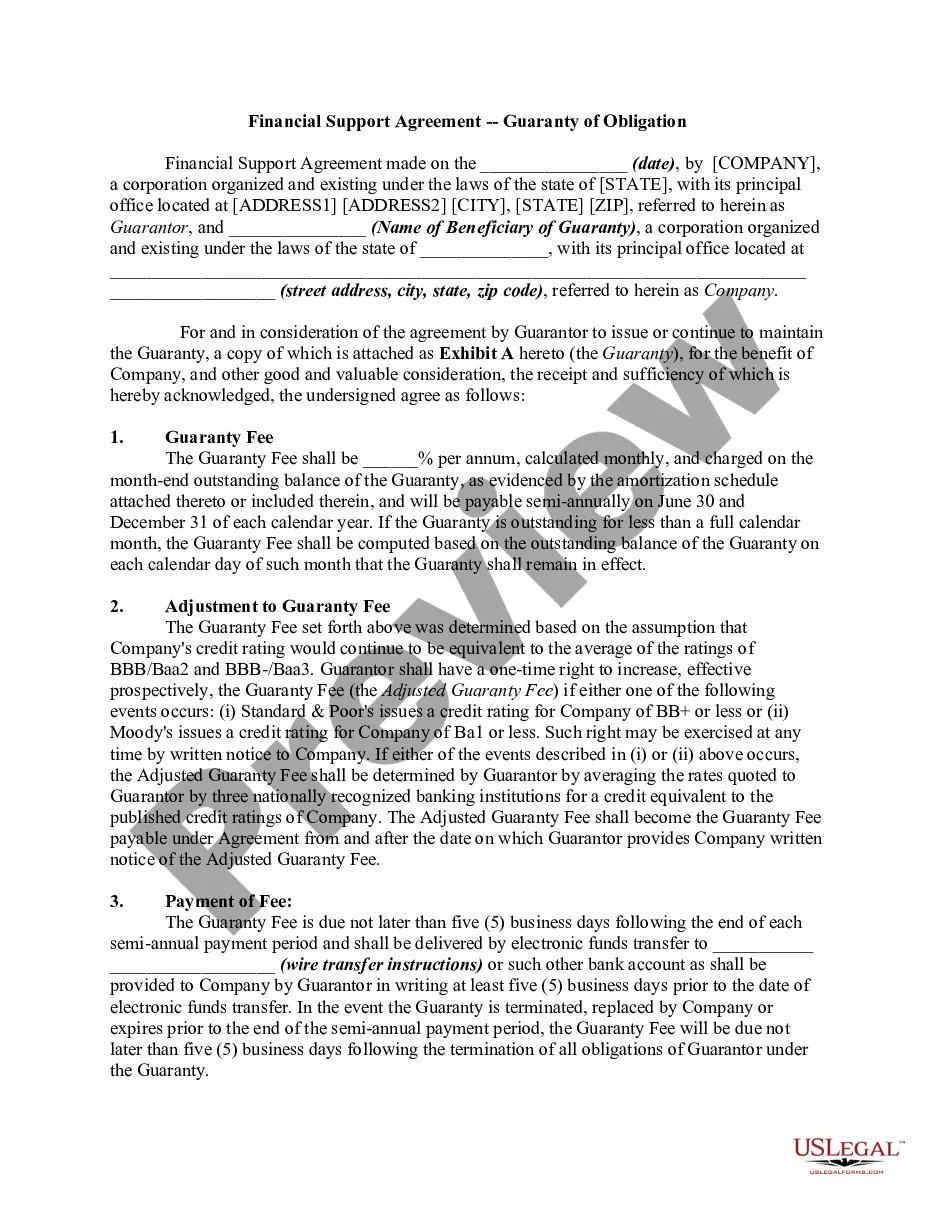
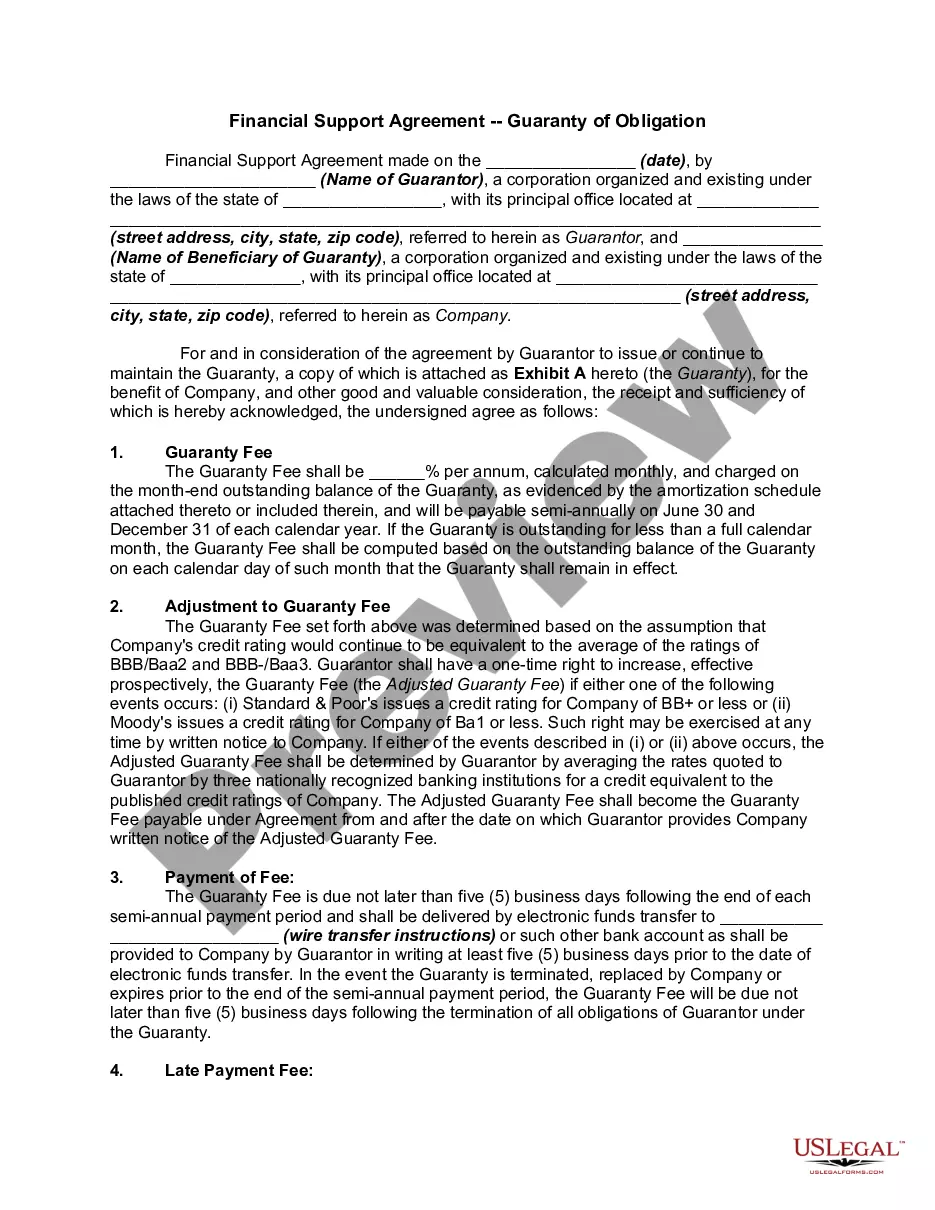
The Financial Support Agreement -- Guaranty of Obligation is a legal document in which one corporation, known as the Guarantor, agrees to provide financial assistance to another corporation (the Company) by guaranteeing certain debts. This agreement outlines the terms of the financial support, including the guaranty fee charged to the Company for the service rendered. Unlike traditional loan agreements, this financial support agreement centers around the guarantee of obligation rather than a direct loan, making it suitable for companies looking for security in their financial dealings.
Form components explained
- Identification of the Guarantor and the Company.
- Details of the Guaranty Fee, including calculation and payment terms.
- Conditions for adjustment of the Guaranty Fee based on credit ratings.
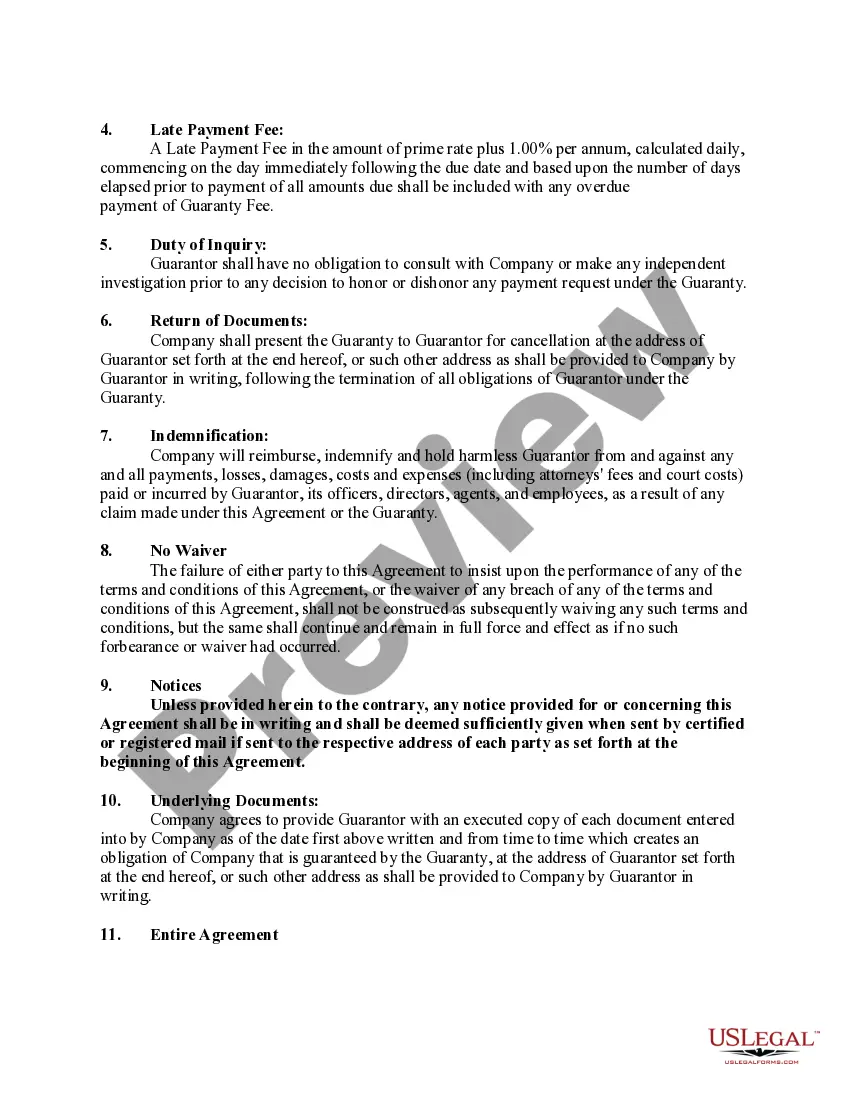
- Clauses regarding late fees and payment duties.
- Indemnification terms for the Guarantor.
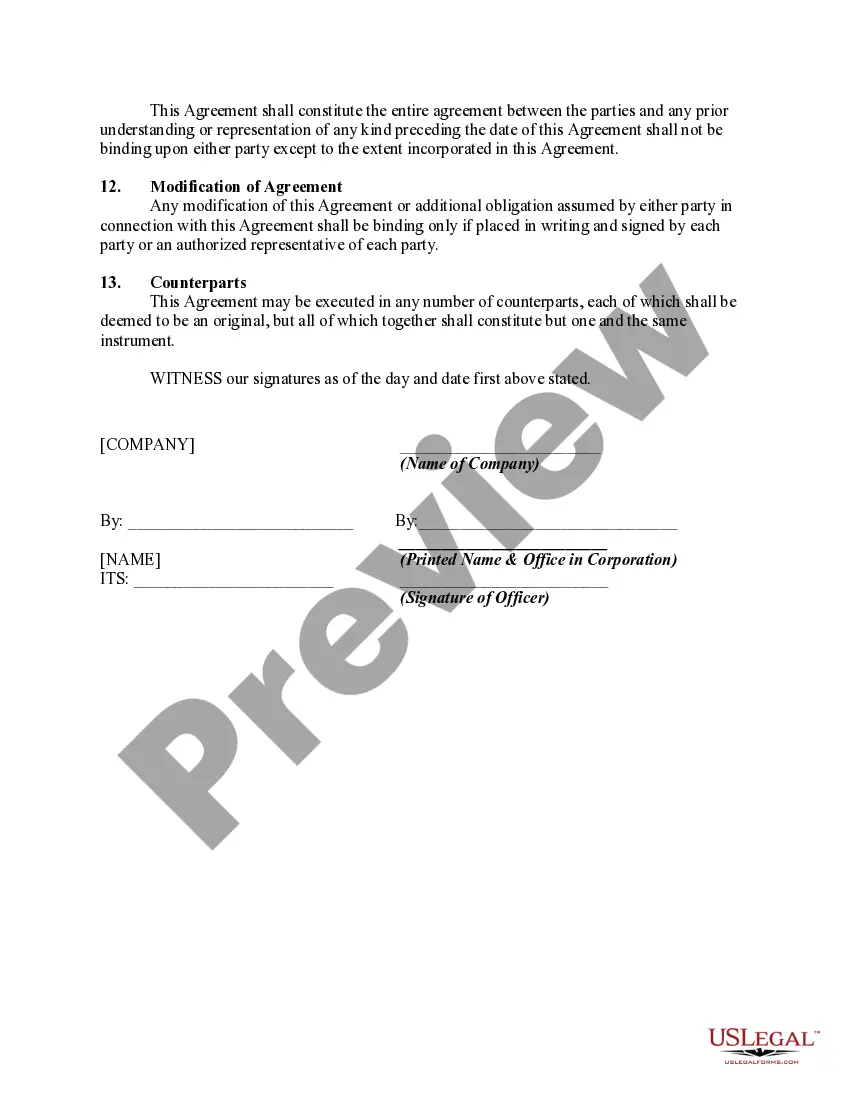
- Processes for terminating the agreement and returning documents.
Common use cases
This form is typically used when a corporation wants to secure financial support by obtaining a guarantee for its indebtedness from another corporation. Companies may seek to use this agreement when they need to reassure creditors that their debts will be honored, reducing lending risks. It is also suitable when the Company has a satisfactory credit rating but wants to ensure continued financial backing.
Who needs this form
- Corporations looking to secure a financial guarantee from another company.
- Businesses that require assurance for loans or obligations to third parties.
- Financial institutions that are evaluating the creditworthiness of corporate clients.
Instructions for completing this form
- Identify the parties involved: Enter the names, corporate status, and addresses of the Guarantor and the Company.
- Specify the date of the agreement at the top of the document.
- Fill in the Guaranty Fee and any adjustments based on credit rating conditions.
- Detail the payment instructions for the Guaranty Fee, including any electronic transfer details.
- Include signature lines for authorized representatives from both corporations.
Notarization requirements for this form
This form does not typically require notarization unless specified by local law. However, it is advisable to check local requirements to ensure compliance with any additional formalities.
Get your form ready online
Our built-in tools help you complete, sign, share, and store your documents in one place.
Make edits, fill in missing information, and update formatting in US Legal Forms—just like you would in MS Word.
Download a copy, print it, send it by email, or mail it via USPS—whatever works best for your next step.
Sign and collect signatures with our SignNow integration. Send to multiple recipients, set reminders, and more. Go Premium to unlock E-Sign.
If this form requires notarization, complete it online through a secure video call—no need to meet a notary in person or wait for an appointment.
We protect your documents and personal data by following strict security and privacy standards.

Make edits, fill in missing information, and update formatting in US Legal Forms—just like you would in MS Word.

Download a copy, print it, send it by email, or mail it via USPS—whatever works best for your next step.

Sign and collect signatures with our SignNow integration. Send to multiple recipients, set reminders, and more. Go Premium to unlock E-Sign.

If this form requires notarization, complete it online through a secure video call—no need to meet a notary in person or wait for an appointment.

We protect your documents and personal data by following strict security and privacy standards.
Common mistakes
- Failing to accurately identify the parties involved and their corporate structure.
- Not specifying the correct Guaranty Fee or missing the payment method details.
- Overlooking the requirement for signatures from authorized representatives.
Benefits of completing this form online
- Convenient access: Downloadable legal forms allow for quick completion.
- Editability: Users can fill out and customize the form to reflect specific agreements.
- Reliability: All forms are drafted by licensed attorneys, ensuring legal compliance.
Legal use & context
- The agreement establishes a legally binding commitment from the Guarantor to cover the Company's indebtedness.
- It is essential in corporate finance, particularly for businesses with fluctuating credit ratings.
- Understanding the terms of the agreement ensures all parties are aware of their obligations and rights.
Looking for another form?
Form popularity
FAQ
If you are a guarantor for home loan, you can request to recover the amount by liquidating the property. A refusal to repay the loan, gives bank the right to take legal actions. In extreme cases, bank may seek the possession of your property to recover its dues.
A secondary obligation A guarantee is a promise by one party (the guarantor) to another party (the guaranteed party) to be responsible for the due performance of the obligations of another party (the principal) to the guaranteed party if the principal fails to perform such obligations.
The Guarantor hereby unconditionally and irrevocably guarantees to the Beneficiaries the payment and performance of all of the Obligations, together with interest thereon as provided in Section 5.4. Guarantee of Obligations.
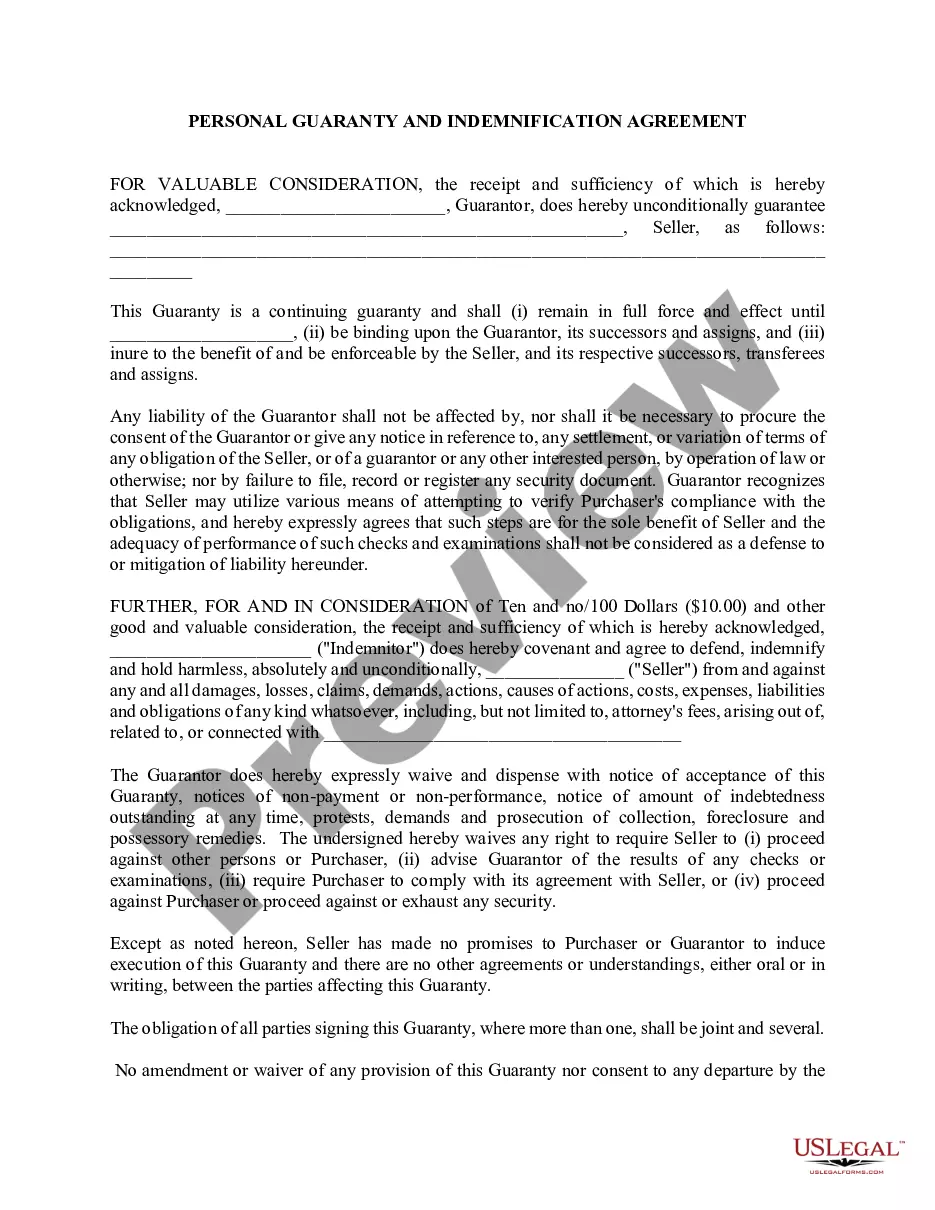
A guaranty agreement is a contract between two parties where one party agrees to pay a debt or perform a duty in the event that the original party fails to do so. The party who makes the guaranty is called the guarantor. An agreement of this nature is often used in real estate, insurance, or financial transactions.
A guaranty clause can take many forms; a primary example is a loan agreement that is co-signed, which can signify a guaranty from the co-signer to a specific amount, even if the loan agreement does not use a specific "guarantor" title.
A guaranty can be thought as a collateral to a primary or principal obligation from the guarantor to perform. In a finance or lending context, a guarantor would be forced to answer for the debt or default of the debtor to the creditor, if a debtor does not fulfill an obligation on their part to repay their debt.
A guarantee is a promise by one party (the guarantor) to another party (the guaranteed party) to be responsible for the due performance of the obligations of another party (the principal) to the guaranteed party if the principal fails to perform such obligations.
The "guarantor" is the person guarantying the debt while the party who originally incurred the debt is the "principle" and the creditor is the "guaranteed party." Under California law, if properly drafted, a guaranty is a fully enforceable obligation which allows the guaranteed party to proceed directly against the