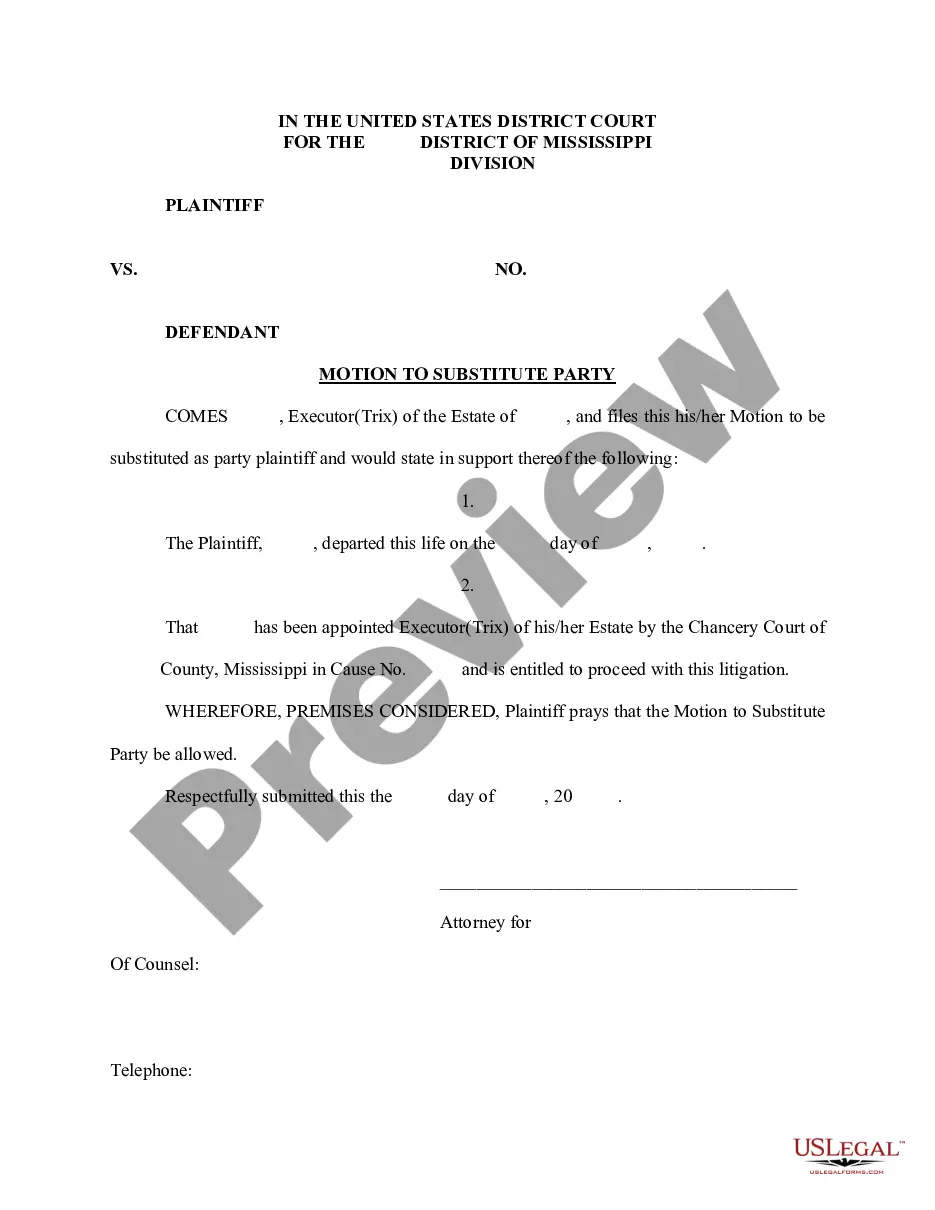
Louisiana Motion to Require State to Reveal Any Agreement Entered Into Between State and Any Prosecution Witnesses
What is this form?
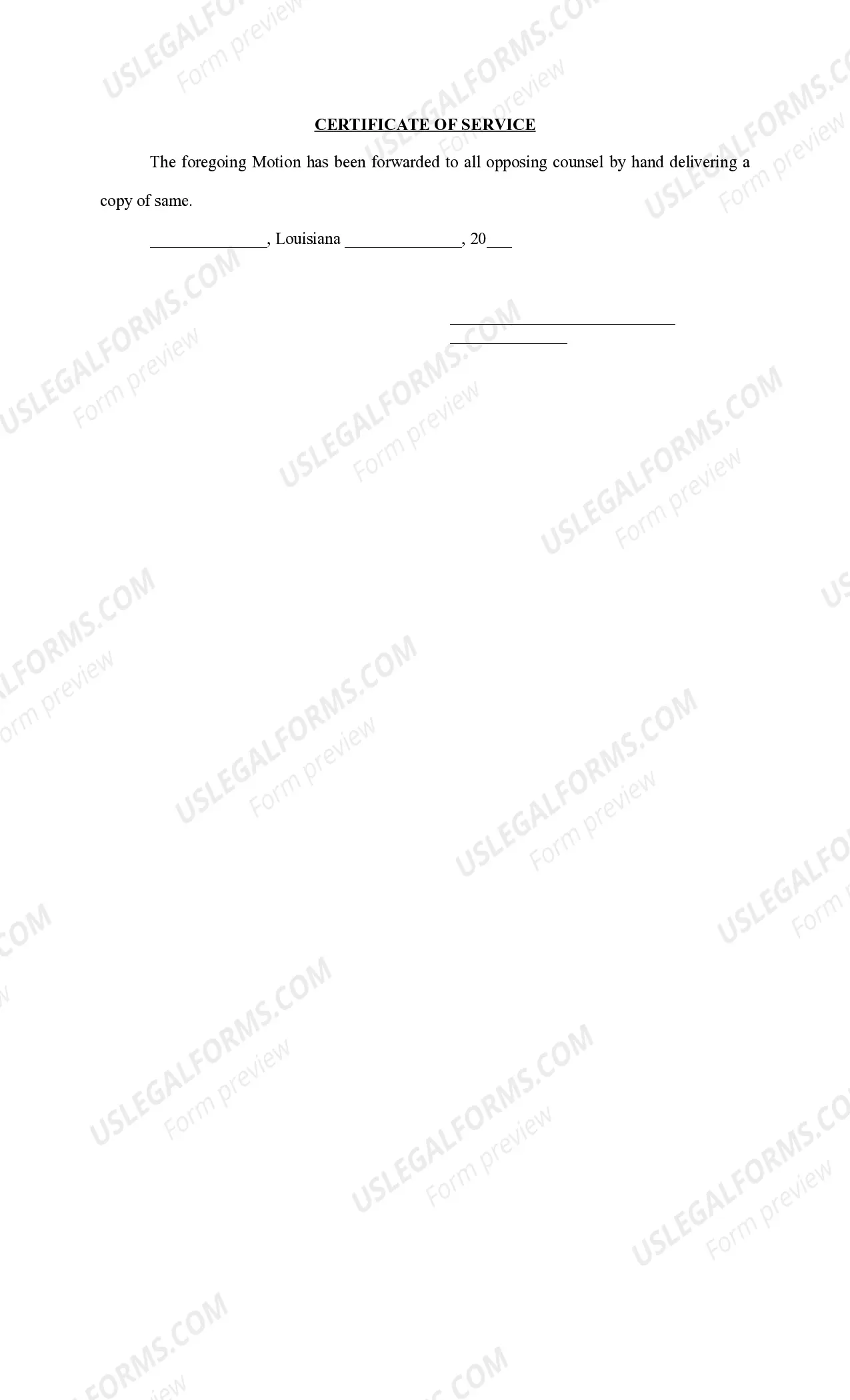
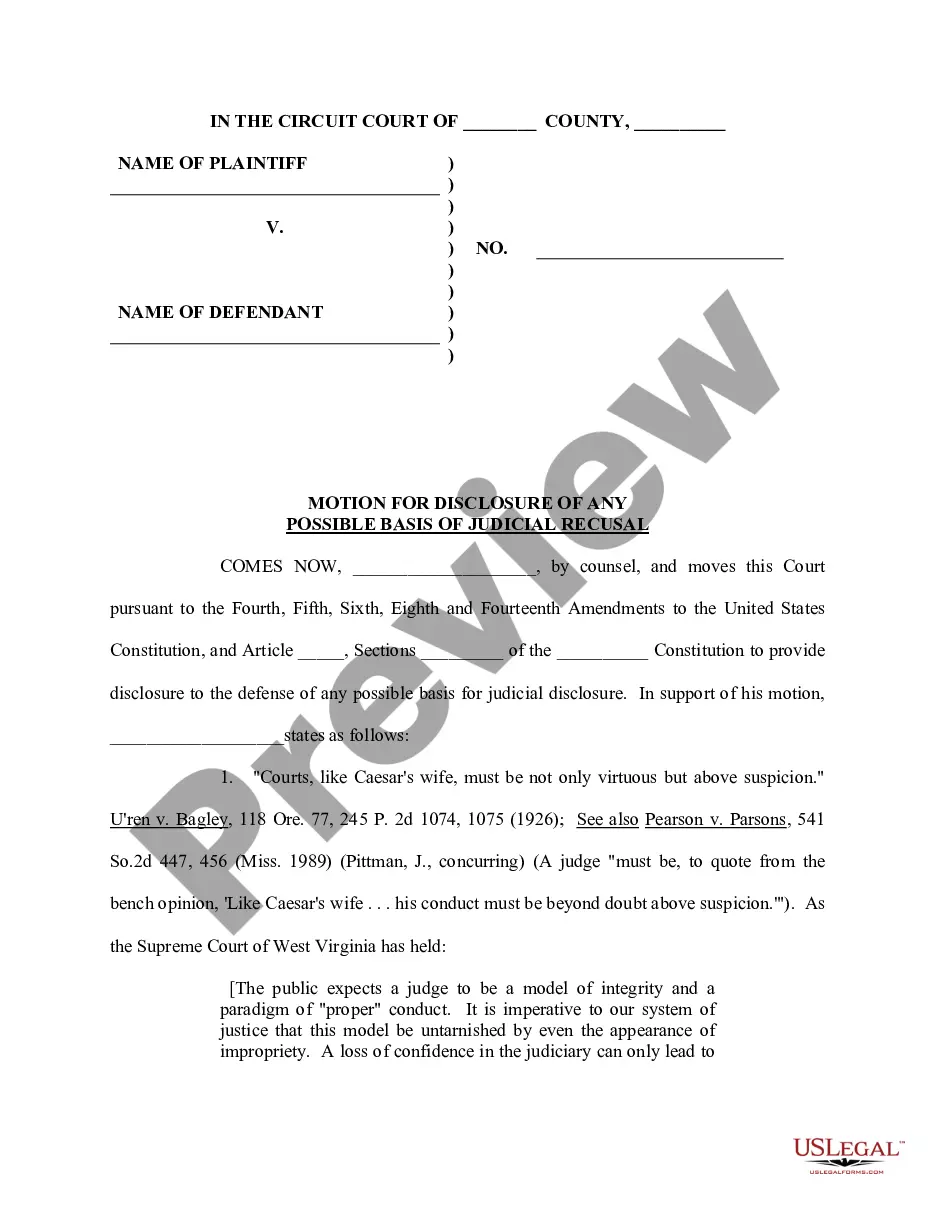
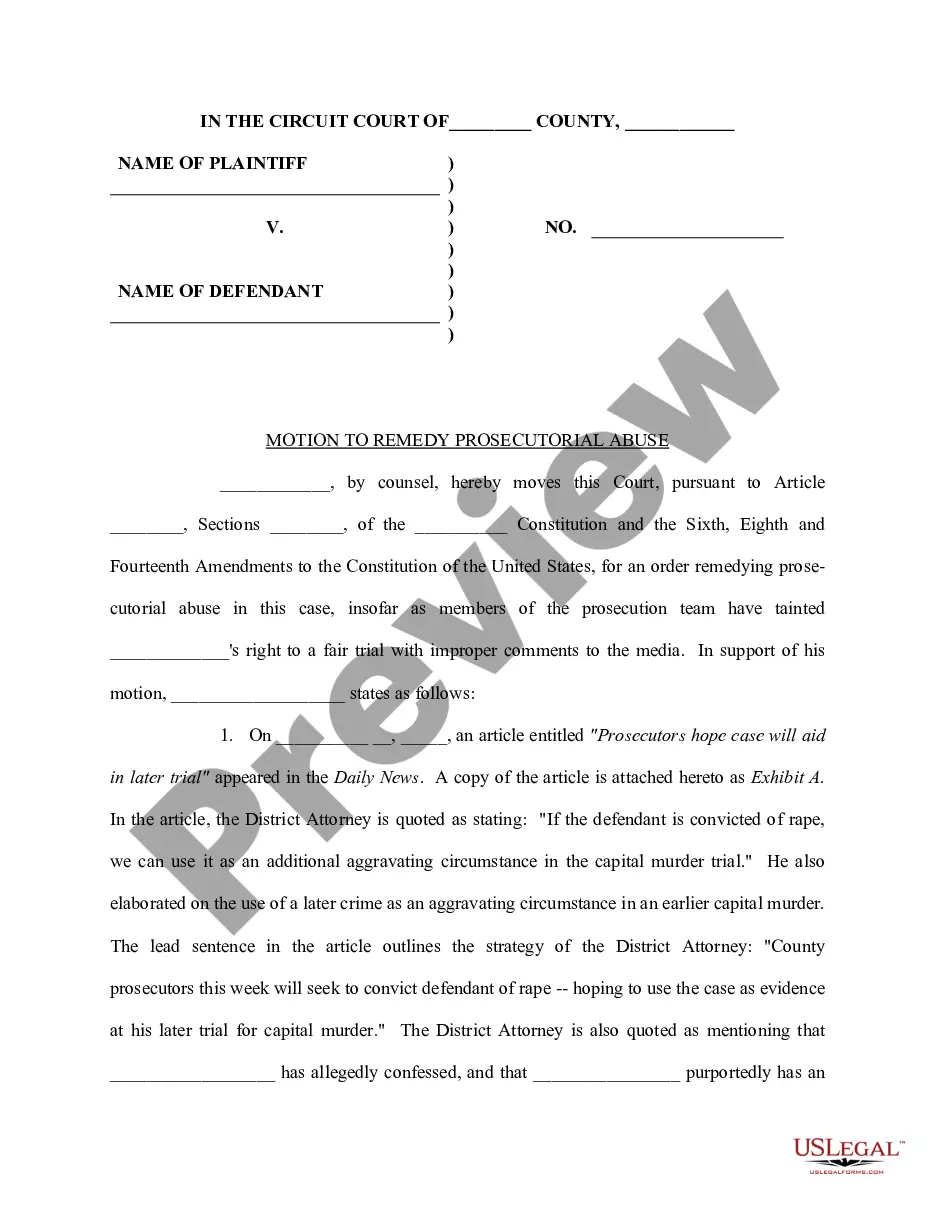
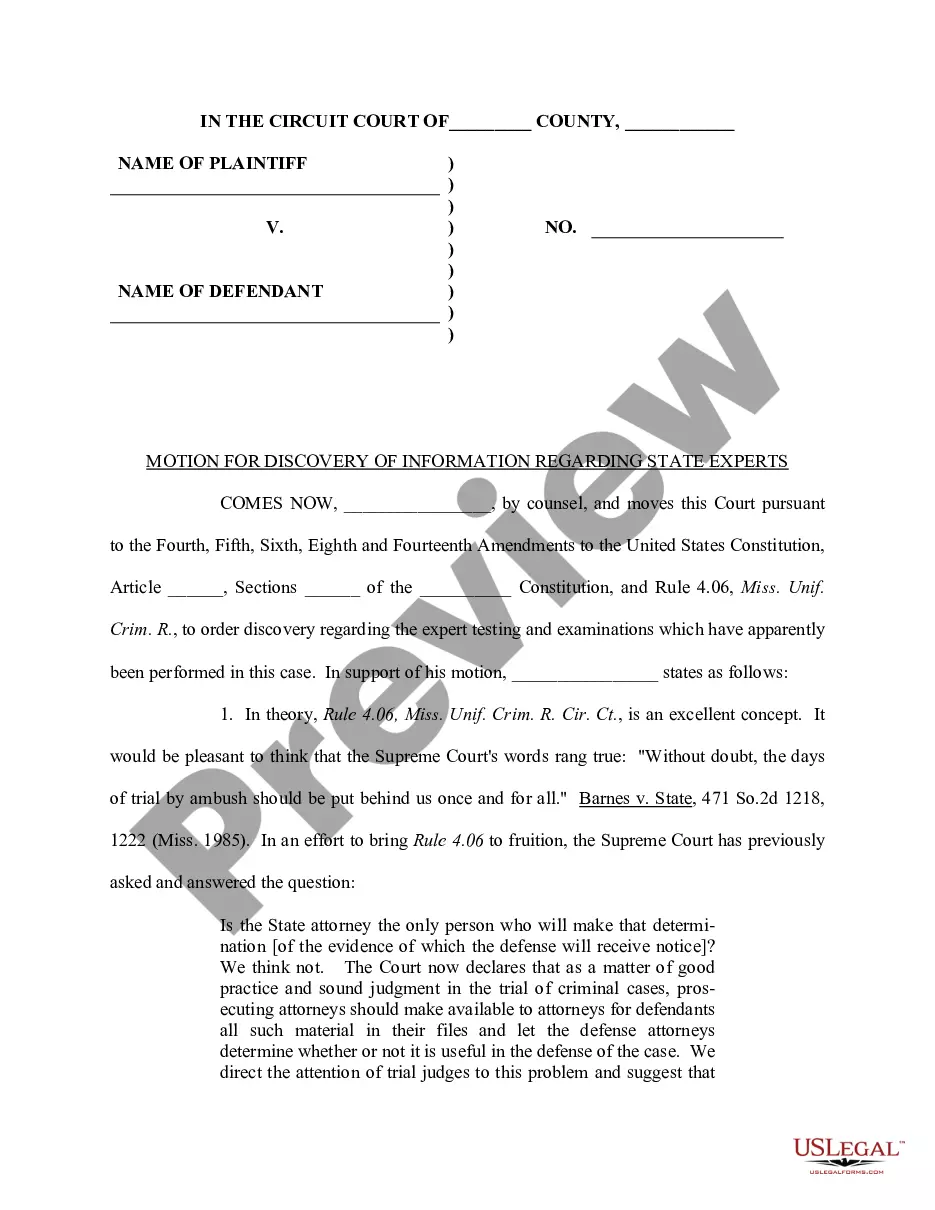
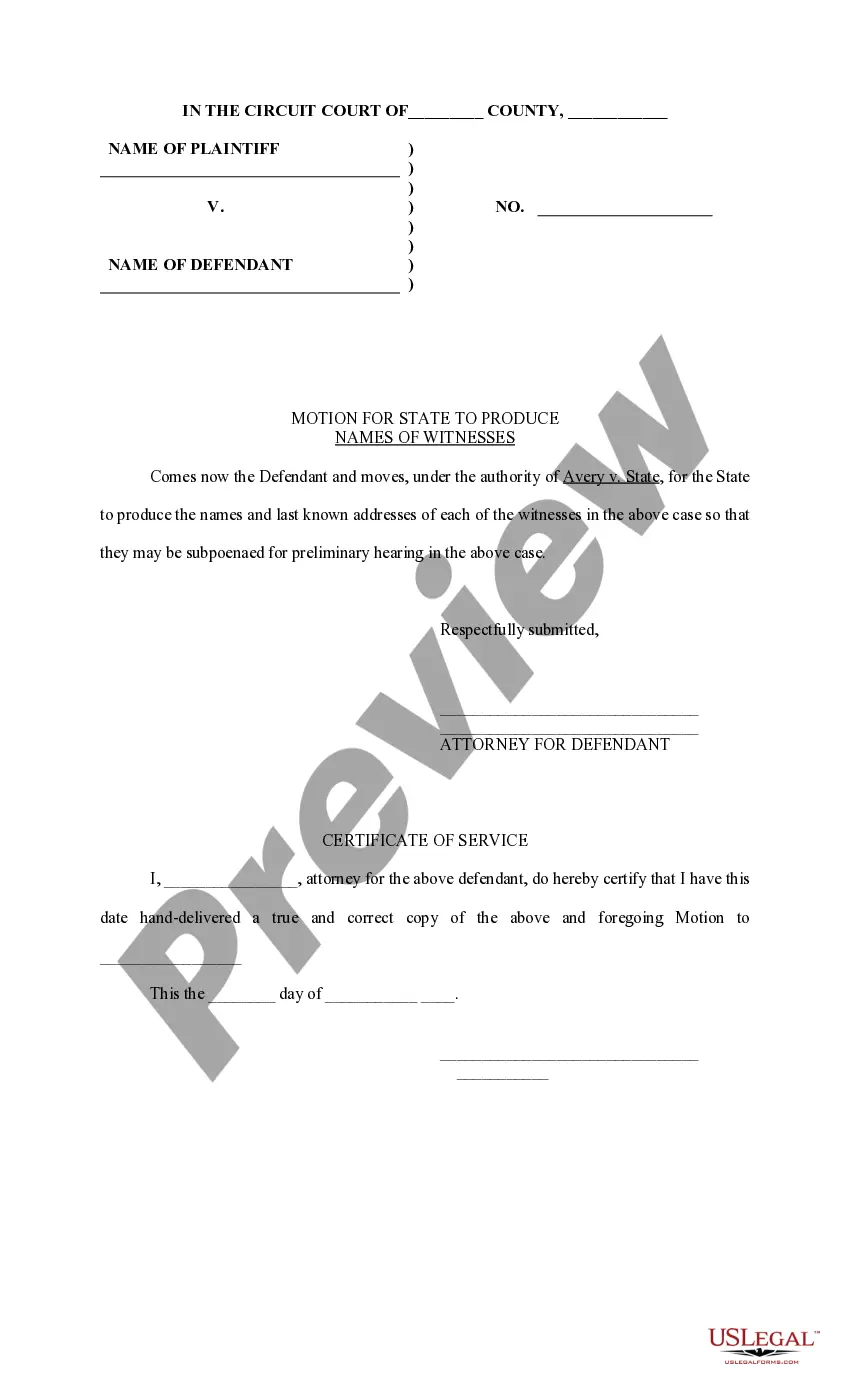
This form is a Motion to Require State to Reveal Any Agreement Entered Into Between State and Any Prosecution Witness. It requests the court to compel the prosecution to disclose agreements that may affect the testimony of prosecution witnesses, which could be crucial for the defendant's case. This form is essential for ensuring fair trial rights by uncovering potential biases or influences on witness testimony, distinguishing it from other motion forms that may not focus specifically on witness agreements.
What’s included in this form
- Defendant's identification: Includes the name of the defendant and their legal representation.
- Motion request: A clear statement requesting the court to order the State to reveal any agreements with prosecution witnesses.
- Details of agreements sought: Specifies the types of agreements that must be disclosed, such as immunity offers or promises of leniency.
- Legal foundation: References constitutional rights, including the Fourth Amendment and the due process clause of the Fourteenth Amendment.
- Order section: A formal order that the court may issue requiring the State to comply with the request.
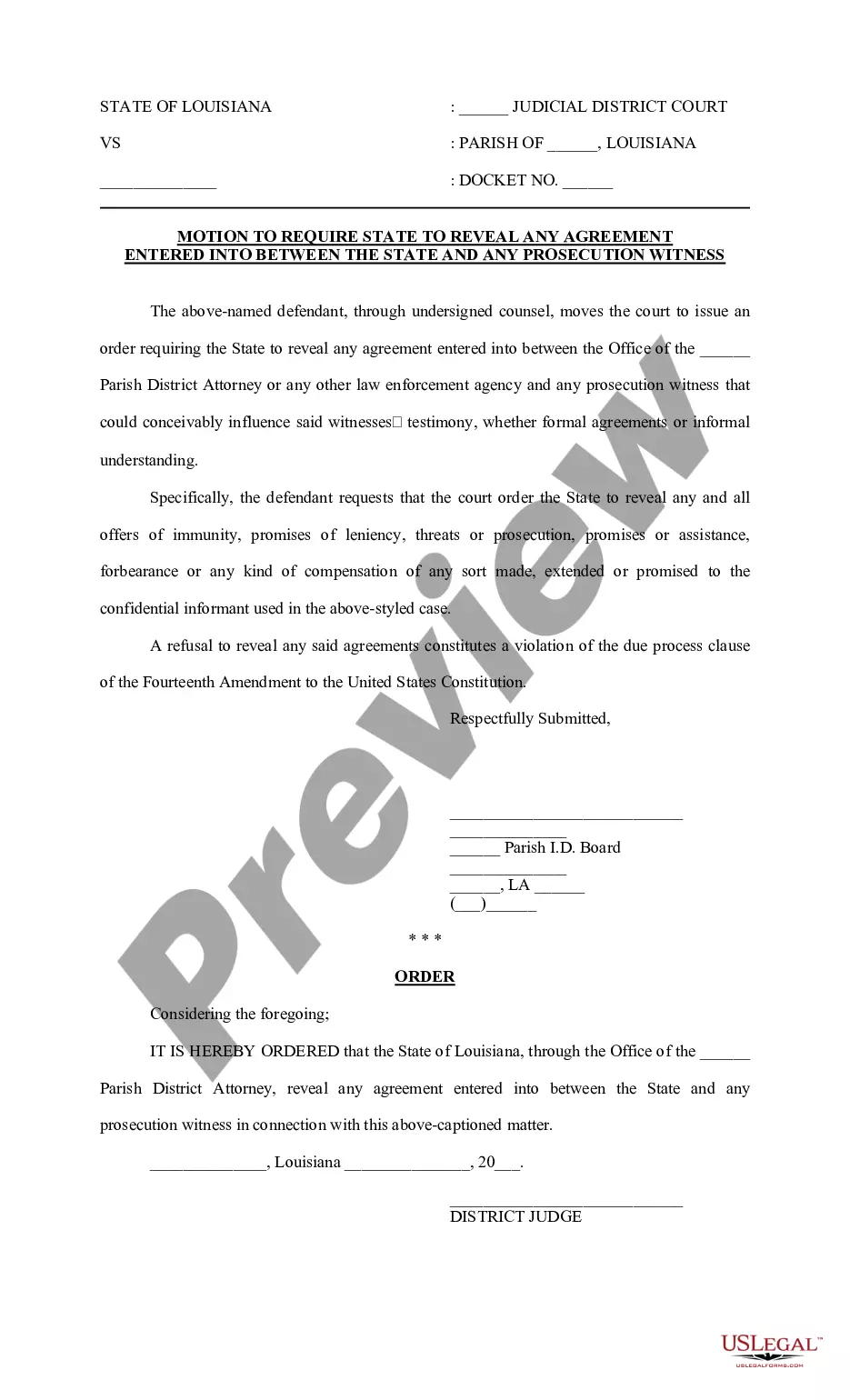
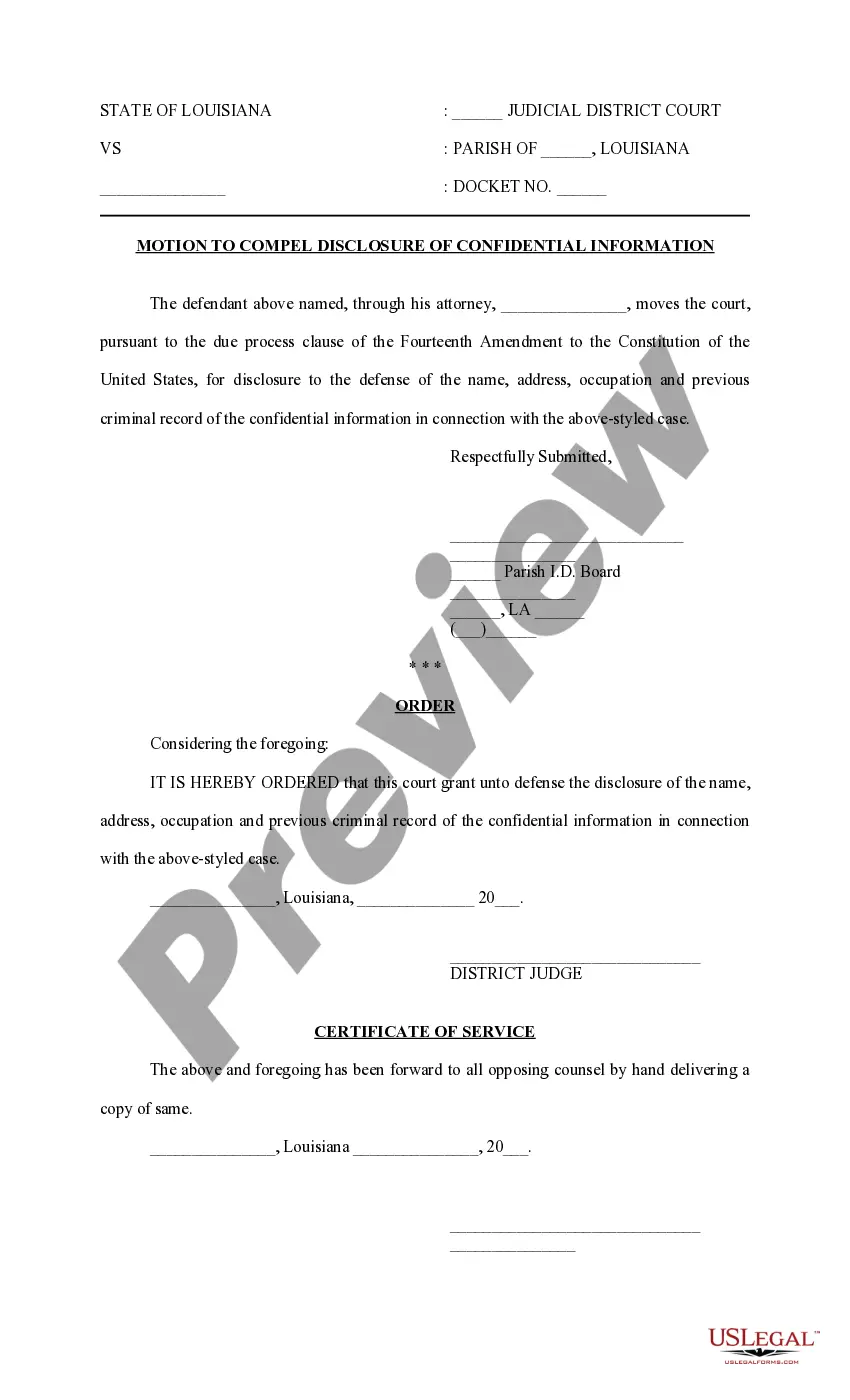
- Certificate of service: Confirmation that the motion has been delivered to opposing counsel.
When to use this document
Who needs this form
- Defendants in criminal cases who believe there may be undisclosed agreements affecting prosecution witnesses.
- Defense attorneys representing clients in cases that involve witness testimony that might be influenced by the State's actions.
- Individuals seeking to protect their rights under the U.S. Constitution regarding fair trial and due process.
How to complete this form
- Begin by entering the name of the defendant and the case docket number in the designated fields.
- Clearly state the request for the State to reveal any agreements related to prosecution witnesses.
- List the specific types of agreements that should be disclosed, such as any offers of immunity or promises.
- Ensure that the motion references relevant constitutional rights to support the request.
- Sign the Motion and include identifying information such as the parish and contact details.
- Complete the Certificate of Service, confirming that all parties have received the motion.
Does this form need to be notarized?
In most cases, this form does not require notarization. However, some jurisdictions or signing circumstances might. US Legal Forms offers online notarization powered by Notarize, accessible 24/7 for a quick, remote process.
Get your form ready online
Our built-in tools help you complete, sign, share, and store your documents in one place.
Make edits, fill in missing information, and update formatting in US Legal Forms—just like you would in MS Word.
Download a copy, print it, send it by email, or mail it via USPS—whatever works best for your next step.
Sign and collect signatures with our SignNow integration. Send to multiple recipients, set reminders, and more. Go Premium to unlock E-Sign.
If this form requires notarization, complete it online through a secure video call—no need to meet a notary in person or wait for an appointment.
We protect your documents and personal data by following strict security and privacy standards.

Make edits, fill in missing information, and update formatting in US Legal Forms—just like you would in MS Word.

Download a copy, print it, send it by email, or mail it via USPS—whatever works best for your next step.

Sign and collect signatures with our SignNow integration. Send to multiple recipients, set reminders, and more. Go Premium to unlock E-Sign.

If this form requires notarization, complete it online through a secure video call—no need to meet a notary in person or wait for an appointment.

We protect your documents and personal data by following strict security and privacy standards.
Common mistakes to avoid
- Failing to specify all types of agreements sought can weaken the motion.
- Not referencing relevant constitutional protections may undermine the request.
- Omitting the Certificate of Service could lead to delays or denial of the motion.
Why complete this form online
- Convenient access to a professionally drafted legal form that saves time.
- Edit and customize the form easily to fit individual case requirements.
- Ensures compliance with legal standards, reducing the risk of mistakes.
Legal use & context
- This motion is legally grounded in the defendant's rights to a fair trial and informed defense.
- Failure to disclose agreements could lead to claims of prosecutorial misconduct and may impact the case's outcomes.
Main things to remember
- The Motion to Require State to Reveal Any Agreement is essential for protecting fair trial rights.
- Completing this form accurately is crucial for uncovering potential biases in witness testimony.
- Filing this motion can strengthen a defense by promoting transparency in prosecution strategies.
Looking for another form?

Form popularity
FAQ
The state has to bring you to trial with 120 days if you are accused of a felony and 30 days if you are accused of a misdemeanor and are still being held in custody. If you have bonded out, the State has 180 days to bring you to trial on a felony charge and 60 days to bring you to trial on a misdemeanor charge.
The purpose of Rule 16, in layman's terms, establishes the powers and responsibilities of the court, as it relates to discovery. Rule 16 first lays out the reasons for a Pretrial Conference.Some of the order's subjects cover limiting the time to join parties, amend pleadings, complete discovery, and file motions.
(1) A motion by the defendant for a speedy trial, in order to be valid, must be accompanied by an affidavit by defendant's counsel certifying that the defendant and his counsel are prepared to proceed to trial within the delays set forth in this Article.
A party who discovers additional evidence or material before or during trial must promptly disclose its existence to the other party or the court if: (1) the evidence or material is subject to discovery or inspection under this rule; and. (2) the other party previously requested, or the court ordered, its production.
This is the formal process of exchanging information between the parties about the witnesses and evidence they'll present at trial. Discovery enables the parties to know before the trial begins what evidence may be presented.One of the most common methods of discovery is to take depositions.
Discovery, in the law of common law jurisdictions, is a pre-trial procedure in a lawsuit in which each party, through the law of civil procedure, can obtain evidence from the other party or parties by means of discovery devices such as interrogatories, requests for production of documents, requests for admissions and
An arraignment in Louisiana is the first court appearance in criminal court in Louisiana. Prior to the arraignment, the prosecutor either filed a bill of information, which is the formal charge, or the grand jury returned a true bill indictinhg the defendant. The arraignment is then set.
In United States criminal procedure, the Federal government and certain states have reciprocal discovery laws that compel defendants to disclose some information to prosecutors before trial.Access to physical evidence in the possession of the defendant for purpose of inspection and testing, and.