New York Certification of Trust
What is this form?
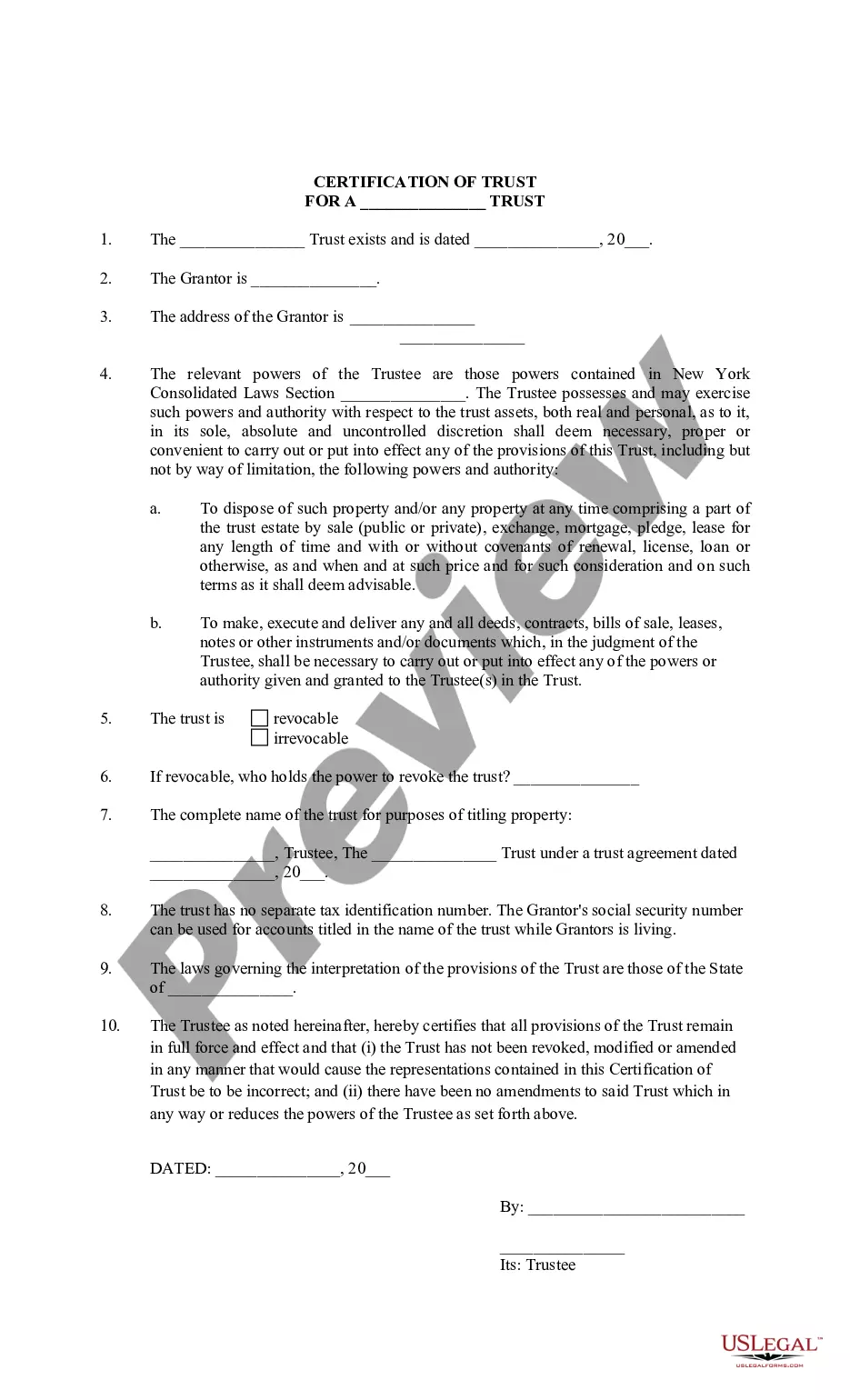
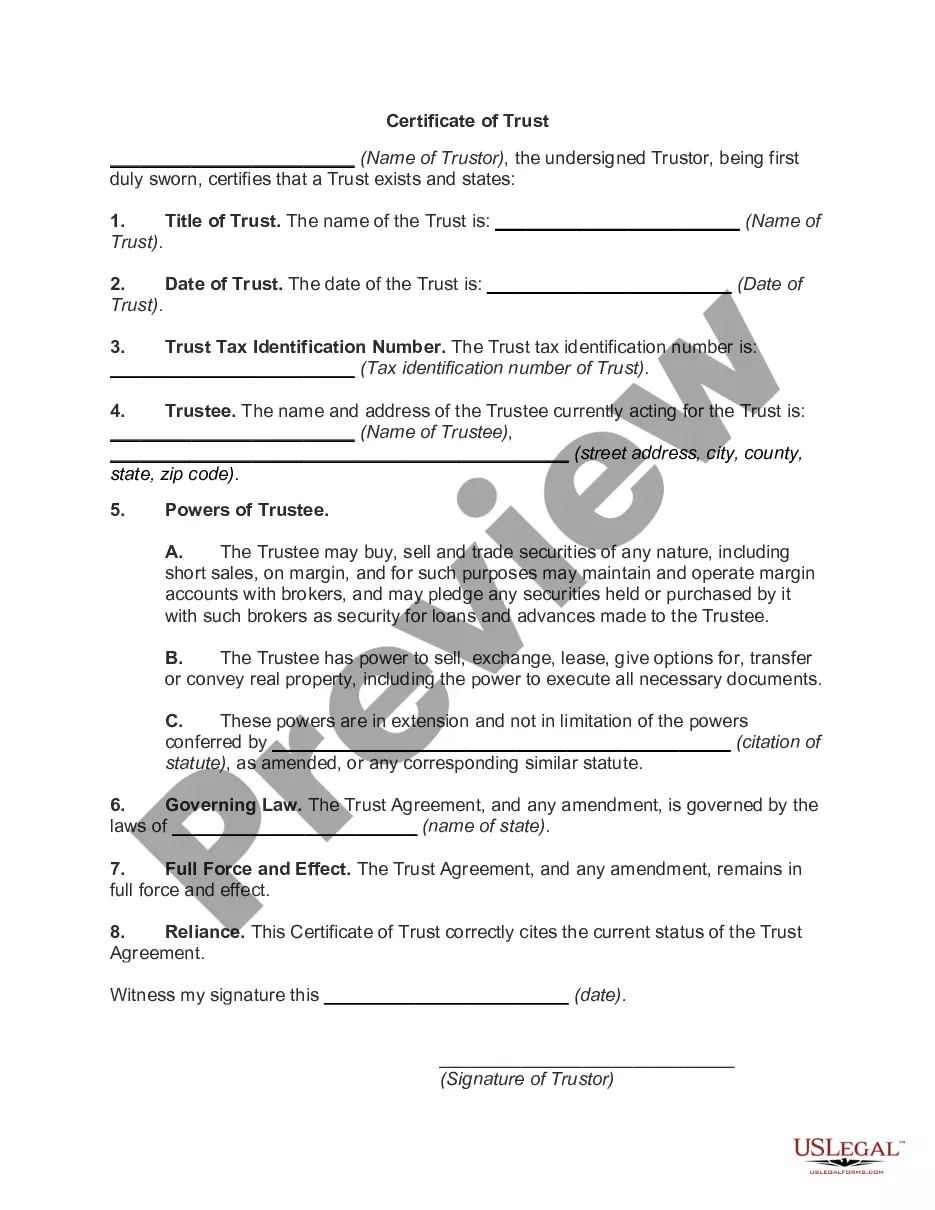
The Certification of Trust is a legal document that allows an individual trustee to demonstrate the existence of a trust without disclosing the entire trust document. This form offers evidence of the trust's validity and outlines the powers granted to the trustee, streamlining transactions where proof of the trust is necessary. Unlike a full trust document, the Certification of Trust is more concise and protects the privacy of the trust's terms.
Key components of this form
- Identification of the trust, including its date and name.
- Details about the grantor, including their name and address.
- Defined powers of the trustee based on relevant state laws.
- If the trust is revocable or irrevocable and who can revoke it (if applicable).
- Certification that the trust remains in effect and has not been amended against the statement provided.
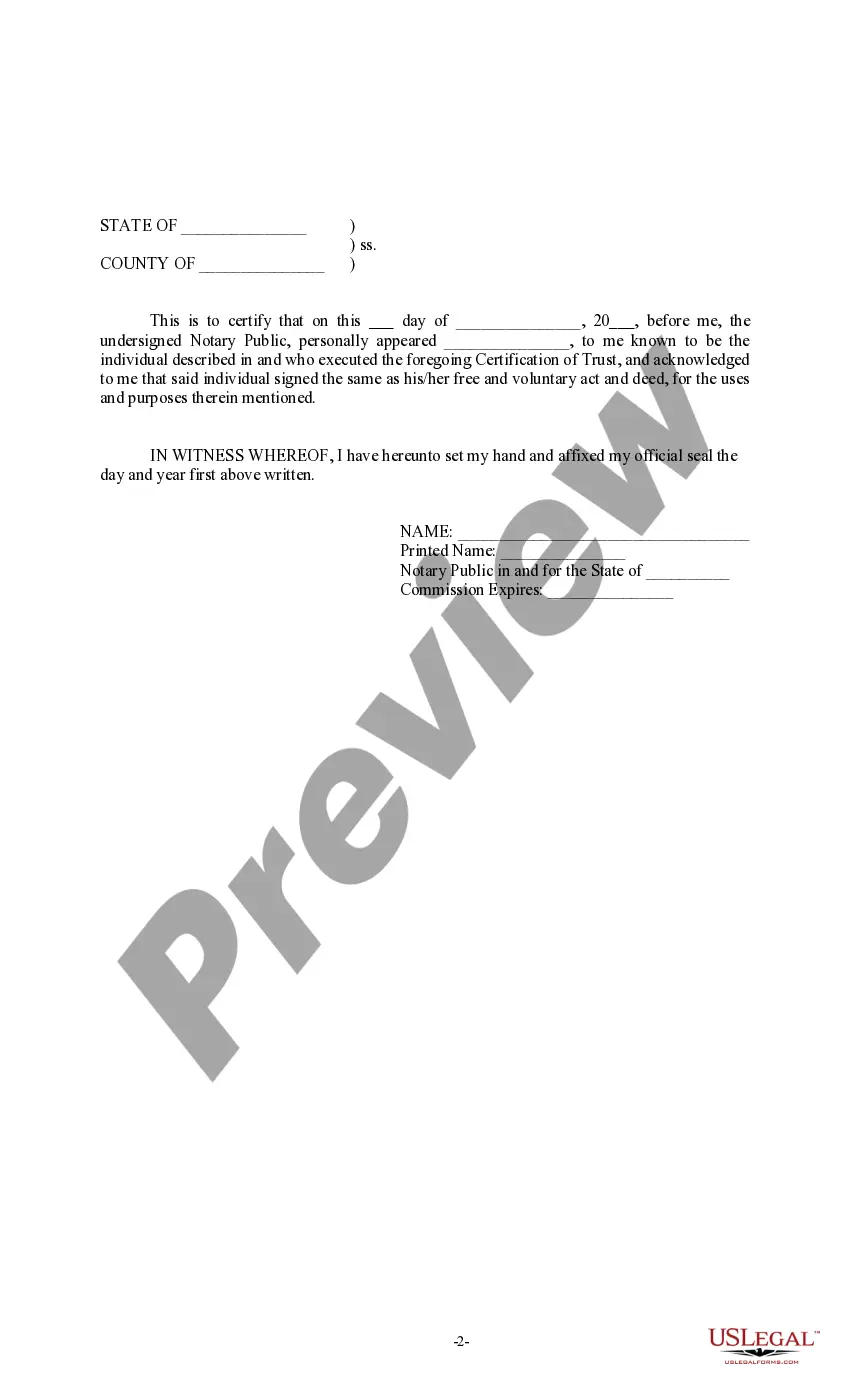
- Notary acknowledgment for validation.
Situations where this form applies
This form is useful when a trustee needs to prove the existence and terms of a trust to financial institutions, real estate entities, or other third parties without sharing the entire trust document. Common scenarios include opening bank accounts in the trust's name, managing property held in trust, or when legal and financial matters arise that require validation of trust ownership.
Who can use this document
- Trustees who need to provide proof of their authority to manage trust assets.
- Individuals managing a trust on behalf of an incapacitated owner.
- Grantors wishing to clarify trust terms without revealing sensitive details.
- Legal representatives handling transactions involving trust property.
How to complete this form
- Enter the name of the trust and its date of creation.
- Fill in the name and address of the grantor.
- Detail the relevant powers available to the trustee as per state laws.
- Indicate whether the trust is revocable or irrevocable, and specify who can revoke it if applicable.
- Complete the trust name for titling property and ensure all information is accurate.
- Sign and date the form in the presence of a notary public.
Is notarization required?
Yes, this form must be notarized to be legally valid. The presence of a notary public ensures that the signature of the trustee is authentic and adds a layer of legal protection. US Legal Forms offers integrated online notarization services, allowing for a secure and convenient process via a video call, ensuring you can complete this requirement from anywhere.
Get your form ready online
Our built-in tools help you complete, sign, share, and store your documents in one place.
Make edits, fill in missing information, and update formatting in US Legal Forms—just like you would in MS Word.
Download a copy, print it, send it by email, or mail it via USPS—whatever works best for your next step.
Sign and collect signatures with our SignNow integration. Send to multiple recipients, set reminders, and more. Go Premium to unlock E-Sign.
If this form requires notarization, complete it online through a secure video call—no need to meet a notary in person or wait for an appointment.
We protect your documents and personal data by following strict security and privacy standards.

Make edits, fill in missing information, and update formatting in US Legal Forms—just like you would in MS Word.

Download a copy, print it, send it by email, or mail it via USPS—whatever works best for your next step.

Sign and collect signatures with our SignNow integration. Send to multiple recipients, set reminders, and more. Go Premium to unlock E-Sign.

If this form requires notarization, complete it online through a secure video call—no need to meet a notary in person or wait for an appointment.

We protect your documents and personal data by following strict security and privacy standards.
Typical mistakes to avoid
- Failing to specify the correct date of the trust.
- Omitting essential details about the powers of the trustee.
- Not providing a clear indication of whether the trust is revocable.
- Neglecting to have the document notarized, if required.
- Using incorrect or outdated names for the trust or trustee.
Advantages of online completion
- Convenient access to legal templates drafted by licensed attorneys.
- Ability to fill out the form at your own pace with the option to edit.
- Instant downloads for immediate use.
- Secure completion process ensuring confidentiality of your information.
Key takeaways
- The Certification of Trust simplifies the process of proving a trust's existence.
- It's essential for trustees to have this form completed and notarized when dealing with third parties.
- Accurate information ensures the trust is recognized and respected by financial and legal entities.
- This form is tailored to comply with New York's legal requirements.
Looking for another form?
Form popularity
FAQ
The New York Certification of Trust is a standard form used to confirm that a trust exists and to verify a trustee’s authority to act on behalf of the trust without disclosing the full trust terms. It’s typically used when interacting with banks, title companies, or other third parties that require proof of authority before processing transactions in New York.
A certificate of trust is a concise, formal document that confirms the existence of a trust, identifies the trustee, and states the powers the trustee has to manage or transfer trust assets, without disclosing private terms of the trust. In New York, it’s used to prove authority to deal with assets for third parties.
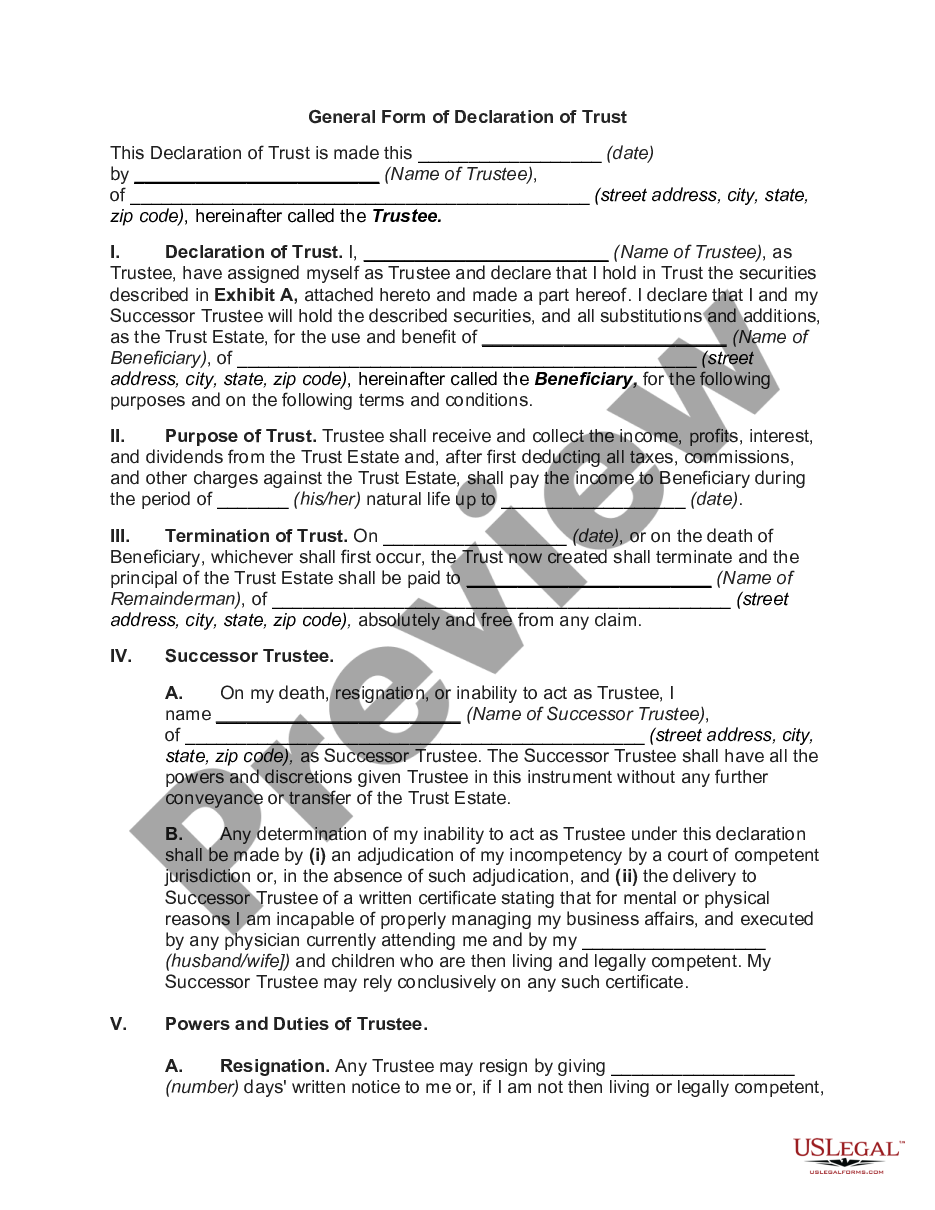
A trust agreement is the full writing that lays out the terms, distributions, and duties of the trust. A certification of trust is a short, formal document used to prove the trust exists and the trustee’s authority, without sharing the private provisions. It is designed for third‑party dealings in New York.
Typically, the original trust agreement remains with the trustee or a designated custodian. The New York Certification of Trust identifies the trust and the trustee, and third parties may accept the certificate to verify authority without requiring the full trust document.
This form is a standard New York Certification of Trust used to prove the trust’s existence and the trustee’s authority without sharing private terms. It’s prepared by the trustee (or with an attorney) and then presented to banks, title companies, or other third parties to verify authority.
This form is tailored to New York practice. It identifies the trust and the trustee, states the powers to manage or transfer assets, and is designed for use with New York banks, title companies, and other third parties that require proof of authority without sharing terms. Other states may use different formats or disclosure rules.