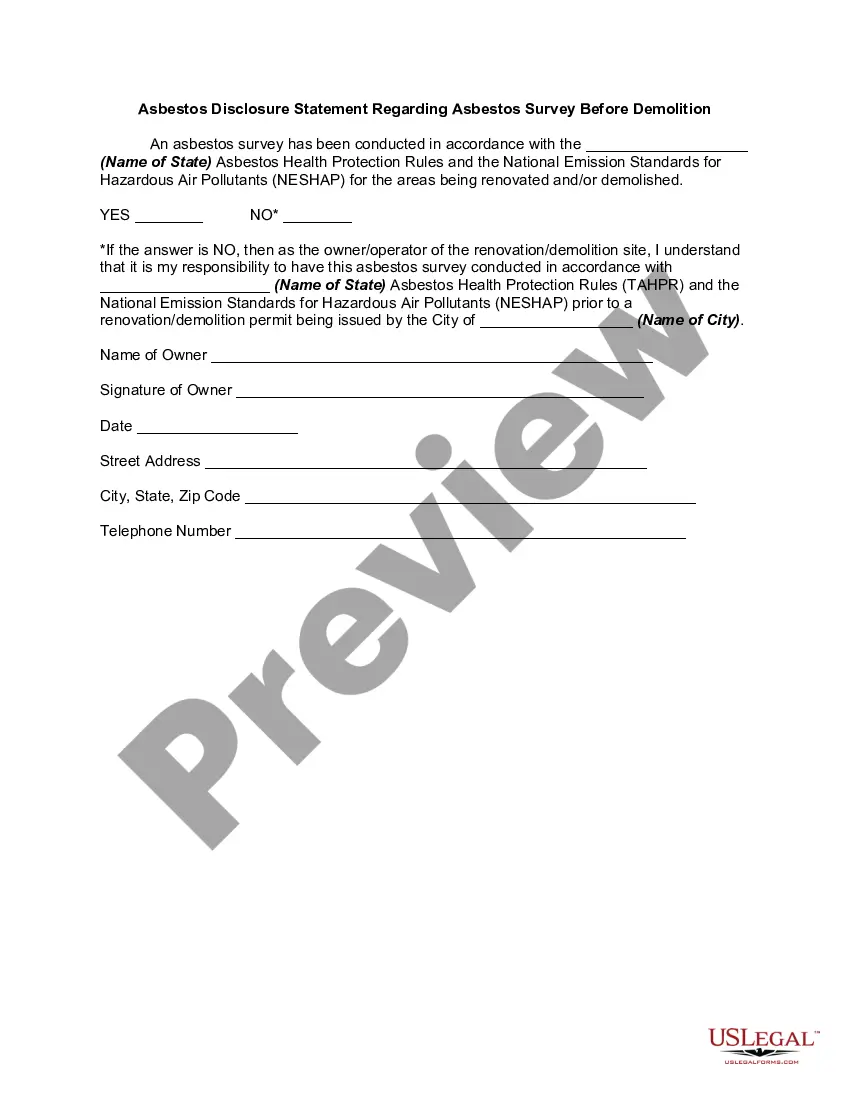
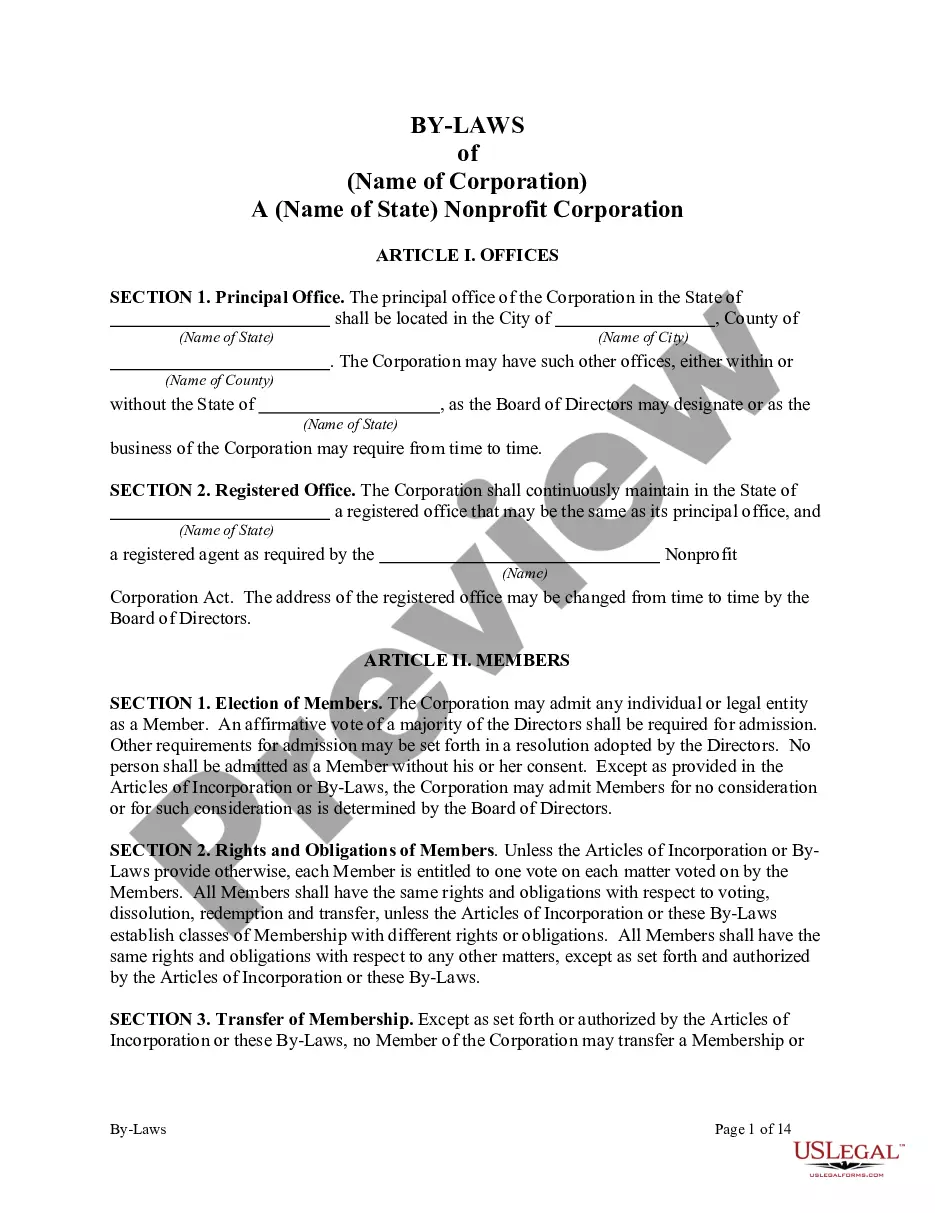
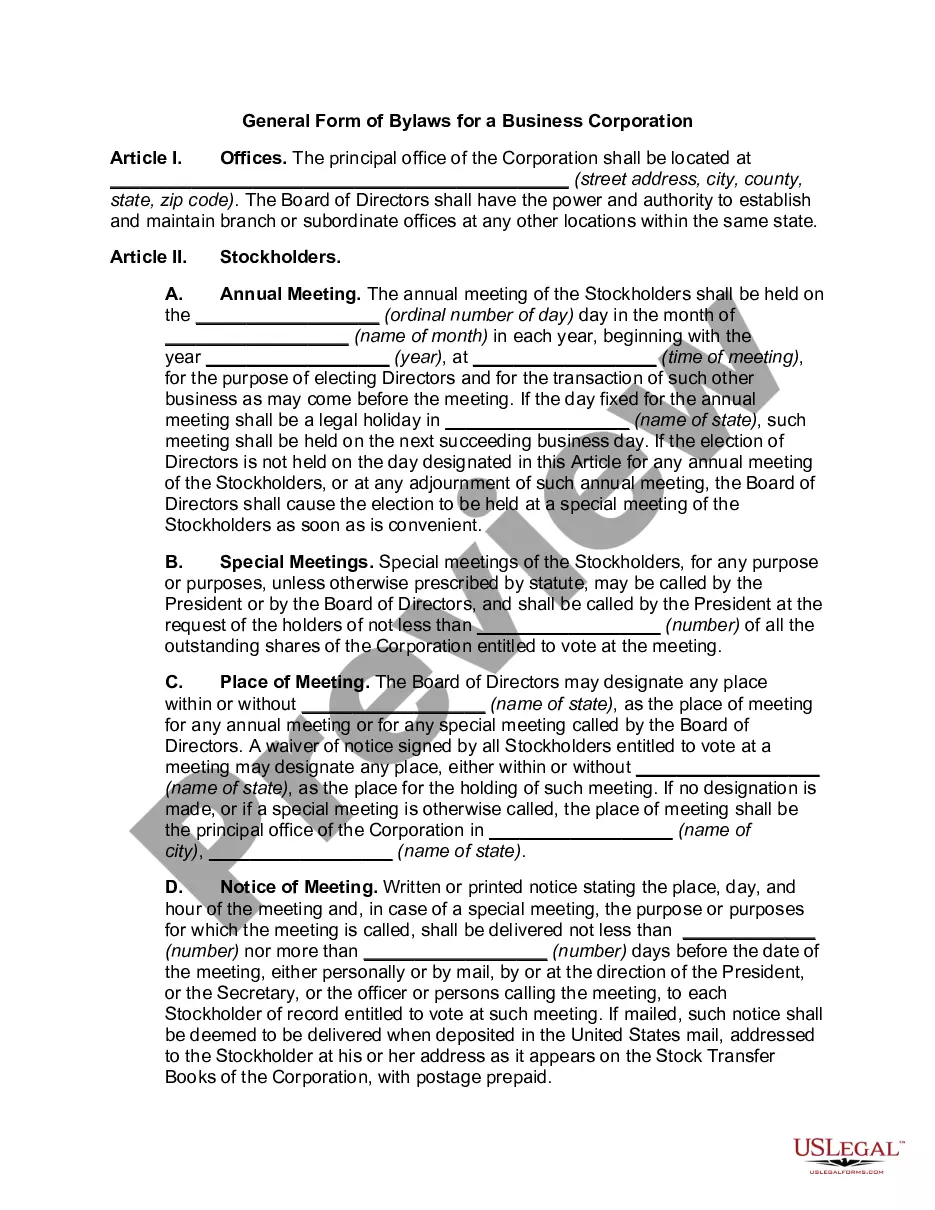
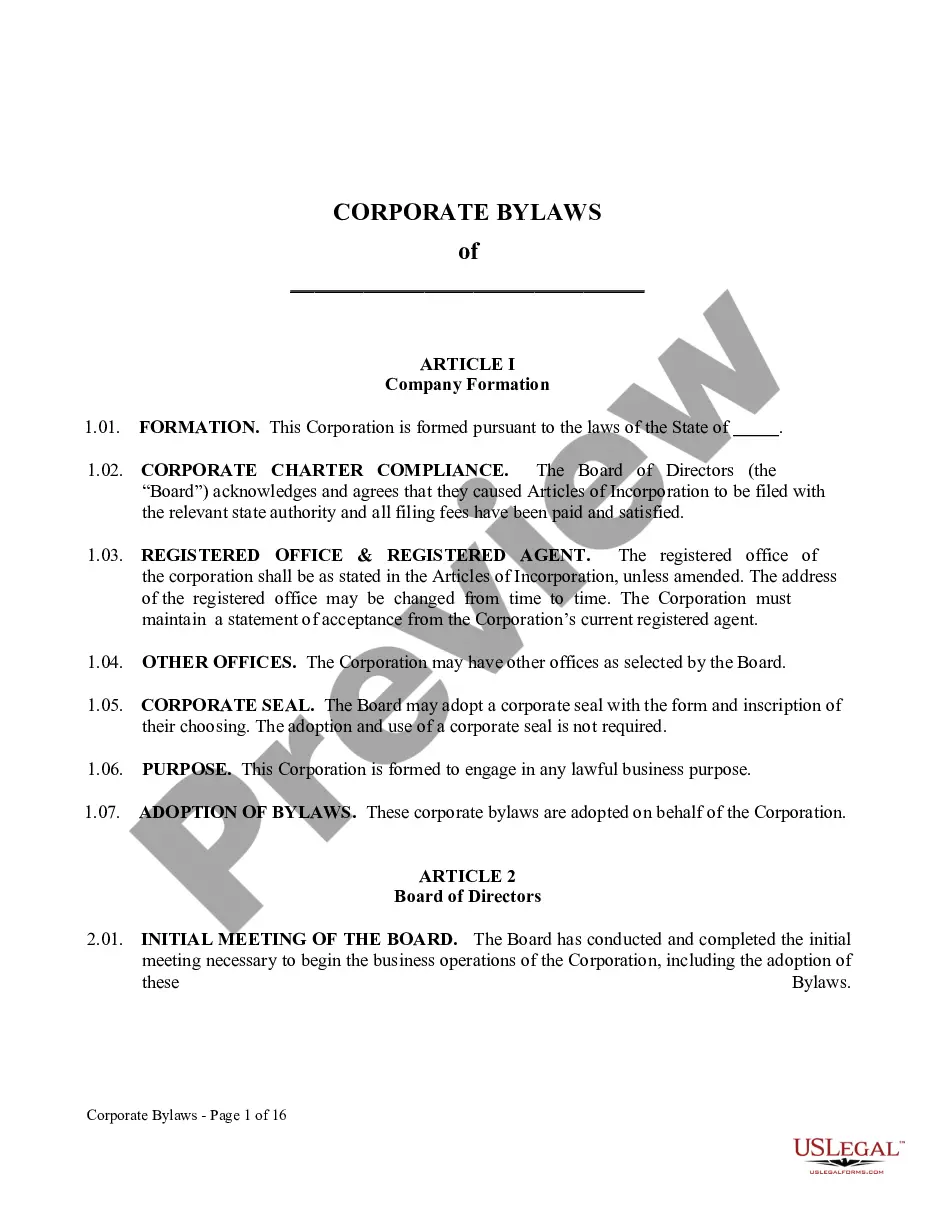
This By-Laws document contains the following information: the name and location of the corporation, the shareholders, and the duties of the officers.
Texas Bylaws for Corporation
Instant download
Description
Free preview











Get your form ready online
Our built-in tools help you complete, sign, share, and store your documents in one place.
Built-in online Word editor
Make edits, fill in missing information, and update formatting in US Legal Forms—just like you would in MS Word.
Export easily
Download a copy, print it, send it by email, or mail it via USPS—whatever works best for your next step.
E-sign your document
Sign and collect signatures with our SignNow integration. Send to multiple recipients, set reminders, and more. Go Premium to unlock E-Sign.
Notarize online 24/7
If this form requires notarization, complete it online through a secure video call—no need to meet a notary in person or wait for an appointment.
Store your document securely
We protect your documents and personal data by following strict security and privacy standards.

Make edits, fill in missing information, and update formatting in US Legal Forms—just like you would in MS Word.

Download a copy, print it, send it by email, or mail it via USPS—whatever works best for your next step.

Sign and collect signatures with our SignNow integration. Send to multiple recipients, set reminders, and more. Go Premium to unlock E-Sign.

If this form requires notarization, complete it online through a secure video call—no need to meet a notary in person or wait for an appointment.

We protect your documents and personal data by following strict security and privacy standards.
Looking for another form?


How to fill out Bylaws For Corporation?
It is feasible to spend numerous hours on the internet searching for the authentic document template that satisfies the federal and state criteria you will require.
US Legal Forms provides thousands of authentic forms that have been evaluated by experts.
You can effortlessly download or print the Texas Bylaws for Corporation from your service.
In order to obtain another version of the form, utilize the Search field to find the template that fits your preferences and requirements.
- If you already possess a US Legal Forms account, you can sign in and then select the Download option.
- Subsequently, you can fill out, modify, print, or sign the Texas Bylaws for Corporation.
- Each authentic document template you obtain is yours permanently.
- To retrieve an additional copy of the acquired form, navigate to the My documents tab and click the corresponding option.
- If you are using the US Legal Forms website for the first time, follow the simple instructions below.
- First, ensure you have selected the correct document template for the state/town of your choice.
- Review the form details to verify you have picked the right one.
Form popularity
FAQ
Writing bylaws for a corporation involves several key steps. First, you need to outline the structure of your corporation, including roles and responsibilities. Texas Bylaws for Corporation should also include procedures for meetings, voting, and amendments. Utilizing resources from platforms like USLegalForms can provide templates and guidance, ensuring your bylaws meet legal standards and suit your corporation’s unique needs.
The primary purpose of bylaws in a corporation is to provide a clear structure for governance and operations. Texas Bylaws for Corporation delineate how decisions are made, how meetings are conducted, and the duties of various members. By having well-defined bylaws, a corporation can ensure smooth functioning, minimize disputes, and maintain compliance with legal requirements. Ultimately, they serve as a roadmap for corporate integrity and efficiency.
Yes, bylaws are indeed rules that a corporation sets for itself. Texas Bylaws for Corporation outline essential policies on governance, meetings, and the roles of officers and directors. These rules are established by the corporation during its formation and serve to provide clarity and consistency in operations. Establishing clearly defined bylaws fosters an environment of accountability and efficiency.
Bylaws do not supersede articles of incorporation, as both documents serve different purposes. In Texas, the articles of incorporation establish the corporation's existence and basic structural details, while Texas Bylaws for Corporation provide the governing rules. If there is a conflict between the two, the articles typically take precedence. It is essential to align both documents to ensure seamless corporate governance.
Technically, a corporation can exist without bylaws, but this is not advisable. Texas Bylaws for Corporation play a critical role in defining the corporation's operational framework and governance. Without established bylaws, a corporation may face confusion during decision-making, leading to legal issues or disputes among members. For smooth operations and clarity, having bylaws is highly recommended.
Bylaws are not the same as general rules; rather, they serve as a specific framework for how a corporation operates. Texas Bylaws for Corporation establish the internal governance structure, detailing roles, responsibilities, and procedures that must be followed. While they may include rules, bylaws are foundational documents essential for corporate functionality. Simply put, bylaws provide a more formalized set of guidelines tailored to the corporation's unique needs.
Bylaws are generally not publicly available unless the corporation chooses to disclose them. They are internal documents meant for the organization’s reference. However, having transparent Texas Bylaws for Corporation can enhance trust among stakeholders, so it's wise to consider making them accessible in certain situations.
Yes, you can have bylaws without a constitution. Bylaws serve a specific function in managing an organization's internal affairs whereas a constitution, if it exists, can function as a broader guiding document. For many organizations in Texas, focusing solely on bylaws is sufficient for establishing clear operational procedures. Just remember that your Texas Bylaws for Corporation should lay out all essential governance elements.
In Texas, bylaws do not need to be filed with the Secretary of State. However, they must be adopted and kept on record by the corporation. Keeping your Texas Bylaws for Corporation updated and aligned with your organization’s goals is crucial for operational clarity and legal compliance.
Anyone with a clear understanding of the organization can write bylaws, including founders, directors, or legal professionals. However, drafting Texas Bylaws for Corporation requires knowledge of state laws. Therefore, consulting with an attorney specializing in corporate law can provide valuable insights and help avoid pitfalls.