Texas Statutory Declaration of Guardian in the Event of Later Incapacity or Need of Guardian
What is this form?
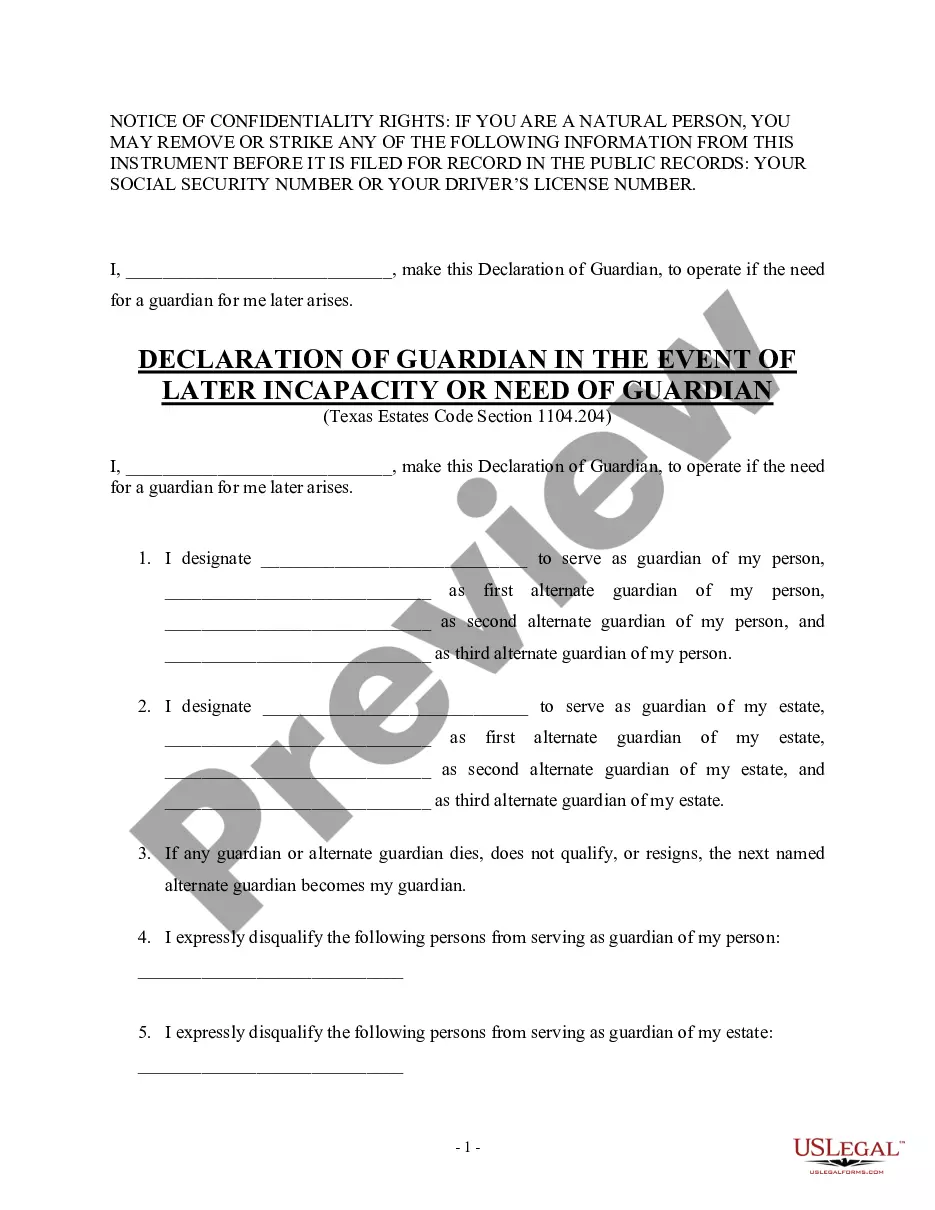
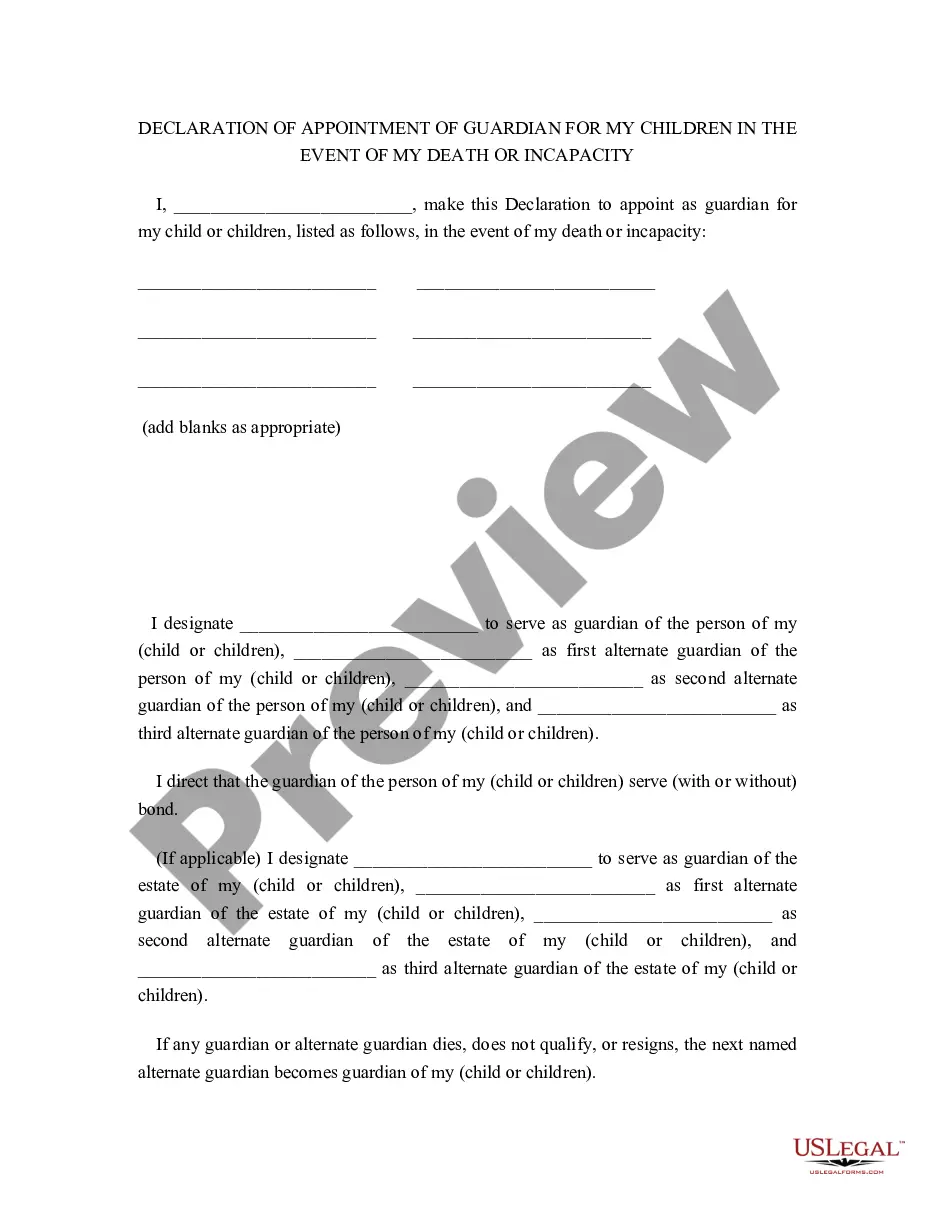
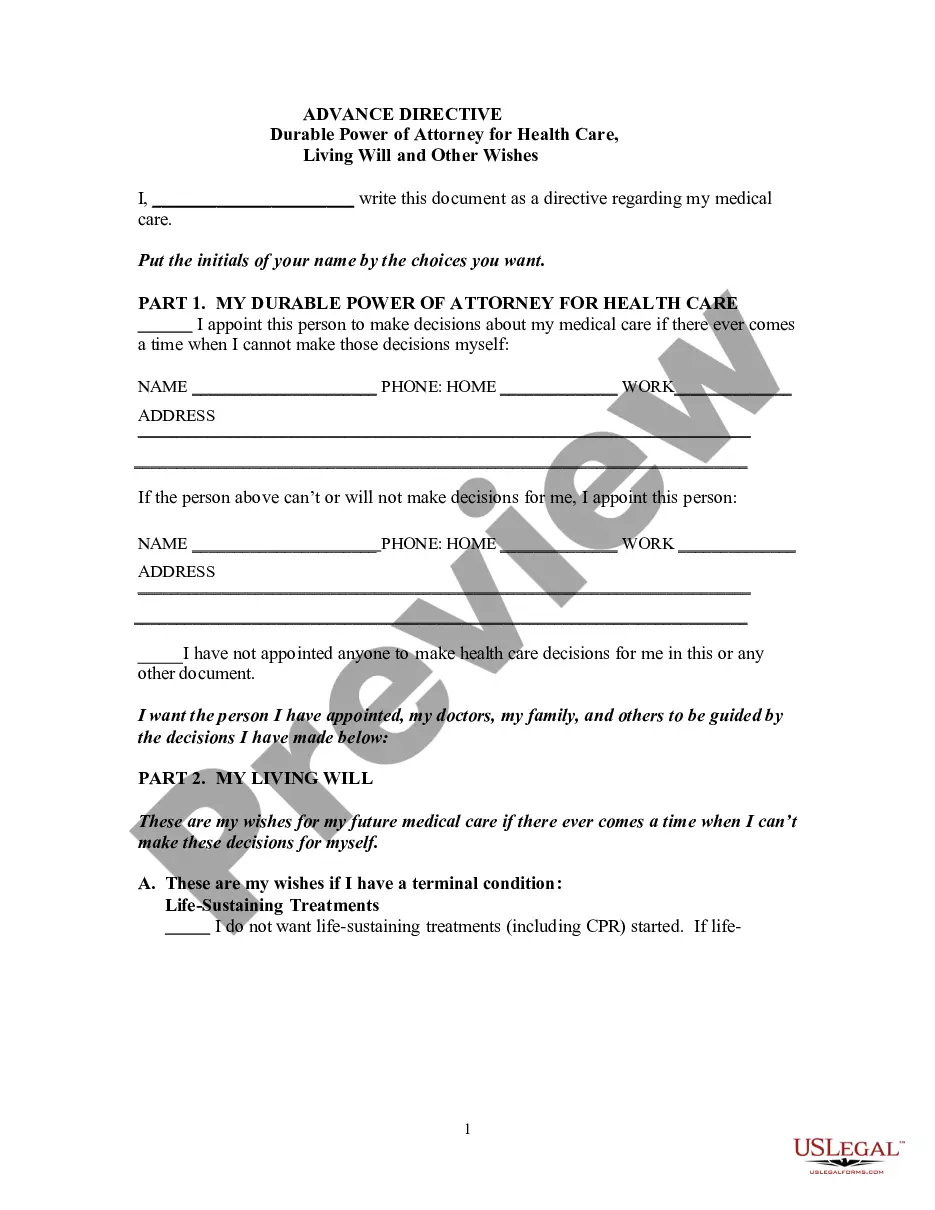
The Statutory Declaration of Guardian in the Event of Later Incapacity or Need of Guardian is a legal document in Texas that allows you to designate individuals who will act as your guardians should you become incapacitated. This form is essential for planning your future care and ensures your preferences are respected. It differs from a general power of attorney as it specifically designates guardians for your person and estate, preparing for unforeseen situations where you may not be able to make decisions yourself.
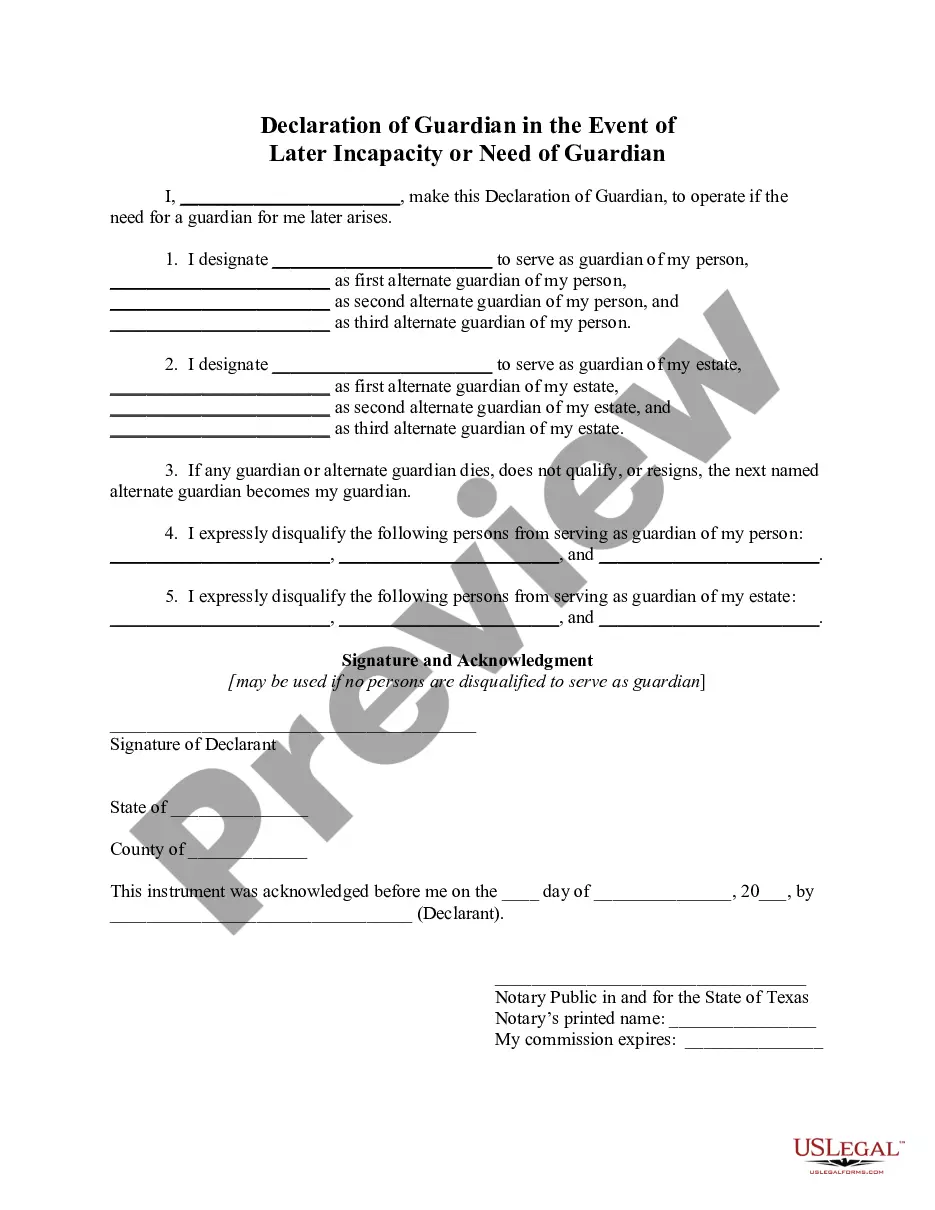
Form components explained
- Declarant's name and identification
- Designated guardian and alternate guardians for both personal and estate matters
- Disqualification of certain individuals from serving as guardians
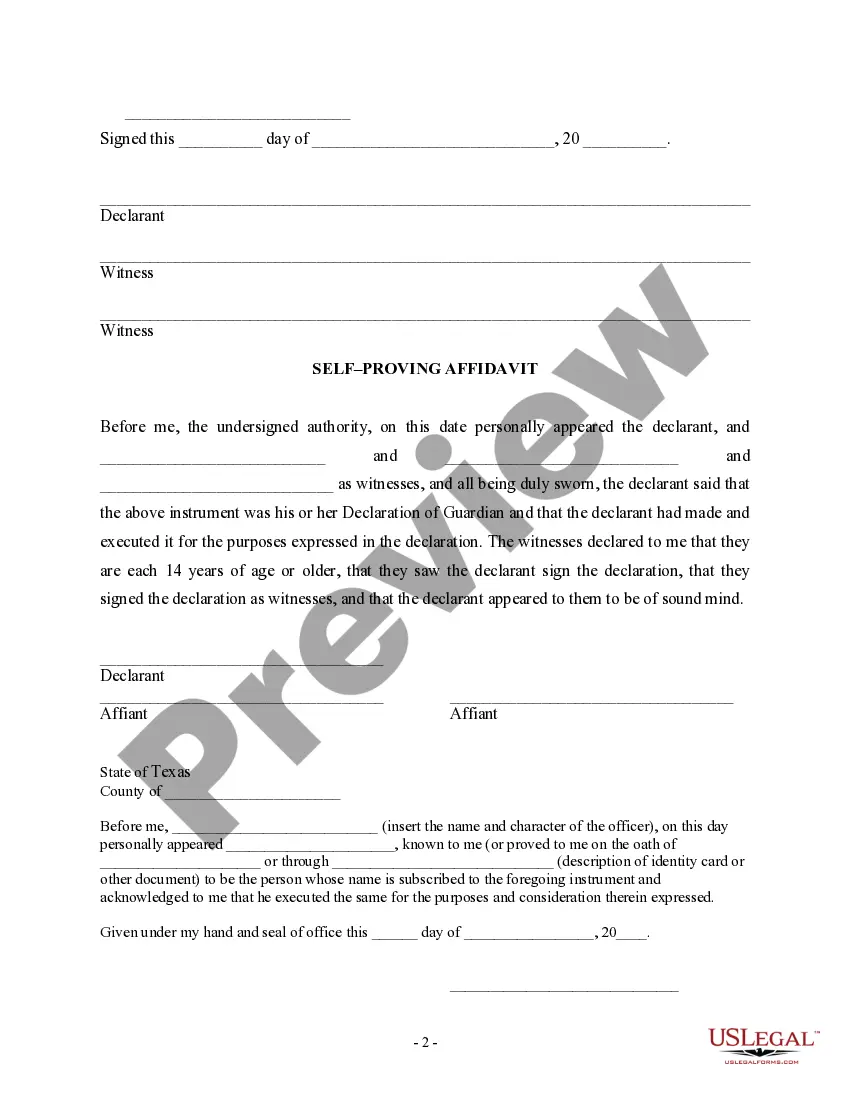
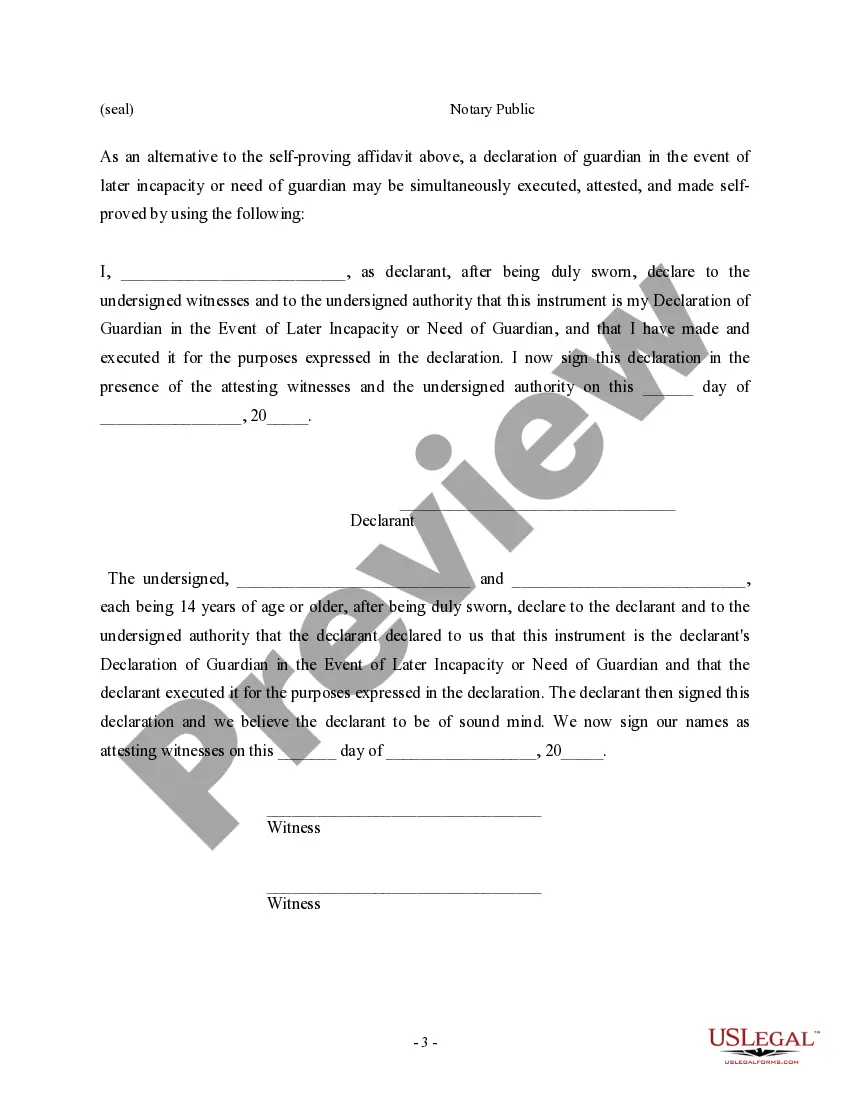
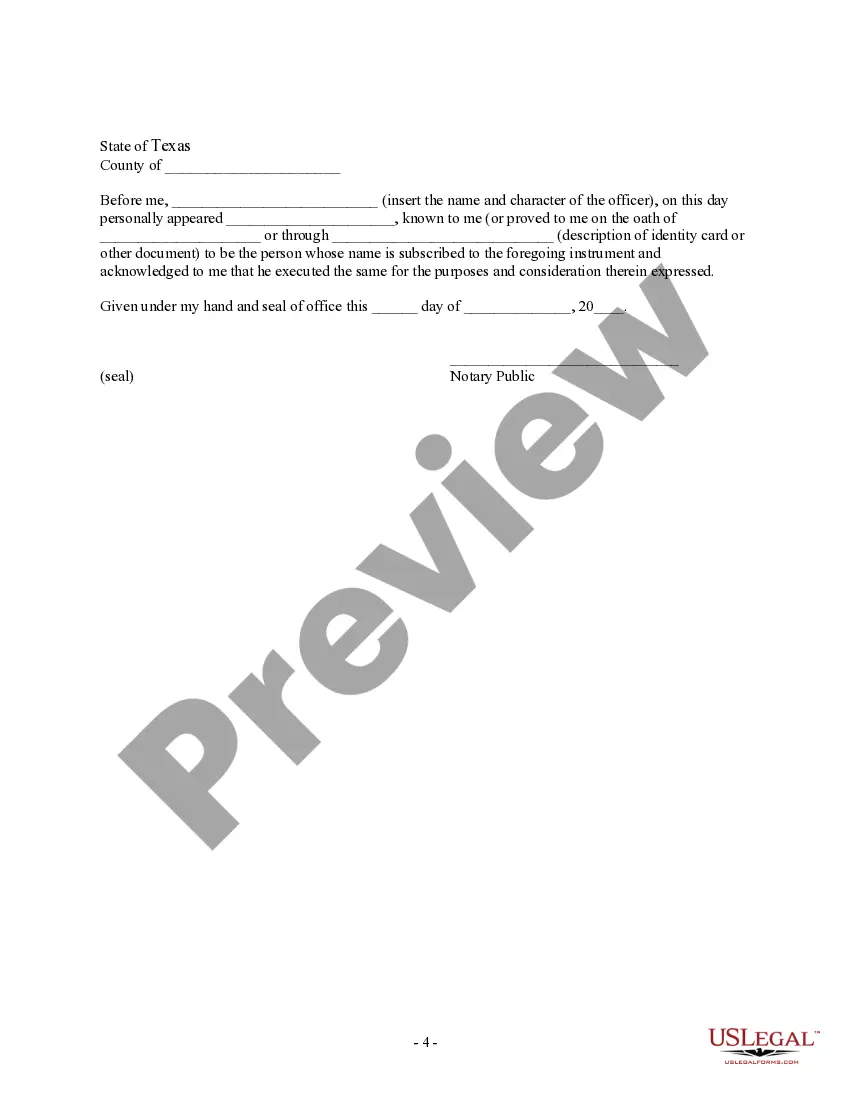
- Witness and notary sections for signature verification
Common use cases
Use this Declaration of Guardian when you want to ensure that specific individuals are appointed as your guardians in the event you become incapacitated or unable to make decisions for yourself. This form is particularly important for those managing chronic health conditions, undergoing medical procedures that may affect decision-making, or considering future estate planning to secure their welfare.
Who needs this form
This form is recommended for:
- Adults in Texas who wish to plan for future incapacity
- Individuals with specific preferences for guardianship of their personal and estate matters
- Persons seeking to ensure their choices are legally recognized and enforceable
Completing this form step by step
- Enter your full name as the declarant at the top of the form.
- Designate your chosen guardians, including first, second, and third alternates for both personal and estate matters.
- Specify individuals you do not want to serve as guardians.
- Sign the form in the presence of at least two witnesses.
- Ensure the witnesses are over the age of 14 and sign the form as well.
- Have the document notarized by a licensed notary public to validate the signatures, if required.
Does this form need to be notarized?
To make this form legally binding, it must be notarized. Our online notarization service, powered by Notarize, lets you verify and sign documents remotely through an encrypted video session.
Typical mistakes to avoid
- Failing to specify alternate guardians may lead to uncertainty in guardianship decisions.
- Not having the form properly witnessed or notarized can invalidate the document.
- Leaving out the disqualification of certain individuals could allow them to serve as guardians against your wishes.
Benefits of using this form online
- Convenient access to legal documents from anywhere at any time.
- Edit and customize the template according to your specific needs.
- Secure and reliable storage and retrieval of your completed documents.
Key takeaways
- The Statutory Declaration of Guardian is crucial for designating guardians for future incapacity.
- Ensure proper completion, witnesses, and notarization for the form to be valid.
- Utilizing the form online streamlines the process and offers flexibility in editing.
Form popularity
FAQ
A Declaration of Guardian is a legal document where you tell the court who you want to serve as your guardian if there is ever a guardianship proceeding for you. There are two types of guardians: Guardian of your estate, and guardian of your person.
The names of the forms are usually: Petition for Appointment of Guardian (or Petition for Appointment of Guardian of Minor) Petition for Conservatorship (when dealing with an incompetent adult) Order Appointing Guardian.
GUARDIAN: In the event I shall die as the sole parent of minor children, then I appoint ____________________________________ as Guardian of said minor children. If this named Guardian is unable or unwilling to serve, then I appoint ____________________________________ as alternate Guardian.
Decide if you want to get help or use a do-it-yourself software program. Select your beneficiaries. Choose the executor for your will. Pick a guardian for your kids. Be specific about who gets what. Be realistic about who gets what. If there's more you want to say, attach a letter to the will.
Decide Who Will Administer Your Estate. Someone needs to wrap up your affairs after you pass away. Decide How You Want to Distribute Your Assets. Choose One or More Guardians. Write and Sign Your Will.
A guardianship of the estate is set up to manage a child's income, money, or other property until the child turns 18. A child may need a guardian of the estate if he or she inherits money or assets. In most cases, the court appoints the surviving parent to be the guardian of the child's estate.
To do this, the person you nominate will need to file a Petition for Appointment of Guardian with the Probate Court, notify certain persons and agencies, and attend a court hearing. Although the probate court will take into account your wishes, other people will also have the opportunity to request guardianship.
You can establish guardianship of a child by filing papers in court. Initially, file a petition stating your interest in obtaining guardianship along with a filing fee. You'll also want to file a letter of consent from the child's parents.
The legal guardianship document is a formal declaration to the court system that another party is responsible for the well-being of the minors. No one can predict when an accident or other disaster may occur. Some include a legal guardianship document in their wills to determine who will raise their children.