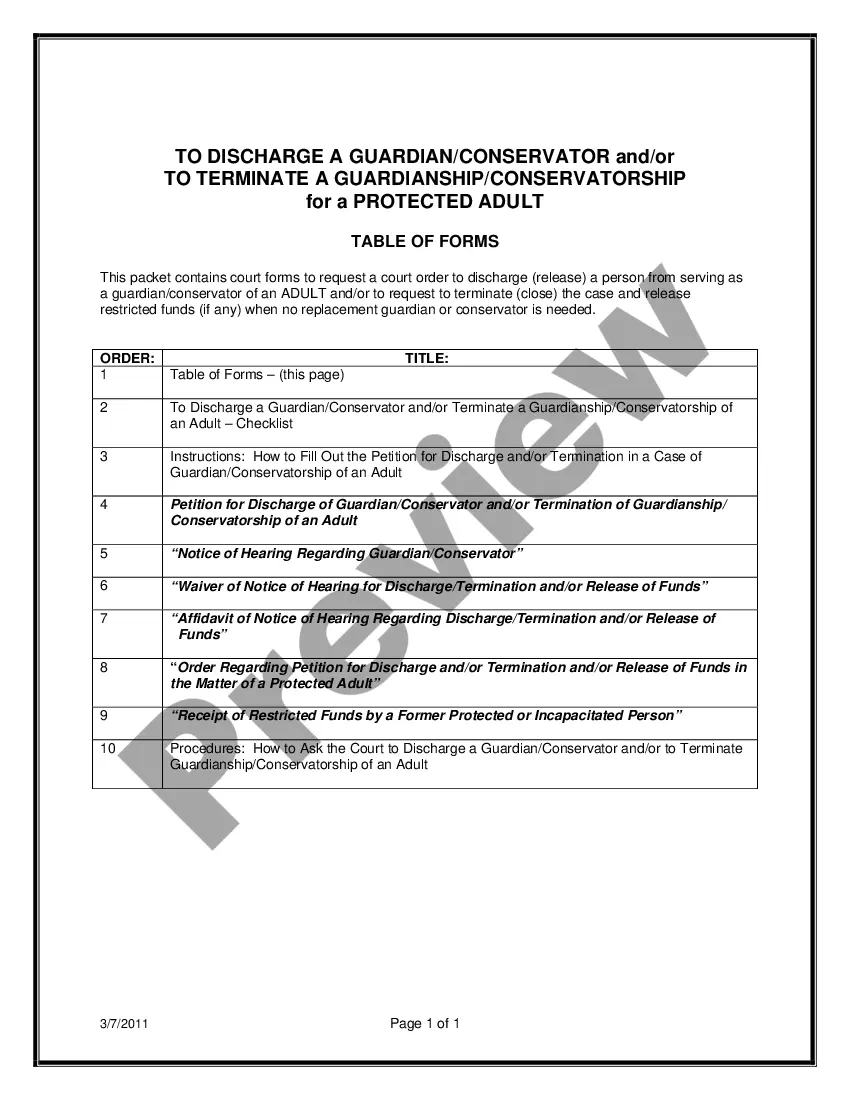
Oklahoma Marital Domestic Separation and Property Settlement Agreement for persons with No Children, No Joint Property or Debts where Divorce Action Filed
Overview of this form
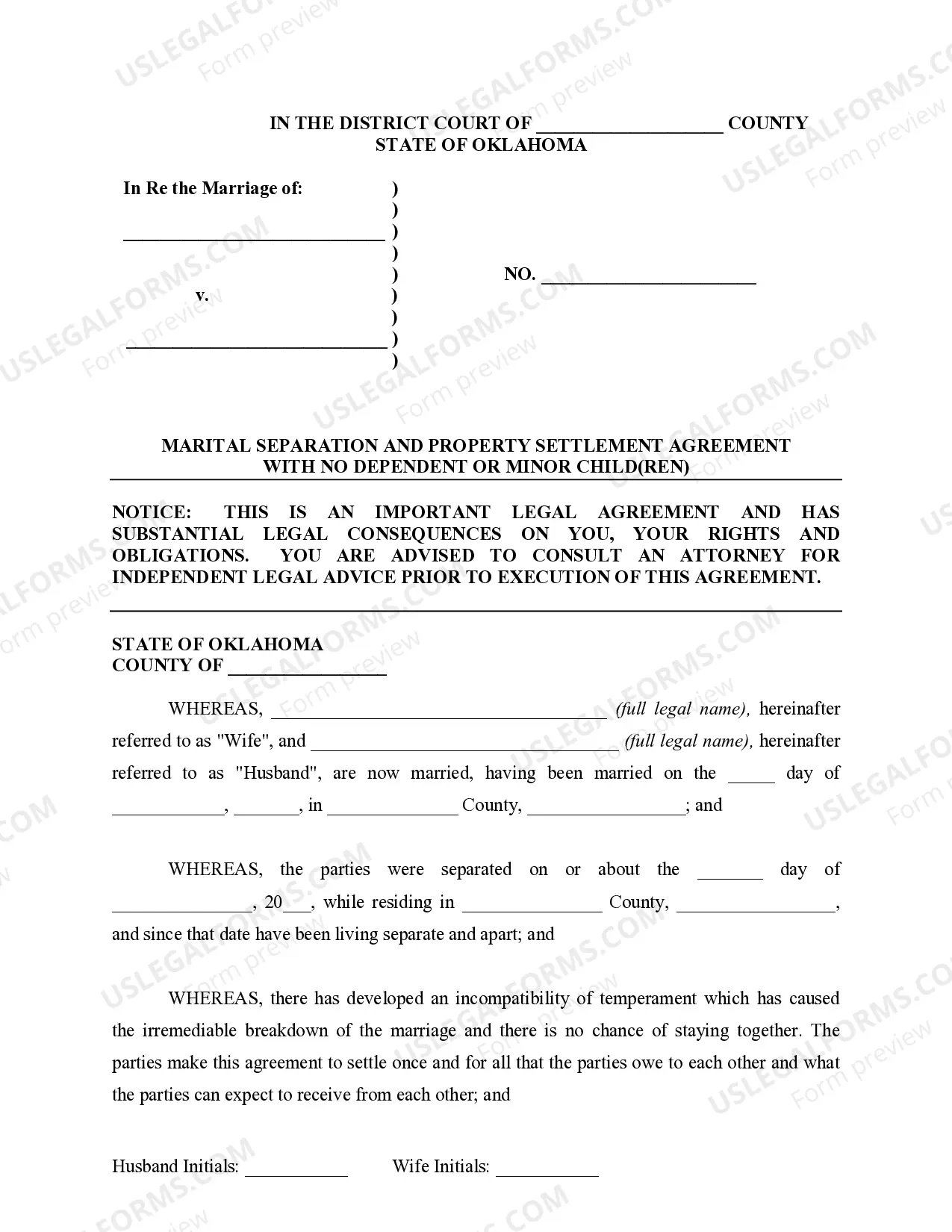
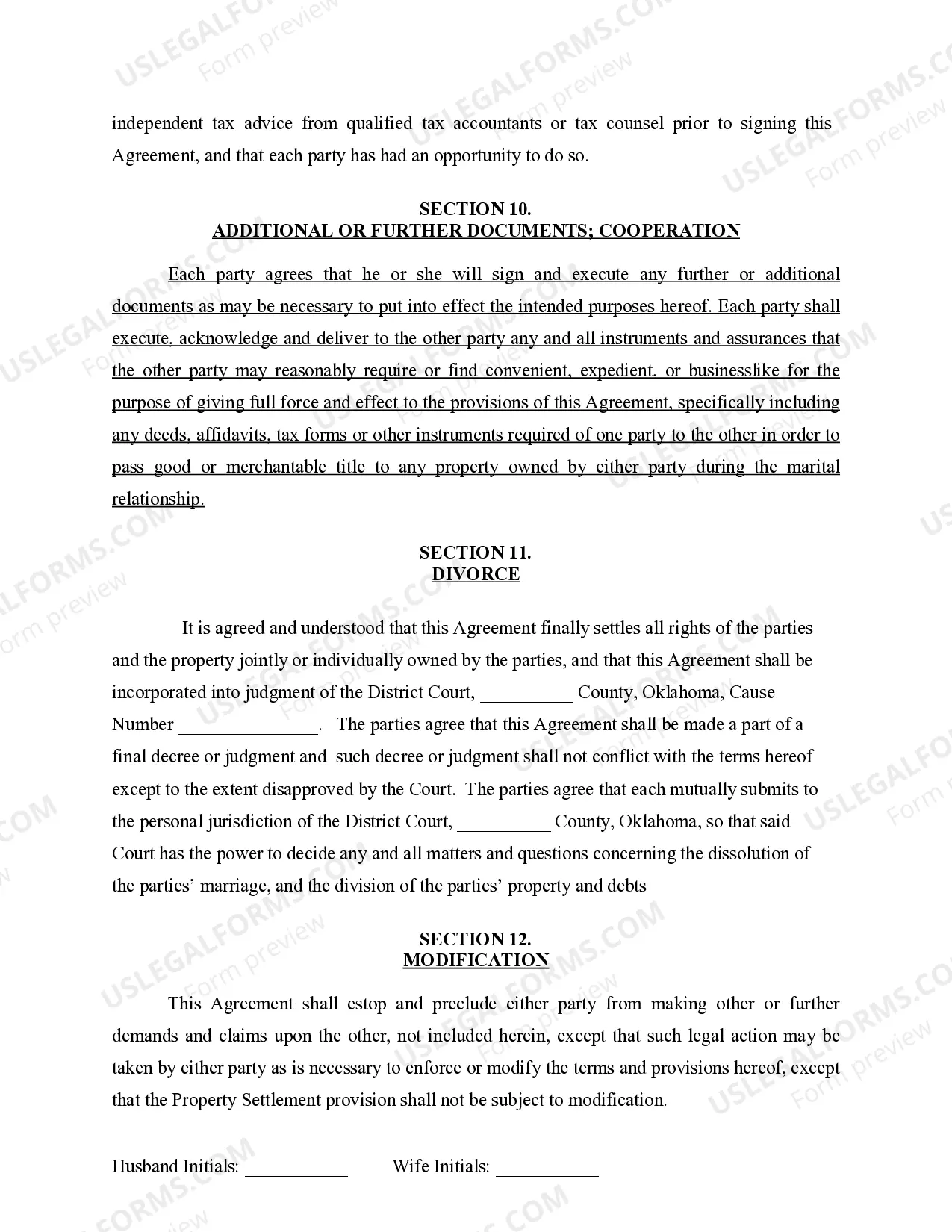
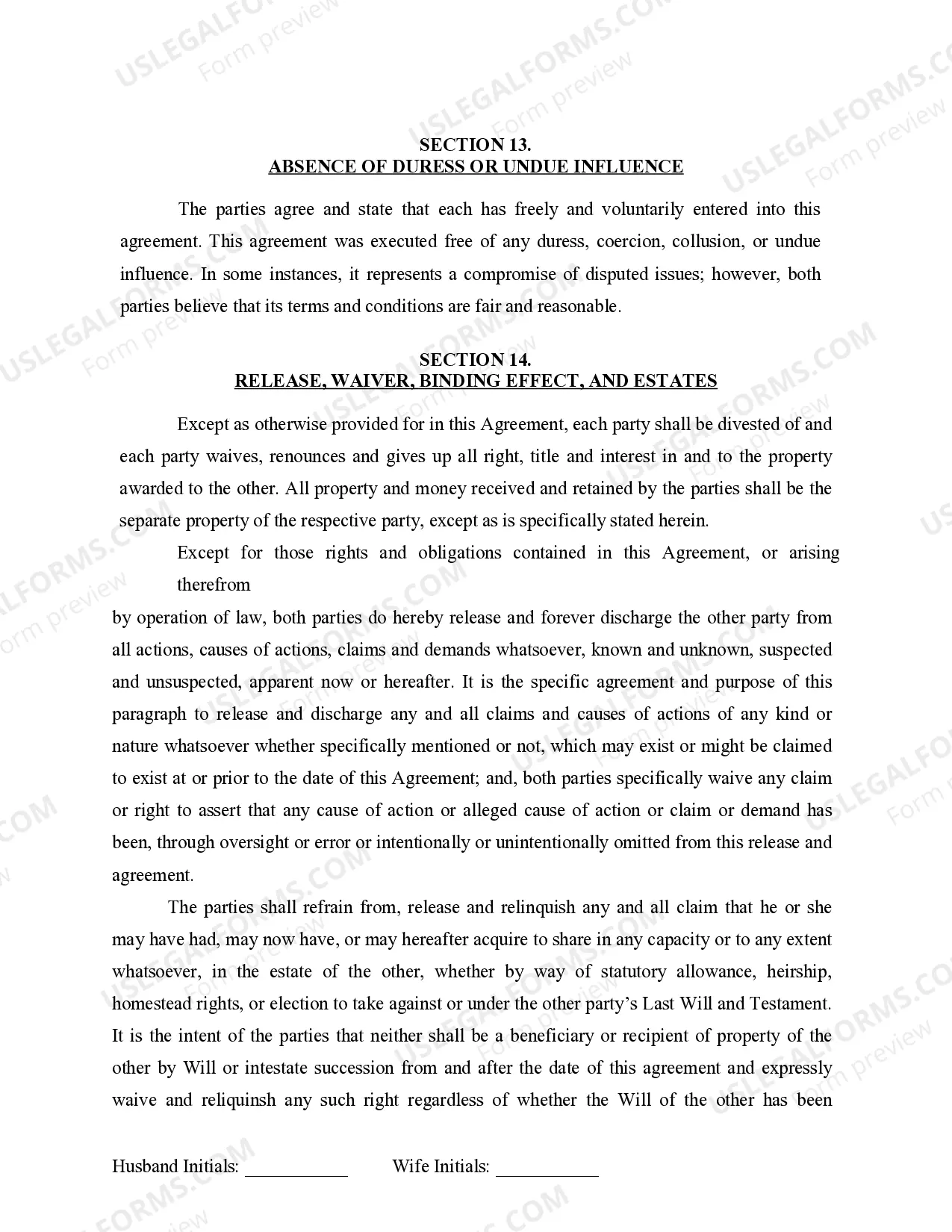
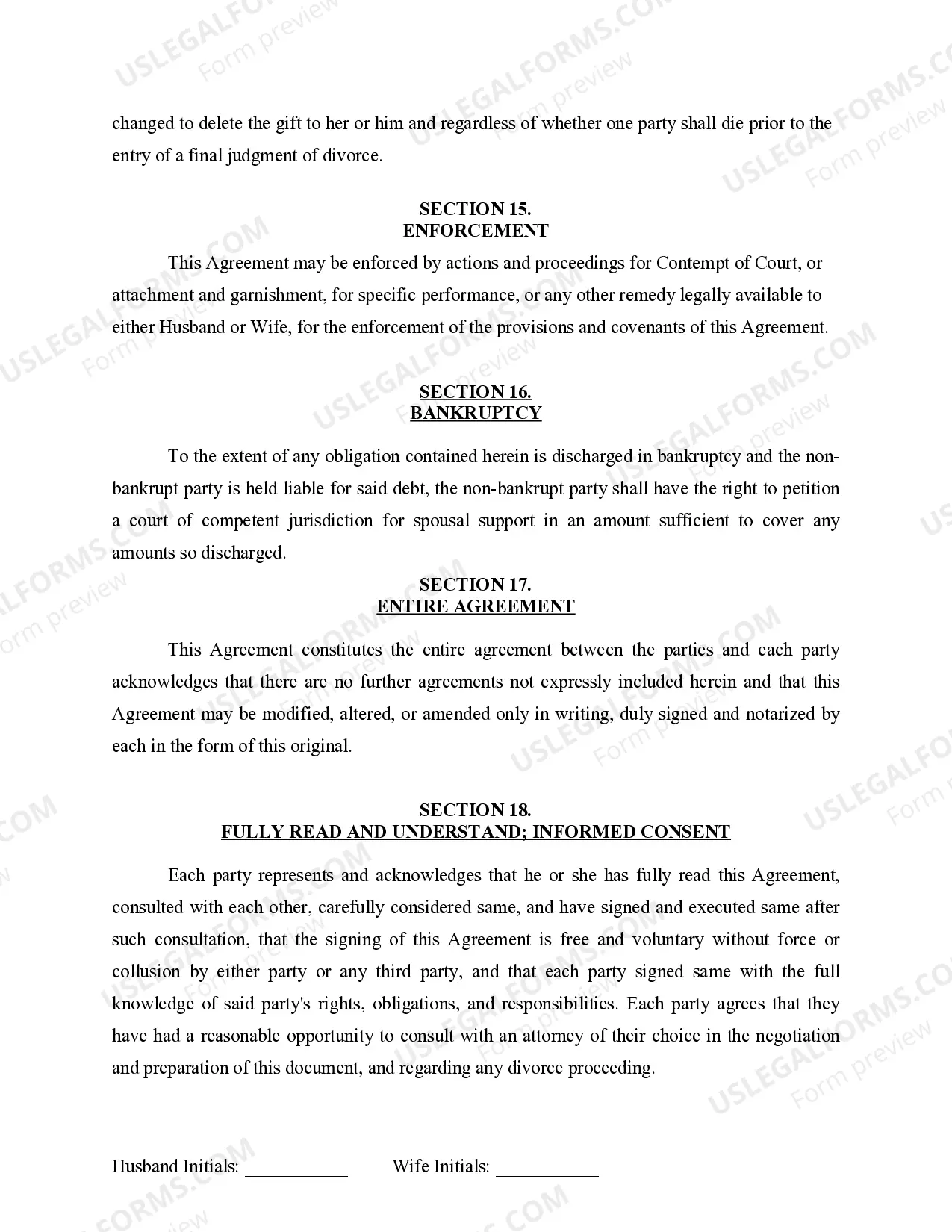
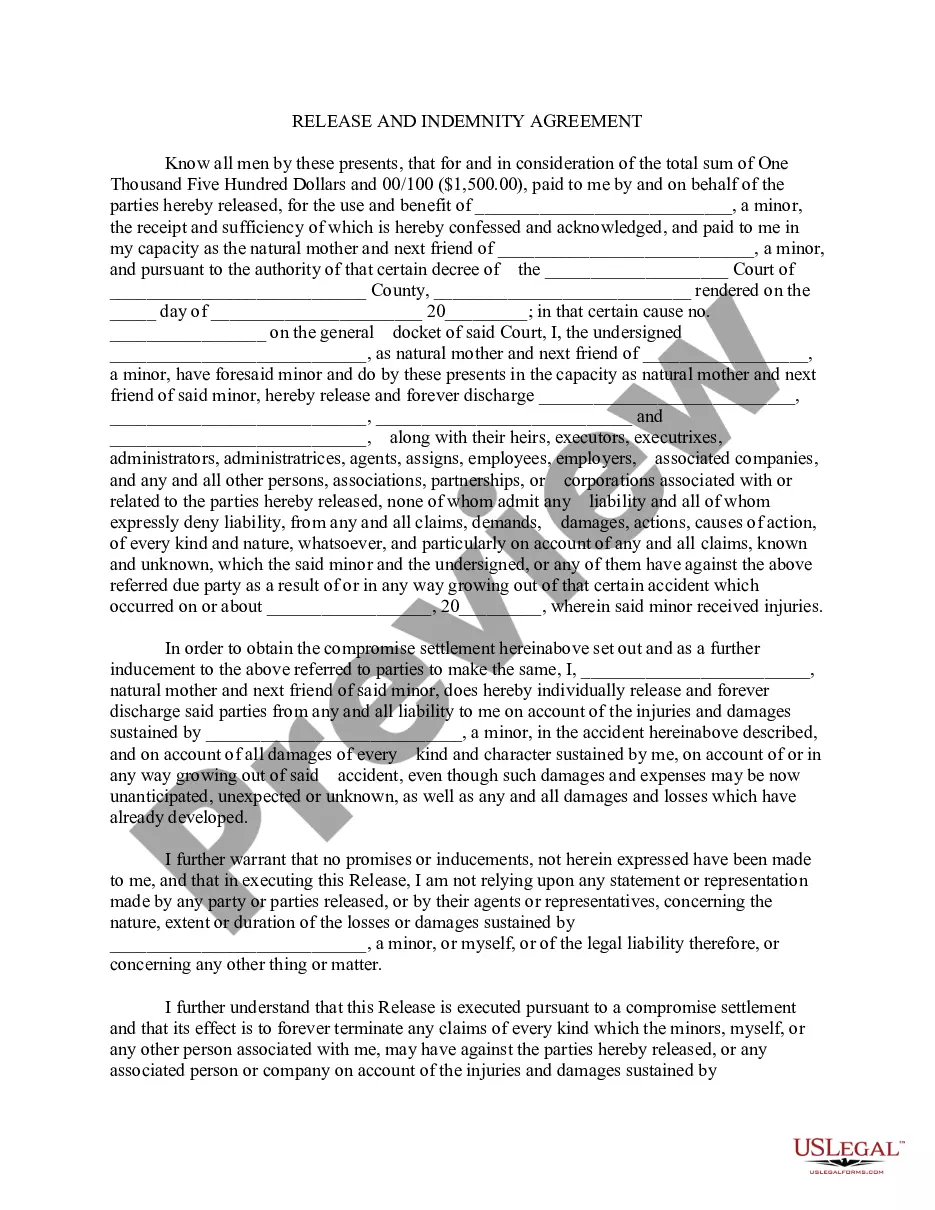
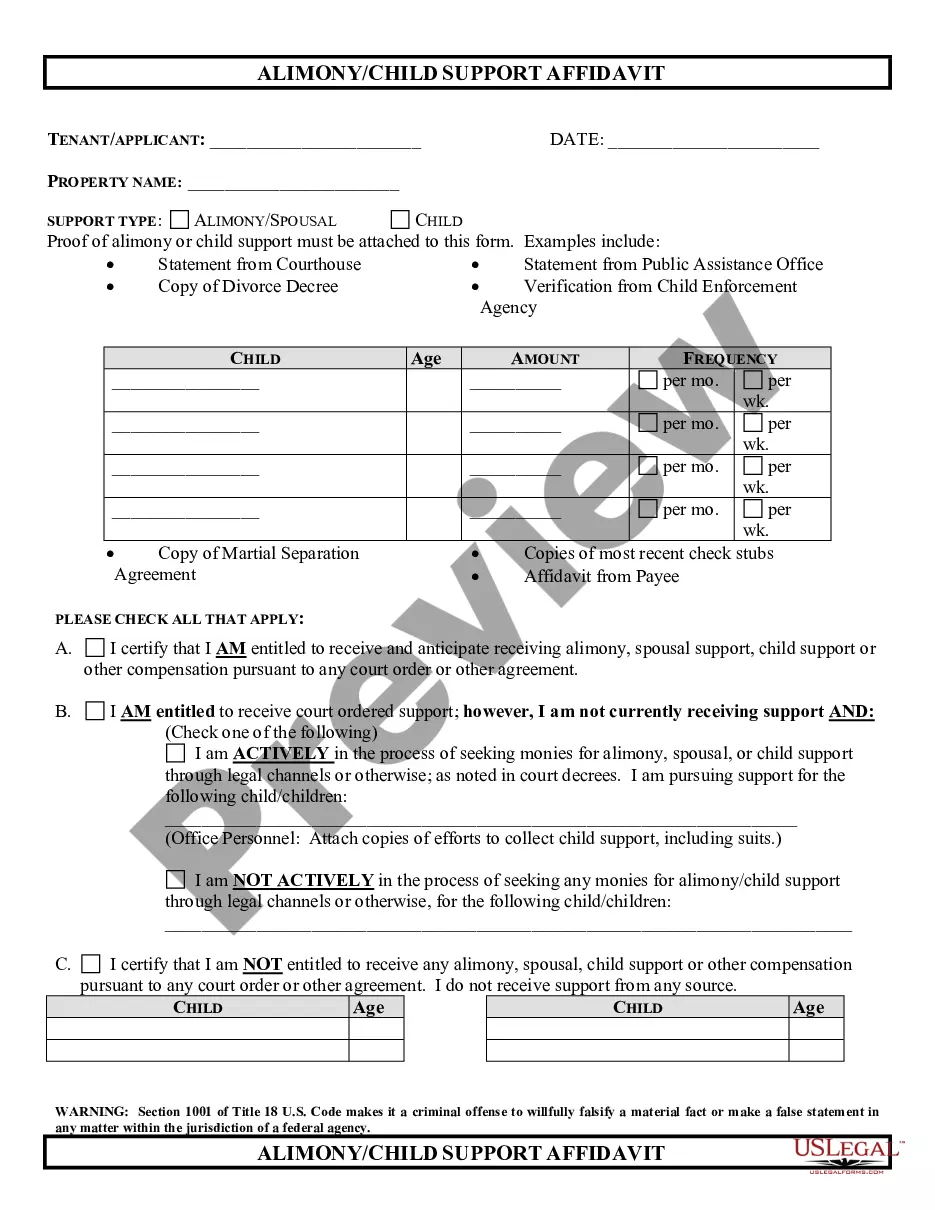
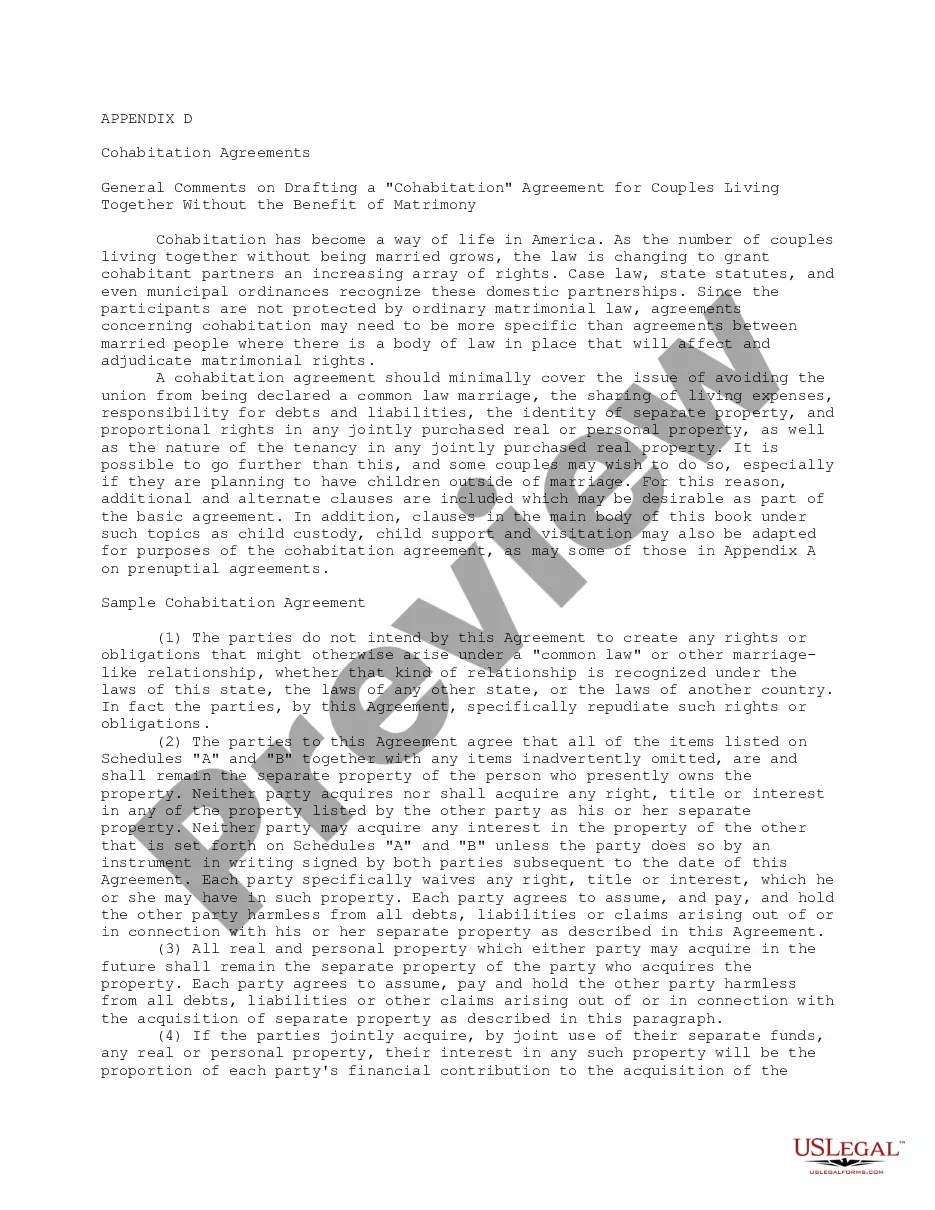
The Marital Domestic Separation and Property Settlement Agreement for persons with no children, no joint property or debts where divorce action is filed is a legal document designed to clarify and settle the rights and obligations of married individuals preparing for a divorce. This agreement is specifically tailored for couples without children and without shared debts or property, making it different from more comprehensive separation agreements that address child custody or joint assets.
Main sections of this form
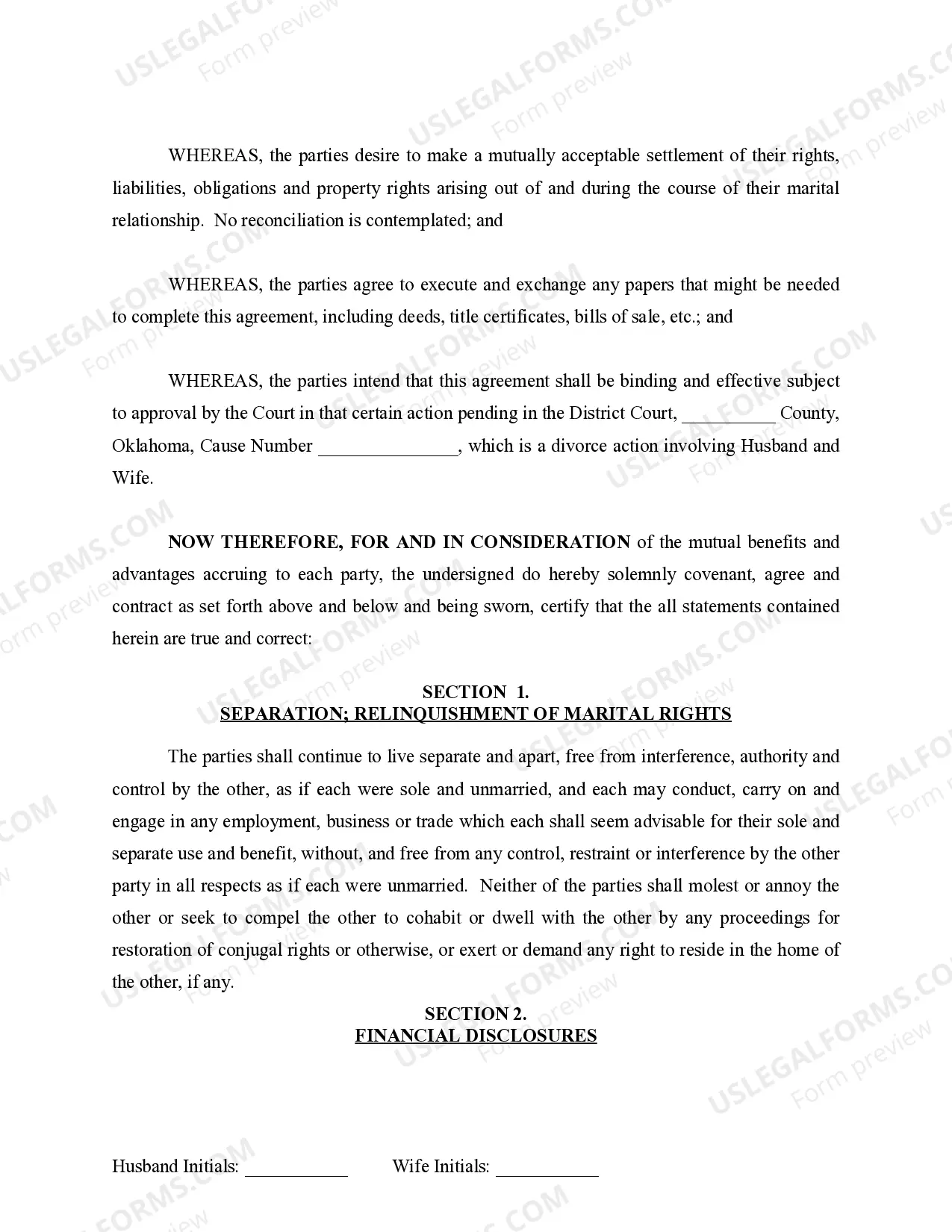
- Separation terms outlining living arrangements and rights of each spouse.
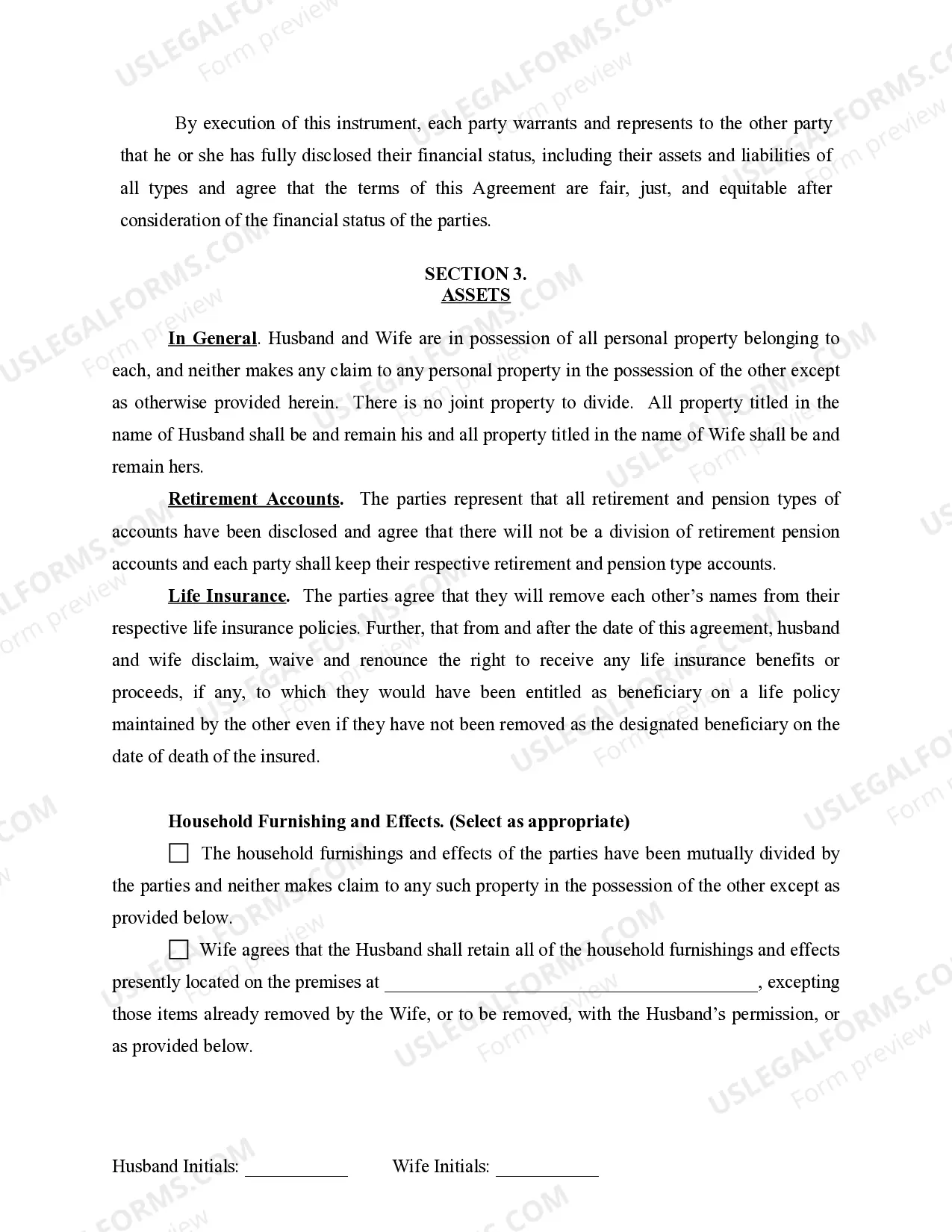
- Disclosure of financial status, including assets and liabilities.
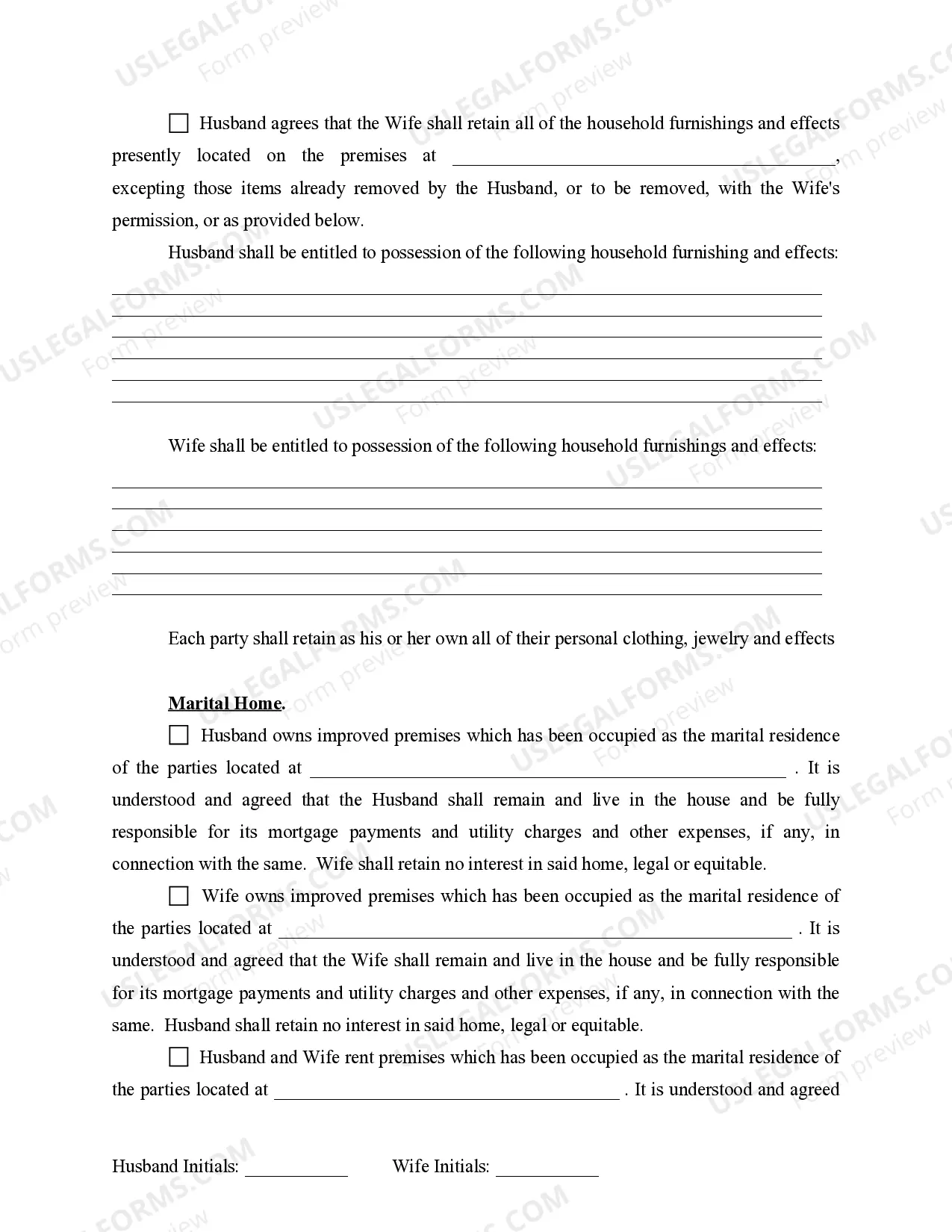
- Agreement on the division of individual property and stipulations regarding retirement accounts.
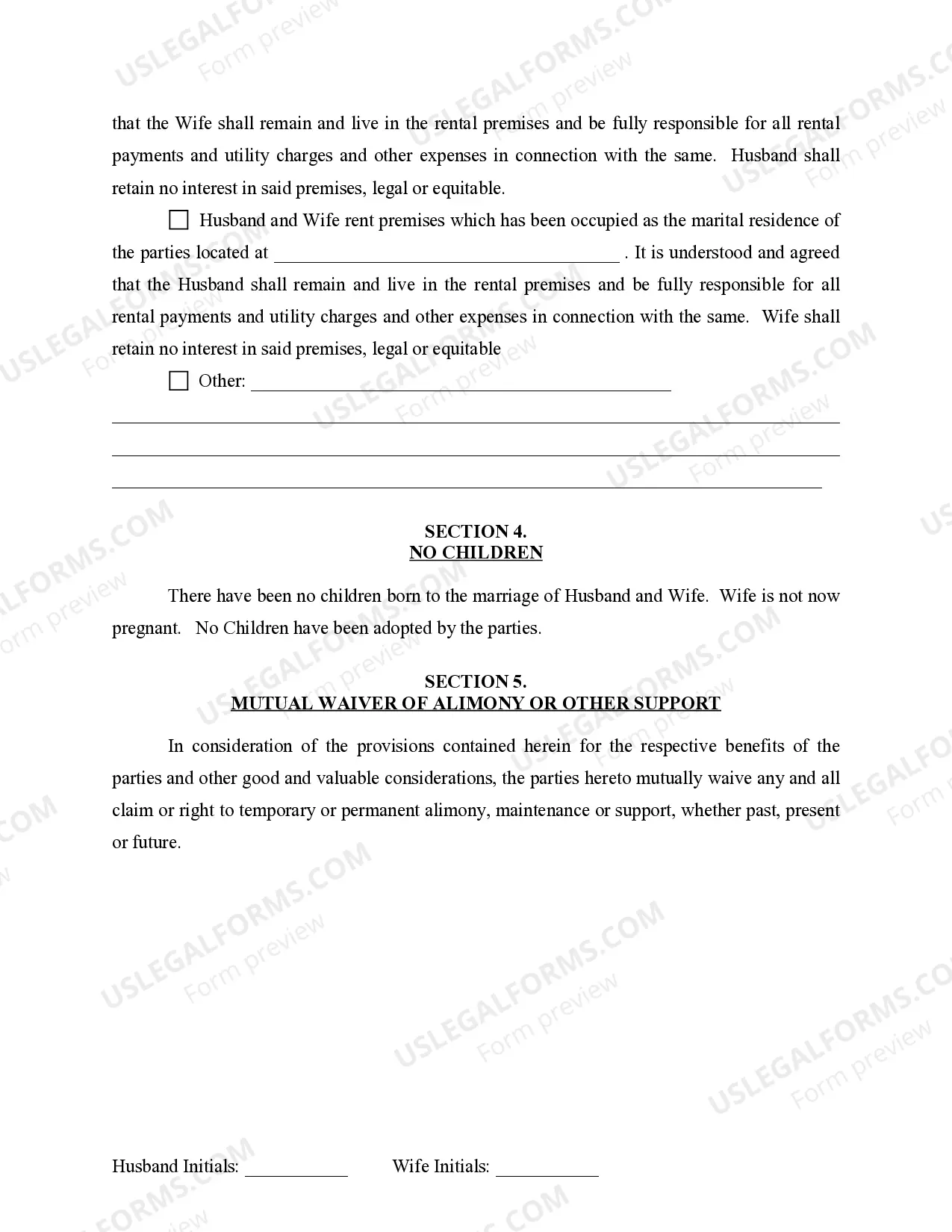
- Mutual waivers of alimony or support obligations.
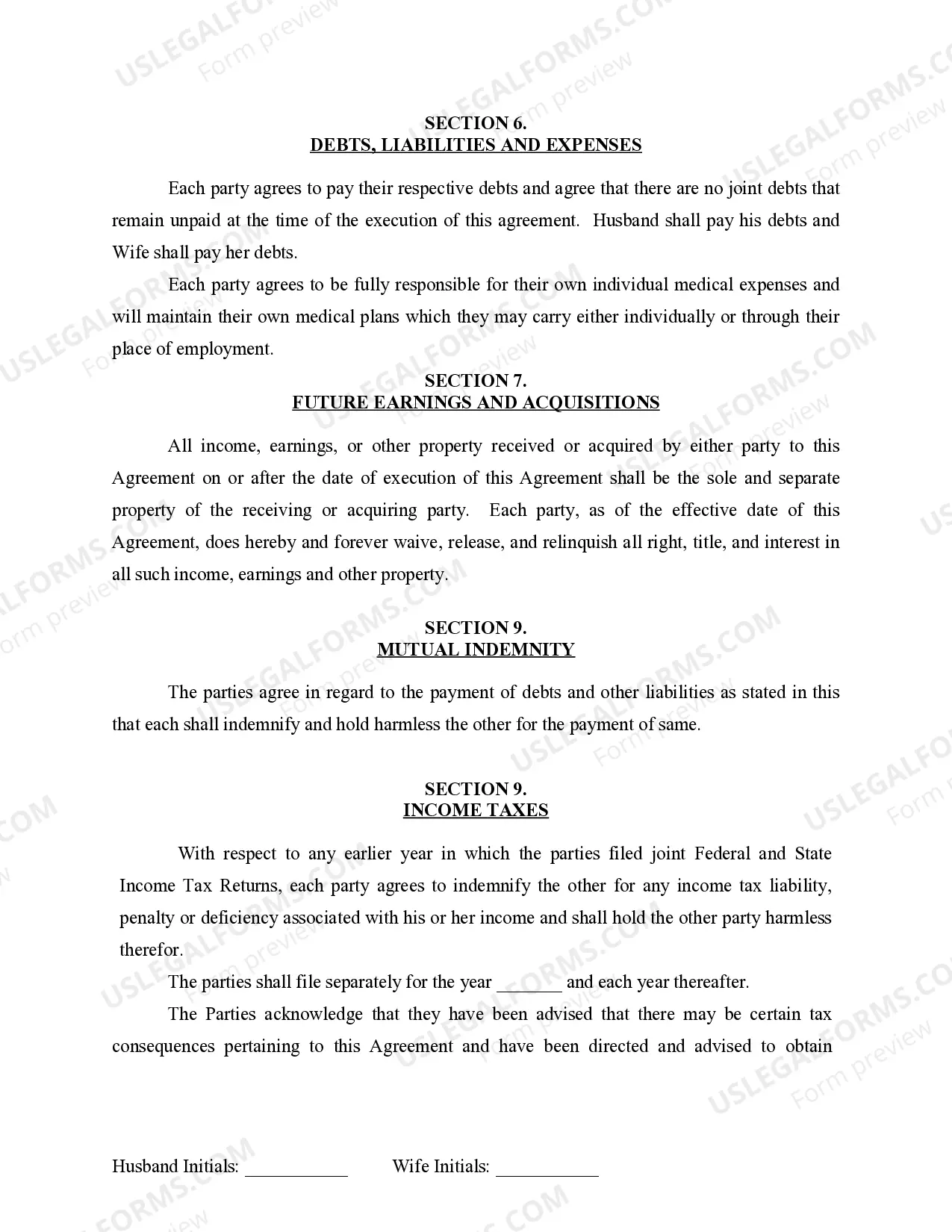
- Indemnification clauses relating to debts and liabilities.
- Specification that there are no children and mutual consent to terms.


When to use this document
This form should be used when both parties wish to establish clear terms regarding their separation and property division prior to a divorce proceeding. It is especially suitable when no children are involved, and the couple has no joint debts or property requiring division. Utilizing this form can help streamline the divorce process by ensuring that each partyâs rights and obligations are clearly articulated and agreed upon.
Who needs this form
- Married individuals seeking a formal separation agreement before a divorce.
- Couples without children, joint property, or joint debts.
- Individuals who want a clear understanding of their rights regarding assets and liabilities.
- Spouses who have filed for divorce or are planning to file shortly.
Steps to complete this form
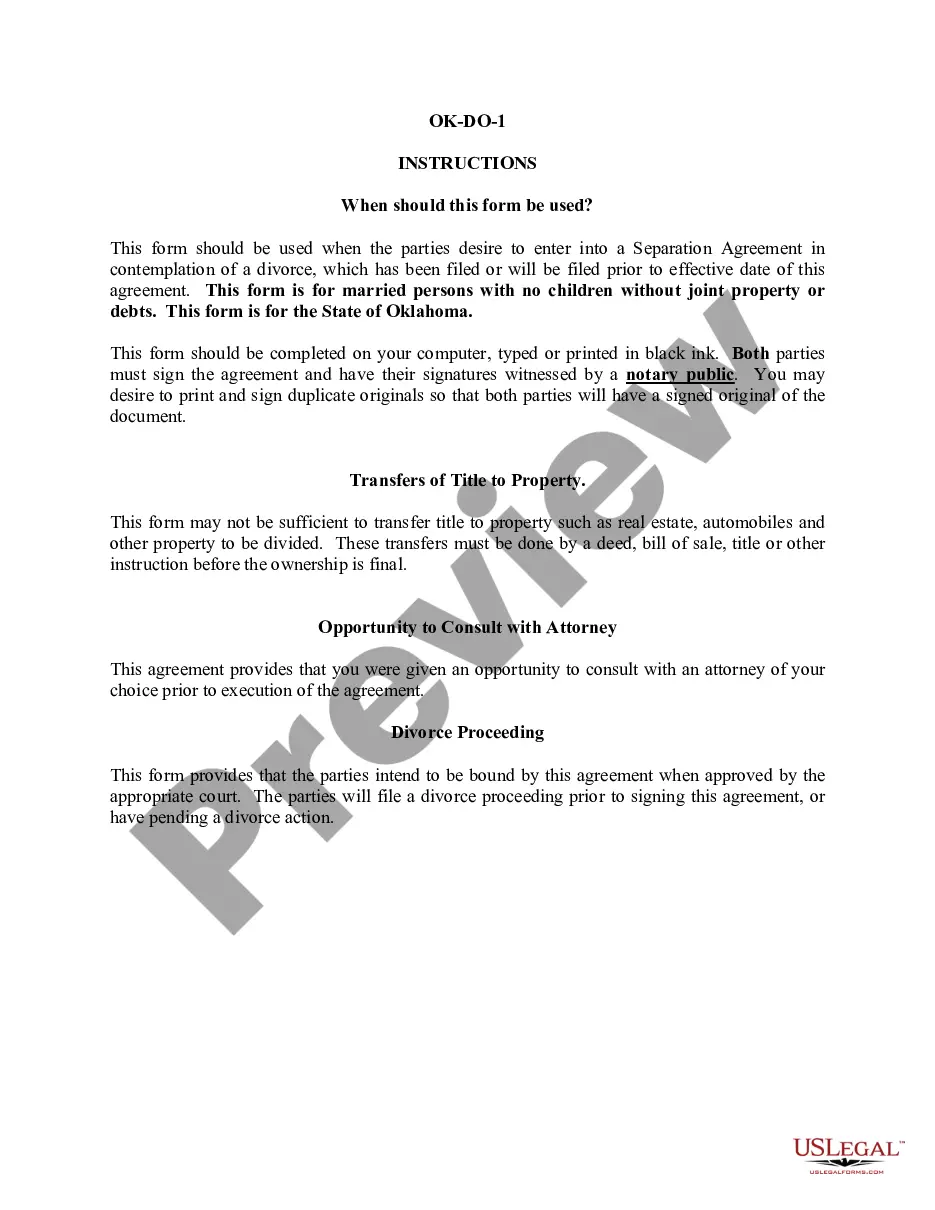
- Identify and enter the full legal names of both spouses at the beginning of the agreement.
- Provide the date of marriage and the date of separation.
- Detail any personal property ownership and agree on the division of assets.
- Include a section for the parties to waive any rights to alimony and outline debt responsibilities.
- Both parties must sign the form in the presence of a notary public.
Notarization guidance
Yes, this form must be notarized to be legally valid. It is important to have both parties' signatures witnessed by a notary public to ensure that the agreement is enforceable in court. US Legal Forms offers integrated online notarization, making it convenient for you to complete this requirement through a secure video call.
Get your form ready online
Our built-in tools help you complete, sign, share, and store your documents in one place.
Make edits, fill in missing information, and update formatting in US Legal Forms—just like you would in MS Word.
Download a copy, print it, send it by email, or mail it via USPS—whatever works best for your next step.
Sign and collect signatures with our SignNow integration. Send to multiple recipients, set reminders, and more. Go Premium to unlock E-Sign.
If this form requires notarization, complete it online through a secure video call—no need to meet a notary in person or wait for an appointment.
We protect your documents and personal data by following strict security and privacy standards.

Make edits, fill in missing information, and update formatting in US Legal Forms—just like you would in MS Word.

Download a copy, print it, send it by email, or mail it via USPS—whatever works best for your next step.

Sign and collect signatures with our SignNow integration. Send to multiple recipients, set reminders, and more. Go Premium to unlock E-Sign.

If this form requires notarization, complete it online through a secure video call—no need to meet a notary in person or wait for an appointment.

We protect your documents and personal data by following strict security and privacy standards.
Typical mistakes to avoid
- Failing to fully disclose all assets and liabilities, leading to potential legal disputes later.
- Not having the agreement notarized, which can render the document unenforceable.
- Skipping the opportunity to consult with an attorney for tailored legal advice.
- Not clearly specifying the division of individual property or outstanding debts.
Advantages of online completion
- Immediate access to legally vetted form templates drafted by licensed attorneys.
- Convenient editing and customization options to suit your individual needs.
- Quick downloadable format, allowing for faster completion of necessary legal processes.
- Secured environment ensuring privacy and compliance with legal standards.
Looking for another form?

Form popularity
FAQ
Any property acquired during a marriage is marital property, regardless of how it is titled or who owns it. This includes cars, houses, bank accounts, and all other property and assets. Oklahoma, along with 40 other states, is classed as an Equitable Distribution state.
Couples going through a divorce must decide how to divide their property and debtsor ask a court to do it for them. Under California's community property laws, assets and debts spouses acquire during marriage belong equally to both of them, and they must divide them equally in a divorce.
In Alberta, the Court applies the Matrimonial Property Act (MPA) to divide assets fairly. The MPA only applies to legally married spouses in Alberta. It does not apply to individuals in a common-law relationship. So, following a divorce or legal separation, who gets to keep the house?
Related Content. Property that is unlikely to be shared between the parties on the breakdown of the marriage or civil partnership unless it is required to meet needs. Generally non-matrimonial property is: Acquired by one party before the marriage.
Though the term non-marital property often refers to any personal or real property owned prior to, and brought into the marriage, it can also refer to things such as inheritances and gifts made to only one spouse.
Marital, or community property, is defined as assets and debt newly acquired during the marriage, either jointly or by one party, other than by a gift or inheritance to one spouse. Nonmarital, or separate property, are the assets and debts owned prior to the marriage that remain unchanged.
Couples who established bank accounts after the marriage began must divide these accounts equally when seeking divorce. Specific accounts that contain marital funds are the marital property of both parties.Meanwhile, couples who each own separate property keep their specific accounts or property.
Marital property refers generally to all of the property acquired by either or both spouses during the marriage. Separate property refers to any property the spouses acquired separately before the marriage or after separation (or in some states after divorce).
: not of, relating to, or occuring within marriage or the married state : not marital nonmarital childbearing nonmarital cohabitation nonmarital sexual relations.