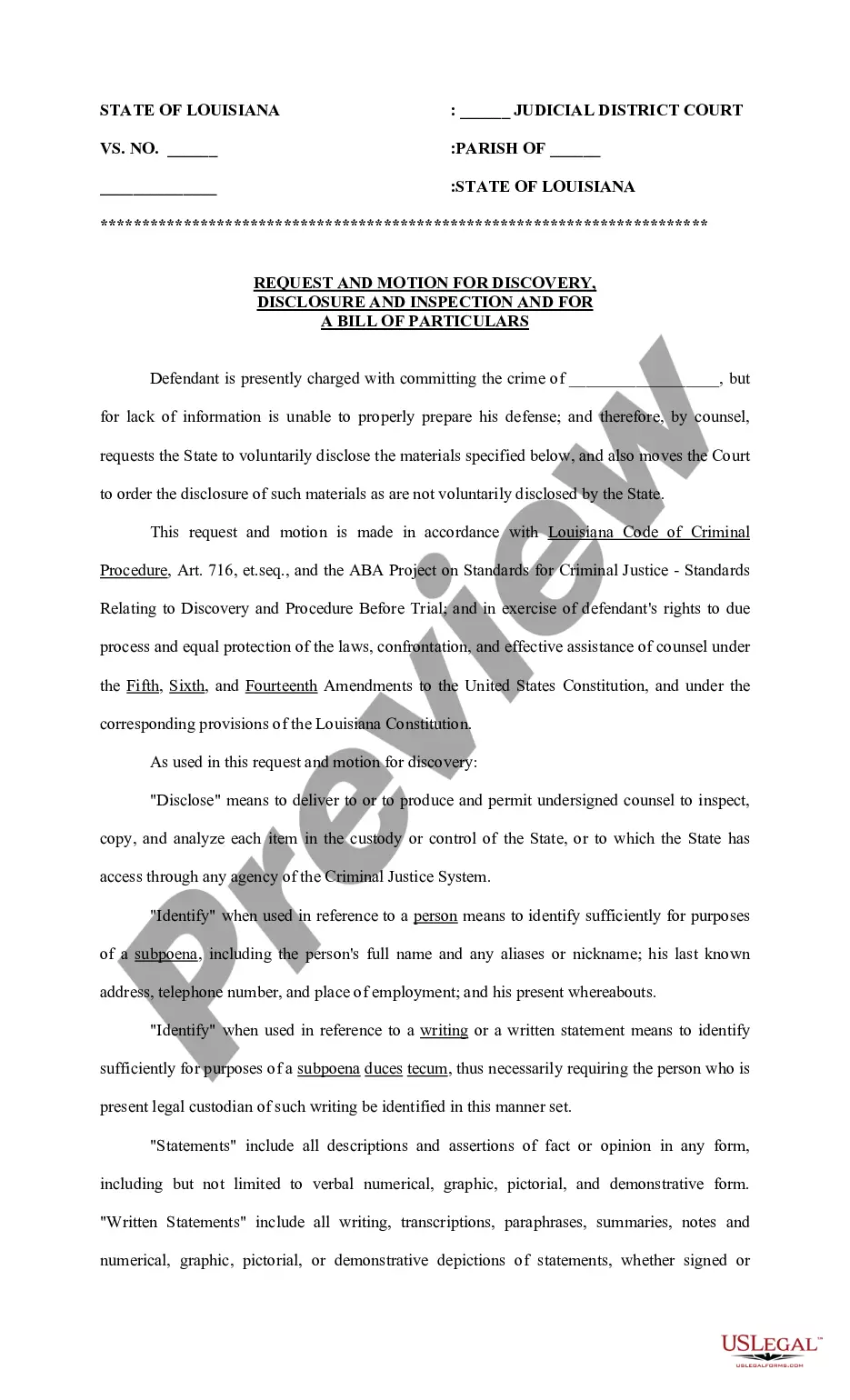
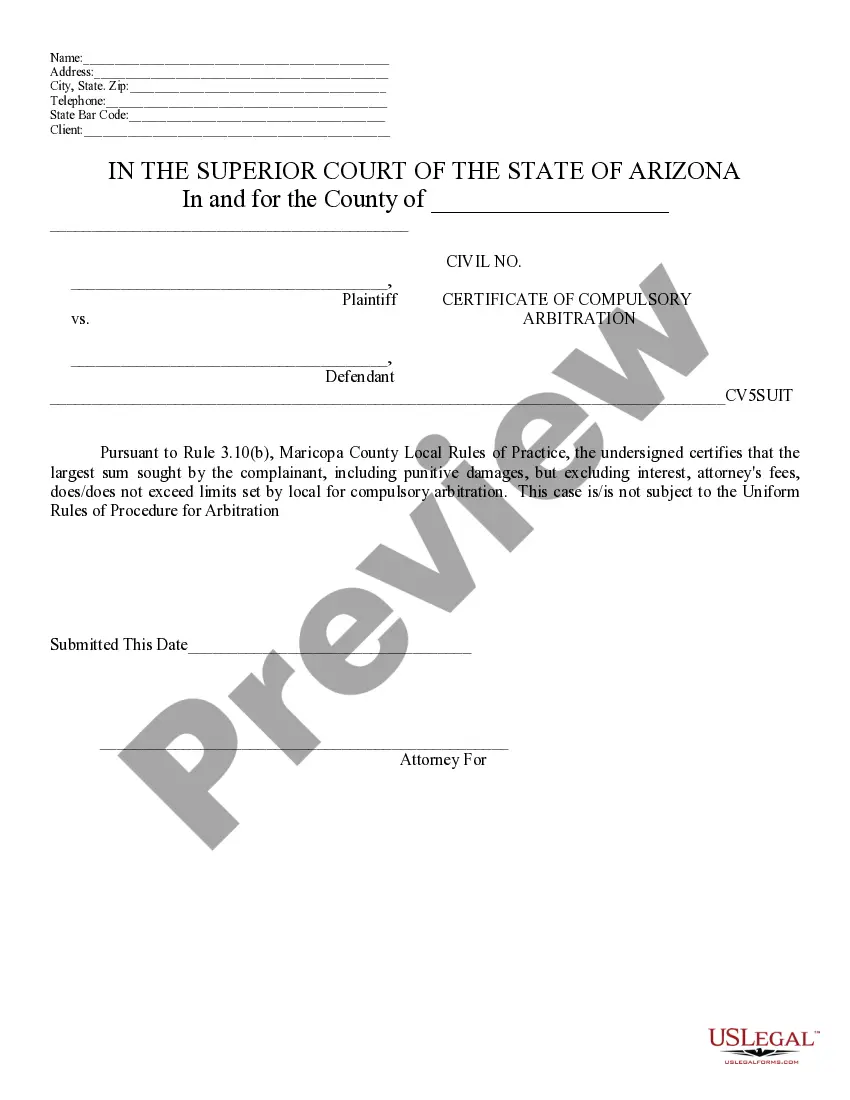
Arizona Certificate of Compulsory Arbitration
What is this form?
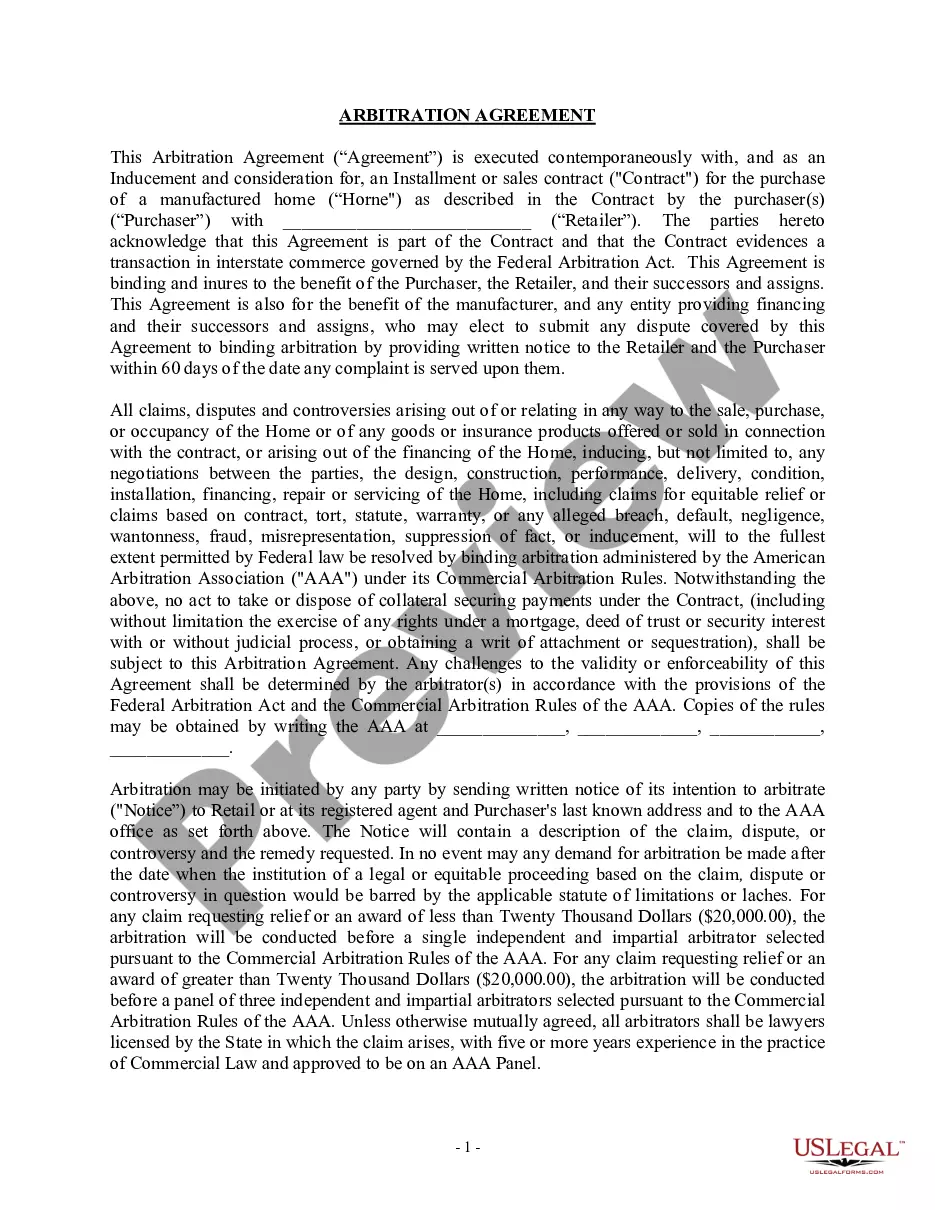
The Certificate of Compulsory Arbitration is a legal document that certifies whether a case exceeds the monetary limits for compulsory arbitration in certain jurisdictions. This form indicates that the amount in controversy does not surpass the statutory limits, meaning the case is exempt from compulsory arbitration rules. It is important to use this form correctly to ensure compliance with local legal requirements.
Key components of this form
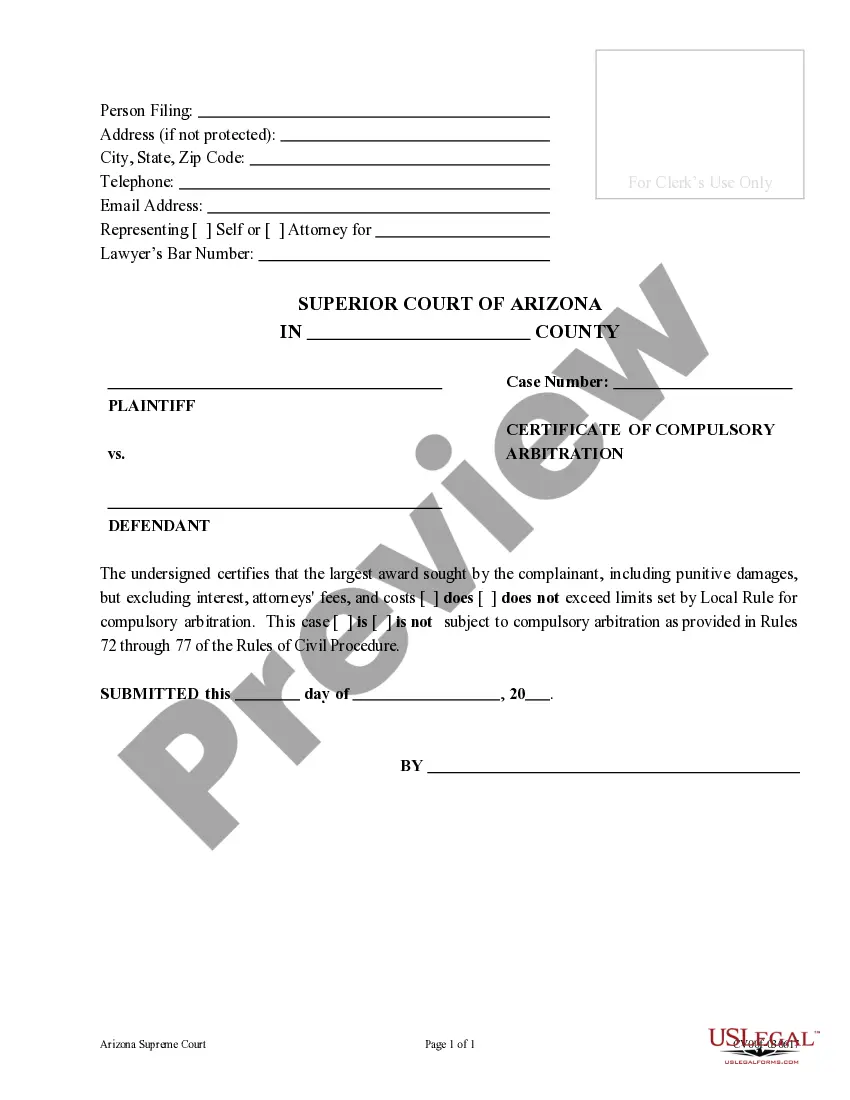
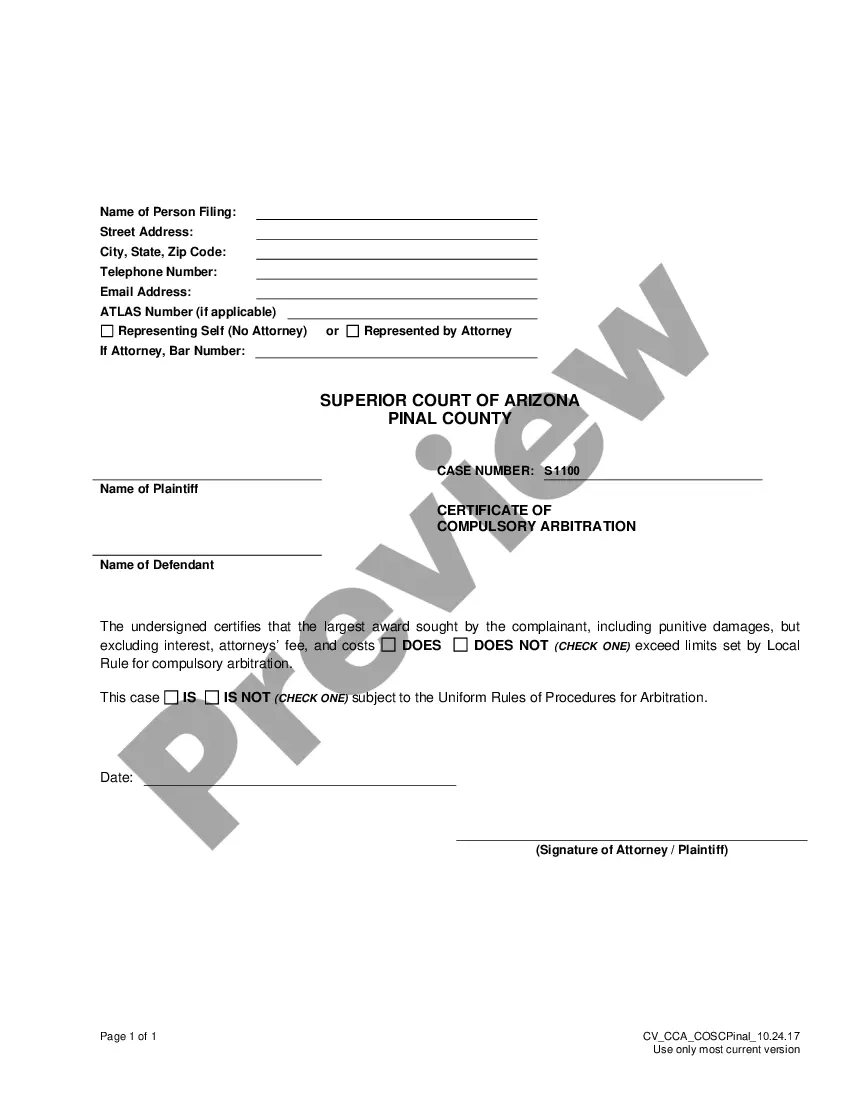
- Address and contact information of the attorney and client.
- Identification of the court in which the case is filed.
- Certification statement regarding the monetary limits related to compulsory arbitration.
- Signature and date submitted by the attorney.


When to use this form
This form is used when you are filing a civil lawsuit in a jurisdiction that requires certification of the amount in controversy. If the amount is within the statutory limits set for compulsory arbitration, this form is necessary to confirm that the case cannot be subjected to arbitration processes.
Who this form is for
- Attorneys representing clients in civil litigation.
- Individuals filing a lawsuit where the amount in question is relevant to the arbitration rules.
- Parties involved in disputes requiring clarification on arbitration eligibility.
Completing this form step by step
- Enter the address and contact details of the attorney and client.
- Specify the county where the lawsuit is being filed.
- Affirm whether the amount in controversy exceeds the local limits for compulsory arbitration.
- Sign and date the form to authenticate the certification.
Notarization guidance
Notarization is generally not required for this form. However, certain states or situations might demand it. You can complete notarization online through US Legal Forms, powered by Notarize, using a verified video call available anytime.
Get your form ready online
Our built-in tools help you complete, sign, share, and store your documents in one place.
Make edits, fill in missing information, and update formatting in US Legal Forms—just like you would in MS Word.
Download a copy, print it, send it by email, or mail it via USPS—whatever works best for your next step.
Sign and collect signatures with our SignNow integration. Send to multiple recipients, set reminders, and more. Go Premium to unlock E-Sign.
If this form requires notarization, complete it online through a secure video call—no need to meet a notary in person or wait for an appointment.
We protect your documents and personal data by following strict security and privacy standards.

Make edits, fill in missing information, and update formatting in US Legal Forms—just like you would in MS Word.

Download a copy, print it, send it by email, or mail it via USPS—whatever works best for your next step.

Sign and collect signatures with our SignNow integration. Send to multiple recipients, set reminders, and more. Go Premium to unlock E-Sign.

If this form requires notarization, complete it online through a secure video call—no need to meet a notary in person or wait for an appointment.

We protect your documents and personal data by following strict security and privacy standards.
Avoid these common issues
- Failing to accurately determine the amount in controversy.
- Not identifying the correct jurisdiction.
- Leaving out required signatures or dates.
Benefits of completing this form online
- Convenience of downloading and completing the form at your own pace.
- Access to templates that are drafted by licensed attorneys.
- Ability to edit the form as needed before submission.
Quick recap
- The Certificate of Compulsory Arbitration confirms whether a case is subject to arbitration rules based on the amount in controversy.
- Precision in completing this form is critical to avoiding legal complications.
- Always check for state-specific regulations to ensure compliance.
Looking for another form?
Form popularity
FAQ
The Arizona Certificate of Compulsory Arbitration certifies that the amount in controversy does not exceed the statutory limits for compulsory arbitration, making the case exempt from those rules. It must include the attorney and client contact information, identify the court where the case is filed, include a certification statement about the monetary limits, and be signed and dated by the attorney.
This form is used to confirm that the amount in controversy in a civil case does not exceed the statutory limits for compulsory arbitration, thereby showing the case is not subject to compulsory arbitration. It requires the attorney and client contact information, court identification, a certification statement about monetary limits, and a signature with date.
Arizona law typically subjects civil disputes to compulsory arbitration when the amount in controversy exceeds the statutory limits. This form is used to certify that the amount is within the limits, indicating the case is not subject to compulsory arbitration. The filing must include the attorney and client contact information and the court identification.
Compulsory arbitration is a process where certain civil disputes may be required to go to arbitration instead of court. The Arizona Certificate of Compulsory Arbitration helps determine eligibility by certifying the amount in controversy, so the case can be excluded from or subjected to arbitration based on those monetary limits.
If a court grants a motion to compel arbitration, the dispute may proceed in arbitration under applicable rules. The Arizona Certificate of Compulsory Arbitration relates to whether the case falls within the monetary limits and is typically used beforehand to establish eligibility for arbitration.
The Certificate of Compulsory Arbitration specifically certifies that the amount in controversy does not exceed statutory limits, demonstrating exemption from compulsory arbitration. A standard arbitration filing initiates arbitration and does not address monetary-limit eligibility; this form also requires attorney contact info, court identification, a certification statement, and a signature.