Texas Mutual Wills or Last Will and Testaments for Man and Woman Living Together, Not Married With Minor Children
What this document covers
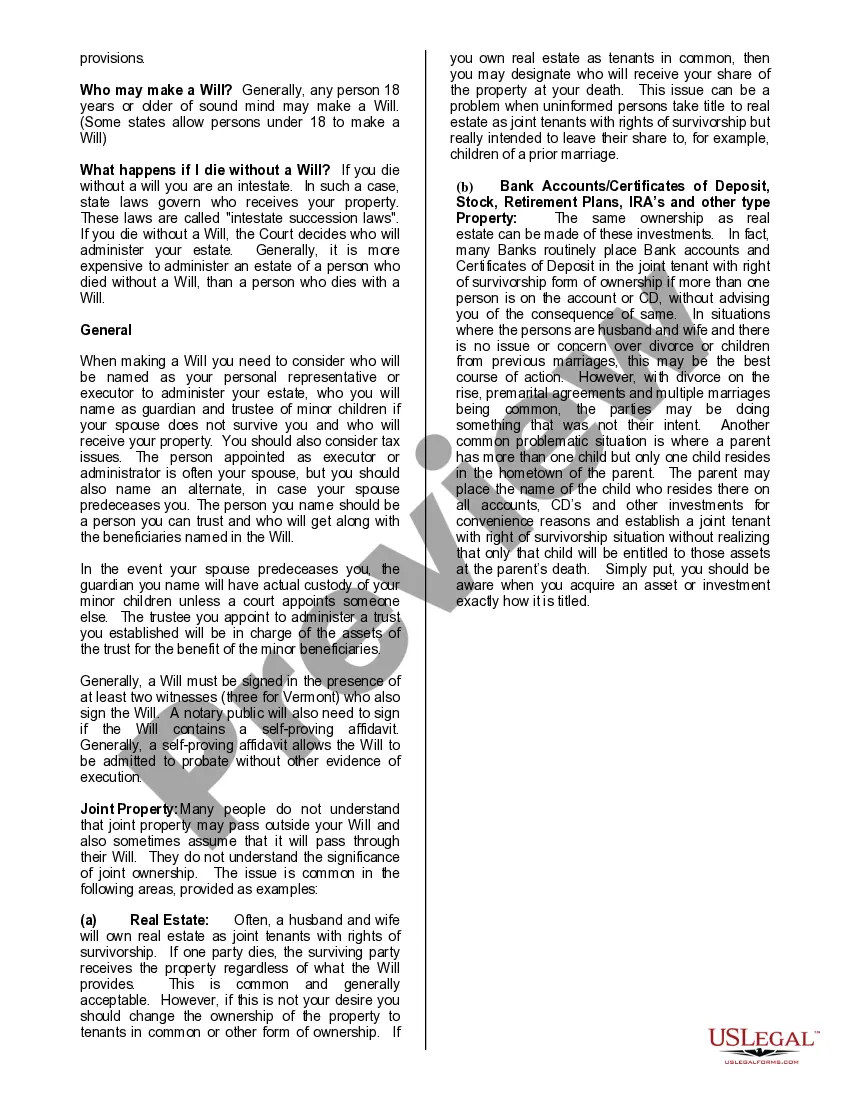
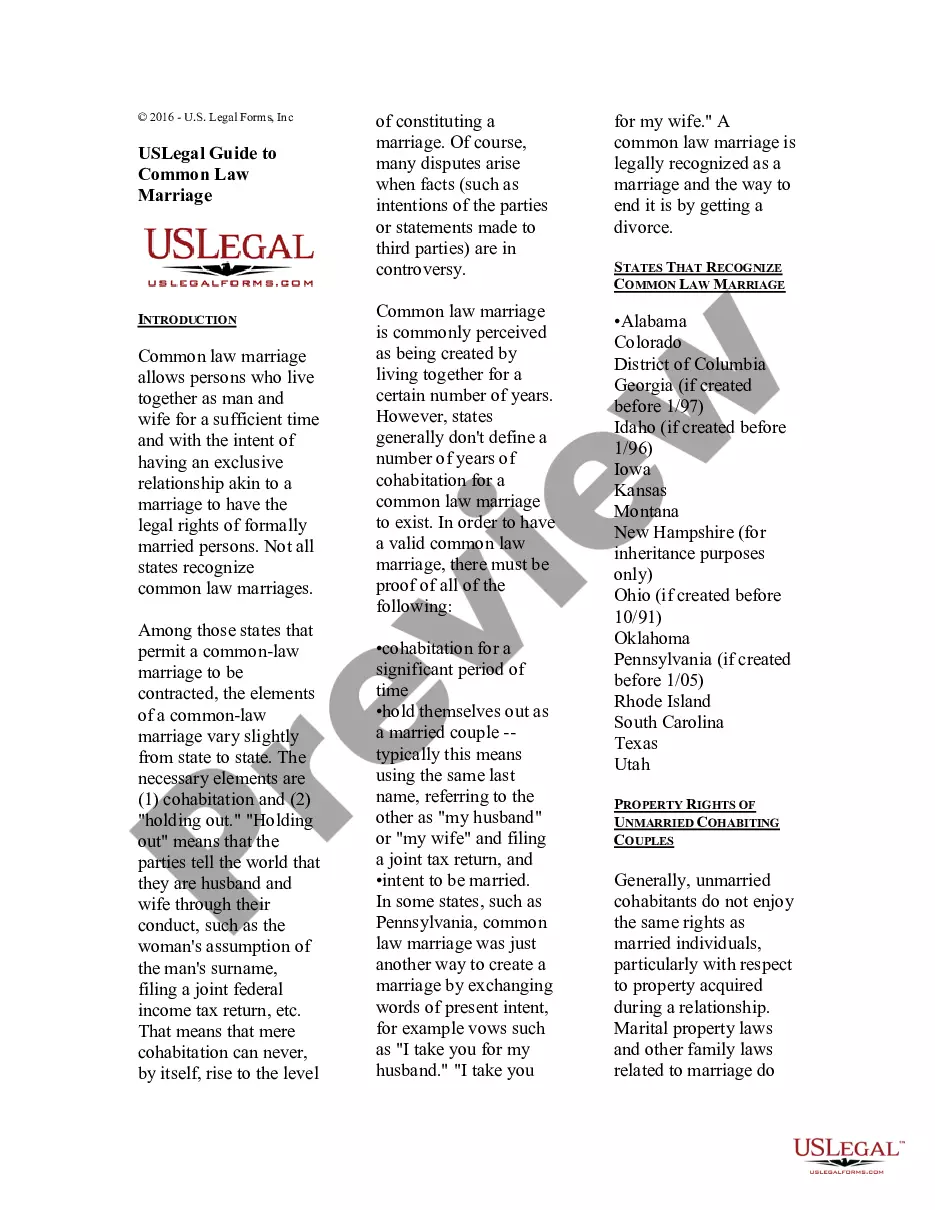
This Mutual Will or Last Will and Testament is designed for a man and woman living together, not married, and having minor children. This form allows both parties to leave their property to each other while also ensuring that their minor children are provided for after their passing. This will differs from individual wills as it encompasses mutual agreements about the distribution of assets between partners who are not legally married, addressing the unique needs of couples in this situation.
Key components of this form
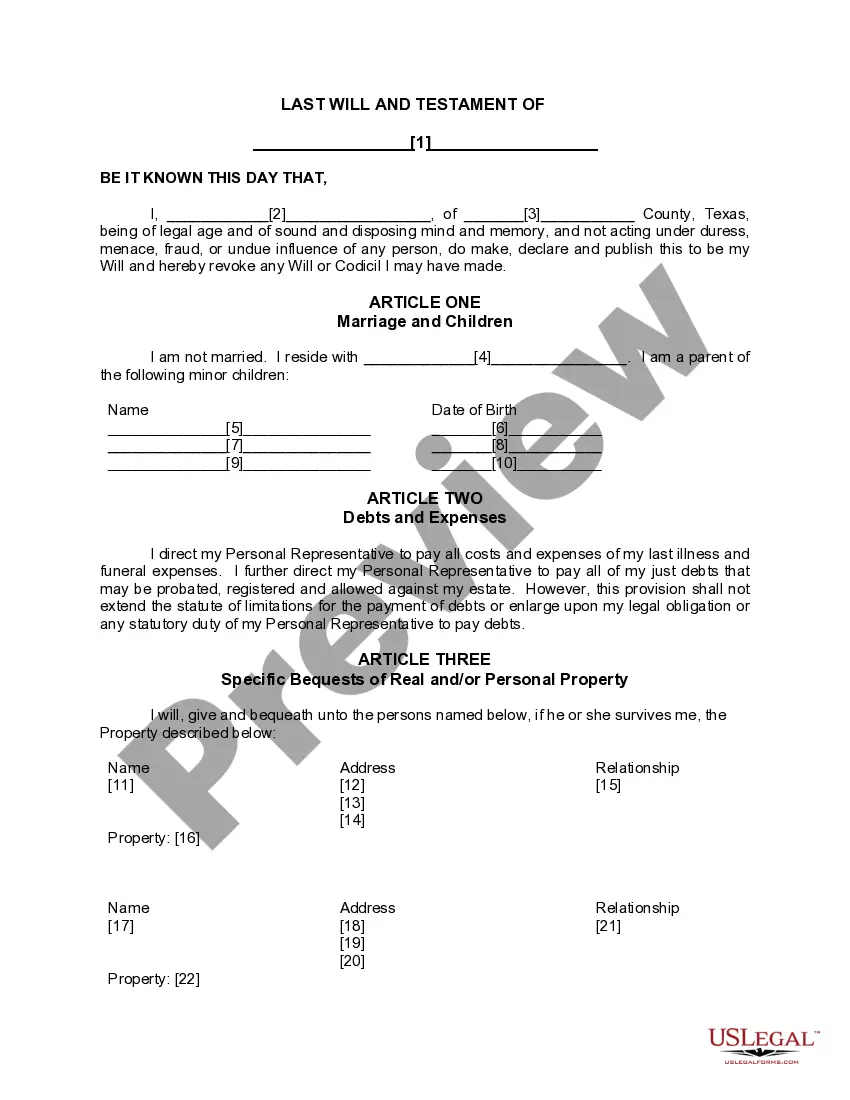
- Identification of the parties involved, including their names and the county of residence.
- Details of any minor children, including names and birthdates.
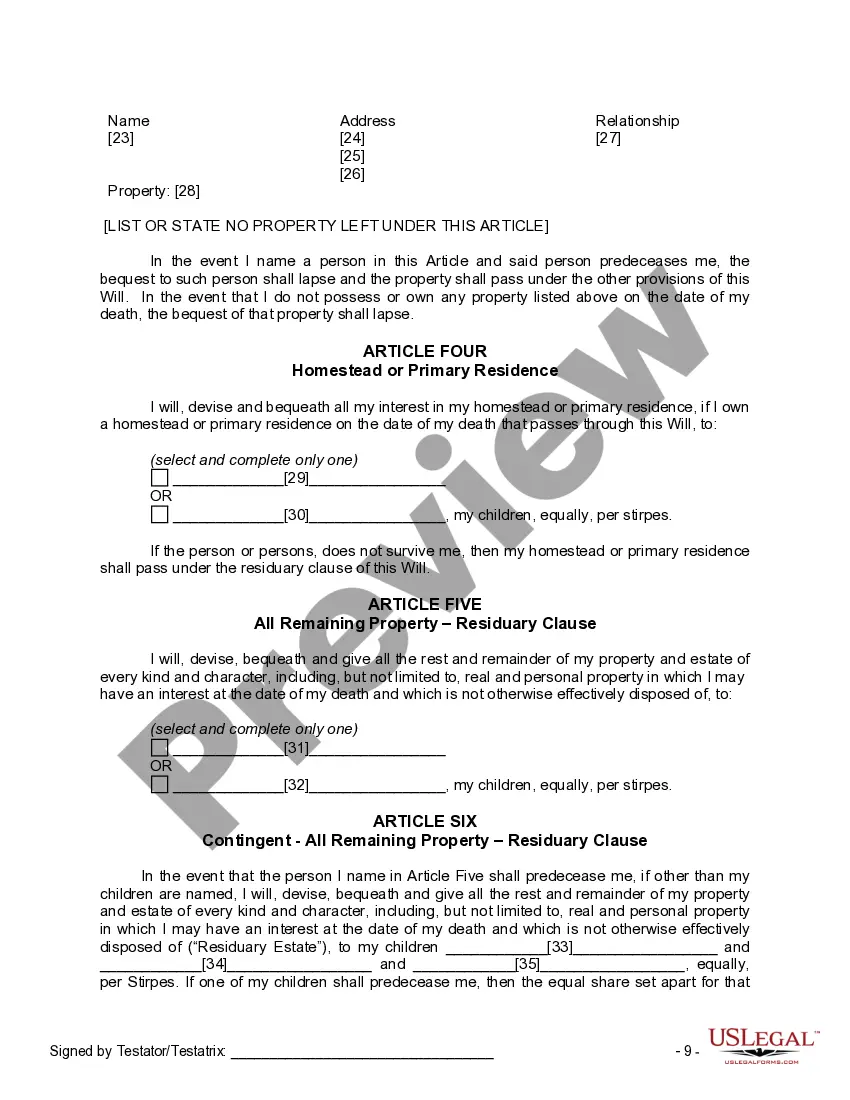
- Instructions for specific bequests, indicating how property should be distributed to designated individuals.
- Declarations regarding the primary residence and how it will be handled.
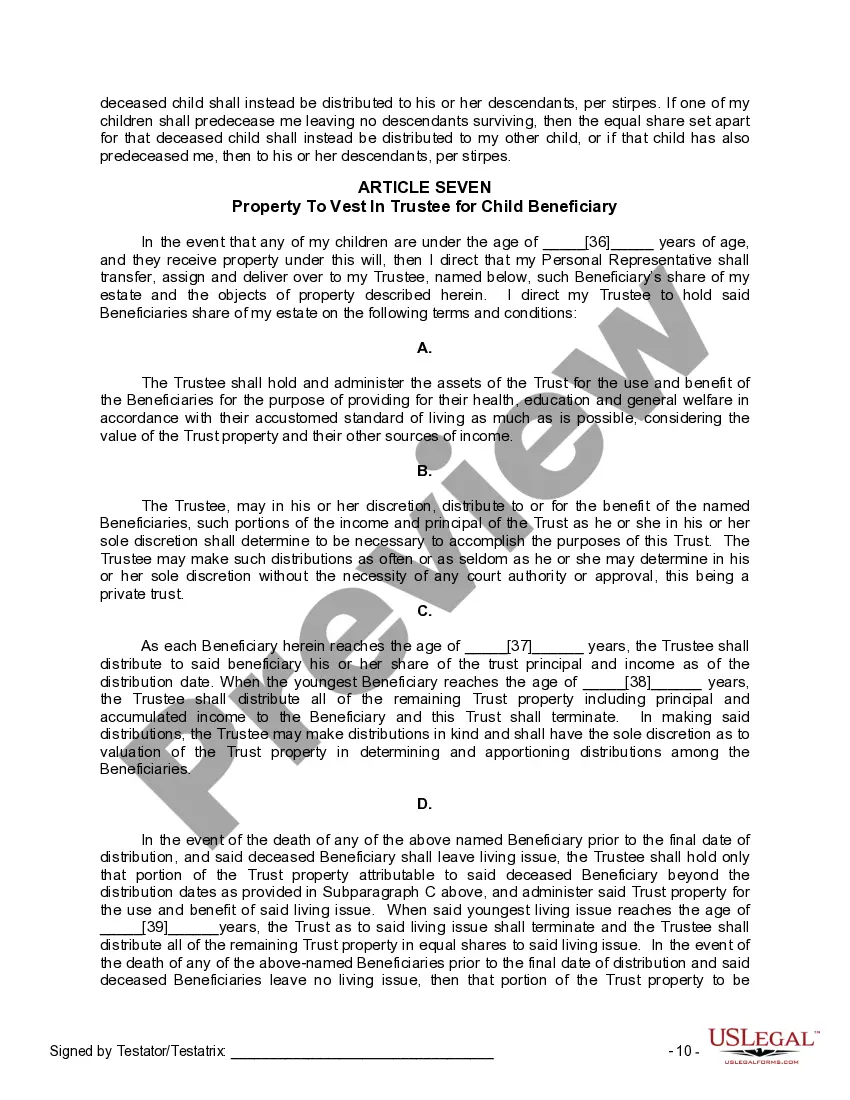
- Provisions for a Trustee and Guardian for minor children, ensuring their care and management of assets.
- Signature requirements, including witness signatures and notarization for legal validity.




When to use this form
This form should be used by couples who are living together without being married and wish to establish mutual wills for the distribution of their assets after death. It is particularly important for those who have minor children and want to ensure that both partners' wishes are honored regarding property and guardianship. Scenarios may include situations where one partner wants to ensure support for the other while also providing for their children in a cohesive manner.
Intended users of this form
- Cohabiting partners who are not married.
- Couples who have minor children and want to secure their future.
- Individuals wanting to ensure their partner is provided for in the event of their death.
- Those looking to create legally binding mutual wills that reflect their joint intentions.
Steps to complete this form
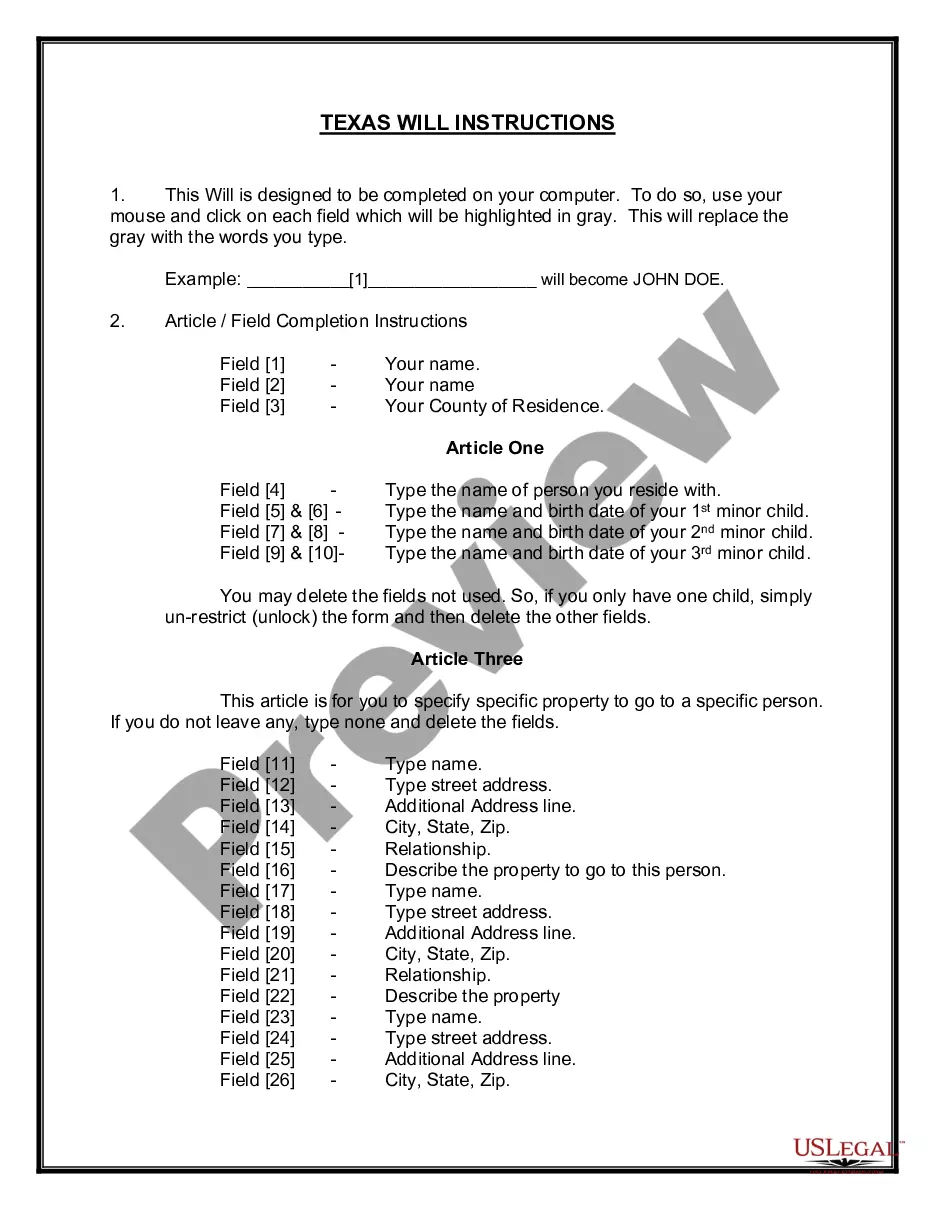
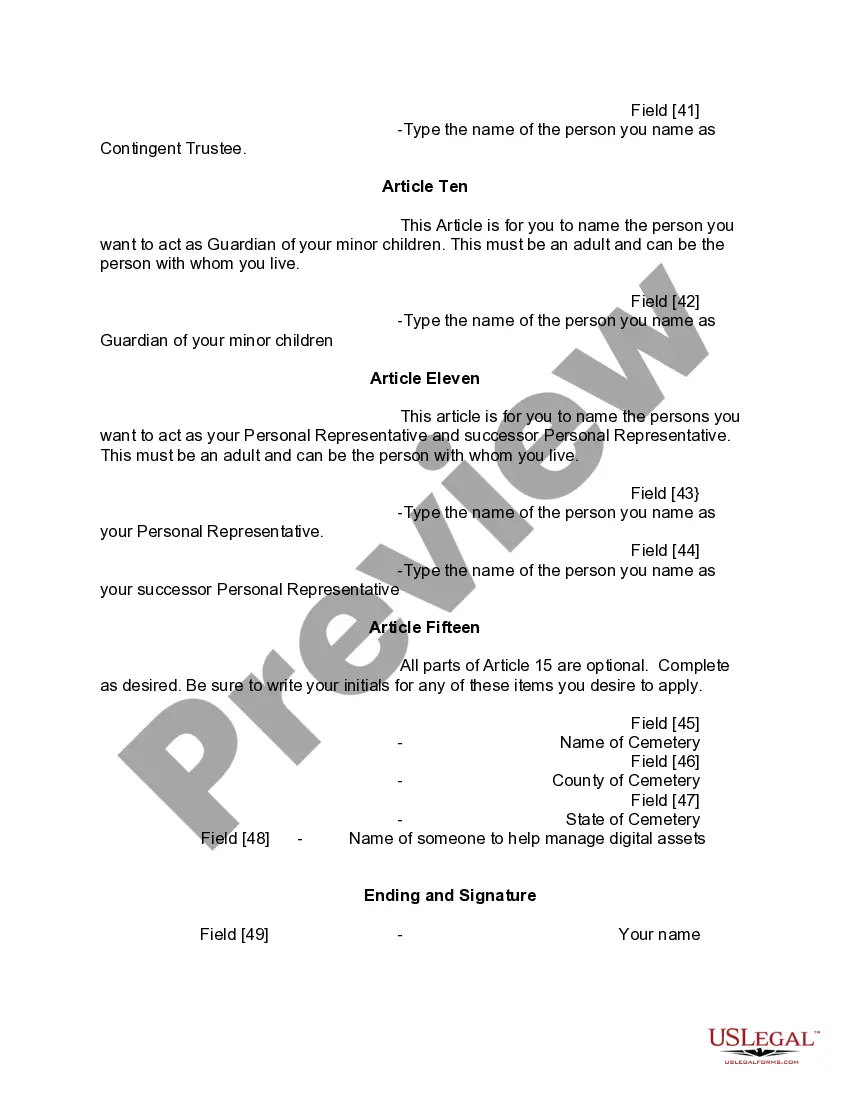
- Enter your name and the name of your partner, along with the county of residence.
- Provide the names and birthdates of your minor children.
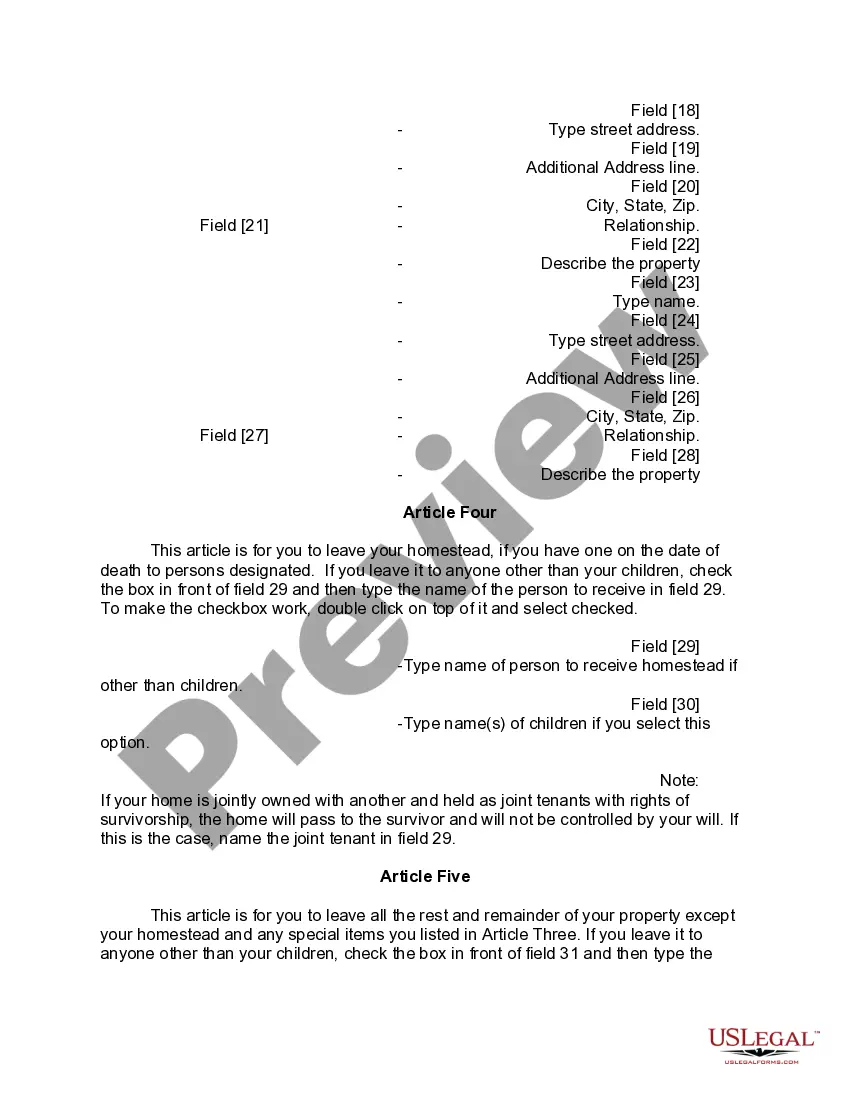
- List any specific properties and the individuals you wish to bequeath them to, detailing any relationships.
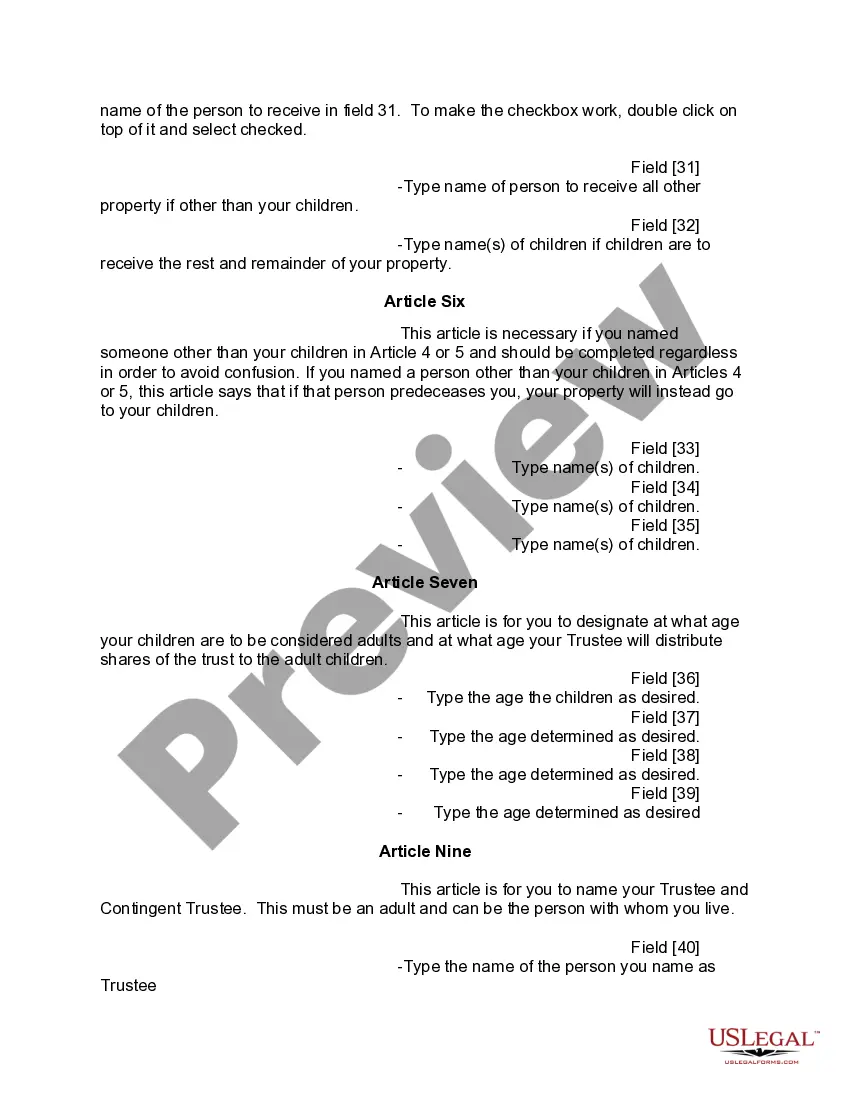
- Designate a Trustee for any assets intended for minor children and choose a Guardian.
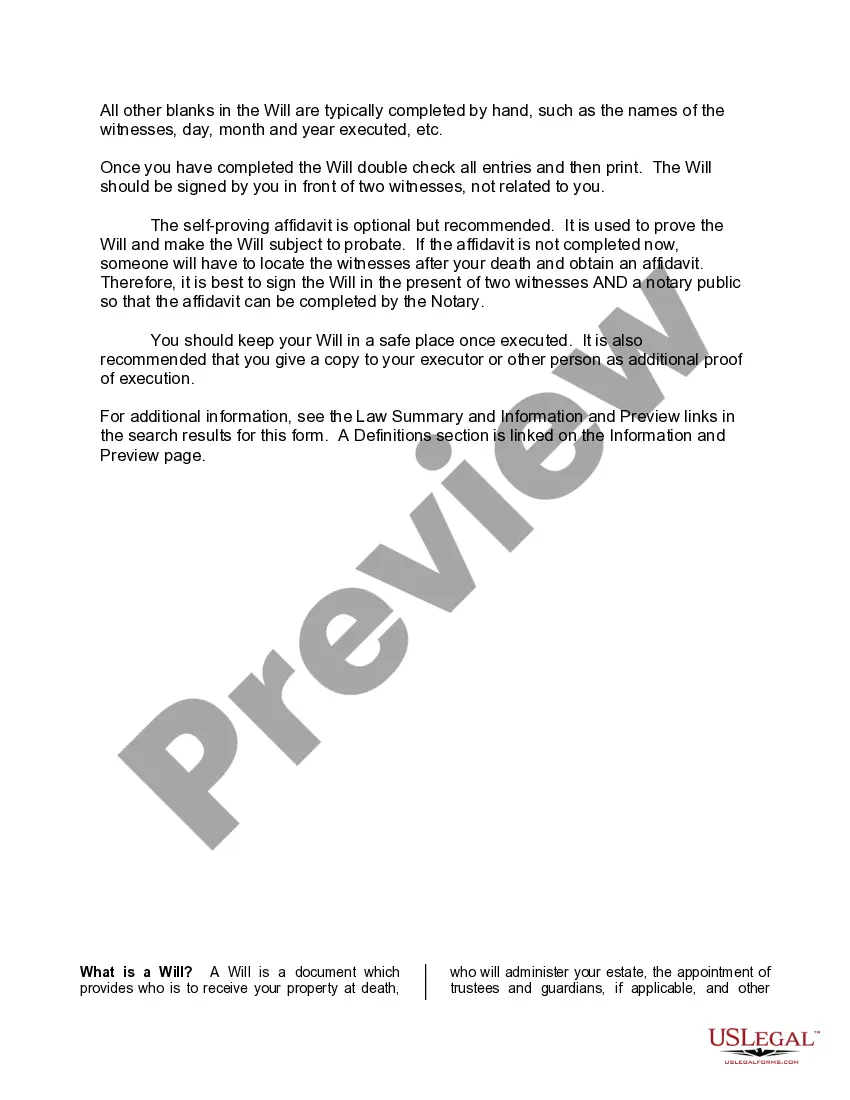
- Ensure all parties sign the will in the presence of two witnesses who are not related.
- If required, have the will notarized to enhance its legal enforceability.
Does this document require notarization?
To make this form legally binding, it must be notarized. Our online notarization service, powered by Notarize, lets you verify and sign documents remotely through an encrypted video session.
Get your form ready online
Our built-in tools help you complete, sign, share, and store your documents in one place.
Make edits, fill in missing information, and update formatting in US Legal Forms—just like you would in MS Word.
Download a copy, print it, send it by email, or mail it via USPS—whatever works best for your next step.
Sign and collect signatures with our SignNow integration. Send to multiple recipients, set reminders, and more. Go Premium to unlock E-Sign.
If this form requires notarization, complete it online through a secure video call—no need to meet a notary in person or wait for an appointment.
We protect your documents and personal data by following strict security and privacy standards.

Make edits, fill in missing information, and update formatting in US Legal Forms—just like you would in MS Word.

Download a copy, print it, send it by email, or mail it via USPS—whatever works best for your next step.

Sign and collect signatures with our SignNow integration. Send to multiple recipients, set reminders, and more. Go Premium to unlock E-Sign.

If this form requires notarization, complete it online through a secure video call—no need to meet a notary in person or wait for an appointment.

We protect your documents and personal data by following strict security and privacy standards.
Common mistakes to avoid
- Failing to have the will signed in front of the required number of witnesses.
- Not updating the will after significant life changes, such as the birth of additional children.
- Overlooking the notarization requirement if applicable in your state.
- Neglecting to specify alternate beneficiaries for any specific bequests.
Benefits of using this form online
- Convenience of filling out the form directly on your computer, allowing for easy edits.
- Access to attorney-drafted templates which provide peace of mind regarding legal compliance.
- Immediate downloads for quick access to your documents without waiting for postal services.
Looking for another form?

Form popularity
FAQ
Create the initial document. Start by titling the document Last Will and Testament" and including your full legal name and address. Designate an executor. Appoint a guardian. Name the beneficiaries. Designate the assets. Ask witnesses to sign your will. Store your will in a safe place.
When a person dies without leaving a valid will, their property (the estate) must be shared out according to certain rules.A person who dies without leaving a will is called an intestate person. Only married or civil partners and some other close relatives can inherit under the rules of intestacy.
Yes, under some circumstances. If no consideration is provided for the mutual wills, except the mutual agreement of the spouses, either spouse can change the will prior to the death of the first spouse.After the first spouse dies, however, the surviving spouse cannot change the will.
Many married couples own most of their assets jointly with the right of survivorship. When one spouse dies, the surviving spouse automatically receives complete ownership of the property.Since one never knows which spouse will survive the other, it is important that both have a Will.
Their legal name. A physical addresses for named beneficiaries. Provide a description of the relationship to the testator. Enter the last four digits of the SSN for all persons named beneficiaries. Enter a list/descriptions of property that the testator shall provide per beneficiary.
A simple/basic Will in Texas averages between $250 to $2,500+. The price depends on the experience of the attorney drafting the Will. Reputable attorneys will charge a minimum of $500+, since a Will is only valid if it is properly drafted and executed.
In order to make a valid handwritten will in Texas, the entire document must be in your own handwriting. No one can write any part of it except for you and no part of it can be typed. You can write in cursive or print, but the entire will must be in your handwriting only.
Are 18 years of age or older, have been lawfully married, or. are a member of the armed forces of the United States.
No, in Texas, you do not need to notarize your will to make it legal. However, Texas allows you to make your will "self-proving" and you'll need to go to a notary if you want to do that. A self-proving will speeds up probate because the court can accept the will without contacting the witnesses who signed it.