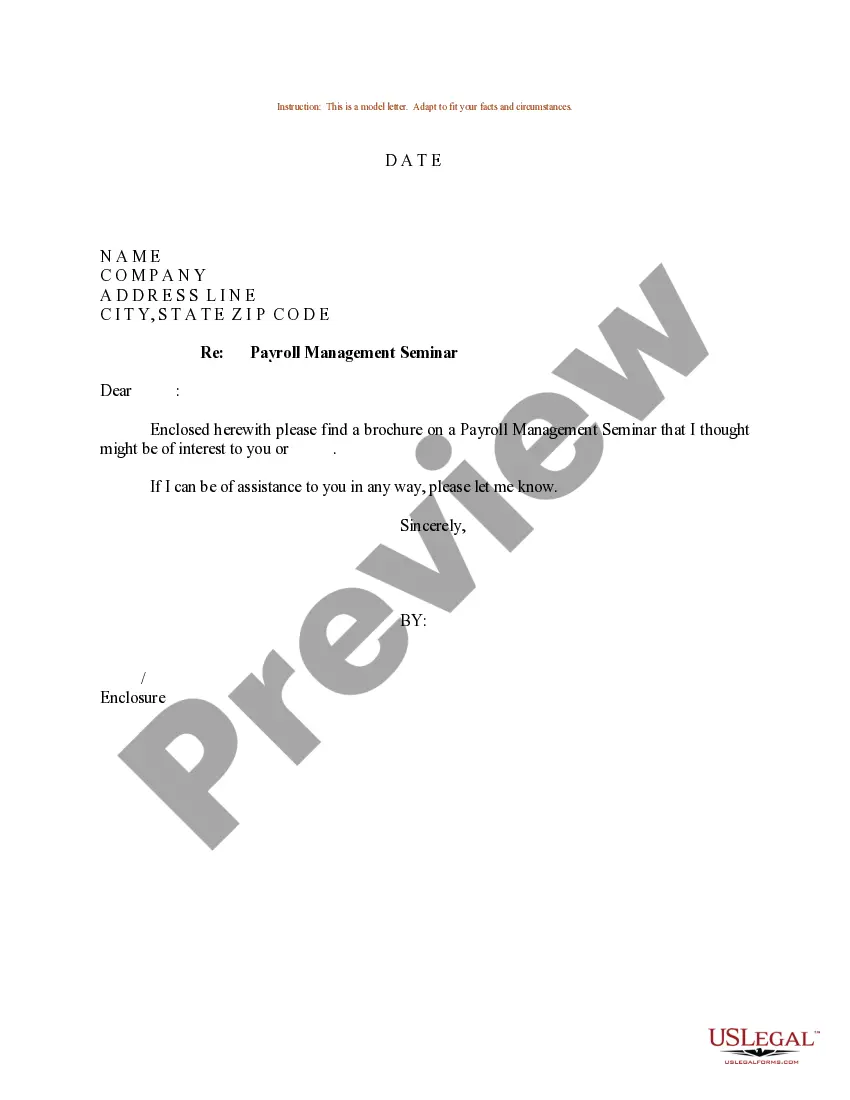
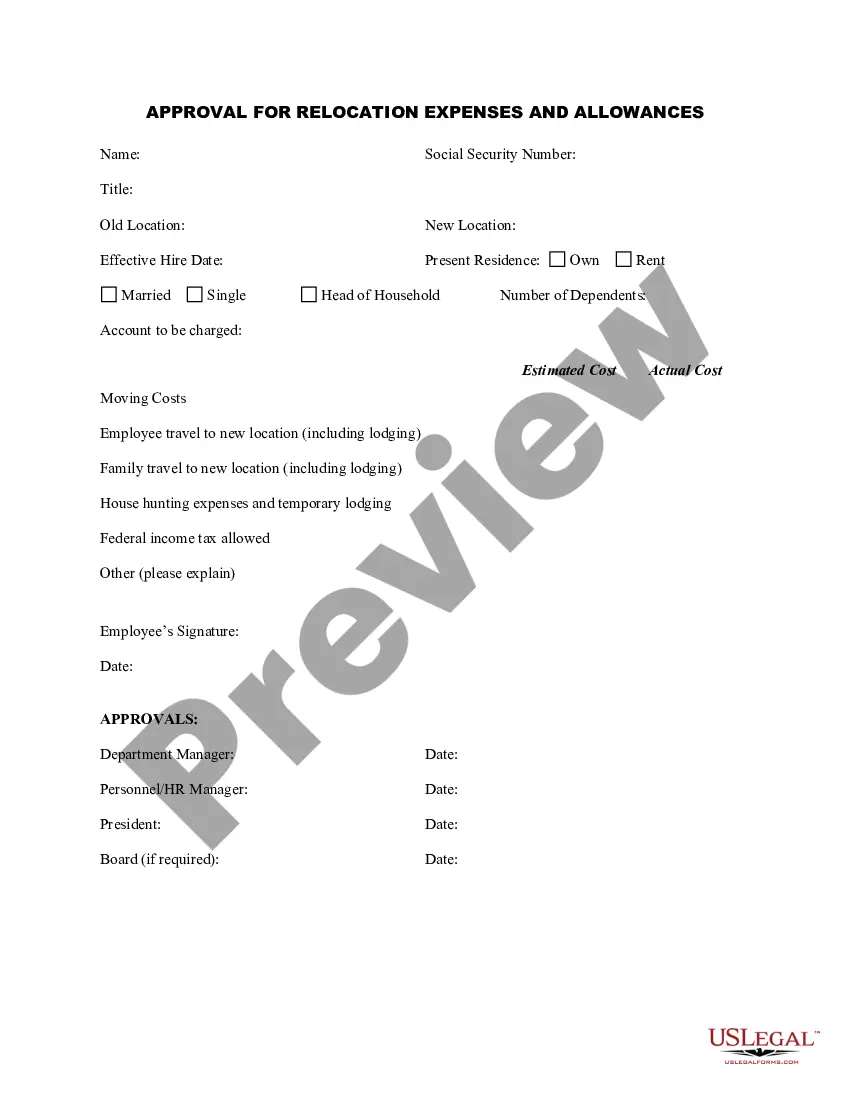
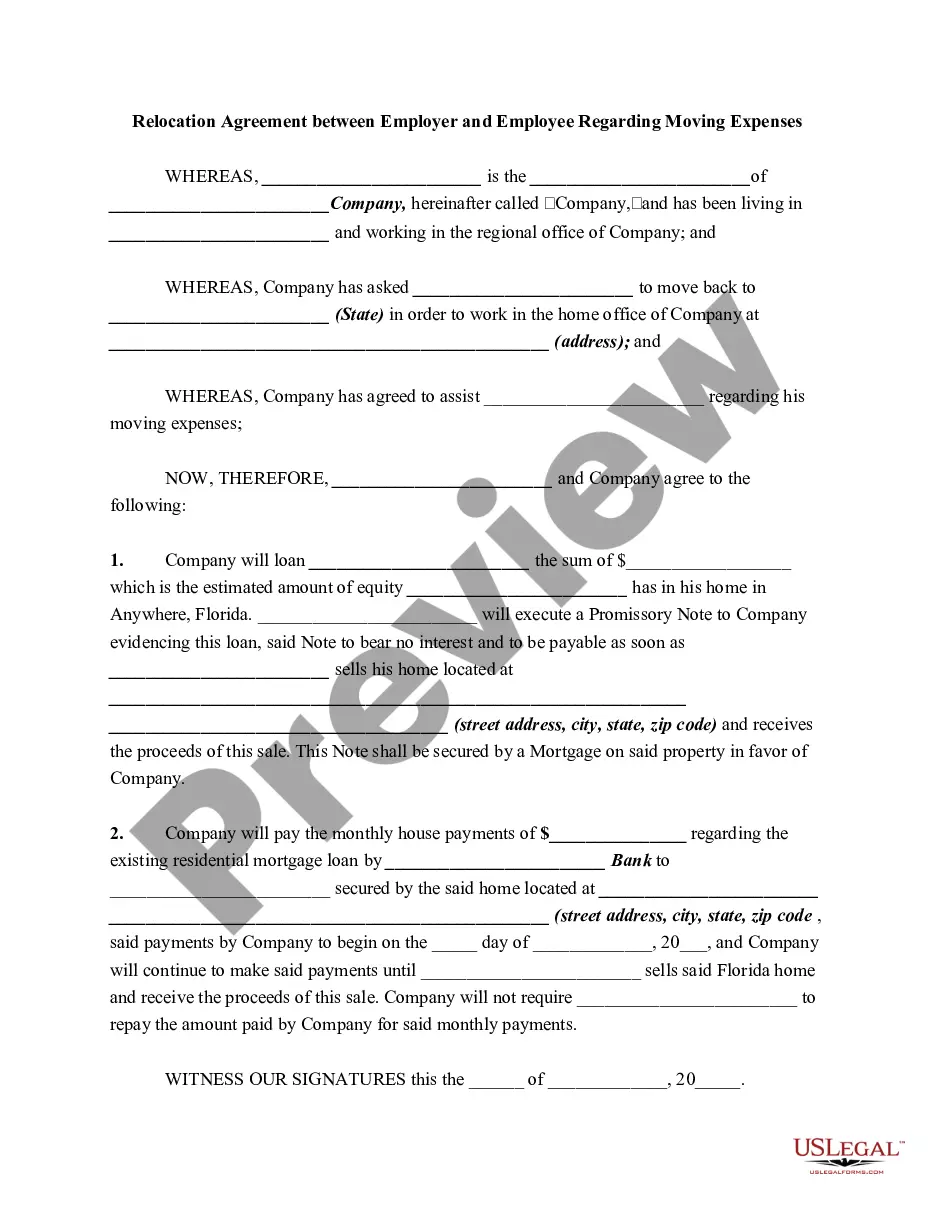
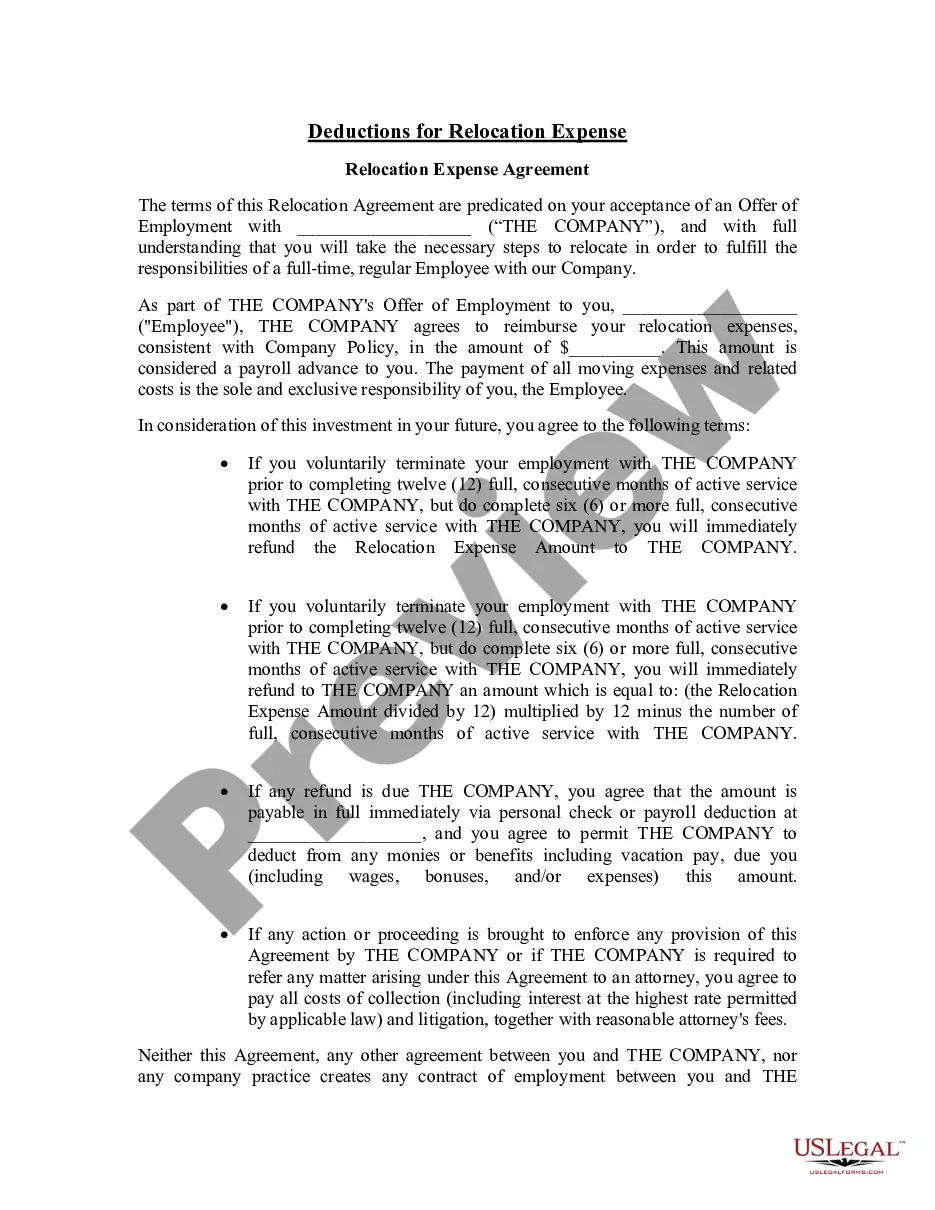
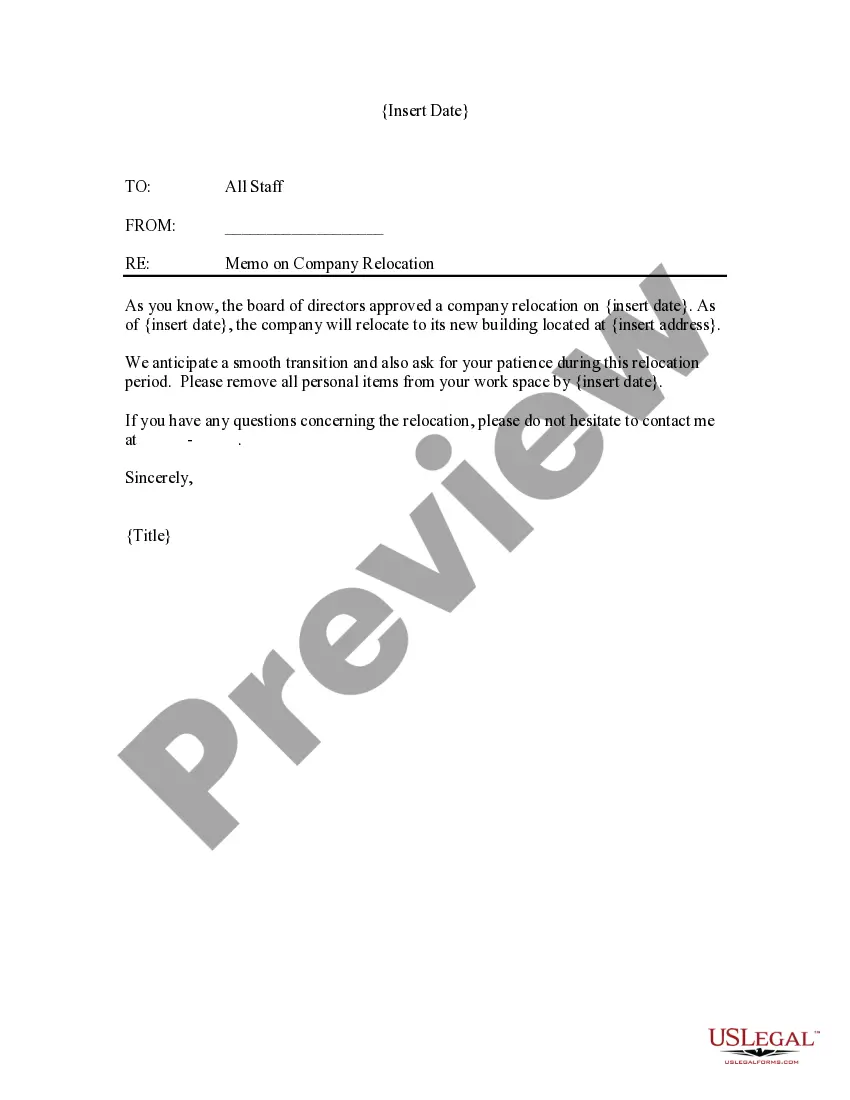
Tennessee Approval for Relocation Expenses and Allowances
Description
Get your form ready online
Our built-in tools help you complete, sign, share, and store your documents in one place.
Make edits, fill in missing information, and update formatting in US Legal Forms—just like you would in MS Word.
Download a copy, print it, send it by email, or mail it via USPS—whatever works best for your next step.
Sign and collect signatures with our SignNow integration. Send to multiple recipients, set reminders, and more. Go Premium to unlock E-Sign.
If this form requires notarization, complete it online through a secure video call—no need to meet a notary in person or wait for an appointment.
We protect your documents and personal data by following strict security and privacy standards.

Make edits, fill in missing information, and update formatting in US Legal Forms—just like you would in MS Word.

Download a copy, print it, send it by email, or mail it via USPS—whatever works best for your next step.

Sign and collect signatures with our SignNow integration. Send to multiple recipients, set reminders, and more. Go Premium to unlock E-Sign.

If this form requires notarization, complete it online through a secure video call—no need to meet a notary in person or wait for an appointment.

We protect your documents and personal data by following strict security and privacy standards.
Looking for another form?






How to fill out Approval For Relocation Expenses And Allowances?
Are you presently in a location where you need documents for both professional or personal purposes almost every working day.
There are numerous official form templates accessible online, but finding ones you can rely on is challenging.
US Legal Forms provides a vast array of form templates, including the Tennessee Approval for Relocation Expenses and Allowances, that are crafted to meet state and federal regulations.
Select a convenient file format and download your copy.
You can find all the form templates you have purchased in the My documents section. You can download another copy of the Tennessee Approval for Relocation Expenses and Allowances anytime if needed. Just click on the desired form to download or print the template.
Utilize US Legal Forms, the most comprehensive selection of official forms, to save time and avoid mistakes. The service offers professionally created legal document templates that you can use for various purposes. Create an account on US Legal Forms and start making your life a little easier.
- If you are familiar with the US Legal Forms website and have an account, simply Log In.
- Then, you can download the Tennessee Approval for Relocation Expenses and Allowances template.
- If you do not have an account and wish to start using US Legal Forms, follow these steps.
- Find the form you need and ensure it is for the correct city/state.
- Use the Review button to evaluate the form.
- Examine the details to ensure you have selected the right form.
- If the form is not what you seek, use the Search field to locate the form that meets your needs and requirements.
- Once you find the correct form, click Buy now.
- Select the pricing plan you prefer, fill out the required information to create your account, and complete your order with your PayPal or credit card.
Form popularity
FAQ
Payment made by an employer or a government agency to cover removal expenses and other costs incurred by an employee who is required to take up employment elsewhere.
You can deduct the expenses of moving your household goods and personal effects, including expenses for hauling a trailer, packing, crating, in-transit storage, and insurance. You can't deduct expenses for moving furniture or other goods you bought on the way from your old home to your new home.
To qualify, reimbursements or payments must be for work-related moving expenses that would have been deductible by the employee if the employee had directly paid them before Jan. 1, 2018.
Accordingly, as of July 2019, only seven states still allowed a moving tax deduction and/or continued to exclude moving reimbursements from income:Arkansas.California.Hawaii.Massachusetts.New Jersey.New York.Pennsylvania.
Travel expenses incurred from moving from another state to Tennessee will be reimbursed at out-of-state rates. 9. Expenses may be reimbursed for a single house-hunting trip for up to three days and two nights. Reimbursed expenses may include lodging, meals and transportation.
A typical relocation package usually covers the costs of moving and storing furnishings, household goods, assistance with selling an existing home, costs incurred with house-hunting, temporary housing, and all travel costs by the employee and family to the new location.
Key takeaway: Employee relocation packages vary, but some options to consider include relocation reimbursement, a flexible start date, free visits, temporary housing, familial support, real estate cost assistance, pay adjustments or bonuses, and a payback clause.
You can generally deduct your expenses of moving yourself, your family, and your belongings.Professional moving company services.Do-it-yourself moving trucks or pods.Gas and oil or the standard moving mileage rate, if you travel by car.Packing supplies (blankets, tape, boxes)Move insurance.More items...
For most taxpayers, moving expenses are no longer deductible, meaning you can no longer claim this deduction on your federal return. This change is set to stay in place for tax years 2018-2025.
Due to the Tax Cuts and Jobs Act (TCJA) passed in 2017, most people can no longer deduct moving expenses on their federal taxes. This aspect of the tax code is pretty straightforward: If you moved in 2020 and you are not an active-duty military member, your moving expenses aren't deductible.