Tennessee Protecting Deceased Persons from Identity Theft
Understanding this form package
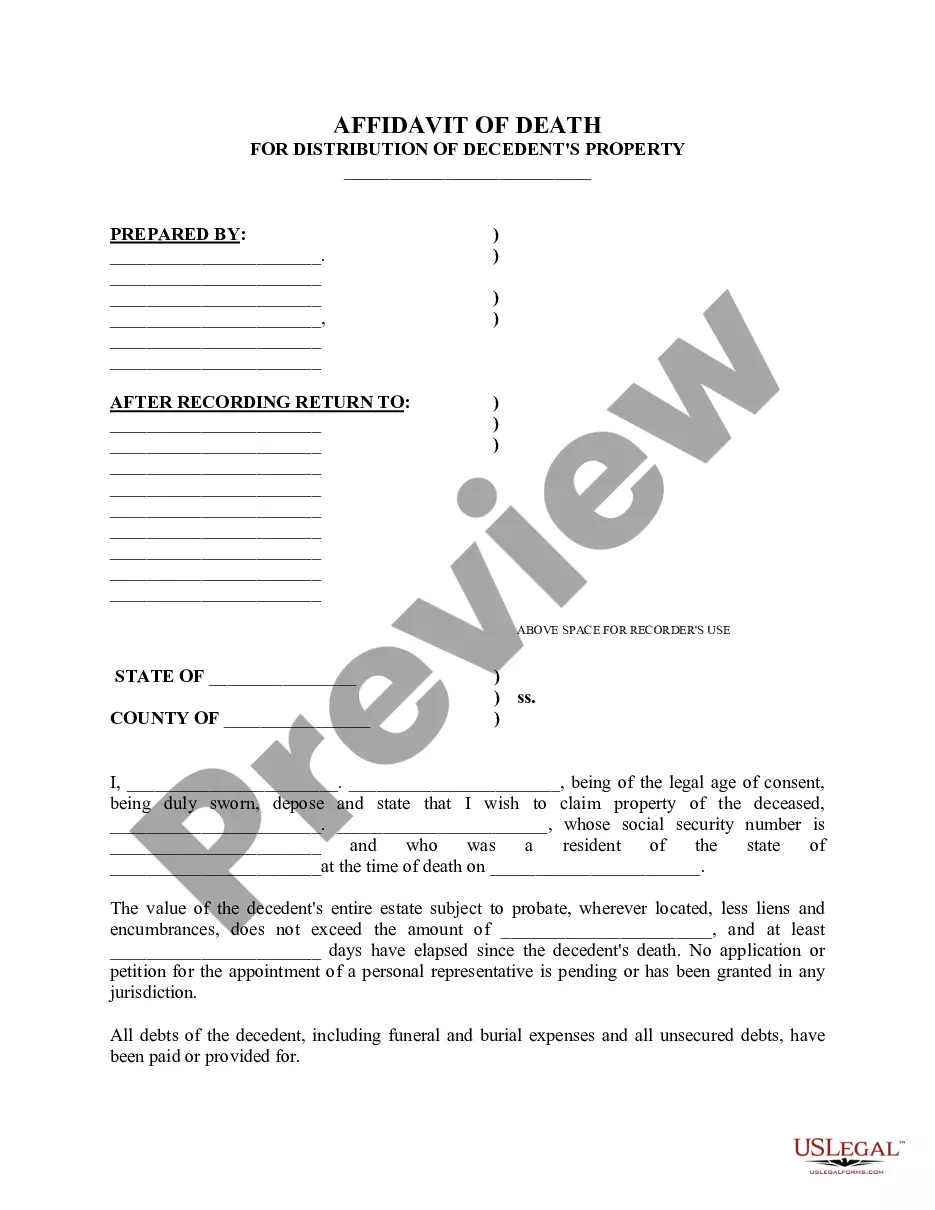
The Tennessee Protecting Deceased Persons from Identity Theft form package consists of essential documents designed to help reduce the risk of identity theft for deceased individuals. This package addresses the unique challenges that arise after a person's death, such as notifying creditors, government agencies, and other entities about their passing and the potential misuse of their personal information. By using this package, you can take proactive steps to protect the identifying information of your loved one from identity theft.
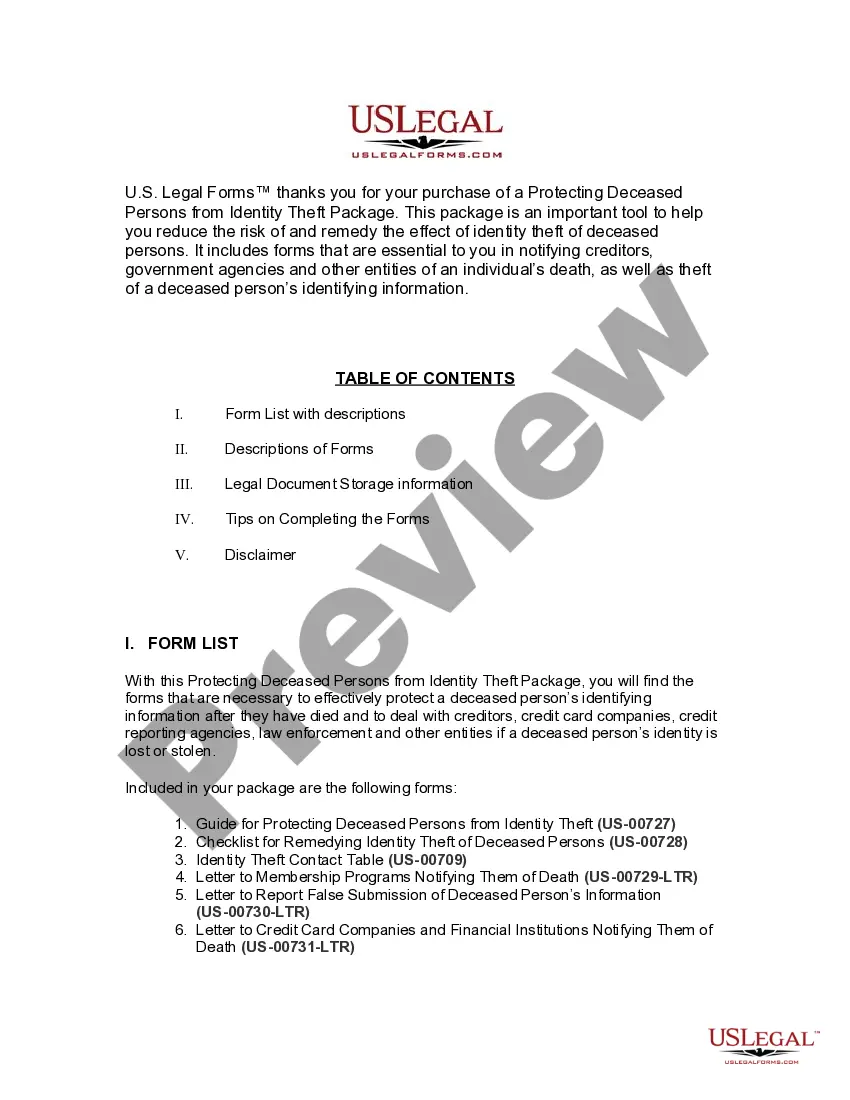
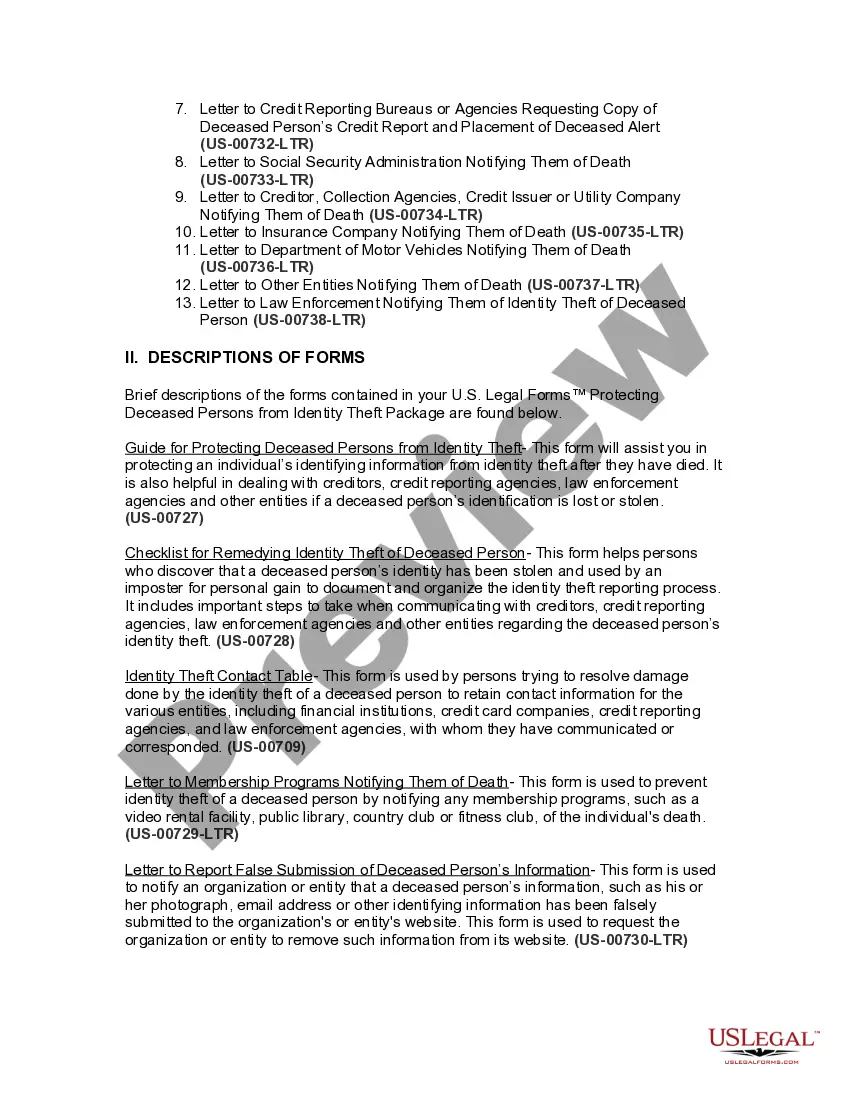
Documents contained in this package
- Identity Theft Contact Table
- Guide for Protecting Deceased Persons from Identity Theft
- Checklist for Remedying Identity Theft of Deceased Persons
- Letter to Membership Programs Notifying Them of Death
- Letter to Report False Submission of Deceased Person's Information
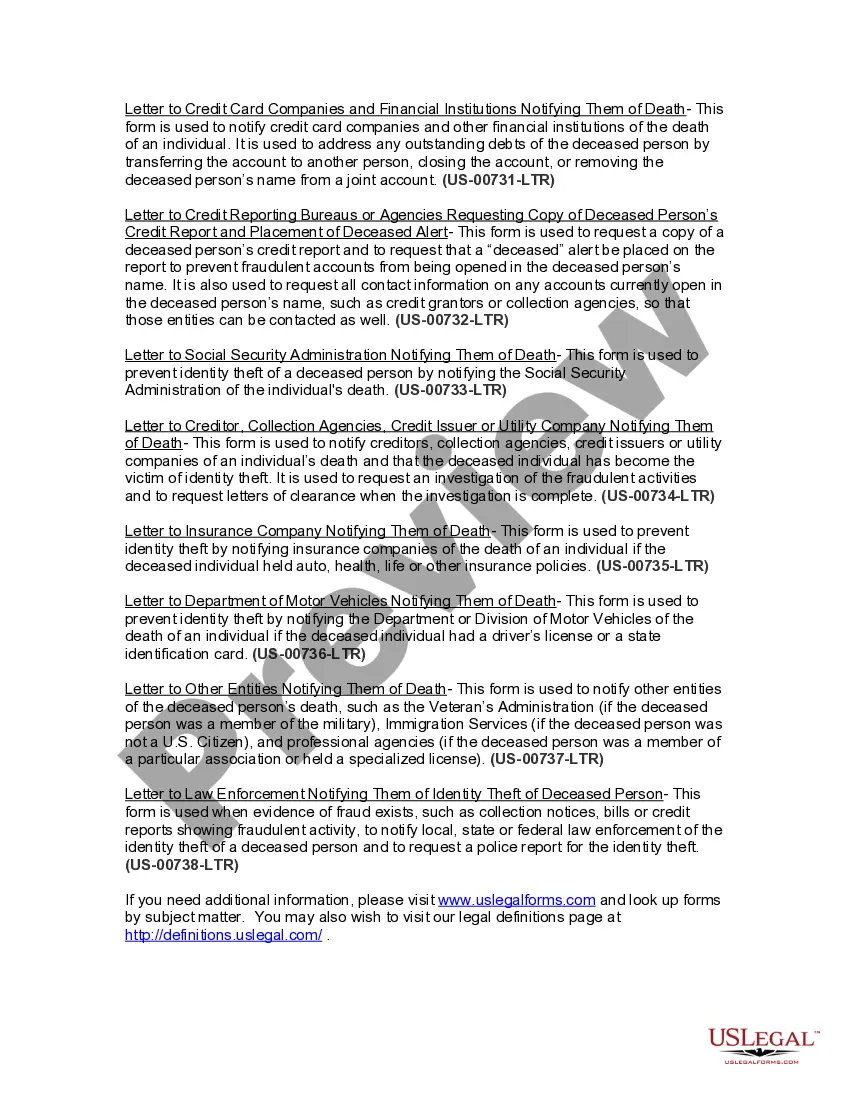
- Letter to Credit Card Companies and Financial Institutions Notifying Them of Death
- Letter to Credit Reporting Bureaus or Agencies Requesting Copy of Deceased Person's Credit Report and Placement of Deceased Alert
- Letter to Social Security Administration Notifying Them of Death
- Letter to Creditor, Collection Agencies, Credit Issuer or Utility Company Notifying Them of Death
- Letter to Insurance Company Notifying Them of Death
- Letter to Department of Motor Vehicles Notifying Them of Death
- Letter to Other Entities Notifying Them of Death
- Letter to Law Enforcement Notifying Them of Identity Theft of Deceased Person
Common use cases
This form package should be utilized in various situations, including:
- After the death of a family member or friend to prevent identity theft.
- When you discover that a deceased individual's personal information has been compromised.
- If you need to notify creditors and agencies about the death of a loved one.
- When managing the affairs of a deceased person's estate.
Who can use this document
- Family members handling the affairs of a deceased relative.
- Legal representatives or estate administrators.
- Anyone needing to address identity theft issues involving a deceased person.
Steps to complete these forms
- Review the guide provided in the package for detailed instructions.
- Identify the deceased person's information to be used in the forms.
- Fill in the required details in each form, ensuring accuracy.
- Send notifications to relevant parties, including creditors and agencies, using the provided letters.
- Keep a record of all communications concerning the deceasedâs identity theft and notifications sent.
Notarization guidance for this package
No, forms in this package typically do not require notarization unless required by local law. Be sure to check specific requirements if you are uncertain.
Get your form ready online
Our built-in tools help you complete, sign, share, and store your documents in one place.
Make edits, fill in missing information, and update formatting in US Legal Forms—just like you would in MS Word.
Download a copy, print it, send it by email, or mail it via USPS—whatever works best for your next step.
Sign and collect signatures with our SignNow integration. Send to multiple recipients, set reminders, and more. Go Premium to unlock E-Sign.
If this form requires notarization, complete it online through a secure video call—no need to meet a notary in person or wait for an appointment.
We protect your documents and personal data by following strict security and privacy standards.

Make edits, fill in missing information, and update formatting in US Legal Forms—just like you would in MS Word.

Download a copy, print it, send it by email, or mail it via USPS—whatever works best for your next step.

Sign and collect signatures with our SignNow integration. Send to multiple recipients, set reminders, and more. Go Premium to unlock E-Sign.

If this form requires notarization, complete it online through a secure video call—no need to meet a notary in person or wait for an appointment.

We protect your documents and personal data by following strict security and privacy standards.
Avoid these common issues
- Failing to notify all relevant creditors and agencies.
- Overlooking important details in the letters, leading to delays.
- Not keeping a copy of all correspondence for your records.
Benefits of completing this package online
- Convenience of downloading and completing forms at your own pace.
- Editability to ensure all information is accurate before finalizing.
- Reliable resources drafted by licensed attorneys familiar with Tennessee law.
Key takeaways
- This form package is essential for protecting deceased individuals from identity theft.
- Accurate completion and distribution of the forms can prevent potential misuse of the individual's identity.
- This package includes comprehensive resources and letters for various notifications required in Tennessee.
Looking for another form?

Form popularity
FAQ
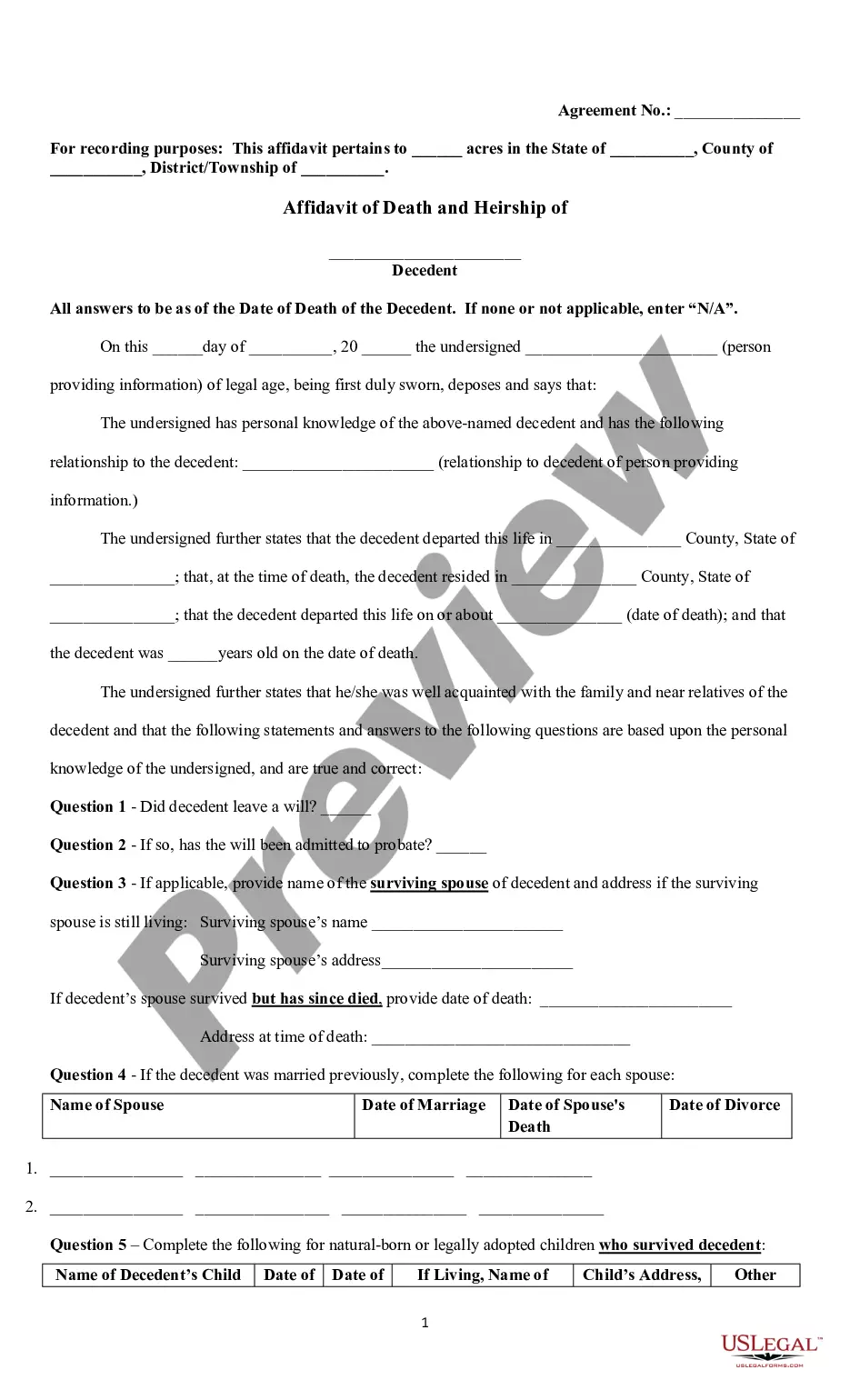
When a Social Security beneficiary dies, the death is usually reported to SSA by a family member, a funeral home, or a government agency. Whoever does the reporting, according to SSA, the death should be reported as soon as possible.
What happens to your Social Security number after you die? The Social Security Administration (SSA) maintains a national file of reported deaths for the purpose of paying appropriate benefits.The SSA generally receives reports of death from a family member or a funeral home.
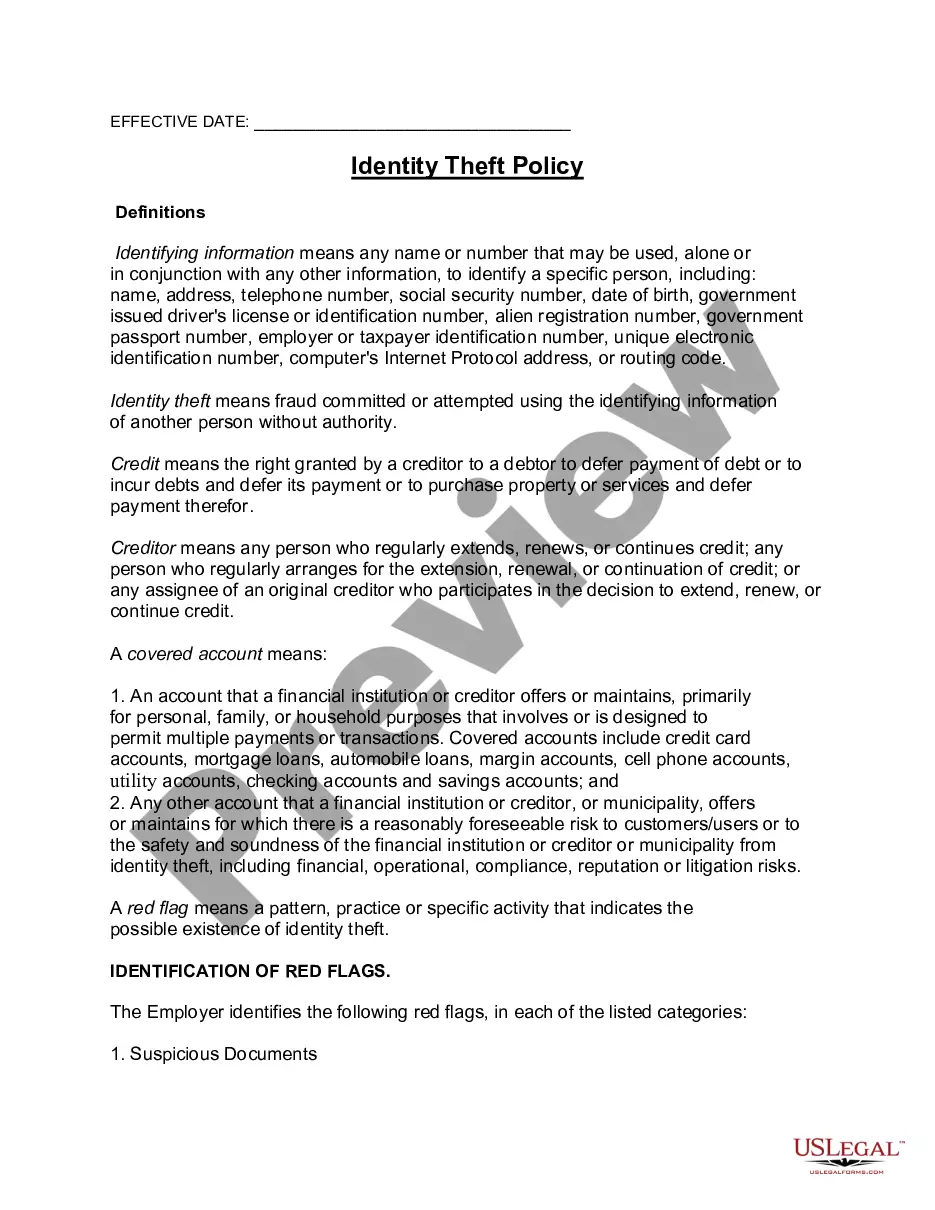
It's called ghosting, and it's both scary and surprising. Ghosting is a form of identity theft. It occurs when someone uses the personal information of a dead person, often for monetary gain. A savvy criminal can take over bank accounts, apply for new credit cards, and even file for fraudulent tax refunds.
Identity thieves can strike even after death. An identity thief's use of a deceased person's Social Security number may create problems for family members.The Social Security Administration (SSA) maintains a national file of reported deaths for the purpose of paying appropriate benefits.
The Social Security Administration (www.ssa.gov) does not reappoint a Social Security number to someone else after the original owner's death. The SSA estimates that there are enough new number combinations to last well into the next SEVERAL generations.
An identity thief's use of a deceased person's Social Security number may create problems for family members.Sometimes delays in reporting can provide time for identity thieves to collect enough personal information to open credit accounts or take other fraudulent actions using the deceased's information.
Place a Fraud Alert on Your Credit Report. Freeze Your Credit Report. Order Your Free Credit Reports. Buy Your Credit Reports. Monitor Your Accounts Online. Enroll in Credit Monitoring. Keep Your Social Security Number Safe. Pick Up Your Check Order.
For joint accounts, remove the deceased's name. Report the death to Social Security by calling 800-772-1213. Contact the department of motor vehicles to cancel the deceased's driver's license, to prevent duplicates from being issued to fraudsters.
Limit the amount of personal information you share about the deceased in newspaper and online obituaries. Notify the Social Security Administration of the death. Send the IRS a copy of the death certificate so that the agency can note that the person is deceased.