Tennessee Solar Easement
What is this form?
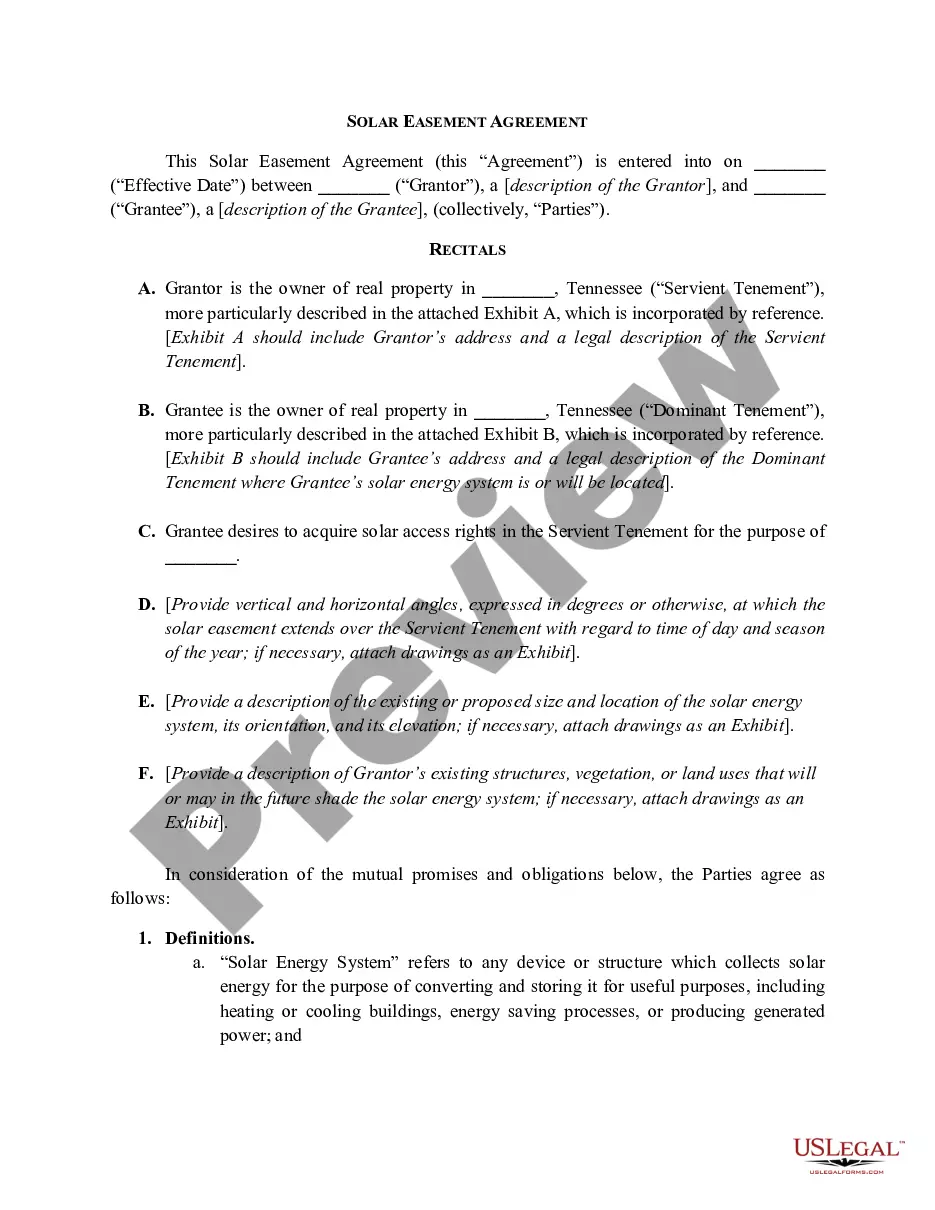
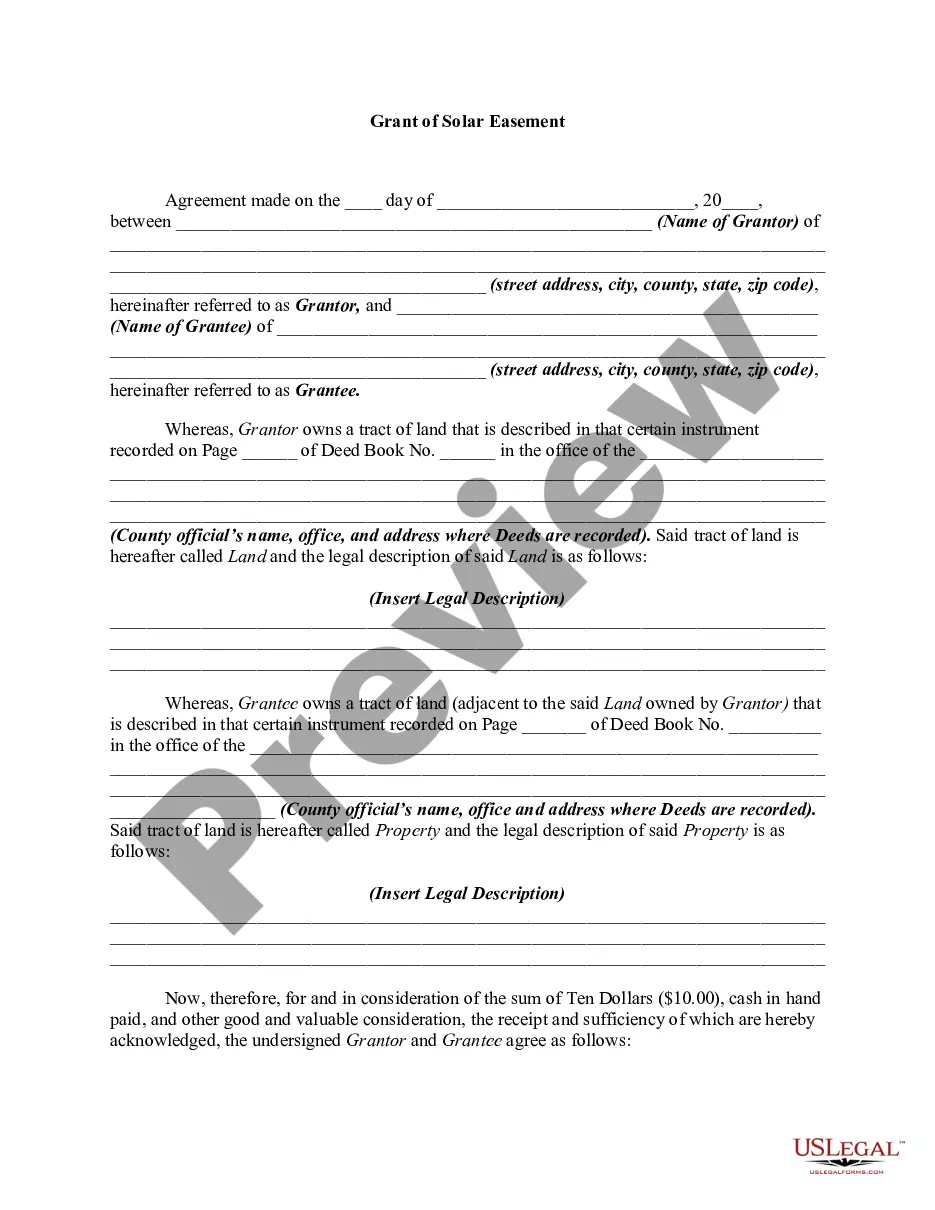
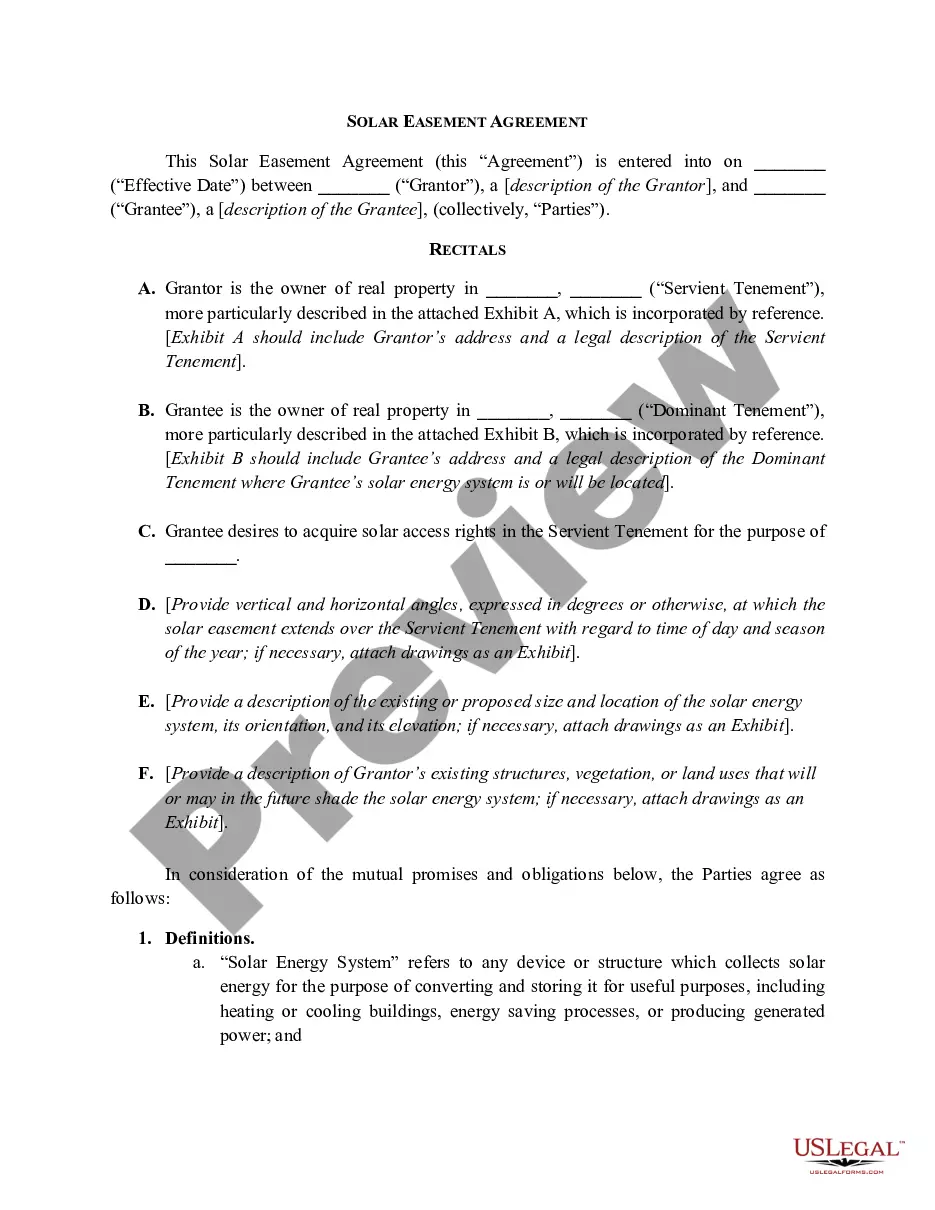
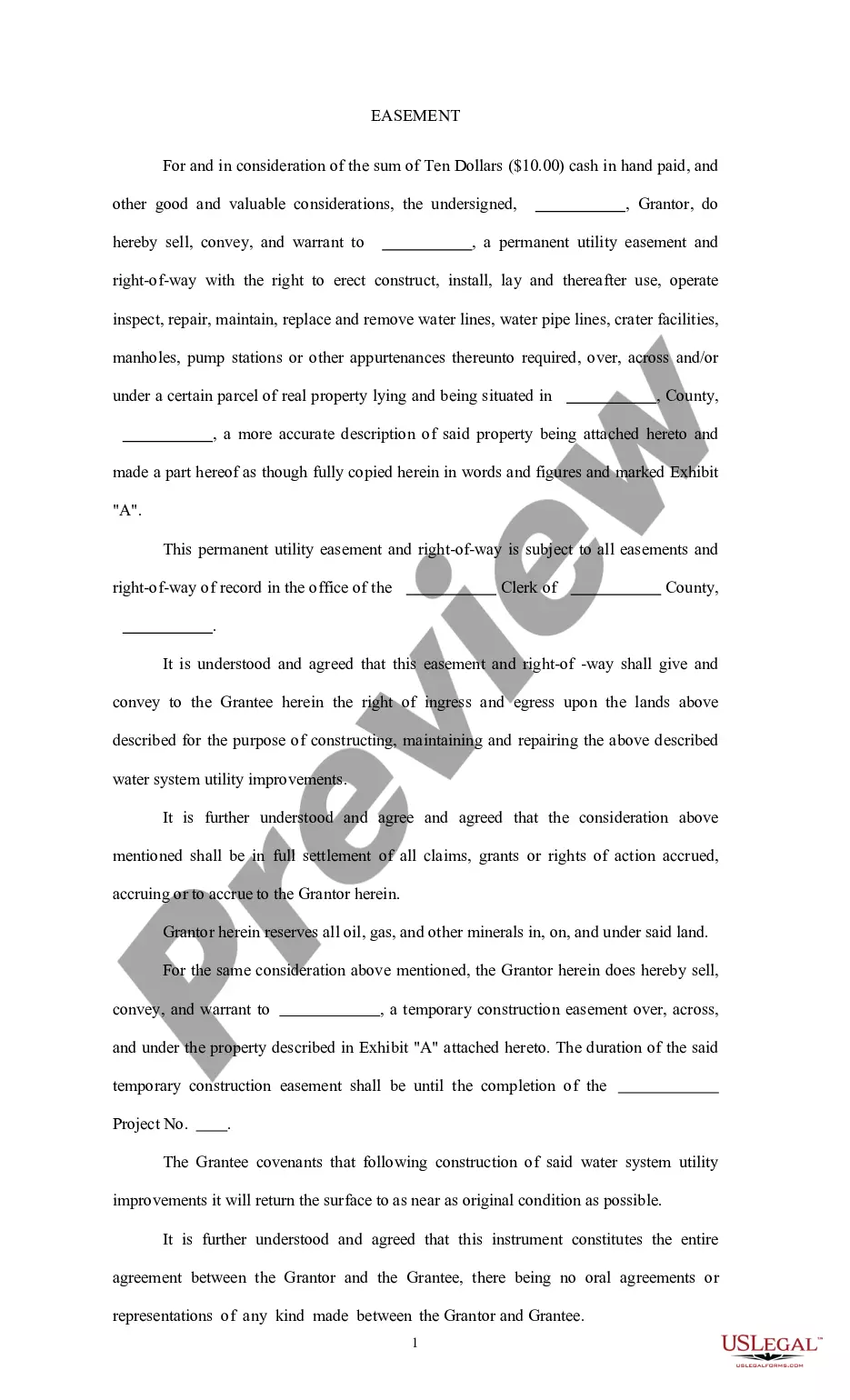
A solar easement is an agreement that grants a property owner the right to access sunlight across a neighboring property for the purpose of utilizing solar energy. This Solar Easement Agreement specifically establishes solar access rights without transferring possession of the land. It is essential for solar energy system owners who need assurance that their systems will not be obstructed by future developments or vegetation on adjacent properties, differentiating it from general property easements that might cover broader use rights.
Key components of this form
- Identification of parties: details of the Grantor and Grantee involved.
- Description of properties: includes legal descriptions of both the Servient and Dominant Tenements.
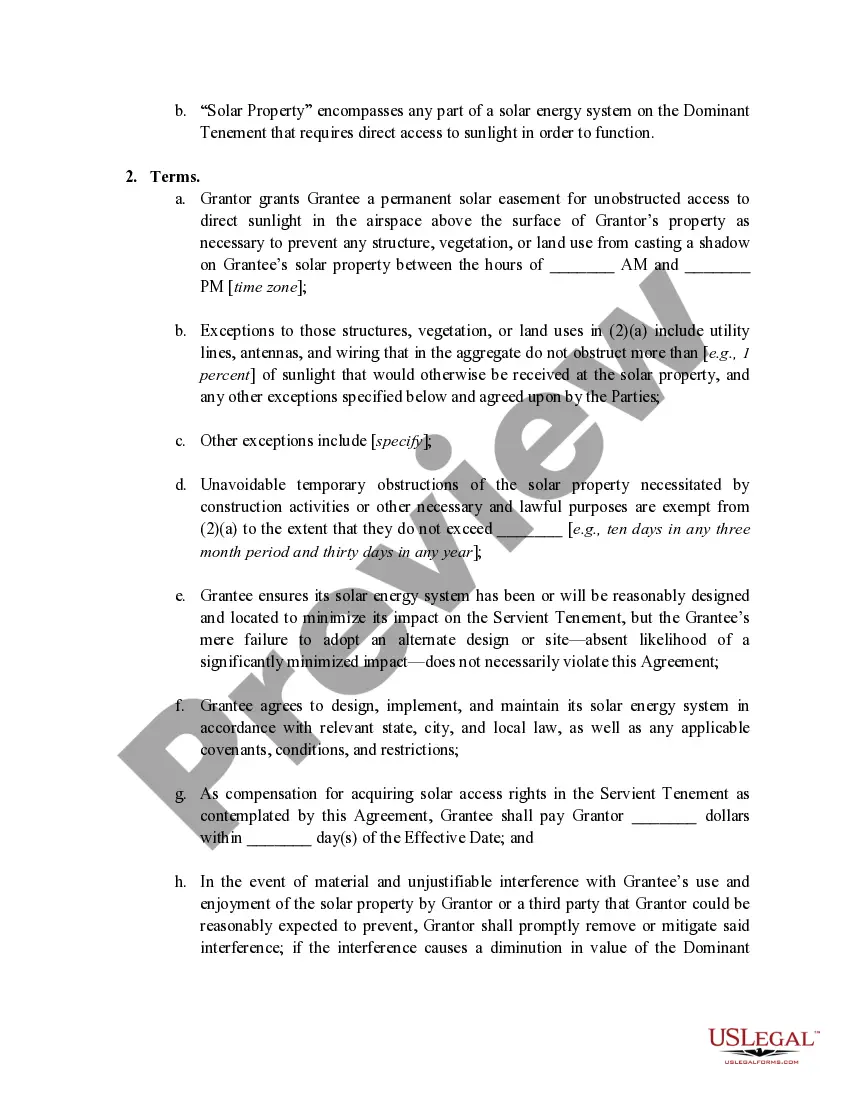
- Specification of solar access rights: outlines the angles and timings of sunlight access across the Servient Tenement.
- Compensation terms: defines payment details for solar access rights granted.
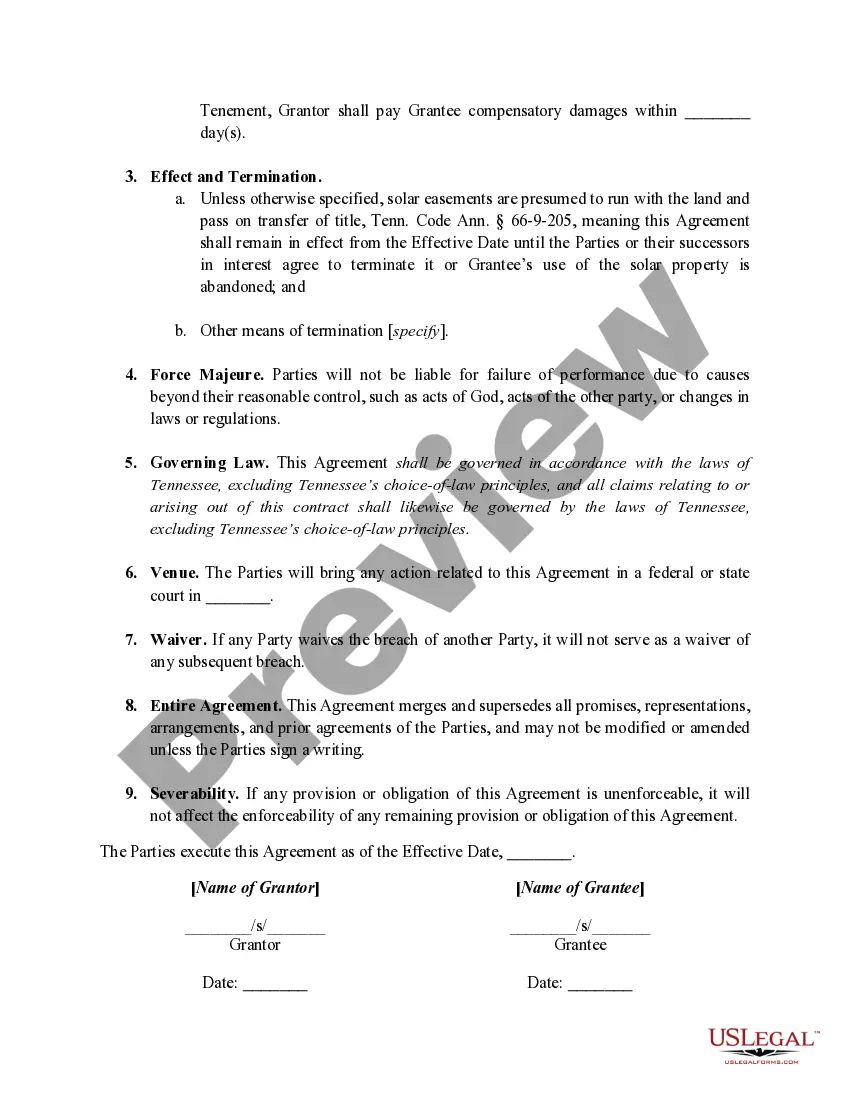
- Termination clauses: stipulates how and when the agreement may be terminated.

When to use this document
This form is useful when one property owner (Grantee) wishes to install a solar energy system but requires assurance that the neighboring property (Grantor) will not develop structures or vegetation that block sunlight. It is applicable during real estate transactions involving solar installations, renovations involving solar systems, or any situation where solar access may be impeded.
Who can use this document
- Homeowners or businesses installing solar energy systems.
- Landowners looking to secure solar access from neighboring properties.
- Real estate professionals handling properties with potential solar installations.
- Individuals seeking to ensure long-term access to solar energy without obstructions.
Instructions for completing this form
- Identify the parties involved by entering the names of the Grantor and Grantee.
- Specify the properties by detailing the legal descriptions of both the Servient and Dominant Tenements.
- Define the solar access rights, including angles and times when sunlight access is required.
- Enter the terms of compensation for the solar easement agreement.
- Include signatures and dates for both parties to finalize the agreement.
Notarization guidance
This form does not typically require notarization unless specified by local law. However, for additional legal assurance, it is advisable to consult with an attorney or local regulations to confirm whether notarization is necessary.
Get your form ready online
Our built-in tools help you complete, sign, share, and store your documents in one place.
Make edits, fill in missing information, and update formatting in US Legal Forms—just like you would in MS Word.
Download a copy, print it, send it by email, or mail it via USPS—whatever works best for your next step.
Sign and collect signatures with our SignNow integration. Send to multiple recipients, set reminders, and more. Go Premium to unlock E-Sign.
If this form requires notarization, complete it online through a secure video call—no need to meet a notary in person or wait for an appointment.
We protect your documents and personal data by following strict security and privacy standards.

Make edits, fill in missing information, and update formatting in US Legal Forms—just like you would in MS Word.

Download a copy, print it, send it by email, or mail it via USPS—whatever works best for your next step.

Sign and collect signatures with our SignNow integration. Send to multiple recipients, set reminders, and more. Go Premium to unlock E-Sign.

If this form requires notarization, complete it online through a secure video call—no need to meet a notary in person or wait for an appointment.

We protect your documents and personal data by following strict security and privacy standards.
Common mistakes to avoid
- Failing to accurately describe the properties involved, leading to potential disputes.
- Not specifying the times of day or angles for sunlight access, which may lead to insufficient rights.
- Omitting signatures or dates, resulting in an invalid agreement.
Benefits of completing this form online
- Convenience of instant download and completion at your own pace.
- Editability to customize sections according to specific needs.
- Access to forms prepared by licensed attorneys, ensuring legal reliability.
Looking for another form?
Form popularity
FAQ
Yes, solar is worth it in Tennessee! In fact, solar panels are worth it in most areas, though certain factors ? including the cost of electricity, available incentives, the climate, and sun angle ? will all impact how quickly you break even on your investment relative to other areas.
An easement based on prior use can be established if a piece of land has been used to perform a necessary function for an extended period of time. For instance, a person's driveway might veer into their neighbor's property.
Like many other states, Tennessee has solar easement and rights laws that help ensure your solar installation isn't covered by shade. These easements are tied to the property and protect the access to direct sunlight for your solar energy system.
The court will consider easement by necessity, which means a part of the property is landlocked, therefore the use is valid.
Easements are a right to use someone else's land for a specific purpose. Tennessee easements can be created in a few different ways, but the most common is through an express grant, reservation, prescription, estoppel, eminent domain, or implication. Easements also come in two types: appurtenant and in gross.
What Is an Easement by Necessity? An easement by necessity is defined as an ?easement created by operation of law because the easement is indispensable to the reasonable use of nearby property, such as an easement connecting a parcel of land to a road? (Black's Law Dictionary).
Easement of Necessity Giving a landowner right-of-way over an adjoining parcel of land in order to access a public road is the most common example of an easement by necessity.
Easements are a right to use someone else's land for a specific purpose. Tennessee easements can be created in a few different ways, but the most common is through an express grant, reservation, prescription, estoppel, eminent domain, or implication. Easements also come in two types: appurtenant and in gross.