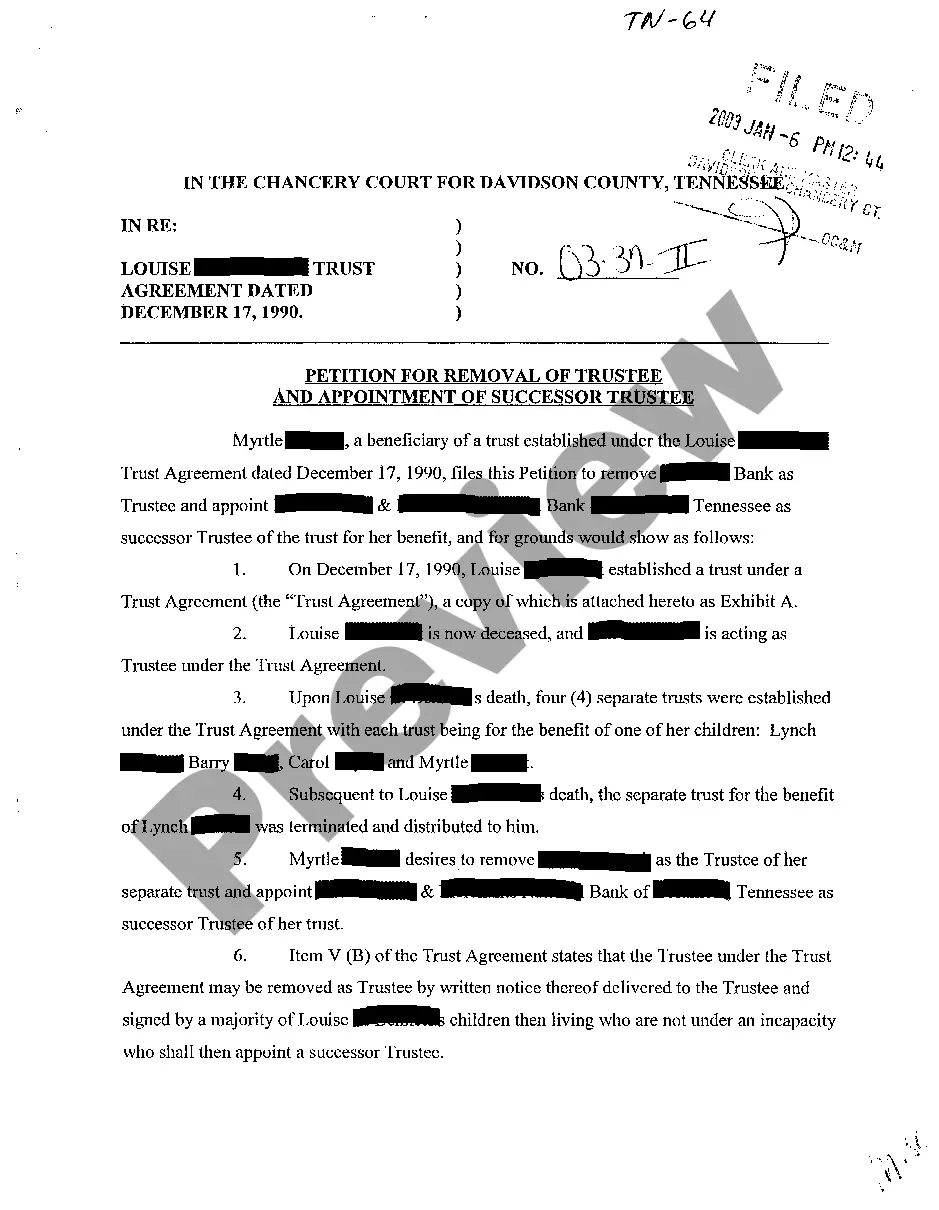
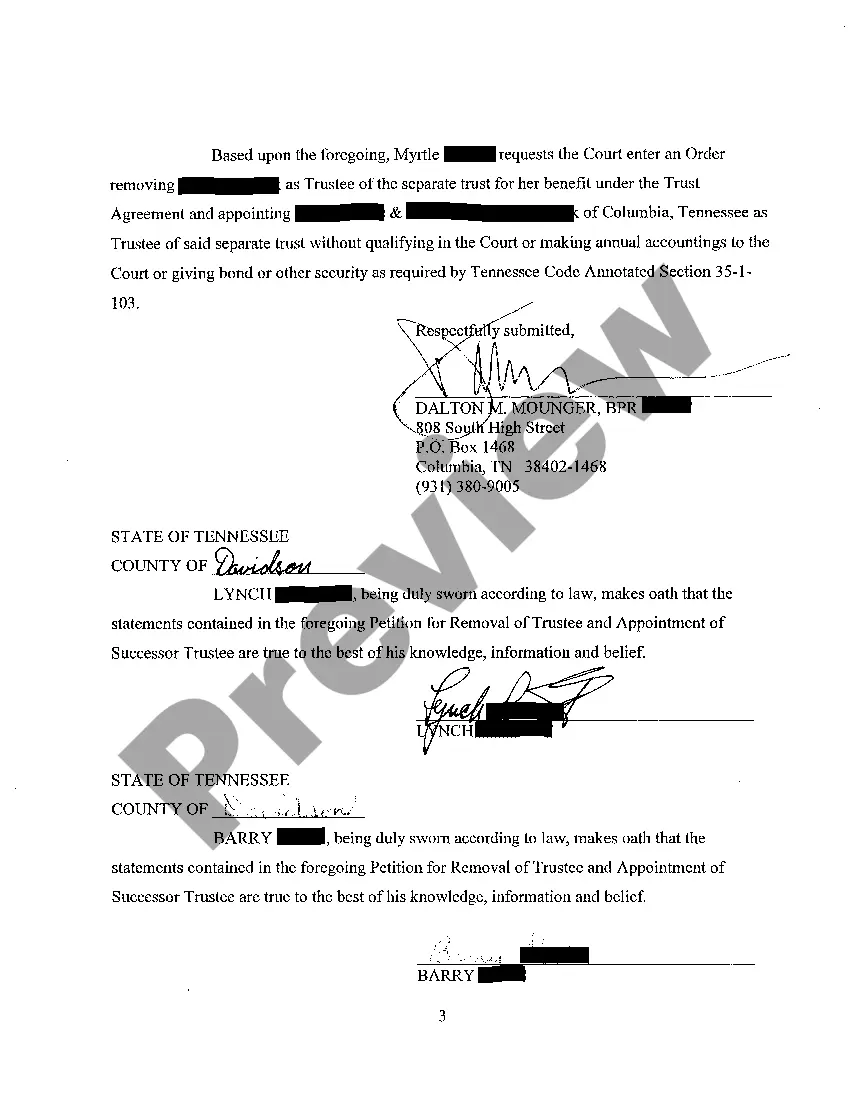
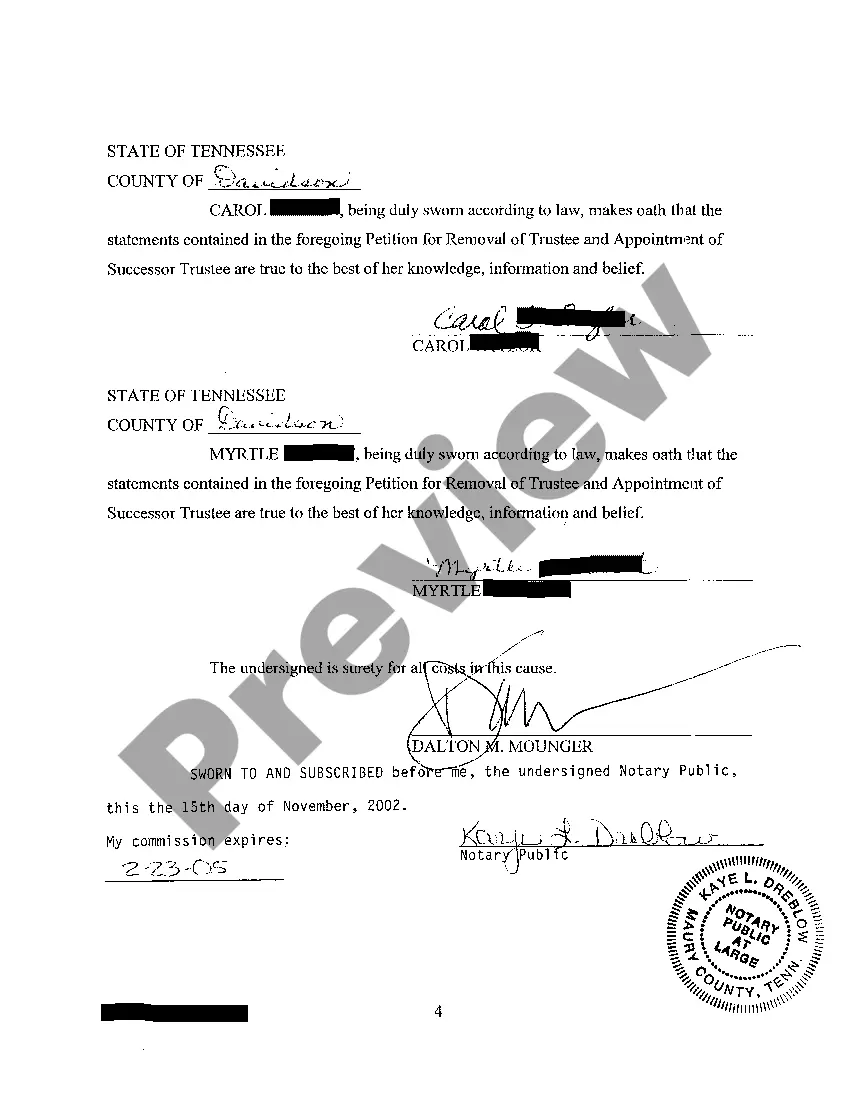
Tennessee Petition For Removal of Trustee And Appointment of Substitute Trustee


Notarization requirements for this form
This form usually doesn’t need to be notarized. However, local laws or specific transactions may require it. Our online notarization service, powered by Notarize, lets you complete it remotely through a secure video session, available 24/7.



Form popularity
FAQ
If the trust document is silent about removing a trustee or there is a disagreement between the other trustees and beneficiaries as to whether they should be removed, then either the other trustees or beneficiaries can to apply to court to have them removed.
The trust instrument may confer an express power of removal on a particular person such as a protector, or the settlor, or a person nominated to appoint new trustees.The court, therefore, concluded that the protector's power of appointment and removal was a fiduciary power.
Yes,it us quite possible to change any trustee of a charitable trust. The procedure for bringing this change is to pass a resolution in the meeting of the board of trustees related to the issue. There should be a genuine reason for the change.
With an irrevocable trust, you must get written consent from all involved parties to switch the trustee. That means having the trustmaker (the person who created the trust), the current trustee and all listed beneficiaries sign an amendment to remove the trustee and replace him or her with a new one.
The court can remove a fiduciary, such as a Trustee, when the court believes that the Trustee has taken action counter to the beneficiary's best interest breaching their fiduciary duty.
Procedurally, to remove a California Trustee you have to file a petition in Probate Court. Before filing in Court, however, you should look at the Trust document. Some Trust documents give the beneficiaries the power to remove and replace a Trustee.
Can a trustee remove a beneficiary from a trust? Yes.An irrevocable trust is intended to be just that: Irrevocable. That means the individuals creating the trust intended its assets for the beneficiaries, without change.
The interested party pays the attorney, but if the removal action is successful, the judge may order reimbursement from the estate.The trust pays this attorney, but if the judge removes the Trustee for bad acts, such as Breach of Fiduciary Duty, the judge may order the Trustee to repay the amount given to the lawyer.