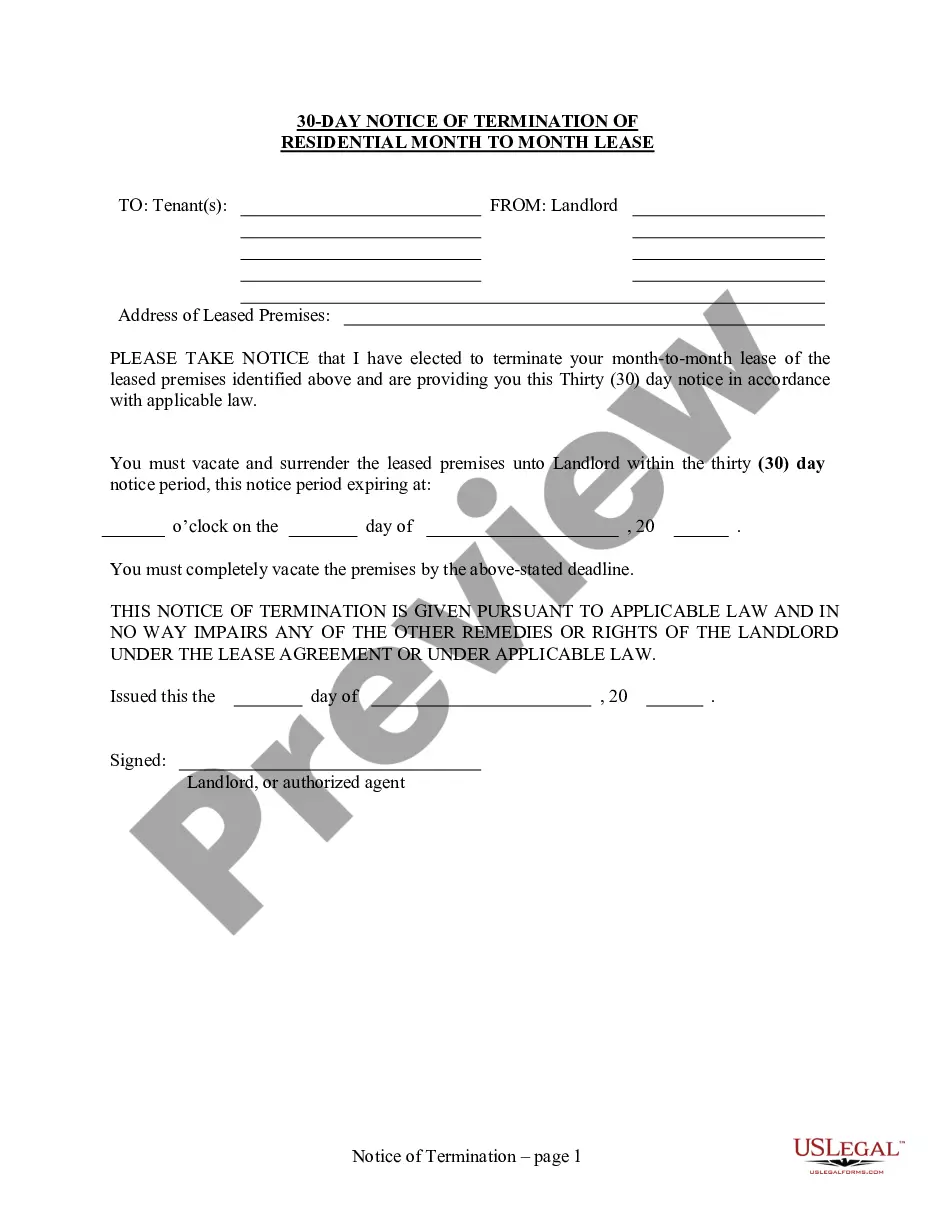
South Dakota Drainage Contractor Package
What this form package covers
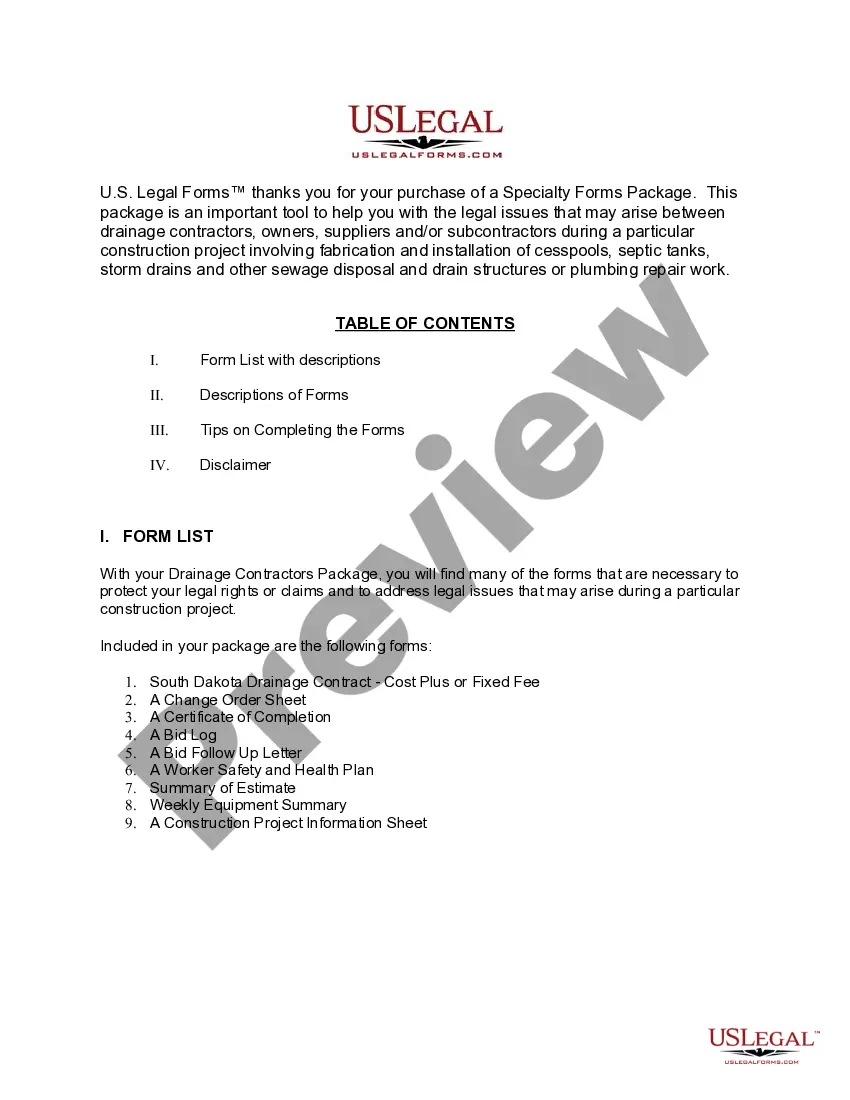
The South Dakota Drainage Contractor Package is a collection of essential legal documents tailored specifically for drainage contractors. This package equips you with the necessary forms to assert legal rights and address important issues during construction projects involving cesspools, septic tanks, storm drains, and plumbing repair work. What sets this package apart is its core drainage contract, which complies with South Dakota state law, ensuring that your agreements are both valid and enforceable.
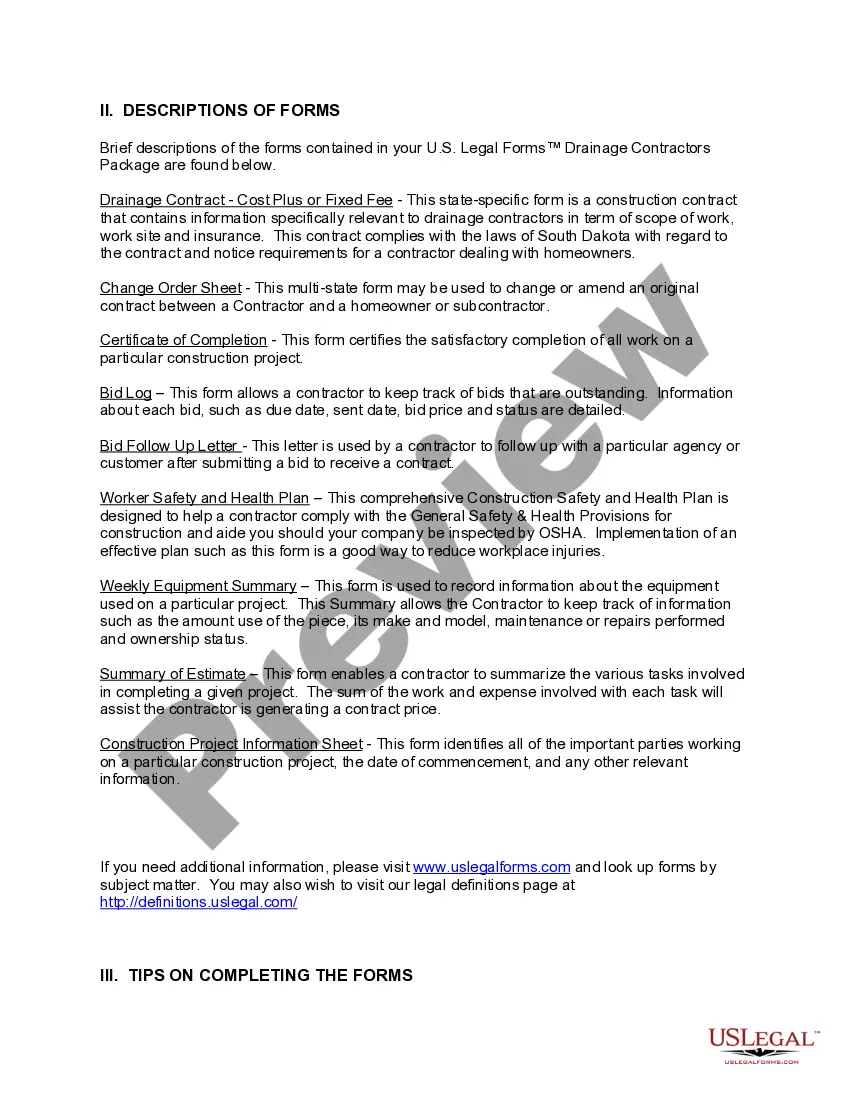
Forms provided in this package
- Drainage Contract for Contractor
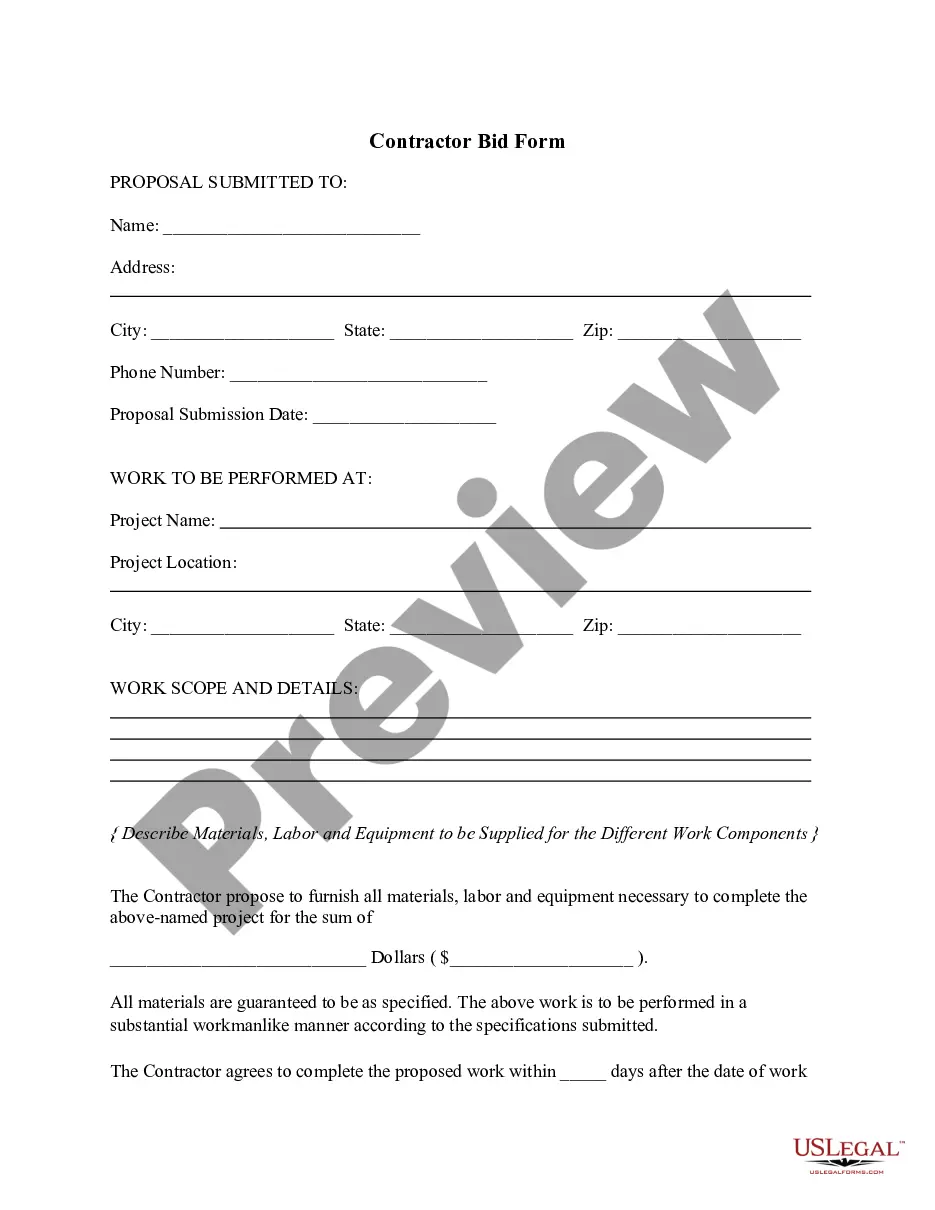
- Contractor's Weekly Equipment Summary
- Contractor's Bid Log
- Contractor's Bid Follow Up Letter
- Contractor's Summary of an Estimate
- Construction Safety and Health Plan
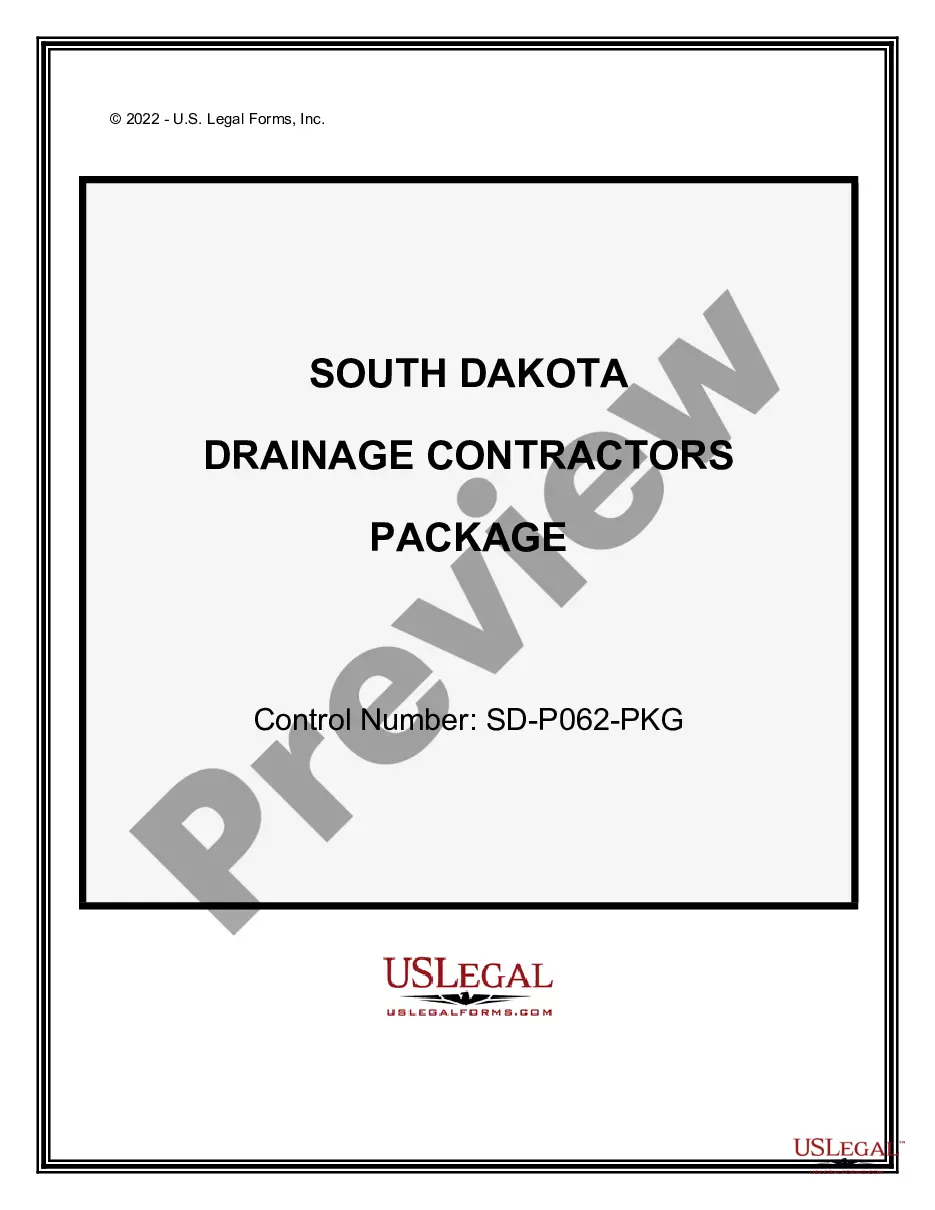
- Change Order for Construction or Repairs by Contractor
- Certification of Completion by Contractor
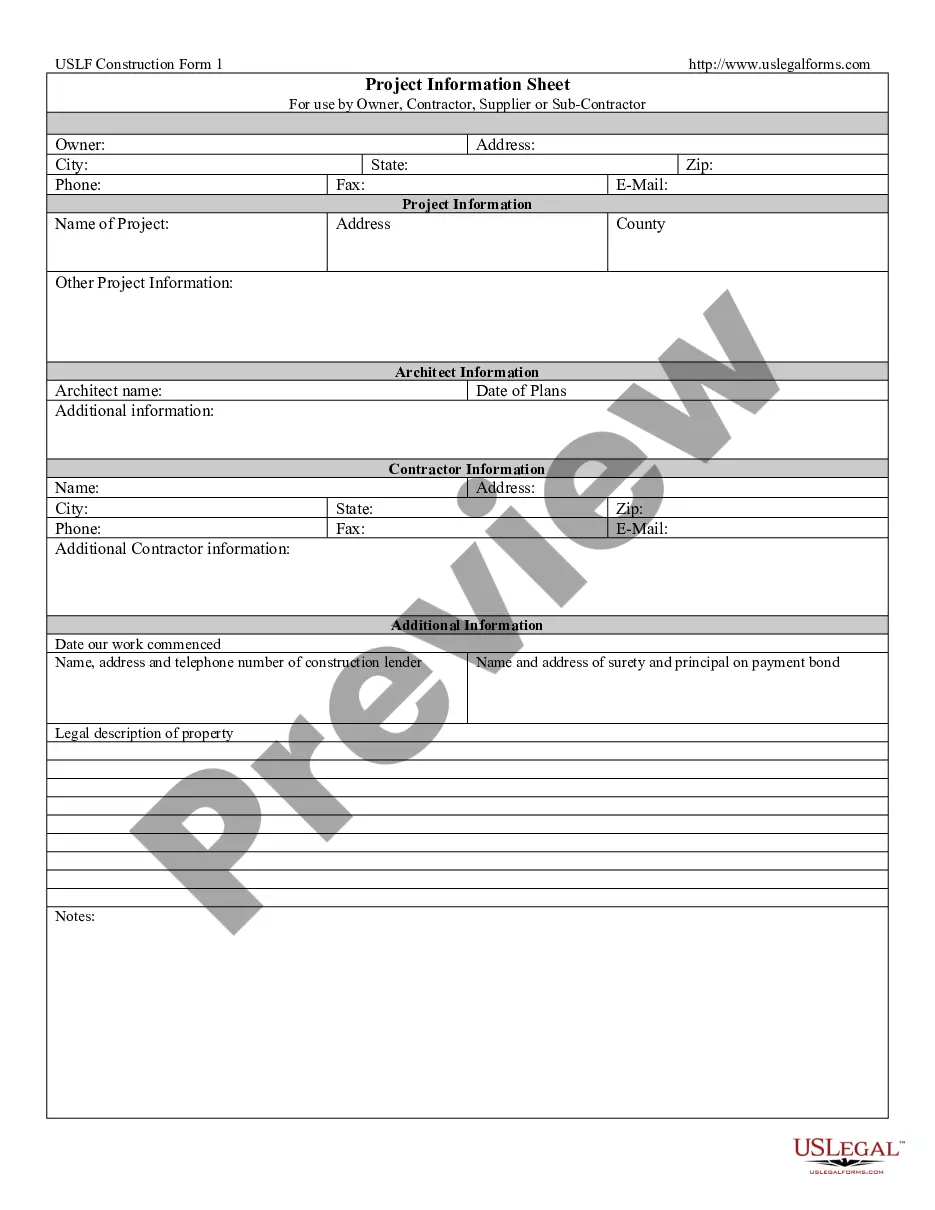
- Construction Project Information Sheet
Common use cases
This form package is useful in a variety of scenarios, including:
- When entering into contracts for drainage construction projects
- When modifications to existing contracts are needed
- Tracking bids for various construction projects
- Ensuring compliance with worker safety and health regulations
- Documenting project completion and equipment usage
Intended users of this form package
- Drainage contractors looking to protect their legal rights
- Subcontractors involved in drainage or plumbing work
- Property owners hiring drainage contractors
- Suppliers providing materials for drainage projects
How to prepare this document
- Review included forms to understand their purpose and requirements.
- Identify the parties involved in your drainage project.
- Enter project details, including dates and payment terms in the drainage contract.
- Complete the Construction Project Information Sheet to provide comprehensive project details.
- Use the Change Order Sheet for any modifications to the contract.
- Sign and date all required forms to finalize your agreements.
Notarization guidance for this package
Notarization is not commonly needed for forms in this package. However, if your state’s laws require it, our notarization service, powered by Notarize, allows you to finalize documents online 24/7 without in-person visits.
Get your form ready online
Our built-in tools help you complete, sign, share, and store your documents in one place.
Make edits, fill in missing information, and update formatting in US Legal Forms—just like you would in MS Word.
Download a copy, print it, send it by email, or mail it via USPS—whatever works best for your next step.
Sign and collect signatures with our SignNow integration. Send to multiple recipients, set reminders, and more. Go Premium to unlock E-Sign.
If this form requires notarization, complete it online through a secure video call—no need to meet a notary in person or wait for an appointment.
We protect your documents and personal data by following strict security and privacy standards.

Make edits, fill in missing information, and update formatting in US Legal Forms—just like you would in MS Word.

Download a copy, print it, send it by email, or mail it via USPS—whatever works best for your next step.

Sign and collect signatures with our SignNow integration. Send to multiple recipients, set reminders, and more. Go Premium to unlock E-Sign.

If this form requires notarization, complete it online through a secure video call—no need to meet a notary in person or wait for an appointment.

We protect your documents and personal data by following strict security and privacy standards.
Common mistakes
- Failing to include all parties in the drainage contract.
- Not documenting changes to the original project scope using the Change Order Sheet.
- Hastily completing the Certificate of Completion without confirming all work was finished to satisfaction.
- Ignoring state-specific details that may affect contract enforceability.
Why complete this package online
- Convenient access to all necessary forms in one affordable package.
- Edit and customize forms easily to suit your project needs.
- Reliable documents designed by licensed attorneys, ensuring compliance with state laws.
- Instant download capability, allowing you to start your project without delay.
Looking for another form?
Form popularity
FAQ
Select basic utilities are also included in the association fees. Utilities like gas, water, sewer, trash, and even heat are common services included.Condo fees cover all operation and maintenance costs of these facilities.
What HOAs Can Legally Do. Covenants, conditions, and restrictions fall under the scope of the HOA bylaws or articles. They are (in some cases) forged with the power to fine, place liens against mortgages, and even foreclose on a homeowner's property.
Some of the repairs the Board is typically responsible for includes the exterior portions of residences, landscaping, common areas such as lobbies and stairwells, and fences and exterior walls. When there is a maintenance issue in a common area that requires repair, an HOA member should notify the Board in writing.
A homeowner can sue HOA for selective enforcement if they feel it is warranted they have every right to do so. Naturally, an HOA board will want to do everything in its power to prevent legal action from taking place.
Determine the cause for poor drainage. You need to first determine what is causing water to accumulate in your yard before looking into potential solutions. Till the soil. Install a dry well. Grow trees and shrubs. Use drainage pipe. Slope the yard away from your home.
While the rules and regulations of an HOA are legally binding for association members, they generally aren't enforceable by law enforcement.These laws could include parking violations for public streets or county noise restrictions that may mirror your HOA rules.
Typically, an HOA is given the power to impose fines on any homeowners or condo owners who violate the rules.If your HOA has no powers of enforcement or the rule you want your HOA to enforce is discretionary, your only option may be to attempt to amend the HOA's governing documents.
Drainage is the artificial removal of water, both surface and sub-surface. Drainage is often a major element of civil engineering and construction projects and is necessary to avoid flooding and other damage. Typically, effluent is conveyed by drains to sewers, and from sewers to a suitable outfall or treatment plant.
The deeds for your house and property typically only convey basic information about your property and will not usually show any information about the property's drainage plans.
Look for landscapers who specialize in new lawn creation, ground leveling, and drainage management as they are best suited for such a project.