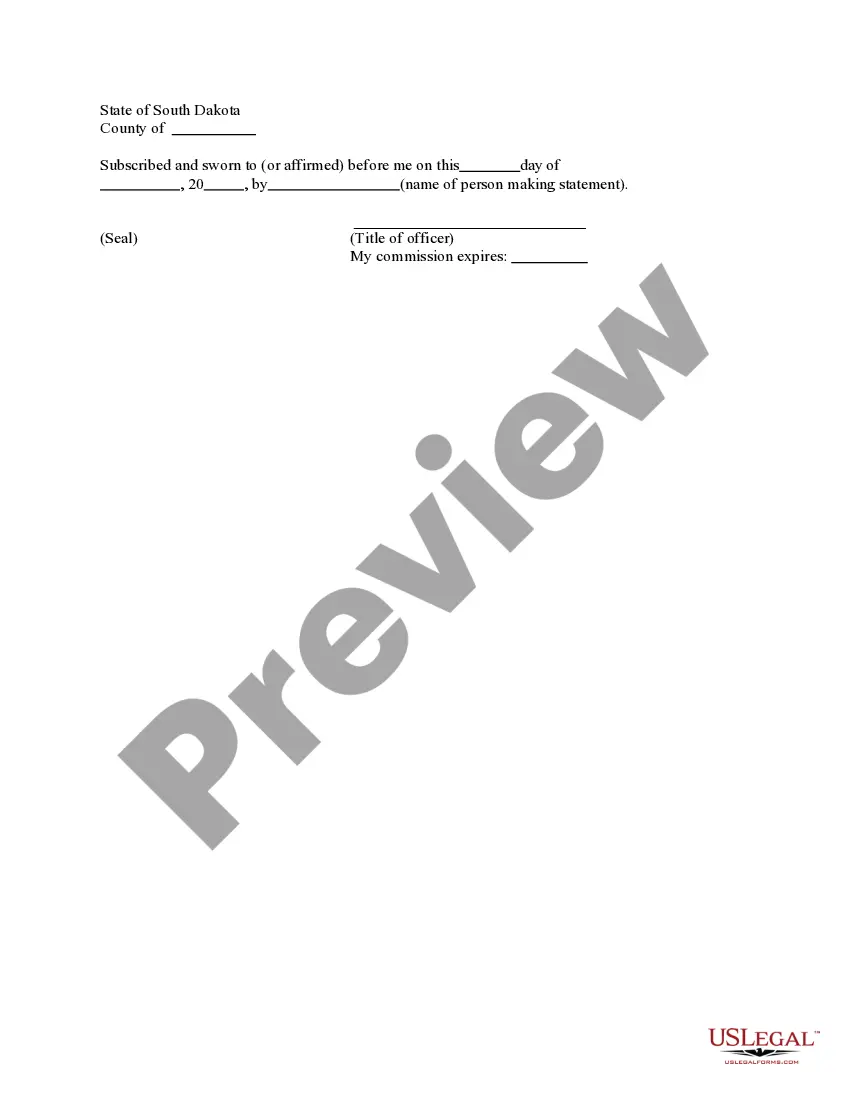
South Dakota Jurat Acknowledgment
About this form
The Jurat Acknowledgment is a legal document used to confirm the authenticity of a statement made under oath. This form is particularly important in legal settings where a sworn assertion is required for the document to have weight and validity. Unlike other acknowledgment forms, this one specifically involves an affidavit or sworn statement that confirms a personâs signature and the legitimacy of their claims before a notary public or authorized officer.
What’s included in this form
- Date on which the statement is made.
- Name of the individual making the statement.
- Signature of the individual affirming the statement.
- Notary public's signature and seal.
- Title of the officer taking the acknowledgment.
- Expiration date of the notary's commission.

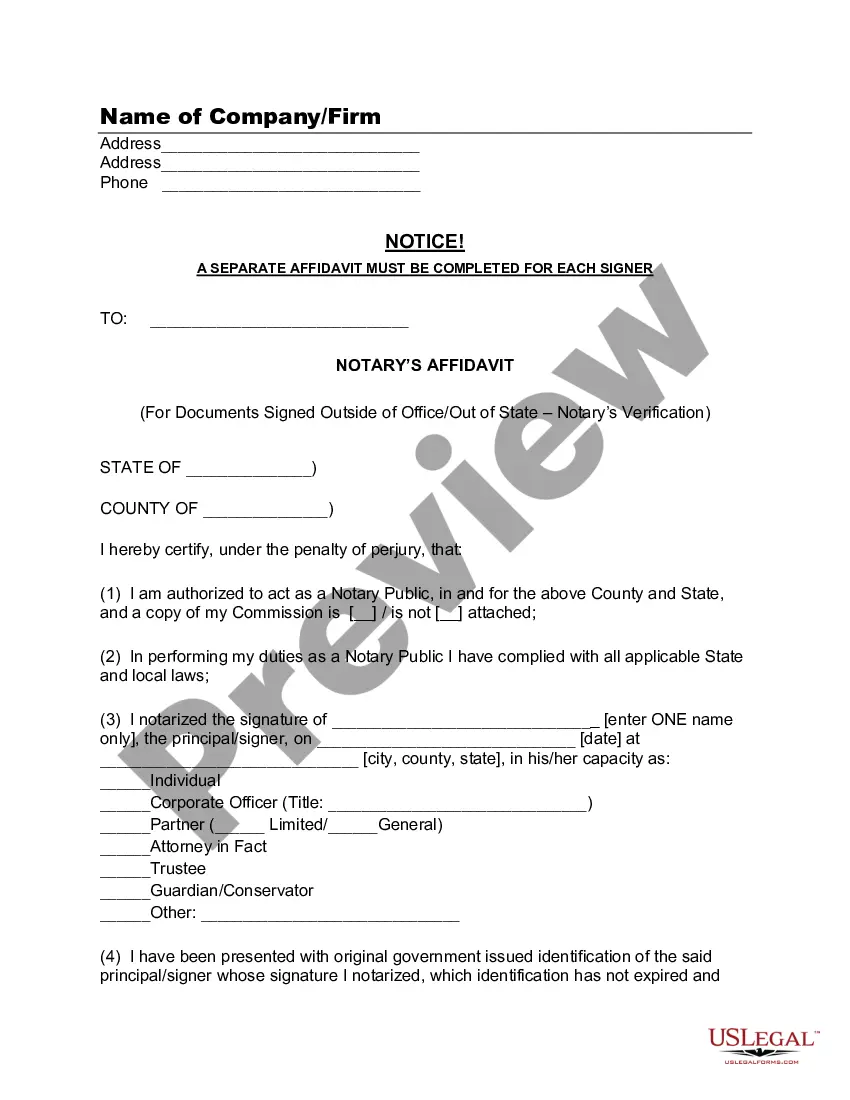
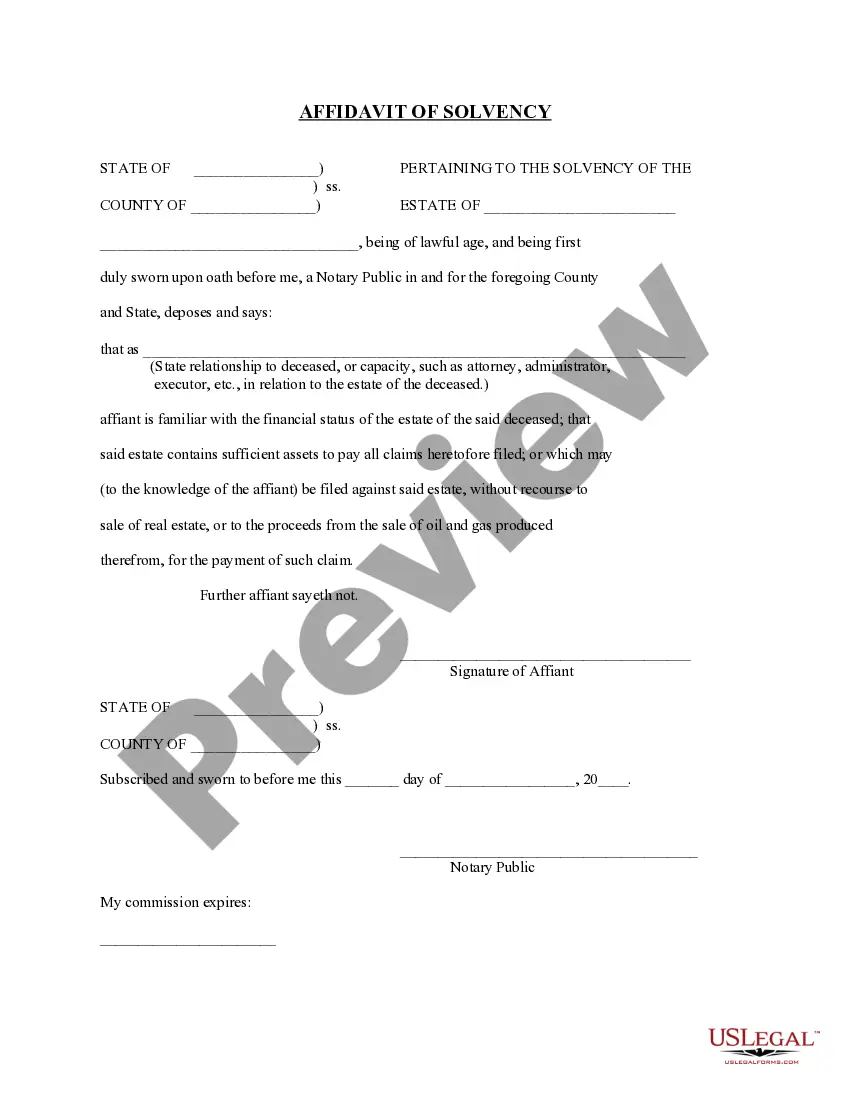
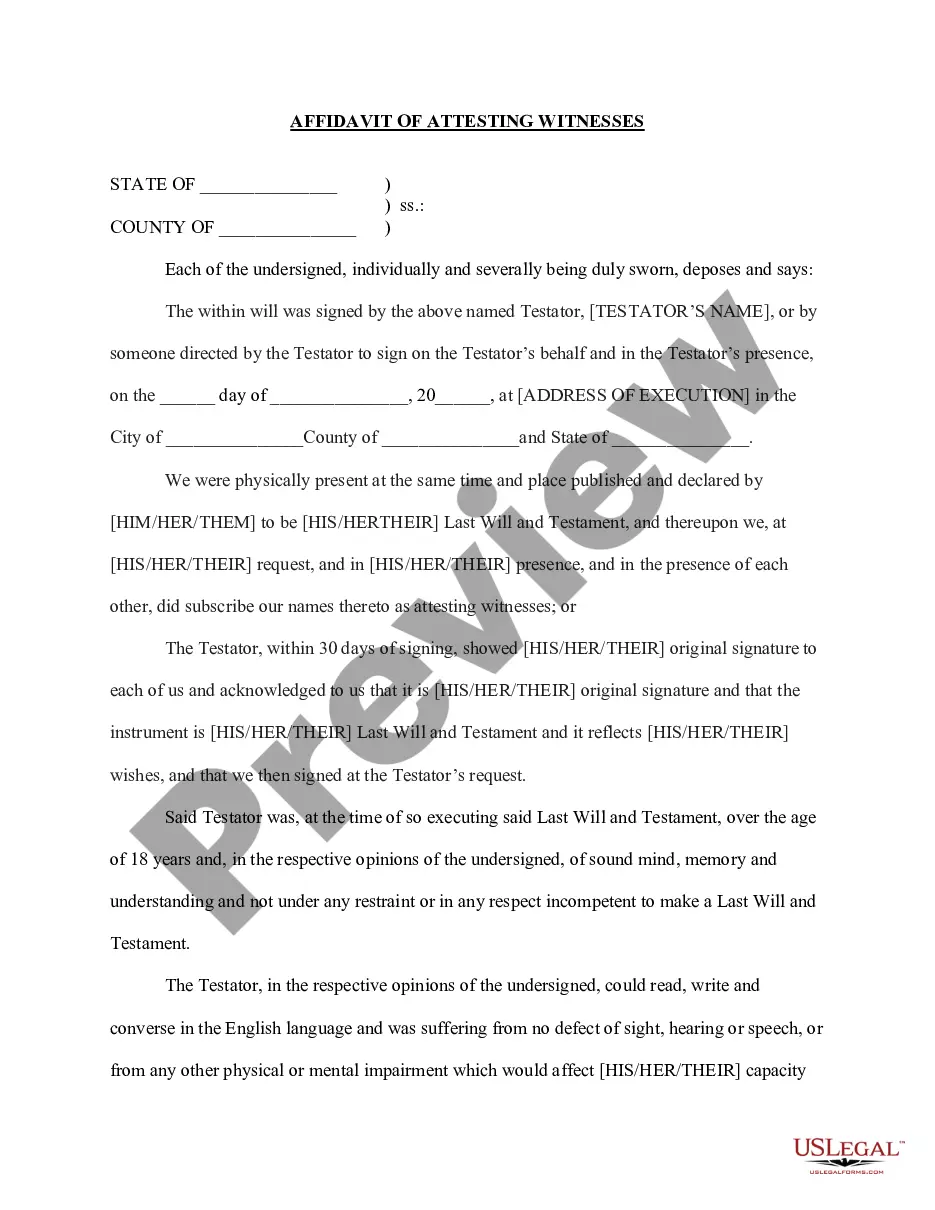
When to use this form
This form should be used when you need to formally acknowledge a sworn statement, typically in cases involving legal matters such as affidavits, depositions, or other documents where the truthfulness of the stated claims must be confirmed. It is commonly used in court proceedings, real estate transactions, and various legal processes requiring sworn affirmations.
Who this form is for
- Individuals providing sworn statements for legal proceedings.
- Affiants preparing to submit documents to a court or government entity.
- Anyone in need of a notary public to verify their identity and signature.
Completing this form step by step
- Enter the date of the statement at the top of the form.
- Provide the full name of the individual making the statement.
- Have the individual sign the form in the designated area.
- The notary public should complete their section, including their signature and seal.
- Fill in the title of the notary or official taking the acknowledgment.
- Note the expiration date of the notary's commission for compliance.
Does this document require notarization?
Yes, this form must be notarized to be legally valid. US Legal Forms offers integrated online notarization, allowing for secure video calls with licensed notaries available twenty-four-seven, making it easy and convenient to complete your form without the need to travel.
Get your form ready online
Our built-in tools help you complete, sign, share, and store your documents in one place.
Make edits, fill in missing information, and update formatting in US Legal Forms—just like you would in MS Word.
Download a copy, print it, send it by email, or mail it via USPS—whatever works best for your next step.
Sign and collect signatures with our SignNow integration. Send to multiple recipients, set reminders, and more. Go Premium to unlock E-Sign.
If this form requires notarization, complete it online through a secure video call—no need to meet a notary in person or wait for an appointment.
We protect your documents and personal data by following strict security and privacy standards.

Make edits, fill in missing information, and update formatting in US Legal Forms—just like you would in MS Word.

Download a copy, print it, send it by email, or mail it via USPS—whatever works best for your next step.

Sign and collect signatures with our SignNow integration. Send to multiple recipients, set reminders, and more. Go Premium to unlock E-Sign.

If this form requires notarization, complete it online through a secure video call—no need to meet a notary in person or wait for an appointment.

We protect your documents and personal data by following strict security and privacy standards.
Common mistakes to avoid
- Failing to include the date of the statement.
- Having the signatory print their name instead of signing.
- Not obtaining the notary's signature or seal.
- Leaving out the notary's title or expiration date.
Advantages of online completion
- Immediate access to professionally drafted templates.
- Convenience of downloading and filling out the form at your own pace.
- Increased reliability with attorney-reviewed forms.
- Easy editability to customize the document to fit your needs.
Looking for another form?

Form popularity
FAQ
It depends. You may notarize a document that does not have pre-printed notarial wording as long as the signer tells you what type of notarization is needed.As nonattorneys, Notaries cannot decide the type of notarization to perform on a document because the choice can have important legal ramifications.
The purpose of an acknowledgment is for a signer, whose identity has been verified, to declare to a Notary or notarial officer that he or she has willingly signed a document.The signer may either sign the document before appearing before you, or in your presence.
When you see (here insert the name and character of the officer) next to a blank as shown below, it means you should insert Your name, Notary Public in the blank.
Use an appropriate heading. You can write the letter in any format you choose but make certain to mention an appropriate heading. Insert a case caption. Add the address. Give details about the affiant. Include your name. Leave a space for the signature of the notary public.
Require Personal Appearance. Review The Document. Screen The Signer And Verify The Facts. Record The Notarization. Complete The Notarization.
In such cases, you should refuse to notarize, citing the blank space as a reason. Remember that you may only complete information in the notarial certificate wording. Any blanks in the main text must be completed by the signer or another individual authorized to do so before the notarization may proceed.
If the document has already been signed, the signer can sign his or her name again above or next to the first signature. You can then proceed with the notarization. You may want to notate in your journal that the signer was instructed to sign again in your presence.
What Is A Jurat? The purpose of a jurat also known in some states as a verification upon oath or affirmation is for a signer to swear to or affirm the truthfulness of the contents of a document to a Notary or notarial officer.
Step 1: Require Personal Appearance. Step 2: Check Over The Document. Step 3: Carefully Identify The Signer. Step 4: Record Your Journal Entry. Step 5: Complete The Notarial Certificate. A Last Note: Never Give Advice.