South Dakota Closing Statement

What this document covers
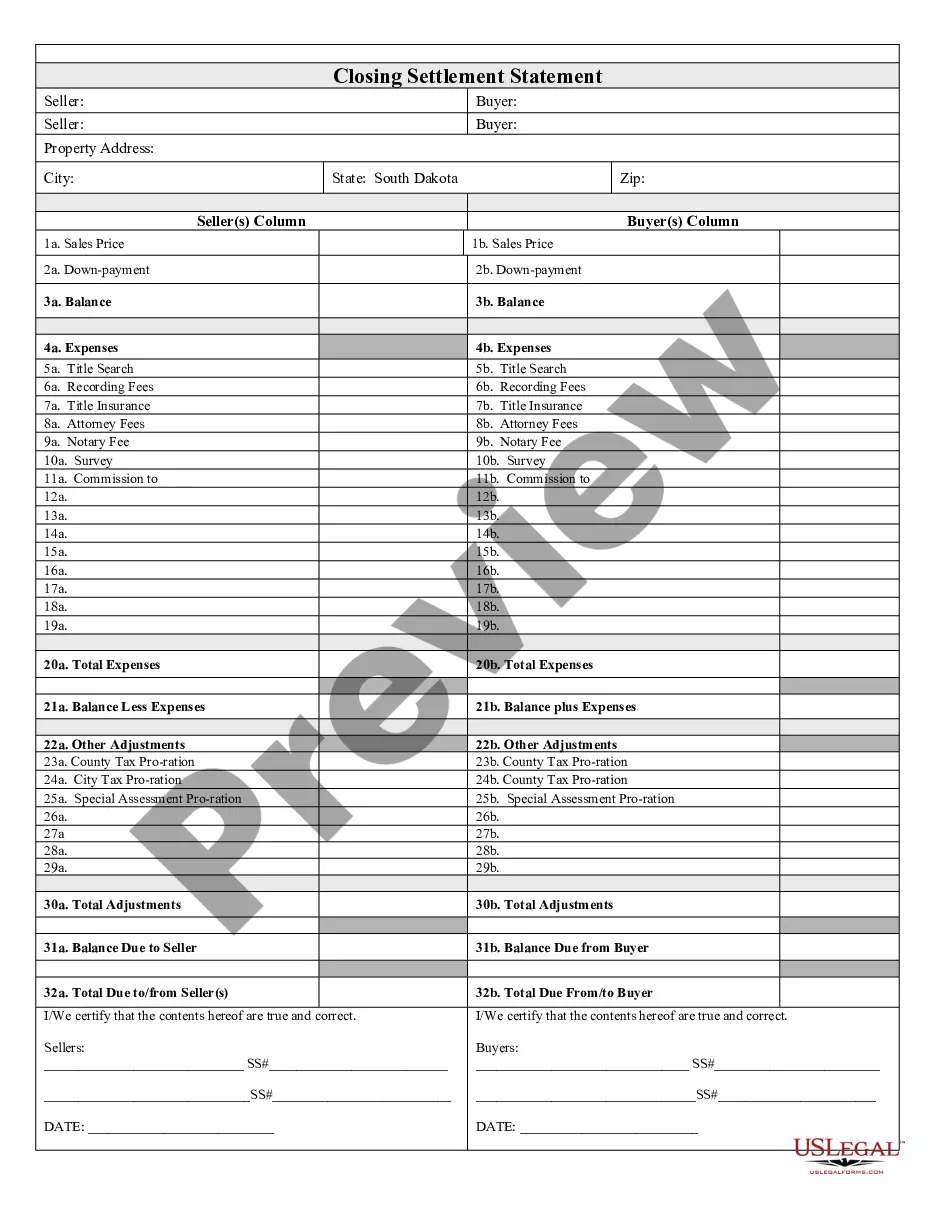
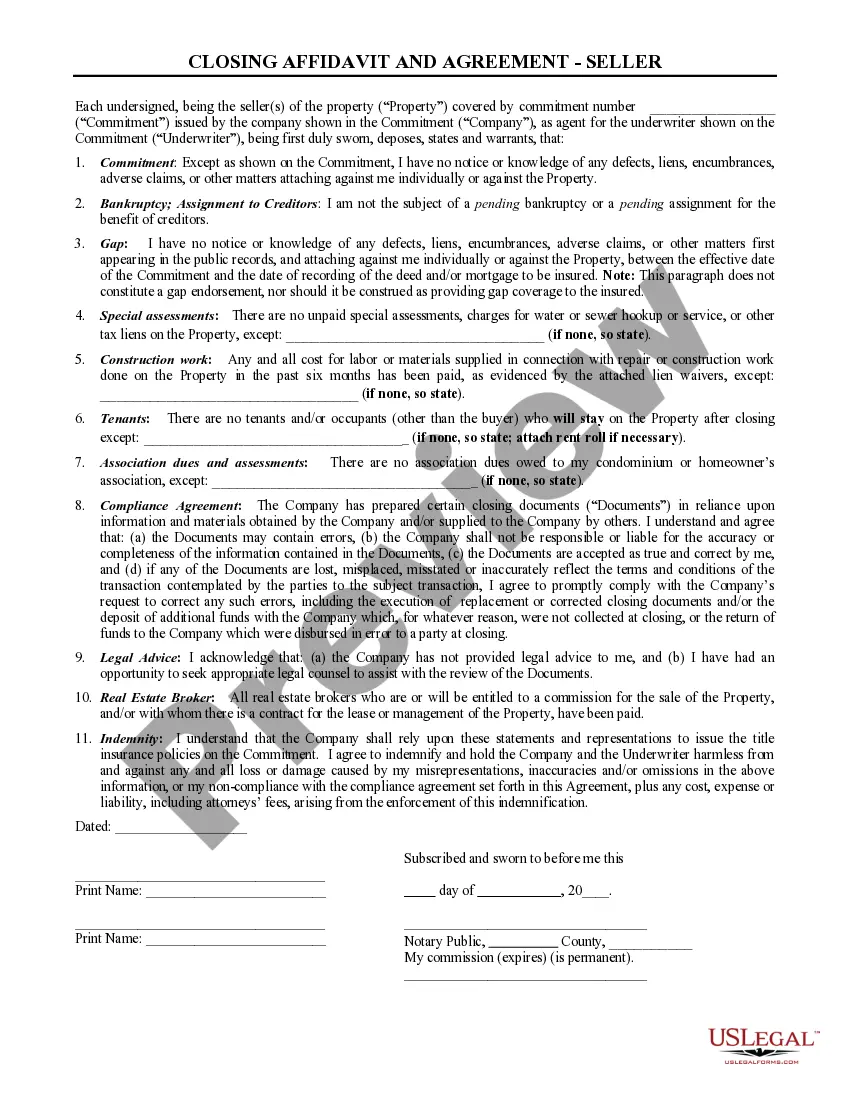
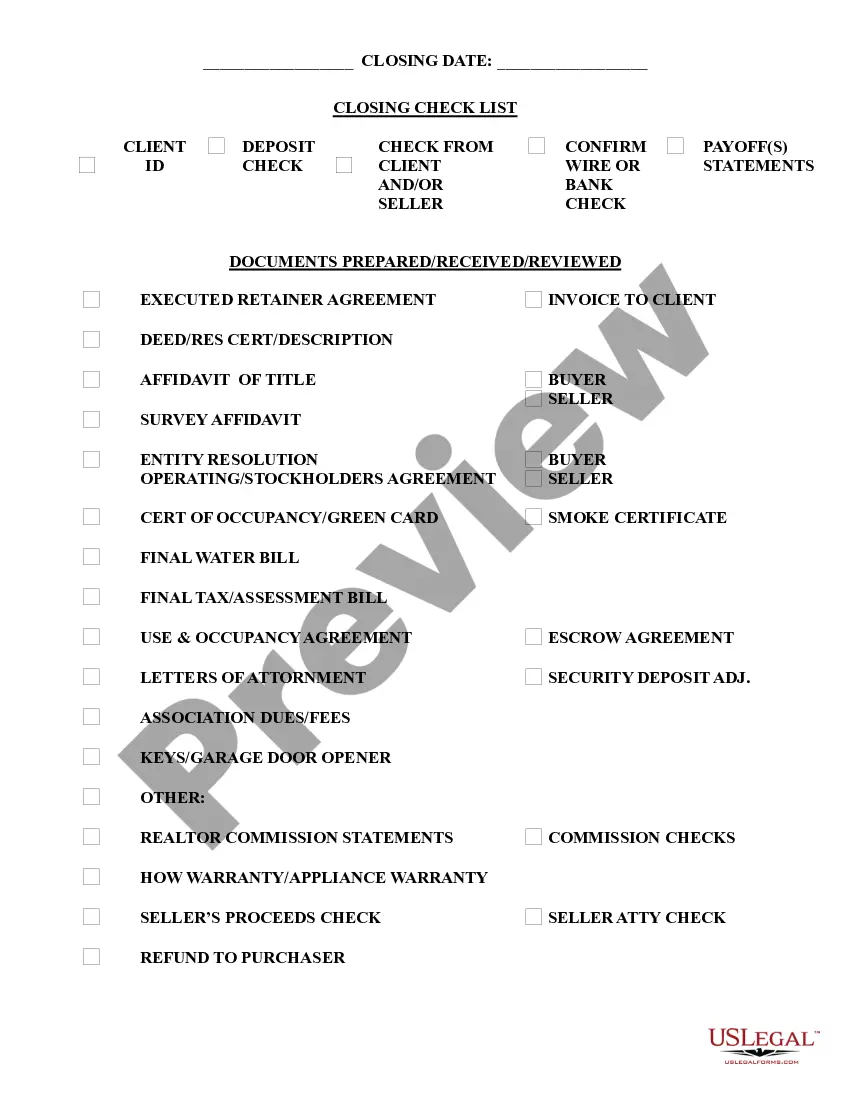
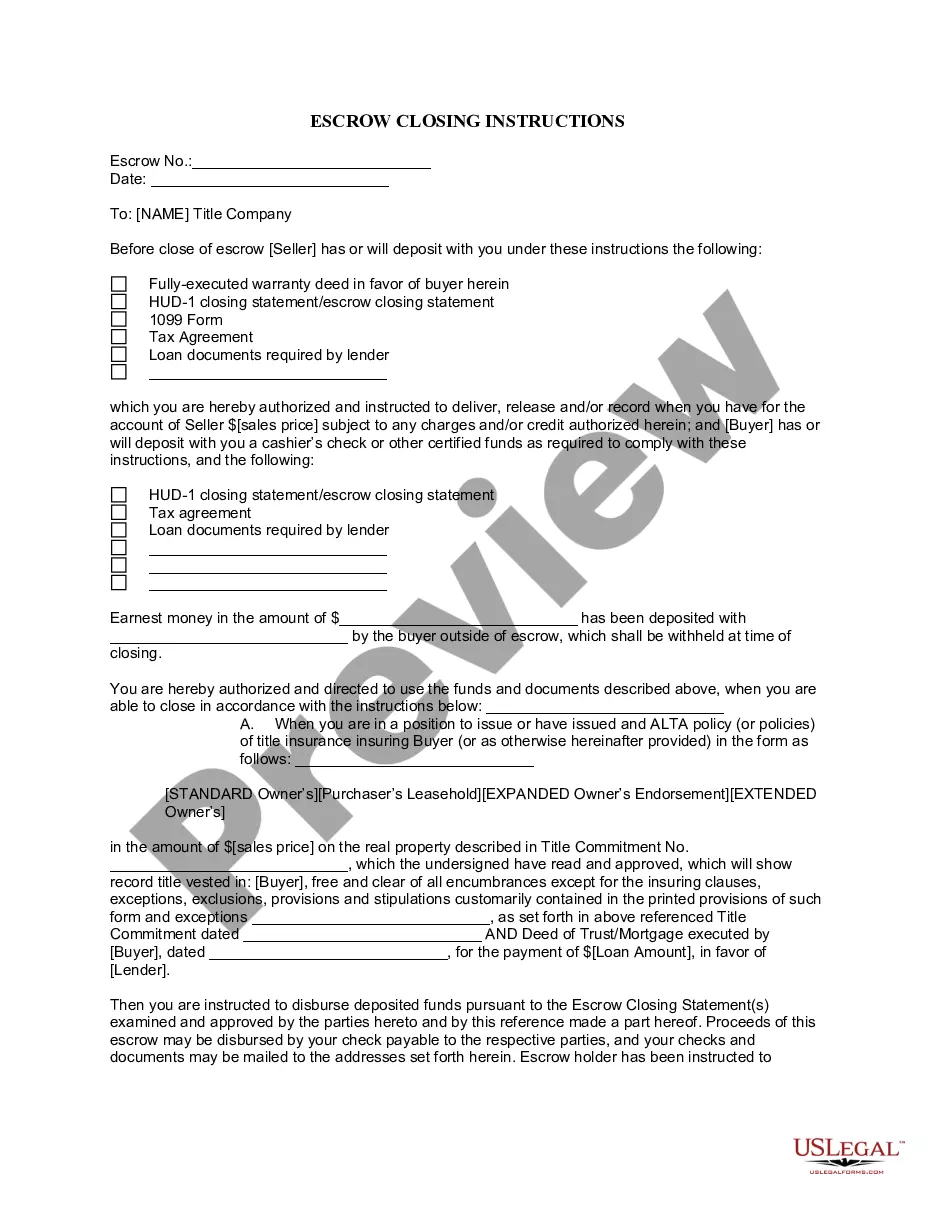
The Closing Statement is a critical document in a real estate transaction, particularly for cash sales or transactions involving owner financing. This form serves to detail all financial aspects of the sale, ensuring that both the buyer and seller understand the costs and proceeds involved. Unlike invoices and other receipts, the Closing Statement provides an official account of the settlement in a legally recognized format.
Key parts of this document
- Balance: Shows the amount due after all expenses have been deducted.
- Expenses: Lists all costs associated with the transaction, including title searches, recording fees, and attorney fees.
- Title Insurance: Details the cost and type of title insurance purchased as part of the transaction.
- Adjustment Pro-rations: Covers adjustments for property taxes and other fees that may apply.
- Certification by Buyer and Seller: Includes verification signatures from both parties, affirming the correctness of the information.

Situations where this form applies
This form is used when finalizing a real estate transaction where the payment is made either in cash or through owner financing. It should be completed and signed by the buyer and seller at the closing of the sale, providing a clear, agreed-upon summary of the financial exchange.
Who should use this form
This form is intended for:
- Home buyers and sellers engaged in real estate transactions.
- Real estate agents or brokers assisting in the closing process.
- Attorneys or professionals involved in real estate law who need to provide a settlement statement.
Steps to complete this form
Steps to Complete the Closing Statement:
- Identify the parties involved: include names of the seller and buyer.
- List all expenses: detail all costs including title insurance, attorney fees, and others.
- Calculate total adjustments: ensure that all applicable pro-rations and adjustments are accurately calculated.
- Verify balances: confirm the balance due to/from seller and buyer after expenses.
- Obtain signatures: both parties must sign and date the document to certify its accuracy.
Notarization guidance
This form does not typically require notarization unless specified by local law. However, it is always advisable to check with local regulation requirements to ensure compliance.
Get your form ready online
Our built-in tools help you complete, sign, share, and store your documents in one place.
Make edits, fill in missing information, and update formatting in US Legal Forms—just like you would in MS Word.
Download a copy, print it, send it by email, or mail it via USPS—whatever works best for your next step.
Sign and collect signatures with our SignNow integration. Send to multiple recipients, set reminders, and more. Go Premium to unlock E-Sign.
If this form requires notarization, complete it online through a secure video call—no need to meet a notary in person or wait for an appointment.
We protect your documents and personal data by following strict security and privacy standards.

Make edits, fill in missing information, and update formatting in US Legal Forms—just like you would in MS Word.

Download a copy, print it, send it by email, or mail it via USPS—whatever works best for your next step.

Sign and collect signatures with our SignNow integration. Send to multiple recipients, set reminders, and more. Go Premium to unlock E-Sign.

If this form requires notarization, complete it online through a secure video call—no need to meet a notary in person or wait for an appointment.

We protect your documents and personal data by following strict security and privacy standards.
Typical mistakes to avoid
Common mistakes to avoid:
- Failing to include all relevant expenses and adjustments.
- Incorrectly calculating total amounts due.
- Omitting signatures, which can invalidate the form.
- Not verifying compliance with state-specific requirements.
Benefits of completing this form online
Benefits of using this form online:
- Convenience: Easily downloadable and accessible from anywhere.
- Editability: Allows for customization to fit specific transaction details.
- Reliability: Forms are drafted by licensed attorneys, ensuring legal compliance.
Key takeaways
Key takeaways:
- The Closing Statement outlines all financial aspects of the real estate transaction.
- Accurate completion and verification are essential for legal standing.
- Both buyer and seller must sign the document to confirm its contents.
Looking for another form?

Form popularity
FAQ
While the buyers will typically be responsible for the lion's share, sellers should expect to pay between 1-3% of the home's final sale price at closing.
A closing statement, also called a HUD-1 statement or settlement sheet, is a form used in real estate transactions with an itemized list of all the costs to the buyer and seller.
What is the seller's closing statement, aka settlement statement? The seller's closing statement is an itemized list of fees and credits that shows your net profits as the seller, and summarizes the finances of the entire transaction.
A closing statement is a document that records the details of a financial transaction. A home buyer who finances the purchase will receive a closing statement from the bank, while the home seller will receive one from the real estate agent who handled the sale.
To get a copy of your closing statement of your home purchase in 2006, you should start by contacting the settlement agent for the purchase of the home. Depending on how long they retain their records, they should be able to supply you with a copy of your Settlement Documents.
If the closing date is missed, at a minimum, the contract is in jeopardy; the worst-case scenario is the contract has expired. The typical action is to extend the closing date, but the sellers might not agree.
In the United States, a seller disclosure statement is a form disclosing the seller's knowledge of the condition of the property. The seller disclosure notice or statement is anecdotal and does not serve as a substitute for any inspections of warranties the purchaser may wish to obtain.
In South Dakota, typical closing costs including origination fees charged by the lender and third-party fees like appraisals, flood certification fees, and the fee charged by the closing attorney. According to a study from Bankrate, closing fees in South Dakota typically average $1,814.