South Dakota Discovery Interrogatories from Defendant to Plaintiff with Production Requests

What is this form?
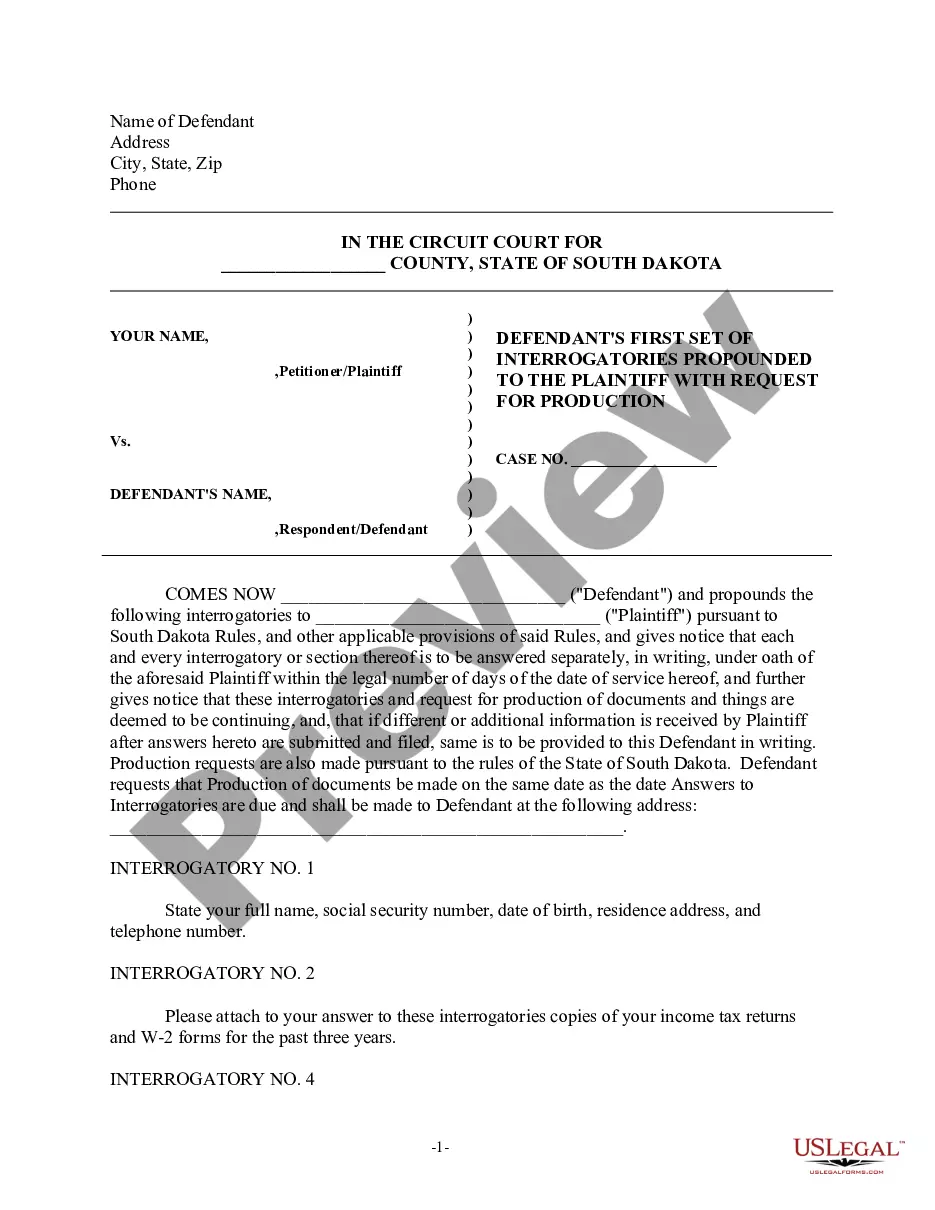
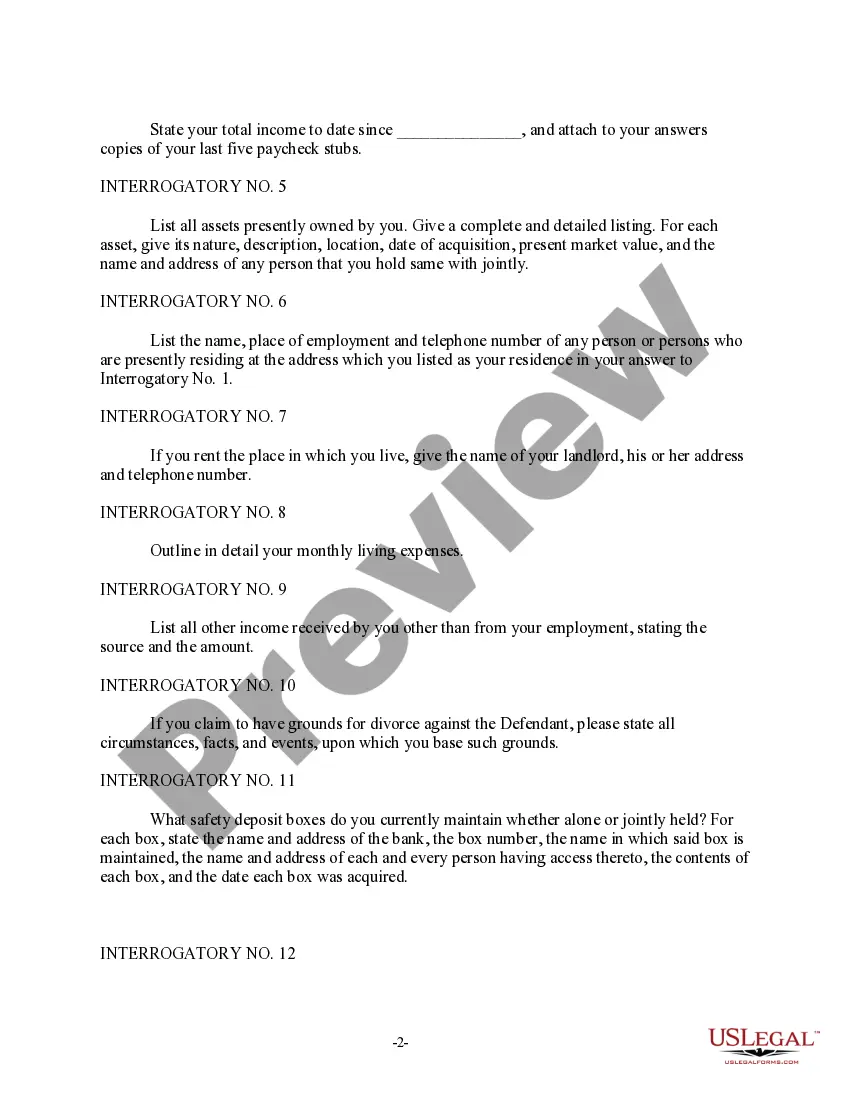
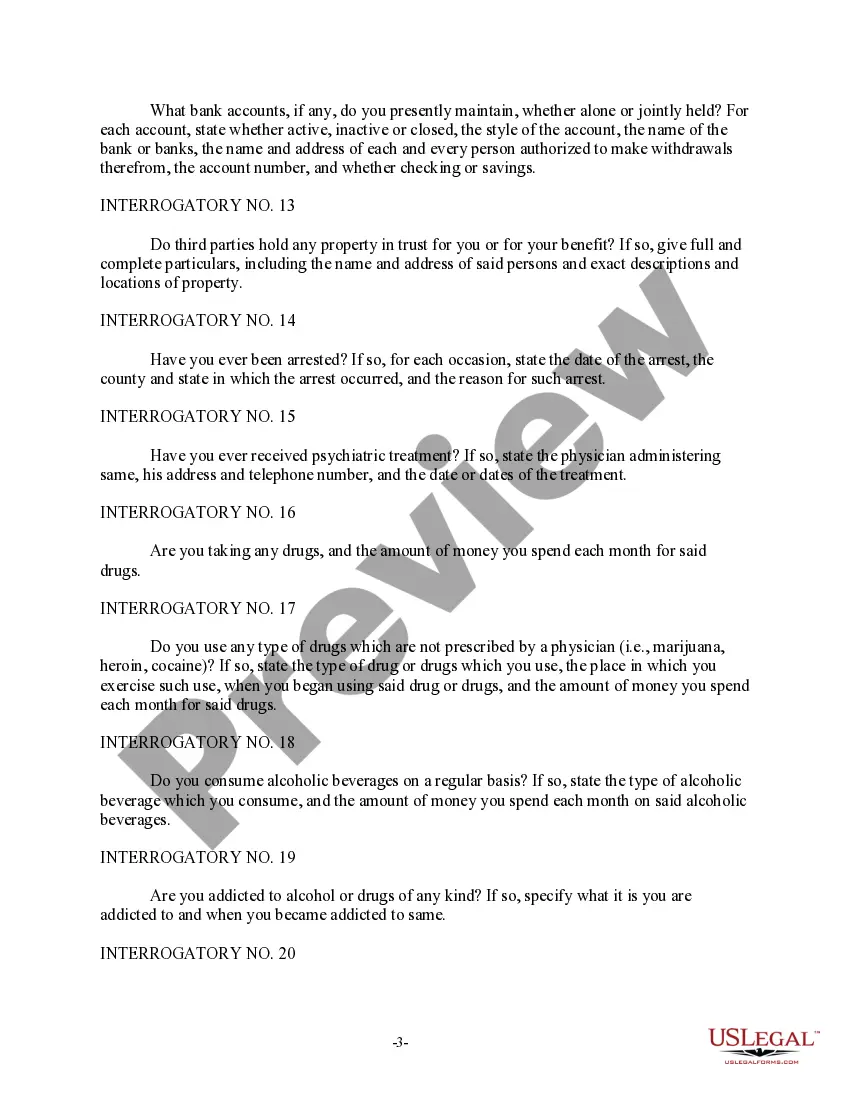
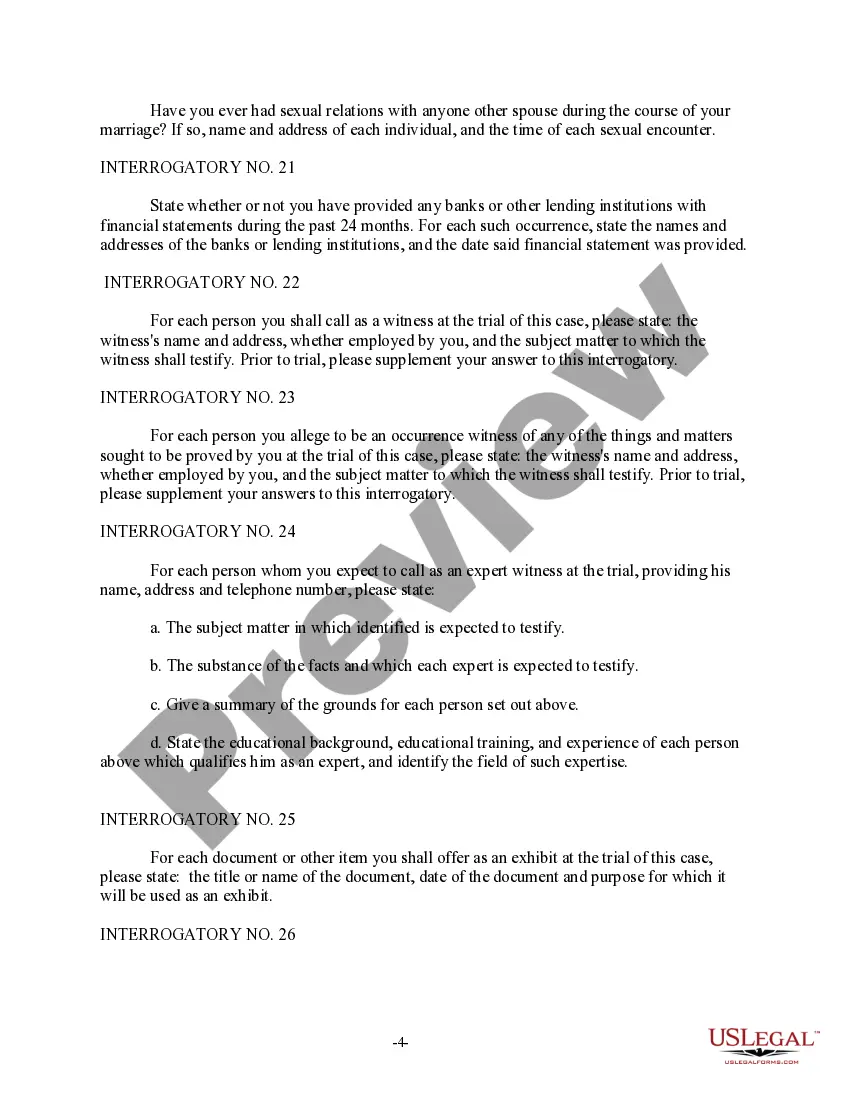
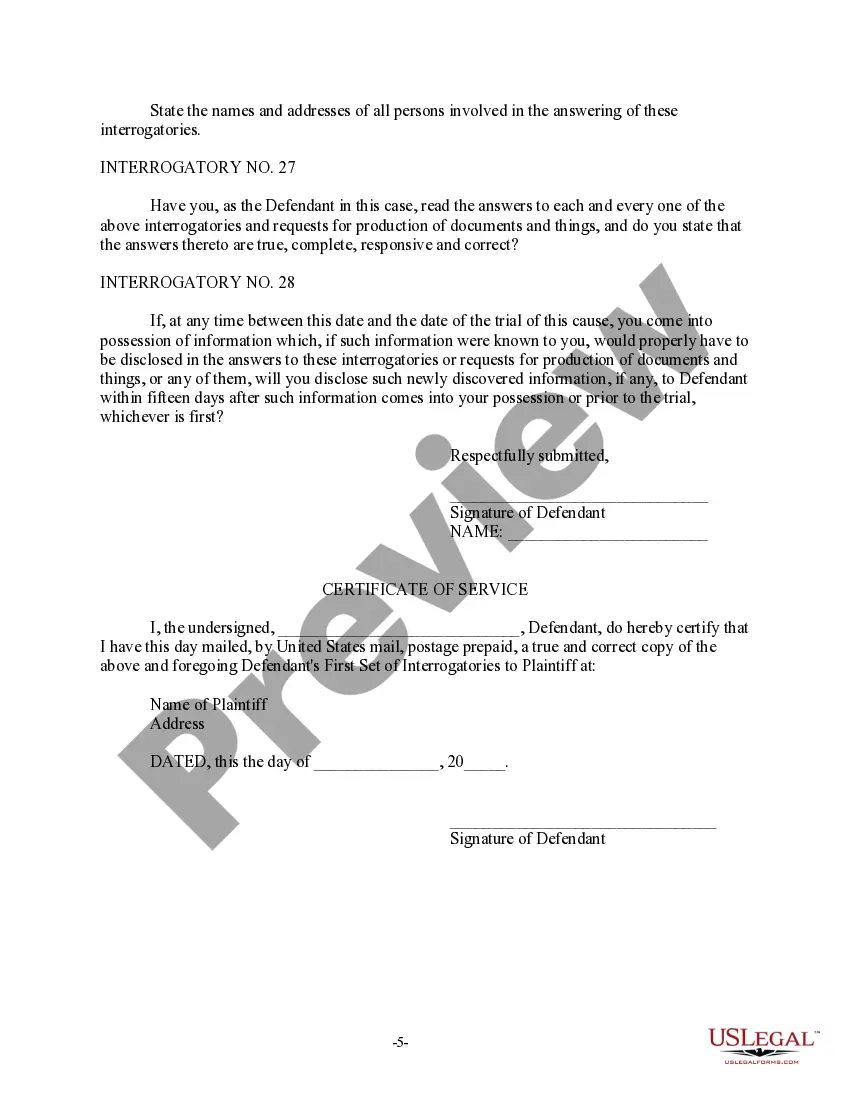
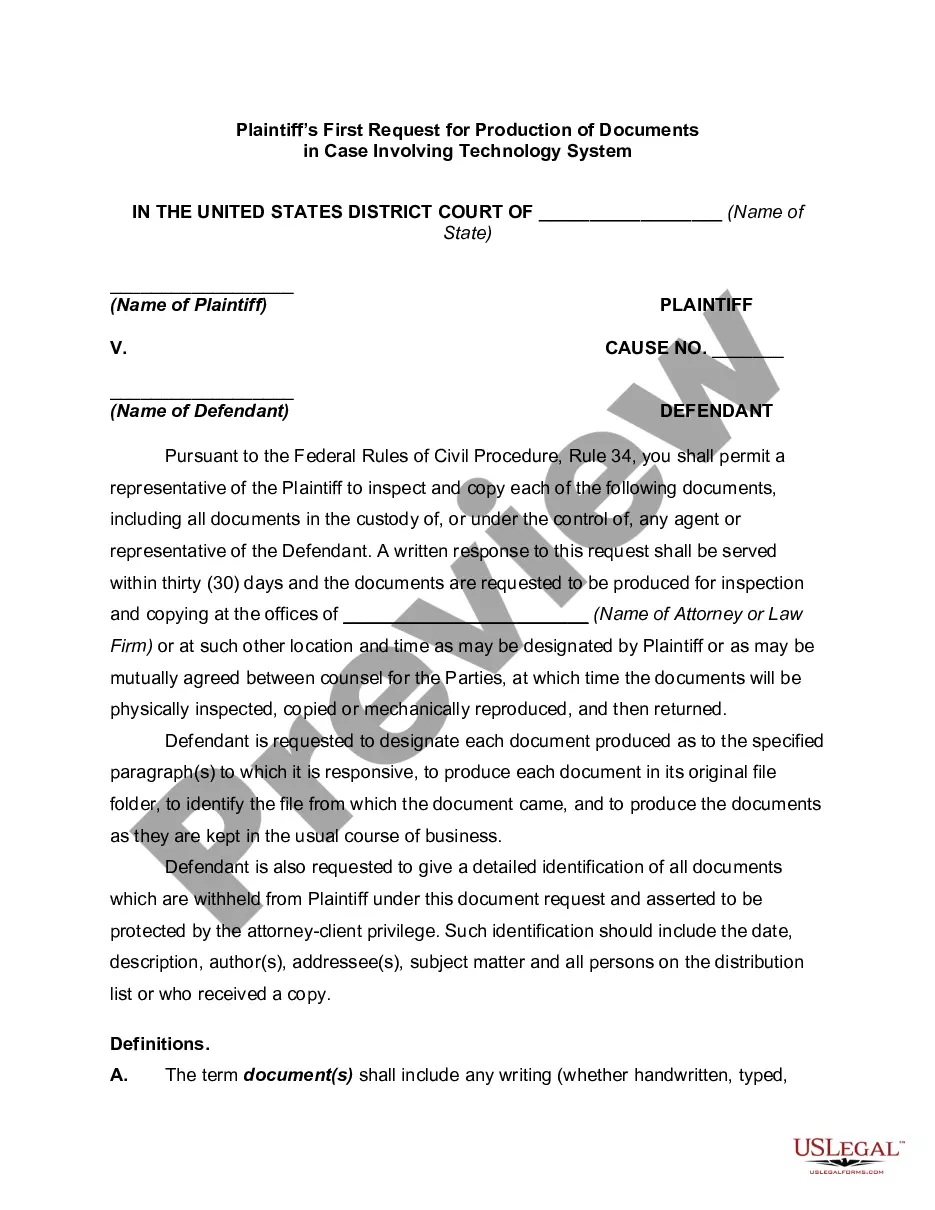
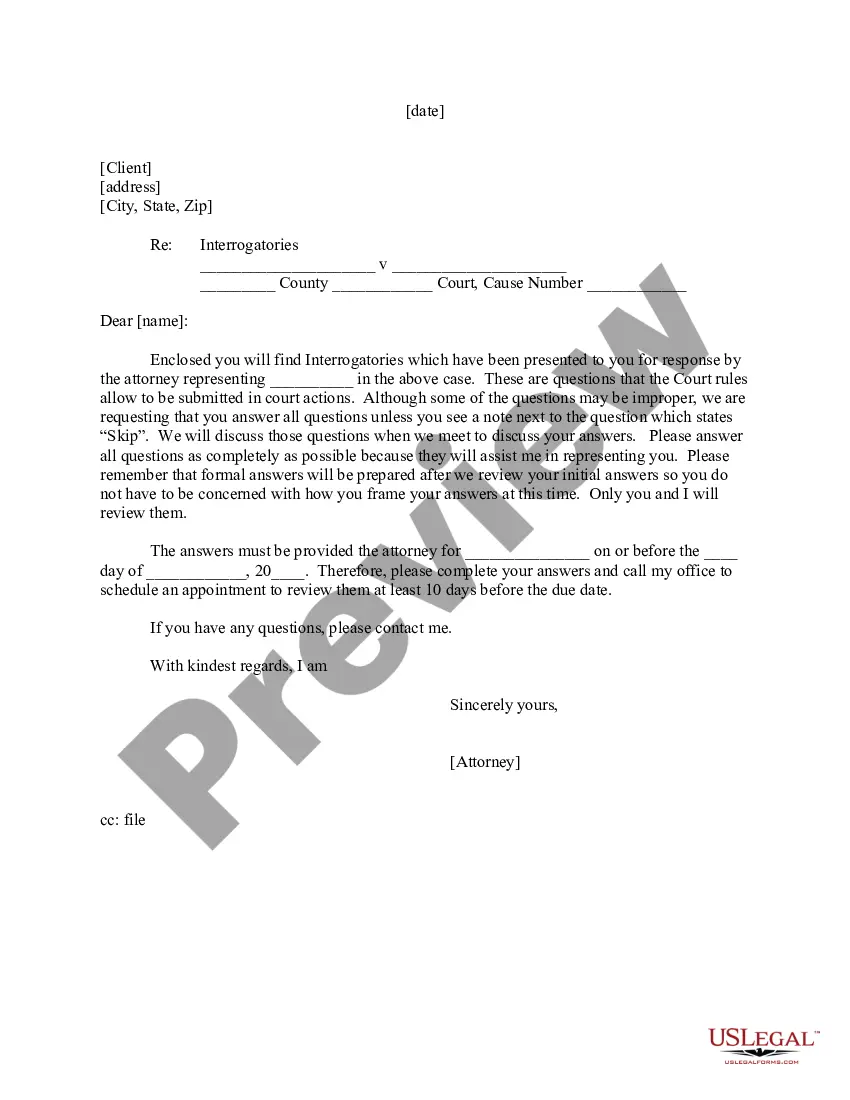
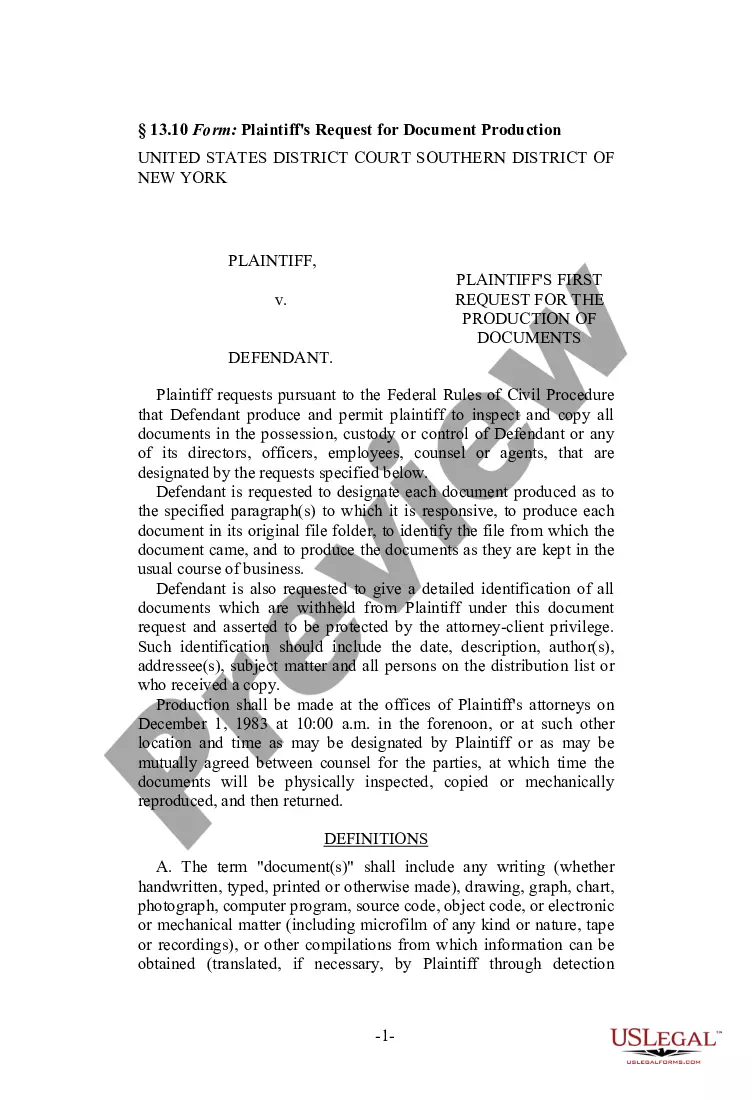
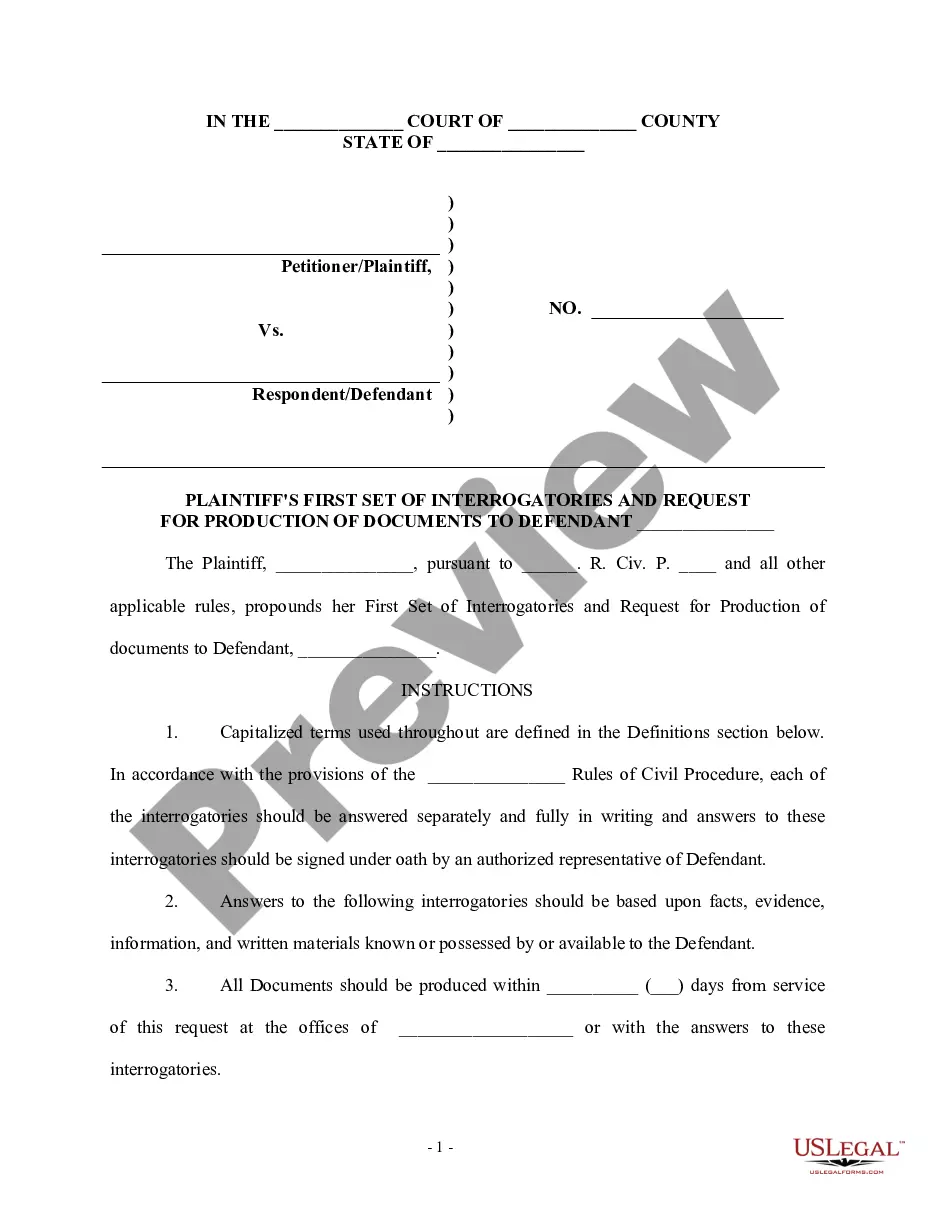
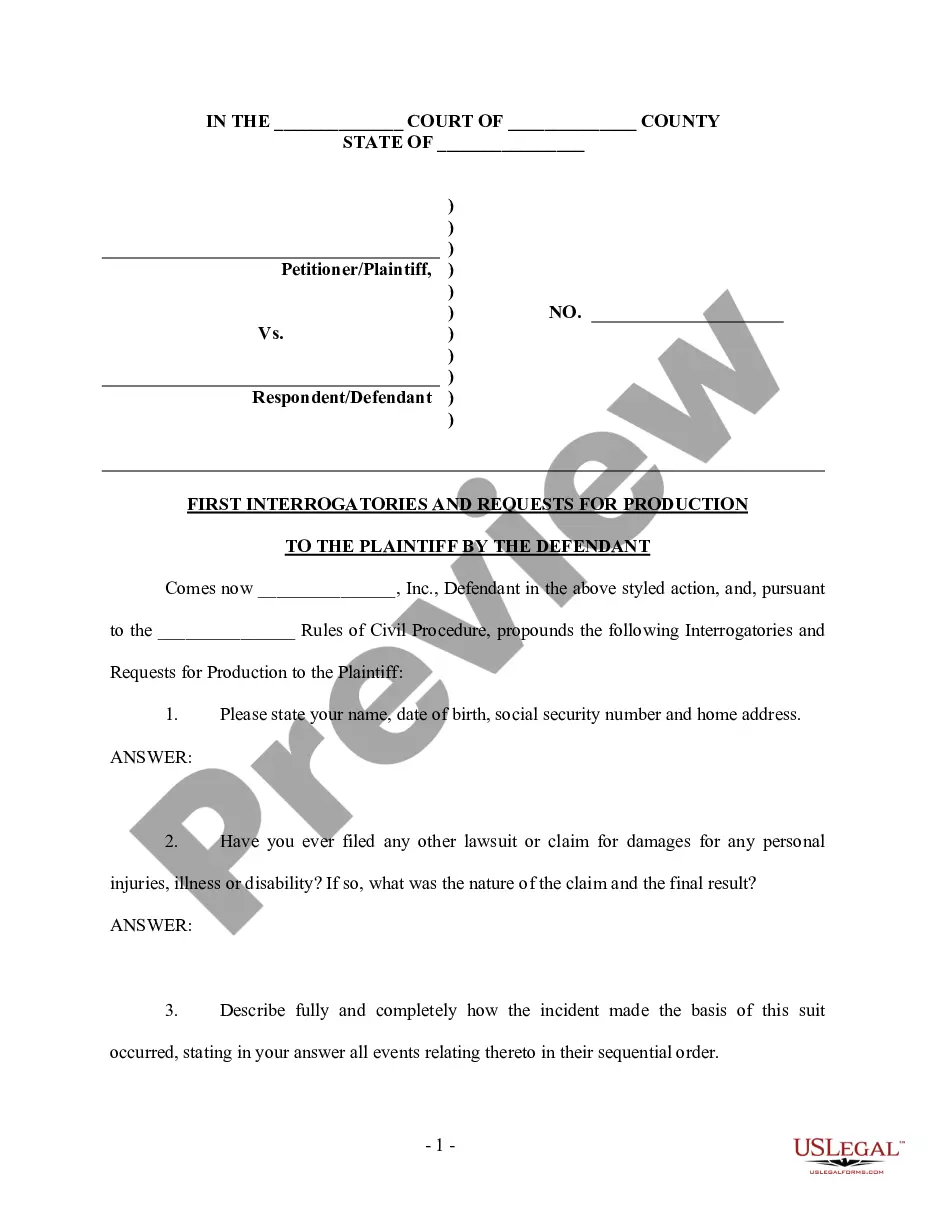
The Discovery Interrogatories from Defendant to Plaintiff with Production Requests is a legal form used in divorce proceedings. It allows the defendant to ask the plaintiff a series of questions and request relevant documents to gather pertinent information regarding the case. This form is specifically tailored for use in South Dakota and is distinct from other discovery forms by combining interrogatories and requests for document production in one comprehensive document. This approach helps streamline the discovery process in divorce actions.
Form components explained
- Interrogatories: A series of questions the plaintiff must answer under oath.
- Requests for production: Asks the plaintiff to provide specific documents related to the case.
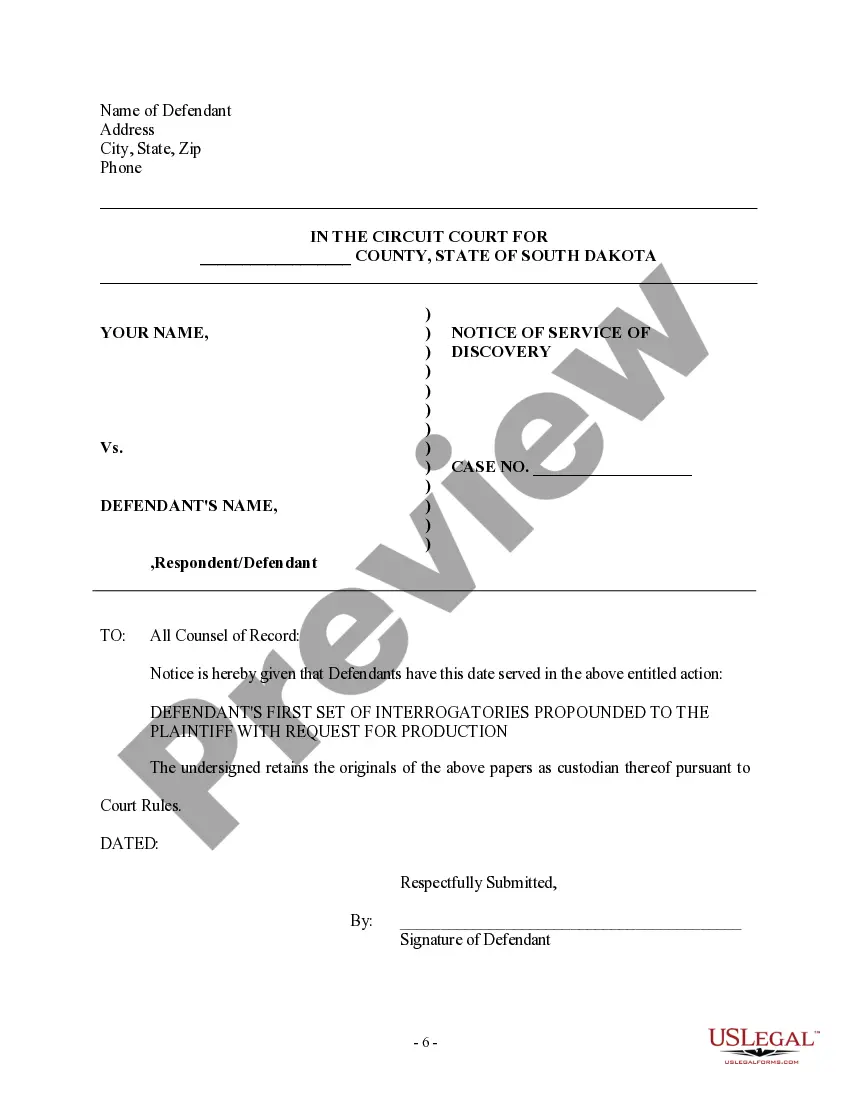
- Notices: Includes a notice of filing to be submitted to the court clerk.
- Signature lines: Space for the defendant's signature and details about service of the interrogatories.
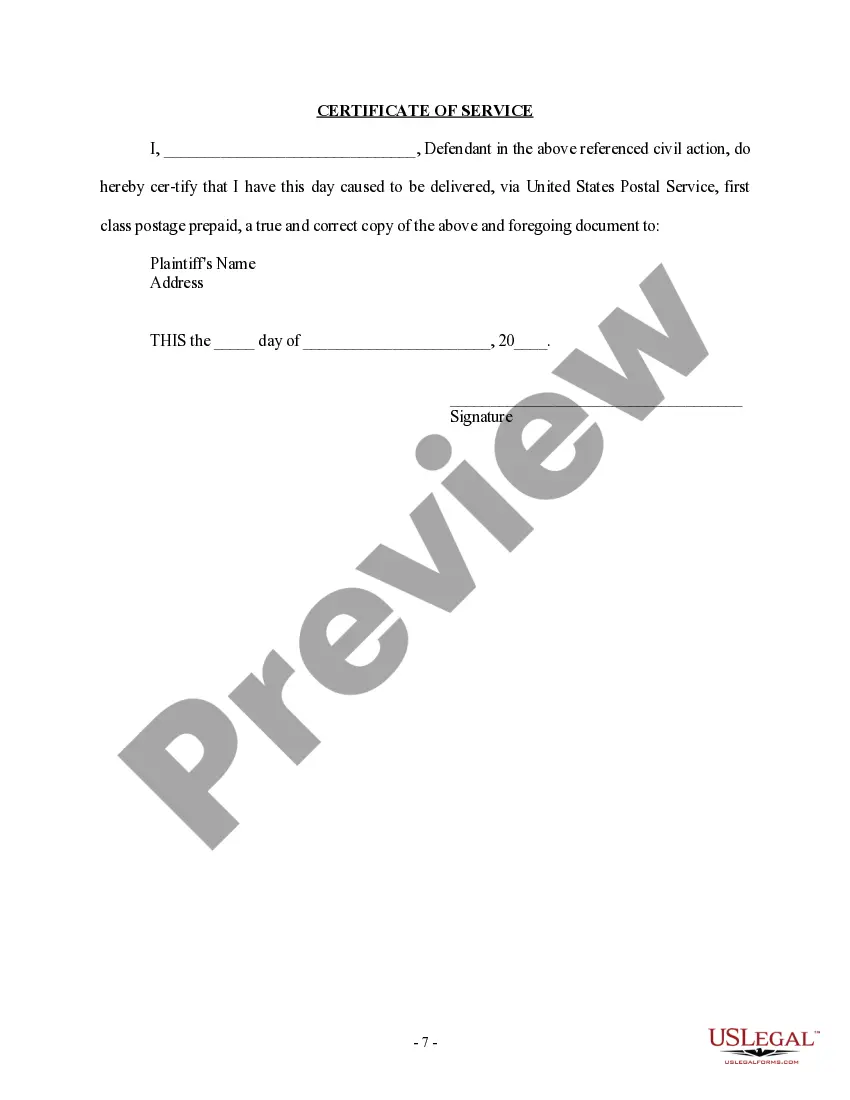
- Certificate of service: Confirms that the plaintiff received a copy of the interrogatories.
When to use this document
This form is used during the discovery phase of a divorce case when the defendant seeks information and documents from the plaintiff. It is necessary when the defendant needs to understand the plaintiff's financial situation, living conditions, or any other pertinent factors that could affect the case outcome. Using this form ensures all relevant questions are addressed systematically and legally.
Who can use this document
- Defendants in divorce proceedings in South Dakota looking to gather information from their spouse.
- Lawyers representing defendants who need to prepare interrogatories for their clients.
- Individuals with no prior legal experience seeking to understand their rights and obligations in divorce cases.
How to prepare this document
- Identify the parties: Fill in the names and addresses of both the defendant and the plaintiff.
- Answer the interrogatories: The plaintiff must respond to each question listed in the form under oath.
- Attach requested documents: Include any relevant documents as requested in the interrogatories.
- Sign and date: The defendant must sign the form and include the date of signing.
- File with the court: Submit the completed form and notice to the court clerk as required by local rules.
Does this form need to be notarized?
This form does not typically require notarization unless specified by local law. However, it is important for the answers given in the form to be truthful and made under oath, ensuring legal validity.
Get your form ready online
Our built-in tools help you complete, sign, share, and store your documents in one place.
Make edits, fill in missing information, and update formatting in US Legal Forms—just like you would in MS Word.
Download a copy, print it, send it by email, or mail it via USPS—whatever works best for your next step.
Sign and collect signatures with our SignNow integration. Send to multiple recipients, set reminders, and more. Go Premium to unlock E-Sign.
If this form requires notarization, complete it online through a secure video call—no need to meet a notary in person or wait for an appointment.
We protect your documents and personal data by following strict security and privacy standards.

Make edits, fill in missing information, and update formatting in US Legal Forms—just like you would in MS Word.

Download a copy, print it, send it by email, or mail it via USPS—whatever works best for your next step.

Sign and collect signatures with our SignNow integration. Send to multiple recipients, set reminders, and more. Go Premium to unlock E-Sign.

If this form requires notarization, complete it online through a secure video call—no need to meet a notary in person or wait for an appointment.

We protect your documents and personal data by following strict security and privacy standards.
Common mistakes to avoid
- Failing to answer all interrogatories completely and accurately.
- Not including required documents with the responses.
- Incorrectly filing the form or missing deadlines for responses.
- Overlooking the need for answers to be signed under oath.
Benefits of using this form online
- Immediate access: Download the form instantly from uslegalforms.com.
- Editable template: Customize and modify the form to suit your specific case needs.
- Expert guidance: Drafted by licensed attorneys, ensuring legal compliance and accuracy.
Legal use & context
- Interrogatories must be answered with honesty and accuracy; failure to do so can lead to legal consequences.
- Responses can be used as evidence in court if the case proceeds to trial.
- Understanding and complying with the rules of discovery is crucial for both parties in a divorce proceeding.
Quick recap
- The Discovery Interrogatories from Defendant to Plaintiff with Production Requests is essential for collecting critical information in divorce cases.
- This form helps organize the discovery process, making it easier for defendants to obtain necessary details.
- It is specifically crafted to meet the legal standards in South Dakota, ensuring proper use in court.
Looking for another form?
Form popularity
FAQ
Interrogatories Interrogatories are written questions that are sent by one party to another.Requests for production are the means by which you can ask the other party to make copies of documents, photographs, records, etc. and to request the inspection of property.
You must answer each interrogatory separately and fully in writing under oath, unless you object to it. You must explain why you object. You must sign your answers and objections.
The purpose of interrogatories is to learn a great deal of general information about a party in a lawsuit. For example, the defendant in a personal injury lawsuit about a car accident might send you interrogatories asking you to disclose things like: Where you live. Where you work.
Interrogatories, which are written questions about things that are relevant or important to the case. (NRCP 33; JCRCP 33) Requests for production of documents or things, which are written requests that demand the other side provide particular documents or items.
There are basically six types of discovery in family court: 1) interrogatories; 2) requests for production of documents and inspection 3) requests for admissions; 4) depositions; 5) subpoenas duces tecum; 6) physical and mental examinations.
Interrogatories are a part of the "discovery" stage of a civil case.During discovery, the parties request and exchange information and documents. Interrogatories and depositions form the bulk of the discovery process. Unlike many legal documents, interrogatories do not need to be filed with the court.
Interrogatories ask questions; the responding party provides written answers. A request for production of documents requests the production of documents (or other tangible things); the responding party provides documents.
So, can you refuse to answer interrogatories? The answer is, no, you may not. You must answer a Rule 33 interrogatory within 30 days of being served with it. That answer must either permit inspection of the requested information or object to the production of the information for a specific reason.
You must answer each interrogatory separately and fully in writing under oath, unless you object to it. You must explain why you object. You must sign your answers and objections.