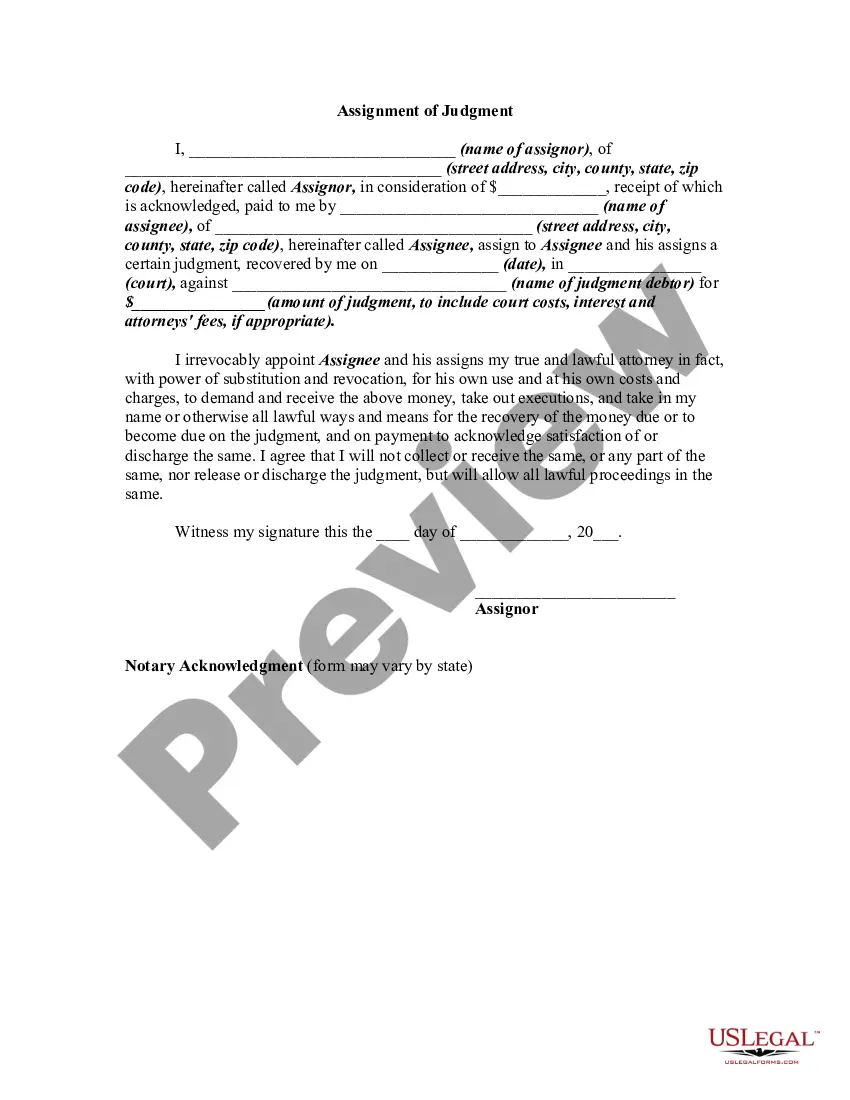
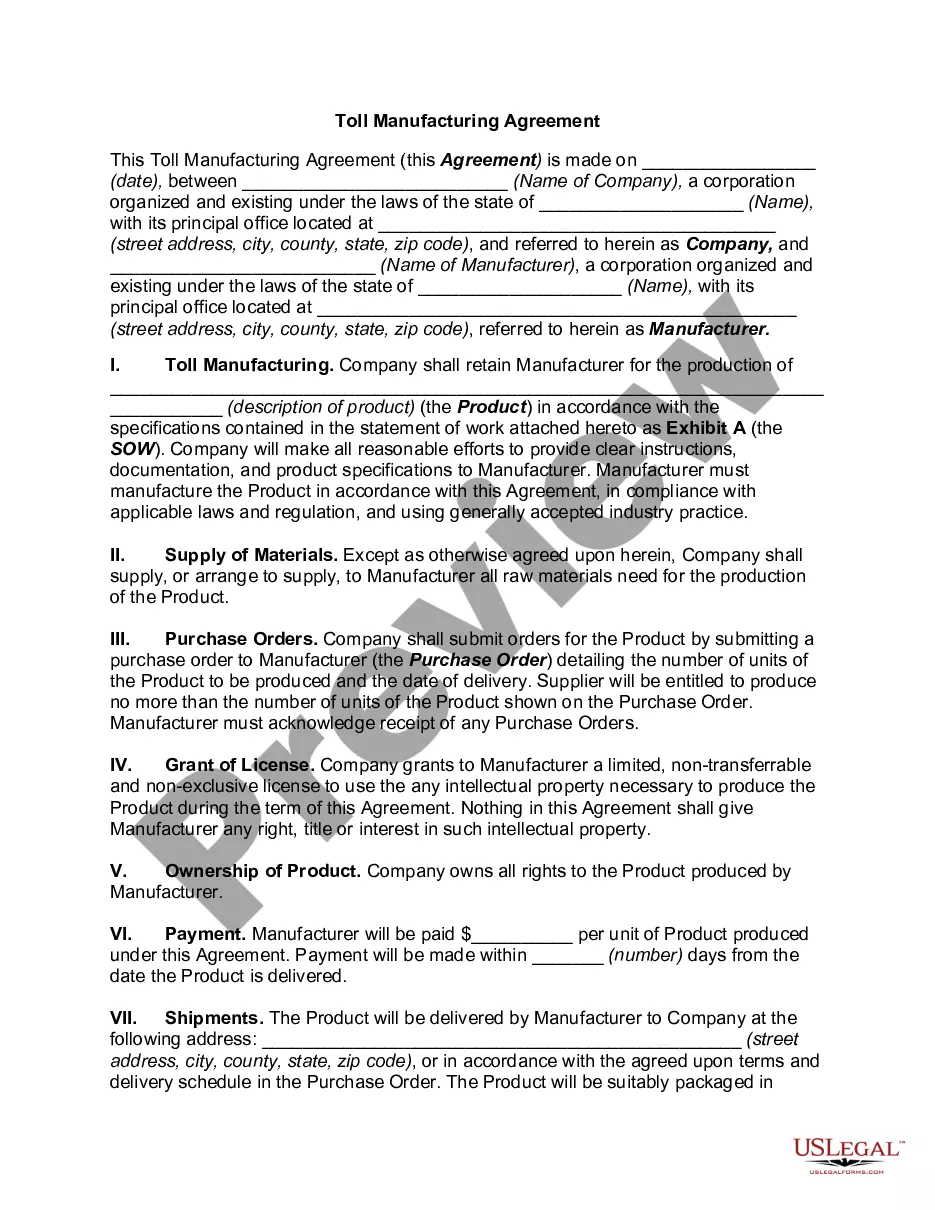
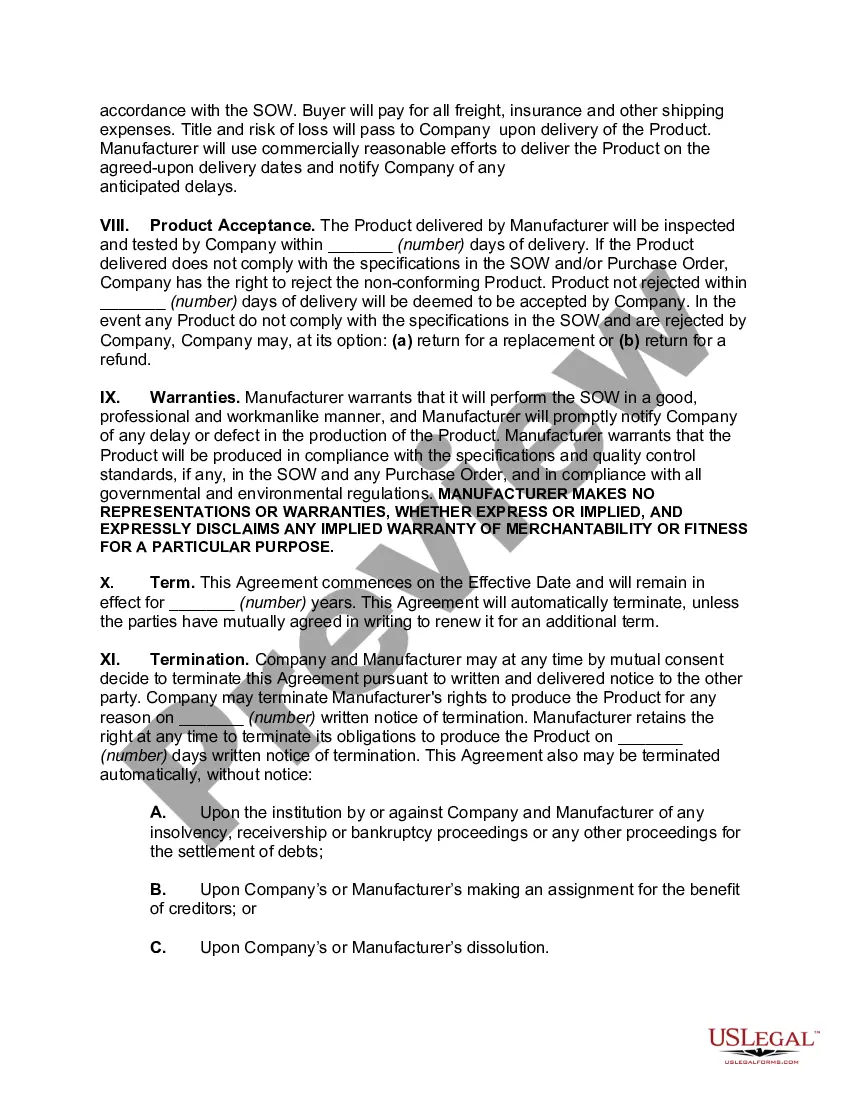
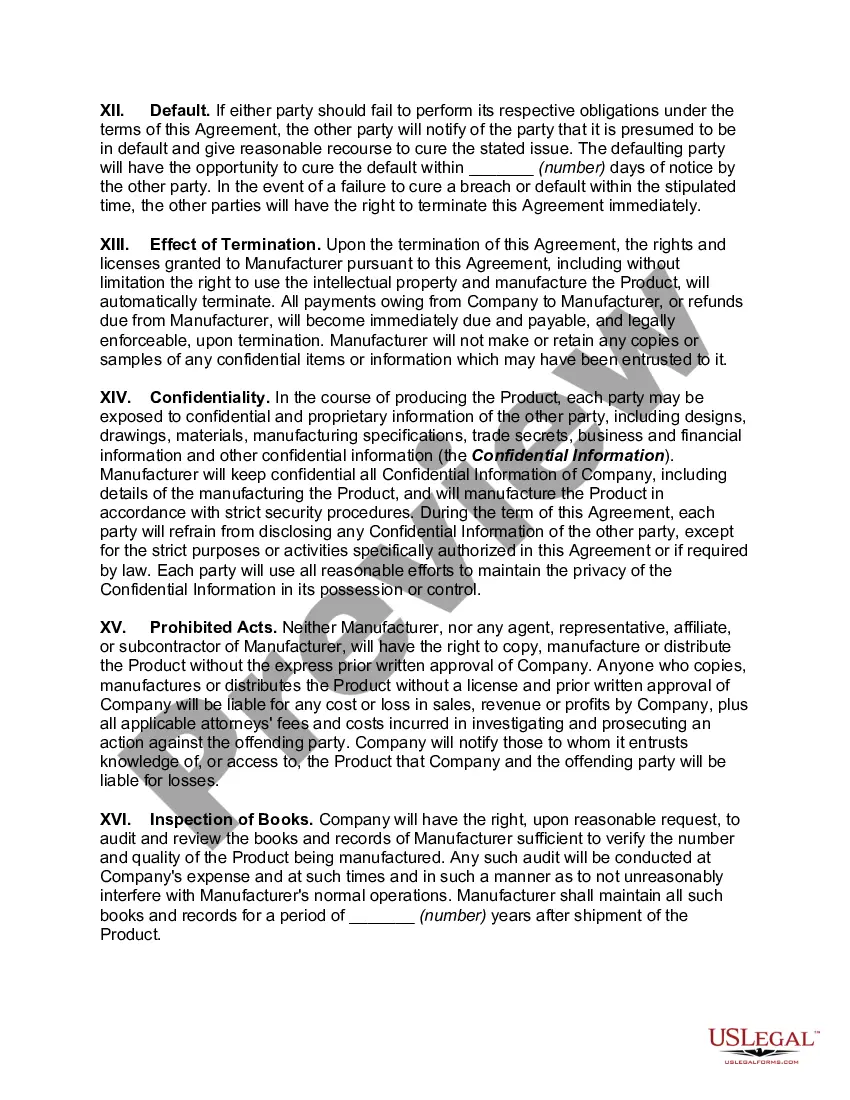
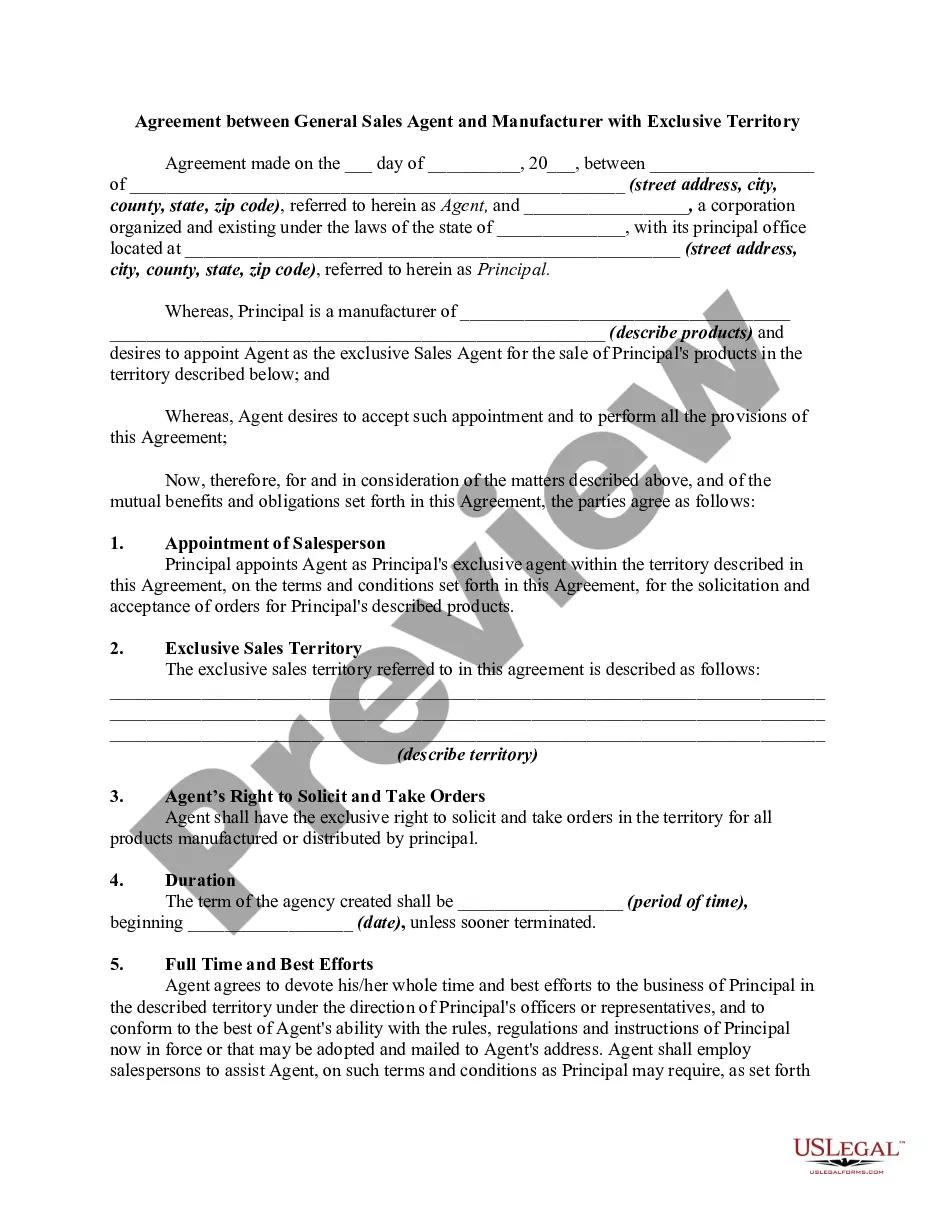
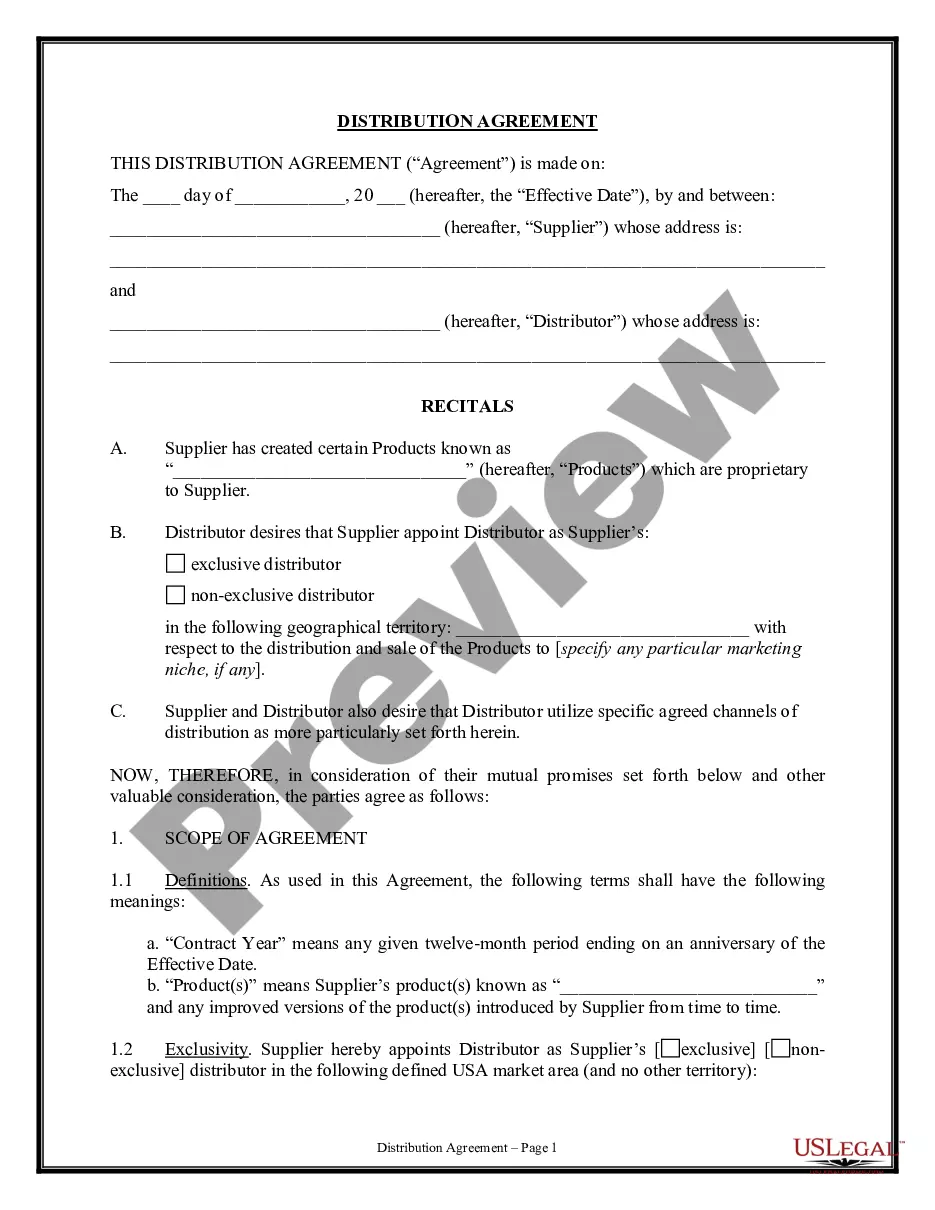
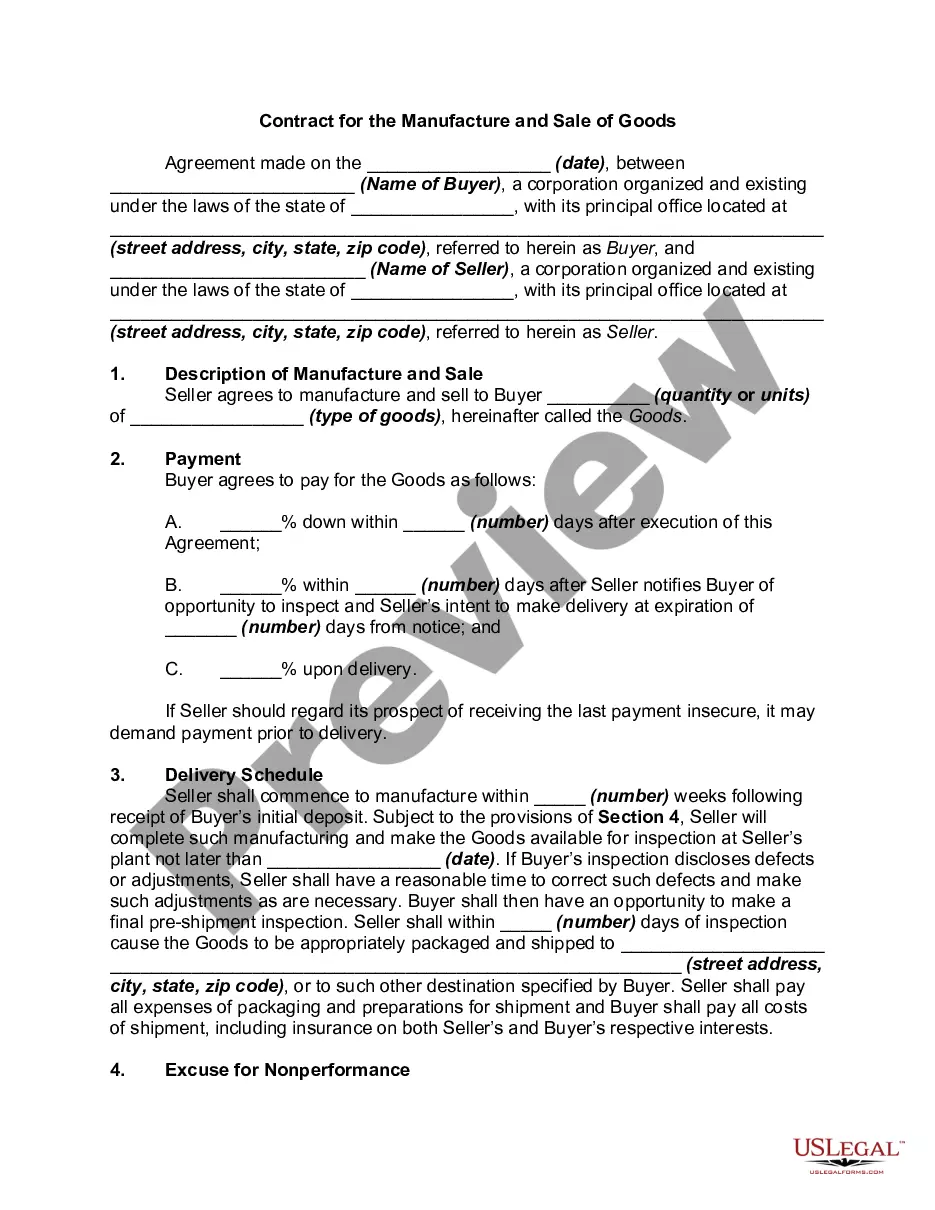
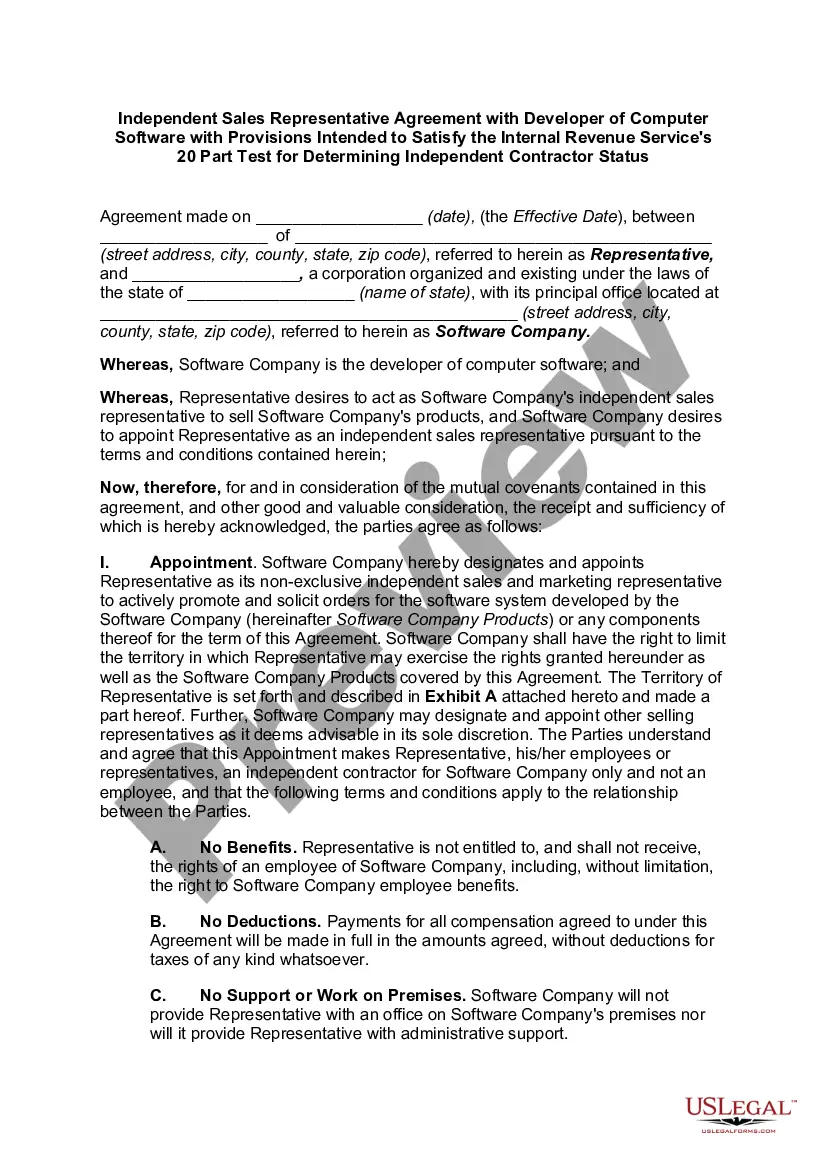
South Carolina Toll Manufacturing Agreement
Description
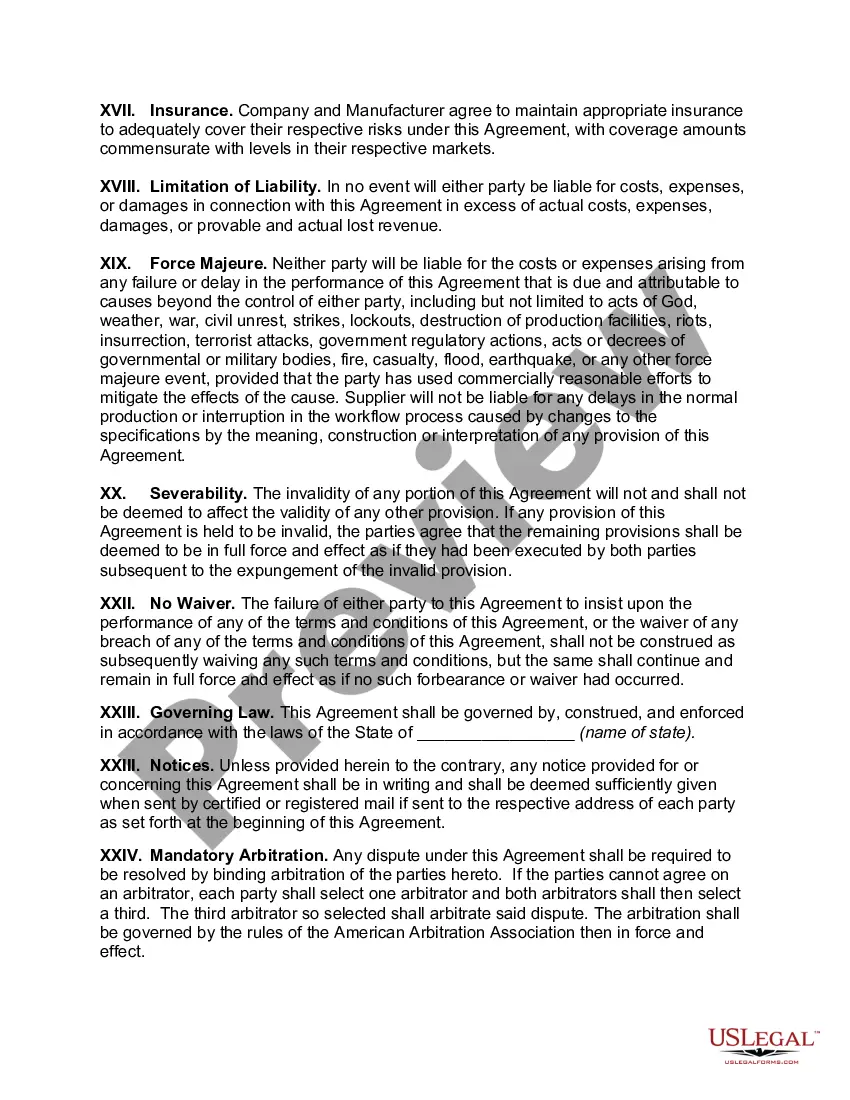
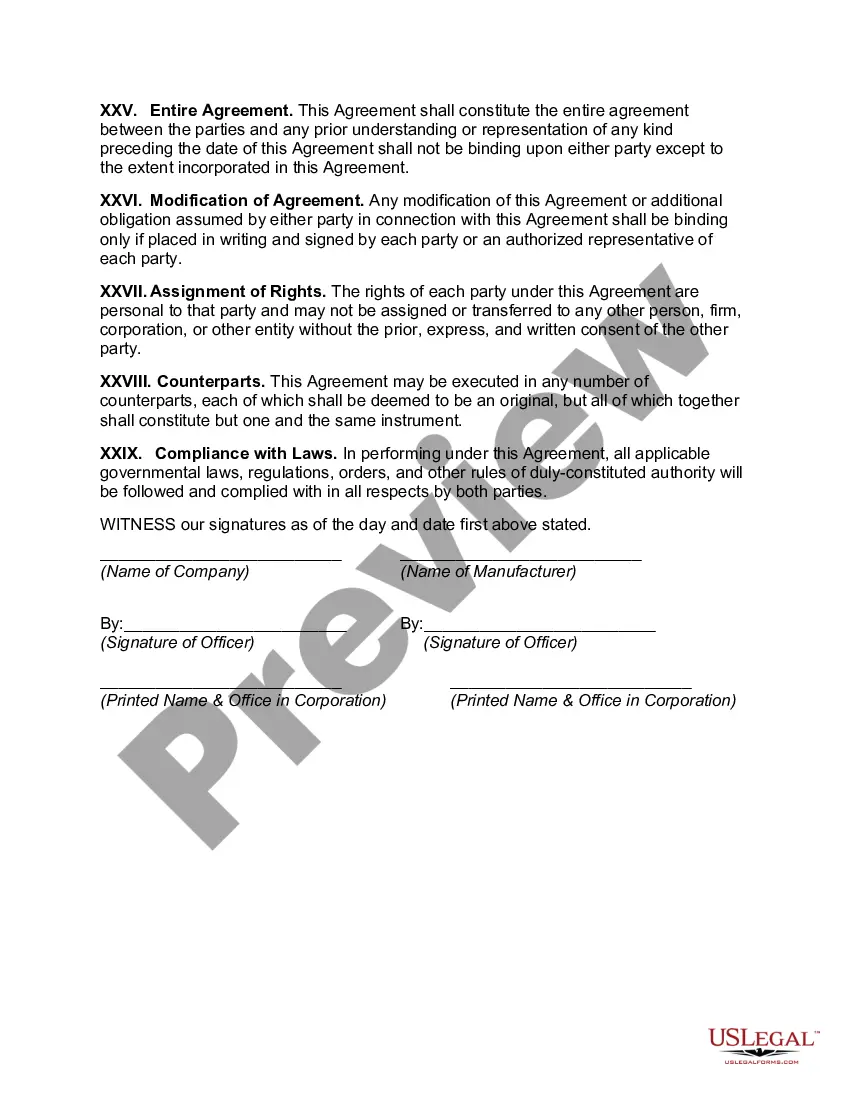
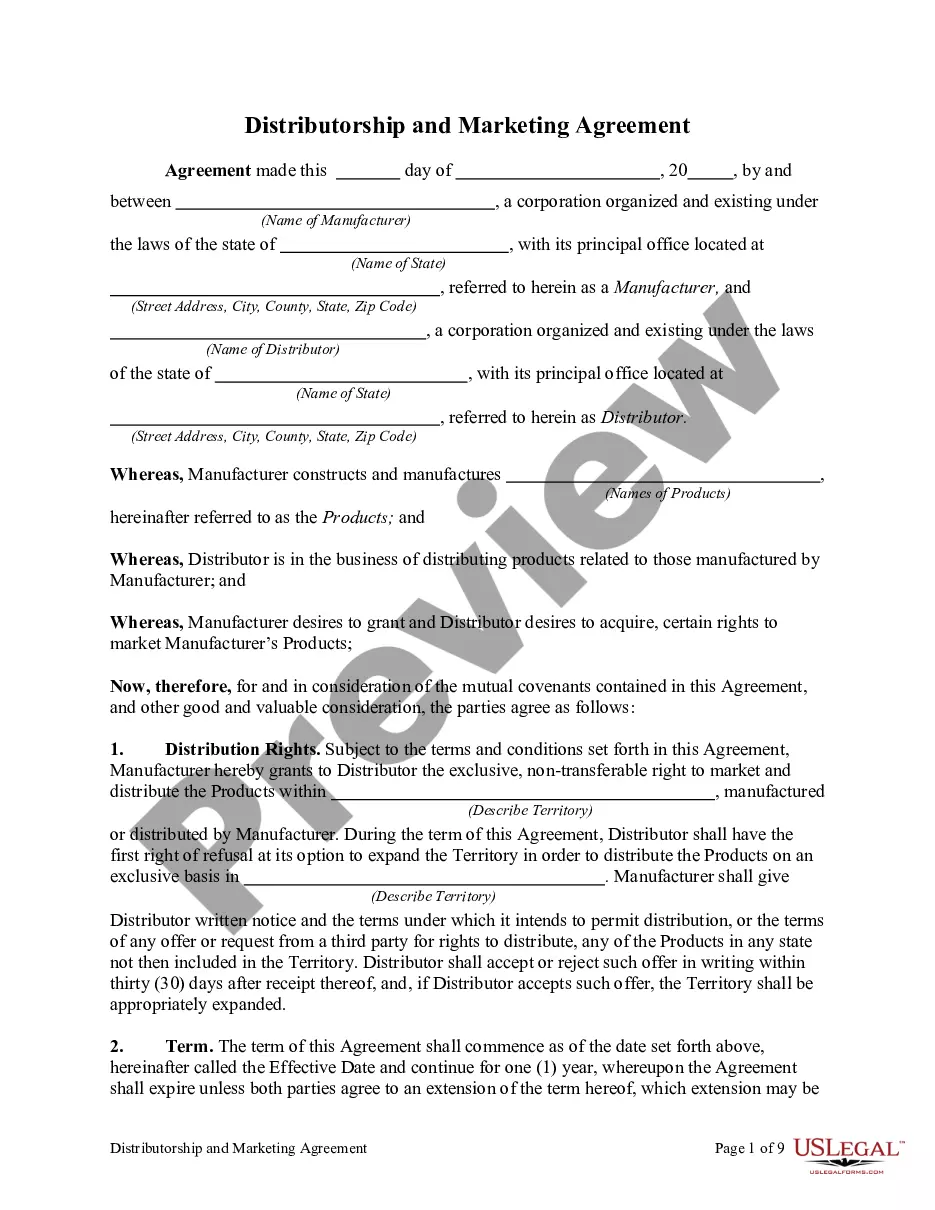
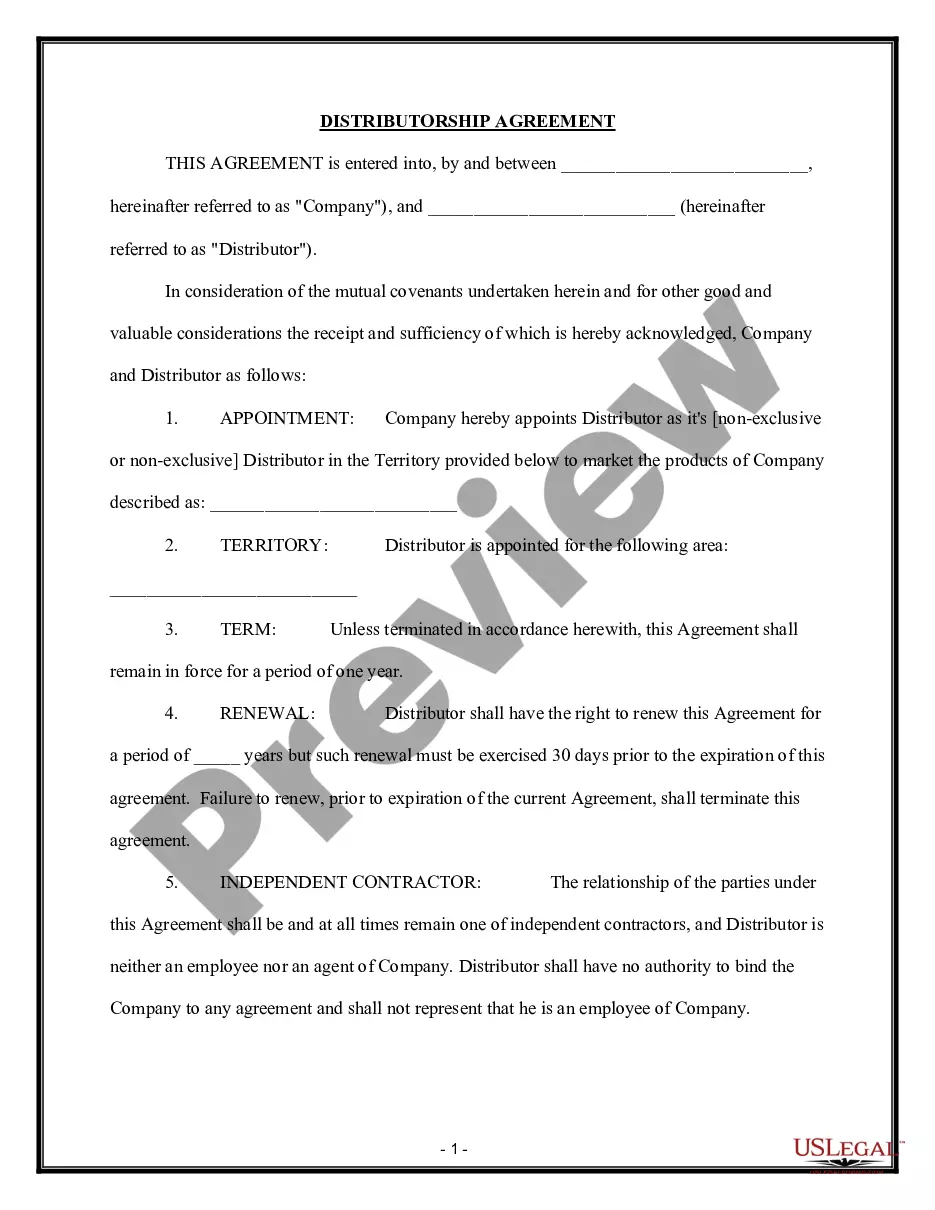
Get your form ready online
Our built-in tools help you complete, sign, share, and store your documents in one place.
Make edits, fill in missing information, and update formatting in US Legal Forms—just like you would in MS Word.
Download a copy, print it, send it by email, or mail it via USPS—whatever works best for your next step.
Sign and collect signatures with our SignNow integration. Send to multiple recipients, set reminders, and more. Go Premium to unlock E-Sign.
If this form requires notarization, complete it online through a secure video call—no need to meet a notary in person or wait for an appointment.
We protect your documents and personal data by following strict security and privacy standards.

Make edits, fill in missing information, and update formatting in US Legal Forms—just like you would in MS Word.

Download a copy, print it, send it by email, or mail it via USPS—whatever works best for your next step.

Sign and collect signatures with our SignNow integration. Send to multiple recipients, set reminders, and more. Go Premium to unlock E-Sign.

If this form requires notarization, complete it online through a secure video call—no need to meet a notary in person or wait for an appointment.

We protect your documents and personal data by following strict security and privacy standards.
Looking for another form?



How to fill out Toll Manufacturing Agreement?
You can allocate time on the web searching for the sanctioned document template that meets the federal and state requirements you will need.
US Legal Forms offers a plethora of legal forms that are reviewed by experts.
You can download or print the South Carolina Toll Manufacturing Agreement from this service.
In order to find another version of the form, use the Search field to locate the template that fits your needs and requirements.
- If you already have a US Legal Forms account, you may Log In and click the Download button.
- After that, you can fill out, edit, print, or sign the South Carolina Toll Manufacturing Agreement.
- Each legal document template you acquire is yours permanently.
- To obtain another copy of a purchased form, visit the My documents tab and click the corresponding option.
- If you are using the US Legal Forms site for the first time, follow the simple instructions detailed below.
- First, ensure that you have selected the correct document template for the area/city of your preference.
- Review the form details to make sure you have chosen the correct form.
Form popularity
FAQ
A tolling manufacturer processes materials on behalf of another company, charging for the service rather than for the products produced. Under a South Carolina Toll Manufacturing Agreement, the tolling manufacturer handles the production while the client retains ownership of the materials and final products. Understanding this relationship helps companies maximize the benefits of toll manufacturing.
A manufacturer typically produces goods independently, while a contract manufacturer operates based on agreements with clients. In the context of a South Carolina Toll Manufacturing Agreement, the contract manufacturer processes materials for the client while adhering to specific guidelines and standards set forth. Knowing this difference can help clients choose the right partner for their production goals.
Contract manufacturing often entails a broader range of services than toll manufacturing. While a South Carolina Toll Manufacturing Agreement focuses primarily on processing materials provided by the client, contract manufacturing may involve sourcing materials and producing finished goods. Understanding this difference helps businesses decide which option best fits their production needs.
Toll manufacturing and subcontracting involve outsourcing production, but they serve different purposes. In a South Carolina Toll Manufacturing Agreement, the manufacturer processes raw materials provided by the client, retaining ownership of the final product. Conversely, subcontracting may involve a manufacturer taking on entire projects, often including material sourcing. This distinction is crucial for businesses looking to streamline their production process efficiently.
A manufacturing arrangement encompasses various agreements related to the production process, including toll manufacturing and contract manufacturing. Specifically, a South Carolina Toll Manufacturing Agreement focuses on production using the client's materials, allowing for customization and control. This flexibility can be advantageous for businesses looking to optimize their supply chain while maintaining quality. A thoughtful approach to manufacturing arrangements helps streamline operations.
A toll manufacturing agreement outlines the terms in which a manufacturer produces goods on behalf of another company using its materials. This agreement is critical for setting expectations regarding costs, timelines, and quality in a South Carolina Toll Manufacturing Agreement. Clear documentation helps avoid disputes and ensures both parties are aligned in their objectives. This contract becomes a reliable foundation for the manufacturing relationship.
A toll manufacturer works with a company's materials to produce goods, while a contract manufacturer oversees the entire process, usually including procurement of materials. In a South Carolina Toll Manufacturing Agreement, the focus is on using the client's materials only, which can offer more control. Contract manufacturing, on the other hand, can provide more comprehensive services but may come with additional costs. Understanding these differences can help businesses choose the right partner.
To find a South Carolina file number, you can search the South Carolina Secretary of State's online database. This file number is essential for identifying businesses and is often necessary for a South Carolina Toll Manufacturing Agreement. Additionally, you can contact the Secretary of State's office directly for assistance. Using the right resources will streamline your search process.
The manufacturing exemption in South Carolina refers to a tax benefit that relieves certain manufacturing entities from paying sales tax on equipment and materials used in production. Understanding this exemption is crucial for companies entering a South Carolina Toll Manufacturing Agreement, as it can significantly impact overall costs. To benefit from the exemption, businesses must comply with specific guidelines established by the state. Consulting with a tax professional can provide clarity.