South Carolina Transfer Tax Affidavit
What is this form?
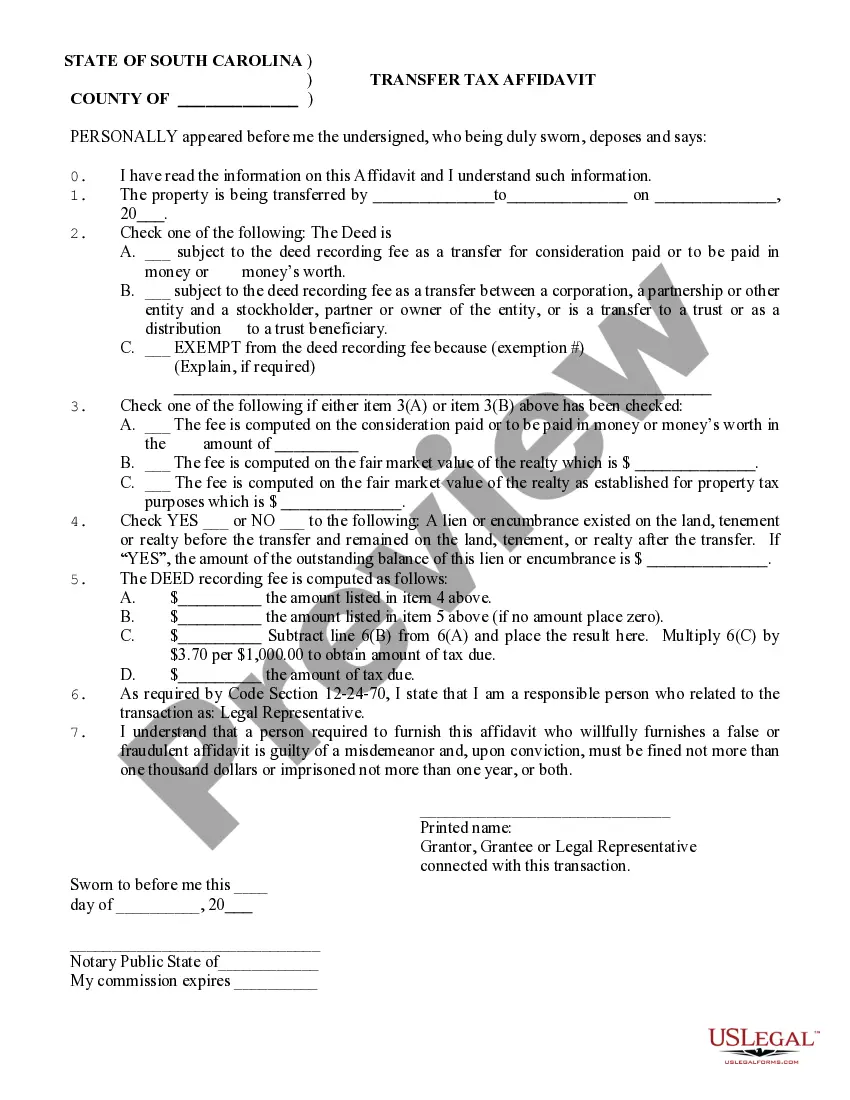
The Transfer Tax Affidavit is a legal document used to detail the specifics of a property transfer and to assess whether the transfer will incur tax obligations. Unlike other real estate forms, it focuses specifically on tax determination rather than just the conveyance of property. This affidavit is essential in compliance with local tax laws and ensures that all necessary fees are calculated accurately.
What’s included in this form
- Personal information of the parties involved in the transfer.
- Description of the property being transferred, including its current owner and new owner.
- Options to indicate whether the transfer is taxable and the basis for any tax exemptions.
- Details on calculating deed recording fees, including the fair market value of the property.
- Verification statement regarding any existing liens or encumbrances on the property.
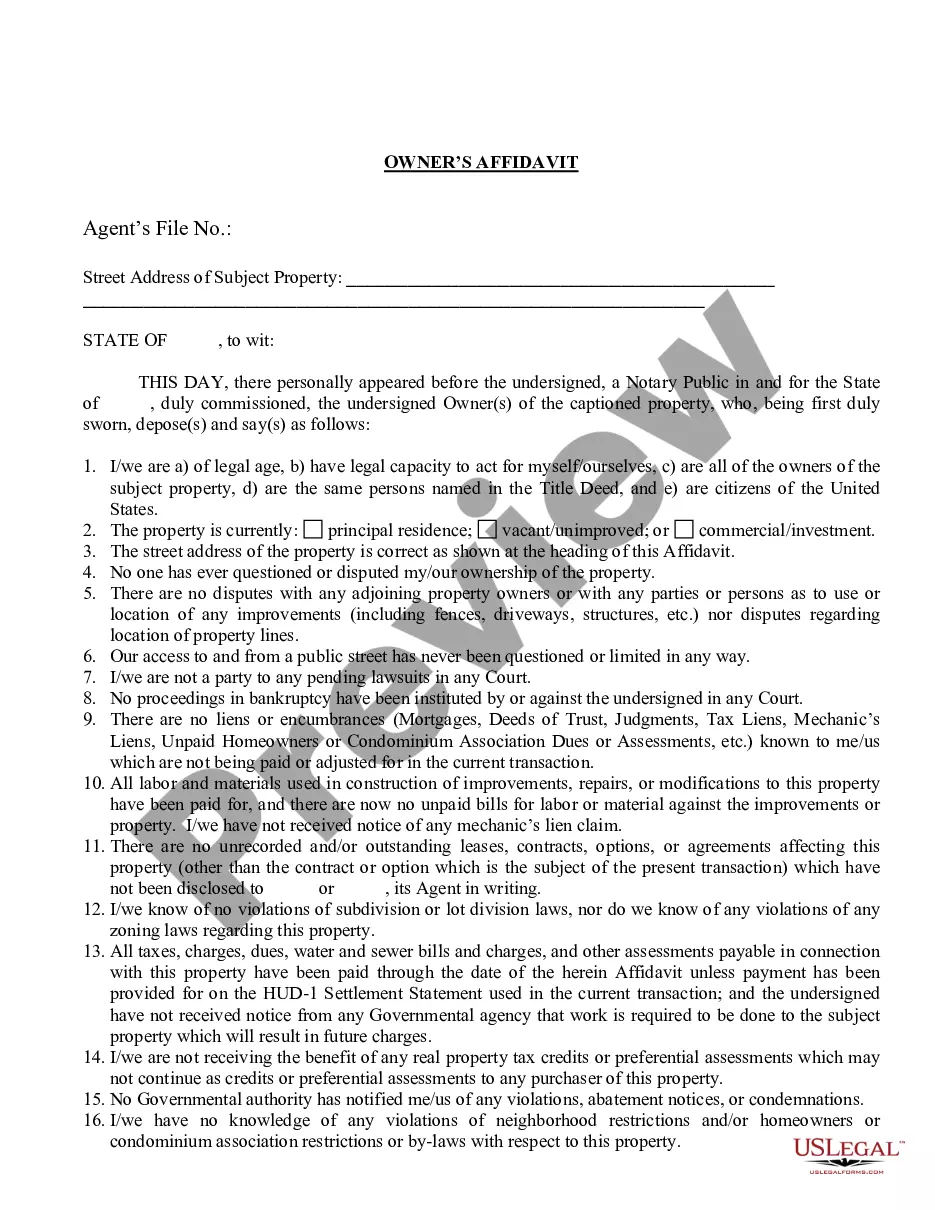
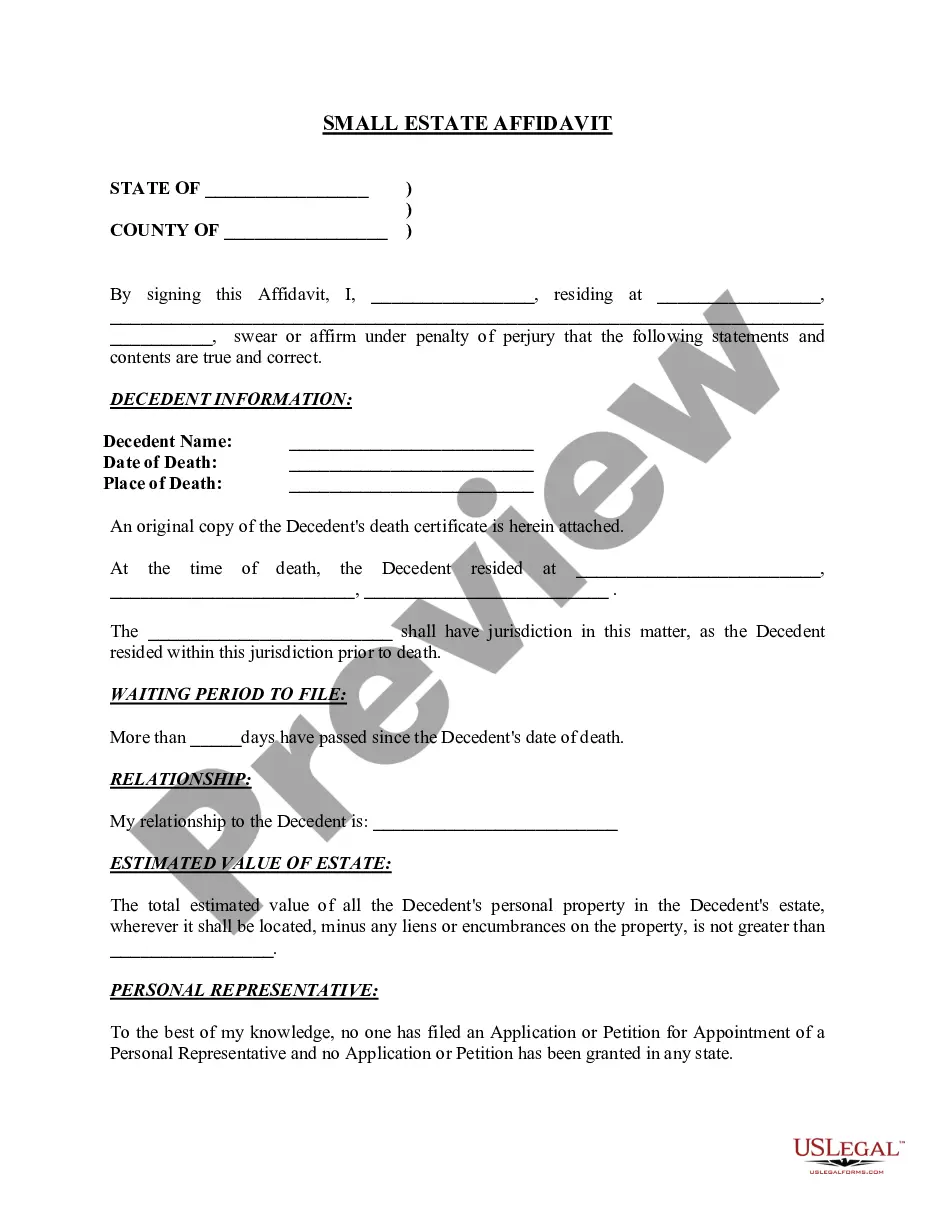
When to use this form
This form is needed when you are transferring property in South Carolina and want to clarify the tax implications of the transfer. It is particularly relevant when the property changes hands for consideration or free of charge, and it assists parties in understanding their financial obligations. Use this affidavit whenever a deed is recorded in relation to real estate transactions.
Who needs this form
- Property grantors and grantees involved in a real estate transaction.
- Legal representatives managing the transfer of property on behalf of parties involved.
- Individuals or entities looking to ensure compliance with local tax regulations during property transfers.
Instructions for completing this form
- Identify and enter the names of the grantor and grantee.
- Specify the date of the property transfer.
- Select the applicable tax status by checking the corresponding box.
- Detail any liens or encumbrances that exist on the property and provide respective amounts.
- Calculate and fill in the required deed recording fees based on property value.
- Sign and notarize the affidavit as required before submission to the appropriate local office.
Notarization requirements for this form
Yes, this form must be notarized to be legally valid. The notarization process helps confirm the identities of the parties involved and ensures the integrity of the document. US Legal Forms offers integrated online notarization services, available 24/7 via secure video calls, ensuring a legal equivalent without the need for travel.
Get your form ready online
Our built-in tools help you complete, sign, share, and store your documents in one place.
Make edits, fill in missing information, and update formatting in US Legal Forms—just like you would in MS Word.
Download a copy, print it, send it by email, or mail it via USPS—whatever works best for your next step.
Sign and collect signatures with our SignNow integration. Send to multiple recipients, set reminders, and more. Go Premium to unlock E-Sign.
If this form requires notarization, complete it online through a secure video call—no need to meet a notary in person or wait for an appointment.
We protect your documents and personal data by following strict security and privacy standards.

Make edits, fill in missing information, and update formatting in US Legal Forms—just like you would in MS Word.

Download a copy, print it, send it by email, or mail it via USPS—whatever works best for your next step.

Sign and collect signatures with our SignNow integration. Send to multiple recipients, set reminders, and more. Go Premium to unlock E-Sign.

If this form requires notarization, complete it online through a secure video call—no need to meet a notary in person or wait for an appointment.

We protect your documents and personal data by following strict security and privacy standards.
Avoid these common issues
- Failing to accurately describe the property being transferred.
- Not checking the correct exemption boxes and miscalculating the fees.
- Omitting liens or encumbrances, which could lead to legal complications later.
- Not having the affidavit notarized when required.
Why use this form online
- Convenience of downloading and completing the form at your own pace.
- Reliable templates drafted by licensed attorneys to ensure compliance with legal standards.
- Editability allows users to easily make necessary adjustments before final submission.
Looking for another form?
Form popularity
FAQ
Unlike other types of insurance that turn into recurring annual expenses, title insurance is a one-time cost that stays in effect until you sell your property. In South Carolina, buyers are typically on the hook for all title-related fees, including title insurance.
In South Carolina, the formula for the transfer tax, mostly referred to as deed stamps, is $1.85 per $500 of consideration; this is the combined amount for city, county and state taxes. If the consideration is $100,000, the transfer tax is $370, and paid directly to the County Register of Deeds by the closing attorney.
The prior owner conveying the property is primarily responsible for payment, and the new owner is secondarily responsible. The deed-recording fee rate is $1.85 for each $500.00 of the real estate's value.
SECTION 12-24-70. Affidavits. (A)(1) The clerk of court or register of deeds shall require an affidavit showing the value of the realty to be filed with a deed. The affidavit required by this section must be signed by a responsible person connected with the transaction, and the affidavit must state that connection.
The deed recording fee is one dollar and eighty-five cents for each five hundred dollars, or fractional part of five hundred dollars, of the realty's ?value? as determined by S.C. Code § 2-24-30.
It is customary for the seller of the property to pay all real estate transfer taxes in South Carolina. The transfer taxes are usually due at the time of closing, alongside other fees such as appraisal fees or agent fees.
In South Carolina, the formula for the transfer tax, mostly referred to as deed stamps, is $1.85 per $500 of consideration; this is the combined amount for city, county and state taxes. If the consideration is $100,000, the transfer tax is $370, and paid directly to the County Register of Deeds by the closing attorney.