South Carolina Transferor Affidavit, Tax Lien Inapplicable
Understanding this form
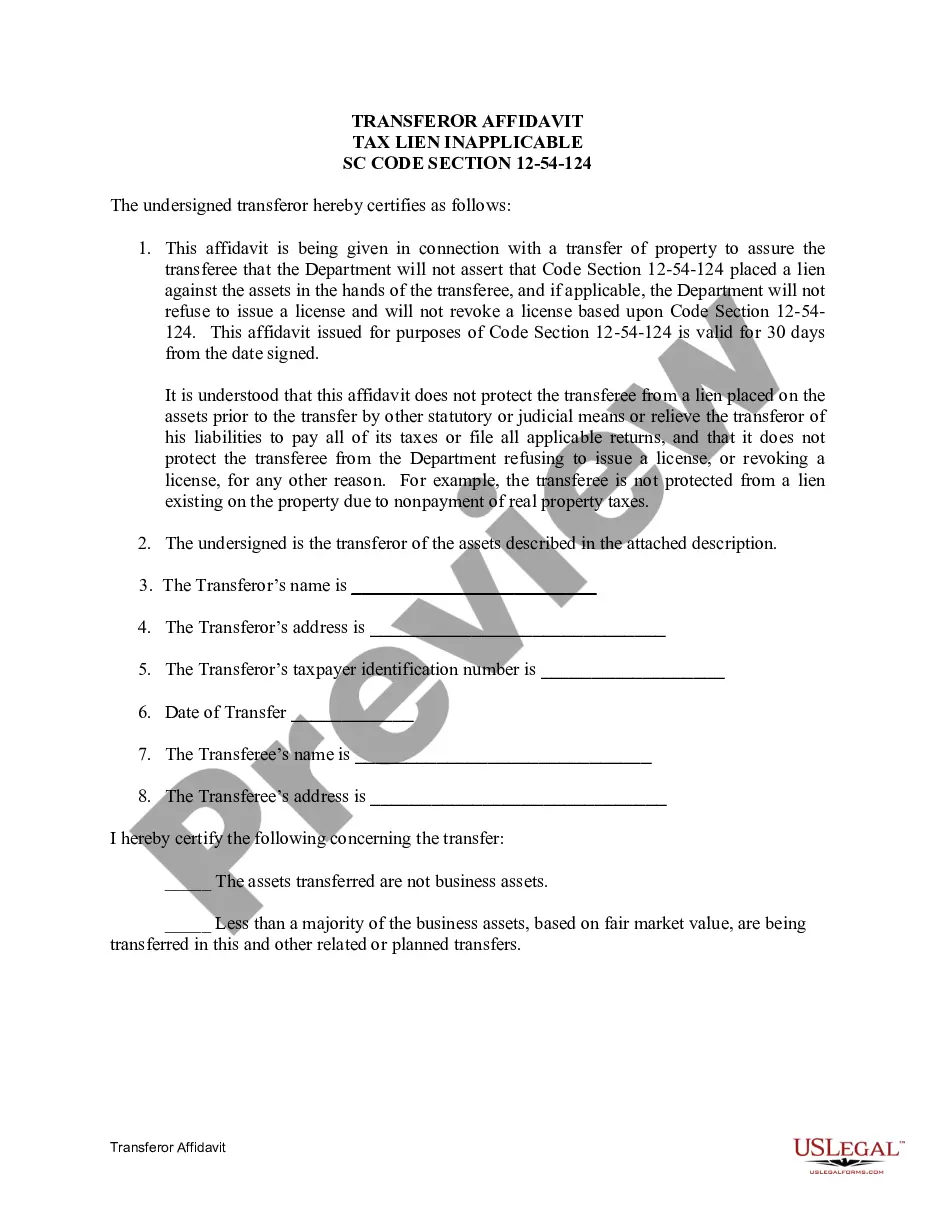
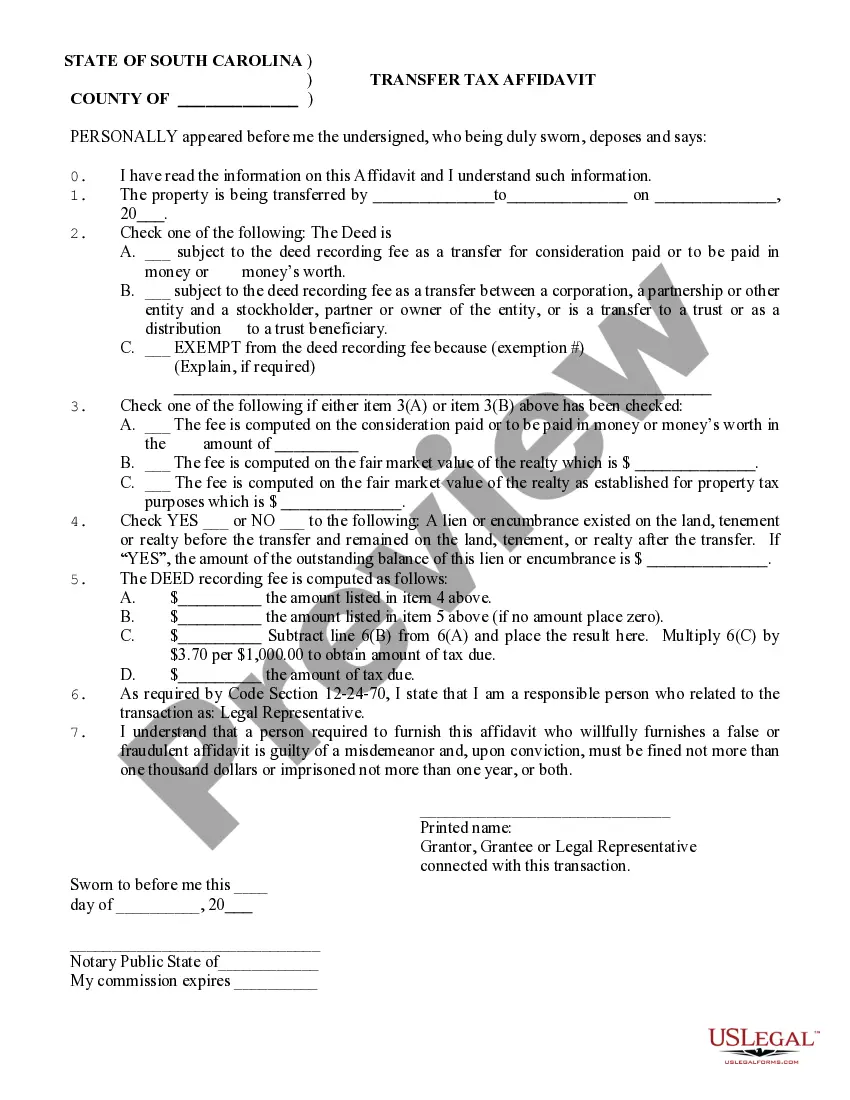
The Transferor Affidavit, Tax Lien Inapplicable, is a legal document that assures the transferee that there are no tax liens against the property being transferred. By using this affidavit, the transferor confirms to the transferee that the South Carolina Department of Revenue will not assert a lien under Code Section 12-54-124 for the transaction at hand. This form is crucial in property transfers where there is concern about existing liens that could impact the transfereeâs ownership rights.
Form components explained
- Transferor's name, address, and taxpayer identification number.
- Date of transfer.
- Transferee's name and address.
- Certification that the transferred assets are not business assets.
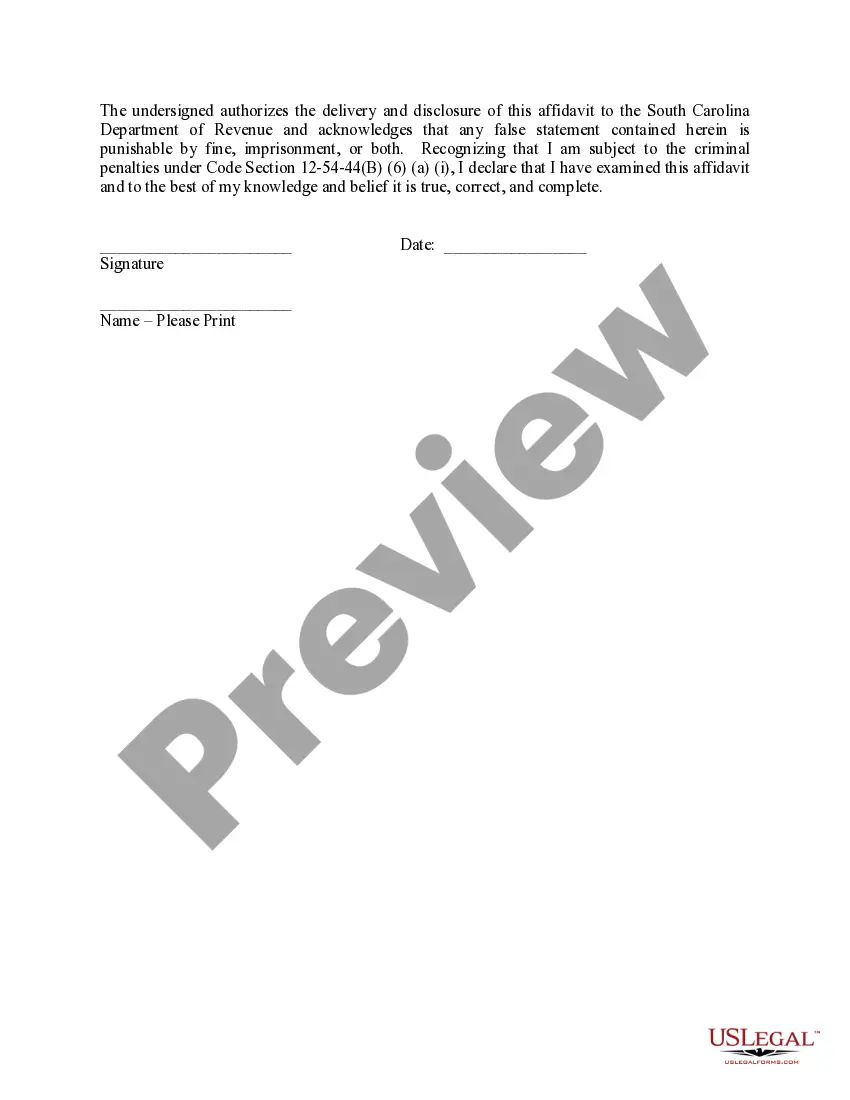
- Signature of the transferor with acknowledgment of legal penalties for false statements.
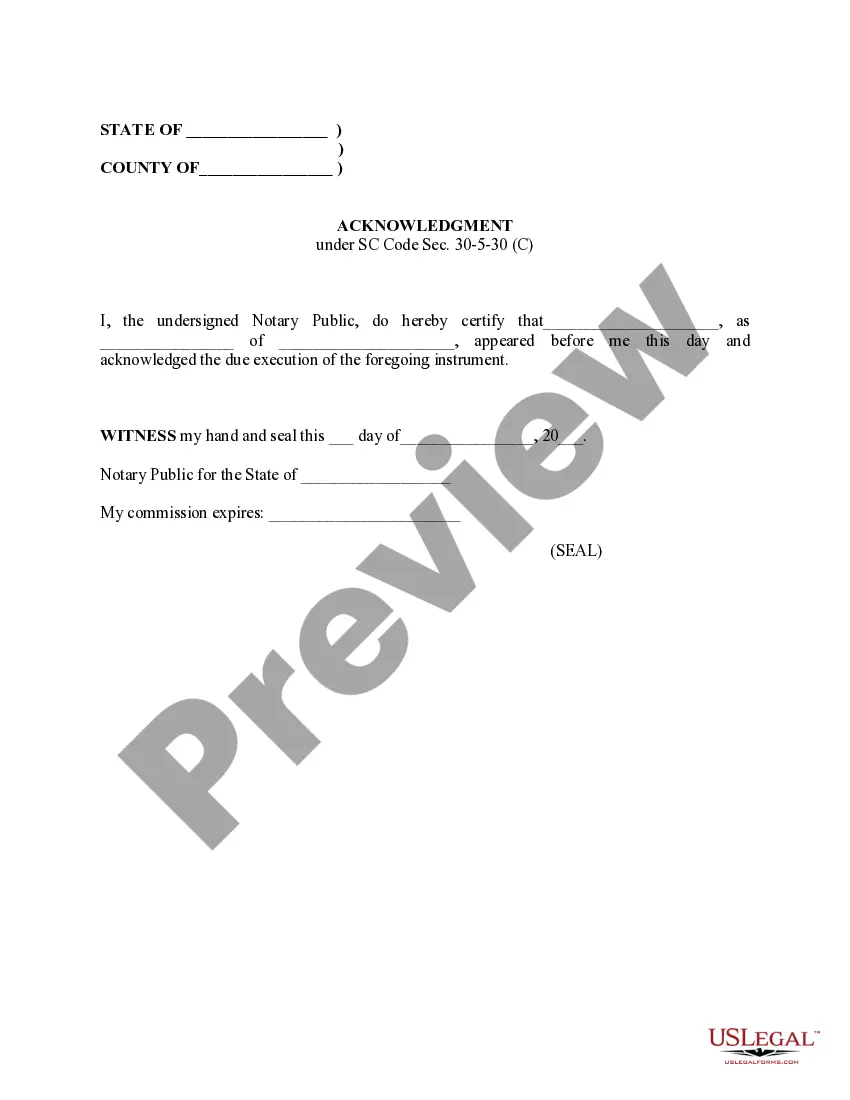
- Notarization section for verification of the transferor's identity.

Common use cases
This form should be used during property transfers when the transferor needs to provide assurance to the transferee that the South Carolina Department of Revenue will not assert a lien on the assets involved. It is particularly important when the transferee wishes to avoid potential legal complications that could arise from tax-related liens. Use this affidavit for transfers involving personal property or when transferring less than majority business assets.
Who can use this document
- Property owners (transferors) transferring assets to another party (transferee).
- Business owners who are transferring non-business assets.
- Individuals seeking legal assurance regarding property liens.
- Transferees who want to ensure a clear title to the property they are acquiring.
Completing this form step by step
- Identify the transferor and provide their name, address, and taxpayer identification number.
- Enter the date of the transfer and the details of the transferee, including their name and address.
- Certify whether the assets being transferred are business assets or non-business assets.
- Sign the affidavit, incorporating the date, and print the transferor's name.
- Have the form notarized as required to validate the affidavit.
Does this form need to be notarized?
Yes, this form must be notarized to be legally valid. The notarization process confirms the identity of the transferor and adds an extra layer of security to the transaction. US Legal Forms offers online notarization services, allowing you to complete this process securely through a video call, making it easy and efficient.
Get your form ready online
Our built-in tools help you complete, sign, share, and store your documents in one place.
Make edits, fill in missing information, and update formatting in US Legal Forms—just like you would in MS Word.
Download a copy, print it, send it by email, or mail it via USPS—whatever works best for your next step.
Sign and collect signatures with our SignNow integration. Send to multiple recipients, set reminders, and more. Go Premium to unlock E-Sign.
If this form requires notarization, complete it online through a secure video call—no need to meet a notary in person or wait for an appointment.
We protect your documents and personal data by following strict security and privacy standards.

Make edits, fill in missing information, and update formatting in US Legal Forms—just like you would in MS Word.

Download a copy, print it, send it by email, or mail it via USPS—whatever works best for your next step.

Sign and collect signatures with our SignNow integration. Send to multiple recipients, set reminders, and more. Go Premium to unlock E-Sign.

If this form requires notarization, complete it online through a secure video call—no need to meet a notary in person or wait for an appointment.

We protect your documents and personal data by following strict security and privacy standards.
Mistakes to watch out for
- Failing to provide complete and accurate information about the transferor and transferee.
- Not specifying the correct date of the transfer, which can affect the validity.
- Omitting the notarization, which is crucial for legal validation of the affidavit.
- Confusing business assets with personal assets, which may lead to incorrect certifications.
Benefits of using this form online
- Convenience of downloading the form at any time from a secure platform.
- Easy editing to tailor the document to specific details of the transfer.
- Access to legal knowledge and compliance with state-specific requirements.
- Time-saving compared to drafting a form from scratch or visiting a legal office.
Looking for another form?


Form popularity
FAQ
Section 12-54-124 - Transfer of business assets; tax liens; suspension of business license; certificate of compliance.
South Carolina considers anyone domiciled in South Carolina to be a resident individual for income tax purposes. ( Sec. 12-6-30, S.C. Code ) A part-year resident is someone who is a resident for only a portion of the tax year.
Following a tax sale in South Carolina, you get twelve months to redeem the property by paying off the delinquent amounts. Redeeming the home will prevent the purchaser from taking title to your property.
Is South Carolina a Tax Deed or Tax Lien State? South Carolina is a Tax Deed State.
Unlike North Carolina, which is a tax deed state, South Carolina has enacted legislation requiring the counties to sell tax liens. South Carolina is a tax lien state. So to answer the question: is South Carolina a tax deed state? The answer is no.
The high bidder at the auction will receive a Deed from the Delinquent Tax Collector provided, however, that the taxpayer has not redeemed the property by paying the taxes (and other penalties) in full within one year of the sale. The Deed that the highest bidder receives is often referred to as a ?Tax Deed?
If a taxpayer owes the SCDOR and neglects or fails to pay a tax debt, the SCDOR can issue a state tax lien. A state tax lien is a claim against your real and/or personal property located in South Carolina. Taxpayers who have an active lien must satisfy the debt prior to selling property.
In South Carolina the county officials are authorized to issue tax lien certificates which are sold at auction. Anyone can attend the auction. The state legislature makes all the rules and defines the process. The local board of supervisors or county commissioners dictate the processes within the county.