South Carolina IMPORTING OR TRANSPORTING OBSCENE MATTERS
Overview of this form
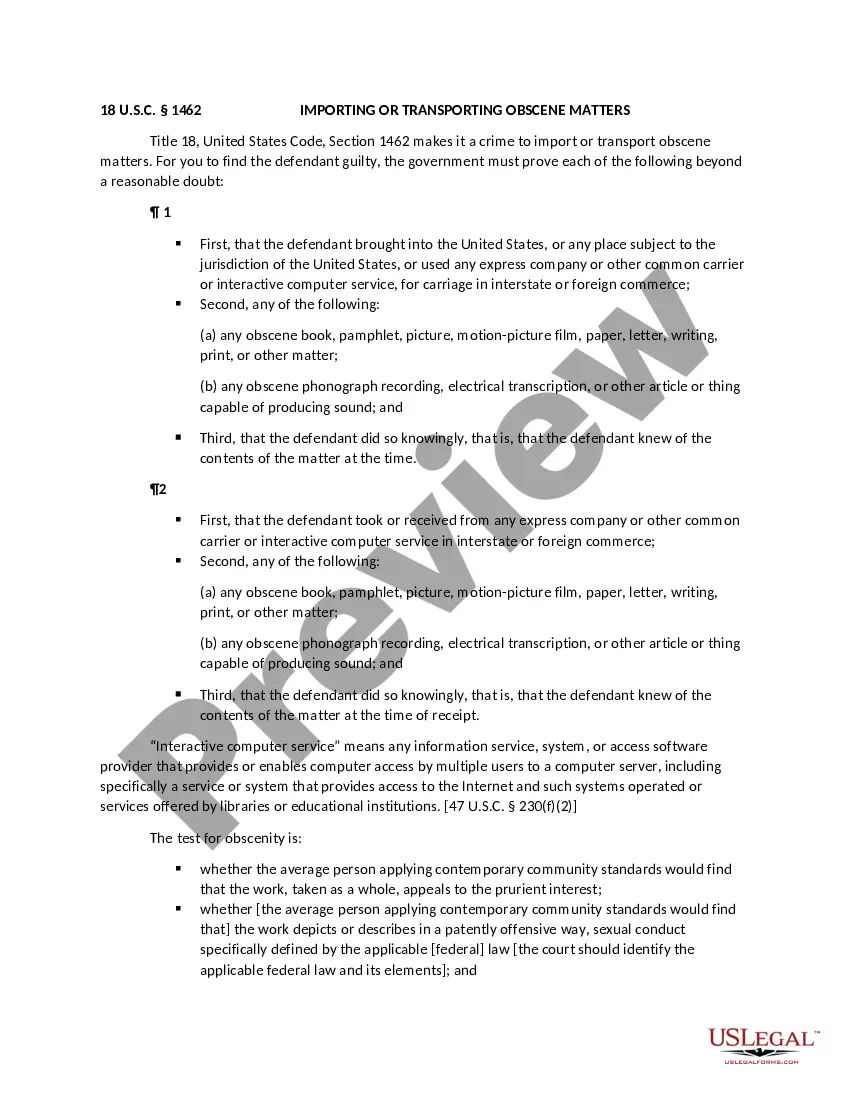
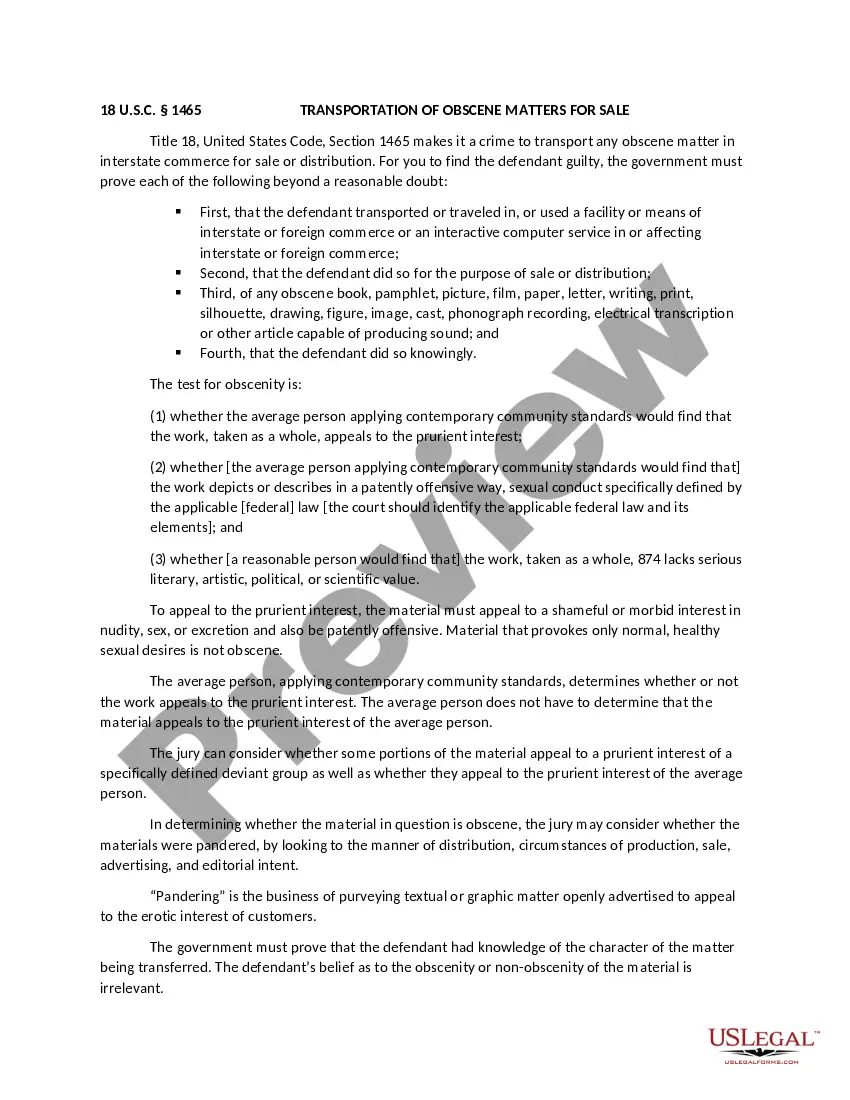
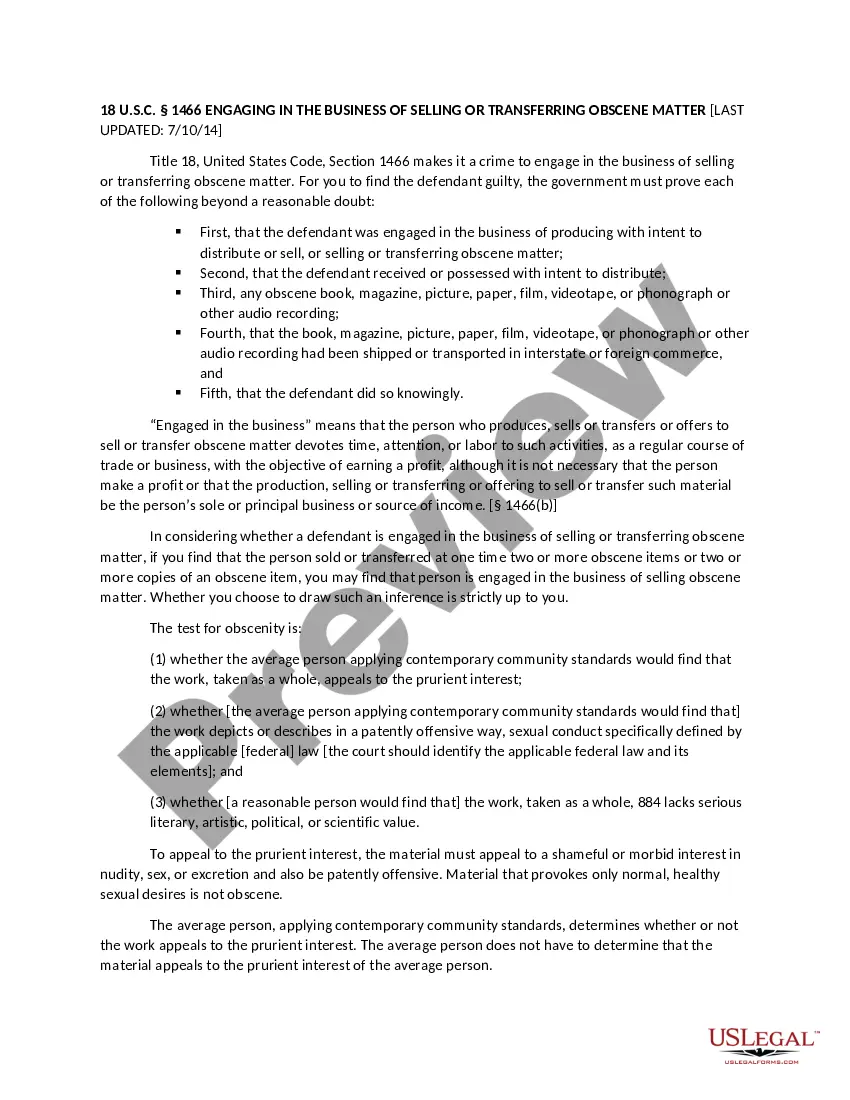
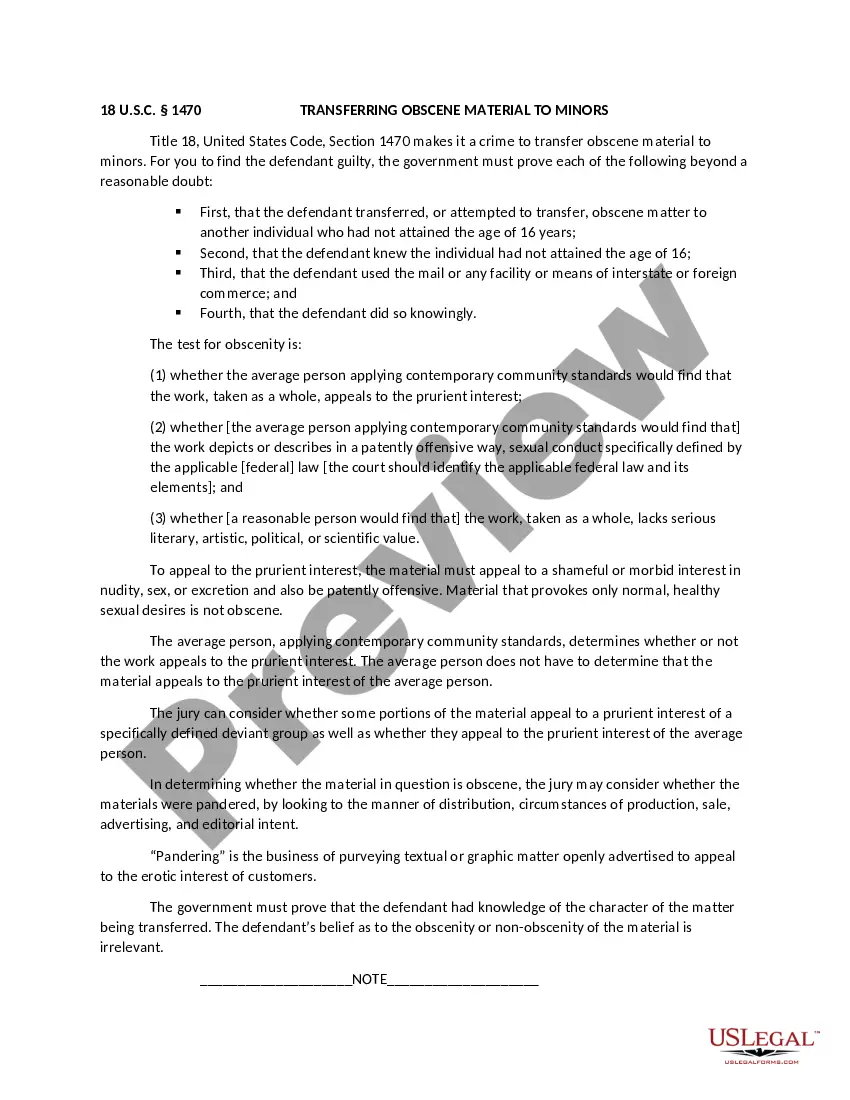
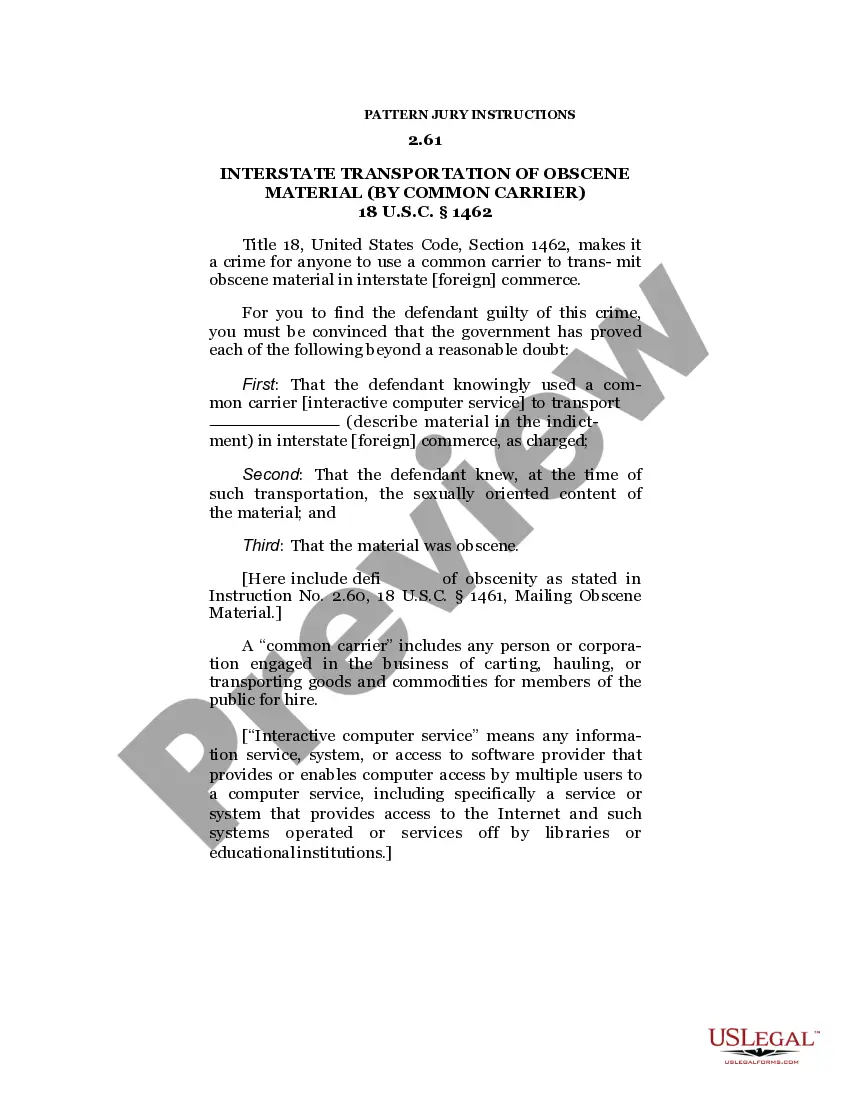
The Importing or Transporting Obscene Matters form is designed for the legal context of criminal cases involving the importation or transportation of obscene materials, as defined under Title 18, United States Code, Section 1462. This legal form serves to instruct juries on the elements required to find a defendant guilty in federal district court. It differs from similar forms in that it specifically addresses the criteria for determining obscenity and the legal responsibilities of those accused of such crimes.
Form components explained
- Elements of the offense, including what constitutes importing or transporting obscene materials.
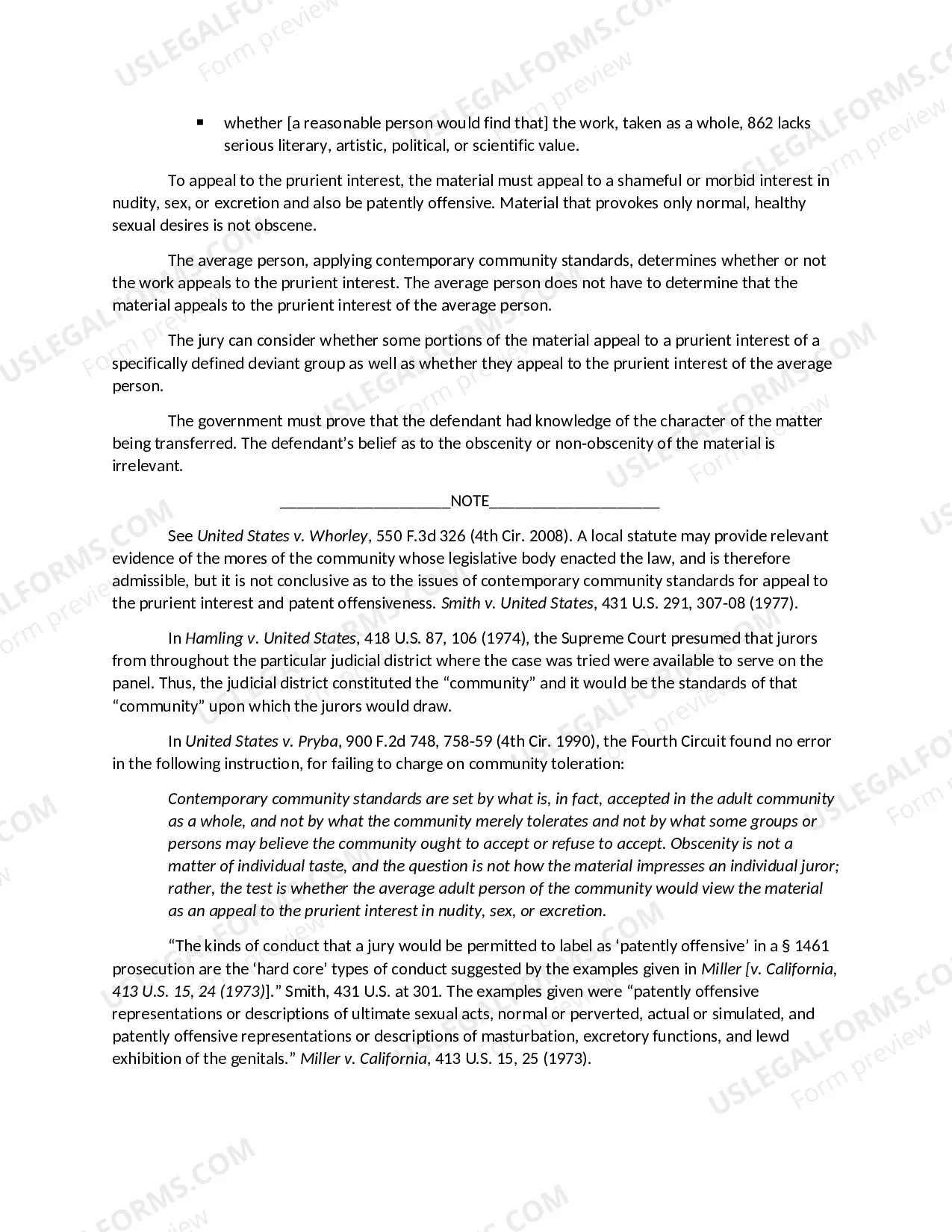
- Definitions of obscenity based on contemporary community standards.
- Criteria for determining the defendant's knowledge of the character of the obscene materials.
- Legal precedents to guide jury considerations regarding community standards.
- Requirements for the government to prove guilt beyond a reasonable doubt.
When to use this document
This form is used in cases where an individual is accused of knowingly importing or transporting materials deemed obscene. It is applicable in federal criminal trials involving such accusations, ensuring jurors understand the legal definitions and requirements that must be met to establish guilt.
Who needs this form
- Judges and juries in federal district court cases addressing obscene materials.
- Legal practitioners involved in criminal defense or prosecution relating to obscenity laws.
- Students or individuals studying criminal law and the complexities of obscenity regulations.
Instructions for completing this form
- Read the specific legal definitions of obscene materials as outlined in the form.
- Assess the elements of the case to prepare for jury instruction.
- Establish the defendant's knowledge of the materials being imported or transported.
- Compile any supporting legal precedents to present in court.
- Ensure all jury members understand the criteria for defining obscenity based on community standards.
Is notarization required?
Notarization is not commonly needed for this form. However, certain documents or local rules may make it necessary. Our notarization service, powered by Notarize, allows you to finalize it securely online anytime, day or night.
Get your form ready online
Our built-in tools help you complete, sign, share, and store your documents in one place.
Make edits, fill in missing information, and update formatting in US Legal Forms—just like you would in MS Word.
Download a copy, print it, send it by email, or mail it via USPS—whatever works best for your next step.
Sign and collect signatures with our SignNow integration. Send to multiple recipients, set reminders, and more. Go Premium to unlock E-Sign.
If this form requires notarization, complete it online through a secure video call—no need to meet a notary in person or wait for an appointment.
We protect your documents and personal data by following strict security and privacy standards.

Make edits, fill in missing information, and update formatting in US Legal Forms—just like you would in MS Word.

Download a copy, print it, send it by email, or mail it via USPS—whatever works best for your next step.

Sign and collect signatures with our SignNow integration. Send to multiple recipients, set reminders, and more. Go Premium to unlock E-Sign.

If this form requires notarization, complete it online through a secure video call—no need to meet a notary in person or wait for an appointment.

We protect your documents and personal data by following strict security and privacy standards.
Mistakes to watch out for
- Failing to clearly define the obscenity standards applicable to the case.
- Neglecting to verify that the jury understands the knowledge requirement for the defendant.
- Overlooking relevant legal precedents that establish criteria for making determinations of obscenity.
- Confusing state and federal law regarding obscenity, leading to improper jury instruction.
Benefits of completing this form online
- Convenience of accessible digital formats that can be downloaded and edited.
- Reliability of having legally drafted templates prepared by licensed attorneys.
- Time-saving solution that allows quick preparation and submission.
- Ease of use for individuals who may not be familiar with legal terminology.
Legal use & context
- This form is legally binding when used in accordance with federal law regarding obscenity.
- It should be used by legal professionals to instruct juries accurately on the law.
- Understanding the obscenity criteria is crucial for both the prosecution and defense in criminal trials.
Main things to remember
- The form provides essential instructions for jury deliberations in obscenity cases.
- It clarifies the legal definitions and necessary elements for proving guilt.
- Understanding federal standards for obscenity is critical for effective legal representation.
Looking for another form?
Form popularity
FAQ
(G) It is unlawful for a person to advertise or otherwise promote the sale of material represented or held out by them as obscene. (H) A person who violates this section is guilty of a felony and, upon conviction, must be imprisoned not more than five years or fined not more than ten thousand dollars, or both.
Federal law makes it illegal to distribute, transport, sell, ship, mail, produce with intent to distribute or sell, or engage in a business of selling or transferring obscene matter. Convicted offenders face fines and imprisonment.
?(a) the dominant theme of the material taken as a whole appeals to a prurient interest in sex; (b) the material is patently offensive because it affronts contemporary community standards relating to the description or representation of sexual matters; and (c) the material is utterly without redeeming social value.?
The three-part test asked whether the average person, applying contemporary community standards, would find the work appeals on the whole to prurient interests; describes sexual conduct in a patently offensive way; and lacks any serious literary, artistic, political or scientific value.
Is declared to be nonmailable matter and shall not be conveyed in the mails or delivered from any post office or by any letter carrier.
Federal law prohibits the possession with intent to sell or distribute obscenity, to send, ship, or receive obscenity, to import obscenity, and to transport obscenity across state borders for purposes of distribution.
For adults at least, most ography ? material of a sexual nature that arouses many readers and viewers ? receives constitutional protection. However, two types of ography receive no First Amendment protection: obscenity and child ography.
C. Obscenity Provisions at 18 U.S.C. §§ 1460-1470. Federal law contains no outright ban on all obscenity; it leaves this to state law.