South Carolina Concrete Mason Contract for Contractor
Overview of this form
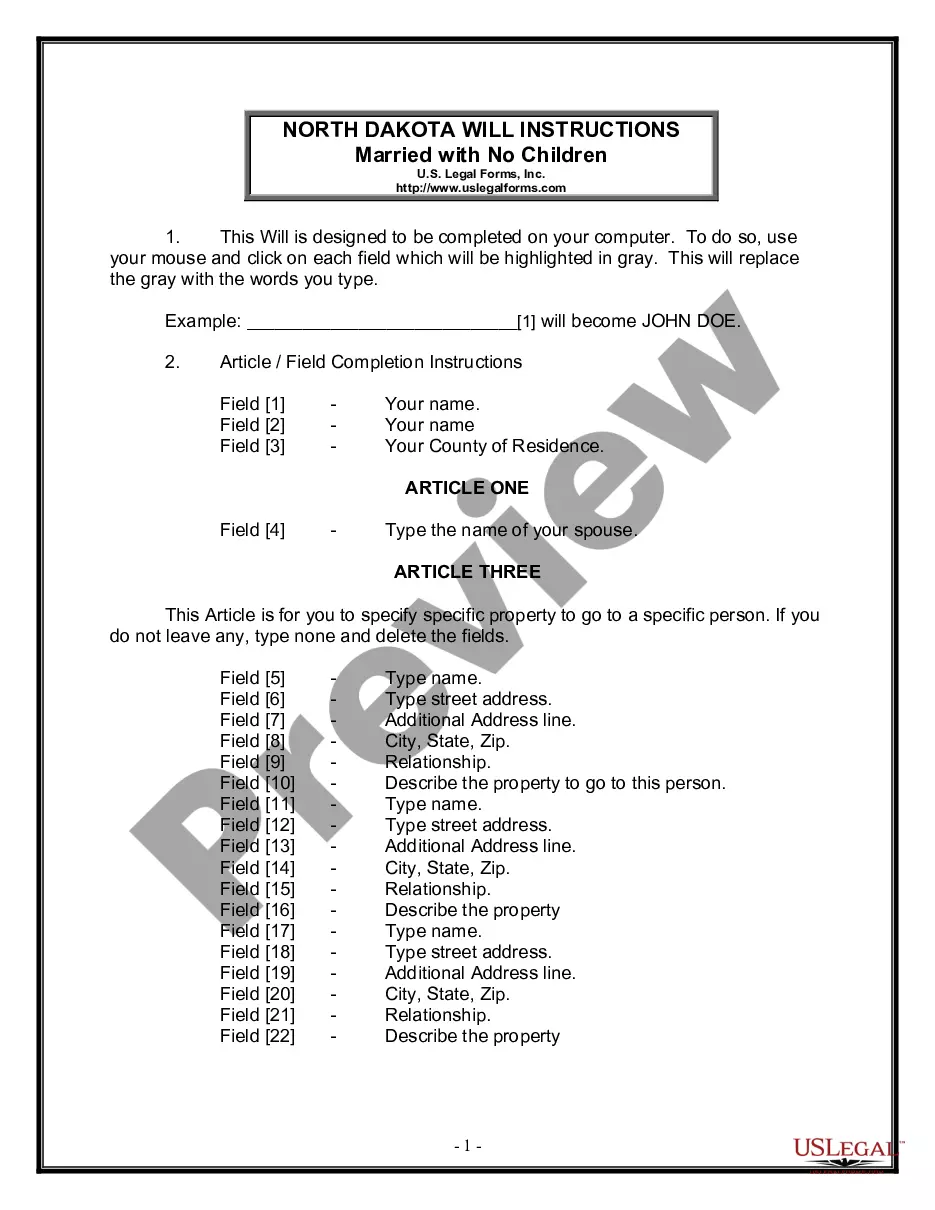
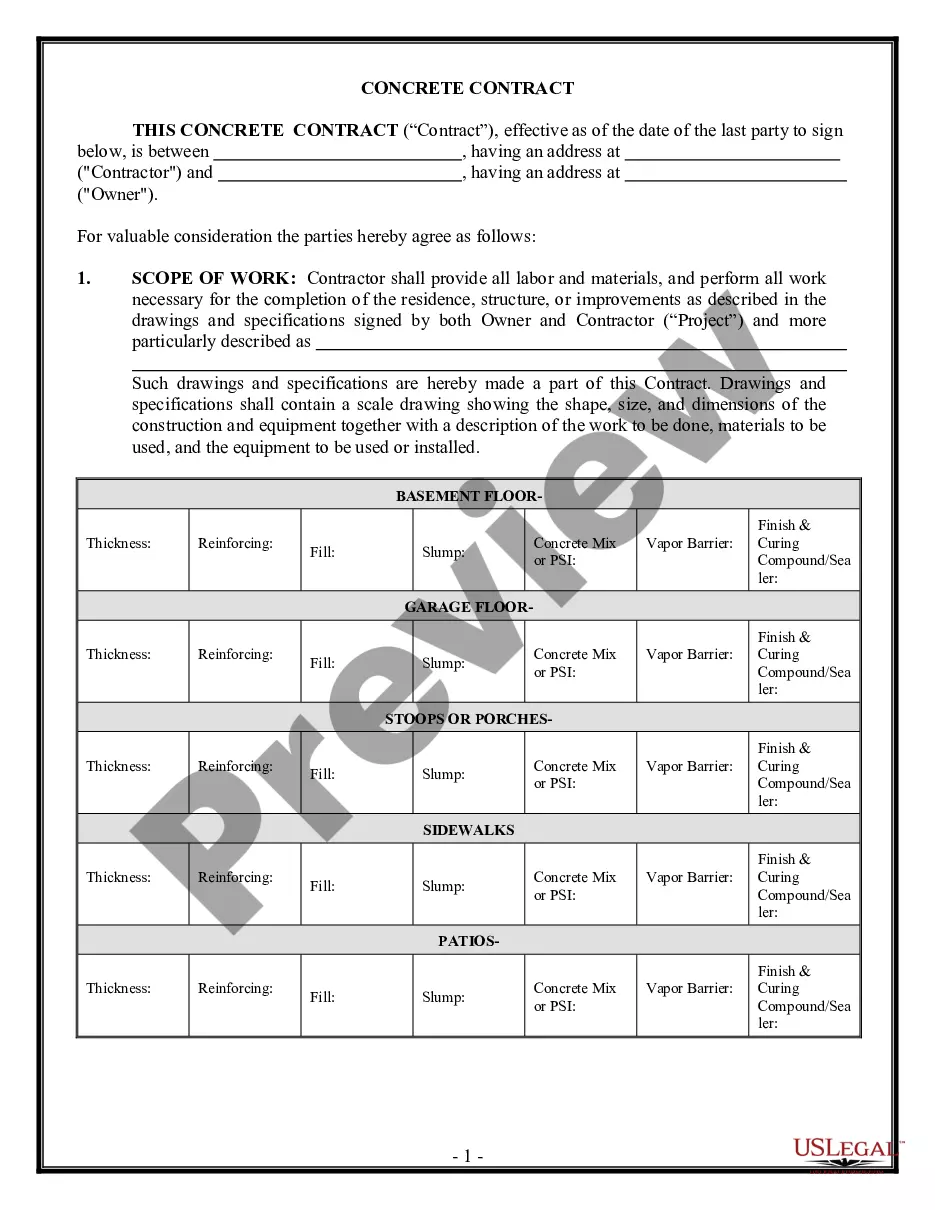
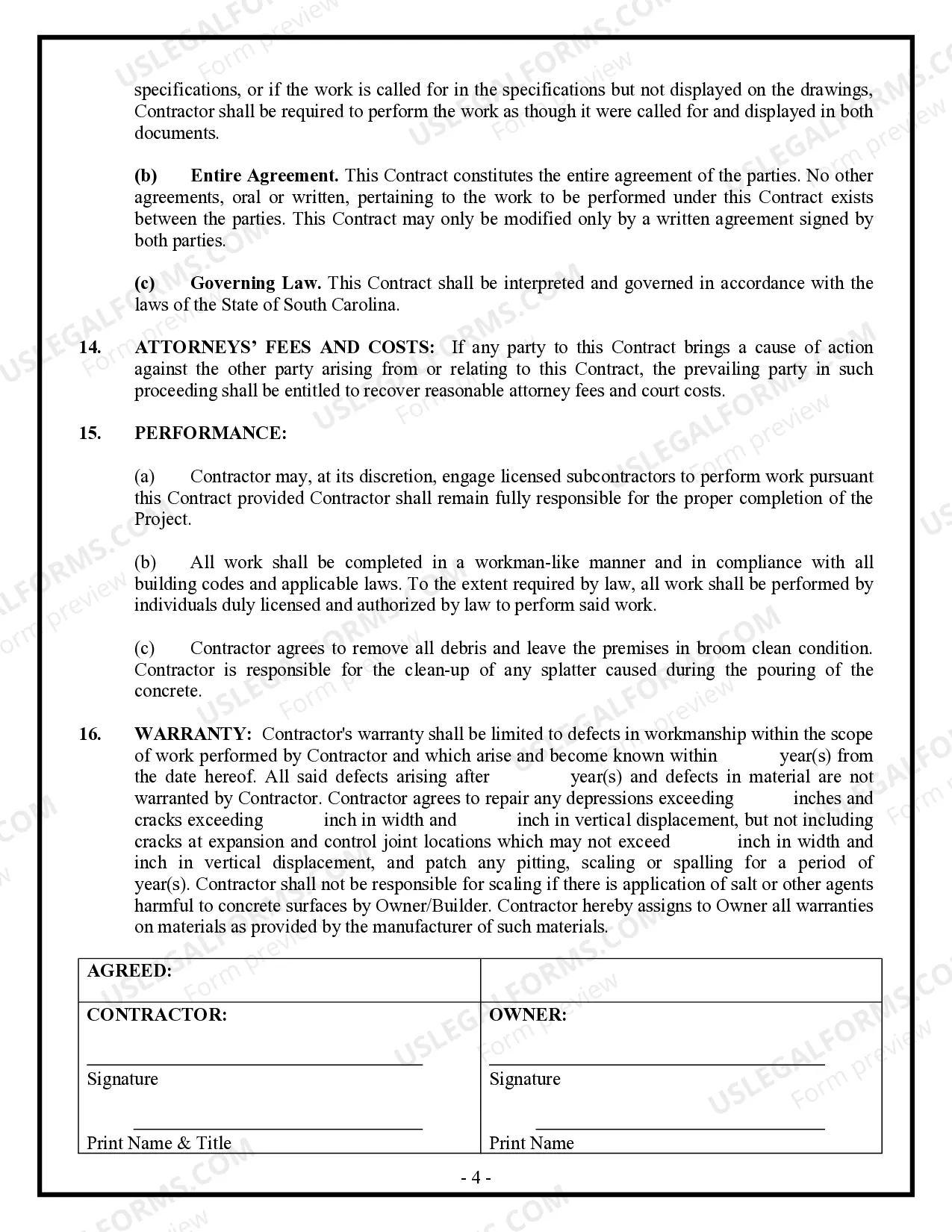
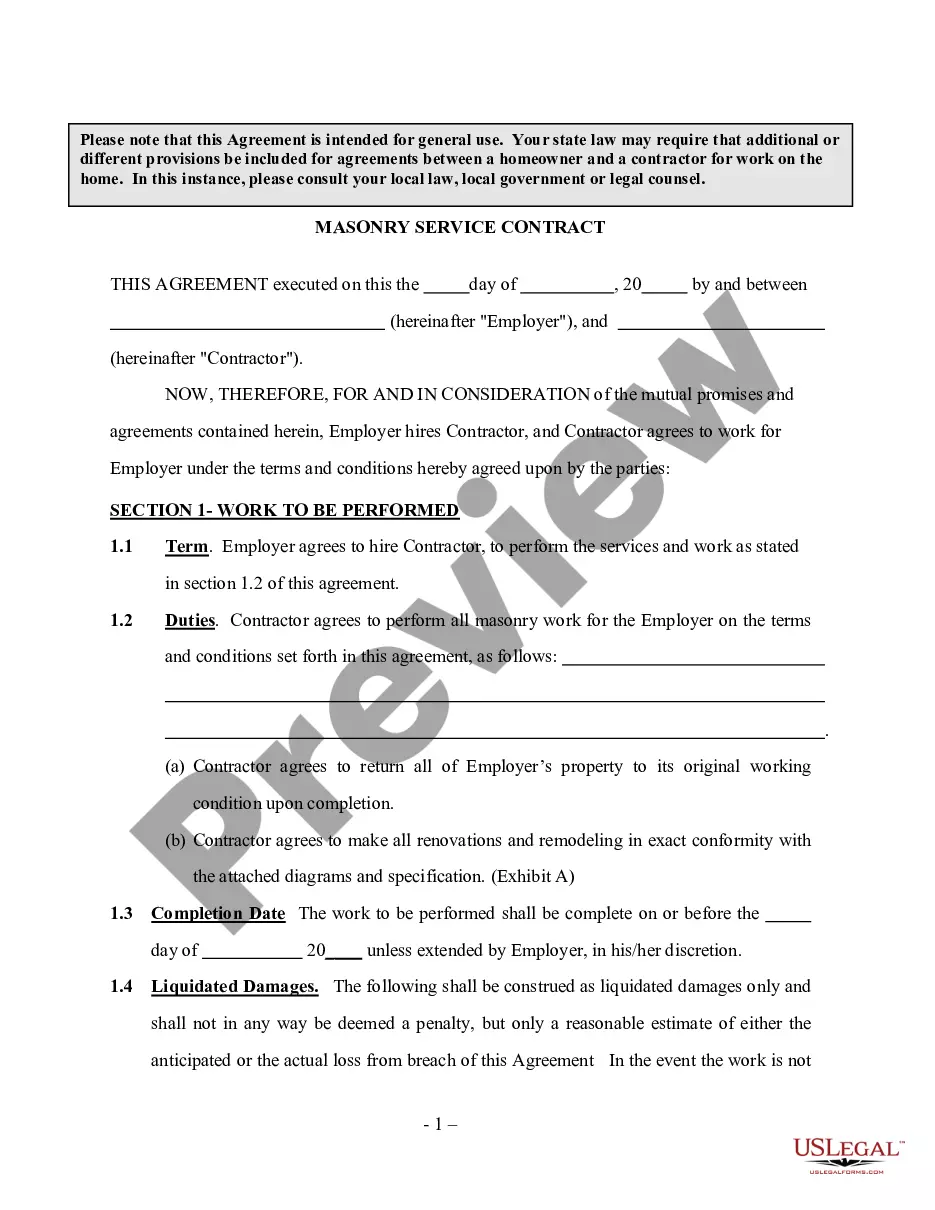
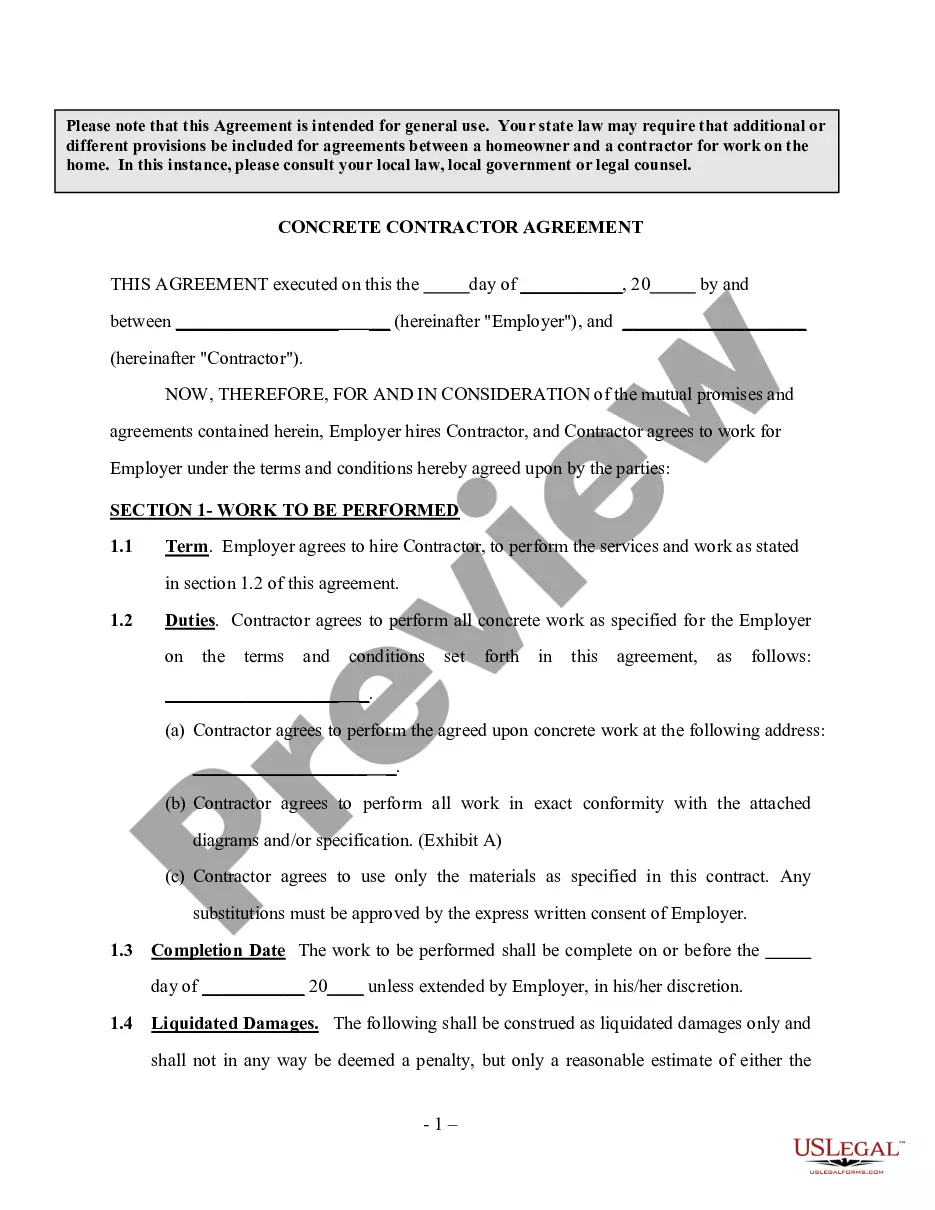
The Concrete Mason Contract for Contractor is a legally binding agreement between a concrete mason contractor and a property owner. This contract outlines the terms of the project, including payment arrangements, responsibilities for permits, insurance requirements, and procedures for change orders. It is specifically tailored to comply with the laws of South Carolina, differentiating it from similar contracts that may not address state-specific regulations.
Main sections of this form
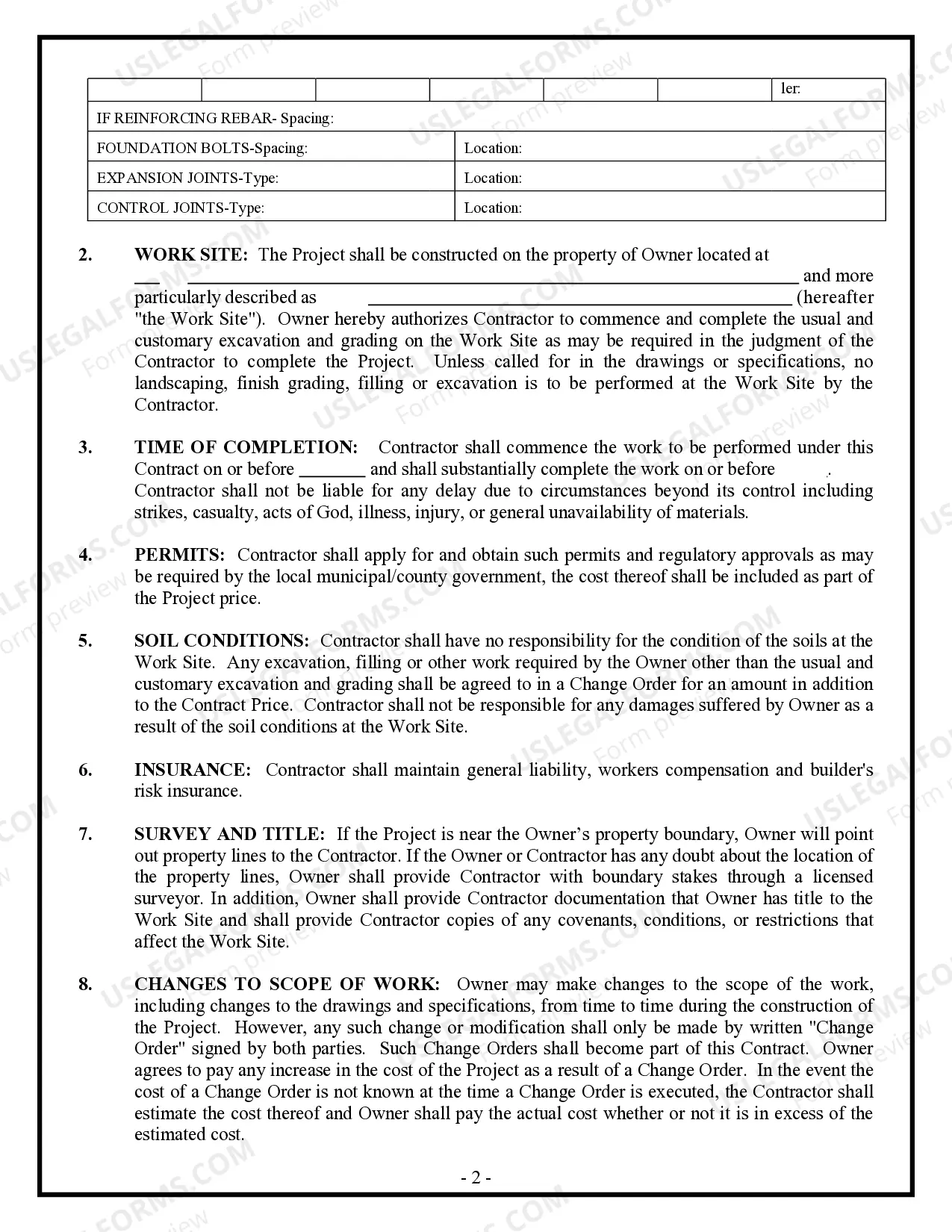
- Permits: Contractor is responsible for obtaining necessary permits, with costs included in the project price.
- Soil Conditions: The contractor is not liable for existing soil conditions at the work site.
- Insurance: Contractor must maintain general liability, workers compensation, and builders risk insurance.
- Change Orders: Any changes to the project scope must be documented and agreed upon in writing by both parties.
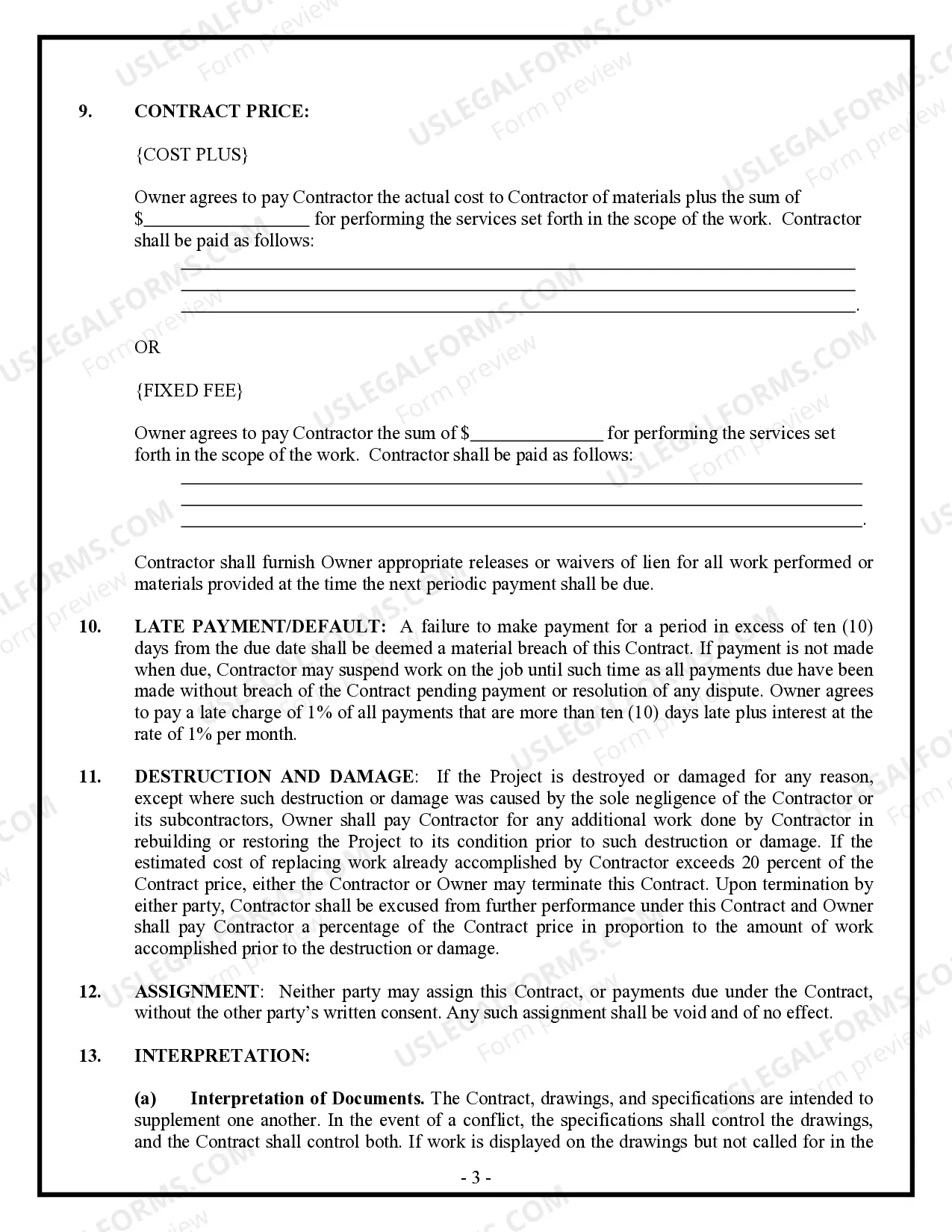
- Late Payment: Outlines consequences for payments that are more than ten days late, including work suspension.
- Destruction and Damage: Defines responsibilities in case of damage to the project, with potential termination clauses.

When to use this document
This form should be used when a property owner hires a concrete mason contractor for a project involving the installation, repair, or maintenance of concrete structures. It is applicable for both residential and commercial projects and is ideal when payment terms need to be clearly defined. Use this contract to ensure both parties understand their rights and responsibilities throughout the duration of the project, especially in South Carolina.
Who can use this document
- Property owners hiring a concrete mason contractor for a project.
- Concrete mason contractors seeking clear contractual terms with their clients.
- Any party involved in a contract for concrete work within South Carolina.
How to prepare this document
- Identify the parties by filling in the names and addresses of both the contractor and the property owner.
- Specify the project details, including the scope of work and any relevant drawings or specifications.
- Include payment terms, specifying whether it is a fixed fee or cost-plus arrangement.
- Detail the responsibilities regarding permits and soil conditions as outlined in the contract.
- Obtain signatures from both parties to execute the contract legally.
Does this form need to be notarized?
This form does not typically require notarization unless specified by local law. However, it is advised to consult with a legal professional to ensure compliance with any additional state requirements.
Get your form ready online
Our built-in tools help you complete, sign, share, and store your documents in one place.
Make edits, fill in missing information, and update formatting in US Legal Forms—just like you would in MS Word.
Download a copy, print it, send it by email, or mail it via USPS—whatever works best for your next step.
Sign and collect signatures with our SignNow integration. Send to multiple recipients, set reminders, and more. Go Premium to unlock E-Sign.
If this form requires notarization, complete it online through a secure video call—no need to meet a notary in person or wait for an appointment.
We protect your documents and personal data by following strict security and privacy standards.

Make edits, fill in missing information, and update formatting in US Legal Forms—just like you would in MS Word.

Download a copy, print it, send it by email, or mail it via USPS—whatever works best for your next step.

Sign and collect signatures with our SignNow integration. Send to multiple recipients, set reminders, and more. Go Premium to unlock E-Sign.

If this form requires notarization, complete it online through a secure video call—no need to meet a notary in person or wait for an appointment.

We protect your documents and personal data by following strict security and privacy standards.
Common mistakes
- Failing to read or understand the entire contract before signing.
- Not specifying all necessary details regarding project scope and payment terms.
- Overlooking the need for change orders when project modifications are needed.
- Neglecting to clarify responsibilities regarding permits and insurance.
Benefits of completing this form online
- Convenience: Download and complete the form from anywhere at any time.
- Editability: Customize the contract to fit the specific needs of your project.
- Reliability: Use a professionally drafted form that complies with South Carolina law.
Legal use & context
- This contract is legally binding once signed and can be enforced in court.
- Non-compliance with contract terms could lead to legal disputes or damages.
- All parties are advised to retain copies for their records and legal compliance.
What to keep in mind
- The Concrete Mason Contract provides a clear framework for agreements between contractors and property owners.
- Understanding the key components can help avoid common pitfalls and improve project outcomes.
- This contract is tailored for use in South Carolina, ensuring compliance with local laws.
Looking for another form?
Form popularity
FAQ
A general contractor is responsible for providing all of the material, labor, equipment (such as engineering vehicles and tools) and services necessary for the construction of the project. A general contractor often hires specialized subcontractors to perform all or portions of the construction work.
Class B General Building Contractor The principal business is in connection with any structure built, being built, or to be built, requiring in its construction the use of at least two unrelated building trades or crafts.
In states where licensing is required, have their own license that allows them to contract work specifically for their scope of work. A general contractor license allows one to contract the overall job or project and the general then subcontracts out the various scopes of work to the individually licensed trades.
A general contractor's job is to oversee the daily operations of the project and act as the contact for all parties involved. They take complete control of a construction project and are the one to hire the specialists (subcontractors) to fulfill different tasks, and schedule and plan out the different project stages.
Licensed general contractors can perform a wide variety of work. It can be earthmoving, plumbing, electrical, foundations, framing, or roofing work.General Contractor Type C have specialized roles. This includes contractors that specialize in concrete, fireproofing, HVAC, elevators, asbestos removal, and electricians.
In South Carolina, the South Carolina Department of Labor, Licensing and Regulations is responsible for the licensing of all contractors. General, mechanical, specialty and manufactured housing contractors must be licensed in order to work in the state.
SC Regulation 117-314.2 states: Building materials when purchased by builders, contractors, or landowners for use in adding to, repairing or altering real property are subject to either the sales or use tax at the time of purchase by such builder, contractor, or landowner.
South Carolina This allows you to work in carpentry, drywalling, wallpaper, painting, sidings, insulation, floor covering, masonry, concrete and roofing.
A handyman, under the classification of Residential Specialty Contractor, does not need a license to work in South Carolina. However, you will need to register with the South Carolina Department of Labor, Licensing and Regulation.