Rhode Island Tax Free Exchange Package
Understanding this form package
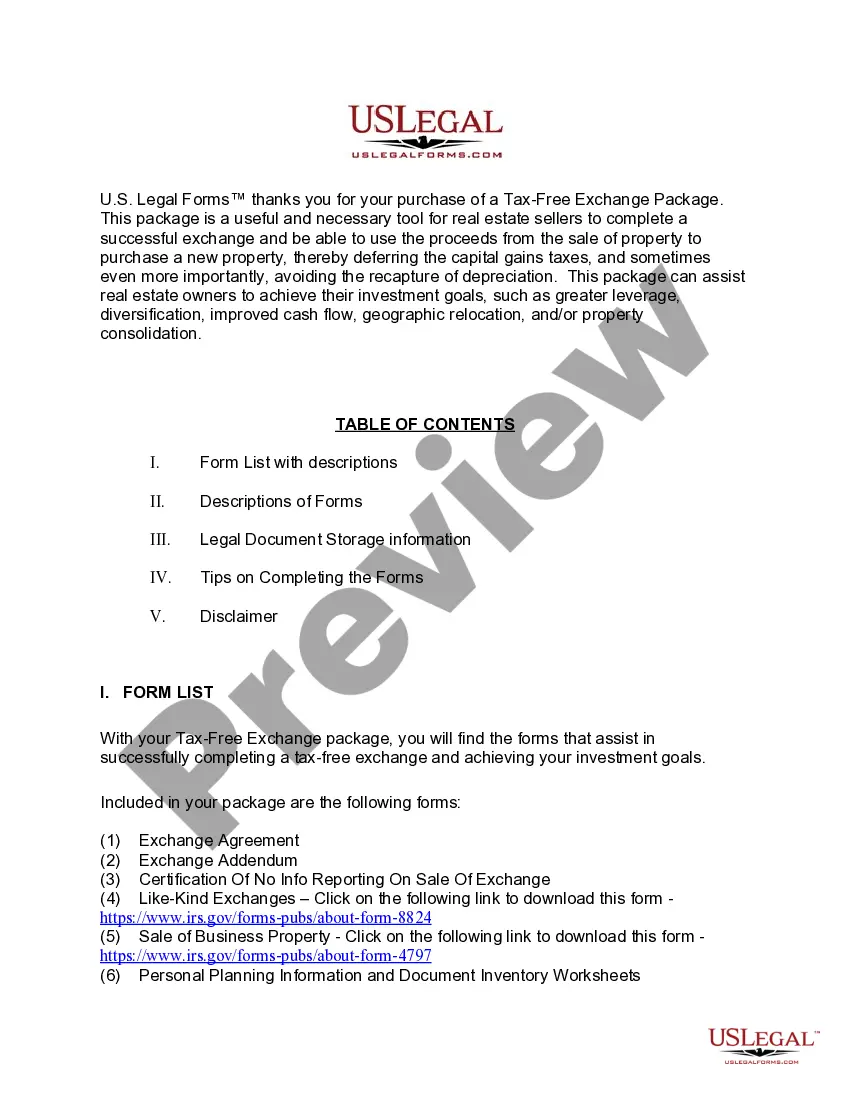
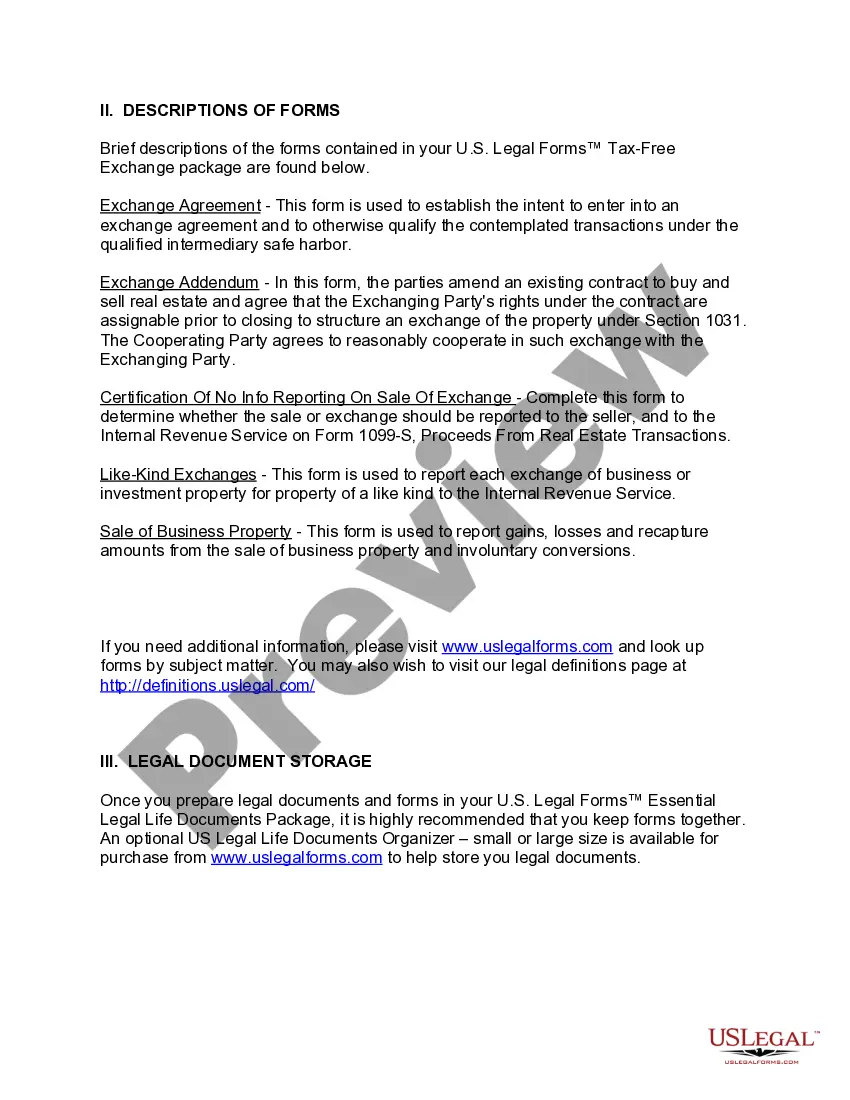
The Rhode Island Tax Free Exchange Package includes vital forms necessary for completing a tax-free exchange of like-kind properties. This package specifically addresses the legal requirements for such exchanges under IRS guidelines, distinguishing it from other real estate transaction forms. Each document is drafted by licensed attorneys to ensure accuracy and compliance.
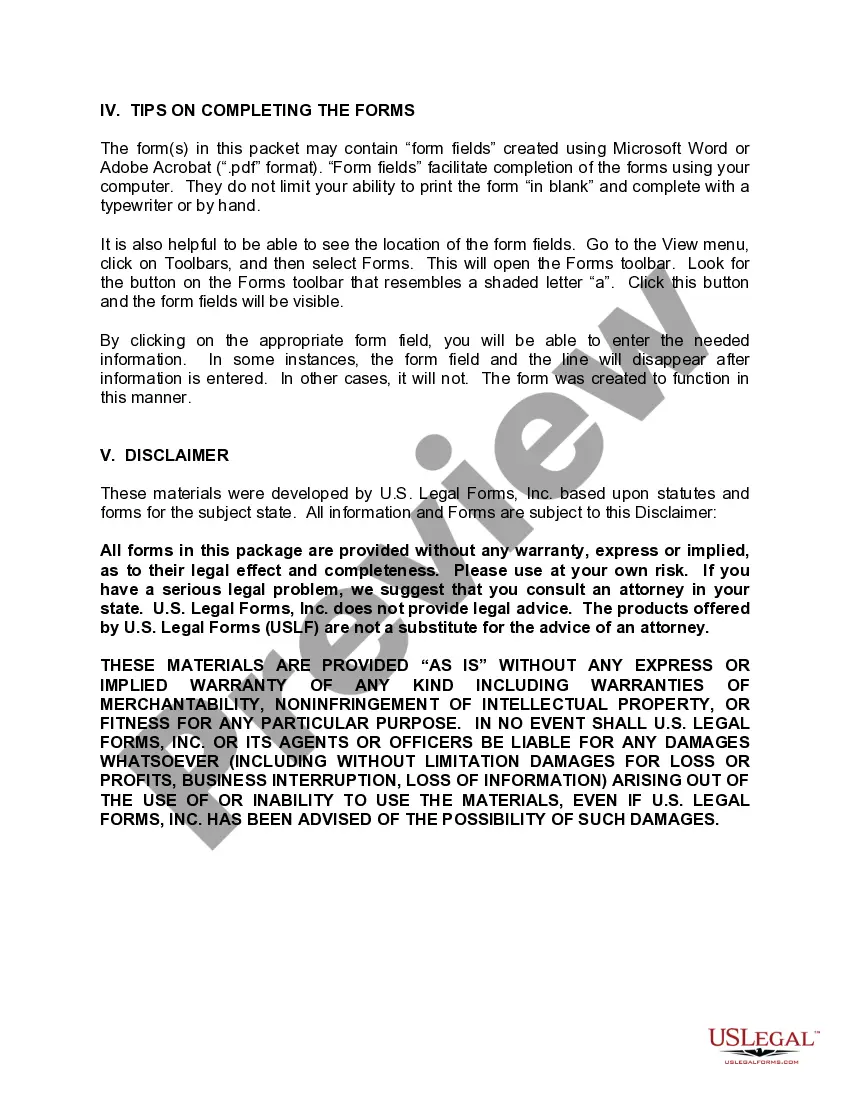
What’s included in this form package
When this form package is needed
This package is applicable in various scenarios, including:
- When you intend to engage in a tax-free exchange of investment properties.
- When making amendments to existing real estate contracts to facilitate an exchange under Section 1031.
- If you are selling business property and need to report gains or losses accurately.
- When seeking to maintain tax advantages while selling and buying properties of like kind.
Intended users of this form package
- Real estate investors or individuals conducting property exchanges.
- Business owners selling business property looking to report transactions properly.
- Attorneys or legal professionals assisting clients with property exchanges.
- Tax advisors guiding clients through tax-free exchange processes.
Instructions for completing these forms
- Review the forms included in the package to understand their purpose.
- Discuss with all parties involved to ensure agreement on the exchange terms.
- Complete the Exchange Agreement and Exchange Addendum, paying attention to details such as property identification.
- Fill out the Certification of No Info Reporting based on your transactions.
- Consult with a tax professional if necessary to ensure compliance with reporting requirements.
- Sign the completed forms and retain copies for your records.
Notarization requirements for forms in this package
Forms in this package typically do not require notarization unless required by local law. However, it is advisable to verify specific requirements for your transactions to ensure validity.
Get your form ready online
Our built-in tools help you complete, sign, share, and store your documents in one place.
Make edits, fill in missing information, and update formatting in US Legal Forms—just like you would in MS Word.
Download a copy, print it, send it by email, or mail it via USPS—whatever works best for your next step.
Sign and collect signatures with our SignNow integration. Send to multiple recipients, set reminders, and more. Go Premium to unlock E-Sign.
If this form requires notarization, complete it online through a secure video call—no need to meet a notary in person or wait for an appointment.
We protect your documents and personal data by following strict security and privacy standards.

Make edits, fill in missing information, and update formatting in US Legal Forms—just like you would in MS Word.

Download a copy, print it, send it by email, or mail it via USPS—whatever works best for your next step.

Sign and collect signatures with our SignNow integration. Send to multiple recipients, set reminders, and more. Go Premium to unlock E-Sign.

If this form requires notarization, complete it online through a secure video call—no need to meet a notary in person or wait for an appointment.

We protect your documents and personal data by following strict security and privacy standards.
Typical mistakes to avoid
- Failing to clearly define the properties involved in the exchange.
- Not obtaining necessary signatures on all required forms.
- Missing deadlines for reporting exchanges to the IRS.
- Improperly completing the Certification of No Info Reporting, leading to potential fines.
Advantages of online completion
- Convenient access to all necessary forms, available for immediate download.
- Forms can be easily edited and customized to fit specific circumstances.
- Reliable documents crafted by attorneys, ensuring compliance with current laws.
- Time-saving process compared to seeking legal assistance in person.
Legal use & context
- The forms are designed to comply with IRS and state regulations for tax-free exchanges.
- Utilizing these forms helps in maintaining a legal record of the exchange process.
- Complete and accurate submission of these forms can impact your tax obligations significantly.
What to keep in mind
- The Rhode Island Tax-Free Exchange Package is essential for executing tax-deferred real estate exchanges.
- Proper completion of the included forms is crucial to stay compliant with tax laws.
- This package is tailored for property investors and business owners in Rhode Island.
Looking for another form?
Form popularity
FAQ
Rhode Island also has no gift tax, but the federal gift tax applies on gifts of more than $14,000 for 2017 and $15,000 for 2018.
The top marginal rate remains 40 percent. The lifetime gift tax exemption for gifts made during 2019 is $11,400,000 (increased from $11,180,000 in 2018). The top marginal rate remains 40 percent. The gift tax annual exclusion amount remains $15,000.
While there is no inheritance tax in Rhode Island, a deceased person's estate may be subject to state and federal estate taxes. Unlike inheritance tax, estate taxes are paid by the estate of the person who died, not by the heirs and beneficiaries.
Gift tax is not an issue for most people If someone gives you more than the annual gift tax exclusion amount ($15,000 in 2020), the giver must file a gift tax return. That still doesn't mean they owe gift tax. For example, say someone gives you $20,000 in one year, and you and the giver are both single.
In Rhode Island, certain items may be exempt from the sales tax to all consumers, not just tax-exempt purchasers. Several examples of items that exempt sales tax are printed packages, booklets, letterheads, billheads, manufacturing operations such as mining, and fuel oil and kerosene.
Rhode IslandClothing is tax exempt, but accessories, protective clothing and athletic clothing are taxable. Effective October 1, 2012, exemption only applies to first $250 of sales price per item of clothing.
The IRS also confirmed that the annual gift exclusion amount for 2019 remains at $15,000 per individual per year, unchanged from 2018. In other words, you can give up to $15,000 to as many people you want (me, for instance) each year without needing to file a gift tax return.
The sales tax is a levy imposed on the retail sale, rental or lease of many goods and services at a rate of 7%. Any sale is a retail sale if the property or service sold will be used and not resold in the regular course of business. The tax is collected by the vendor and remitted directly to the state.
Are services subject to sales tax in Rhode Island? "Goods" refers to the sale of tangible personal property, which are generally taxable. "Services" refers to the sale of labor or a non-tangible benefit. In Rhode Island, specified services are taxable.