Certification of No Information Reporting on Sale or Exchange of Principal Residence - Tax Exemption
About this form
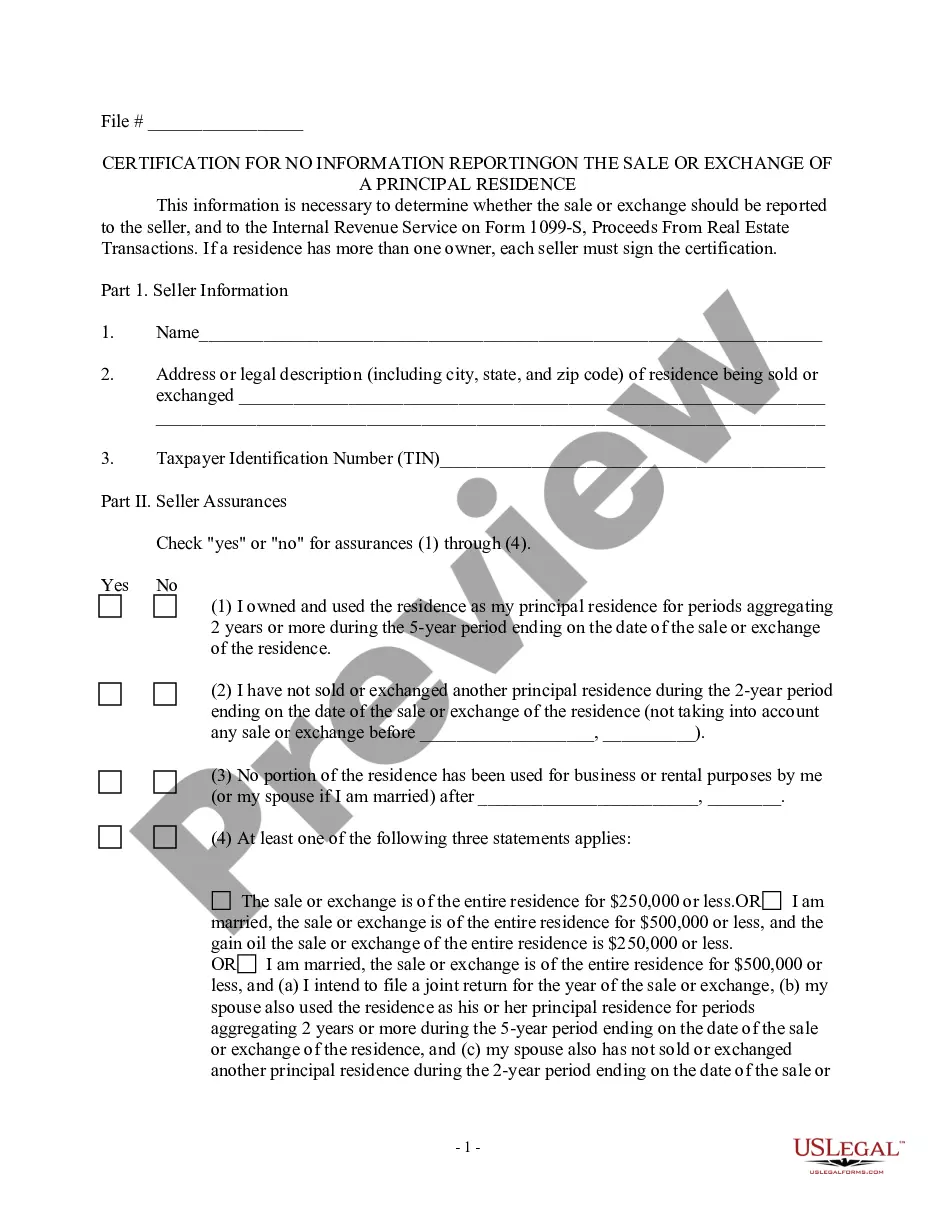
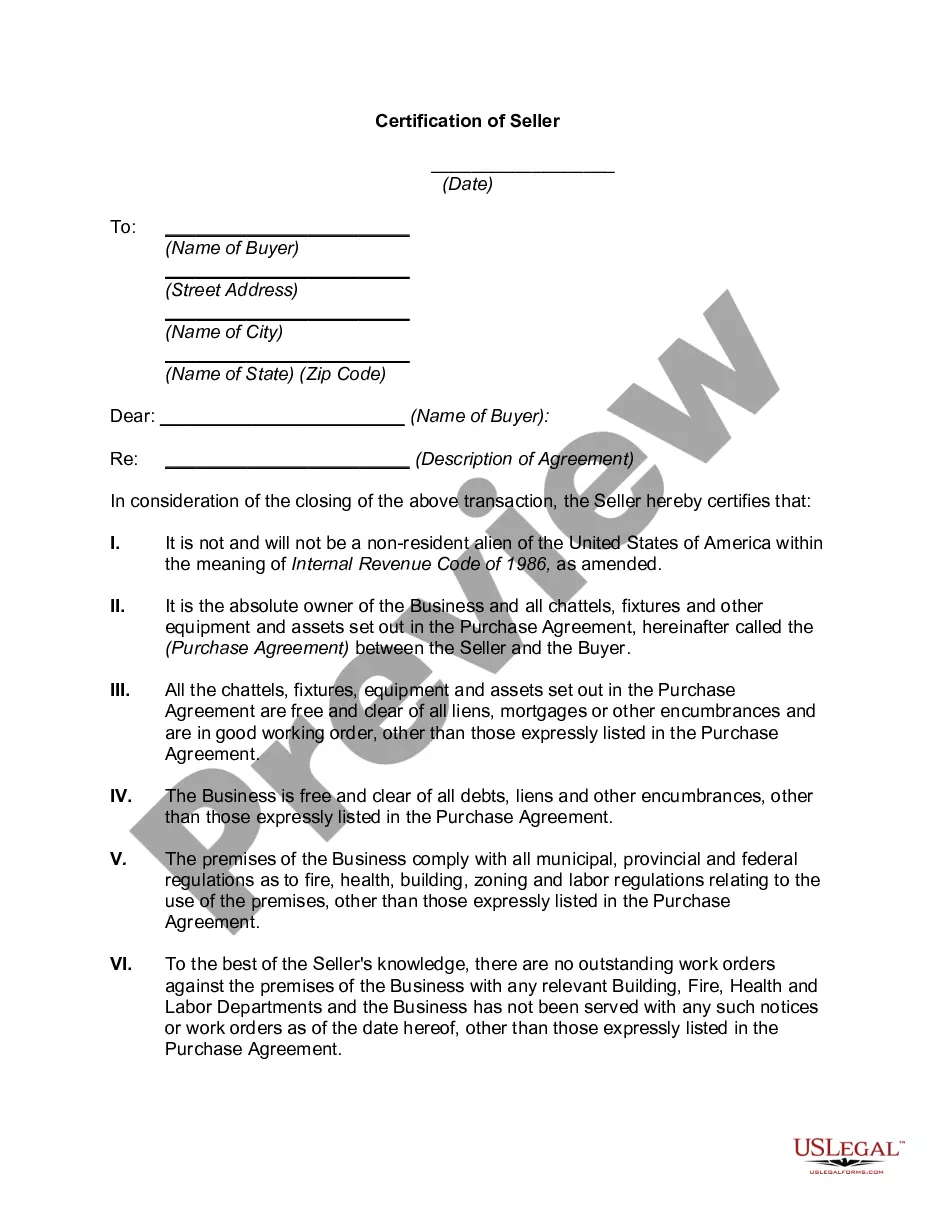
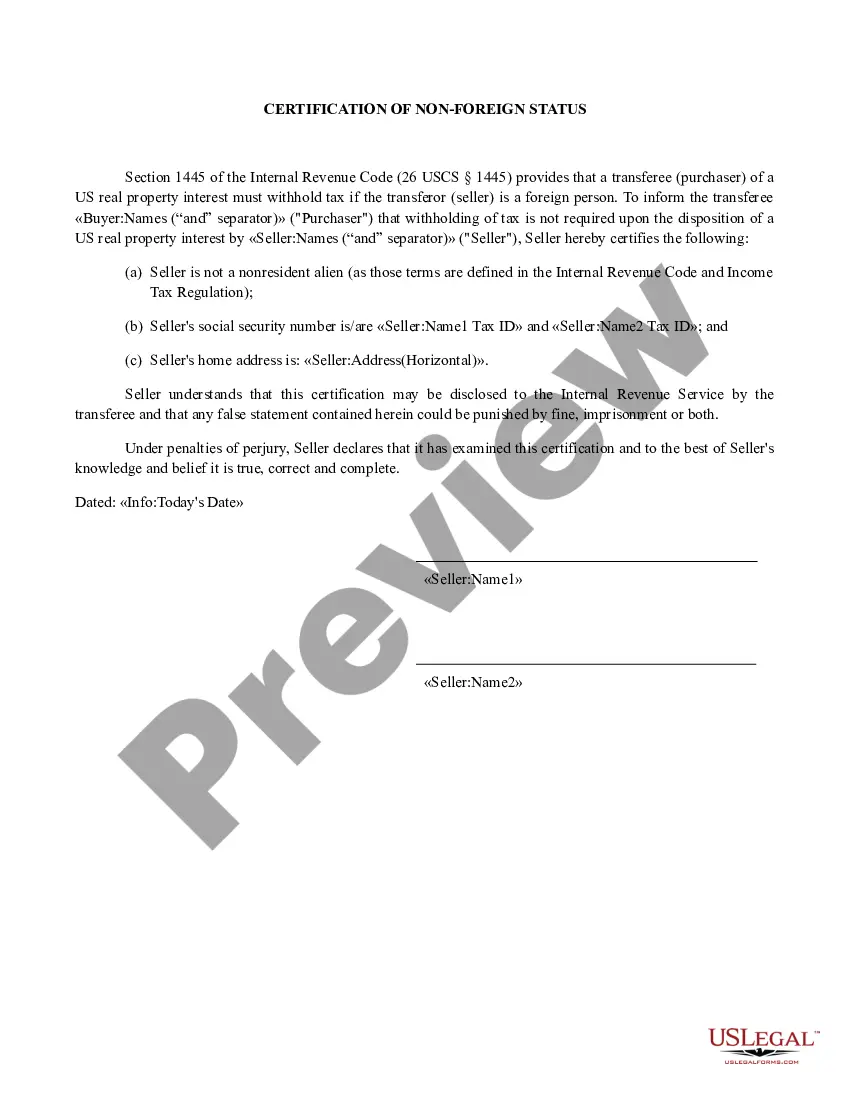
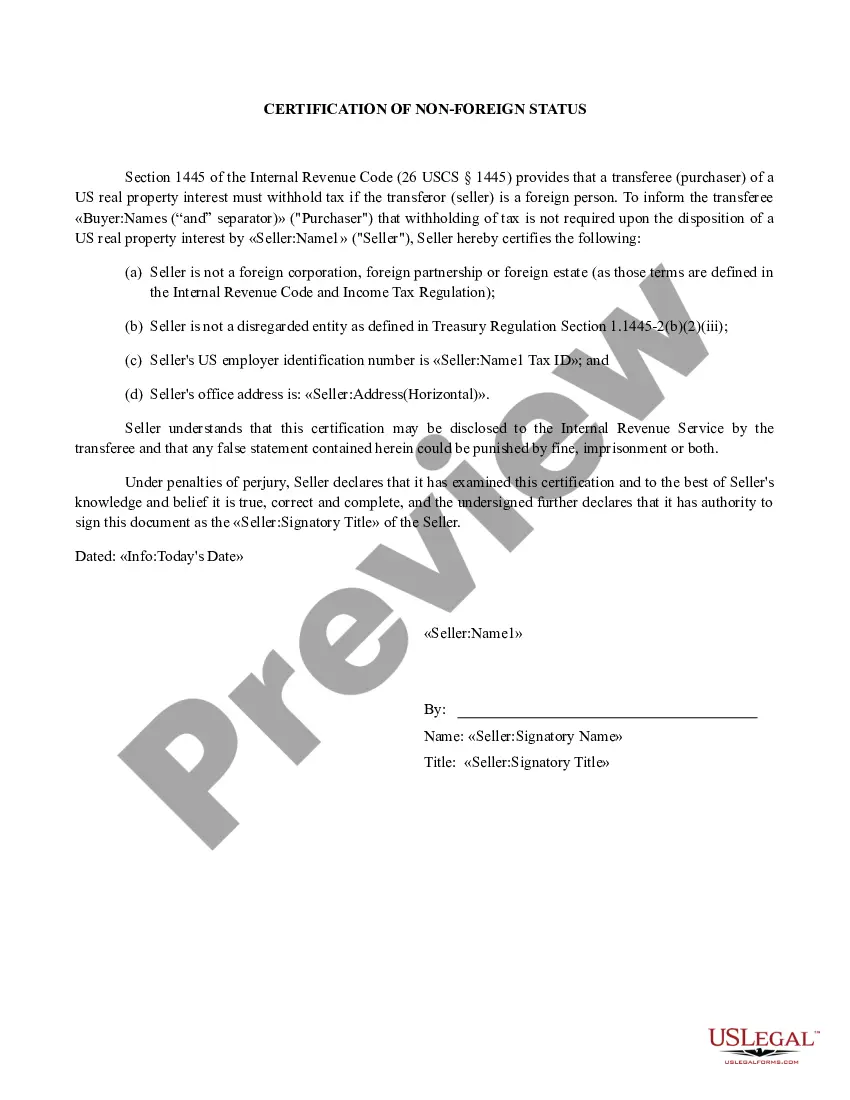
The Certification of No Information Reporting on Sale or Exchange of Principal Residence - Tax Exemption is a legal document used to confirm that certain real estate transactions do not require reporting to the seller or the Internal Revenue Service. This form specifies the conditions under which you may be exempt from information reporting on Form 1099-S, ensuring compliance during the sale or exchange of your primary residence. It is crucial in distinguishing situations where reporting is not necessary, thereby protecting sellers from potential tax implications.
Key components of this form
- Seller Information: Includes the name, address, and taxpayer identification number of the seller.
- Seller Assurances: Four statements that the seller must respond to with a yes or no option, confirming eligibility for non-reporting.
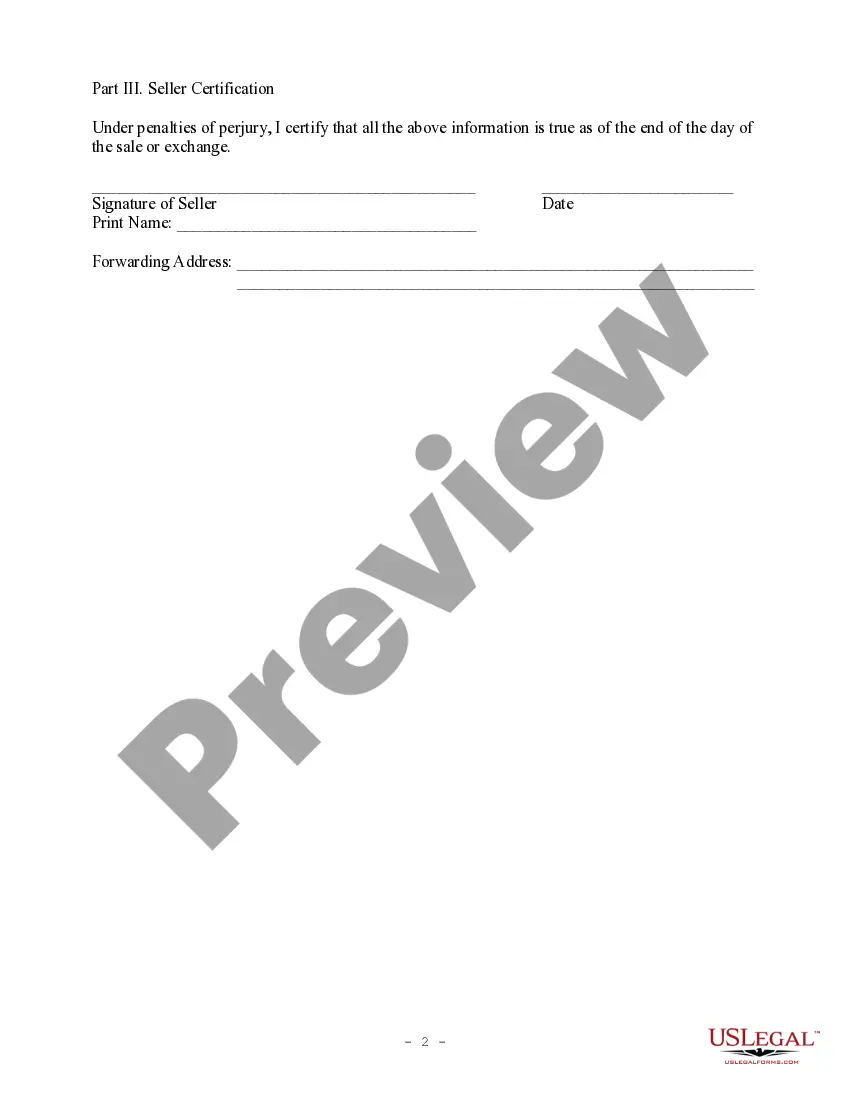
- Certification: A statement under penalties of perjury affirming the truthfulness of the provided information.
- Signature and Date: The seller's signature is required to validate the form.
When to use this document
This form is necessary when selling your principal residence and you believe that the sale qualifies for tax exemption as outlined by IRS guidelines. It is typically used when you have owned and occupied the property as your primary home for a sufficient period and no portion has been used for business or rental purposes. If you fulfill the criteria specified in the seller assurances, the form helps in properly documenting your transaction for tax purposes.
Who can use this document
- Homeowners who are selling their principal residence.
- Sellers who have owned and used their residence for at least two out of the last five years.
- Individuals who have not sold any other principal residence within a specific two-year period.
- Co-owners of a property, as all owners must sign the certification.
Completing this form step by step
- Gather seller information including name, address, and taxpayer identification number.
- Review and assess your ownership history concerning the residence for the past five years.
- Respond to the seller assurances with either "yes" or "no" to confirm eligibility criteria.
- Sign and date the certification section, affirming the accuracy of the information.
- Provide forwarding address if necessary for future correspondence.
Does this document require notarization?
This form does not typically require notarization unless specified by local law. However, signing in front of a notary can enhance the reliability of your submission in some cases.
Get your form ready online
Our built-in tools help you complete, sign, share, and store your documents in one place.
Make edits, fill in missing information, and update formatting in US Legal Forms—just like you would in MS Word.
Download a copy, print it, send it by email, or mail it via USPS—whatever works best for your next step.
Sign and collect signatures with our SignNow integration. Send to multiple recipients, set reminders, and more. Go Premium to unlock E-Sign.
If this form requires notarization, complete it online through a secure video call—no need to meet a notary in person or wait for an appointment.
We protect your documents and personal data by following strict security and privacy standards.

Make edits, fill in missing information, and update formatting in US Legal Forms—just like you would in MS Word.

Download a copy, print it, send it by email, or mail it via USPS—whatever works best for your next step.

Sign and collect signatures with our SignNow integration. Send to multiple recipients, set reminders, and more. Go Premium to unlock E-Sign.

If this form requires notarization, complete it online through a secure video call—no need to meet a notary in person or wait for an appointment.

We protect your documents and personal data by following strict security and privacy standards.
Common mistakes
- Filling out the form without confirming eligibility based on the seller assurances.
- Neglecting to sign the form, which invalidates the certification.
- Omitting the taxpayer identification number, which is essential for processing.
- Failing to ensure that all co-owners sign the document if applicable.
Benefits of using this form online
- Immediate access to downloadable templates drafted by licensed attorneys.
- Convenient to complete from home or office without needing to visit legal offices.
- Editable formats allow for personalized entries based on unique situations.
- Reliable legal language ensures compliance with current regulations.
Quick recap
- The Certification of No Information Reporting is crucial for homeowners selling their principal residence.
- Accurate completion and understanding of the form's requirements can prevent tax reporting issues.
- Always review state-specific regulations to ensure compliance when using this form.
Looking for another form?
Form popularity
FAQ
If you do receive Form 1099-S, you must report the sale of your home on your tax return, even if you do not have to pay tax on any gain. You must meet all of these qualifications to exclude the gain from the sale of your home from income: You must own the property for at least two of the previous five years.
If you receive an informational income-reporting document such as Form 1099-S, Proceeds From Real Estate Transactions, you must report the sale of the home even if the gain from the sale is excludable. Additionally, you must report the sale of the home if you can't exclude all of your capital gain from income.
Generally, the person responsible for closing the transaction, as explained in (1) below, is required to file Form 1099-S. If no one is responsible for closing the transaction, the person required to file Form 1099-S is explained in (2), later.
The 1099-S is used to report the proceeds from the sale or exchange of real estate and certain royalty payments.
The 1099-S Certification Exemption Form One of those transactions the sale of a principal residence under certain conditions is not reportable if certain criteria are met.The sale or exchange is of the entire residence and for $250,000 or less; or if married, for $500,000 or less, and the gain is $250,000 or less.
Business structures besides corporations general partnerships, limited partnerships, limited liability companies and sole proprietorships require Form 1099 issuance and reporting but only for amounts exceeding $600; anyone else is 1099 exempt.
If you have not received an expected 1099 by a few days after that, contact the payer. If you still do not get the form by February 15, call the IRS for help at 1-800- 829-1040. In some cases, you may obtain the information that would be on the 1099 from other sources.
Business structures besides corporations general partnerships, limited partnerships, limited liability companies and sole proprietorships require Form 1099 issuance and reporting but only for amounts exceeding $600; anyone else is 1099 exempt.
If you receive an informational income-reporting document such as Form 1099-S, Proceeds From Real Estate Transactions, you must report the sale of the home even if the gain from the sale is excludable. Additionally, you must report the sale of the home if you can't exclude all of your capital gain from income.