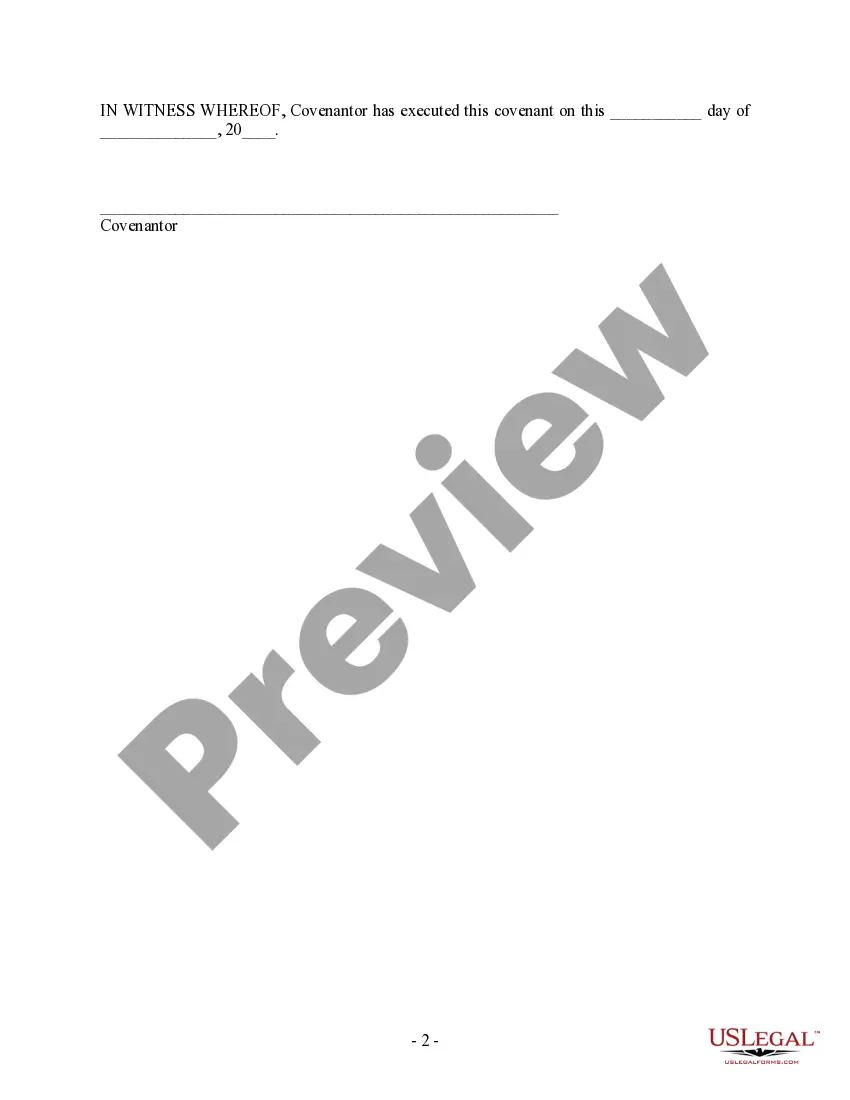
Puerto Rico Covenant Not to Sue
Description
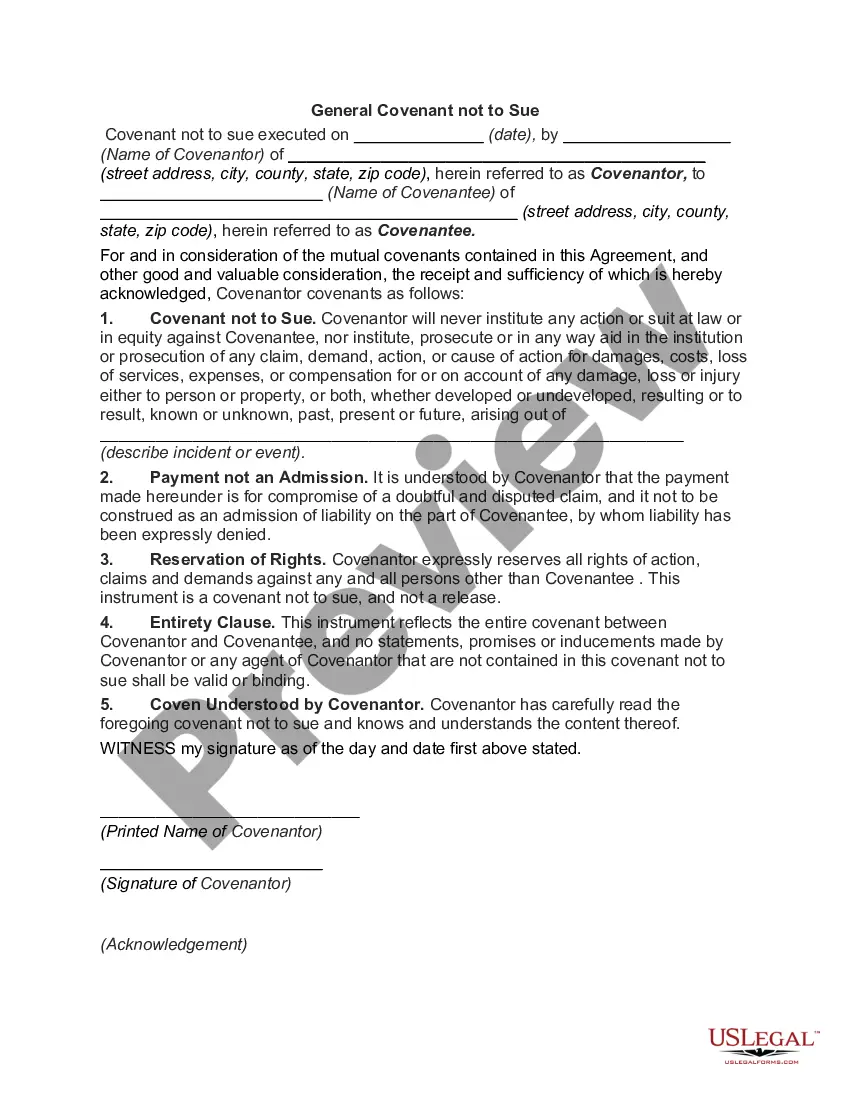
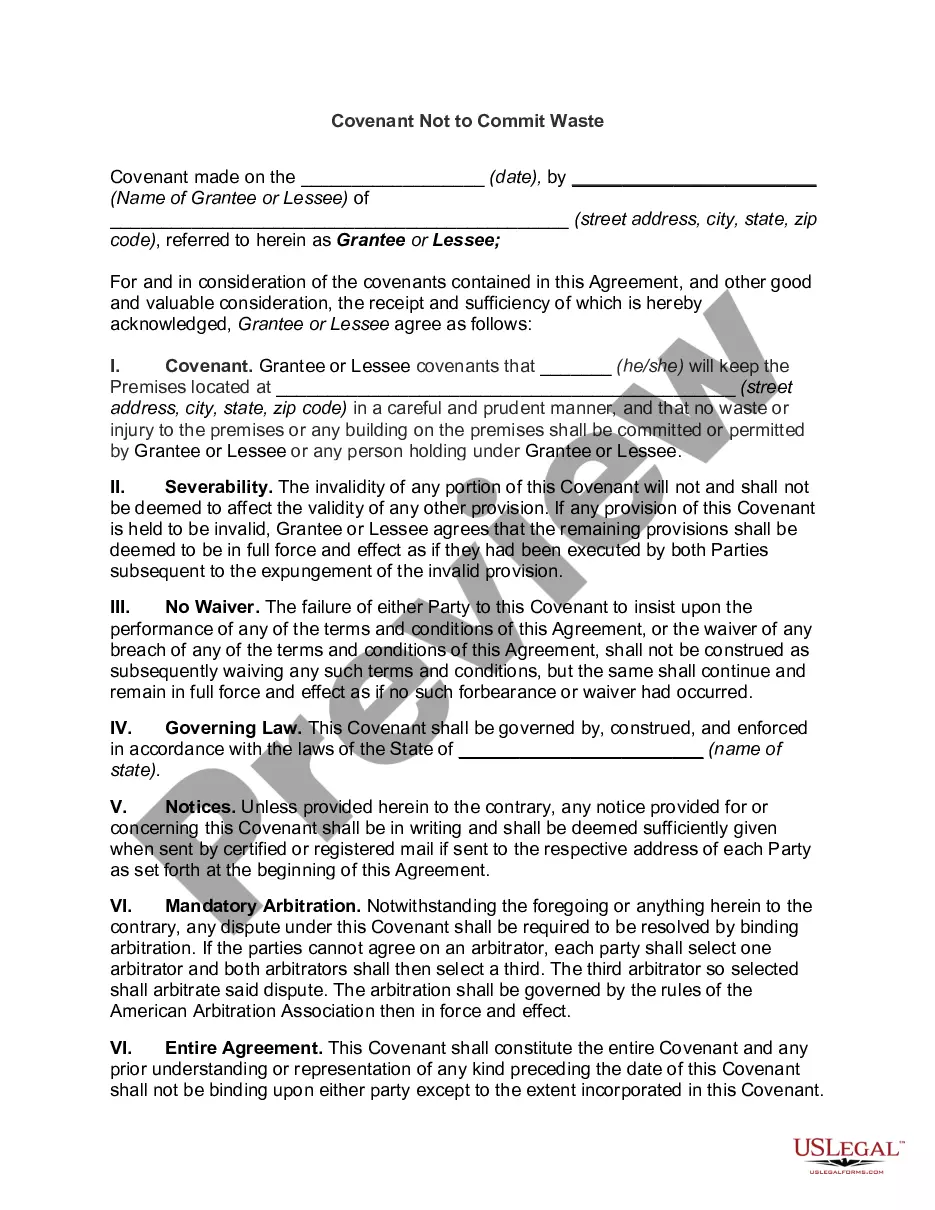
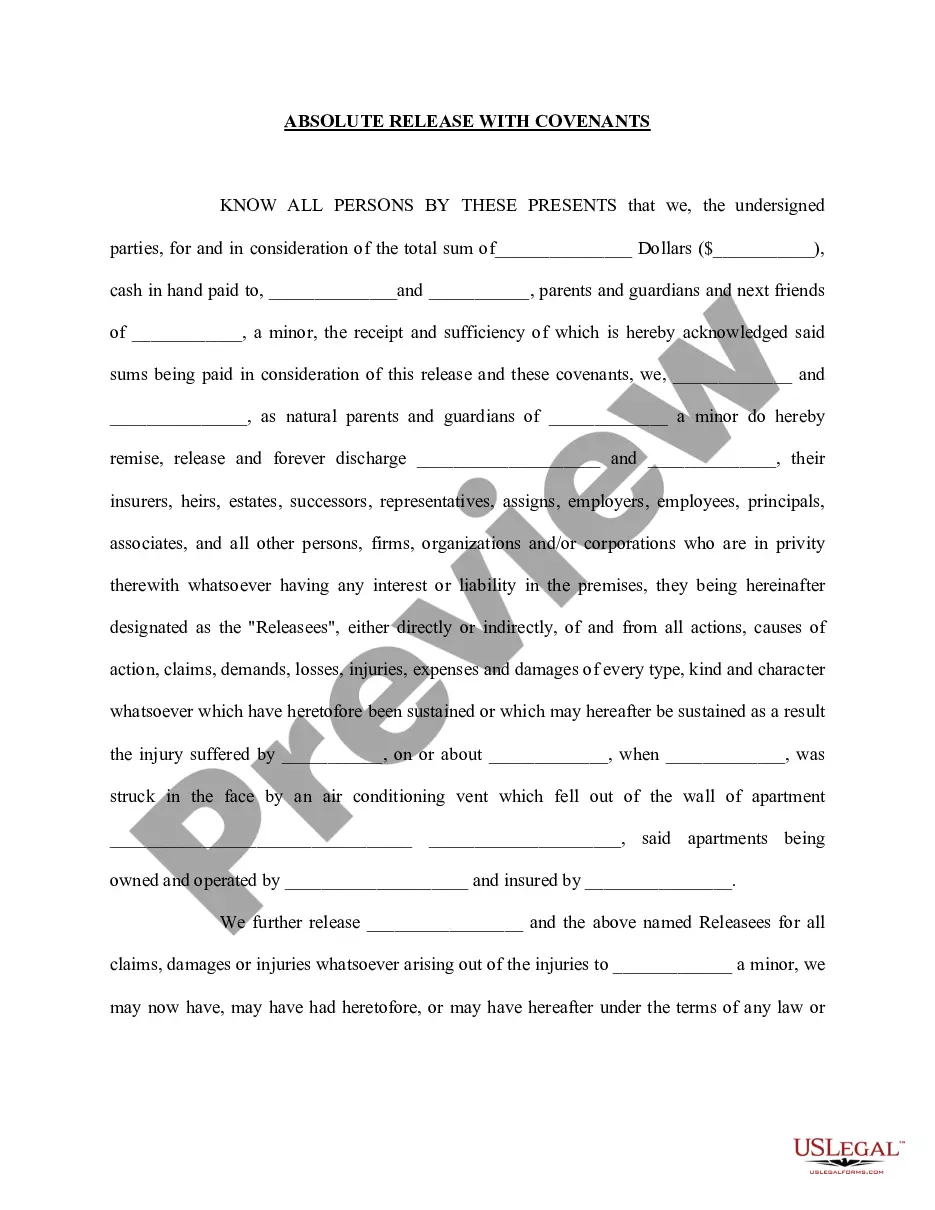
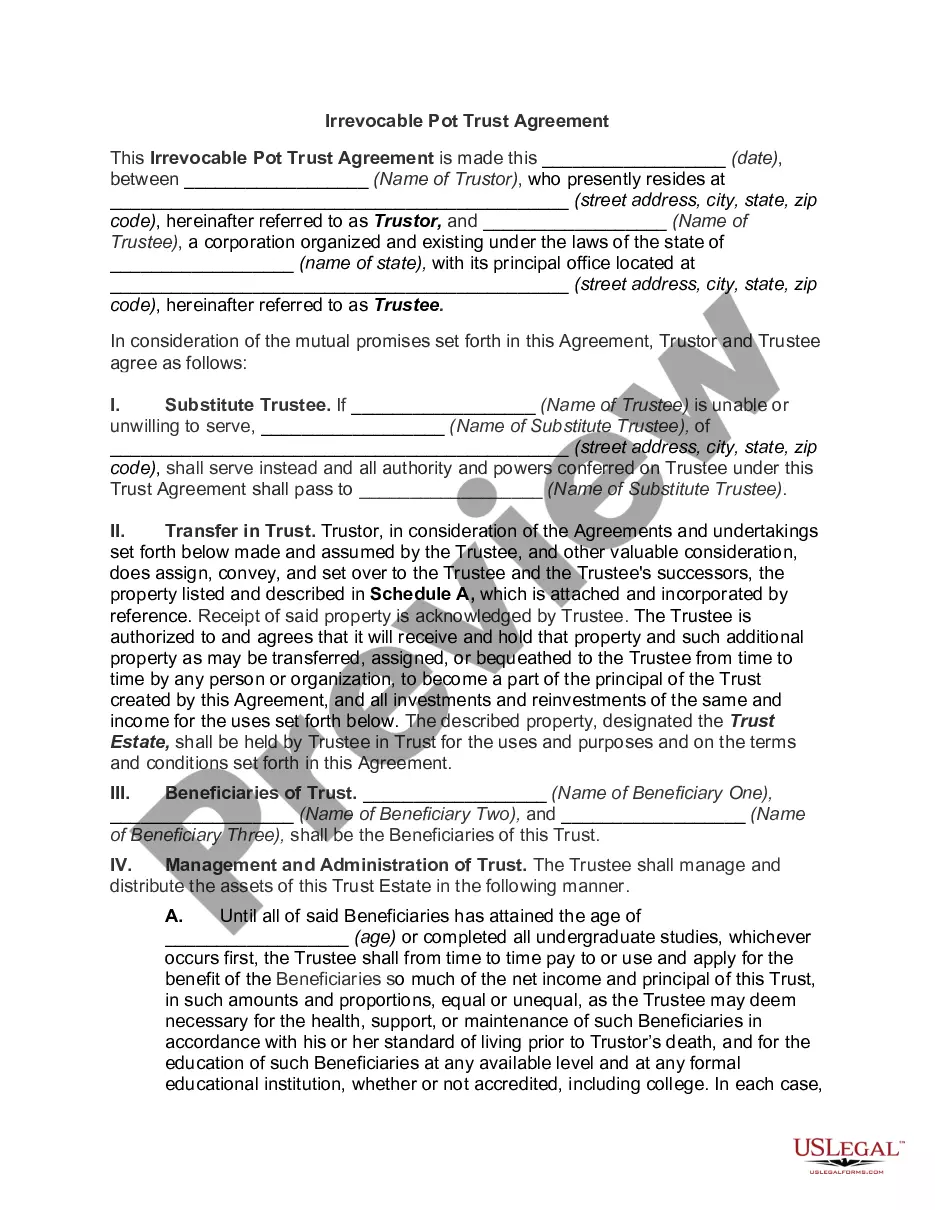


How to fill out Covenant Not To Sue?
Have you ever found yourself in a situation where you need documents for various business or personal reasons almost all the time.
There are numerous legal document templates available online, but finding reliable ones is not simple.
US Legal Forms offers thousands of form templates, including the Puerto Rico Covenant Not to Sue, that are designed to comply with federal and state regulations.
Utilize US Legal Forms, the most extensive collection of legal documents, to save time and avoid mistakes.
The service provides professionally crafted legal document templates that can be used for a variety of purposes. Create an account on US Legal Forms and start simplifying your life.
- If you are already familiar with the US Legal Forms website and have an account, simply Log In.
- Then, you can download the Puerto Rico Covenant Not to Sue template.
- If you do not have an account and wish to use US Legal Forms, follow these steps.
- Select the form you need and ensure it is for the correct city/state.
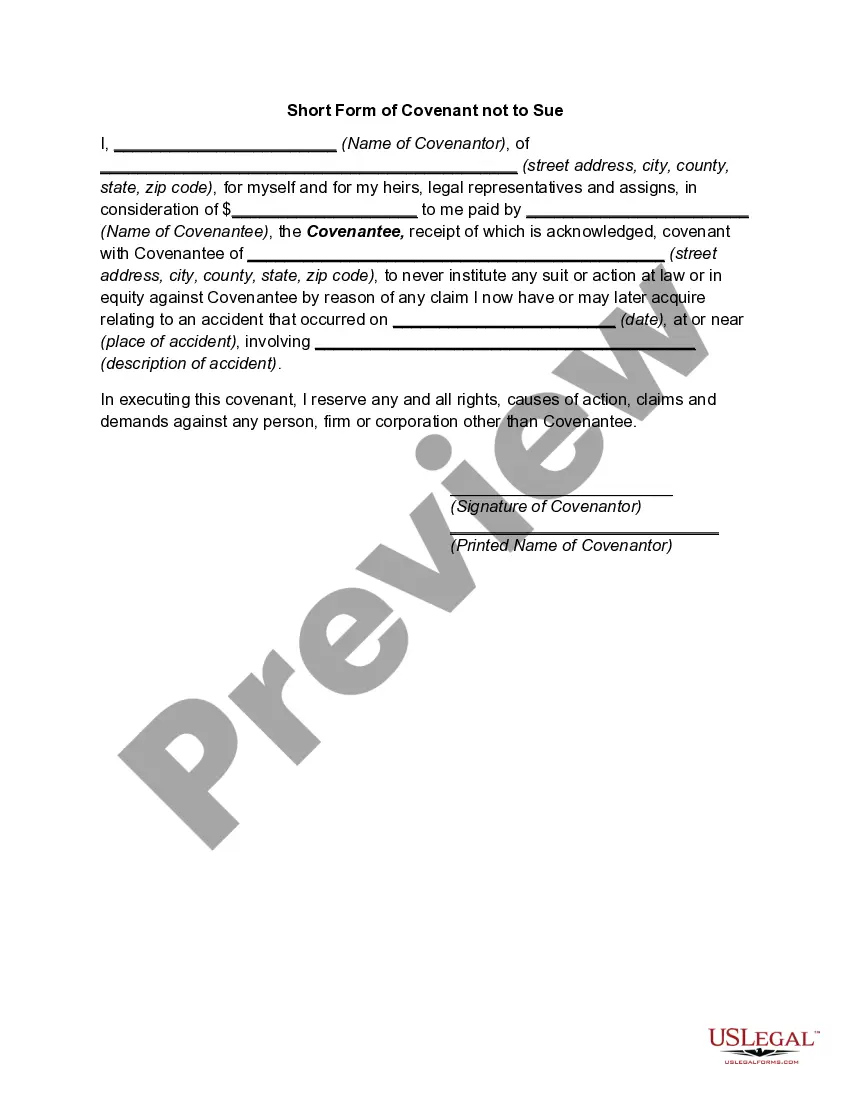
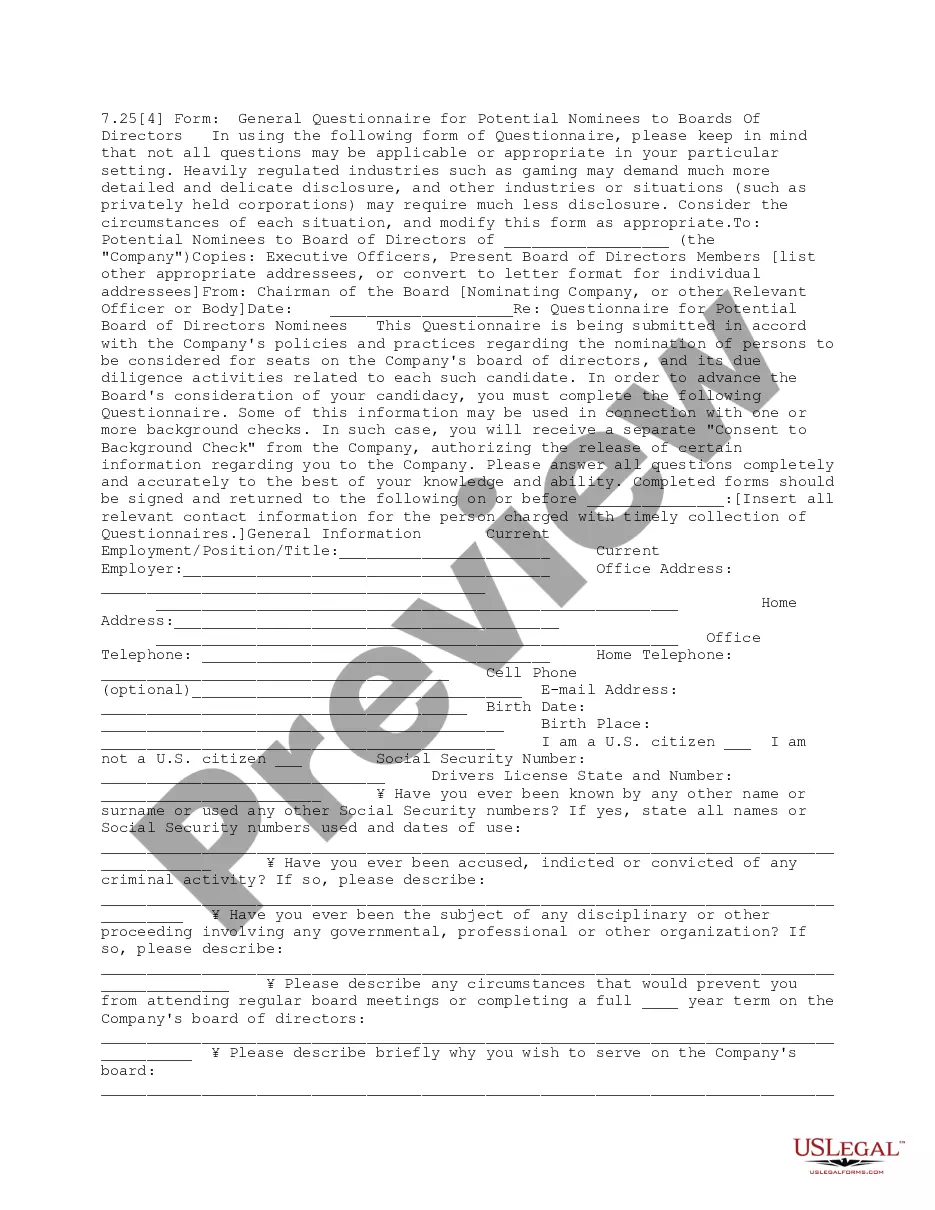
- Use the Preview button to review the form.
- Check the details to ensure you have chosen the correct form.
- If the form is not what you're looking for, use the Search area to find the form that meets your needs and specifications.
- Once you find the right form, click Buy now.
- Choose the payment plan you prefer, fill in the required information to create your account, and pay for the order using your PayPal or credit card.
- Select a convenient file format and download your copy.
- Find all the document templates you have purchased in the My documents section. You can obtain an additional copy of the Puerto Rico Covenant Not to Sue at any time, if needed. Just click the required form to download or print the document template.
Form popularity
FAQ
A covenant not to sue legally obliges a party that could initiate a lawsuit not to do so. The covenant is made explicitly between two parties, and any third party that wants to make a claim is legally allowed to do so.
While a covenant not to sue restricts future claims from being made, the party signing the document is still free to file a lawsuit if it breaches the terms of that agreement. If one or more parties don't sign a covenant not to sue, then they are open for any claim and lawsuit.
I covenant and agree never, individually or with any person or in any way, to commence, aid in any way, prosecute or cause or permit to be commenced or prosecuted against any Employer Affiliate any action or other proceeding, including, without limitation, an arbitration or other alternative dispute resolution ...
By executing a covenant not to sue, the plaintiff essentially gives up the right to pursue a lawsuit related to the injury or accident at issue. In other words, once the plaintiff has signed a covenant not to sue, the plaintiff cannot pursue any further legal action against the defendant.
A covenant not to sue is a legal agreement in which the party seeking damages agrees not to sue the party that it has cause against. Covenants not to sue are used to settle specific legal issues outside of the court system.
Agreeing not to sue This includes not suing for loss caused by the clear negligence of another person. In British Columbia, claims against businesses and activity operators are barred as a result of an agreed upon release.