Pennsylvania Paid Up Lease Pooling Provision
About this form
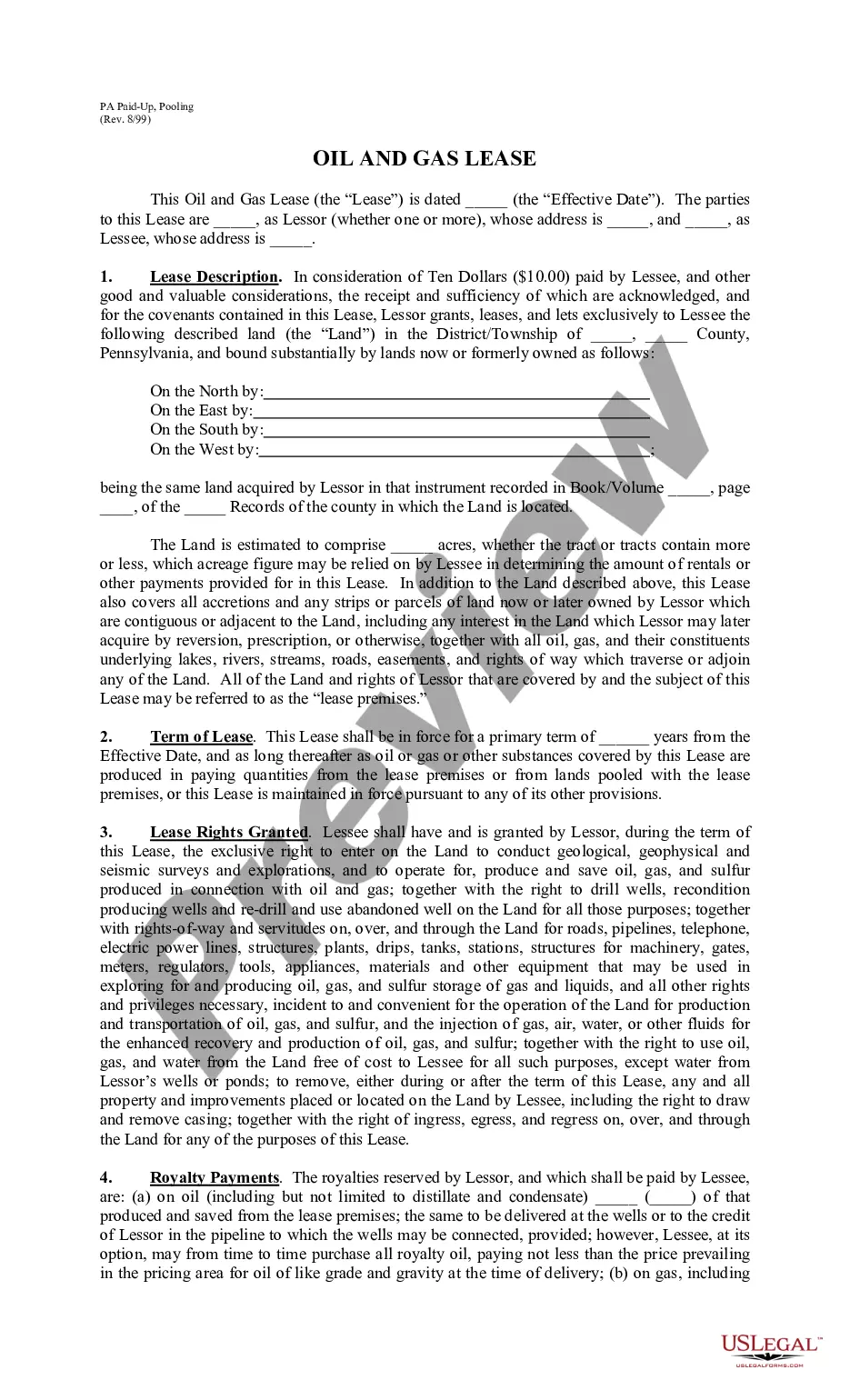
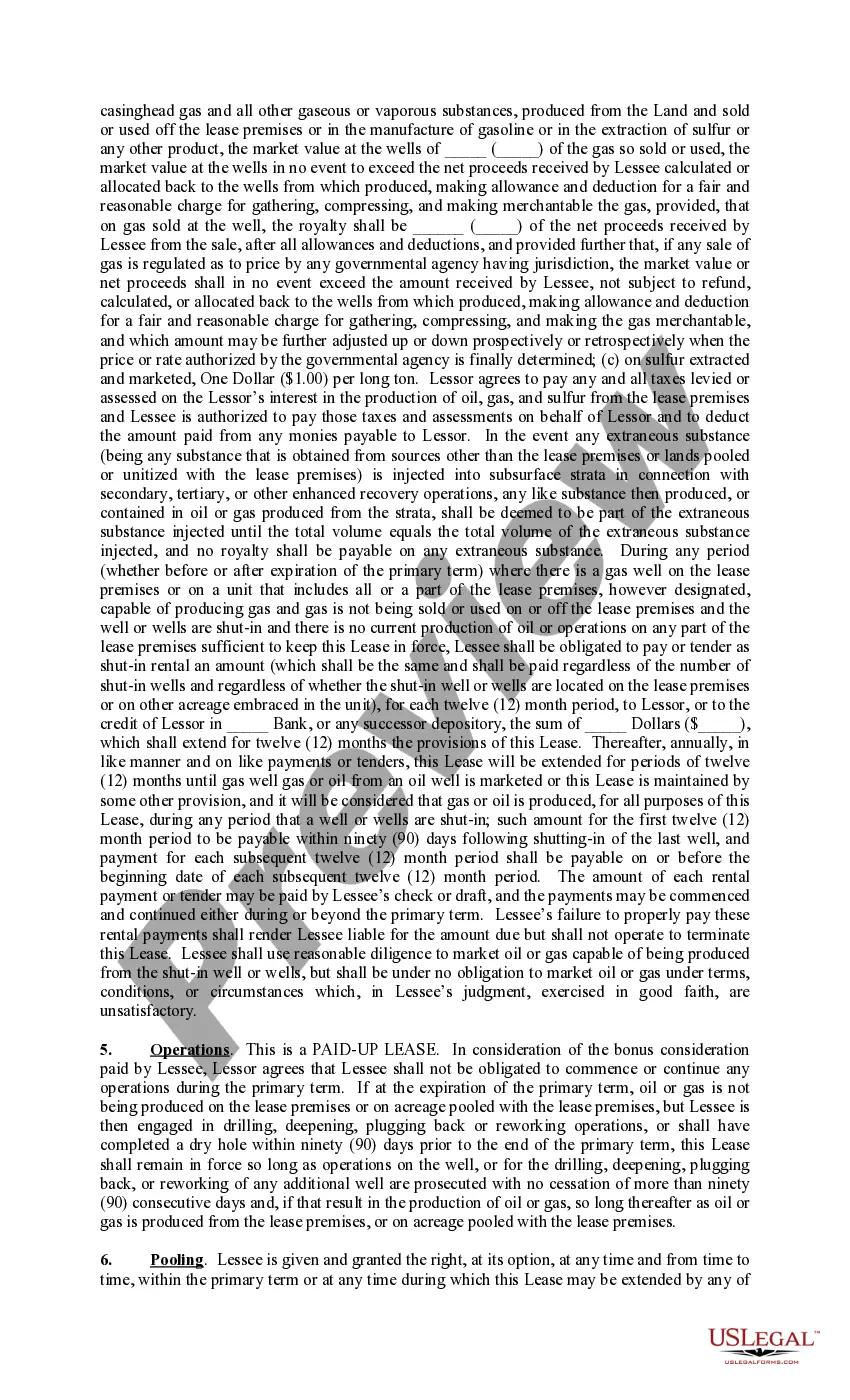
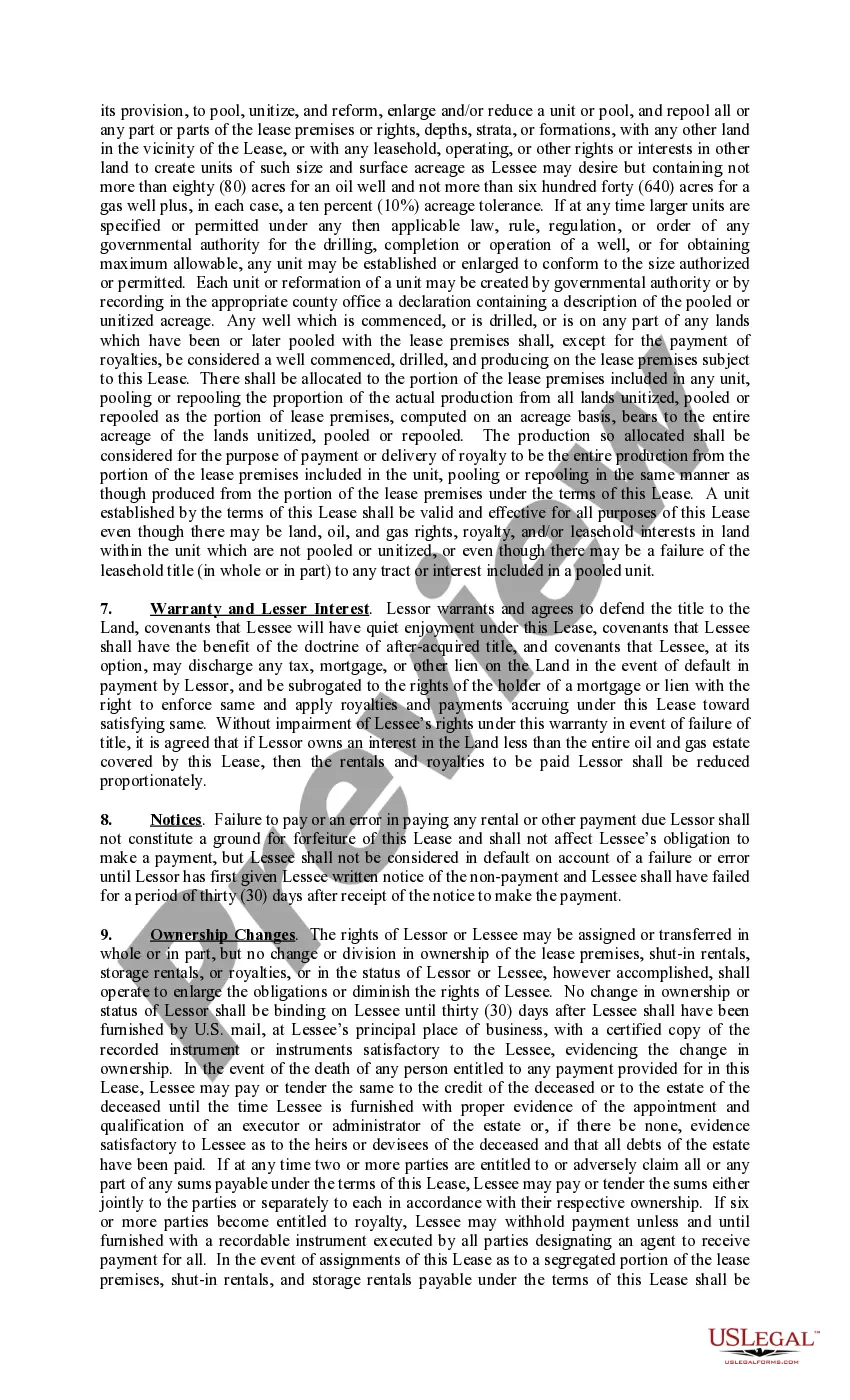
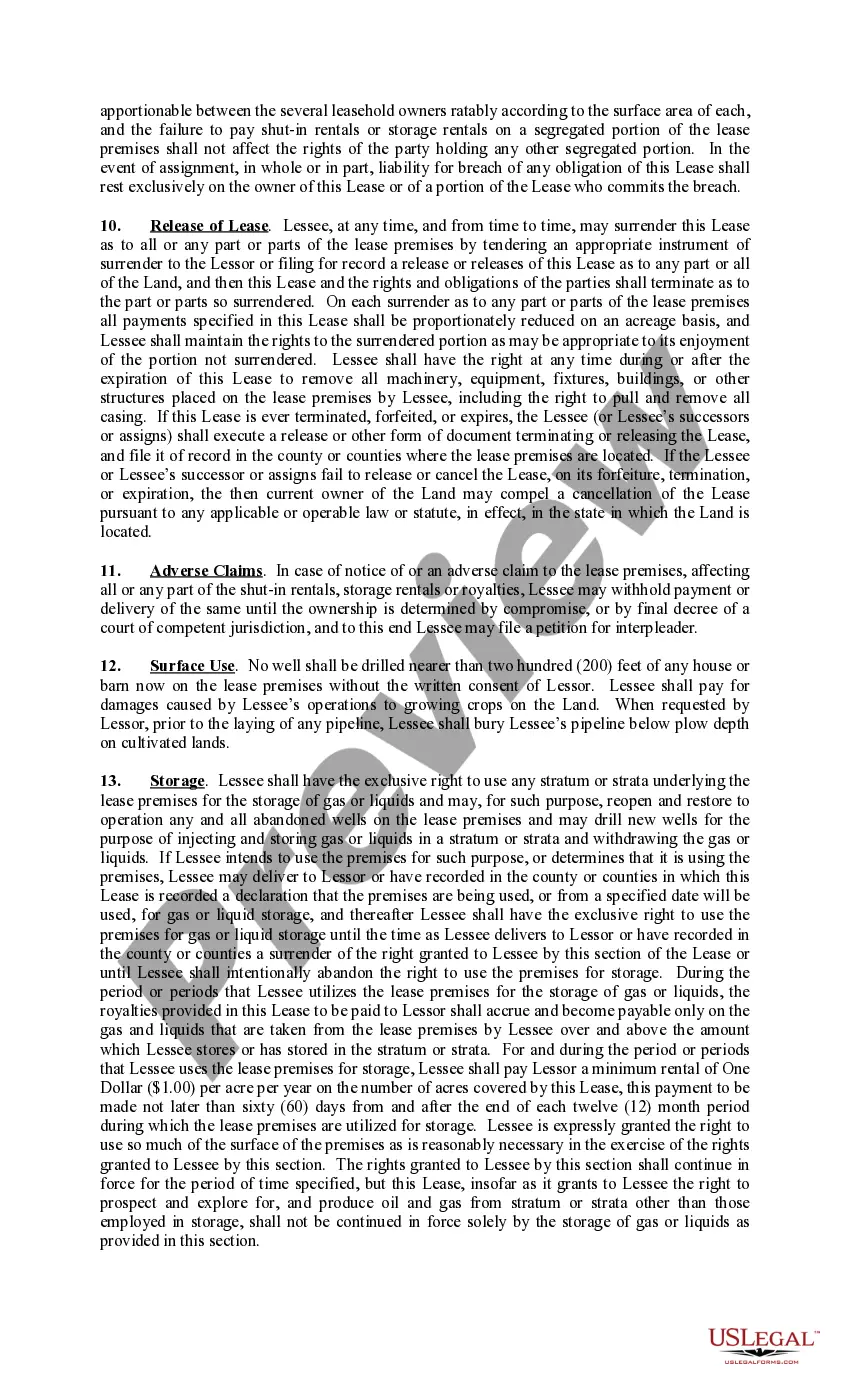
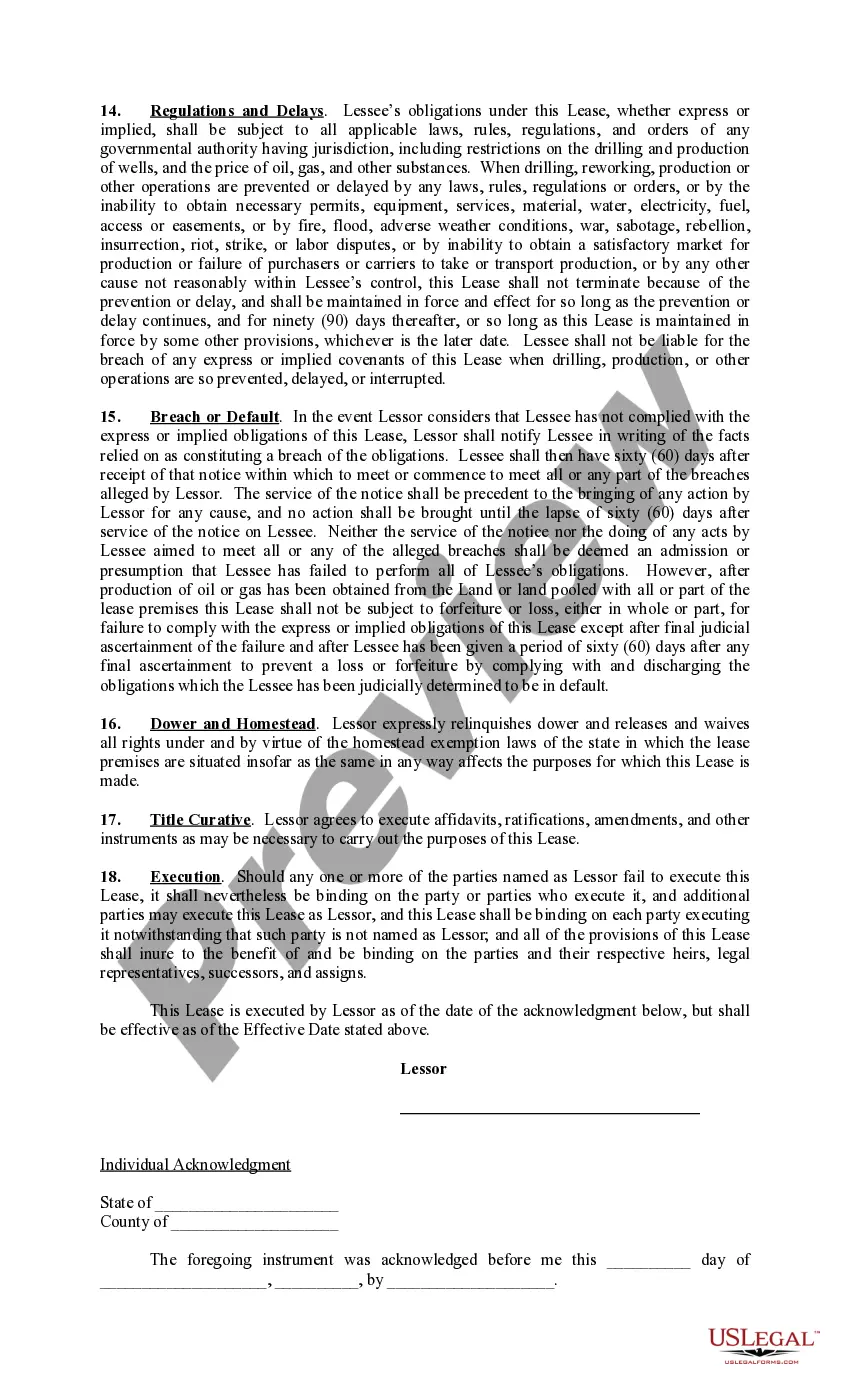
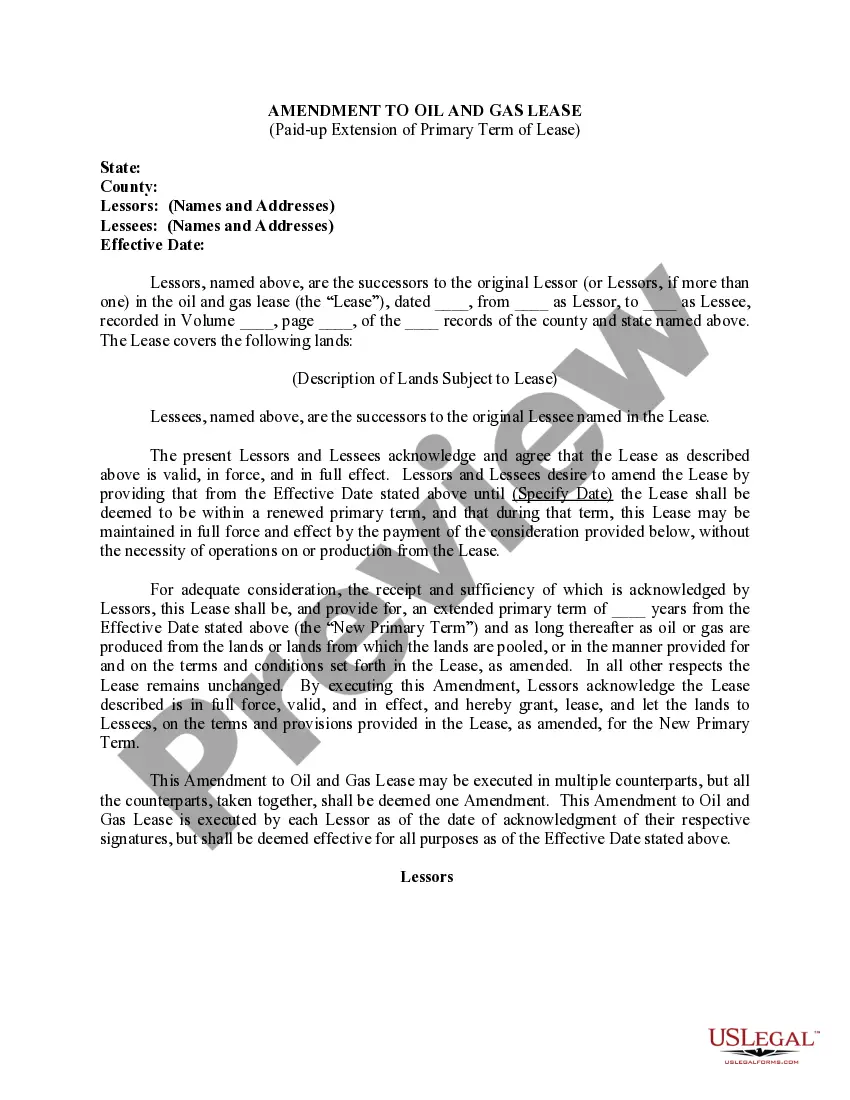
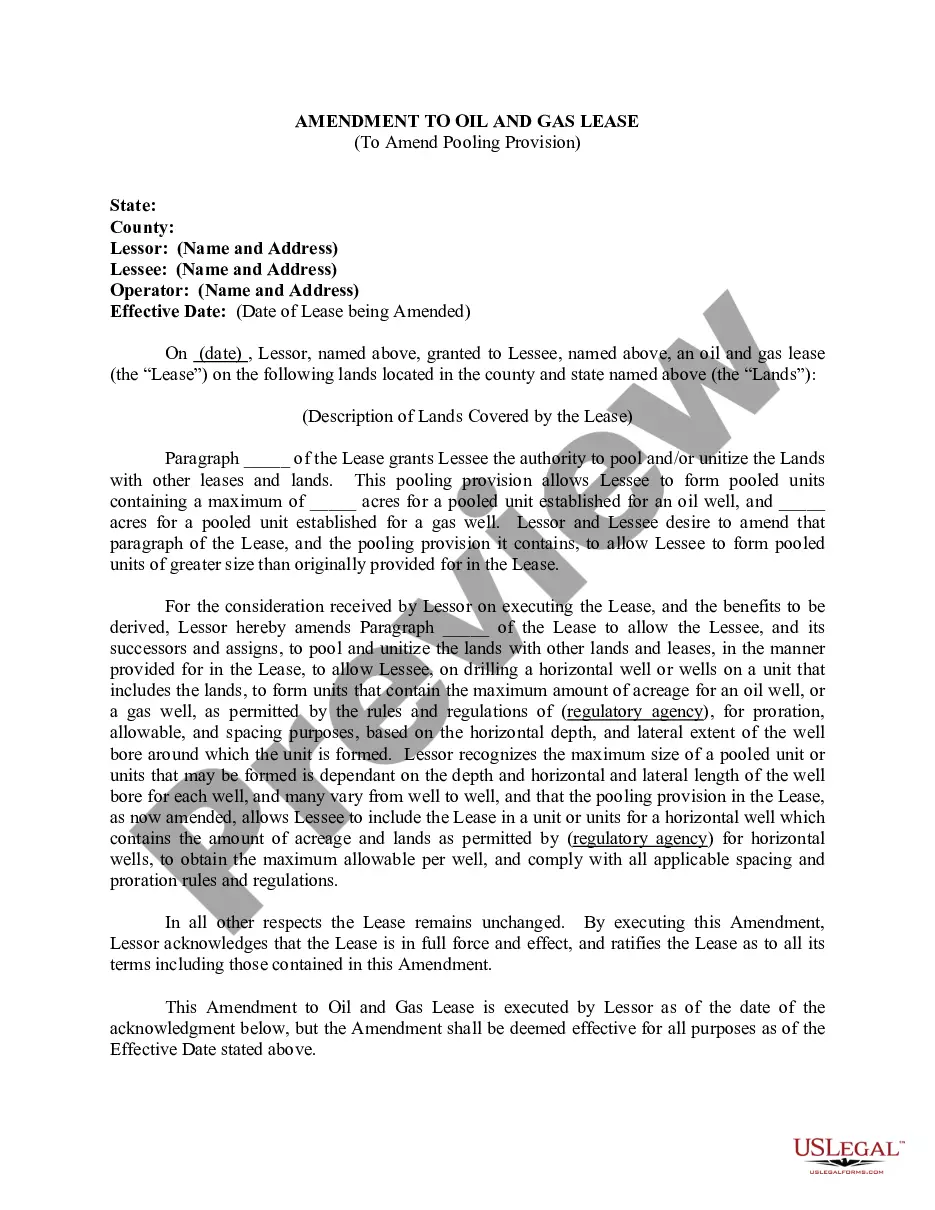
The Paid Up Lease Pooling Provision is a specific legal document used in Pennsylvania that outlines the terms under which a lessor grants rights to a lessee for oil and gas exploration, extraction, and related activities. This form differs from standard lease agreements as it is a paid-up lease, meaning the lessee's obligations to initiate or continue operations are waived for the primary term of the lease. The provision also includes specific terms regarding pooling rights, allowing for the combination of several leases for more efficient mineral production.
What’s included in this form
- Lease Description: Details the land covered by the lease and its boundaries.
- Term of Lease: Specifies the initial duration and conditions for lease renewal.
- Lease Rights Granted: Outlines the lessee's rights, including exploration, drilling, and rights-of-way.
- Royalty Payments: Details the royalties to be paid by the lessee for oil, gas, and other minerals produced.
- Pooling Rights: Allows the lessee to combine their lease with other properties for production efficiency.

When to use this form
This form is needed when a landowner in Pennsylvania wishes to lease their land for oil and gas exploration and production activities while providing the lessee with certain guarantees. It is particularly useful in scenarios where multiple properties are being operated together, as pooling minimizes operational disruptions and enhances efficiency in mineral extraction.
Intended users of this form
- Landowners in Pennsylvania interested in leasing their land for oil and gas operations.
- Lessee companies seeking a paid-up lease agreement to facilitate exploration and production activities.
- Attorneys or legal representatives reviewing or drafting lease agreements for oil and gas ventures.
Instructions for completing this form
- Identify the parties: clearly state the names and addresses of both the lessor and lessee.
- Specify the property: describe the land being leased, including boundaries and dimensions.
- Enter the effective date: indicate the start date of the lease agreement.
- Detail the royalty payment terms: outline the rates and conditions for any royalties owed.
- Complete the pooling section: define how pooling rights will be exercised under the lease.
Notarization requirements for this form
This form must be notarized to be legally valid. US Legal Forms provides secure online notarization powered by Notarize, allowing you to complete the process through a verified video call.
Get your form ready online
Our built-in tools help you complete, sign, share, and store your documents in one place.
Make edits, fill in missing information, and update formatting in US Legal Forms—just like you would in MS Word.
Download a copy, print it, send it by email, or mail it via USPS—whatever works best for your next step.
Sign and collect signatures with our SignNow integration. Send to multiple recipients, set reminders, and more. Go Premium to unlock E-Sign.
If this form requires notarization, complete it online through a secure video call—no need to meet a notary in person or wait for an appointment.
We protect your documents and personal data by following strict security and privacy standards.

Make edits, fill in missing information, and update formatting in US Legal Forms—just like you would in MS Word.

Download a copy, print it, send it by email, or mail it via USPS—whatever works best for your next step.

Sign and collect signatures with our SignNow integration. Send to multiple recipients, set reminders, and more. Go Premium to unlock E-Sign.

If this form requires notarization, complete it online through a secure video call—no need to meet a notary in person or wait for an appointment.

We protect your documents and personal data by following strict security and privacy standards.
Mistakes to watch out for
- Failing to accurately describe the leased property, leading to potential disputes.
- Leaving out the effective date, causing confusion about the lease term.
- Not specifying the royalty payment structure clearly, which may result in financial discrepancies.
- Overlooking the pooling provisions, potentially limiting operational flexibility.
Benefits of completing this form online
- Convenience: Access and complete the form anytime, from anywhere.
- Editability: Easily modify fields to suit specific lease terms and conditions.
- Reliability: Ensure legal compliance with templates drafted by licensed attorneys.
Legal use & context
- The Paid Up Lease Pooling Provision is legally binding upon execution by the parties involved.
- It should be used in accordance with Pennsylvania laws governing oil and gas leasing.
- Failure to comply with the terms laid out in the lease may result in financial penalties or lease termination.
Main things to remember
- The Paid Up Lease Pooling Provision allows for oil and gas extraction with minimal operational obligations for the lessee.
- It is designed specifically for use in Pennsylvania, including certain legal requirements and definitions.
- This form streamlines the leasing process, enabling both lessors and lessees to understand their rights and responsibilities.
Looking for another form?
Form popularity
FAQ
In the United States, the "standard workweek" is generally considered to be 40 hours, with employees working five days a week, for eight hours per day. Some employers consider 37.5 hours to be full time, giving 30-minute unpaid lunch breaks each day, while others give an hour and consider 35 hours to be full-time.
In a nutshell, the new law provides that eligible employees will earn one hour of paid sick time per 35 hours worked within Allegheny County, up to 40 hours per year (exempt employees are presumed to work 40 hours per week). Employers are covered if they have more than 25 employees.
Pennsylvania employers must comply with the FMLA if they have at least 50 employees for at least 20 weeks in the current or previous year. Employees may take FMLA leave if: they have worked for the company for at least a year. they worked at least 1,250 hours during the previous year, and.
An employee who is required to work more than 12 consecutive hours per workday where mandatory overtime is allowed under section 3(c) of Act 102 or who volunteers to work more than 12 consecutive hours shall be entitled to at least 10 consecutive hours of off-duty time immediately after the worked overtime.
Official employer designations regarding full-time employment generally range from 35 to 45 hours, with 40 hours being by far the most common standard. Some companies consider 50 hours a week full-time for exempt employees.
A full time employee is a person who is generally employed to work at least thirty-eight (38) hours each week. If an employee works more than thirty eight hours in a week, then usually the employee is entitled to be paid at overtime rates, or to receive paid time off in lieu of overtime payment.
Pennsylvanians are caught between their work and family responsibilities. A national paid leave plan the FAMILY Act is the solution. Paid leave means not having to choose between job and family. Pennsylvania families will face increased family and medical care needs.
A full-time employee is, for a calendar month, an employee employed on average at least 30 hours of service per week, or 130 hours of service per month.
Pennsylvania's minimum wage, currently set at the federal minimum of $7.25 an hour since 2009, would rise in four steps to $9.50 over the next two years. On July 1, 2020, the wage would rise to $8 an hour; to $8.50 on Jan. 1, 2021; to $9 on July 1, 2021; and to $9.50 on Jan. 1, 2022.